Canadian administrative law
Canadian administrative law is the body of law that governs the actions of government officials, ministers, regulatory agencies, and administrative tribunals. It ensures that these administrative decision-makers act within the legal boundaries of their authority and follow fair procedures when making decisions that affect individuals and organizations. This area of law is fundamental to the Canadian legal system, providing mechanisms for citizens to challenge government actions and holding public authorities accountable. Its principles are constantly evolving through court decisions, notably the Supreme Court of Canada's landmark 2019 ruling in Canada (Minister of Citizenship and Immigration) v Vavilov, which reshaped the framework for judicial review.
Foundations and Sources of Authority
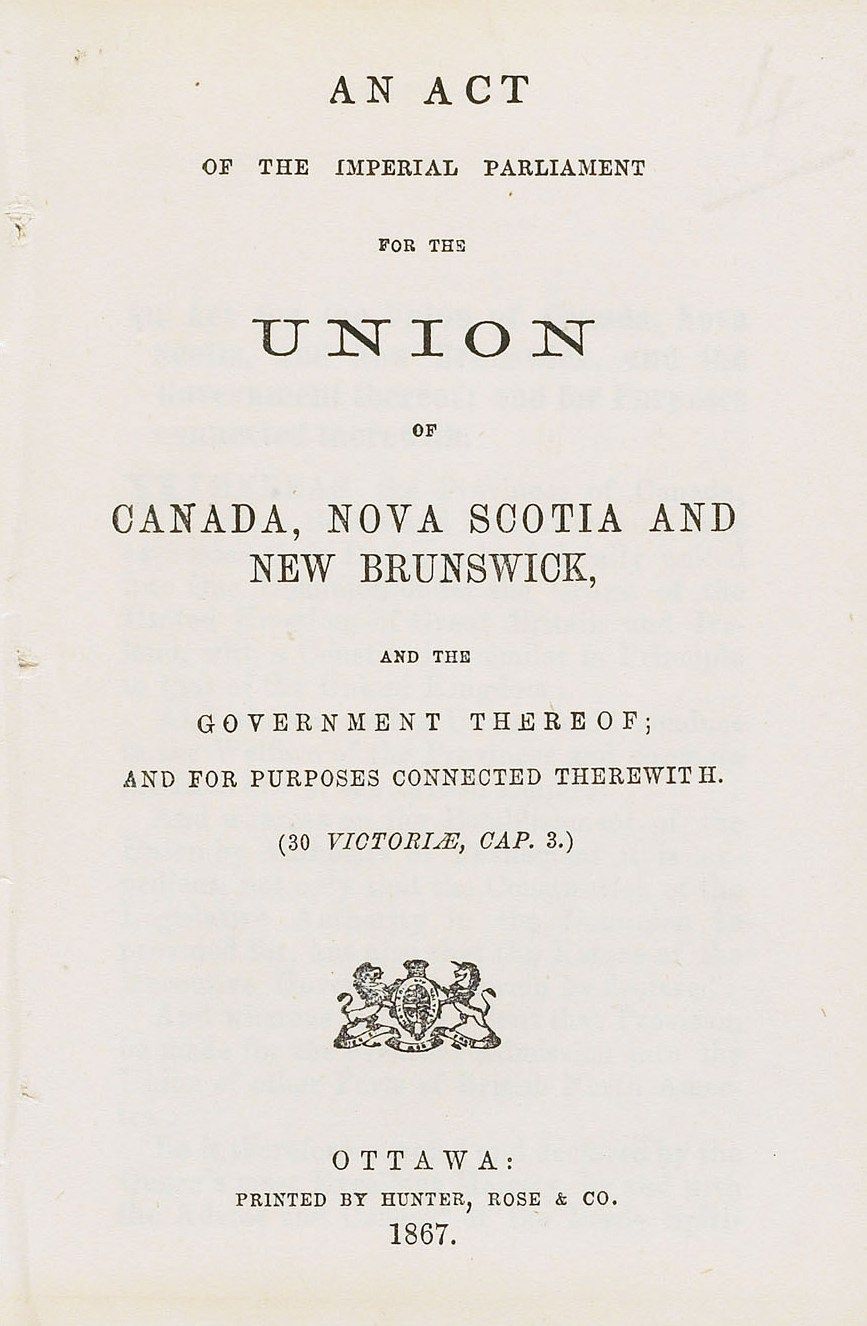
The powers of administrative decision-makers in Canada are primarily created and defined by statutes, known as enabling statutes. These statutes are passed by federal or provincial legislatures within their respective areas of authority as outlined in sections 91 and 92 of the Constitution Act, 1867. The common law, developed through centuries of judicial decisions, provides a secondary but crucial source of administrative law principles. Superior courts, known as Section 96 Courts, possess an inherent common law power to review administrative decisions, a power derived from historical writs like certiorari, prohibition, mandamus and habeas corpus. Legislatures often attempt to limit this judicial oversight through privative or finality clauses within enabling statutes. As established in Crevier v Quebec (AG), the Constitution requires that the courts be able to supervise errors of administrative decision-makers, so the legislature cannot completely oust the courts from that power.

Pathways for Review: Judicial Review and Appeals
There are two principal legal avenues to challenge an administrative decision in Canada: judicial review and statutory appeal. Judicial review is a supervisory process where a court examines the entire decision-making process to ensure it was lawful, reasonable, and fair. This power exists at common law but can be shaped or restricted by the enabling statute. In contrast, a statutory appeal is available only when the enabling legislation explicitly provides for it. The scope of such an appeal is defined by the statute's terms. The Supreme Court of Canada in Vavilov clarified that where a statute provides for an appeal to a court, it signals legislative intent for appellate oversight. A court hearing a statutory appeal must apply appellate standards of review, meaning it reviews questions of law for correctness and questions of fact for a palpable and overriding error. The legislature retains the power to prescribe a different standard within the statute itself.
The Modern Framework for Substantive Review
Substantive review, conducted through judicial review, involves a court assessing the merits of an administrative decision to determine if it is legally defective. The degree of scrutiny a court applies is determined by the standard of review. Prior to the 2019 Vavilov decision, courts engaged in a complex, contextual analysis to select the appropriate standard. The Supreme Court in Vavilov explicitly discarded this approach to create a more streamlined and predictable framework. The current post-Vavilov framework establishes reasonableness as the default and presumptive standard of review for all administrative decisions. This presumption can be rebutted in two specific situations where the correctness standard applies instead. First, correctness applies where the legislature has explicitly indicated it in the statute. Second, correctness applies where the rule of law requires it for certain categories of questions. These categories include constitutional questions, general questions of law of central importance to the legal system as a whole, and questions regarding the jurisdictional boundaries between two or more administrative bodies.
The Reasonableness Standard in Detail
Reasonableness is a deferential standard that requires a reviewing court to focus on the decision actually made by the administrative body, including both its reasoning process and its outcome. The court must not substitute its own view but must assess whether the decision is justified, transparent, and intelligible based on the relevant facts and law. A reasonable decision is based on an internally coherent and rational chain of analysis and is justified in relation to the relevant factual and legal constraints that bear on the decision maker. The court examines the decision against a constellation of contextual factors, including the governing statutory scheme, other relevant law, the evidence before the decision maker, and the potential impact of the decision on the affected individual. Shortcomings or flaws must be sufficiently central or significant to render the decision unreasonable. The Supreme Court in Vavilov identified two types of fundamental flaws: a failure of rationality internal to the reasoning process, and a decision that is untenable in light of the relevant constraints. Reasonableness review is not a line-by-line treasure hunt for error. The court must be able to trace the decision maker's reasoning without encountering fatal flaws in its overarching logic. Where formal reasons are not provided, the reviewing court must examine the record as a whole to understand the decision's basis.
The Correctness and Patent Unreasonableness Standards
The correctness standard is less deferential and applies in the specific rebuttal situations outlined in the Vavilov framework. When applying correctness, the court gives no deference to the administrative decision maker's view. The court will judge the decision solely on whether it is correct in law and may substitute its own opinion. This standard is reserved for fundamental questions that require a uniform and definitive answer from the courts to maintain the consistency and supremacy of the legal system. The standard of patent unreasonableness was abolished by the Supreme Court of Canada in the 2008 Dunsmuir decision. It was the highest level of deference and was found unsatisfactory as it allowed decisions that were unreasonable, but not patently so, to stand. However, this standard continues to exist where it is expressly provided for by provincial legislation. For example, British Columbia's Administrative Tribunals Act adopts the patent unreasonableness standard for certain tribunal decisions. Because a statute is superior to common law, this standard is applicable when courts are applying those specific provincial statutes.
Principles of Procedural Fairness
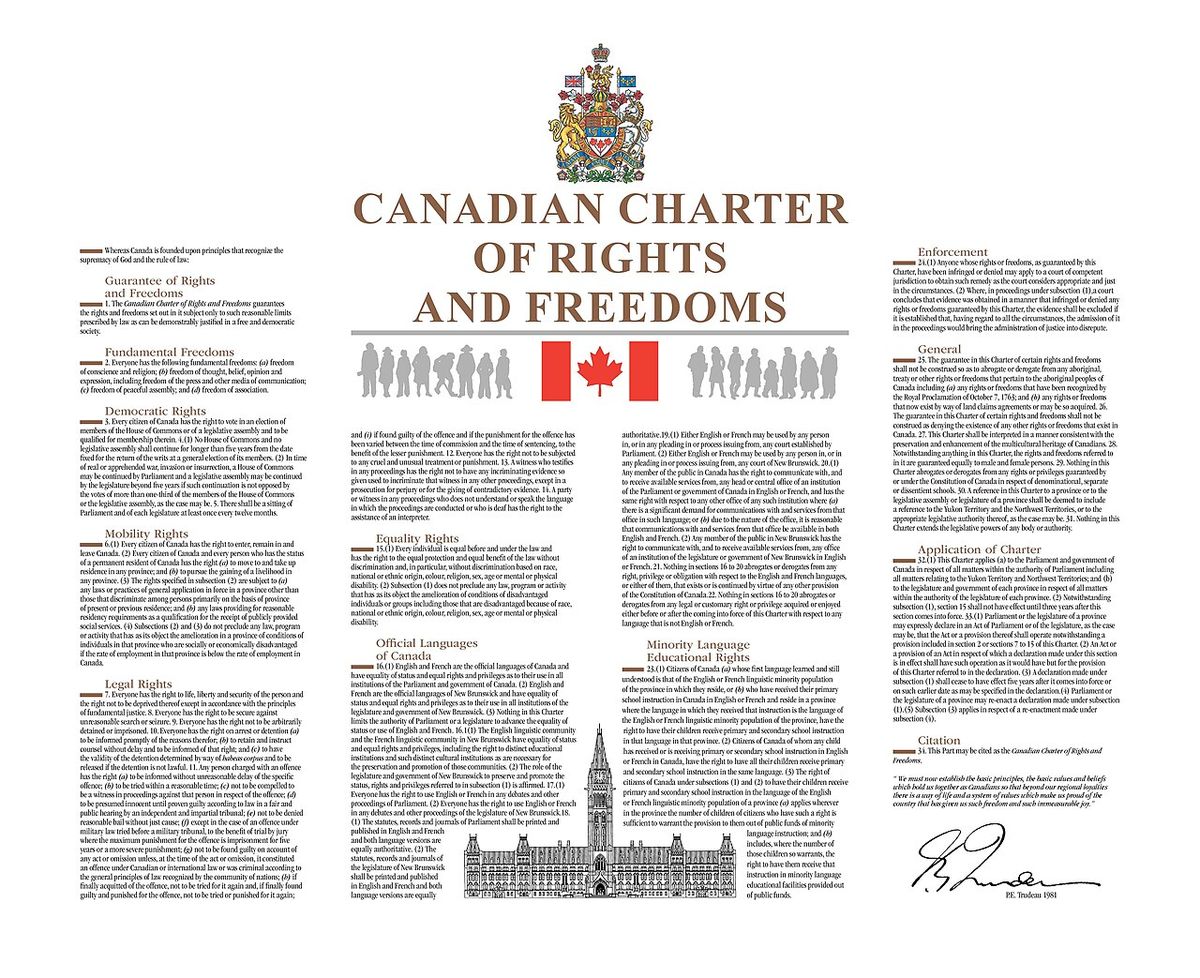
Procedural fairness concerns the right of individuals affected by a decision to participate meaningfully in the decision-making process. These rights flow from the two core principles of natural justice: the right to be heard (audi alteram partem) and the right to be judged impartially (nemo judex in sua causa). The source of these rights can be the Canadian Charter of Rights and Freedoms, general administrative procedure legislation, an enabling statute, or the common law. The common law imposes a minimum duty of fairness where a decision is administrative in nature, stems from a statutory or prerogative power, and affects an individual's rights, privileges, or interests. The concept of legitimate expectation can also give rise to procedural fairness rights. If a public authority makes a clear, unambiguous and unqualified promise to follow a certain procedure, and an individual relies on that promise, it may create a legitimate expectation that the procedure will be followed, so long as it does not conflict with statutory duties. The content of the duty of fairness is determined by a flexible test from Baker v Canada, which considers five non-exhaustive factors.
- The nature of the decision and its purpose (adjudicative vs. policy-oriented).
- The statutory scheme, including whether the decision is final or preliminary.
- The importance of the interest at stake for the individual.
- The legitimate expectations of the person challenging the decision.
- The procedural choices and practices available to the administrative body.
Bias, Independence, and Contemporary Challenges
Administrative tribunals must be free from a reasonable apprehension of bias. This means a reasonable, informed person must conclude that the decision-maker is sufficiently free from factors that could interfere with impartial judgment. The requirement for administrative independence is not as strict as for courts, but minimum requirements like security of tenure and independent administrative control may apply, especially for tribunals that function closer to the judicial end of the spectrum. Once a court finds a reasonable apprehension of bias, the decision is void from the beginning. Contemporary practice in Canadian administrative law addresses several persistent and emerging challenges. These include reducing case backlogs, ensuring access to justice for self-represented parties, and addressing the ethical and operational implications of artificial intelligence in administrative advocacy and adjudication. Other pressing topics involve the constitutional limits of executive authority, the procedural complexities of challenging cabinet decisions, and the evolving intersection of the Charter of Rights and Freedoms with administrative law principles.
Key Resources and Legal Community
The field is supported by a strong community of practitioners, academics, and specialized institutions. The leading contemporary textbook is Canadian Administrative Law, now in its fourth edition, authored by Federal Court Justice Guy Régimbald, Professor Mark Mancini, and John J. Wilson. Previous editions have been cited by the Supreme Court of Canada and courts across the country. Key professional organizations include the Canadian Institute for the Administration of Justice (CIAJ). The Canadian Institute also runs major annual conferences for practitioners, addressing cutting-edge developments. These conferences bring together federal and provincial decision-makers, justices, attorneys, civil servants, and academics to discuss legal developments and practical challenges. This ongoing dialogue and education are essential for maintaining a responsive and principled administrative justice system in Canada.
Questions about Canadian administrative law
What is the standard of review in Canadian administrative law?
The standard of review determines how much deference a court will give to an administrative decision when reviewing it. Since the Supreme Court's 2019 decision in Vavilov, the default and presumptive standard is reasonableness. This means the court will uphold a decision if it is justified, transparent, and intelligible based on the relevant facts and law. The correctness standard applies where the legislature has explicitly prescribed it or for certain fundamental questions, such as constitutional issues or jurisdictional boundaries between tribunals, where the court provides the final, correct answer with no deference.
What is the difference between judicial review and a statutory appeal?
Judicial review is a supervisory process rooted in the common law where a court examines the legality, reasonableness, and procedural fairness of an administrative decision. A statutory appeal, on the other hand, is only available if the enabling legislation that created the administrative body explicitly provides for an appeal to a court. The scope of an appeal is defined by the statute's terms. The presence of a statutory appeal signals that the legislature intended courts to play an appellate role, applying specific appellate standards of review to questions of law and fact.
Can a government decision be challenged even if a law says it is final?
Yes, often it can. Legislatures sometimes include privative clauses or finality clauses in statutes to declare an administrative decision final and attempt to shield it from judicial review. However, based on the constitutional principle established in Crevier v Quebec (AG), courts retain a core supervisory jurisdiction. They cannot be completely ousted from reviewing errors of law or jurisdiction. Where a privative clause provides a limited right of appeal, a court may exercise its discretion to grant judicial review only if the right of appeal fails to provide an adequate alternative remedy.
What was the impact of the Supreme Court's Vavilov decision?
The 2019 Vavilov decision was a watershed moment that dramatically simplified the framework for judicial review in Canada. It eliminated the old, complex contextual analysis for selecting a standard of review. Instead, it established a clear presumption of reasonableness review, with specific, limited categories for correctness review. The decision aimed to make judicial review more predictable and focused on the justification for administrative decisions. It emphasized that reasonableness review requires a decision to be justified in relation to the relevant factual and legal constraints, with reasons that are transparent and intelligible.
What does procedural fairness mean in administrative law?
Procedural fairness refers to the rights of individuals affected by an administrative decision to participate in the decision making process. These rights flow from the two principles of natural justice: the right to be heard and the right to be judged impartially. The source of these rights can be found in the Canadian Charter of Rights and Freedoms, general legislation, an administrative decision maker's enabling legislation, and the common law. The common law imposes a minimum duty of fairness in certain administrative proceedings, which is invoked based on factors like the nature of the decision and its impact on rights. The content of this duty is determined by a flexible test from Baker v Canada, which considers factors such as the statutory scheme and the importance of the interest at stake.
What are some current issues in Canadian administrative law?
Current issues in Canadian administrative law include the application of artificial intelligence in administrative decision making and adjudication. The legal community is also focused on recent decisions and legislative updates that shape the field. Advanced conferences and courses address the evolving standard of review framework established by the Supreme Court of Canada in the Vavilov decision. Practitioners and judges engage with topics such as the constitutional limits of executive authority and the procedural fairness requirements for challenging government decisions. These issues are discussed in contemporary resources like the latest edition of Canadian Administrative Law by Guy Régimbald et al. and specialized programs offered by legal institutes.
Sources and further reading
- Canadian administrative law (Wikipedia)
- Overview | Advanced Administrative Law & Practice (canadianinstitute.com)
- Special Topics in Administrative Law (2026 Edition) (ciaj-icaj.ca)
- Canadian Administrative Law, 4th Edition (store.lexisnexis.com)
- Administrative Law (canadacommons.ca)
Checked by the Nosy Mag desk. Last updated 2026-11-03.