Canadian Indian residential school system
The Canadian Indian residential school system was a network of government-funded, church-run boarding schools that operated from the 1830s until 1996. Created with the explicit intent of assimilating Indigenous children into Euro-Canadian society, the system forcibly removed over 150,000 First Nations, Inuit, and Métis children from their families and communities. Students were prohibited from speaking their languages and practising their cultures, and many suffered severe physical, emotional, and sexual abuse. The system's devastating legacy, which the Truth and Reconciliation Commission of Canada labelled a cultural genocide in 2015, continues to impact Indigenous communities and Canadian society.
Origins and Early Development
The roots of the residential school system lie in early colonial attempts at assimilation, beginning with French missionaries in New France in the 17th century. These early mission schools, run by groups like the Recollets and Jesuits, were largely abandoned by the 1690s due to resistance from Indigenous communities and the practical demands of colonial life. A renewed push for residential schooling emerged in the early 19th century, linked to declining military need for Indigenous allies after the War of 1812. Protestant missionaries opened schools in Ontario to spread Christianity and encourage a shift from nomadic lifestyles to subsistence agriculture. The oldest continuously operated residential school was the Mohawk Institute in Brantford, Ontario, which opened in 1834 under Anglican administration and ran until 1970. The system's formal, government-backed structure was solidified after Confederation, drawing on models from the United States and other British colonies.
The political and ideological foundation for the state system was laid through several key reports and legislative acts. The Gradual Civilization Act of 1857 and the Gradual Enfranchisement Act of 1869 assumed the superiority of European ways and sought to assimilate Indigenous men by offering land in exchange for relinquishing their status and rights. The most influential report was commissioned by Prime Minister John A. Macdonald in 1879. Politician Nicholas Flood Davin studied American industrial schools and recommended a cooperative church-state model to pursue what he called aggressive civilization. Davin argued that to assimilate Indigenous peoples, one must catch them very young and keep children constantly within the circle of civilized conditions. This philosophy became central to the system's operation.
System Expansion and Operation
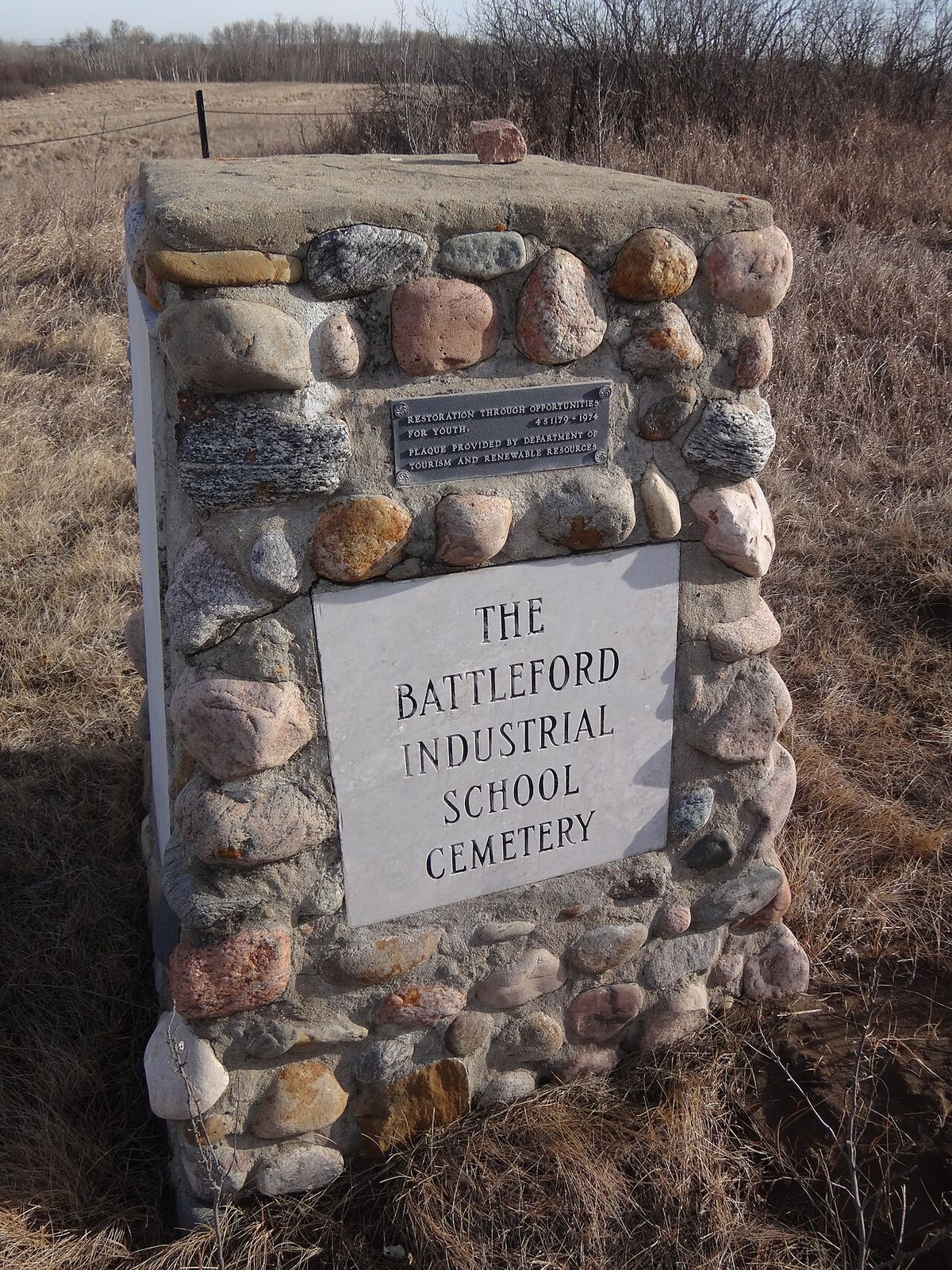
Following the Davin Report, the federal government began actively funding and expanding the residential school system as part of its Department of Indian Affairs policy. The first government-funded industrial school, the Battleford Industrial School in Saskatchewan, opened on December 1, 1883. By 1900, there were 61 schools in operation across the country. The system reached its peak in 1931 with 80 schools operating simultaneously and more than 17,000 enrolled students. These schools operated in every province and territory except New Brunswick and Prince Edward Island. The churches provided teachers and administered daily operations, while the government funded facilities and maintenance. Of the schools operating at the peak, 44 were run by Catholic dioceses and religious orders, 21 by the Anglican Church, 13 by the United Church of Canada, and 2 by Presbyterians.
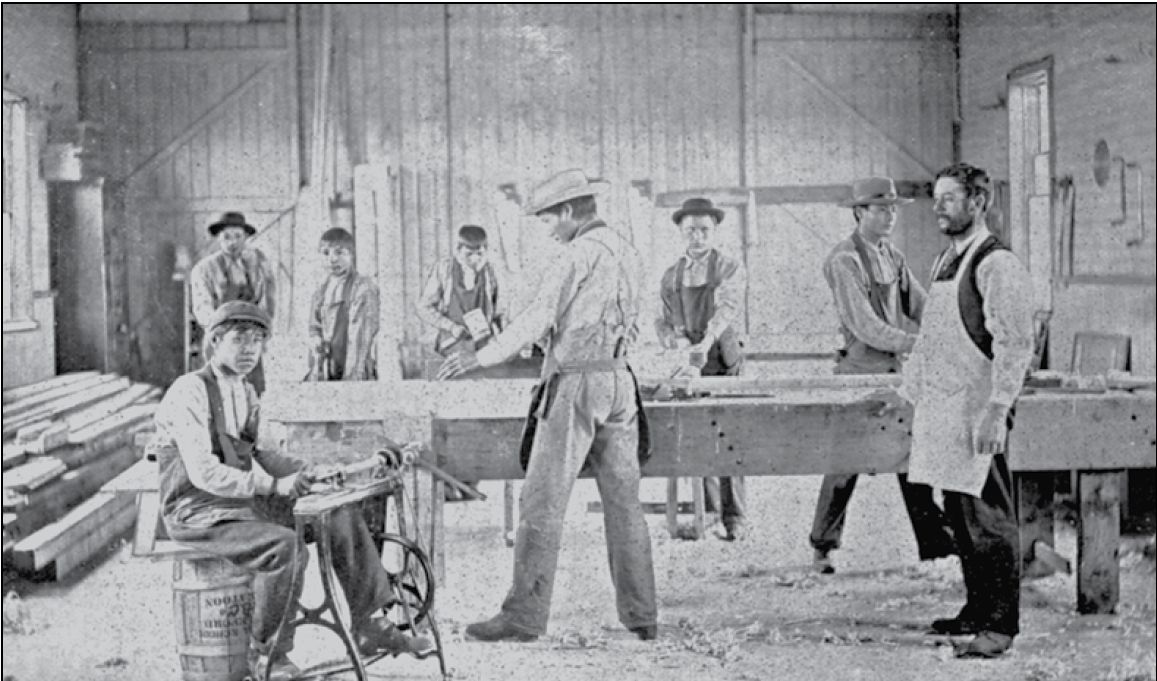
The system was designed as a total immersion program aimed at destroying Indigenous cultural identity. The explicit goal, as summarized by historian John S. Milloy and later the Truth and Reconciliation Commission, was to kill the Indian in the child. Duncan Campbell Scott, the influential Deputy Superintendent of the Department of Indian Affairs, stated in 1920 that the objective was to continue until there is not a single Indian in Canada that has not been absorbed into the body politic. To this end, children were severely punished for speaking their ancestral languages or practising their spiritual and cultural traditions. The curriculum focused heavily on religious instruction and manual labour, with academic education often being rudimentary. Students spent as much as half the day working on school farms, in kitchens, or in workshops to maintain the institutions, which were chronically underfunded.
Key Operational Phases- 1830s-1880s: Church-run mission schools establish the model, with government involvement increasing after Confederation.
- 1883 to 1930s: Federal system expands rapidly, peaking at 80 schools following the 1920 compulsory attendance law.
- 1930s-1960s: Government recognizes systemic failures and rising costs, begins shifting policy toward integration into provincial public schools.
- 1969 to 1997: Federal government takes sole control from churches, begins transferring some schools to communities, leading to eventual closures.
Government Policy and Compulsory Attendance
The residential school system was enabled and enforced through federal legislation, primarily the Indian Act of 1876. This act consolidated control over Indigenous communities, land, and finances, making Indigenous people wards of the state. Although education was a provincial jurisdiction, treaties and the Indian Act placed responsibility for Indigenous education with the federal government. Amendments to the Indian Act in 1894 made attendance at day schools on reserves compulsory for status Indian children between ages 7 and 16, with several exemptions. The most significant enforcement came with an amendment to the Indian Act in 1920, which made attendance at residential schools compulsory for Treaty-status children between the ages of 7 and 15. This law empowered government agents and police to forcibly take children from their families to the schools.
Parental resistance to the system was consistent throughout its history. Families hid their children, advocated for better conditions, and demanded answers about abuse. Their concerns were often dismissed by officials. Further coercion came with the 1945 Family Allowance Act, which required school enrolment for families to receive federal child benefits. Despite growing internal criticism of the system's effectiveness and cost by the 1930s, church officials often resisted reform. The government began to shift policy in the post-war period, amending the Indian Act in 1951 to allow agreements with provinces to integrate Indigenous students into public schools. Between 1945 and 1955, the number of First Nations students in federal day schools grew from 9,532 to 17,947, signalling a move away from the residential model. The government officially took sole control of the system from the churches in 1969.
Conditions, Abuse, and Student Deaths
Conditions in the schools were notoriously poor and often dangerous. Chronic underfunding led to overcrowding, inadequate heating, poor sanitation, and substandard food. These conditions created fertile ground for the spread of infectious diseases, particularly tuberculosis. Students suffered from malnutrition and lacked proper medical care. Many children who died were buried in unmarked graves on school grounds, often without their families being notified. The Truth and Reconciliation Commission documented at least 4,118 student deaths, with estimates exceeding 6,000. The vast majority of deaths occurred before the 1950s and were caused by diseases like tuberculosis. The recent discoveries of hundreds of potential unmarked graves at sites like Kamloops and Marieval have brought this tragic reality to national attention.
Beyond the neglect, students were subjected to systematic psychological, physical, and sexual abuse. Staff, who were rarely held accountable, harshly punished children for any expression of Indigenous identity. Survivor testimonies describe widespread beating, strapping, and other forms of corporal punishment. Emotional abuse was constant, with children told their cultures and families were inferior or savage. Sexual abuse by staff and older students was rampant at many institutions. The trauma inflicted was deep and intentional, part of the process of forced assimilation. All students suffered from severe loneliness, isolation, and a longing for home, stripped of the healthy family relationships and cultural foundations necessary for development.
The Sixties Scoop and Later Removals
Even as the residential school system began to wind down, the large-scale removal of Indigenous children from their families continued through child welfare policies. An amendment to the Indian Act in 1951 allowed provincial child welfare laws to apply on reserves. Provincial officials, often lacking cultural understanding, assessed Indigenous families based on Euro-Canadian standards, frequently deeming traditional lifestyles insufficient. This led to the mass apprehension of children, a period first termed the Sixties Scoop by researcher Patrick Johnston in 1983. Children were taken without parental consent and placed in foster care or put up for adoption, predominantly by non-Indigenous families across Canada and the United States.
While Indian and Northern Affairs Canada estimated 11,132 adoptions between 1960 and 1990, the actual number is believed to be as high as 20,000. Many of these children experienced a loss of cultural identity similar to residential school survivors. Some child welfare facilities were operated in former residential school buildings, creating a grim continuity. This period extended the disruptive policies of assimilation well beyond the formal classroom, further fracturing families and communities and compounding the intergenerational trauma initiated by the residential schools.
Truth, Reconciliation, and Legal Settlement
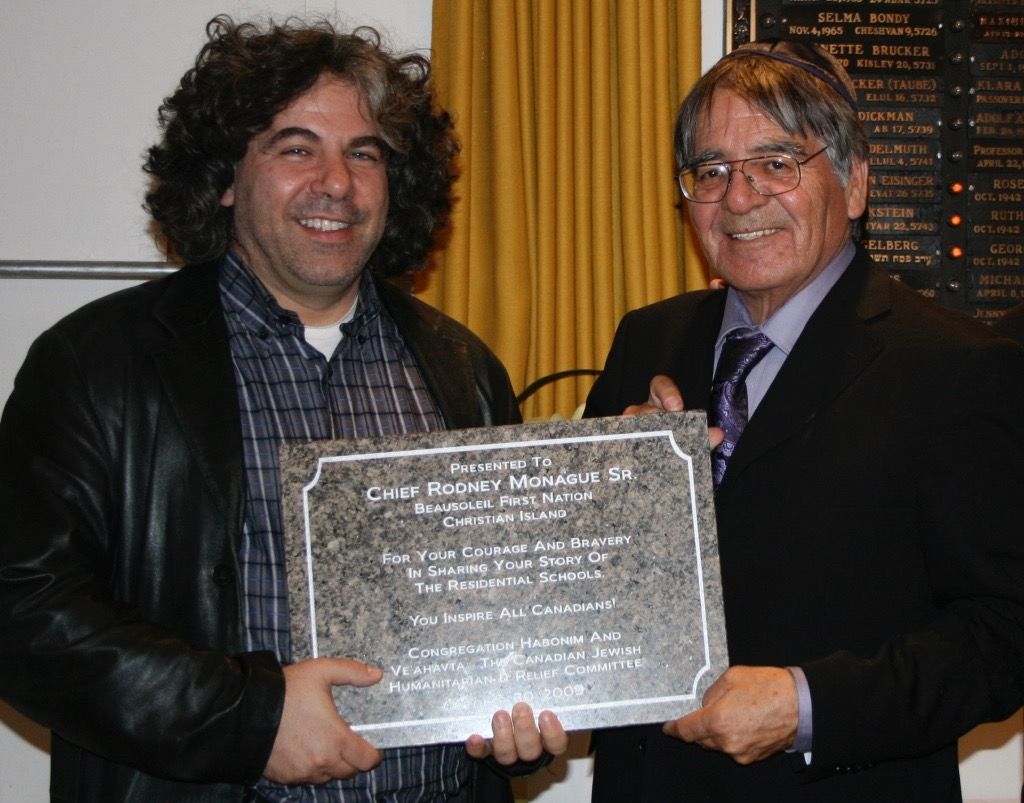
The long journey toward accountability began with survivors courageously sharing their stories. The 1996 Royal Commission on Aboriginal Peoples highlighted the lasting harm of the schools. Survivors pursued legal action against the federal government and churches, culminating in the landmark Indian Residential Schools Settlement Agreement in 2006. This agreement included financial compensation for survivors, the establishment of the Truth and Reconciliation Commission (TRC), and funding for healing initiatives. The TRC, which operated from 2008 to 2015, collected statements from over 6,000 survivors and witnesses. Its final report concluded the system amounted to a cultural genocide, a finding later echoed by Pope Francis in 2022 and by a House of Commons motion in October 2022. Key outcomes stemming from this process include the creation of the National Centre for Truth and Reconciliation (NCTR) to house survivor testimony and records, and the establishment of the National Day for Truth and Reconciliation as a federal statutory holiday, first observed on September 30, 2021. In September 2020, the residential school system was designated an event of national historic significance by Parks Canada. The NCTR continues the work of maintaining a registry of children who died in the schools, a solemn reminder of the system's human cost.
Components of the Indian Residential Schools Settlement Agreement (2006)- Common Experience Payment: Financial compensation paid to all eligible former students.
- Independent Assessment Process: A process for resolving claims of sexual or serious physical abuse.
- Truth and Reconciliation Commission: Mandated to document the history and impacts of the schools.
- Healing and Commemoration Funds: Funding for community-based healing projects and memorials.
- Indian Residential School Survivors Society: Established to provide support services.
Ongoing Legacy and National Response
The legacy of the residential school system is deep and ongoing, contributing directly to many of the social, health, and economic disparities faced by Indigenous peoples in Canada today. The trauma experienced by survivors has had intergenerational effects, impacting parenting, mental health, and community cohesion. The deliberate suppression of languages and cultural practices has led to a devastating loss that communities are now working tirelessly to revitalize. The system's breakdown of family structures and traditional knowledge systems continues to pose significant challenges.
The national response has evolved but remains incomplete. The discovery of potential unmarked graves beginning in 2021 sparked renewed national mourning and reflection. The separate settlements for Métis Nation survivors and survivors from Newfoundland and Labrador, as well as the 2019 settlement for federal Indian Day School survivors, highlight the complex and fragmented path to justice. The residential school system represents a foundational and tragic chapter in Canadian history, the full acknowledgement and redress of which is central to the nation's ongoing journey toward reconciliation.
Questions about Canadian Indian residential school system
When did the last residential school in Canada close?
The last federally funded residential school in Canada was Kivalliq Hall in Rankin Inlet, Northwest Territories, which closed in 1997. This closure ended a system that had been active for more than 160 years, beginning before Confederation. The residential school network operated across most Canadian provinces and territories over its long history. The final school's closure marked the conclusion of the government-funded, church-administered era of residential schooling.
What was the main purpose of the residential school system?
The main purpose was to assimilate Indigenous children into Euro-Canadian culture. The system was created to isolate children from their own culture and religion. It aimed to eliminate Indigenous identities, languages, and cultural practices. The government and churches believed this assimilation was a civilizing mission.
What is the National Day for Truth and Reconciliation?
The National Day for Truth and Reconciliation is a federal statutory holiday observed on September 30 each year, first established in 2021. It was created in direct response to the Truth and Reconciliation Commission's Call to Action number 80. The day serves to honour residential school survivors, their families, and their communities. It also promotes public awareness and education about the history and ongoing legacy of the residential school system in Canada.
What did the Truth and Reconciliation Commission conclude?
The Truth and Reconciliation Commission concluded the system was a cultural genocide. It was established in 2008 and concluded in 2015. The commission labeled the system's aim to destroy Indigenous cultures. This conclusion is part of its final report.
How many children died in residential schools?
The Truth and Reconciliation Commission documented at least 4,118 student deaths, with estimates that the full number exceeds 6,000. The vast majority of these fatalities were caused by diseases such as tuberculosis, which was exacerbated by the poor conditions within the schools. Over the course of the system's more than 160-year history, around 150,000 children were placed in residential schools nationally. Many of these children were buried in unmarked graves on school property.
What was the Sixties Scoop?
The Sixties Scoop refers to the widespread removal of Indigenous children from their families and communities by provincial child welfare authorities, primarily during the 1960s and 1970s. This was enabled by a 1951 amendment to the Indian Act, which allowed provincial laws to apply on reserves. Provincial officials, using Euro-Canadian values, often deemed traditional lifestyles insufficient and took children into custody. These children were placed in welfare facilities, foster care, or put up for adoption by predominantly non-Indigenous families. While official estimates suggest 11,132 children were adopted between 1960 and 1990, the actual number may be as high as 20,000.
Sources and further reading
- Canadian Indian residential school system (Wikipedia)
- Residential School History, NCTR (nctr.ca)
- History of Residential Schools (indigenouspeoplesatlasofcanada.ca)
- Canadian Indian residential school system | Education (ebsco.com)
- Residential Schools (thecanadianencyclopedia.ca)
Checked by the Nosy Mag desk. Last updated 2026-10-19.