Inuit languages
The Inuit languages are a group of closely related Indigenous languages traditionally spoken across the Arctic and subarctic regions of North America, from northern Alaska to Greenland. In Canada, these languages, collectively known as Inuktut, are spoken by Inuit across Inuit Nunangat, the Inuit homeland encompassing Nunavut, Nunavik in Quebec, Nunatsiavut in Labrador, and the Inuvialuit Settlement Region in the Northwest Territories. They constitute a vital part of Inuit culture and identity, with Inuktitut being an official language of Nunavut and the Northwest Territories. Despite facing pressures from colonization and language shift, Inuit languages are the subject of significant revitalization efforts supported by the Indigenous Languages Act and Inuit-led organizations.
Nomenclature and Terminology
The terminology for the Inuit language family varies significantly across its geographic range, reflecting local identities and political realities. In Greenland, the official language is called Kalaallisut, often referred to internationally as Greenlandic. In Alaska, the language is known as Iñupiatun, with distinct variants like Qawiaraq on the Seward Peninsula and the North Slope Iñupiaq spoken on the Alaska North Slope. Within Canada, the collective term Inuktut is increasingly used in national discourse to encompass all Canadian variants. More specific regional names remain in common use, including Inuktitut for many eastern dialects, Inuinnaqtun in western Nunavut, Inuvialuktun in the western Arctic, and Inuttitut or Inuttut in Labrador. The use of the broad term Eskimo, which includes the related Yupik languages, is strongly discouraged in Canada and is diminishing in usage elsewhere due to its colonial origins. The phrase Inuit language is largely limited to professional discourse, as each region has conventional terms that cover local variants.
Classification and Historical Development
The Inuit languages form one of the two primary branches of the Eskaleut language family, the other being the Yupik languages spoken in Alaska and Chukotka, Russia. Linguists believe the Inuit language began to diverge from its Yupik relatives during a centuries long eastward migration of the Thule people, who are the ancestors of modern Inuit. This migration started from the Bering Strait region and reached western Greenland by 1300 CE, finally reaching east Greenland roughly when the Viking colonies in the south disappeared. The language replaced that of the earlier Dorset culture inhabitants. A distinct group known as the Sadlermiut on Southampton Island spoke a distinct dialect until their extinction in 1902. The deep historical connections across the Inuit world were demonstrated in the 1920s by Inuit Danish ethnographer Knud Rasmussen, who could understand dialects across the entire span from Greenland to Alaska during his dog sled journey. The Yupik and Inuit languages remain very similar syntactically and morphologically, sharing a number of cognates that point to their common origin.
Geographic Distribution and Dialects
The Inuit language dialect continuum stretches across four countries, with an estimated total of about 100,000 speakers. Greenland is home to roughly 50,000 speakers, where Kalaallisut is the official language and standard dialect. Greenlandic also has regional dialects like Tunumiisut, often called East Greenlandic, spoken by about 3,000 people, and Inuktun, the North Greenlandic dialect of the Qaanaaq area with under 1,000 speakers. In Alaska, approximately 3,000 of the over 13,000 Iñupiat may still be able to speak Iñupiatun, which is divided into several distinct dialects including North Slope Iñupiaq, Malimiutun of the Kotzebue Sound area, and the phonologically unique Qawiaraq of the Seward Peninsula. In Canada, the 2021 census reported 70,540 Inuit, with 33,790 listing an Inuit language as their mother tongue. Canadian dialects are numerous and are often grouped regionally, with political and sociological divisions increasingly used as criteria due to links to different writing systems and literary traditions. The dialects form a continuum where neighbouring groups understand each other, but mutual comprehensibility drops over longer distances.
The Inuit languages in Canada are officially recognized in Nunavut and the Northwest Territories. In Canada, the word Inuktitut is routinely used to refer to all Canadian variants of the Inuit traditional language. However, specific regional variants are also known by other names, such as Inuinnaqtun in western Nunavut and the eastern Northwest Territories, and Inuvialuktun in the Northwest Territories. The Inuit language of Quebec is called Inuttitut, while in Labrador it is called Inuttut or Labradorimiutut. The Government of Nunavut groups all dialects of Inuktitut and Inuinnaqtun under the collective term Inuktut. An estimated 7,000 Greenlandic Inuit live in Denmark, which is the largest group outside of North America. According to the 2001 census, roughly 200 self reported Inuktitut native speakers regularly live in parts of Canada outside traditional Inuit lands. The total population of Inuit speaking their traditional languages is about 100,000 people.
Linguistic Characteristics
Inuit languages are polysynthetic, meaning they build complex words from a root and a series of suffixes. A single word can convey meaning that requires an entire sentence in English, such as a verb meaning he studies also being interpretable as the noun student. This system employs hundreds of distinct suffixes, with some dialects having as many as 700, leading to a vast vocabulary where most words are used only once in large texts like the Nunavut Hansard. The languages typically have a simple vowel system of three basic vowels (a, i, u) that can be short or long, but a more complex consonant inventory. Eastern Canadian variants have fifteen consonants arranged with five places of articulation, while Alaskan dialects retain retroflex sounds lost elsewhere in proto Inuit. The highly regular, agglutinative morphology makes the languages very systematic, though the long, complex words can be challenging for new learners. This structure also complicates the notion of parts of speech, as fully inflected verbs can often be interpreted as nouns depending on context.
Writing Systems and Literacy
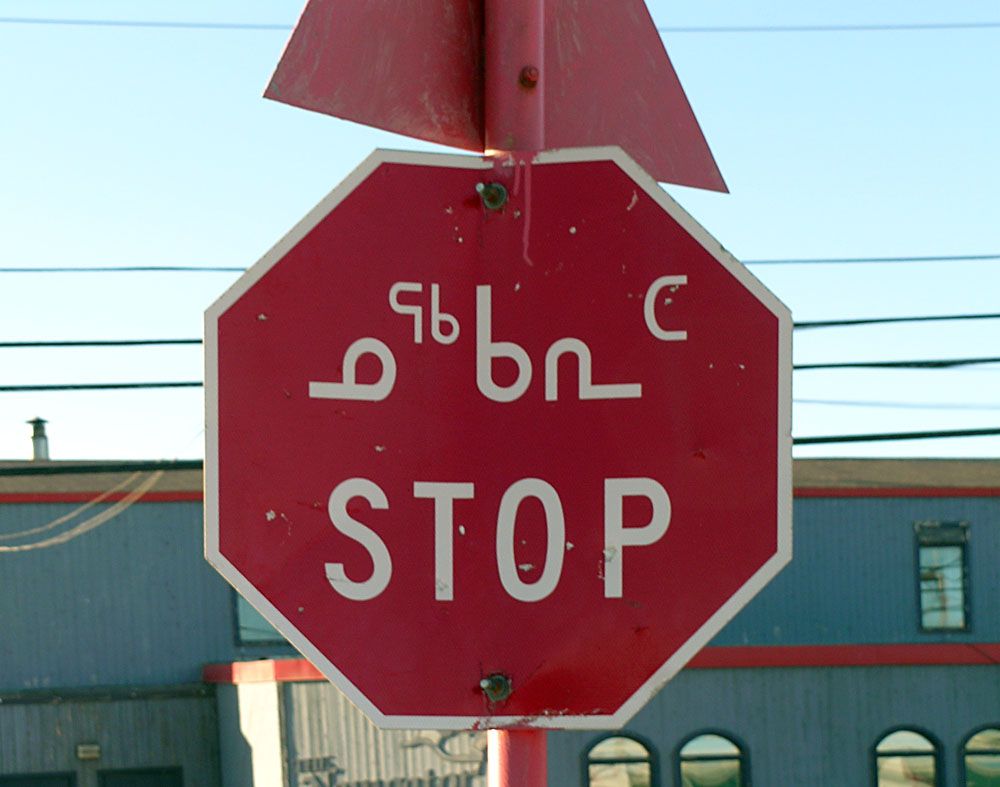
The history of writing systems for Inuit languages is deeply tied to missionary activity and colonial contact, resulting in a complex array of scripts. In Canada alone, multiple different writing systems are in use for a relatively small population. In northern Labrador, Moravian missionaries introduced the first written form of Inuktitut in Canada using a roman orthography as early as 1771. In other parts of the western Arctic, roman orthography was also used. In Nunavik and much of Nunavut, a syllabic script became dominant after Anglican missionary Edmund Peck adapted the Cree syllabary for Bible translation in the 1870s. Peck later introduced this system to Baffin Island in 1894, and it was spread further by Catholic and Anglican missionaries in the early 1900s. This syllabic system is strongly associated with church literacy and cultural identity, but the various adaptations led to inconsistencies. The proliferation of different orthographies has posed challenges for standardization and resource development. In response, Inuit Tapiriit Kanatami has promoted Inuktut Qaliujaaqpait, a unified roman orthography designed to represent sounds across all dialects, to facilitate communication and learning across Inuit Nunangat.
Revitalization and Contemporary Status
While Inuktitut is notably not classified as critically endangered compared to other Indigenous languages in Canada, all Inuit language variants face pressures from dominant languages like English, French, and Danish. The 2021 Canadian census indicated a decline in the number of Indigenous people with an Indigenous mother tongue since 2016, largely due to population aging. However, there is a growing number of second language learners playing a major role in revival, with 66,880 Indigenous people having learned an Indigenous language as a second language, a 6 percent increase from 2016. Key initiatives are underway to reverse language shift and strengthen Inuit languages. The landmark Indigenous Languages Act, which received Royal Assent on June 21, 2019, provides a legislative framework for long term, sustainable funding to support Indigenous led language reclamation. Under this act, the Inuit Language Funding Model provides multi year funding to the four Inuit Land Claim Organizations to implement their own language priorities from 2023 to 2028 through five year work plans. National Indigenous Languages Day, celebrated on March 26, and other observances highlight the ongoing work to honour and revitalize these languages. Inuit Tapiriit Kanatami's 2024 to 2028 Strategic Plan includes objectives like developing an online library of educational resources and publishing a long term Inuktut Policy Strategy.
Cultural Significance and Vocabulary
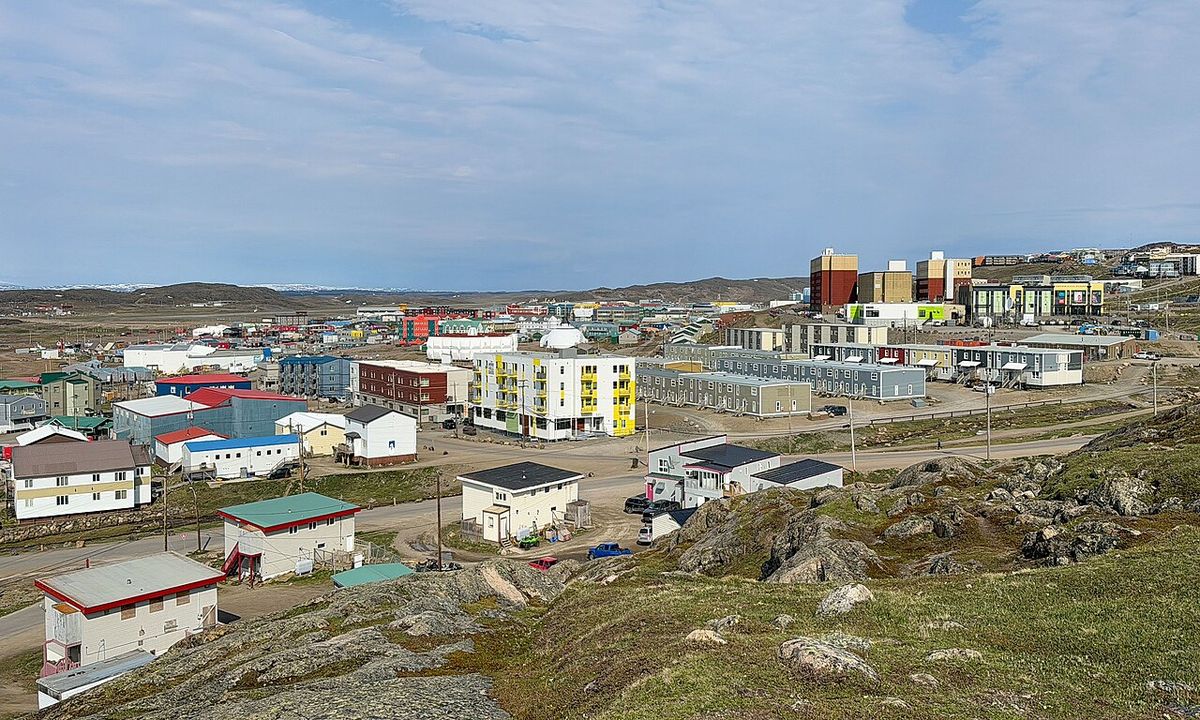
Inuit languages are deeply intertwined with the environment, culture, and worldview of Inuit. Place names and personal names are often descriptive and prosaic when translated. For instance, Iqaluit is the plural of iqaluk, meaning fish, Igloolik means place with houses, and Baffin Island is Qikiqtaaluk, translating approximately to big island. Personal names might reference animals like Nanuq, meaning polar bear, or Uqalik, meaning Arctic hare, objects like Qajaq, meaning kayak, or physical traits like Itigaituk, meaning has no feet. This practice reflects a traditional connection to the land and its beings, with the belief that using animal names allows a person to take on some of that animal's characteristics. A dark chapter in this history was the imposition of disc numbers by the Canadian government in the 1940s for administrative tracking, which supplanted traditional names. Inuit were given leather ID tags with a letter prefix indicating location and a number, a practice sometimes abetted by missionaries who viewed traditional names as linked to shamanism. The richness of Inuit vocabulary and toponymy is a direct reflection of intimate knowledge of the Arctic environment, making language preservation essential for maintaining cultural and ecological knowledge.
Demographic Trends and Speaker Communities
The 2021 Canadian census provides detailed data on the use of Inuit languages, revealing both challenges and signs of resilience. A total of 33,790 Inuit reported an Inuit language as their mother tongue, representing a significant portion of the 70,540 Inuit population. The data shows the importance of home and community transmission, as over two thirds of Indigenous language speakers were raised in homes where the language was spoken regularly. However, younger generations are less likely to have an Indigenous mother tongue than older ones, indicating intergenerational transmission is at risk. On a positive note, 66,880 Indigenous people had learned an Indigenous language as a second language, a 6 percent increase from 2016, and among these second language learners, 56 percent spoke it at home. The census identified silent speakers, individuals who understand their mother tongue but can no longer speak it well enough to conduct a conversation, who represent about 8 percent of those with an Indigenous mother tongue. Community settings, particularly in Inuit Nunangat, remain the strongest support for language use and learning. The history of colonial practices, including the residential school system detailed by the Truth and Reconciliation Commission, has had a deeply negative impact on language use, which current policies aim to repair.
| Region | Inuit Population | Language Speakers (approx.) | Key Dialect Names |
|---|---|---|---|
| Greenland | Approx. 55,000 | 50,000 | Kalaallisut, Tunumiisut, Inuktun |
| Canada | 70,540 | 33,790 (first language) | Inuktitut, Inuinnaqtun, Inuvialuktun, Inuttitut |
| Alaska (U.S.) | Over 13,000 | 3,000 (fluent speakers) | Iñupiatun, Qawiaraq, Malimiutun |
| Russia | Small historical presence | Historical presence in Chukotka |
Inuit in Canada speak Inuit Sign Language (IUR), and in Greenland they speak Greenlandic Sign Language, a dialect of Danish Sign Language. It is unknown if these two sign languages are related. It also remains unknown to what extent Inuit Sign Language is spoken across Inuit Nunangat. Inuit Sign Language is slowly being replaced by American Sign Language, but there are efforts to support the native sign language underway.
Questions about Inuit languages
What is the difference between Inuktitut and Inuktut?
Inuktitut is a specific term often used for the Inuit language variants spoken in eastern Canada, particularly Nunavut and Nunavik, and is an official language of Nunavut. Inuktut is a broader, collective term adopted by national Inuit organizations and the Government of Canada to refer to all Inuit language variants spoken across Inuit Nunangat in Canada. It encompasses Inuktitut, Inuinnaqtun, Inuvialuktun, and the dialects of Labrador. Many Inuit prefer the more specific name for their own regional language, but Inuktut is useful in national policy and discourse. The term is used by Statistics Canada and the Office of the Commissioner of Indigenous Languages throughout the Canadian census.
How many people speak an Inuit language?
Globally, there are approximately 100,000 speakers of Inuit languages. The largest group is in Greenland, with about 50,000 speakers of Kalaallisut. In Canada, the 2021 census recorded 33,790 Inuit who reported an Inuit language as their first language out of a total Inuit population of 70,540. In Alaska, roughly 3,000 of the over 13,000 Iñupiat are fluent speakers of Iñupiatun, with most fluent speakers over the age of 40. A smaller number of speakers, about 7,000, also live in Denmark. These figures represent a significant linguistic community, though many dialects have small numbers of speakers.
Are Inuit languages endangered?
The status varies by region. In Canada, Inuktitut is notably not classified as critically endangered, unlike most of the over 60 other Indigenous language dialects in the country which are considered critically endangered. However, all Inuit language variants face pressures from dominant languages, and speaker numbers are declining among younger generations in some areas. In Alaska, Iñupiatun is considered endangered, with as few as 3,000 of the over 13,000 Iñupiat able to speak it fluently. In Greenland, Kalaallisut remains strong as the official language, supported by a long literary tradition. Significant revitalization efforts are underway across Inuit Nunangat to maintain and strengthen these languages for future generations.
What writing systems are used for Inuit languages?
There are multiple different writing systems in use for Inuit languages in Canada, a legacy of different missionary groups. The two main types are syllabics and roman orthography. Syllabics, adapted from Cree script by missionaries like Edmund Peck, are used predominantly in Nunavut and Nunavik. Roman orthography is used in Labrador, the western Arctic, and in Greenland, where it is the standard. The historical inconsistencies between these systems still exist today. To address the challenges of multiple scripts, Inuit Tapiriit Kanatami has developed Inuktut Qaliujaaqpait, a unified roman orthography intended to represent all dialect sounds consistently and support cross dialect communication.
What is being done to revitalize Inuit languages in Canada?
Revitalization is driven by Inuit led initiatives supported by new legislation and funding models. The Indigenous Languages Act of 2019 provides a framework for long term, sustainable funding to enable the exercise of Indigenous language rights. The Inuit Language Funding Model allocates multi year resources to the four Inuit Land Claim Organizations to implement their own language plans from 2023 to 2028. Organizations like Inuit Tapiriit Kanatami work on national strategies, including developing an online library of educational resources and a long term Inuktut Policy Strategy. Efforts also focus on promoting language use in homes, communities, and media to ensure intergenerational transmission and increase the number of second language learners.
What are some common words in Inuktitut?
Common words often reflect the Arctic environment and traditional life. Iqaluit means fish and is the name of Nunavut's capital. Nanuq is the word for polar bear, and qajaq is the origin of the English word kayak. Other common terms include anaana, meaning mother, ataatak for father, and illu for house. Place names are similarly descriptive. For example, Igloolik means place with houses and Inuvik means place of people. Inuit also use names like Ujarak for rock and Nuvuk for headland. The language's vocabulary offers direct insight into Inuit relationships with the land, sea, animals, and family structures, with names often chosen to honour deceased relatives or characters from traditional tales.
Sources and further reading
- Inuit languages (Wikipedia)
- Indigenous Languages Day: An opportunity to honour the ... (statcan.gc.ca)
- Inuktut Language Initiatives (itk.ca)
- Inuktut writing systems (indigenouspeoplesatlasofcanada.ca)
Checked by the Nosy Mag desk. Last updated 2026-10-22.