History of the Northwest Territories
The history of the Northwest Territories spans millennia, from the first Indigenous inhabitants to its current status as a vast Canadian territory. This history includes ancient Indigenous cultures, European exploration and the fur trade, its evolution within Canadian Confederation, and its ongoing journey of self-determination. The territory's story is marked by dramatic boundary changes, the signing of major treaties, and the 1999 creation of Nunavut.
Indigenous Presence and Early European Contact
For thousands of years before European arrival, the lands that constitute the Northwest Territories were inhabited by diverse Indigenous peoples. The Dene nations, including the Chipewyan, Tłį̄chǫ (Dogrib), Yellowknives, Slavey, and others, lived in the boreal forest regions for millennia. Approximately 1,000 years ago, the ancestors of the Inuvialuit arrived in the Mackenzie Delta and along the Arctic coast. The first recorded European visits came in the 1570s with the expeditions of Martin Frobisher. Subsequent explorers like Henry Hudson, who landed on the western shore of the bay bearing his name in 1610, and others such as William Baffin, Thomas James, Luke Foxe, John Davis, Robert Bylot, Thomas Button, and George Weymouth sought the Northwest Passage, gradually mapping the coastline and opening the continental interior. These early contacts were primarily for exploration, with sustained economic engagement beginning with the fur trade in the following century.
The Fur Trade Era and Inland Exploration
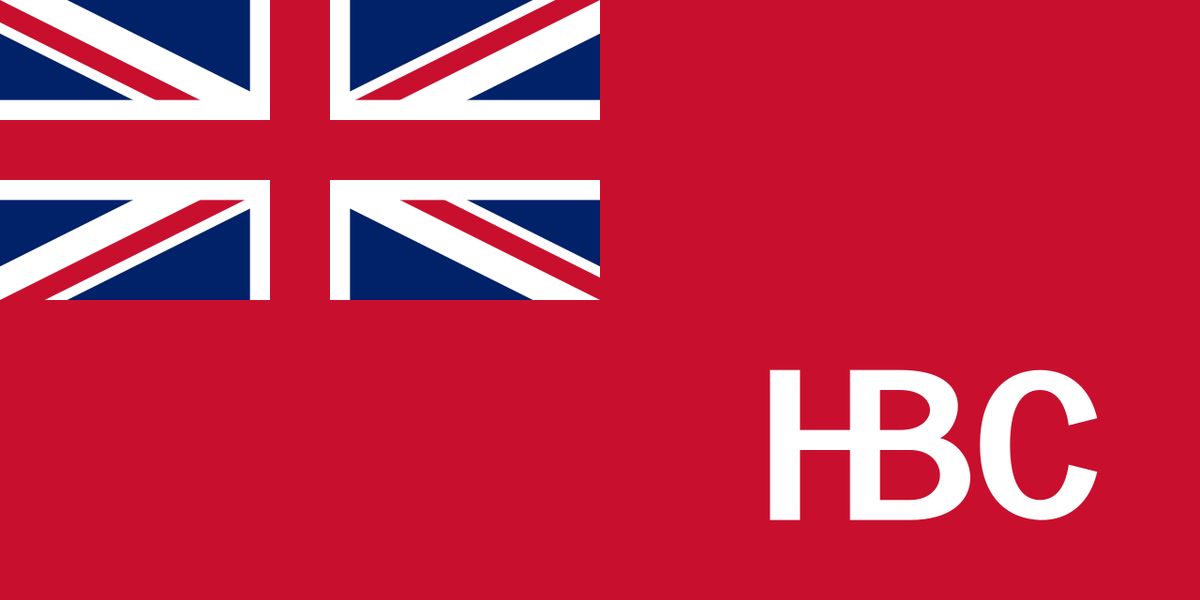
The 17th and 18th centuries were dominated by the commercial fur trade, which reshaped the region's economy and social structures. The Hudson's Bay Company (HBC) was chartered in 1670 by King Charles II with a monopoly over the Hudson Bay watershed, known as Rupert's Land. By the 1700s, it faced competition from the Montreal-based North West Company, which travelled throughout the territory to obtain furs. Explorer Peter Pond pioneered the route through the Methye Portage into the river systems flowing north. Samuel Hearne, travelling with Chipewyan guides, became the first European to reach the Arctic Ocean overland via the Coppermine River in 1771. In 1789, Alexander Mackenzie followed the river now named for him to the Arctic Ocean. The HBC headquarters at York Factory became a central hub, relying on Indigenous middlemen like the Chipewyan to bring furs from western tribes. The introduction of firearms through trade altered inter-Indigenous power dynamics, with groups like the Cree, Chipewyan, Beaver and Yellowknives gaining a military advantage over their Athapaskan neighbours, including the Slavey, Sekani, and Dogrib peoples. In the early 1800s, the North West Company established a post at Tulita (Fort Norman). In 1821, the North West Company and the Hudson's Bay Company merged under the HBC name, led by Sir George Simpson for forty years.
Confederation and Territorial Formation
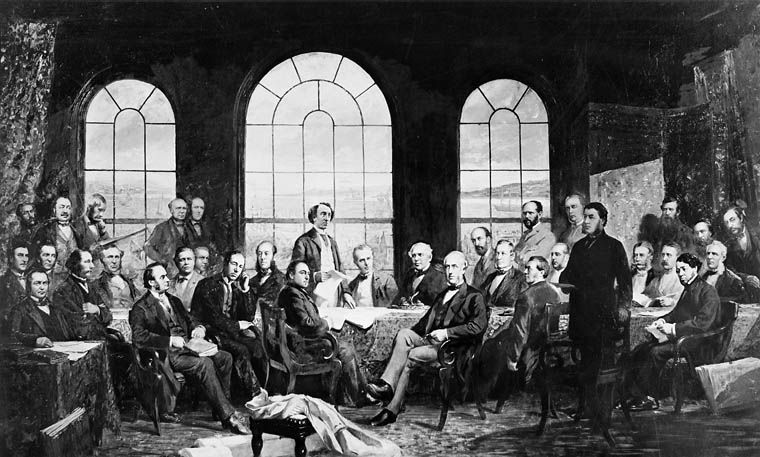
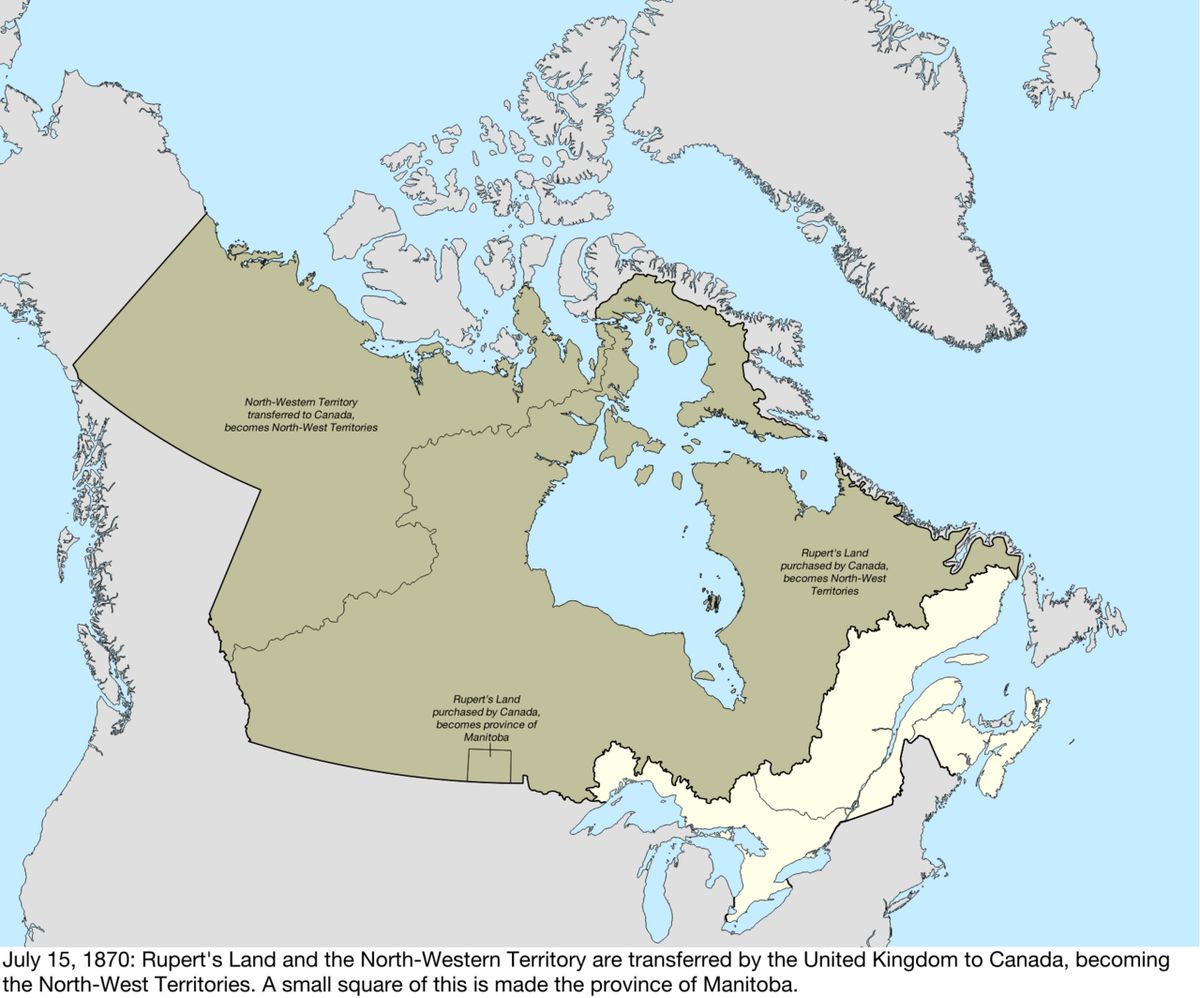
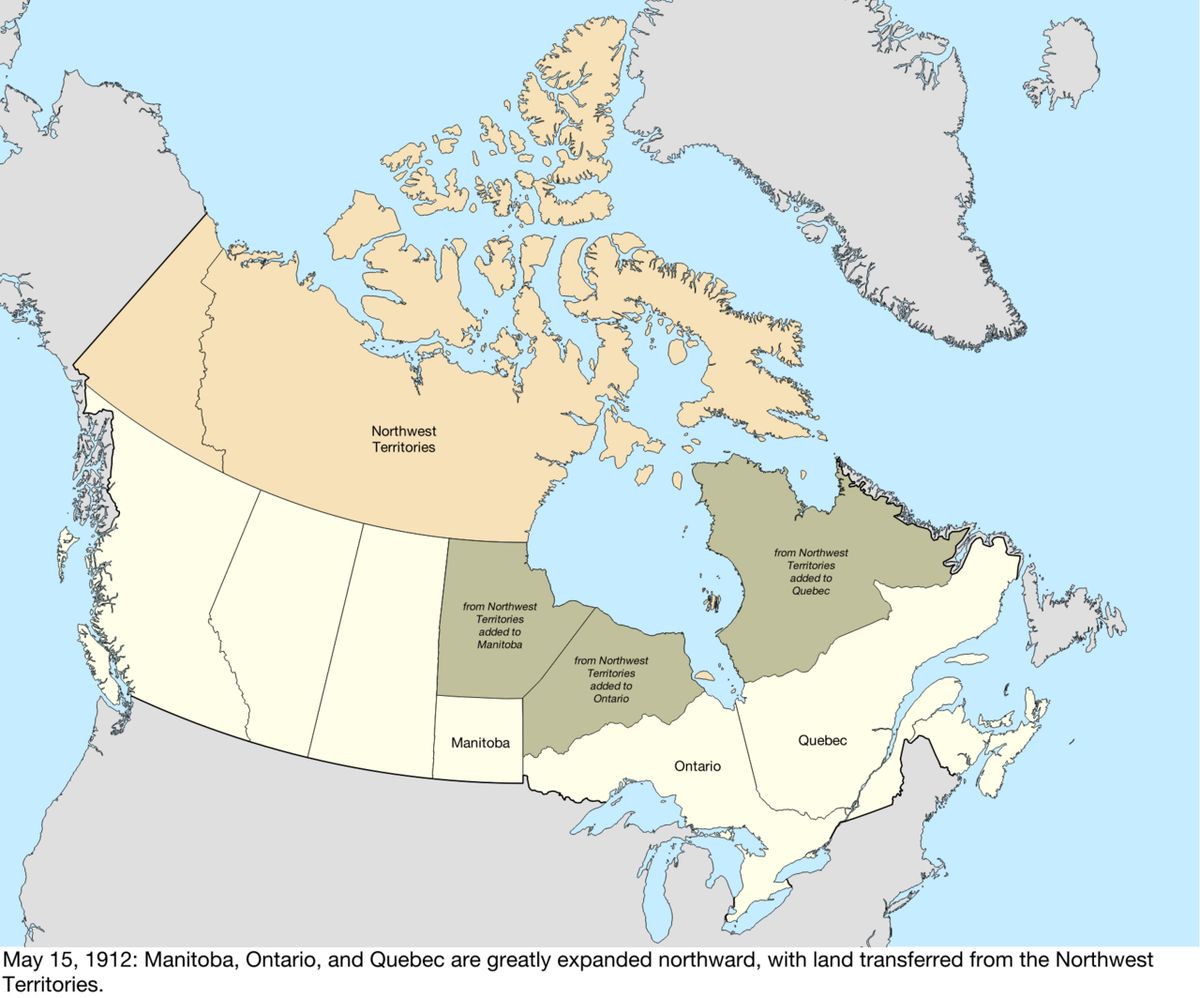
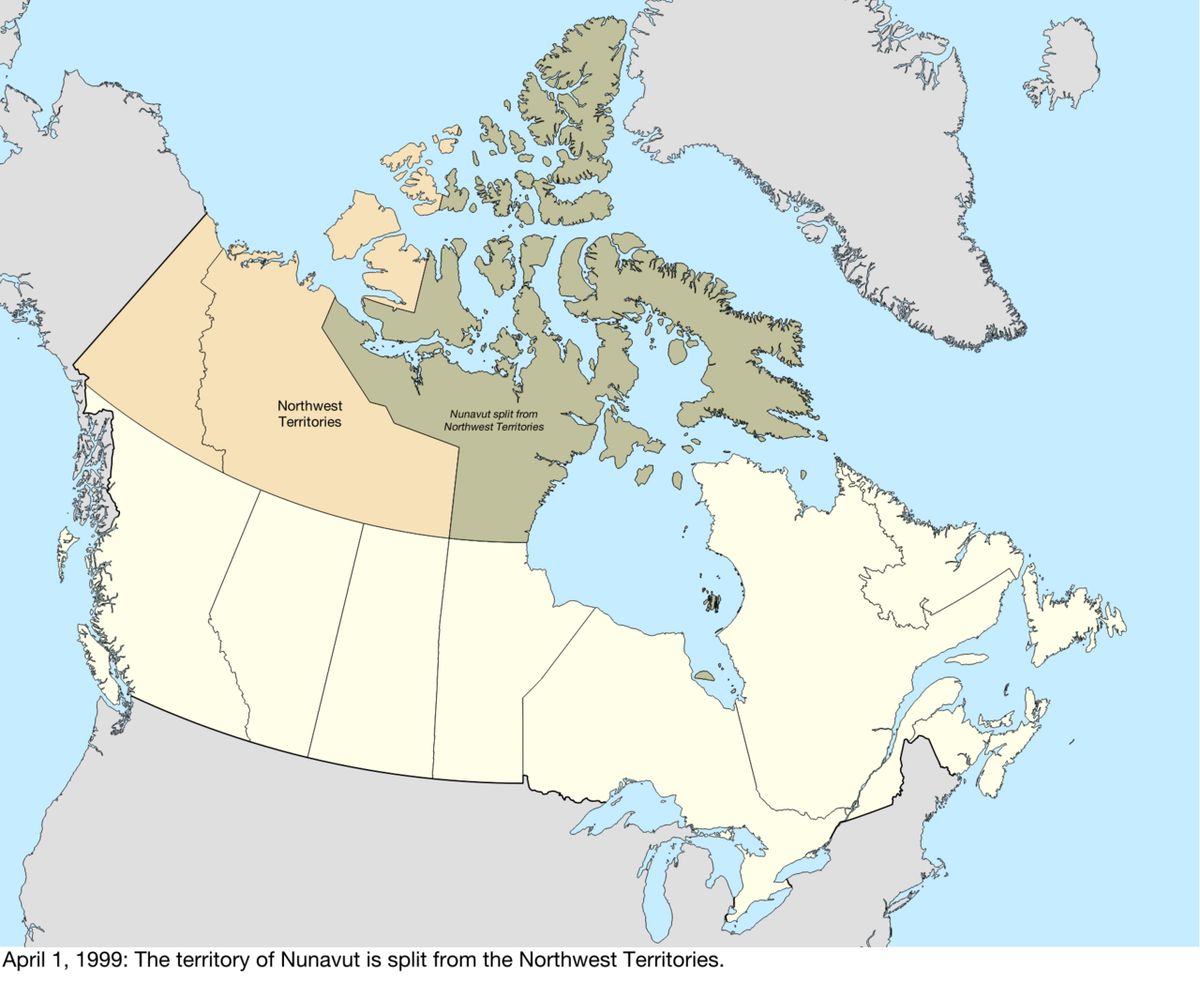
A major transformation occurred in the late 19th century with the transfer of Rupert's Land and the North-Western Territory from the Hudson's Bay Company to the Canadian government, enacted on 23 June 1870. After the resolution of the Red River Rebellion, most of this vast area was admitted into Confederation on 15 July 1870 as the North-West Territories, with the Red River Colony becoming the province of Manitoba. The territory reached its maximum size in 1880 when the British Arctic Territories were transferred from the United Kingdom to Canada and incorporated. The first territorial government, the Temporary North-West Council, was appointed in 1872 and sat inside the territories at Fort Livingstone in 1876, later moving to Battleford in 1878. The first territorial election took place in 1881. French was abolished as an official language in 1892. The late 1800s and early 1900s saw a series of major boundary reductions that carved out new political entities from the territory. These changes drastically reduced the population and land area, and in 1906 the official name lost its hyphen, becoming the Northwest Territories. The territorial government reverted to federal control from Ottawa after 1905, returning to its 1870 constitutional status following the creation of Alberta and Saskatchewan. The territory reached its largest size in 1880 after the British Arctic Territories were transferred to Canada and incorporated into the North-West Territories. Its size was reduced several times during the late 19th and early 20th centuries. Major adjustments included severing its western portions to form the Yukon Territory in 1898. Further reductions occurred when its south-western portions were severed to form the provinces of Alberta and Saskatchewan in 1905. In 1912, its remaining lands south of the 60th parallel north and the District of Ungava were transferred to the provinces of Manitoba, Ontario, and Quebec. The final major reduction was the separation of the eastern portions to form the territory of Nunavut in 1999.
- 1898: The Yukon Territory was created from the western portion following the Klondike Gold Rush.
- 1905: The provinces of Alberta and Saskatchewan were formed from the southwestern territories, reducing the population from approximately 160,000 to 17,000.
- 1912: Lands south of the 60th parallel and the District of Ungava were transferred to Manitoba, Ontario, and Quebec, further shrinking its area.
Treaty Making and Resource Development
The Canadian government entered into two major numbered treaties covering large portions of the territory to facilitate non-Indigenous settlement and resource extraction. Treaty No. 8, negotiated beginning in June 1899 and signed in 1900, covered 840,000 square kilometres and was the largest land settlement made by the government at that time. It was signed at Fort Resolution by Dene groups including the Yellowknives and Tłį̄chǫ under chief Drygeese with headmen Benaiyah and Sek'eglinan. Following oil discoveries in the Mackenzie Valley twenty years later, Treaty No. 11 was signed in the summer of 1921, with Tłı̨chǫ trading chief Monfwi being a key signatory. These treaties, intended to allow for miners and development in return for medical and educational assistance and treaty payments, have been sources of ongoing debate as many Dene felt Treaty No. 8 was not honoured. In 1925, based on the sector principle, Canada extended its maritime boundaries northward to the North Pole, increasing the size of the Northwest Territories to about 3.3 million square kilometres. The early 20th century also saw significant resource discoveries that spurred settlement. Gold prospecting in the Yellowknife district in 1935, where surveyors located nearly 3,000 square miles of promising territory, led directly to the founding of the town. In 1930, prospector Gilbert LaBine discovered pitchblende, the chief source of uranium and radium, at Great Bear Lake, which later supplied ore for the Manhattan Project during World War II from the Eldorado Mine at Port Radium.
The Modern Territorial Era and Path to Division
The mid-20th century brought deep administrative changes as the federal government began devolving responsibilities to the territory. Elections returned in 1951, with councils being a mix of elected and appointed members. The territory adopted its current flag, designed by Robert Bessant and chosen from a Canada-wide contest, in 1969 and introduced the polar bear license plate in 1970. The government became a fully elected body again in 1975. A major constitutional development began with a 1982 plebiscite where a majority voted in favour of dividing the territory. This led to lengthy land claim negotiations with the Inuit Tapirisat of Canada, which had begun in 1976, culminating in an agreement in September 1992. The Nunavut Land Claims Agreement Act and the Nunavut Act were passed by the Canadian Parliament in June 1993. The new territory of Nunavut was officially established on 1 April 1999, separating the eastern Arctic from the Northwest Territories. In 1984, the Canadian Government devolved the responsibility for geographical naming to the territorial government, a power previously held only by provinces.
Contemporary Northwest Territories and Demographics
Today, the Northwest Territories is a culturally diverse jurisdiction with a population of approximately 45,500 people as of the 2025 census. About half the population is Indigenous, comprising Dene, Inuvialuit, and Métis peoples, while the other half have come from elsewhere in Canada and the world. The territory officially recognizes eleven languages: Chipewyan, Cree, Tłį̄chǫ, Gwich’in, North Slavey, South Slavey, Inuktitut, Inuvialuktun, Inuinnaqtun, English and French. Yellowknife, with a population of around 24,000, remains the capital and central hub. The territory continues to face modern crises, including the devastating 2023 wildfire season that forced the evacuation of about 70% of the territory's population, including 87% of Yellowknife residents as fires approached within 15 kilometres. The government focuses on sustainable development, Indigenous rights, and the unique needs of northern communities.
Detailed Indigenous Composition and Community Origins
The contemporary Northwest Territories is defined by its diverse cultural makeup and linguistic heritage, with each Indigenous group having specific historical territories and community foundations. The Dene, making up about 30 percent of the territorial population, are further divided into several groups with deep connections to specific regions. The territory's official recognition of eleven languages is a direct reflection of this diversity. Many of the NWT’s communities have origins as fur trade posts, transportation hubs, or resource extraction centres. Communities like Fort Resolution and Fort Simpson began as trading posts, while Fort Smith, Hay River and Enterprise developed as transportation hubs. Norman Wells was founded on oil and Yellowknife on gold mining, with the city established in 1934 on the traditional territory of the Yellowknives Dene First Nation. Inuvik was established to provide modern services, and communities like Colville Lake and Wekweètì were founded by First Nations people seeking a return to traditional life. Prior to European colonization, the lands were inhabited for millennia by several First Nations. Native Inuit groups included the Mackenzie, Copper, Caribou, and Central nations. When Europeans first arrived, First Nations in the area included the Yellowknives, Chipewyan, Sekani, Beaver, Nahanni, Dogrib, and Slavey.
- Chipewyan: Around Łutsel Kʼ e on Great Slave Lake's East Arm.
- Tłį̄chǫ: In the North Slave region near BehchokǬ̀ and Whatì.
- Yellowknives Dene First Nation: North and northeast of Great Slave Lake, including N’dilo and Dettah.
- Slavey: North Slavey in the Dehcho Region and South Slavey around the southwest of Great Slave Lake.
- Sahtu Dene: In communities around Great Bear Lake like Fort Good Hope, Colville Lake, Norman Wells, Tulít'a, and Délƣ̨nę.
- Inuvialuit: Comprising about 11 percent of the population, in the Mackenzie Delta and Arctic coast.
- Métis: About nine percent, concentrated south of Great Slave Lake.
Significant 20th Century Events, Infrastructure and Governance
The 20th century was a period of rapid modernization, federal involvement, and evolving governance in the north. During the Second World War, the region played a strategic role. The Eldorado Mine at Port Radium supplied uranium ore for the Manhattan Project, shipped to Port Hope, Ontario for processing. Between 1942 and 1946, the construction of the Alaska Highway and the Canol pipeline brought 40,000 American military and civilian personnel to the region, accelerating infrastructure development. The Cold War prompted the controversial High Arctic relocation of Inuit families by the Canadian government in 1953 to 1955 to establish sovereignty. In terms of governance, women in the Northwest Territories won the right to vote and stand for office in 1951, the same year elections returned with a mix of elected and appointed members. The first municipal government in the territories was inaugurated in Yellowknife in 1953. In 1967, the Minister of Indian Affairs and Northern Development, Arthur Laing, announced Yellowknife as the capital, and the government relocated from Ottawa on 18 September 1967, with Commissioner Stuart Milton Hodgson and eighty-one employees arriving.
Historical Expeditions and Cultural Legacy
The history of the Northwest Territories is deeply intertwined with famous expeditions of exploration and the enduring cultural legacy of its inhabitants. John Franklin led three Arctic expeditions through the region. His first Coppermine expedition from 1819 to 1822 included George Back and John Richardson and aimed to map the northern coast. Franklin's second expedition in 1825 wintered at Fort Franklin (now Deline) on Great Bear Lake before travelling to the mouth of the Mackenzie River. His fateful third expedition in 1845 vanished, leading to massive searches that mapped much of the Arctic coastline. His ships were finally found in 2014 and 2016. George Back, a naval officer and artist, served under Franklin and was responsible for surveying and chart making on these journeys, later being promoted to commander. The cultural legacy is preserved in many forms. The Prince of Wales Northern Heritage Centre and NWT Archives hold extensive collections. The territory also commemorates its history through place names, with 116 geographical features bearing names related to World War II alone.
Questions about History of the Northwest Territories
Why was Nunavut created from the Northwest Territories?
Nunavut was created following a long process of land claim negotiations and a public vote. In April 1982, a majority of residents voted in favour of dividing the territory. The Inuit Tapirisat of Canada had been negotiating a comprehensive land claim since 1976. An agreement was reached in September 1992, and the Nunavut Land Claims Agreement Act and the Nunavut Act were passed by the Canadian Parliament in June 1993. The new territory of Nunavut officially came into being on 1 April 1999.
What is the capital of the Northwest Territories and when did it move there?
The capital of the Northwest Territories is Yellowknife. The territorial government was relocated from Ottawa to Yellowknife on 18 September 1967, as announced by the Minister of Indian Affairs and Northern Development, Arthur Laing. Commissioner Stuart Milton Hodgson and eighty-one government employees arrived that day. Yellowknife was chosen due to its growth as a centre following the 1930s gold rush.
What are the main Indigenous groups in the Northwest Territories?
The main Indigenous groups are the Dene, the Inuit (specifically the Inuvialuit in the western Arctic), and the Métis. The Dene comprise several distinct nations, including the Chipewyan, Tłį̄chǫ (Dogrib), Yellowknives, Slavey (North and South), and Sahtu Dene. Indigenous peoples make up approximately half of the territory's population. The Inuvialuit represent about 11 percent, the Métis about nine percent, and the various Dene groups together constitute about 30 percent.
What was the impact of the 2023 wildfires on the Northwest Territories?
The 2023 wildfire season was catastrophic for the Northwest Territories, with approximately 230 wildfires burning across the territory. The fires caused massive disruption, forcing the evacuation of an estimated 70 percent of the total population. This included 87 percent of the residents of the capital, Yellowknife, as fires approached within 15 kilometres of the city. Premier Caroline Cochrane was among those evacuated.
How many official languages does the Northwest Territories have?
The Northwest Territories officially recognizes eleven languages. These are Chipewyan, Cree, Tłį̄chǫ, Gwich’in, North Slavey, South Slavey, Inuktitut, Inuvialuktun, Inuinnaqtun, English, and French. This official multilingualism reflects the territory's diverse cultural heritage and commitment to preserving Indigenous languages.
When did the Northwest Territories become part of Canada?
The lands that formed the original Northwest Territories became part of Canada on 23 June 1870. This occurred when the United Kingdom transferred ownership of Rupert's Land and the North-Western Territory from the Hudson's Bay Company to the Canadian government. These lands were formally admitted into Canadian Confederation on 15 July 1870 as the North-West Territories, after the Red River Rebellion was resolved.
Sources and further reading
- History of the Northwest Territories (Wikipedia)
- Northwest Territories (thecanadianencyclopedia.ca)
- People & History (spectacularnwt.com)
- Online Resources (pwnhc.ca)
- About Yellowknife (yellowknife.ca)
Checked by the Nosy Mag desk. Last updated 2026-10-23.