History of Montreal
Montreal, Quebec, is a major Canadian metropolis with a history spanning thousands of years. Founded as the French missionary settlement of Ville-Marie in 1642, its strategic location at the confluence of the St. Lawrence and Ottawa Rivers made it a central hub for the North American fur trade. The city's development was shaped by French colonial rule, British conquest in 1760, and its subsequent emergence as the industrial and financial capital of Canada. Key 20th-century events, including Expo 67 and the 1976 Summer Olympics, established its international status, while ongoing social and political dynamics continue to define its unique Franco-Canadian character.
Indigenous History and First Contact
The area now known as Montreal has been inhabited by Indigenous peoples for approximately 8,000 years. The oldest artifact found within the city's current boundaries is about 4,000 years old. By the 14th century, the St. Lawrence Iroquoians, a distinct group speaking a language now called Laurentian, had established fortified agricultural villages along the river. Their village of Hochelaga, situated on the Island of Montreal, was home to over a thousand people when French explorer Jacques Cartier first arrived on October 2, 1535. Cartier recorded observations of the village and its cultivated fields, and he documented about 200 words of the inhabitants' language. The St. Lawrence Iroquoians disappeared from the valley by about 1580, for reasons that remain debated by historians, with theories ranging from migration and conflict to the impacts of European diseases introduced by earlier contacts. When Samuel de Champlain visited the site seventy years after Cartier, in the early 17th century, the village of Hochelaga was gone and the valley appeared uninhabited. This prevented permanent European settlement for several more decades. The Mohawk had moved into the region from present-day New York to control key hunting areas and trade routes, which they were determined to protect from French encroachment.
Founding and Early Development of Ville-Marie
Permanent French settlement began with the founding of Ville-Marie on May 17, 1642. The project was initiated by the Roman Catholic Société Notre-Dame de Montréal, with the goals of creating a missionary colony dedicated to the Virgin Mary and converting Indigenous peoples. The founding party was led by Paul Chomedey de Maisonneuve, who became the colony's governor, and Jeanne Mance, a nurse who would establish North America's first hospital north of Mexico. They arrived with a small group of settlers, building a fort at a location near the former Hochelaga. The early years were perilous, marked by frequent attacks from the Iroquois, particularly the Mohawk. By 1651, the population had dwindled to less than 50, prompting Maisonneuve to return to France to recruit reinforcements for the struggling settlement.
Maisonneuve recruited 100 new settlers, whose arrival in November 1653 ensured the colony's survival against the Iroquois threats. Key institutions were quickly established, reinforcing the settlement's religious and social foundations. In 1644, Jeanne Mance founded the Hôtel-Dieu hospital. In 1653, Marguerite Bourgeoys arrived and founded Montreal's first school, as well as the Congrégation de Notre-Dame, a teaching order. The first land concession was granted to Pierre Gadois in 1648, and the first water well was dug by settler Jacques Archambault in 1658. In 1663, the Sulpician seminary became the new seigneur, or landlord, of the entire island, taking over from the original society and administering local justice for the growing community.
Fur Trade and the Great Peace of Montreal
Montreal's geographic position made it a natural hub for the fur trade. Located at the head of navigation on the St. Lawrence River, just below the Lachine Rapids, it became the key transshipment point where goods from Europe were exchanged for furs from the continental interior. The town's economy was dominated by this trade, which involved French merchants, coureurs des bois, and Indigenous trappers and middlemen. An annual summer fur fair was held in Montreal, attracting hundreds of members of various First Nations who came to trade directly with colonists. The fair began to dwindle after 1680 as the trade became more organized through licensed voyageurs. The fur trade existed within a context of persistent conflict, known as the French and Iroquois Wars, which threatened the colony's existence and limited economic activity for extended periods.
A major diplomatic breakthrough occurred in 1701 with the signing of the Great Peace of Montreal. The agreement ended decades of warfare, reopened large-scale commerce, and established a framework for future relations. The peace allowed the settlements on and around the Island of Montreal to develop without the constant fear of Iroquois raids, securing the colony's economic future. This unique diplomatic treaty, with signatures representing clan or personal totems, is still observed by several First Nations today as a foundational agreement.
Population and Society in New France
The population of the Island of Montreal during the French regime included both French colonists and Indigenous peoples. The first colonial census in 1666 recorded a French population of 659, alongside an estimated Indigenous population of 1,000 living on or near the island. Migration from France was initially slow and precarious due to the threat of Iroquois attacks. Between 1642 and 1714, approximately 1,200 to 1,500 French migrants settled on the island, with about 75 percent remaining permanently. These migrants came from diverse backgrounds and regions of France. By 1716, the French population had grown to 4,409 people while the native population was 1,177.
- Indentured servants (engagés) constituted about half of the male migrants in the early decades.
- Soldiers made up roughly one-fifth of all migrants, with many becoming notable early residents.
- Single women, often coming to find husbands, represented a significant portion of female migrants and became permanent settlers.
- Merchants were a relatively small group, as Quebec City remained the primary commercial centre.
Demographics shifted dramatically over the 17th century. By 1681, 66 percent of Montreal's French population was native-born, compared to 56 percent newcomers in 1666. The male-to-female sex ratio became more balanced, moving from 163:100 in 1666 to 133:100 in 1681. The population grew at a rate of about 2.5 percent per annum through the early 18th century. Indigenous presence in the settlement itself included residents of mission communities like Kahnawake and Lac-des-deux-Montagnes, as well as a small number of enslaved Indigenous individuals, with about 50 recorded on the island in 1716.
Economy and Administration Under French Rule
Montreal's economy was fundamentally oriented around the fur trade, but the colony also developed a degree of self-sufficiency. While dependent on France for finished goods like fabric, iron tools, and weapons, local production gradually emerged. By 1720, colonial blacksmiths could supply all necessary iron tools, reducing reliance on imports. The local seigneurs organized wool production from their flocks to offset fabric imports, though most peasant production was for household use only. Guns, shot, and powder represented about 15 percent of imports, requiring local blacksmiths for repairs and maintenance. The colony's administrative structure placed Montreal as one of three districts of New France, alongside Quebec and Trois-Rivières, each with its own local officials.
Montreal had a local governor representing the governor general and a commissaire de la marine who acted for the intendant. Before a royal jurisdiction court was established in 1693, the Sulpician seminary administered local justice. From 1647 to the 1670s, the district elected syndics, representatives who could voice residents' concerns to the colonial council, though with limited power. This office was eliminated over fears of political factionalism. Merchants, due to their economic importance, were permitted to form chambers of commerce called bourses to discuss issues and appoint representatives to meet with officials, providing a formal channel for commercial interests.
The British Conquest and Its Aftermath
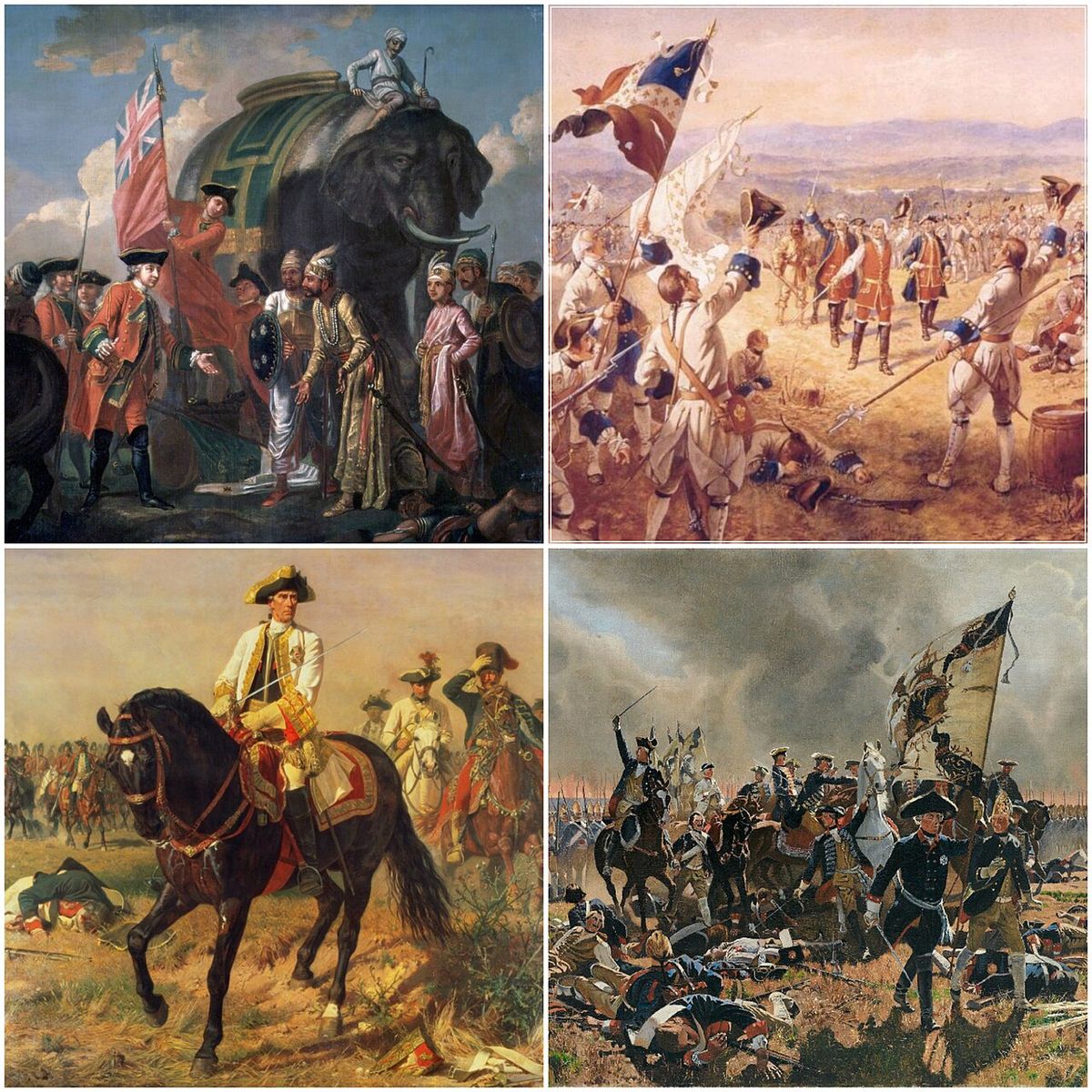
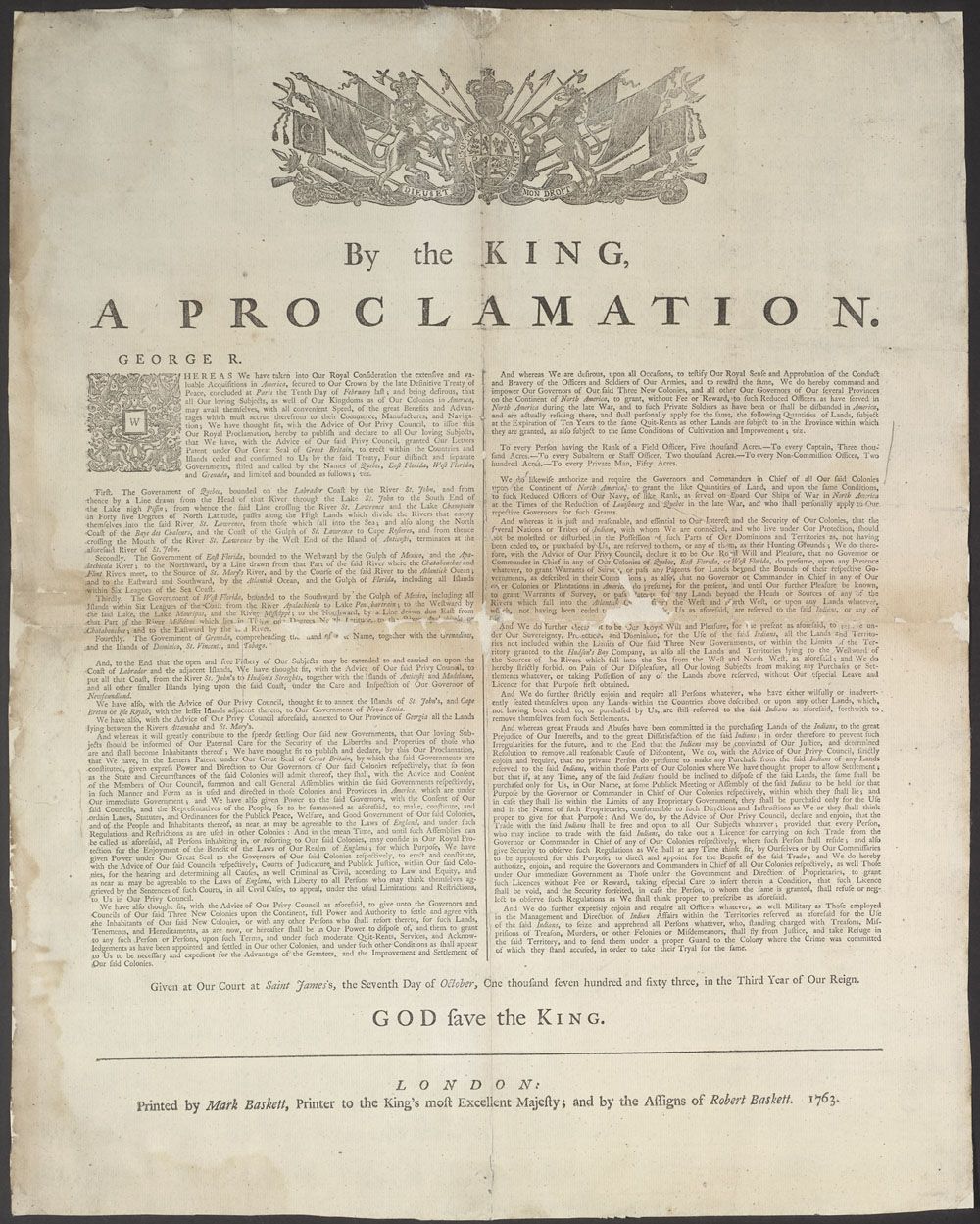
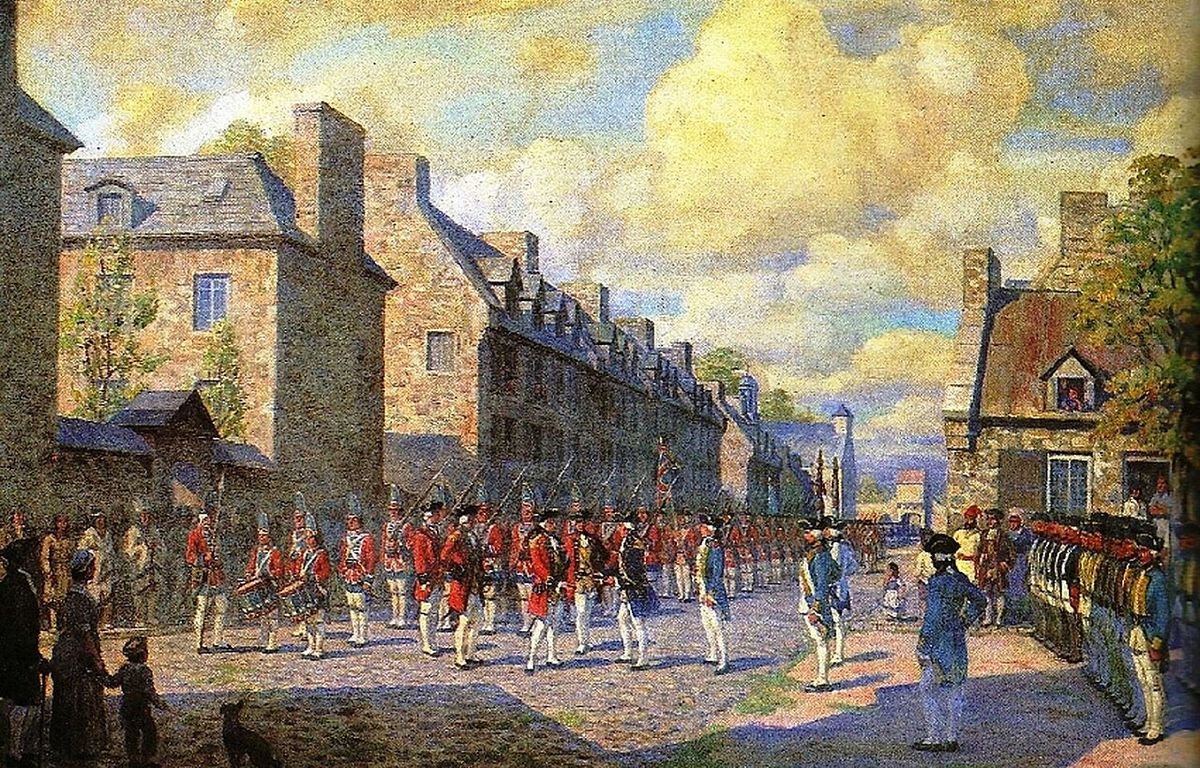
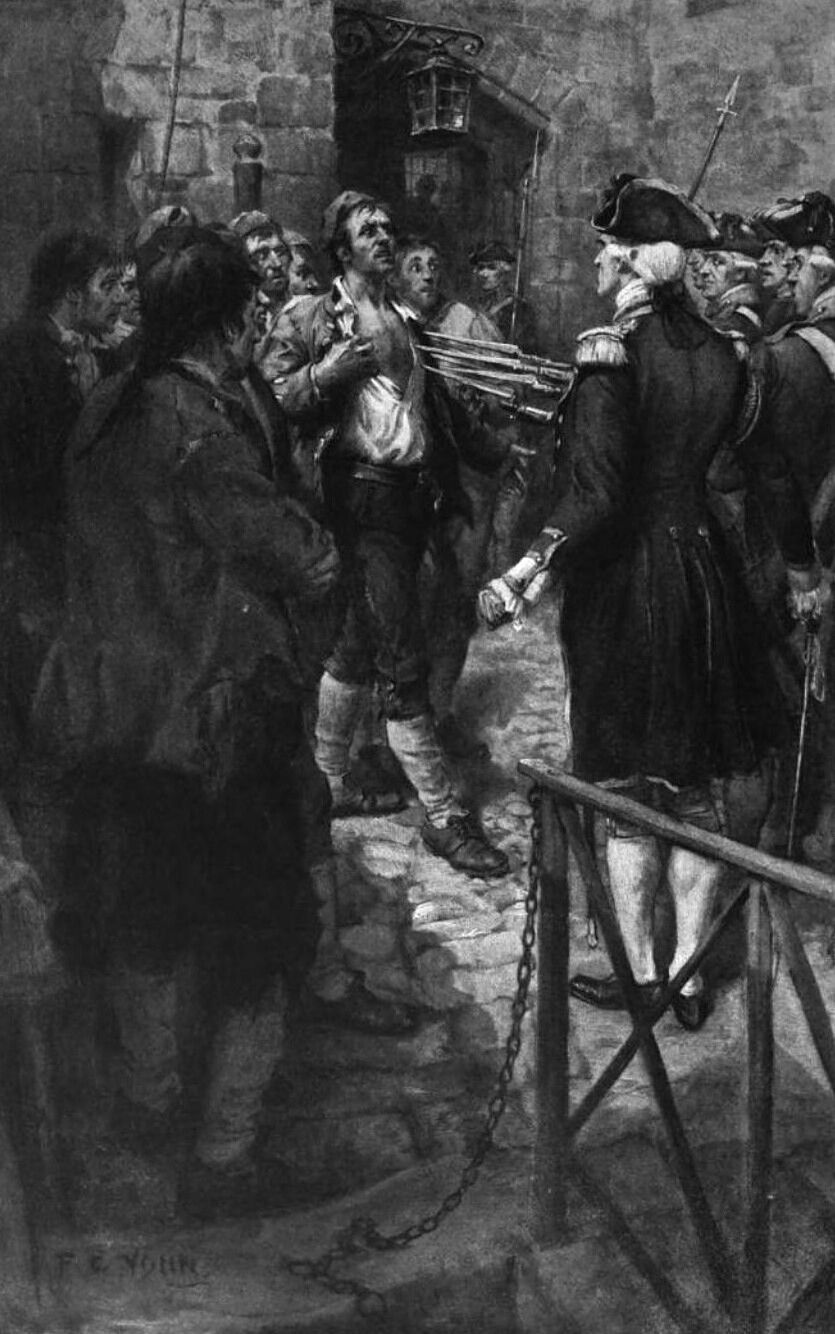
The French regime in Montreal ended with the British conquest in 1760. Faced with overwhelming force, the French governor, the Marquis de Vaudreuil, surrendered the city on September 8, 1760. The terms of capitulation were significant for shaping the future character of Quebec. They guaranteed French colonists the right to maintain their property, practice the Roman Catholic faith, and be governed in civil matters by the Custom of Paris. These conditions facilitated a period of British military rule, which lasted until the Royal Proclamation of 1763 formally made the territory the Province of Quebec.
The conquest did not immediately alter Montreal's economic role. The fur trade remained central, and the city entered a golden era with the rise of the locally owned North West Company, which challenged the Hudson's Bay Company's dominance. British and Scottish merchants began to arrive, gradually taking control of business and finance and creating a powerful Anglophone commercial elite. This period set the stage for the complex linguistic and cultural duality that would define Montreal in the centuries to come. The city's growth was spurred by this continued commercial activity and new British immigration, which expanded the city's population and economic reach.
19th Century Growth and Industrialization
Montreal was incorporated as a city in 1832. The city's growth was spurred by the opening of the Lachine Canal. Montreal served as the capital of the United Province of Canada from 1844 to 1849, a period ended when rioters protesting the Rebellion Losses Bill burned the Parliament building. By 1860, Montreal had become the largest city in British North America and the undisputed economic and cultural centre of Canada. The city's physical and demographic landscape changed rapidly during this era of expansion and industrial development.
A series of annexations of neighbouring towns between 1883 and 1918 expanded its territory and altered its linguistic makeup, eventually restoring a Francophone majority. The construction of railways, the expansion of the port, and the continued growth of finance and manufacturing solidified its metropolitan status. This era established the patterns of Anglophone economic dominance and a predominantly Francophone populace that would fuel social and political tensions in the 20th century. The city's golden era of fur trading continued with companies like the North West Company operating from Montreal, though the economy was becoming increasingly diversified.
20th Century Metropolis and Modern Challenges
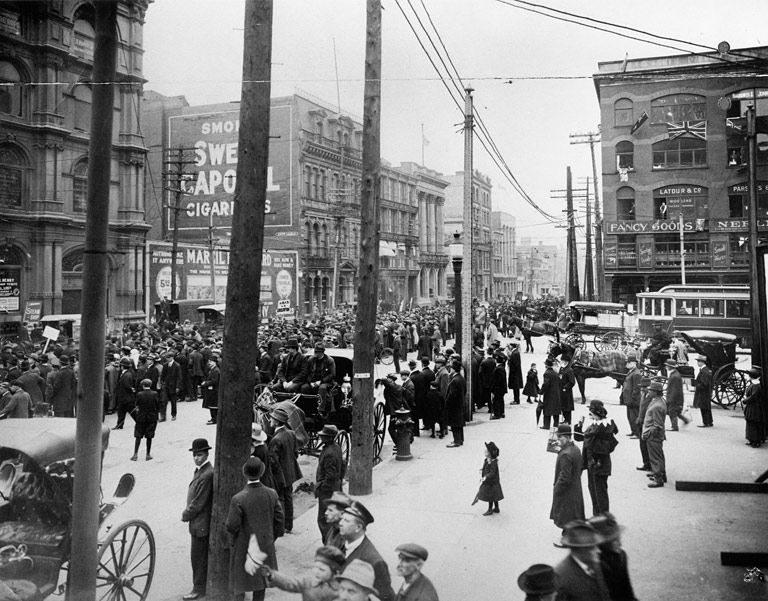
The 20th century saw Montreal consolidate its position as a major North American city while experiencing deep social change. Its population surpassed one million in the early 1950s. The city's international prestige was established by hosting Expo 67, a world's fair considered a landmark success, and the 1976 Summer Olympics, though the latter left a significant financial debt. The nationalist movement, which included events like the October Crisis of 1970, led to a significant exodus of Anglophone residents and the relocation of corporate headquarters from Montreal to Toronto. The city's major league baseball team, the Expos, played from 1969 until their relocation to Washington, D.C., in 2004. Despite economic and political challenges, Montreal has retained its vital cultural and linguistic character, continuing to evolve as a unique and dynamic Canadian metropolis. Skyscrapers and museums were built throughout the century, changing the city's skyline and cultural scene, while events like the Great Depression brought unemployment before recovery in the mid-1930s.
Key Historical Events and Commemorations
Montreal's long history is commemorated and explored through numerous museums, festivals, and public events. Institutions like Pointe-à-Callière, Montreal's archaeology and history museum, curate the city's story, while annual events often have historical themes. The Festival d'Histoire de Montréal involves multiple museums presenting the city's past. The Old Port of Montreal is a lively venue for historical and cultural events year-round, from summer street festivals to winter celebrations. Historical reenactments and immersive experiences, such as the 18th Century Public Market event scheduled for August 2026, allow residents and visitors to engage directly with the past through demonstrations and activities.
- 1535: Jacques Cartier's visit to Hochelaga.
- 1642: Founding of Ville-Marie by Maisonneuve and Mance.
- 1701: Signing of the Great Peace of Montreal.
- 1760: British conquest of Montreal.
- 1832: Incorporation as a city.
- 1976: Hosting of the Summer Olympics.
Questions about History of Montreal
When was Montreal founded and by whom?
Montreal was founded as Ville-Marie on May 17, 1642, by a French missionary group called the Société Notre-Dame de Montréal. The founding party was led by Paul Chomedey de Maisonneuve, who served as governor, and Jeanne Mance, who founded North America's first hospital north of Mexico at the settlement. The colony was established with religious and missionary goals, dedicated to the Virgin Mary. The first permanent French settlement on the island was started in 1639 by tax collector Jérôme le Royer de la Dauversière.
When did Montreal become part of British Canada?
Montreal was surrendered to British forces on September 8, 1760, following the Montreal Campaign in the wider Seven Years' War. The French governor capitulated to General Jeffrey Amherst. The terms of surrender guaranteed French colonists the right to keep their property, practice Roman Catholicism, and maintain French civil law. British military administration lasted until the Royal Proclamation of 1763 formally created the Province of Quebec.
Why was Montreal the capital of Canada and for how long?
Montreal served as the capital of the United Province of Canada from 1844 to 1849. The capital rotated among several cities, and Montreal's tenure ended abruptly in 1849 when rioters, protesting the Rebellion Losses Bill, set fire to the Parliament building. The capital was subsequently moved to Toronto and later Ottawa. During its brief period as capital, Montreal was already the largest city and primary commercial centre in British North America.
What was the impact of the fur trade on Montreal's development?
The fur trade was the foundational economic engine of Montreal from its earliest days. The city's location at the head of navigation on the St. Lawrence River made it the essential transshipment point where European goods were exchanged for furs from the continental interior. This trade attracted merchants, voyageurs, and Indigenous traders, shaping the city's social and economic structures. It led to the formation of powerful trading companies like the North West Company and created a wealthy commercial class. The fur trade's legacy is deeply embedded in Montreal's history, driving its growth from a small missionary settlement into a major commercial centre.
What was the Great Peace of Montreal?
The Great Peace of Montreal was a peace treaty signed at Montreal in 1701. This treaty ended the French and Iroquois Wars, which had threatened the survival of Ville Marie and other settlements. The conference involved the French and representatives of thirty-nine different Aboriginal nations. With the Great Peace, Montreal and the surrounding seigneuries could develop without the fear of Iroquois raids, securing long term growth and trade in the region.
Sources and further reading
- History of Montreal (Wikipedia)
- Festival d'Histoire de Montréal (mtl.org)
- Montréal in Time (canadashistory.ca)
- List of events in the history of Quebec compiled by the Ministry ... (ouvert.canada.ca)
- Events | Old Port of Montréal (oldportofmontreal.com)
Checked by the Nosy Mag desk. Last updated 2026-10-31.