List of political parties in Canada
Political parties in Canada are the fundamental organizing units of the country's parliamentary democracy, determining the composition of government and opposition. The federal system features a multi-party structure, with the Liberal Party of Canada and the Conservative Party of Canada historically serving as the dominant centre-left and centre-right forces, respectively. Other significant national parties include the New Democratic Party (NDP), the Bloc Québécois, and the Green Party of Canada. Beyond the federal level, party systems vary significantly across provinces and territories, with some regions operating on a non-partisan consensus model while others, like Quebec and British Columbia, feature strong provincial and even municipal party structures.
The Federal Party System and Electoral Dynamics
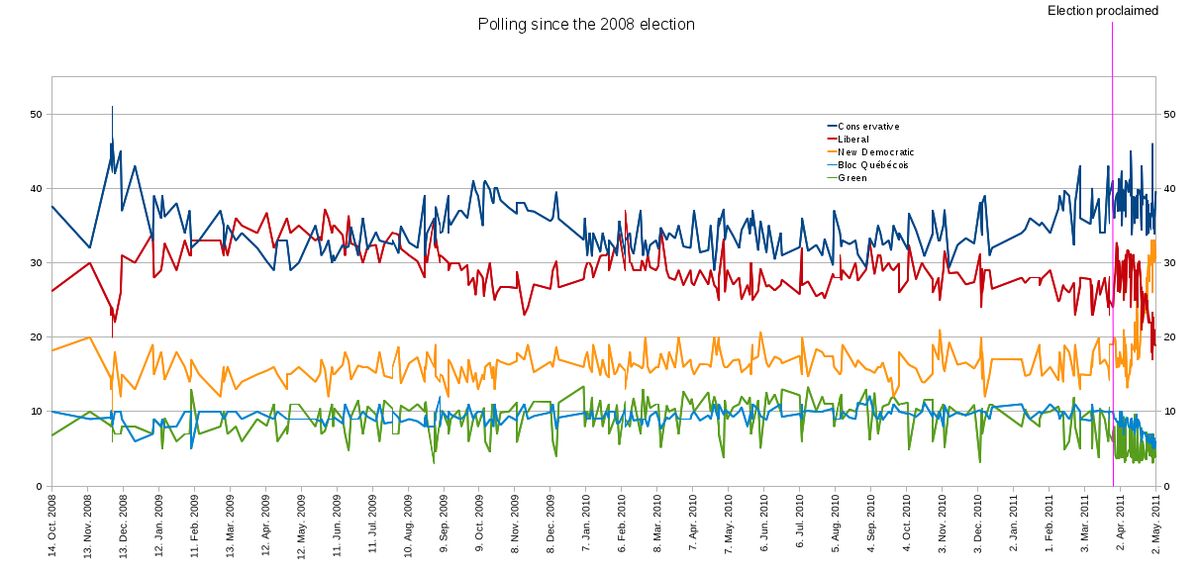
The federal political structure in Canada is characterized by its multi-party system, typically dominated by the Liberal and Conservative parties with other significant contenders. As of 2026, the party standings in the House of Commons reflect this dynamic, with the Liberal Party holding 170 seats, the Conservative Party holding 141, the Bloc Québécois holding 22, the New Democratic Party holding 6, and the Green Party holding 1 seat, alongside 3 vacant ridings. Federal parties are registered with Elections Canada, which maintains an official registry detailing their leadership, national headquarters, and chief agents. The Liberal Party of Canada is the oldest continuously registered party, while the Conservative Party of Canada was registered under its current name in 2003 and the Bloc Québécois was registered on June 14, 1991. A key structural feature of Canadian federalism is the often loose connection between federal parties and their provincial namesakes, with the notable exception of the New Democratic Party, which is organizationally integrated with most of its provincial wings. The party that elects the most members to the House of Commons forms the Government of Canada and selects the prime minister and cabinet, while the party with the second-largest number of seats forms the Official Opposition, a role held by the Conservative Party in 2026.
Leadership of these parties is a high-profile affair, as leaders serve as candidates for prime minister during general elections. The leader formulates party policy and holds significant authority over the party caucus, with the power to expel members. The Liberal Party has been led by Prime Minister Mark Carney since March 9, 2025, the Conservative Party has been led by its current leader since September 10, 2022, the New Democratic Party has been led by Avi Lewis since March 29, 2026, and the Bloc Québécois has been led by its current leader since January 17, 2019. Party membership, which involves paying an annual fee usually around fifteen dollars, is held by an estimated one to two per cent of Canadians, with numbers often swelling during leadership contests. Members elect the party leader and local candidates and vote on internal constitutional matters, making them a crucial, though small, part of the political process where individuals who are personally invested in politics, including relatives of politicians and political activists, tend to participate.
Major Federal Political Parties
Five parties have consistently held seats in the House of Commons and are considered the primary national political forces. The Liberal Party of Canada, currently led by Prime Minister Mark Carney, is a centre to centre-left party advocating liberalism and social liberalism. Its national headquarters is in Ottawa at the address K1P 6M8, and its chief agent is The Federal Liberal Agency of Canada with PricewaterhouseCoopers LLP serving as auditor. The Conservative Party of Canada, led since September 2022 by its current leader, is a centre-right party with its headquarters in Ottawa at K1P 5H1, and its chief agent is Conservative Fund Canada. The New Democratic Party (NDP) is a social democratic party. As of March 2026, its leader is Avi Lewis, and its headquarters is in Ottawa at K1P 5J9, with the New Democrats of Canada Association serving as chief agent. The Bloc Québécois, founded in 1991 and led since January 2019 by its current leader, is a party dedicated to Quebec nationalism and sovereignty, with its national headquarters in Montreal at H2S 2M6 and Mathieu Desquilbet as chief agent, audited by Mallette S.E.N.C.R.L. The Green Party of Canada, with its headquarters in Mississauga, Ontario at L4W 2N9, focuses on environmental politics and has historically won a small number of seats, with the Green Party of Canada Fund acting as its chief agent.
In addition to these five, other registered federal parties contest elections, though they rarely win seats. These include the People's Party of Canada, the Marxist-Leninist Party of Canada, the Christian Heritage Party of Canada, and the Animal Protection Party of Canada. The following list includes some of the registered federal parties as of 2026 with their headquarters locations and illustrates the range of political options available to voters beyond the major players. The Communist Party of Canada is based in Toronto at M4K 1N6, the Animal Protection Party of Canada is in Toronto at M4M 2G3, the Centrist Party of Canada is in Toronto at M1P 4Y4, and the Parti Rhinocéros Party is based in Montreal at H2K 2N9. These smaller parties maintain the required organizational structure, including a chief agent and auditor, to remain registered with Elections Canada, allowing them to issue tax receipts for donations and have their party name appear on the ballot during federal elections.
- Liberal Party of Canada, Ottawa, Ontario
- Conservative Party of Canada (registered December 6, 2003), Ottawa, Ontario
- Bloc Québécois (registered June 14, 1991), Montreal, Quebec
- New Democratic Party, Ottawa, Ontario
- Green Party of Canada, Mississauga, Ontario
- People's Party of Canada, Ottawa, Ontario
- Christian Heritage Party of Canada, Ottawa, Ontario
- Communist Party of Canada, Toronto, Ontario
- Animal Protection Party of Canada, Toronto, Ontario
- Centrist Party of Canada, Toronto, Ontario
- Marxist-Leninist Party of Canada, Montreal, Quebec
- Parti Rhinocéros Party, Montreal, Quebec
Provincial and Territorial Party Systems
Provincial party systems in Canada operate with a significant degree of independence from their federal counterparts, often sharing only a name. For example, a provincial Progressive Conservative party may have no formal organizational links to the federal Conservative Party of Canada. The integration of the New Democratic Party across most provinces, excluding Quebec, is a notable exception to this rule, featuring a shared membership base. The strength and discipline of party systems also vary by province. British Columbia established disciplined party caucuses as the backbone of its politics after 1903, moving away from a legislature previously dominated by independents and short-lived governments where governments rarely lasted more than two years. Prior to 1903, members were elected under a wide variety of party labels and no single party held strong majorities, with many members serving as Independents. In contrast, the territories of Nunavut and the Northwest Territories operate on a consensus government model without political parties.
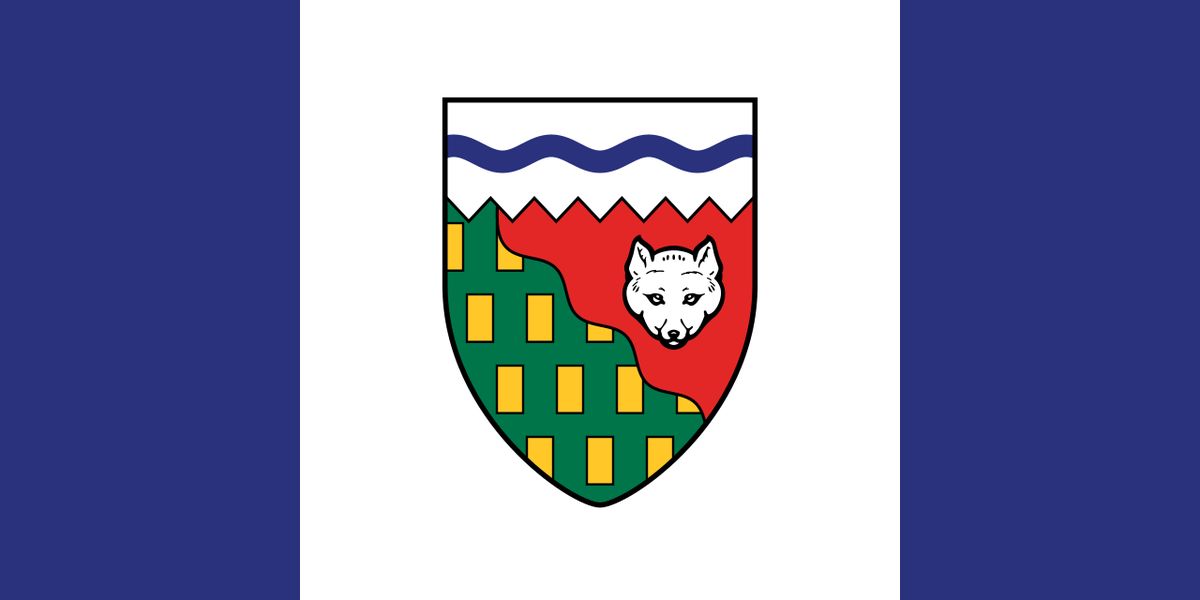
Nunavut, established in 1999, has a unicameral Legislative Assembly where all members are elected as independents and govern by consensus. The Northwest Territories had active political parties from approximately 1897 to 1905, including the Northwest Territories Liberal Party and the Northwest Territories Liberal-Conservative Party, before the creation of Alberta and Saskatchewan. Its contemporary legislature, re-established in 1951, functions like Nunavut's, with territorial law not recognizing political parties, though some candidates in recent years have asserted they were running on behalf of a party. Saskatchewan's political history has also included a notable number of independent candidates and loose coalitions alongside its major parties. Provincial elections in Quebec, Ontario, and the Atlantic provinces feature their own distinct party systems, with parties like the Bloc pot, Climat Québec, and Démocratie directe appearing on Quebec's provincial ballot in 2026, demonstrating the diversity of political options at the sub-national level.
Municipal Political Parties
While the vast majority of municipal governments in Canada are non-partisan, the provinces of Alberta, British Columbia, and Quebec permit the formation of municipal political parties. This has led to formal party systems in major cities such as Calgary, Edmonton, Montreal, and Vancouver. In Vancouver, municipal politics were historically dominated by the centre-right Non-Partisan Association, originally formed as a 'free enterprise coalition' to counter the influence of the democratic socialist Co-operative Commonwealth Federation. The social democratic Vision Vancouver later became the dominant force for a decade after the 2008 election until its defeat in the 2018 election. In Montreal, political parties existed long before they were officially legalized by the Parti Québécois provincial government in 1978, making it one of the rare examples of a city with a long-standing municipal party system in Canada.
Current municipal council compositions in some cities illustrate the party dynamics and show how local governance is structured along partisan lines where it is permitted. In Burnaby, British Columbia, the Burnaby Citizens Association holds 4 council seats and the Burnaby Green Party holds 1, with four independents also serving on council. In Surrey, British Columbia, the Safe Surrey Coalition holds 5 seats and Surrey First holds 4. These municipal parties focus on local issues like development, transportation, and civic services, though they may have loose ideological alignments with provincial or federal parties. The existence of these parties means local elections in these cities involve campaigning under a party banner, with slates of candidates, party platforms, and organized caucuses within city council, a structure more familiar to provincial and federal politics than to most town and city halls across the country where non-partisan elections are the norm.
Internal Party Structure, Membership, and Funding
Canadian political parties are hierarchically structured, with a single leader at the apex who formulates policy, determines the party's stance on issues, and holds significant power over the caucus. The leader runs as the party's candidate for prime minister in a federal election and can expel politicians from the party for misbehaviour. Party members are individuals who pay an annual fee, usually around fifteen dollars, to hold a card-carrying membership. These members elect the party leader, select local candidates, and vote on internal matters such as constitutional amendments. Despite these participatory mechanisms, it is estimated that only about one to two per cent of Canadians are members of a political party. Membership typically surges during leadership elections and is concentrated among those deeply invested in politics, such as activists, political staff, and relatives of politicians who regularly campaign during elections.
Each registered federal party must appoint a chief agent responsible for the party's financial administration and an auditor to review its financial statements. For instance, the Liberal Party's auditor is PricewaterhouseCoopers LLP, the Bloc Québécois's auditor is Mallette S.E.N.C.R.L., and the Communist Party of Canada's auditor is Suntharalingam Professional Corporation. The national headquarters for parties are spread across the country, primarily in Ottawa, Toronto, and Montreal. This formal structure, regulated by Elections Canada, ensures accountability in party financing, including the issuance of tax receipts for political contributions. The information in the Registry of Political Parties is updated whenever a written report is received from a party leader, maintaining a current public record of party officials and locations which includes details like telephone numbers and email addresses for party offices.
Policy Positions of Major Parties on Key Issues
The major federal parties distinguish themselves through distinct policy platforms on key issues such as climate change, taxation, and energy. The following table outlines comparative stances on carbon pricing and energy projects as articulated in recent platforms, providing a clear contrast for voters. The Liberal Party would tighten the output-based pricing system for large industrial emitters and invest twenty million dollars in a Nunavut hydroelectricity facility, while the Conservative Party would boost incentives like expanded tax credits for businesses that reduce emissions. The New Democratic Party committed to rehiring every border officer cut by the last Conservative government to curb illegal guns and would offer a rebate for buying Canadian-made zero-emissions vehicles. The Bloc Québécois would ask the federal government to increase its funding for the Canada-Quebec Nature Agreement fund from one hundred million to three hundred million dollars.
| Party | Carbon Pricing Stance | Key Energy Project Positions |
|---|---|---|
| Liberal Party | Cut consumer pricing. Keep industrial system. Introduce border carbon adjustment. | Open to pipelines. Respect Quebec veto. Phase out fossil fuels in government buildings by 2030. Invest in Nunavut hydroelectricity. |
| Conservative Party | Repeal all carbon pricing, including on industrial emitters. | Support east-west pipeline. Approve LNG Quebec. Develop Port of Churchill. Boost tax credits for clean tech. |
| New Democratic Party | Remove consumer pricing. Keep industrial price. Border carbon adjustment. | Against LNG pipeline in Quebec. Respect provincial veto. Prioritize east-west electricity grid. Cut oil and gas subsidies. |
| Bloc Québécois | Introduce border carbon adjustment. Tax oil and gas profits. | Respect Quebec's opposition to all pipelines. End offshore oil exploration in protected areas. Increase nature funding. |
| Green Party | Policies detailed in other sections. | Invest in east-west grid. Stop new fossil fuel projects. Stop subsidies to oil and gas. Create emergency response agency. |
| People's Party | Abolish all climate programs. Withdraw from Paris Accord. | Sell Trans Mountain pipeline. Repeal tanker ban and Impact Assessment Act. Keep Line 5 operating. Reassert federal pipeline jurisdiction. |
On economic issues, parties offer different visions. The Liberals have proposed trimming one percentage point off the lowest income tax bracket, cancelling a proposed hike to the capital gains inclusion rate, and eliminating the GST on all homes up to one million dollars for first-time homebuyers. They also plan to ease access to employment insurance by raising regional unemployment rate percentages. The Conservatives focus on tax credits for businesses that reduce emissions and to promote clean energy technologies. The NDP has committed to cutting eighteen billion dollars in oil and gas subsidies and offering rebates of ten thousand dollars for buying Canadian-made zero-emissions vehicles and five thousand dollars for vehicles made elsewhere. The Bloc Québécois suggests reinvesting taxes on oil and gas profits into climate change adaptation initiatives. These policy contrasts provide voters with clear choices that reflect the ideological spectrum within Canadian politics.
Historical Context and Evolution of Parties
The Liberal Party of Canada's modern identity has been heavily shaped by the legacy of Pierre Trudeau, with his son Justin Trudeau leading the party to power in 2015 and former Bank of Canada governor Mark Carney taking over the leadership in 2025. The party has often been called 'Canada's Natural Governing Party' due to its historical success and long periods in government. The Conservative Party of Canada is the successor to earlier conservative coalitions, including the Progressive Conservative Party, and was re-founded under its current name in 2003. The Bloc Québécois was formed in 1991. It is a federal political party with the purpose of promoting Quebec sovereignty and defending Quebec's interests in Parliament. It has struggled to win more than a handful of seats in the federal electoral system. The array of smaller registered federal parties is dynamic and includes various groups. Parties like the Canadian Action Party and the Direct Democracy Party of Canada have been eligible for registration. These smaller parties illustrate the continuous emergence and dissolution of political movements.
Questions about List of political parties in Canada
How many political parties are there in Canada?
There are over ten registered political parties at the federal level in Canada, though only a handful consistently win seats in the House of Commons. The five major federal parties are the Liberal Party, the Conservative Party, the New Democratic Party, the Bloc Québécois, and the Green Party. Many more parties exist at the provincial and municipal levels, with the number and strength varying significantly by region. In provinces like British Columbia and Quebec, municipal parties are also active in major cities like Vancouver, Surrey, Burnaby, and Montreal.
What is the difference between federal and provincial parties in Canada?
Federal and provincial parties in Canada are often only loosely connected despite sometimes sharing similar names. They have separate organizations, memberships, leadership, and platforms tailored to their respective jurisdictions. The New Democratic Party is a key exception, as it is organizationally integrated with most of its provincial counterparts, sharing membership outside of Quebec. Provincial parties focus on areas of provincial responsibility like education and healthcare, while federal parties address national and international issues like defence, foreign policy, and federal taxation.
Which Canadian provinces or territories do not have political parties?
The territories of Nunavut and the Northwest Territories operate on a consensus government model without political parties. Members of their legislative assemblies are elected as independents and make decisions through consensus. The Northwest Territories had parties briefly from 1897 to 1905, but its modern system, re-established in 1951, is non-partisan. All Canadian provinces have partisan systems for their provincial legislatures, with parties like the Bloc pot, Climat Québec, and Démocratie directe appearing on recent Quebec provincial ballots.
Can you have political parties in Canadian municipal elections?
Municipal political parties are permitted only in the provinces of Alberta, British Columbia, and Quebec. In other provinces, municipal elections are strictly non-partisan. Cities with active municipal party systems include Vancouver, Surrey, and Burnaby in British Columbia, Calgary and Edmonton in Alberta, and Montreal in Quebec. These local parties focus on civic issues such as development, transit, and policing, and they run slates of candidates for council, mayor, and school board positions.
Who is the current leader of the New Democratic Party?
As of March 29, 2026, the leader of the New Democratic Party is Avi Lewis. The NDP is a social democratic party and has been a significant force in Canadian federal politics, often holding the balance of power in minority parliaments. The party's national headquarters is located in Ottawa, Ontario at the address K1P 5J9. The NDP is unique for its integrated structure with most of its provincial wings, sharing membership across the country except in Quebec.
What are the main policy differences between the Liberals and Conservatives?
The Liberal and Conservative parties differ sharply on climate and economic policy. The Liberal Party supports a carbon pricing system for industrial emitters and incentives for clean energy, while being open to certain pipeline projects and respecting Quebec's right to veto pipelines. The Conservative Party pledges to repeal all carbon pricing and focuses on expanding tax credits for emission-reducing technologies and supporting resource export projects like LNG Quebec and the Port of Churchill. On taxation, the Liberals propose income tax cuts for lower brackets and GST relief for first-time homebuyers, whereas Conservative proposals emphasize different economic incentives and have not announced a specific carbon emissions reduction target.
Sources and further reading
- List of political parties in Canada (Wikipedia)
- Registered Political Parties and Parties Eligible for ... (elections.ca)
- Compare the election promises of Canada's major parties (newsinteractives.cbc.ca)
- Canadian Political Parties (thecanadaguide.com)
Checked by the Nosy Mag desk. Last updated 2026-11-01.