Climat Québec
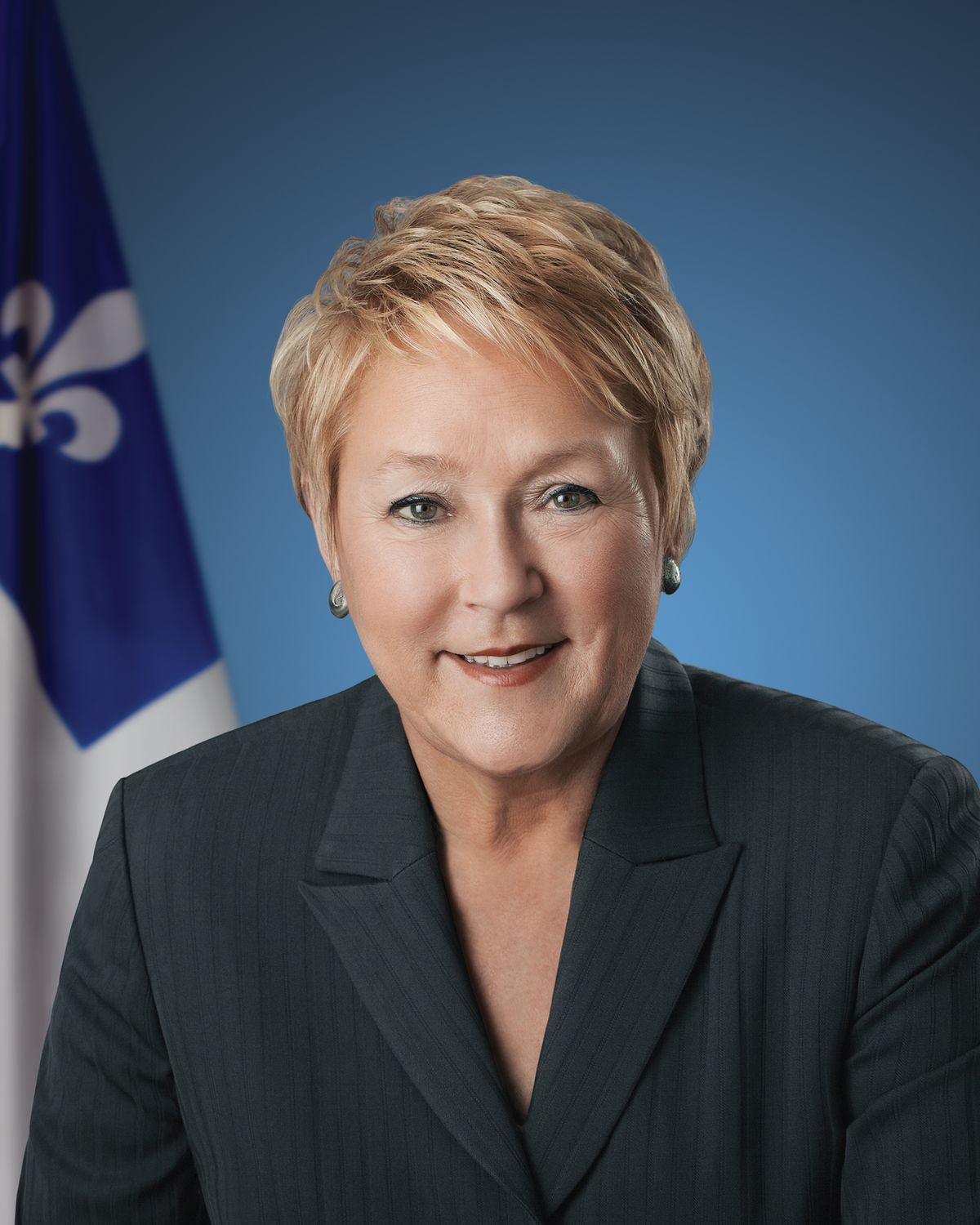
Climat Québec is a minor provincial political party in Quebec founded in 2021 by former Bloc Québécois leader and Parti Québécois cabinet minister Martine Ouellet. The party positions itself on the centre-left of the political spectrum with a dual focus on addressing the climate crisis and achieving Quebec sovereignty. It contests elections across the province, having run dozens of candidates in the 2022 and 2026 general elections and participating in numerous by-elections. The party also exists within a broader ecosystem of climate action initiatives, such as the Sommet Québec Capitale Climat, which gathers hundreds of decision-makers. Climat Québec represents a distinct political force that seeks to merge environmental urgency with the project of Quebec independence, critiquing corporate influence and specific infrastructure projects.
Founding, Leadership and Political Context
Climat Québec was established in 2021 by Martine Ouellet, a figure with extensive experience in Quebec's sovereigntist political movements. Her departure from these established parties was a catalyst for creating Climat Québec, which she leads as its founding president and principal spokesperson. The party's formation was driven by a belief that neither the Parti Québécois nor the Bloc Québécois was prioritizing the climate emergency with sufficient urgency while also advancing the independence cause. From its inception, the party has been closely associated with Ouellet's personal political trajectory and her critique of corporate influence in politics, positioning itself as an alternative for voters dissatisfied with the status quo.

Core Ideology and Policy Platform
Climat Québec's ideology is built upon two foundational and intertwined pillars: aggressive action on climate change and the pursuit of Quebec sovereignty. The party describes its mission as creating 'a new country to act,' explicitly framing political independence as a necessary tool for implementing comprehensive environmental policies without federal constraints. Its platform is sharply critical of corporate lobbies and private interests, which it argues systematically obstruct meaningful climate action and democratic decision-making. On specific infrastructure, Climat Québec notably opposes the proposed Alto high-speed rail line connecting Toronto and Quebec City. The party argues that the project's resources should instead be directed toward modernizing existing rail networks and establishing a dedicated, efficient passenger rail link between Quebec City and Montreal. This position reflects a prioritization of intra-provincial connectivity and sustainable transit over interprovincial megaprojects it views as misaligned with Quebec's ecological and economic sovereignty.
The party's policy outlook aligns with and responds to broader governmental climate frameworks. For instance, it operates in a context where the Agglomération de Québec has a Plan climat for 2026 to 2035 aimed at climate adaptation and where the provincial Loi sur la performance environnementale des bâtiments has been adopted. However, Climat Québec likely views such measures as insufficient, especially following the Quebec government's announcement of a delay in its 2030 greenhouse gas reduction targets to 2035. The party's core argument is that only a sovereign Quebec can move with the speed and decisiveness required by the climate crisis, free from the compromises of Canadian federalism and powerful corporate lobbies. The party's opposition to the Alto rail project is a concrete example of its policy to redirect investment toward Quebec's internal needs and existing infrastructure.
Electoral History and Candidate Deployments
Since its founding, Climat Québec has participated in multiple provincial elections and by-elections, maintaining a consistent though electorally minor presence. In the 2022 Quebec general election, the party fielded 54 candidates across the province's ridings. It repeated this effort in the 2026 Quebec general election, presenting a slightly smaller slate of 52 candidates. The party has demonstrated particular persistence in contesting by-elections, often presenting its leader as the standard-bearer. Martine Ouellet was the candidate in the April 2022 Marie-Victorin by-election, triggered by the resignation of Catherine Fournier, where she received 1.9 percent of the vote and finished sixth in a field of 12 candidates. Beyond this initial contest, Climat Québec has actively sought to influence outcomes in vacant ridings across the legislature, which requires a sustained organizational capacity to recruit and support candidates even with limited resources.
The party has contested the following provincial by-elections, a record of its ongoing campaign activity. It contested the Marie-Victorin by-election in April 2022 with Martine Ouellet as its candidate. The party also contested the 2023 Saint-Henri, Sainte-Anne provincial by-election, the 2023 Jean-Talon provincial by-election, the 2025 Terrebonne provincial by-election, the 2025 Arthabaska provincial by-election, and the 2026 Chicoutimi provincial by-election. In the 2022 Marie-Victorin by-election, Martine Ouellet received 1.9 percent of the vote, earning sixth place of twelve candidates.
- Marie-Victorin by-election, April 2022 (Candidate: Martine Ouellet, 1.9% of vote)
- Saint-Henri, Sainte-Anne provincial by-election, 2023
- Jean-Talon provincial by-election, 2023
- Terrebonne provincial by-election, 2025
- Arthabaska provincial by-election, 2025
- Chicoutimi provincial by-election, 2026
These repeated candidacies, while not resulting in any seats won, demonstrate the party's commitment to maintaining a visible presence in the electoral arena. The party ran fifty-four candidates in the 2022 Quebec general election and fifty-two candidates in the 2026 Quebec general election. This effort of running over fifty candidates in a general election indicates a province-wide network of supporters. These supporters are willing to stand for the party's unique platform on the climate crisis and the secession of Quebec from Canada.

The Sommet Québec Capitale Climat and Associated Events
Beyond direct electoral politics, Climat Québec exists within a wider network of climate advocacy and policy discussion in Quebec, a key node of which is the Sommet Québec Capitale Climat (Quebec Climate Capital Summit). This major gathering for climate action stakeholders illustrates the type of mobilizing space where the party's ideas can circulate. The second edition of this summit was held on June 8, 2026, at the Centre des congrès de Québec. The event attracted over 400 strategic actors from the economic, political, institutional, and civil society sectors of the Quebec City region, with the goal of integrating climate transition concretely into organizational activities. The summit's detailed programming offered participants practical tools, networking opportunities, and validation of training hours through a participation attestation. Participants could learn how local organizations innovate and act successfully on climate issues, which aligns with the party's focus on practical, sovereign action.
The 2026 summit featured several key components and participants, highlighting its scope and the actors involved. The second edition of the Sommet Québec Capitale Climat was held on June 8, 2026, at the Centre des congrès de Québec. Over four hundred economic, political, institutional, and civil society decision-makers from the region attended the event. The summit aimed to integrate the climate transition concretely into the core of their activities. Participants included the President and CEO of Beneva and the Rector of Université Laval, who were co-chairs of Québec Capitale Climat.
- Opening plenary with a master of ceremonies and dignitaries.
- A review of major commitments announced the previous year to accelerate greenhouse gas reduction and climate adaptation measures.
- Speeches from co-chairs of Québec Capitale Climat, including the President and CEO of Beneva and the Rector of Université Laval.
- A panel featuring elected officials from various Quebec localities, including a municipal councillor and vice-president of the executive committee for Quebec City.
- An immersive workshop titled '2050 Scenario' based on scientific facts, exploring extreme climate impacts and crisis communication.
- A session on the Loi sur la performance environnementale des bâtiments, featuring expert and institutional testimonials.
- Awards recognizing businesses and non-profits in the Quebec and Lévis area for achievements in sustainable mobility.
Another related initiative is the Rendez-vous de l'Action Climatique (Climate Action Meeting), which held its third edition on May 25 and 26, 2026, at the Auditorium Jean-Paul Tardif at Laval University. These events represent the substantive policy and business community engagement on climate issues. The summit advised attendees of parking alternatives due to construction at Place Québec, recommending Place d’Youville or the Marie-Guyart building (Complexe G). It noted that people with reduced mobility were invited to arrive via the entrance at 1000, boulevard René-Lévesque East. Attendees were also invited to plan their travel due to roadwork in Quebec City.
Municipal and Institutional Climate Action Alignment
Climat Québec's emphasis on local action and governance finds resonance in various municipal and institutional initiatives across the province, which operate independently but share similar goals. A prime example is the Bureau du développement durable de Victoriaville (Victoriaville Sustainable Development Office), established in 2023. This bureau was created to reflect the common will of Victoriaville's elected officials and municipal organization to play an active role in sustainable development and climate adaptation. Its mission is to accompany responsible decision-making and the adoption of sustainable practices, and its action is articulated around the 17 United Nations Sustainable Development Goals. The bureau is staffed by strategic advisors and a director, representing a professionalized municipal approach to the climate agenda that parallels the party's call for dedicated governmental focus.
The work of such entities aligns with the party's critique of distant, ineffective governance and its advocacy for decisive local action. The Agglomération de Québec's own Plan climat 2026 to 2035 aims to improve community quality of life through a better-adapted city, a healthier environment, and a strong, sustainable local economy. These municipal plans and offices demonstrate that climate action is being operationalized at the local government level, often with a focus on innovation and economic development. Climat Québec's political project can be seen as an attempt to scale this model of proactive, sovereign decision-making to the level of the Quebec state, arguing that the same principles of local leadership and freedom from external constraint are necessary for ultimate success against the climate crisis. The party's platform directly engages with these local dynamics, even as it argues for the larger constitutional change of sovereignty to enable them fully.

Organizational Structure and Public Engagement
Climat Québec presents itself as a neutrally administered and independent institution dedicated to electoral integrity and transparency, according to its official party profile. Its public outreach is centred on a website that articulates its platform of climate urgency and sovereignty, using the slogan 'Un nouveau pays pour agir' (A new country to act). The party engages with public events and summits related to climate action, seeking to influence the policy conversation beyond the ballot box and connect with like-minded organizations and citizens who are part of the broader climate movement in the province. While it remains a minor party in terms of electoral success and seat count, its consistent participation in general elections and by-elections ensures a degree of continued visibility and media attention. The party's structure is typical of smaller political movements in Quebec, centred on a charismatic leader with a high public profile and a clear, dual-purpose message designed to attract voters disillusioned with larger, more established parties. Its activities require managing candidate nominations, fundraising, and platform communication, all while operating in a political scene dominated by the Coalition Avenir Québec, the Parti Québécois, and the Quebec Liberal Party. Climat Québec's persistence in this environment shows the commitment of its core supporters to its unique fusion of environmentalism and nationalism, and its repeated electoral campaigns test the resonance of this message with the Quebec electorate over time.
Questions about Climat Québec
Who founded Climat Québec and when?
Climat Québec was founded in 2021 by Martine Ouellet. Ouellet is a former cabinet minister in the Parti Québécois government of Pauline Marois and a former leader of the Bloc Québécois at the federal level. She established the party to advance a political agenda focused simultaneously on climate action and Quebec sovereignty, arguing that existing parties were failing on both fronts. Her experience in both provincial and federal sovereigntist politics provided the foundation for this new political venture.
What are the main political goals of Climat Québec?
The party has two primary goals: treating the climate crisis as an urgent priority and achieving Quebec's independence from Canada. It argues that sovereignty is necessary for Quebec to implement comprehensive environmental policies without federal interference or corporate lobbyist influence. The party also opposes specific projects like the Alto high-speed rail line, advocating instead for modernized intra-provincial rail links between Quebec City and Montreal. Its platform is critical of corporate interests and favours redirecting investment to existing infrastructure.
How has Climat Québec performed in Quebec elections?
Climat Québec has contested elections as a minor party without winning any seats in the National Assembly. It ran 54 candidates in the 2022 provincial election and 52 in the 2026 election. The party's leader, Martine Ouellet, received 1.9% of the vote in the 2022 Marie-Victorin by-election, placing sixth. It has also participated in several other by-elections in 2023, 2025, and 2026, maintaining a consistent though low-level electoral presence across the province in ridings like Saint-Henri, Sainte-Anne and Jean-Talon.
What is the Sommet Québec Capitale Climat?
The Sommet Québec Capitale Climat is a major climate action summit held in Quebec City. Its second edition took place on June 8, 2026, at the Centre des congrès de Québec, bringing together over 400 economic, political, and institutional decision-makers. The summit aims to integrate climate transition into organizational activities through plenaries, workshops, and networking, and it presents awards for sustainable mobility. It represents the broader climate action community in Quebec where ideas that align with Climat Québec's platform are discussed and promoted.
What is Climat Québec's position on transportation infrastructure?
Climat Québec opposes the proposed Alto high-speed rail project linking Toronto and Quebec City. The party believes the resources for such an interprovincial megaproject should be redirected to modernize existing rail networks and to establish a dedicated passenger rail link between Quebec City and Montreal. This policy reflects a focus on intra-provincial sustainable transit and a skepticism of projects it sees as not prioritizing Quebec's specific ecological and sovereignty needs. The party frames this as a choice between corporate-driven interprovincial projects and pragmatic, sovereignty-affirming internal development.
Is Climat Québec associated with any municipal climate initiatives?
While not directly operated by the party, Climat Québec's platform aligns with municipal-level climate actions in Quebec. Examples include the Bureau du développement durable de Victoriaville, established in 2023 to promote sustainable development and climate adaptation, and the Agglomération de Québec's Plan climat 2026 to 2035. The party engages with the ideas and actors within this broader ecosystem of local climate governance, which it sees as a model for sovereign state action. These initiatives demonstrate the kind of practical, localized focus the party advocates scaling up to the provincial level.
Sources and further reading
- Climat Québec (Wikipedia)
- Sommet Québec Capitale Climat 2026 (convention.qc.ca)
- Sommet Québec Capitale Climat 2026 (quebeccapitaleclimat.org)
Checked by the Nosy Mag desk. Last updated 2026-10-30.