Law of Canada
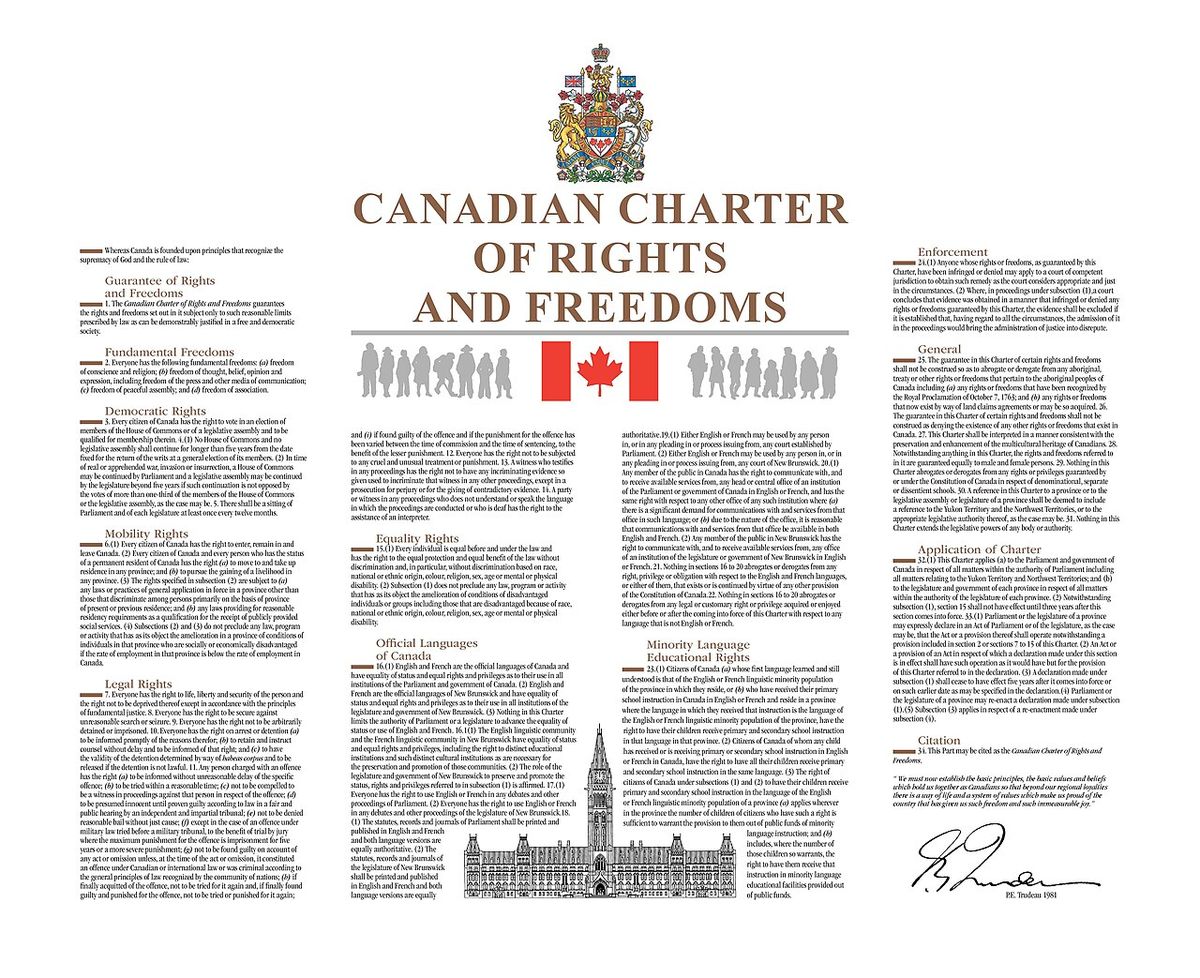
The law of Canada is the body of rules and principles that govern the nation, derived from a unique blend of English common law, French civil law, and Indigenous legal traditions. The Constitution of Canada, which includes the Constitution Act, 1867 and the Constitution Act, 1982, serves as the supreme law of the land, establishing the framework for federalism and enshrining the Canadian Charter of Rights and Freedoms. Canada's legal system is characterized by a division of powers between the federal Parliament and provincial legislatures, with the judiciary, led by the Supreme Court of Canada, interpreting laws and safeguarding constitutional rights. The Constitution Act, 1982 also contains a notwithstanding clause, which allows Parliament and provincial legislatures to override certain Charter rights for five-year periods.
Constitutional Framework
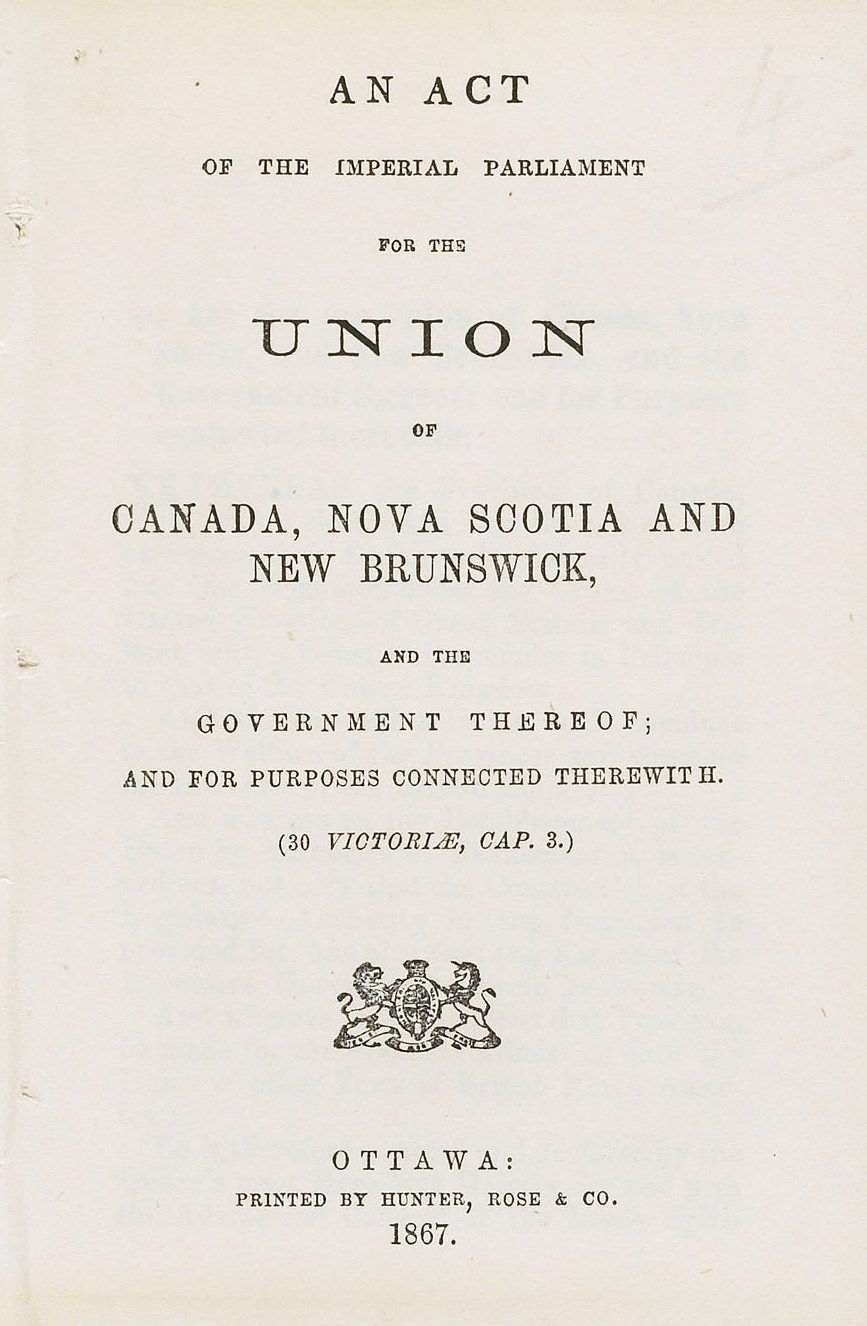
The Constitution of Canada is the supreme law of the country, consisting of written texts and unwritten conventions. The foundational document is the Constitution Act, 1867, originally known as the British North America Act, which established Canada as a federation and divided legislative powers between the federal Parliament and the provincial legislatures. The Constitution Act, 1982 patriated the constitution, ending all legislative ties to the United Kingdom, and introduced a domestic amending formula and the Canadian Charter of Rights and Freedoms. Section 52 of the Constitution Act, 1982 explicitly states that any law inconsistent with the constitution is, to the extent of the inconsistency, invalid.
The written constitution includes over thirty acts and orders, but the Supreme Court of Canada has also identified unwritten constitutional principles. In the 1998 Reference re Secession of Quebec, the Court outlined four foundational principles: federalism, democracy, constitutionalism and the rule of law, and respect for minorities. While these principles are an enforceable part of the constitution, courts use them to fill gaps in the constitutional text rather than to override it. Constitutional conventions, which are established practices of political actors, are also recognized as part of the constitutional framework, though they are not enforceable in court. The division of powers is central to Canadian constitutional law, with section 91 of the Constitution Act, 1867 granting federal jurisdiction over areas like criminal law, trade and commerce, banking, and immigration, while section 92 grants provinces authority over property and civil rights, natural resources, and education.
Sources of Legislation
Primary sources of law in Canada are acts passed by the Parliament of Canada and by provincial legislatures, within their respective areas of jurisdiction as defined by the constitution. Federal statutes are first published in the Canada Gazette, the official government newspaper, and are subsequently compiled in the annual Statutes of Canada. Periodically, the federal government consolidates its statutes into the Revised Statutes of Canada, with the most recent comprehensive consolidation completed in 1985. Provincial laws follow a similar publication process, with each province issuing its own gazette, annual statutes, and periodic consolidations, such as the Revised Statutes of Ontario or the Revised Statutes of Quebec.
The legislative process results in a vast body of statute law that governs specific areas. For public access, the non-profit Canadian Legal Information Institute (CanLII), managed by the Federation of Law Societies of Canada, provides free online access to Canadian case law and legislation. The federal Justice Laws Website also provides access to current and historical statutes and regulations. New federal acts enacted in 2026, as published in the Annual Statutes, include the Strengthening Canada’s Immigration System and Borders Act, the Consumer-Driven Banking Act, and the Spring Economic Update 2026 Implementation Act.
- Federal acts are published first in the Canada Gazette.
- They are compiled annually in the Statutes of Canada.
- A comprehensive consolidation is the Revised Statutes of Canada (1985).
- Provinces publish their own annual statutes and consolidations, such as the Revised Statutes of British Columbia or the Revised Statutes of New Brunswick.
- Key 2026 federal acts include the Consumer-Driven Banking Act.
- Free public access is provided via CanLII and the Justice Laws Website.
Court System and Judiciary
The judiciary in Canada is independent and interprets laws, resolves disputes, and reviews the constitutionality of government action. The Supreme Court of Canada, seated in Ottawa, is the highest court and final arbiter for all legal matters. It is composed of nine justices, including the Chief Justice, who are appointed by the governor general on the advice of the prime minister and the minister of justice. As of December 2026, the Chief Justice is Richard Wagner, who has held the position since December 18, 2017. The Supreme Court has the ultimate authority to bind all lower courts in Canada with its rulings, though it is not bound by its own previous decisions.
Below the Supreme Court are provincial and territorial courts of appeal and superior courts. Judges for the superior and appellate courts are appointed by the federal government after consultation with non-governmental legal bodies. Provincial courts handle the majority of criminal trials and other matters under provincial law. The Constitution Act, 1867 gives the federal Parliament the power to establish a general court of appeal, which led to the creation of the Supreme Court of Canada. The principle of stare decisis, or precedent, is fundamental to the common law system used across Canada except in Quebec. Lower courts must follow the decisions of higher courts within their jurisdiction, and decisions from one province's highest court can be persuasive, though not binding, in another province.
Major Legal Traditions
Canada's legal system is uniquely pluralistic, incorporating three distinct legal traditions. The common law tradition, inherited from England, is followed in nine provinces and the three federal territories. This system is based on judge-made precedent and the doctrine of stare decisis. In common law provinces, contract law and tort law are primarily developed through case law, though some principles have been codified in statutes like provincial Sale of Goods Acts. Criminal law, as a federal responsibility, is uniformly based on common law principles across Canada, though the offences themselves are codified in statutes like the Criminal Code.
Quebec maintains a hybrid system where private law is governed by the civil law tradition, derived from French law and codified in the Civil Code of Quebec. Public law in Quebec, including administrative and criminal law, follows the common law tradition. The third foundational tradition is Indigenous law, which encompasses the diverse legal traditions, customs, and practices of First Nations, Métis, and Inuit communities. These legal systems govern internal community relations and have gained increasing recognition within the broader Canadian constitutional framework. Indigenous laws are often oral, based on stories and teachings, and are interpreted and upheld by elders and knowledge-keepers.
Key Areas of Law
Canadian law encompasses numerous specialized fields that regulate society and the economy. Criminal law is the exclusive responsibility of the federal government, primarily enacted in the Criminal Code and the Controlled Drugs and Substances Act. Major reforms to bail and sentencing provisions in the Criminal Code are scheduled to come into force on July 15, 2026. Constitutional law involves the interpretation of the Constitution and the Charter of Rights and Freedoms, which guarantees fundamental freedoms, legal rights, and equality rights, subject to a legislative override clause known as the notwithstanding clause.
Administrative law governs the actions of government agencies and tribunals. Contract law, outside Quebec, is largely common law based, while in Quebec it falls under the law of obligations in the Civil Code. Family law involves a mix of federal and provincial jurisdiction, with the federal government regulating marriage and divorce, and provinces regulating the solemnization of marriage, marital property, and child protection. Human rights law is protected both by the Charter and by federal and provincial human rights statutes that prohibit discrimination in areas like employment and housing. Other significant areas include immigration law, governed by the Immigration and Refugee Protection Act, copyright law, insolvency law, and evidence law, which has both federal and provincial statutes.
- Criminal Law: Federal jurisdiction. Codified in the Criminal Code.
- Constitutional Law: Interprets the Constitution and Charter.
- Administrative Law: Governs actions of government agencies.
- Family Law: Federal divorce law. Provincial marriage and child law.
- Human Rights Law: Charter protections and statutory codes.
- Immigration Law: Governed by the Immigration and Refugee Protection Act.
- Aboriginal Law: Governs Crown-Indigenous relations and treaty rights.
Recent and Emerging Legal Developments
The Canadian legal landscape is continuously evolving, with significant legislative activity focused on technology, privacy, and financial regulation. A major federal priority for 2026 is data sovereignty, involving initiatives to strengthen control over Canadian data through policy, potential legislation, and investment in sovereign AI infrastructure. Privacy law reform remains active, with the federal government expected to introduce new private sector privacy legislation in late 2025 or early 2026 to replace the Personal Information Protection and Electronic Documents Act (PIPEDA). The proposed law is anticipated to include severe penalties for violations, potentially up to the greater of $25 million or 5% of global revenue.
In financial regulation, the Consumer-Driven Banking Act, enacted in March 2026, establishes a framework for open banking, allowing consumers to securely share their financial data among accredited institutions to foster competition. The 2026 Spring Economic Update and its accompanying implementation act introduced measures to update financial institution legislation, regulate digital assets like stablecoins, and combat financial crimes. The government also plans to establish a new Financial Crimes Agency with police powers to investigate major fraud and money laundering. Other 2026 changes include the automatic filing of taxes for low-income Canadians by the Canada Revenue Agency and a national consultation on measures to strengthen fraud prevention across banks and telecommunications providers.
| Legislative Area | Key 2026 Development |
|---|---|
| Privacy and Data | New federal privacy bill expected. Focus on data sovereignty. |
| Financial Regulation | Consumer-Driven Banking Act enacted. Stablecoin regulation advanced. |
| Criminal Law | Major bail and sentencing reforms come into force July 15, 2026. |
| Taxation | CRA begins automatic tax filing for low-income Canadians. |
| Financial Crime | Plans to establish a new Financial Crimes Agency. |
Aboriginal Law and Treaty Rights
Aboriginal law in Canada defines the relationship between the Crown and Indigenous peoples, including First Nations, Métis, and Inuit. Section 91(24) of the Constitution Act, 1867 grants the federal Parliament exclusive legislative authority over matters related to Aboriginal peoples. These rights include land title, rights to hunt and fish, and self-government, and they impose a duty on the Crown to consult and accommodate Indigenous groups when contemplating actions that might adversely affect these rights. The legal framework includes historic and modern treaties, the Indian Act, and a substantial body of case law from the Supreme Court of Canada. Indigenous law itself refers to the internal legal traditions and customs of Indigenous nations, which are diverse and often based on oral history and clan systems. While these traditions were historically marginalized, there is a growing movement towards their recognition and revitalization within the Canadian legal system.
Questions about Law of Canada
What is the supreme law of Canada?
The supreme law of Canada is the Constitution of Canada. It consists of written documents, primarily the Constitution Act, 1867 and the Constitution Act, 1982, along with unwritten conventions and principles. The Constitution Act, 1982 includes the Canadian Charter of Rights and Freedoms. Any federal, provincial, or territorial law that is inconsistent with the constitution is invalid.
How does the law in Quebec differ from the rest of Canada?
Quebec has a hybrid legal system. For private law matters like contracts, property, and family law, Quebec follows the civil law tradition, which is codified in the Civil Code of Quebec. For public law matters, such as criminal law and administrative law, Quebec follows the common law tradition used in the rest of Canada. This unique blend results from Quebec's history as a French colony later governed by British law.
Who appoints judges to the Supreme Court of Canada?
Justices of the Supreme Court of Canada, including the Chief Justice, are appointed by the governor general on the advice of the prime minister and the minister of justice. The court has nine members who serve as the highest court and final arbiter in the country. As of December 2026, the Chief Justice is Richard Wagner, who was appointed to this role on December 18, 2017. All judges at the superior and appellate levels are appointed after consultation with non-governmental legal bodies.
What is the 'notwithstanding clause' in the Charter?
The notwithstanding clause is a provision in the Canadian Charter of Rights and Freedoms that allows Parliament and provincial legislatures to override certain sections of the Charter. Specifically, it permits governments to pass laws that operate notwithstanding the fundamental freedoms in section 2 and the legal and equality rights in sections 7 through 15. A declaration invoking this clause is valid for a maximum period of five years, after which it can be re-enacted. This clause was added as part of the Constitution Act, 1982, which ended all legislative ties to Britain.
What are some major new laws in Canada for 2026?
Major new federal laws for 2026 include the Consumer-Driven Banking Act, enacted to establish a consumer-driven banking framework. Significant reforms to the Criminal Code concerning bail and sentencing are scheduled to come into force on July 15, 2026. The 2026 Spring Economic Update introduces measures aimed at updating financial institution legislation and regulating digital assets. The federal government also plans to establish a new Financial Crimes Agency.
What is the role of Indigenous law in Canada?
Indigenous law in Canada refers to the distinct legal traditions, customs, and practices developed by the various Indigenous Nations and communities, such as the Cree, Mi'kmaq, and Inuit. These legal systems govern daily life, including contracts, ecological management, and family law, and are maintained through traditional governance. Canadian Aboriginal law, which is based on the Constitution and federal statutes like the Indian Act, defines the government's relationship with Indigenous peoples and recognizes certain constitutionally protected rights. This includes a duty to consult and accommodate, which arises from treaties and case law established to mediate relations.
Sources and further reading
- Law of Canada (Wikipedia)
- 2026 Annual Statutes, Justice Laws Website (laws-lois.justice.gc.ca)
- Consumer-Driven Banking Act, Justice Laws Website (lois.justice.gc.ca)
Checked by the Nosy Mag desk. Last updated 2026-10-31.