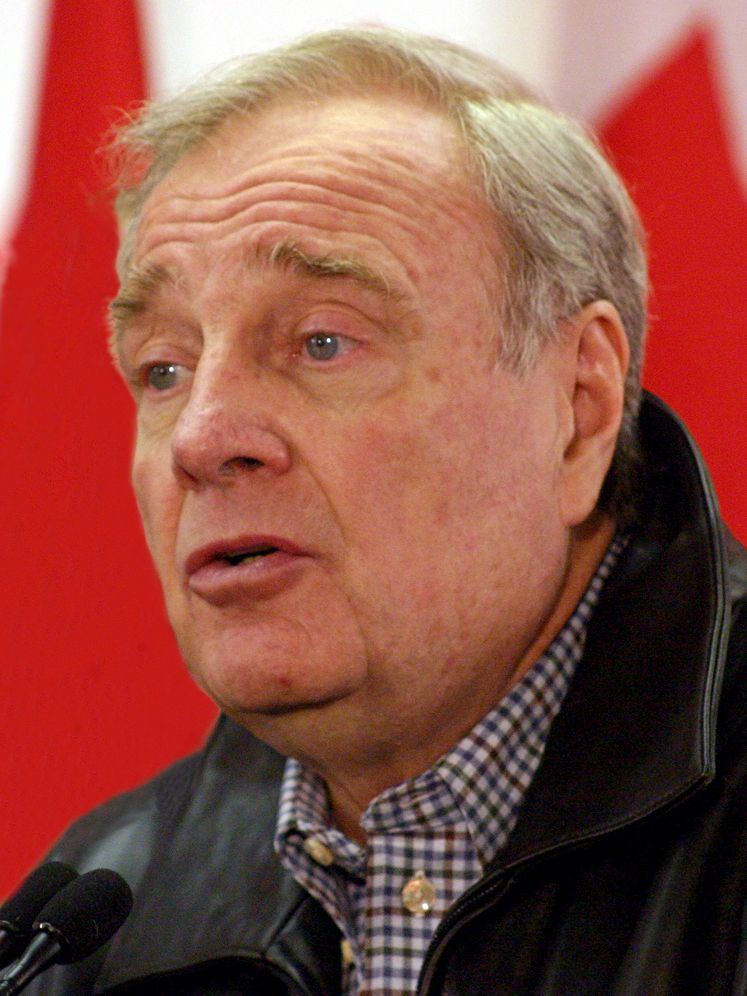
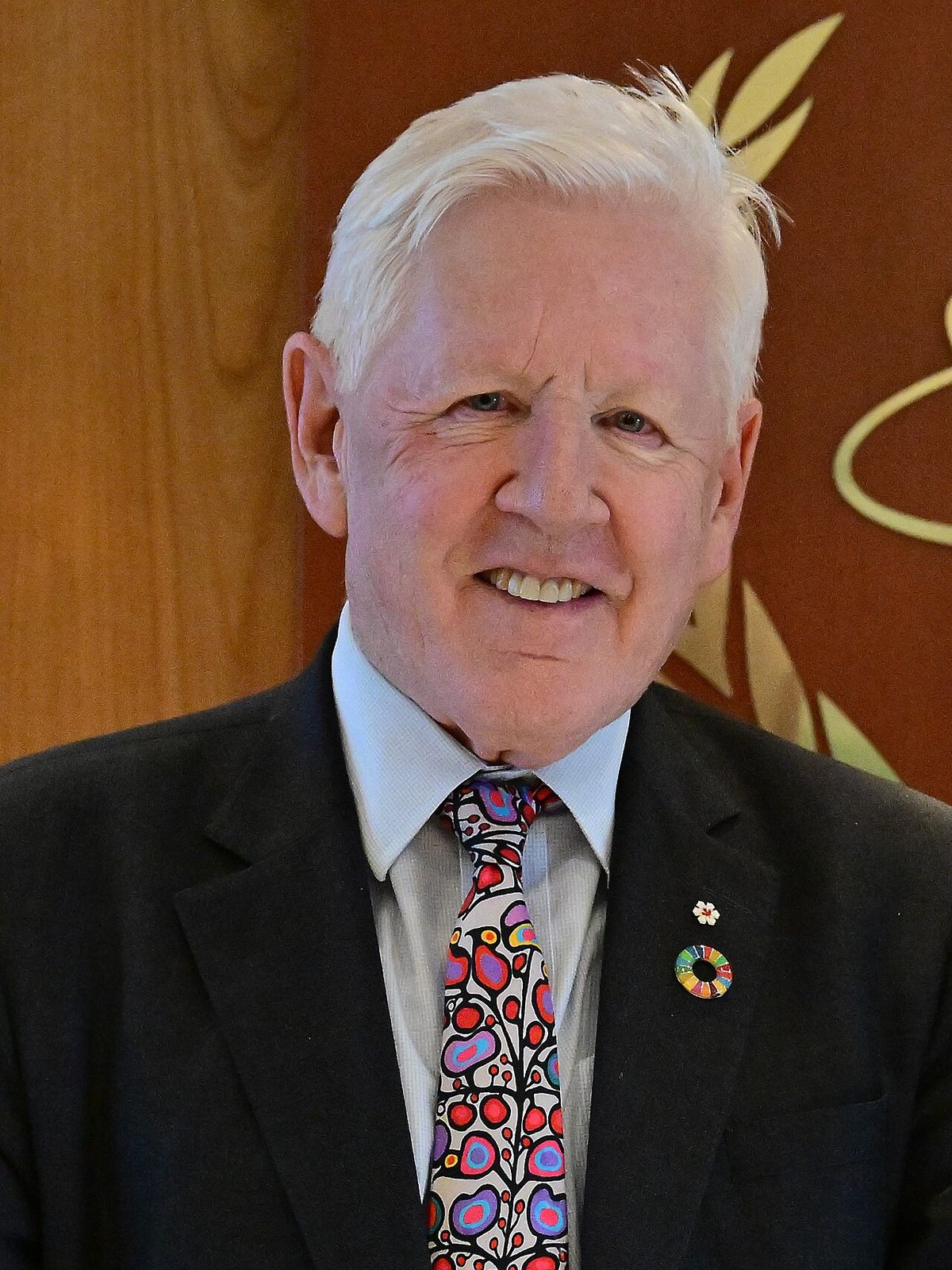
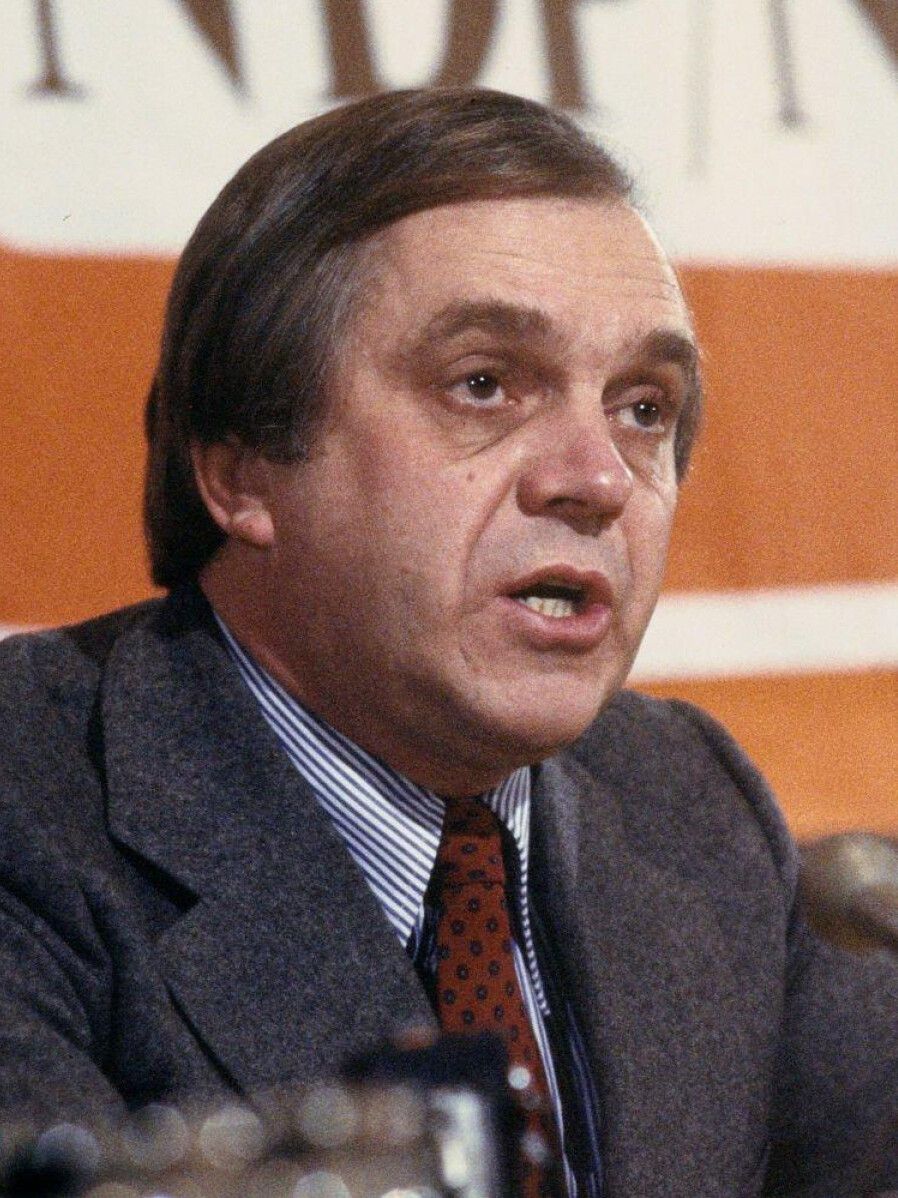
Ujjal Dosanjh
Ujjal Dev Dosanjh is a Canadian lawyer and politician. He served as the 33rd premier of British Columbia from 2000 to 2001, becoming Canada's first Indo-Canadian provincial premier. In federal politics, he was the Liberal member of Parliament for Vancouver South from 2004 to 2011 and served as minister of health under Prime Minister Paul Martin.
Early Life, Immigration, and Legal Career
Ujjal Dosanjh was born in 1947 in the village of Dosanjh Kalan in Jalandhar, India, shortly after the end of British rule in India. His early political awareness was shaped by debates between his father, a supporter of the Indian National Congress, and his maternal grandfather, Moola Singh Bains, a former freedom fighter and socialist who had established a primary school. At age 17, seeking to pursue his own educational interests against his father's wishes for a medical career, Dosanjh emigrated to the United Kingdom. In London, he worked various manual jobs including shunting trains in a British Rail goods yard and making crayons in a factory. He served as an assistant editor for a Punjabi-language weekly newspaper, learning English by listening to the BBC. He immigrated to Canada on May 12, 1968, settling in British Columbia to live with his aunt. He completed a Bachelor of Arts degree in political science and earned a law degree from the University of British Columbia in 1976. He was called to the bar the following year. During his university years, he taught English as a second language at Vancouver Community College and worked as an assistant editor of a local Punjabi newspaper. He established his own law practice in 1979, specializing in family and personal injury law.
Parallel to his legal career, Dosanjh was deeply involved in community activism and civil rights work. He founded the Farm Workers' Legal Information Service, which later evolved into the Canadian Farm Workers' Union. He served on the boards of the BC Civil Liberties Association, the Vancouver Multicultural Society, and the Labour Advocacy Research Association, and volunteered with organizations like MOSAIC Immigrant Services Centre and the South Vancouver Neighbourhood House. A prominent moderate Sikh in Vancouver, he spoke out against violence by Sikh extremists who advocated Khalistani independence from India. As a result of these views, in February 1985 he was attacked in the parking lot of his law office by an assailant wielding an iron bar. Dosanjh, 37 at the time, suffered a broken hand and received 80 stitches in his head. He was targeted again on December 26, 1999, while he was a member of the Legislative Assembly, when his constituency office was broken into and a Molotov cocktail was left burning on a table. Dosanjh and his wife Raminder have three sons. In April 2000, his middle son Aseem was charged with assaulting an Ontario police officer during a bar brawl but was found not guilty. In January 2003, he was awarded the Pravasi Bharatiya Samman (Expatriate Indian Honour) by Indian Prime Minister Atal Bihari Vajpayee in New Delhi.
Provincial Political Career and Role as Attorney General
Ujjal Dosanjh ran as the British Columbia New Democratic Party candidate in the Vancouver South riding in the 1979 and 1983 provincial elections, losing both times to BC Social Credit Party candidates. He won the Vancouver-Kensington riding in the 1991 election as his party came to power and was re-elected there in 1996. He spent his first few years as a backbencher. In 1993, he chaired the Select Standing Committee on Parliamentary Reform, Ethical Conduct, Standing Orders and Private Bills. He served two years as caucus chair until April 10, 1995, when Premier Mike Harcourt dismissed Robin Blencoe from his cabinet and replaced him with Dosanjh as Minister of Government Services and Minister Responsible for Sports. A month later, in a small cabinet shuffle upon the resignation of Moe Sihota, Harcourt added Minister Responsible for Multiculturalism and Human Rights to Dosanjh's portfolio. In another cabinet shuffle in August 1995, as Sihota was reinstated into the cabinet, Dosanjh's portfolio was changed to Minister Responsible for Multiculturalism, Human Rights and Immigration and he was appointed Attorney General of British Columbia, a role he held until February 2000.
As Attorney General, Dosanjh oversaw the resolution of the 1995 Gustafsen Lake Standoff involving the Secwepemc Nation and the RCMP, a tense armed confrontation. He set up a provincial database for registering violent offenders and established a hate crime division in the Royal Canadian Mounted Police in British Columbia. He lobbied successfully for increased numbers of police officers, probation officers, and judiciary members. As the Minister Responsible for Multiculturalism, Human Rights and Immigration he successfully lobbied for legislative changes granting same-sex couples equal rights and responsibilities concerning child support, custody, and access, a significant advancement for LGBTQ+ rights in the province. His office drew criticism for reducing legal aid funding and closing courthouses, which drew opposition from legal advocates. In early 1999, a special prosecutor under the RCMP opened an investigation into possible influence peddling by Premier Glen Clark concerning a neighbour's casino licence application. After the RCMP raided Clark's home on March 4, they briefed Attorney General Dosanjh under a gag order. The order was lifted on August 13, he informed Clark, and called a press conference, after which Clark resigned. Dosanjh's handling of the matter was both criticized by some for not informing his party caucus sooner and applauded by others for avoiding perceptions of conflict of interest despite his power to intervene in the prosecution.
Premier of British Columbia
The leadership convention to replace Clark was set for February 20, 2000. Dosanjh was among the front runners, along with former cabinet ministers Corky Evans, Gordon Wilson, and Joy MacPhail. Clark, Wilson and fellow MLA Moe Sihota campaigned specifically against Dosanjh's candidacy. MacPhail dropped out and endorsed Dosanjh, followed by Wilson dropping out to endorse Evans. Dosanjh emerged victorious at the convention and was sworn in as the 33rd Premier of British Columbia on February 24, 2000, making history as Canada's first Indo-Canadian provincial leader. His premiership, which lasted until the June 2001 election, focused on the key issues of health care, education, and maintaining balanced budgets during the 36th Parliament. Benefiting from increased government revenue from a rapidly expanding oil and gas sector, his government directed the finance minister to draft balanced budget legislation and tabled it. The previous year's budget was unexpectedly in surplus, and with increased revenue expected to continue, the 2001 budget increased spending by eight percent while remaining in surplus, directing funds toward hospital and school renovations, new cancer treatment centres, lower post-secondary tuition fees, and the creation of thousands of new apprenticeship and post-secondary spaces.
Dosanjh's government passed several significant pieces of legislation during its short tenure. These included the Definition of Spouse Amendment Act, which extended equal rights to same-sex couples, the Tobacco Damages and Health Care Recovery Act enabling lawsuits against tobacco companies to recoup health care costs, the Sex Offender Registry Act, and the Protection of Public Participation Act to shield citizens from lawsuits for participating in public processes. Dosanjh also became the first sitting provincial premier to march in a gay pride parade, a symbolic act of inclusion. Despite these policy achievements and his personal popularity, which at times exceeded that of opposition leader Gordon Campbell until the run-up to the election, the BC NDP government was deeply unpopular due to scandals and fatigue. Party support had fallen to 15 percent at the time of Clark's resignation. Under Dosanjh, support had risen to 21 percent by August 2000, but the party knew re-election was unlikely. Their 2001 campaign focused on the expanding economy, health care, education, and Dosanjh's personal appeal, concentrating efforts on a few competitive ridings in the Lower Mainland. In the May 16, 2001 provincial election, the party suffered a historic defeat, winning only two seats in the second-worst defeat of a sitting provincial government in Canada, with the BC Liberals winning the other 77 seats. Dosanjh lost his own seat in Vancouver-Kensington along with all but two members of his cabinet, marking the end of his premiership after just over a year in office. He was the last NDP premier of the province until John Horgan was raised to the position in 2017.
Transition to Federal Politics and Tenure as Health Minister
After his provincial defeat, Dosanjh returned to practicing law and let his NDP membership lapse. Speculation about his joining the federal Liberals dated back to October 2002. In March 2004, with a federal election imminent, Prime Minister Paul Martin recruited him as a star candidate for the Liberal Party of Canada, appointing him to the Vancouver South nomination over two other candidates. Martin announced Dosanjh as part of a team of BC star candidates that included economist David Emerson, union leader Dave Haggard, community activist Shirley Chan, and Liberal organizer Bill Cunningham. The party's advertising emphasized Dosanjh's socially progressive credentials, and he won the June 2004 election with 44.5 percent of the vote. He was immediately appointed Minister of Health in Martin's cabinet, becoming one of four visible minorities to serve in that ministry. In this role, he was a staunch defender of Canada's publicly funded, single-tier health care system and worked to prevent provinces from privatizing elements of it. His key initiatives and accomplishments as minister included several concrete measures.
- Introducing legislation to mandate fire-safe cigarettes and new regulations to further limit lead content in children's jewelry.
- Supporting an NDP motion to ban trans fats and advocating for Canada's ratification of the World Health Organization Framework Convention on Tobacco Control, which occurred in November 2004.
- Funding a program to revise Canada's Food Guide to better reflect multicultural foods and another program to better integrate foreign-trained medical professionals into the health care system.
- Overseeing a government agreement, following a unanimous House of Commons vote, to compensate the approximately 6,000 Canadians infected with hepatitis C from tainted blood transfusions.
- Negotiating a 10-year, $41 billion health accord with the provinces, which included $5.5 billion specifically targeted at reducing wait times that had been a key election issue, though he rejected premiers' demands for a national bulk pharmaceutical purchasing program.
- Introducing and passing Bill C-12, which modernized the 1985 Quarantine Act to better prevent the introduction and spread of communicable diseases. It received royal assent in May 2005.
His tenure was briefly clouded by the Gurmant Grewal affair in May 2005, where the Conservative MP accused Dosanjh and the Prime Minister's chief of staff, Tim Murphy, of offering an ambassadorship and a Senate seat for his wife to cross the floor or abstain from a crucial vote. Grewal released secretly recorded tapes of conversations, but Dosanjh claimed innocence and accused Grewal of altering the tapes. Audio analysis concluded the tapes were altered, and the RCMP did not pursue criminal investigations. Fellow MP John Reynolds filed a complaint with the Law Society of British Columbia, but the society reviewed the matter and cleared Dosanjh and Murphy of misconduct, concluding Grewal had attempted to elicit rewards for his compliance.
Later Federal Career as Opposition Member of Parliament
Following the Liberal defeat in the January 2006 federal election, Dosanjh remained the MP for Vancouver South, winning decisively against Conservative candidate Tarlok Sablok and NDP candidate Bev Meslo. With the Liberal party forming the Official Opposition, he was appointed critic for National Defence and sat on the Standing Committee on National Defence and the Standing Committee on Foreign Affairs and International Development. In the December 2006 Liberal leadership race, he initially supported fellow former NDP premier Bob Rae, and when Rae was eliminated, he supported Stéphane Dion. Under Dion's leadership, his critic responsibility was moved to Foreign Affairs, though he remained on the two committees. On the morning of February 13, 2007, he suffered a mild heart attack outside the House of Commons and was attended by fellow MP and doctor Carolyn Bennett before being rushed to hospital for a successful operation to remove a blood clot near his heart. In the second session of the 39th Parliament, from October 2007 to September 2008, his critic portfolio was moved to Public Safety, and he sat on the Standing Committee on Public Safety and National Security and the Special Committee on the Canadian Mission in Afghanistan.
The next election was called for October 2008, and Dosanjh faced a highly competitive race in Vancouver South against Conservative candidate Wai Young, a sociologist, NDP candidate Ann Chambers, a health worker, and Green Party candidate Csaba Gulyas, an IT consultant. Dosanjh won by only 33 votes initially, with both he and Young receiving 38.4 percent of the vote. A recount confirmed his victory by a margin of 22 votes, and a subsequent judicial recount requested by the Conservatives again confirmed Dosanjh as the victor. In the 40th Canadian Parliament, he was initially appointed the National Defence critic for the short-lived first session. During the 2008-09 Canadian parliamentary dispute, he defended the proposed coalition government as a reaction to the existing government's handling of economic issues. When Dion resigned as party leader, Dosanjh considered but did not run for the leadership, citing his inability to speak French, and again supported Rae's bid. In October 2009, new leader Michael Ignatieff appointed him as the Liberals' critic for National Defence. When the 40th Parliament reconvened for its 2nd session, he continued as National Defence critic and served on the Standing Committee on National Defence, the Standing Committee on Justice and Human Rights, and the Special Committee on the Canadian Mission in Afghanistan. In the 3rd session, he continued on the National Defence and Afghanistan committees and also sat with the Standing Committee on Health. In September 2010, he was reassigned to be the Liberal health critic. During this parliament, he introduced private member's bill C-467, An Act to amend the Citizenship Act (children born abroad), which sought to grant automatic citizenship to children born to or adopted by Canadian citizens working for the federal government, including members of the Canadian Forces. The bill received second reading in September 2010 but did not become law.
Public Controversies and Community Relations
Throughout his career, Ujjal Dosanjh's outspoken views, particularly on Sikh extremism, generated both admiration and controversy within segments of the community. His consistent condemnation of violence and advocacy against Khalistani independence from India, especially after the 1985 Air India bombing, defined his position as a moderate Sikh leader. This stance directly led to the 1985 physical attack against him and continued to spark tensions years later. A notable public controversy occurred in relation to the annual Vaisakhi Parade in Surrey, British Columbia. In April 2010, one of the parade organizers issued a statement the day before the event indicating that if Dosanjh and BC Liberal MLA Dave Hayer attended, their safety could not be guaranteed. The organizer stated, 'Everybody's invited except those who've been excluded... Everyone (is invited) except... two people, Ujjal Dosanjh and Dave Hayer. We've never invited them.' This exclusion was linked in part to comments Dosanjh had made after the 2007 parade, suggesting a police investigation into reports of a parade float displaying a picture of Talwinder Singh Parmar, accused in the Air India bombing. Premier Gordon Campbell called for an apology. None was forthcoming and all three declined to attend the parade. On April 23, 2010, the RCMP launched an investigation into threats made against Dosanjh on a Facebook site, titled 'Ujjal Dosanjh is a Sikh Traitor.' Canada's parliamentarians condemned any death threats against Dosanjh. The incident highlighted the ongoing divisions within the community regarding how to address historical violence and extremism, and it showed the personal risks Dosanjh continued to face for his political principles even decades after his initial activism on the issue.
Post-Political Life, Writings, and Recognition
Ujjal Dosanjh retired from politics after choosing not to run in the 2011 federal election. He turned his attention to writing, encouraged by his wife Raminder and a chance meeting with a publisher on a flight from Ottawa to Vancouver. He authored his autobiography, Journey After Midnight: A Punjabi Life from Canada, which was published in 2016 and spent several weeks on British Columbia's bestseller list. The book, which he wrote himself over a year and a half without a ghostwriter, reducing an initial 300,000 words to a final manuscript, was motivated by a desire to document historical events from his perspective and to ensure his grandchildren knew his story. He remains active in public discourse, often speaking at diaspora events on issues related to Canada-India relations, multiculturalism, and social justice. In 2014, he was the subject of a biography titled Unbreakable: The Ujjal Dosanjh Story by author Doug Welbanks. His contributions have been recognized with several honours. He was awarded the Pravasi Bharatiya Samman (Expatriate Indian Honour) by Indian Prime Minister Atal Bihari Vajpayee in New Delhi in January 2003. In 2009, he was one of the recipients of the Top 25 Canadian Immigrant Awards, presented by Canadian Immigrant Magazine. In January 2026, he was felicitated by the Consul General of India in Vancouver, Masakui Rungsung, during Pravasi Bharatiya Divas celebrations. Dosanjh lives in Vancouver, where he has resided since 1968, and enjoys gardening, walking, writing, and spending time with his six grandchildren.
Electoral Record
The following table outlines Ujjal Dosanjh's electoral history in his principal races for the Legislative Assembly of British Columbia and the House of Commons. He was first elected to the British Columbia legislature in 1991 as a member of the British Columbia New Democratic Party for the Vancouver-Kensington riding and was re-elected there in 1996. After his provincial career, he joined the Liberal Party of Canada and was elected as the member of Parliament for Vancouver South in 2004. He won the Vancouver South riding again in the 2006 federal election. In the 2008 federal election, he won his Vancouver South seat by a historically narrow margin of 22 votes after a judicial recount.
| Election | Riding | Party | Result |
|---|---|---|---|
| 1979 Provincial | Vancouver South | BC NDP | Lost to BC Social Credit |
| 1983 Provincial | Vancouver South | BC NDP | Lost to BC Social Credit |
| 1991 Provincial | Vancouver-Kensington | BC NDP | Elected |
| 1996 Provincial | Vancouver-Kensington | BC NDP | Elected |
| 2001 Provincial | Vancouver-Kensington | BC NDP | Lost |
| 2004 Federal | Vancouver South | Liberal | Elected |
| 2006 Federal | Vancouver South | Liberal | Elected |
| 2008 Federal | Vancouver South | Liberal | Elected (by 22 votes after judicial recount) |
Questions about Ujjal Dosanjh
What is Ujjal Dosanjh known for?
Ujjal Dosanjh is best known for being the 33rd premier of British Columbia, serving from 2000 to 2001, and as Canada's first Indo-Canadian provincial premier. He is also recognized for his later federal career as the Liberal MP for Vancouver South and his tenure as federal minister of health from 2004 to 2006. As Health Minister, he strongly supported Canada's publicly funded health-care system. He is known for being a vocal moderate Sikh who spoke out against violence by Sikh extremists, which led to him being attacked in 1985.
When and why did Ujjal Dosanjh switch from the NDP to the Liberal Party?
Ujjal Dosanjh switched from the provincial New Democratic Party to the federal Liberal Party in March 2004. After his defeat as BC premier in 2001, he returned to law and let his NDP membership lapse. There had been speculation about his move since 2002, and he had refused an offer from federal NDP leader Jack Layton in 2003. Prime Minister Paul Martin personally recruited him as a high-profile 'star candidate' for the upcoming election, appointing him to the Vancouver South nomination. Dosanjh agreed, joining a team of BC candidates, and his campaign emphasized the Liberal Party's socially progressive aspects.
What did Ujjal Dosanjh accomplish as federal Minister of Health?
As federal minister of health, Dosanjh was a strong advocate for Canada's public health care system. Key accomplishments included negotiating a 10-year, $41 billion health accord with the provinces, with $5.5 billion specifically targeted at reducing wait times. He introduced legislation for fire-safe cigarettes and regulations limiting lead in children's jewelry, supported a ban on trans fats, and oversaw Canada's ratification of the WHO Framework Convention on Tobacco Control. He funded the revision of Canada's Food Guide to include multicultural foods and programs to integrate foreign-trained health professionals. He also secured compensation for victims of the tainted blood scandal and modernized the Quarantine Act to better combat communicable diseases.
Was Ujjal Dosanjh ever physically attacked for his political views?
Yes, Ujjal Dosanjh was violently attacked for his public stance against Sikh extremism. In February 1985, following his condemnation of violence advocated by Khalistani separatists after the Air India bombing, he was assaulted in the parking lot of his Vancouver law office. An assailant struck him with an iron bar, resulting in a broken hand and head injuries that required 80 stitches. A second, non-physical attack occurred in December 1999 when his constituency office was broken into and a Molotov cocktail was left burning on a table while he was an MLA.
What has Ujjal Dosanjh done since retiring from politics?
Since retiring from federal politics in 2011, Ujjal Dosanjh has focused on writing and public engagement. He published his autobiography, Journey After Midnight, in 2016, which became a BC bestseller. He remains engaged in public life, frequently commenting on political and diaspora issues, and was honoured by the Indian consulate in Vancouver in January 2026 during Pravasi Bharatiya Divas. He lives in Vancouver, enjoys gardening and walking, and spends time with his six grandchildren.
What historic first did Ujjal Dosanjh achieve in Canadian politics?
Ujjal Dosanjh achieved a historic first in Canadian politics when he became premier of British Columbia on February 24, 2000. His victory in the BC NDP leadership race made him the first person of Indian origin and the first Indo-Canadian to become a premier of a Canadian province. This milestone was a significant moment for representation in Canadian political leadership. He was also one of only four visible minorities to serve in Prime Minister Paul Martin's federal cabinet.
Sources and further reading
- Ujjal Dosanjh (Wikipedia)
- Ujjal Dosanjh (literasian.com)
- Ujjal Dosanjh (thecanadianencyclopedia.ca)
Checked by the Nosy Mag desk. Last updated 2026-10-30.