List of Indian residential schools in Canada
The list of Indian residential schools in Canada documents the institutions that formed a government-funded, church-run system operating for over 150 years. This network, which the Truth and Reconciliation Commission of Canada characterized as an instrument of cultural genocide, forcibly separated Indigenous children from their families to assimilate them. The system operated in every province and territory except Prince Edward Island and New Brunswick, with the last federally recognized school closing in 1997. The official list, central to legal settlements and national remembrance, includes 139 schools recognized under the 2007 Indian Residential Schools Settlement Agreement, with additional schools in Newfoundland and Labrador recognized separately.
Historical scope and operation
The residential school system in Canada operated for more than 160 years, with the first church-run school opening in 1831 and a formal, federally funded system expanding from the 1880s onward. The system was a collaboration between the Canadian government and various churches, including the Roman Catholic, Anglican, United, and Presbyterian churches. Its explicit intent was to assimilate First Nations, Inuit, and Métis children by removing them from their families, communities, and cultures. An amendment to the Indian Act in 1920 made attendance compulsory for Treaty-status children between the ages of 7 and 15, enforcing their enrolment. Schools were often located far from students' home communities, deliberately severing familial and cultural ties. The institutions were frequently underfunded and overcrowded, providing substandard education while harshly punishing children for speaking their Indigenous languages.
The origins of residential schooling in Canada can be traced to earlier missionary efforts in the 17th century, long before the federal system was consolidated. The model was imported from other colonial contexts, including industrial schools used in the United States, Ireland, South Africa, Australia, and New Zealand. The Canadian government viewed the system as a means to solve what it termed the 'Indian question,' aiming to eliminate distinct Indigenous identities to facilitate control over land and resources. The system's operation followed a consistent pattern across the country, with children forcibly taken from their homes, subjected to regimented routines, and denied contact with their cultures. The harsh conditions and widespread abuse documented in these schools were systemic features of this policy of aggressive assimilation.
The settlement agreement and recognized schools
The Indian Residential Schools Settlement Agreement (IRSSA), implemented in 2007, is the foundational legal document that formally recognized a specific list of schools for the purpose of compensating survivors. The IRSSA originally recognized 130 schools, a number later adjusted to 139 following court rulings and reviews. This list forms the official catalogue of federally supported residential schools, but it is not exhaustive, as it excludes some institutions that operated without federal support. A significant omission from the original IRSSA was the residential schools that operated in Newfoundland and Labrador prior to the province's confederation with Canada. Survivors from those schools reached a separate compensation agreement with the federal government in 2016 following a successful class-action lawsuit. The last school to be added to the IRSSA list was Kivalliq Hall in Rankin Inlet, Nunavut, which closed in 1997 and was recognized in 2019, making it the final federally acknowledged residential school.
The IRSSA was a landmark legal achievement resulting from the courage and persistence of survivors and their advocates. The settlement included several key components designed to address the harms caused by the schools. The primary elements of the agreement were the Common Experience Payment, the Independent Assessment Process for claims of serious abuse, the establishment of the Truth and Reconciliation Commission, and funds for healing and commemoration projects. It is crucial to acknowledge the limitations of the settlement. Notably, Métis Nation survivors were not included in the IRSSA, and a separate settlement for survivors of federal Indian Day Schools was not reached until 2019. The agreement's list of schools remains the definitive reference point for historical recognition and legal compensation, shaping how this history is officially recorded and remembered.
Geographic distribution and notable examples
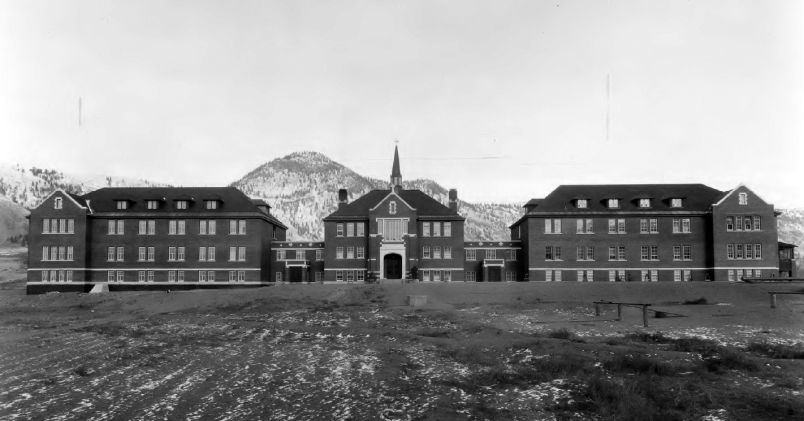
Residential schools operated in all Canadian provinces and territories except Prince Edward Island, New Brunswick, and initially Newfoundland and Labrador. British Columbia and Ontario had the highest concentrations of schools. The geographic spread was a direct function of colonial policy and the locations of Indigenous communities. The interactive map maintained by the federal government allows users to visualize the locations of all 140 sites associated with the IRSSA. Each point on the map provides details about the school's operation, denominational operator, and the current status of the site. Notable examples include the former Kamloops Indian Residential School in British Columbia, which was designated as a national historic site in 2024. That school, operated by the Roman Catholic Church from 1890 to 1978, had children from over 108 communities and at least 38 Indigenous nations attend. Another example is the Crowfoot Indian Residential School at Blackfoot Crossing, Alberta, and the Coqualeetza Residential School in Sardis, British Columbia, both of which are frequently cited in historical accounts.
The residential school system operated in every Canadian province and territory except Prince Edward Island, and New Brunswick. Schools were located across Canada, often near Indigenous reserves. The system was a key aspect of colonialism and federal government policy for more than 150 years. The first school opened in 1828 and the last closed in 1997.
These schools, like all others in the system, were sites of deep cultural loss and personal trauma. Their physical legacies vary, with some buildings demolished, others repurposed, and a few, like Kamloops, preserved as sites of conscience and commemoration. The federal interactive map provides historical aerial photography for these sites, offering a visual record of their landscapes from as early as 1924. The map includes tools for filtering by location and comparing historic and current images, aiding in both research and remembrance.
Documented impacts and the path to truth
The impacts of the residential school system are deep, intergenerational, and well documented. The TRC's final report detailed widespread physical and sexual abuse, neglect, and preventable deaths of children in the schools. It is estimated that thousands of children died while in the system, though an exact number remains unknown as records were often destroyed or lost. The trauma experienced by survivors has had cascading effects on families and communities, contributing to social challenges and the erosion of languages and cultural practices. The courageous testimony of survivors before the TRC and in other forums was the crucial catalyst for public recognition and the legal settlements. Their advocacy led directly to the establishment of the National Centre for Truth and Reconciliation (NCTR) at the University of Manitoba, which now serves as the permanent archive for all statements, documents, and records related to residential schools.
The Truth and Reconciliation Commission of Canada (TRC) built upon the 1996 Royal Commission on Aboriginal Peoples. The TRC concluded that residential schools were a systematic, government sponsored attempt to destroy Aboriginal cultures and languages. It characterized this intent as cultural genocide. The TRC issued Calls to Action for reconciliation, including a call for a national day of commemoration.
The National Centre for Truth and Reconciliation (NCTR) continues the TRC's work by safeguarding the archive of Survivor statements. It maintains a registry of the thousands of children known to have died in residential schools. The TRC's final report is titled 'Honouring the Truth, Reconciling for the Future'. The NCTR supports ongoing research and education about residential school history.
Commemoration and national recognition
Formal national recognition of the residential school system's significance has grown substantially since the conclusion of the TRC. In September 2020, the Government of Canada, on the advice of the Historic Sites and Monuments Board of Canada, designated the Residential School System as a national historic event. This designation acknowledges its lasting and negative impact on shaping Canadian society. In response to the TRC's Call to Action 80, the Canadian Parliament passed legislation to create the National Day for Truth and Reconciliation. The first observance was held on September 30, 2021, making it an annual federal statutory holiday to honour survivors, their families, and communities. At the local level, communities and Indigenous nations are leading commemoration efforts, such as the preservation of school buildings by the Tkʼemlúps te Secwépemc at the Kamloops site. Parks Canada collaborates with communities to install commemorative plaques at former school sites to ensure the history is physically marked and remembered.
The process for designating the system as a national historic event was initiated by a nomination from the National Centre for Truth and Reconciliation, which incorporated input from survivors across the country. This official recognition under the National Program of Historical Commemoration marks a critical step in ensuring this history is neither forgotten nor minimized. The designation of individual school sites, like the former Kamloops Indian Residential School as a national historic site in 2024, provides further tangible points for education and reflection. These acts of commemoration are essential for public education and are part of the long-term process of reconciliation called for by survivors and the TRC. The government's announcement of the national historic event designation on September 1, 2020, was a direct result of the growing public awareness driven by survivor advocacy.
Ongoing resources and support
Acknowledging the traumatic nature of this history, several dedicated support services exist for survivors and their families. The National Indian Residential School Crisis Line, available 24 hours a day at 1-866-925-4419, provides immediate crisis support and referrals. For First Nations, Inuit, and Métis people, the Hope for Wellness Help Line offers toll-free support at 1-855-242-3310. The National Centre for Truth and Reconciliation continues its work as the primary steward of residential school records and survivor statements. It maintains and builds upon the registry of children who died while attending the schools. Public access to historical information is facilitated through online tools like the Indian Residential Schools Interactive Map, which provides geographic and contextual data on each school. These resources collectively serve the dual purpose of supporting healing and ensuring that all Canadians can access and understand this difficult chapter of national history.
The NCTR's mandate extends beyond archiving to include public education and the promotion of reconciliation. It operates on the principle of 'Bezhig miigwan,' which teaches respect for each survivor as a single eagle feather and emphasizes collective responsibility. The centre provides a range of resources for researchers, educators, and the public. Key publicly available tools and resources include the following:
- The Indian Residential Schools Interactive Map with 140 site locations.
- A digital archive of survivor statements and historical documents.
- The registry of deceased children.
- Educational materials for schools and institutions.
- Access to historical aerial photography of school sites from 1924 to 1998.
The National Indian Residential School Crisis Line provides 24 hour support to former students and their families. The NCTR is located on the original lands of Anishinaabeg, Cree, Oji Cree, Dakota, and Dene peoples, and on the homeland of the Métis Nation. These resources support the TRC's vision of a sustained national effort to remember this history. The residential school system has had long term detrimental effects on First Nations, Inuit, and Métis communities.
Questions about List of Indian residential schools in Canada
How many residential schools were there in Canada?
The Indian Residential Schools Settlement Agreement (IRSSA) formally recognizes 139 residential schools that operated with federal support across Canada. This number has been adjusted over time, starting from an original list of 130 in 2007. It is important to note this list does not include all institutions, such as some day schools or schools that operated without federal funding. The separate agreement for Newfoundland and Labrador in 2016 added schools in that province that were not part of the original IRSSA.
When did the last residential school close?
The last residential school to close was Kivalliq Hall in Rankin Inlet, Nunavut, which shut its doors in 1997. It was a hostel for Inuit students. Kivalliq Hall was added to the official list of schools recognized under the Indian Residential Schools Settlement Agreement in 2019 following a court ruling. Prior to this addition, many historical accounts stated the last school closed in 1996, referring to the Gordon's Indian Residential School in Saskatchewan.
Why were residential schools created?
Residential schools were created as a tool of government policy to assimilate Indigenous children into Euro-Canadian society. The explicit intent, as stated in historical documents and confirmed by the Truth and Reconciliation Commission, was to separate children from their families and cultures to 'civilize' them. This policy was driven by colonial goals to gain control over land and resources by eliminating distinct Indigenous identities and legal obligations. The system was modelled on similar institutions in other British colonies and the United States.
What is the Indian Residential Schools Settlement Agreement?
The Indian Residential Schools Settlement Agreement (IRSSA) is a comprehensive class action settlement. It was reached between Survivors, the Assembly of First Nations, Inuit representatives, the federal government, and the churches. The IRSSA formally recognized 139 residential schools across Canada for the purpose of compensation. It established the Truth and Reconciliation Commission and provided funds for healing and commemoration.
What is the National Day for Truth and Reconciliation?
The National Day for Truth and Reconciliation is a federal statutory holiday observed annually on September 30. It was established in response to Call to Action 80 from the Truth and Reconciliation Commission's final report. The day honours the children who never returned home from residential schools, the survivors, their families, and communities. It is intended as a day for public commemoration and reflection on the tragic history and lasting impacts of residential schools, promoting awareness and understanding among all Canadians.
What was the Truth and Reconciliation Commission?
The Truth and Reconciliation Commission of Canada (TRC) was a commission established to document the history and impacts of the residential school system. It concluded that residential schools were a systematic, government sponsored attempt to destroy Aboriginal cultures and languages, characterizing this intent as cultural genocide. The TRC's work included collecting statements from survivors and creating a report with Calls to Action. The National Centre for Truth and Reconciliation now carries on key aspects of the TRC's work, including safeguarding the archive of survivor statements. The TRC's findings were crucial in raising public awareness of the harm inflicted by the schools.
Sources and further reading
- List of Indian residential schools in Canada (Wikipedia)
- Residential School History, NCTR (nctr.ca)
- Residential schools in Canada, National historic designations (parks.canada.ca)
- Indian Residential Schools Interactive Map (geo.sac-isc.gc.ca)
- History of Residential Schools (indigenouspeoplesatlasofcanada.ca)
Checked by the Nosy Mag desk. Last updated 2026-10-29.