Truth and Reconciliation Commission of Canada
The Truth and Reconciliation Commission of Canada (TRC) was a truth and reconciliation commission active in Canada from 2008 to 2015. It was organized by the parties of the Indian Residential Schools Settlement Agreement. Established on June 1, 2008, its purpose was to document the history and lasting impacts of the Canadian Indian residential school system on Indigenous students and their families. The commission gathered testimony from survivors and others affected. Its final report, released in December 2015, concluded the system amounted to cultural genocide and issued 94 Calls to Action to advance reconciliation. The TRC's work established a permanent archive, the National Centre for Truth and Reconciliation, at the University of Manitoba in Winnipeg.
Establishment and Mandate
The Truth and Reconciliation Commission of Canada was created as a direct result of the Indian Residential Schools Settlement Agreement (IRSSA). The commission was officially established on June 1, 2008, with an initial five-year mandate and a budget of 60 million dollars. Its core mandate was to create as complete a historical record as possible of the residential school system and its impacts. The TRC was also tasked with hosting seven national reconciliation events, collecting archival documents from church and government bodies, and overseeing a commemoration fund to support community events. The commission operated as an arms-length organization. Its mandate was extended by one year to June 2015 to allow for the review of a significant volume of documents provided by Library and Archives Canada following a January 2013 order of the Ontario Superior Court of Justice. The IRSSA was negotiated between survivors, the Assembly of First Nations, Inuit representatives, the federal government, and church bodies, with about 70 percent of the schools administered by the Catholic Church.
Commissioners and Leadership
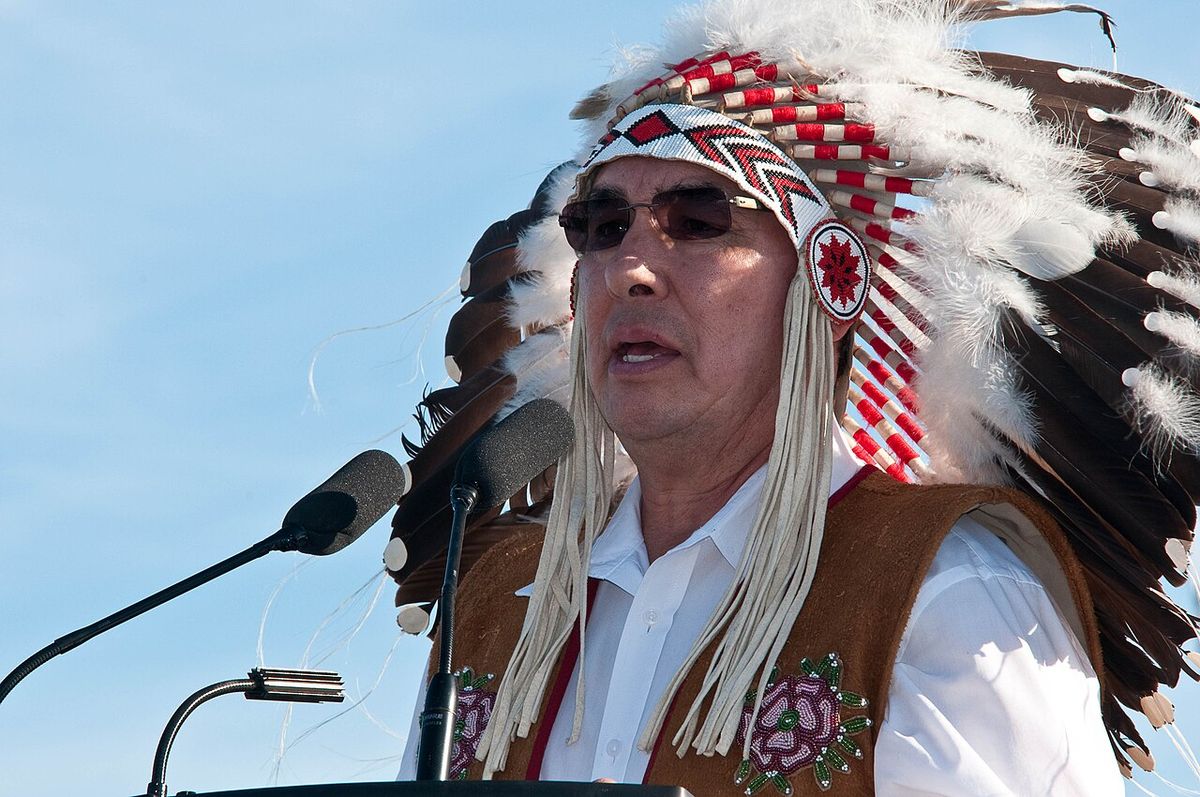
The initial chair of the commission was Justice Harry S. Laforme of the Ontario Court of Appeal, appointed alongside commissioners Claudette Dumont-Smith and Jane Brewin Morley. Laforme resigned in October 2008, citing disagreements over the commission's direction, with the two other commissioners resigning in January 2009. On June 10, 2009, a new leadership team was appointed to guide the TRC through its critical work. Murray Sinclair, who would later become a senator, was appointed as the new chairperson. He was joined by commissioner Marie Wilson, a senior executive from the Northwest Territories and Nunavut, and commissioner Wilton Littlechild, a former Conservative Member of Parliament and Alberta regional chief for the Assembly of First Nations. This trio led the commission for the remainder of its mandate. The commission also recognized individuals like Sandy White Hawk, a Sicangu Lakota adoptee, as an Honorary Witness to its proceedings. The TRC spent six years travelling across Canada to hear testimony and oversee its extensive research program.
Gathering Survivor Testimony
A central pillar of the TRC's work was gathering the firsthand accounts of residential school survivors, their families, and others affected by the system. Between 2008 and 2014, the commission collected an estimated 7,000 testimonies. These statements were gathered in diverse settings designed to be safe and culturally appropriate, including private one-on-one interviews, community hearings, sharing circles, and large public Commissioners Sharing Panels. The public panels often drew hundreds of audience members and media, with testimonies regularly recorded and shared online. Survivors detailed experiences of being stripped of their language and culture, and many shared painful memories of physical and sexual abuse, assault, and malnutrition. The mandate required this collection to create an irrefutable historical record and to educate the public on the truth of what happened in the institutions. The commission recognized the urgency of this work, noting that many survivors were elderly. The records of these testimonies are preserved at the National Centre for Truth and Reconciliation.
Final Report and Key Findings
The TRC released its multi-volume final report in December 2015, culminating years of research and testimony collection. The report was based on primary and secondary source research and testimonies collected from survivors. It was structured into several comprehensive sections covering the origins, operations, and legacy of the schools, including specific volumes on the Inuit and Métis experiences. It estimated that 150,000 First Nations, Inuit, and Métis children attended residential schools over the system's 120-year history. Critically, the TRC concluded that the forcible removal of children to assimilate them into dominant culture constituted cultural genocide. The report noted that 3,200 children were documented to have died in the schools, though researchers acknowledged the actual number was likely much higher. From the approximately 70,000 former students still alive at the time, the report cited 31,970 resolved cases of sexual or serious assault through the Independent Assessment Process, with 5,995 claims still in progress. The commission also established Principles for Reconciliation to guide future efforts. The final report included the sections 'Honouring the Truth, Reconciling for the Future,' 'What We Have Learned,' 'The Survivors Speak,' and detailed historical analyses from origins to 2000.
The 94 Calls to Action
In June 2015, the TRC released an executive summary containing 94 Calls to Action designed to redress the legacy of residential schools and advance reconciliation. These calls were divided into two broad categories, Legacy and Reconciliation, and addressed nearly every sector of Canadian society. The Legacy calls focused on redressing specific harms in areas deeply impacted by the schools and ongoing colonial policies. The Reconciliation calls aimed to repair relationships between governments and Indigenous Peoples and to embed reconciliation into Canadian institutions. Key themes across the calls included child welfare, education, language and culture, health, and justice, alongside specific directives for governments, churches, media, sports, and businesses. The TRC emphasized that these were not mere recommendations but a practical blueprint for fundamental change. The Legacy section of the calls to action focused on redressing the harms resulting from the Indian residential schools. The proposed actions were identified in several critical sub-categories.
- Child Welfare: Addressing the disproportionate number of Indigenous children in foster care, noting that by 2011, 3.6 percent of all First Nations children under 14 were in care compared to 0.3 percent of non-Indigenous children. A 1953 survey found 4,313 of 10,112 residential school children were described as orphans or from broken homes.
- Education: Closing the funding gap for Indigenous education and improving completion rates, addressing the legacy of rudimentary education and manual labour focus in the schools where many students did not progress beyond a basic education.
- Language and Culture: Providing increased funding for Indigenous language education and post-secondary programs, countering the deliberate suppression practiced in residential schools. According to UNESCO, 36 percent of Canada's Indigenous languages are critically endangered.
- Health: Addressing the gap in health outcomes for Indigenous peoples by connecting it to the legacy of poor and variable healthcare in the schools. After the 1940s, some schools had nurses and infirmaries.
- Justice: Extending statutes of limitations for abuse claims, reaffirming RCMP independence, and developing culturally appropriate justice systems. Few prosecutions resulted from police investigations into abuse claims.
The Reconciliation section was focused on creating better relations between governments and Indigenous nations. It included calls for implementing the United Nations Declaration on the Rights of Indigenous Peoples. The section also called for establishing a National Council for Reconciliation and issuing a royal proclamation and covenant of reconciliation. Further calls targeted church apologies, professional development for public servants, and education for reconciliation in schools. Additional calls addressed youth programs, museums and archives, commemoration, media, sports, business, and newcomers to Canada.
Implementation and Tracking of the Calls
The implementation of the 94 Calls to Action has been tracked by several organizations, with progress reported as slow and inconsistent. The Yellowhead Institute, a First Nations-led research centre, has conducted periodic assessments. In 2016, historian Ian Mosby found only five calls completed, a number that grew to seven by 2017. By the end of 2020, an evaluation by Mosby and Eva Jewell concluded only eight calls had been fully implemented. The Canadian Broadcasting Corporation launched its "Beyond 94" tracking website in 2018. As of March 2018, it reported 10 calls completed, 15 in progress, 25 proposed, and 44 unmet. By July 29, 2019, that count shifted to 10 completed, 21 in progress, 37 proposed, and 26 not started. As of May 10, 2025, the CBC's assessment marked 15 calls to action as complete and 24 as in progress. This slow pace has been a point of significant criticism from Indigenous leaders and advocates, who emphasize that reconciliation requires tangible action. The government also conducts its own assessments. The Nordic countries of Norway, Sweden, and Finland have established truth and reconciliation commissions modelled on the Canadian commission to address the colonization of the Saami people.
The National Centre for Truth and Reconciliation and Commemoration
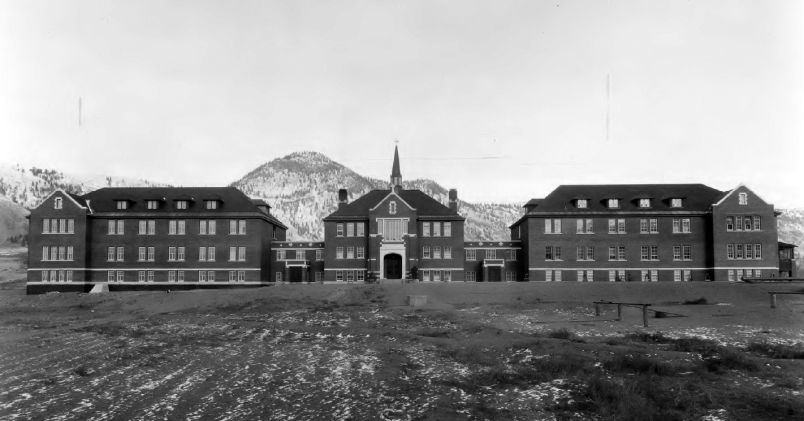
As a permanent legacy of the TRC's work, the National Centre for Truth and Reconciliation was established at the University of Manitoba in Winnipeg. The centre opened to the public in November 2015 and serves as the official archival repository for all statements, documents, and other materials collected by the commission. The NCTR holds more than five million documents related to the residential school system and its legacy. It continues the work of the TRC by engaging in ongoing research, public education, and commemoration. The centre plays a leading role in organizing Truth and Reconciliation Week, an annual five-day national educational program for students. It also supports the National Day for Truth and Reconciliation, observed each year on September 30, a federal statutory day to honour survivors, their families, and communities. The NCTR operates on the original lands of Anishinaabeg, Cree, Oji-Cree, Dakota, and Dene peoples, and the homeland of the Métis Nation. The TRC's Commemoration Initiative provided funding for community-designed events to honour survivors. The NCTR also undertakes critical ongoing work such as the Missing Children Project, dedicated to identifying the thousands of children who died at residential schools. In 1917, the Department of Indian Affairs stopped recording death rates. For example, NCTR researchers have identified 63 children who died at the former Kamloops Indian Residential School. The centre's philosophy is guided by the teaching of Bezhig miigwan.
Criticisms, Legacy, and Contemporary Challenges
While the TRC was a landmark undertaking, it faced criticism from some Indigenous scholars and writers regarding its scope and framework. A key critique, articulated by Professor Glen Coulthard of the Yellowknives Dene First Nation, was that by focusing primarily on the residential school system as a historical wrong, the commission risked framing reconciliation as a matter of closing a "sad chapter" rather than addressing the ongoing structures of colonialism. Professors Brian Rice and Anna Snyder agreed, noting the schools were only one aspect of a larger assimilation project. This critique suggests the TRC's framework allowed the harms of colonialism to be historicized. Other observers noted the commission's limited ability to compel action, leaving the implementation of its calls to the goodwill of governments and institutions. Unlike the South African commission, the Canadian TRC had no powers of subpoena or amnesty and could not explicitly name perpetrators. In the years following the TRC's report, a rise in residential school denialism has presented a direct challenge to its work. This was evidenced by incidents like the September 2026 banner drop in Kamloops, British Columbia. The TRC's influence extends to the creation of new national observances and ongoing educational mandates. In August 2018, the Royal Canadian Geographical Society released the Indigenous Peoples Atlas of Canada to address the Calls to Action. The commission's vast archive at the NCTR ensures that the truths it documented will remain accessible.
Questions about Truth and Reconciliation Commission of Canada
What was the main purpose of the Truth and Reconciliation Commission of Canada?
The main purpose was to document the history and lasting impacts of the Indian residential school system on Indigenous students and their families. Its mandate was to create a comprehensive historical record by gathering survivor testimony and archival documents, and to educate all Canadians about this truth. The commission aimed to provide a platform for survivors to share their experiences. Ultimately, its work was directed toward fostering reconciliation between Indigenous and non-Indigenous peoples in Canada. The TRC was a key component of the Indian Residential Schools Settlement Agreement.
What did the TRC conclude about the residential school system?
The TRC's final report concluded that the residential school system amounted to cultural genocide. It found that the forced removal of children from their families with the intent to assimilate them was a deliberate policy designed to destroy Indigenous cultures. The report estimated that 150,000 children attended the schools over 120 years and that at least 3,200 children died while in the system. The commission documented widespread physical and sexual abuse, malnutrition, and neglect. The ambiguity of the TRC's phrasing allowed for the interpretation that physical and biological genocide also occurred, though it was not authorized to make that legal conclusion.
What are the 94 Calls to Action?
The 94 Calls to Action are specific recommendations issued by the TRC in 2015 to redress the legacy of residential schools and advance the process of reconciliation. They are divided into two main categories, Legacy and Reconciliation. The calls cover areas including child welfare, education, language and culture, health, justice, and the implementation of the United Nations Declaration on the Rights of Indigenous Peoples. They also include directives for churches, media, sports, businesses, and newcomers to Canada. The Legacy calls address specific harms, while the Reconciliation calls focus on repairing relationships and embedding reconciliation into institutions.
How many of the Calls to Action have been completed?
Progress on implementing the 94 Calls to Action has been slow and is tracked by different organizations. According to the CBC's "Beyond 94" project, as of May 10, 2025, 15 calls have been marked as complete and 24 are in progress. Independent assessments by researchers like those at the Yellowhead Institute have reported even fewer completions, with an evaluation at the end of 2020 finding only eight calls fully implemented. The varying counts reflect different methodologies, but all trackers agree that the vast majority of calls remain unmet. The government also conducts its own assessments of progress.
What is the National Centre for Truth and Reconciliation?
The National Centre for Truth and Reconciliation is the permanent archival repository established at the University of Manitoba in Winnipeg to house all the records collected by the TRC. It opened in November 2015 and holds more than five million documents related to residential schools. The NCTR continues the work of the TRC by preserving survivor testimony, supporting ongoing research like the Missing Children Project, and leading public education and commemoration initiatives. It organizes annual events like Truth and Reconciliation Week and supports the National Day for Truth and Reconciliation on September 30. The centre is an archive for the research, documents, and testimony collected during the TRC's operation.
What is the National Day for Truth and Reconciliation?
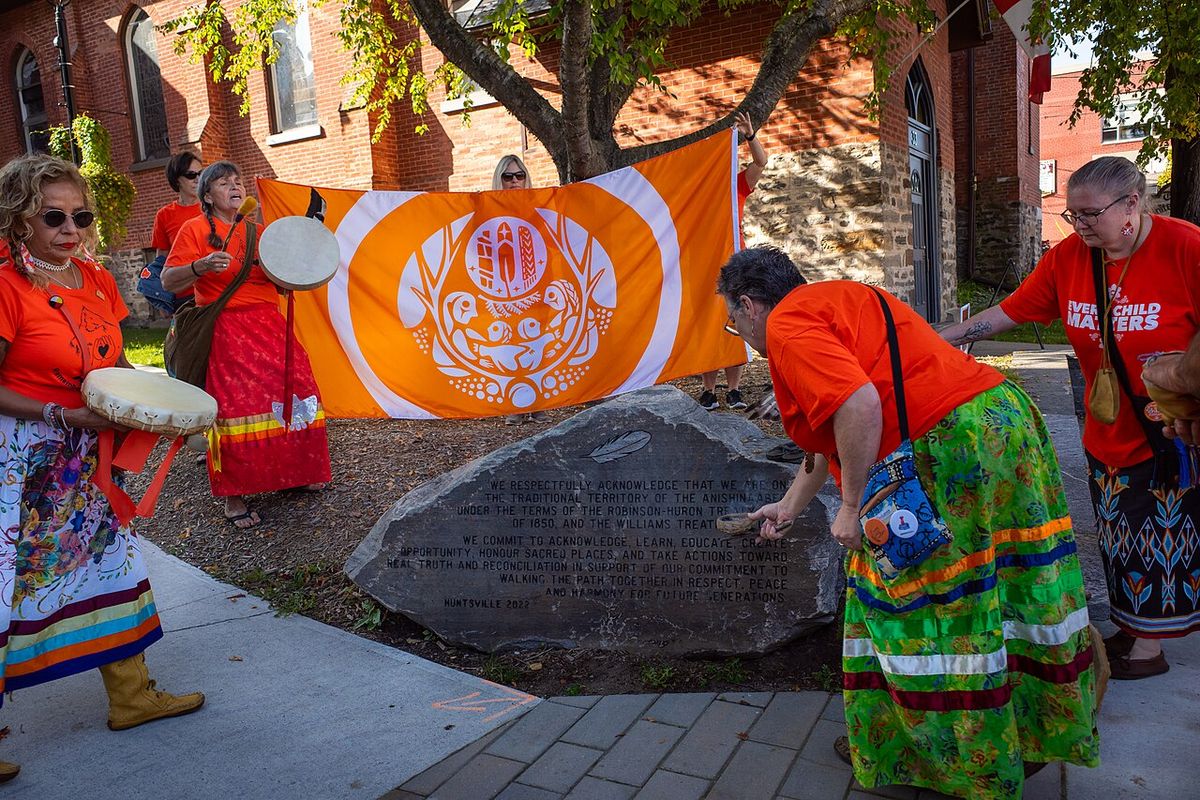
The National Day for Truth and Reconciliation is observed annually on September 30. It is a federal statutory holiday that honours First Nations, Inuit and Métis Survivors of residential schools and their families. The day was established in response to the Truth and Reconciliation Commission's calls to action to advance the process of Canadian reconciliation. It serves as a day for public commemoration of the tragic history and ongoing legacy of residential schools, including the children who never returned home. The day is also widely recognized as Orange Shirt Day, which symbolizes the stripping away of culture and identity experienced by Indigenous children in the schools.
Sources and further reading
- Truth and Reconciliation Commission of Canada (Wikipedia)
- Truth and Reconciliation Commission of Canada, NCTR (nctr.ca)
- National Day for Truth and Reconciliation (historymuseum.ca)
- Truth and Reconciliation Week, Taking Truth to Action (trw-svr.nctr.ca)
- Truth and Reconciliation Day marked across Canada (cp24.com)
Checked by the Nosy Mag desk. Last updated 2026-10-25.