Kamloops Indian Residential School
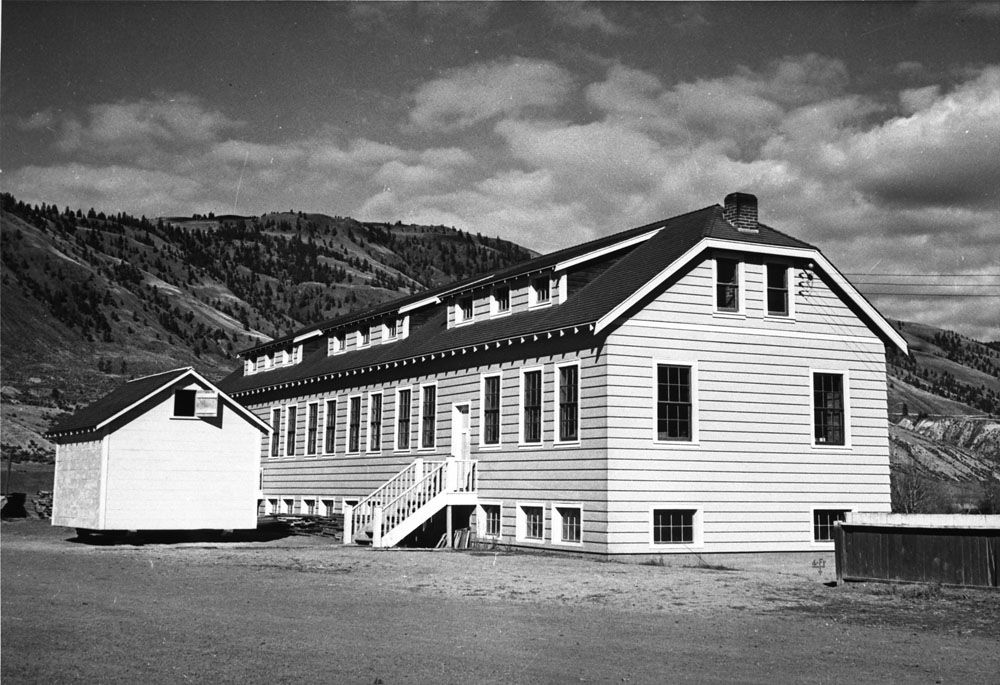
The Kamloops Indian Residential School was a Canadian Indian residential school located in Kamloops, British Columbia, on the traditional territory of the Tk’emlúps te Secwépemc First Nation. Operating from 1890 to 1978, it was once the largest such institution in Canada, designed as part of a federal policy of forced assimilation of Indigenous children. The school's history is marked by harsh conditions, widespread abuse, and the intergenerational trauma inflicted on students from many Indigenous Nations. In 2021, a ground-penetrating radar survey indicated the possible presence of approximately 200 unmarked graves on the school grounds. As of 2026, no human remains had been excavated or confirmed. The site was designated a National Historic Site in 2024.
Establishment and operation
The institution that became the Kamloops Indian Residential School first opened on May 19, 1890, as the Kamloops Industrial School. It was built near the city of Kamloops on the traditional territory of the Secwepemc people, with the initial construction contract for $10,000 awarded to J.D. Ross in April 1889. The first buildings were three two-story wooden structures with separate living quarters for boys, girls, and teachers, along with classrooms and a recreation area. After the first principal, Michel Hagan, resigned in 1892, the federal government placed the school under the administration of the Catholic Church's Oblates of Mary Immaculate. Father Alphonse-Marie Carion was appointed principal in March 1893 and remained in that role until 1916, emphasizing in his reports that the school's primary goal was the moral and religious training of students to assimilate them into colonial society.
The school operated for 88 years, closing permanently in 1978. For most of its history, it was run by the Catholic Church, with principals including John Duplanil (1927), James Fergus O'Grady (1939), and G. P. Dunlop (1958). In 1969, the federal government took over direct operation from the Church, after which the facility served as a residence for students attending other area schools until its final closure. The school's physical legacy was partially preserved, with four buildings maintained by Tk’emlúps te Secwépemc. In 1982, the main building reopened as the first location of the Secwepemc Museum, and in September 2026, the British Columbia Ministry of Transportation and Infrastructure unveiled a Stop of Interest sign at the site in collaboration with the First Nation to acknowledge its history.
Student experience and conditions
Children from across British Columbia and beyond were forcibly removed from their homes and sent to the Kamloops school, especially after mandatory attendance laws were introduced in the 1920s. At its peak, the school enrolled 500 children annually from many Indigenous Nations and communities, including Penticton, Hope, Mount Currie, and Lillooet. Students were prohibited from speaking their native languages, such as Secwepemctsín, and faced harsh punishments for doing so. Former student George Manuel of the Secwépemc Nation cited his three strongest memories as hunger, being forced to speak English, and being called a heathen because of his grandfather. In 1910, the principal reported that government funding was insufficient to properly feed the students.
Living conditions at the school were often dire and dangerous. On December 24, 1924, a fire destroyed the girls' wing, forcing 40 students into minus 10 degree Celsius weather in only their night clothes. A 1927 report linked the poor construction of the buildings to numerous respiratory infections among students during the previous winter. During the 1957 to 1958 influenza pandemic, the Kamloops district health officer reported that half the students had been ill. Students endured harsh disciplinary treatment, including being struck with a shillelagh. The 2015 Truth and Reconciliation Commission of Canada report concluded the residential school system constituted cultural genocide, documenting at least 4,100 student deaths across all schools from abuse, negligence, and disease.
- Students were forcibly removed from their families under mandatory attendance laws.
- Speaking Indigenous languages was prohibited and punished.
- A 1924 fire displaced 40 girls into freezing conditions.
- Poor building construction contributed to widespread illness.
- Half the student body fell ill during the 1957 to 1958 flu pandemic.
- The TRC documented systemic cultural genocide and thousands of student deaths.
Cultural suppression and the dance program
The school's policy of forced cultural assimilation extended into its extracurricular activities. Beginning in the 1940s, the school operated a girls' folk dancing program under Sister Mary Leonita that focused exclusively on European dance styles. The program initially taught Irish dancing and later expanded to include Swiss and Ukrainian folk dances. Children in the program were expressly prohibited from learning or performing any Indigenous dances, reinforcing the school's mandate to erase their cultural identity. This program was presented as an example of the school's success in assimilation.
The dancers from Kamloops were featured at high-profile events, including the 1960 Pacific National Exhibition. In July 1964, a group of girls from the school travelled to Mexico to perform in a series of festivals, with Canadian embassy officials calling them the finest ambassadors ever to come from Canada. The trip was funded by the Knights of Columbus. The dance program ended later in 1964 when Sister Mary Leonita transferred away from the school. This program exemplified the systemic suppression of Indigenous culture, a point later argued by scholar Celia Haig-Brown in her 1988 book, which contended the school ultimately failed in its assimilation goal due to Secwepemc resistance.
The 2021 survey and investigation
In 2021, the Tk’emlúps te Secwépemc First Nation announced preliminary findings from a ground-penetrating radar survey conducted by anthropologist Dr. Sarah Beaulieu of the University of the Fraser Valley. The survey, focused on a two-acre apple orchard on the 160-acre school site, identified subsurface disruptions consistent with approximately 200 potential unmarked graves. The site was chosen based on oral histories from survivors who recalled hearing about children being forced to dig holes there and reports of seeing children's bodies on the grounds. Dr. Beaulieu emphasized the findings indicated probable burials or targets of interest, but noted that only forensic excavation could confirm the presence of human remains.
The announcement triggered a multi-year investigation led by the First Nation. By May 2022, a technical task force of archaeologists and professors had been formed to plan the next steps, though the community remained divided on whether to excavate. The RCMP opened an investigative file but stated the First Nation remained the lead. In May 2024, on the third anniversary of the survey, Tk’emlúps te Secwépemc referred to the 215 suspected sites mentioned in 2021 as anomalies rather than children. As of February 2025 and confirmed through 2026, no human remains had been excavated or confirmed at the site. A Globe and Mail report on May 30, 2026, stated that in the five years of investigation, no human remains were ever found, including the 215 originally cited.
| Investigation Timeline | Key Event or Status |
|---|---|
| May 2021 | Preliminary GPR findings indicate ~200 potential burials announced. |
| July 2021 | Anthropologist Sarah Beaulieu revises estimate to 200 probable burials. |
| May 2022 | Technical task force formed. Decision on excavation pending. |
| March 2024 | Tk’emlúps te Secwépemc states decision to excavate is unresolved. |
| May 2024 | First Nation refers to sites as anomalies in statement. |
| February 2025 | No human remains excavated or confirmed. |
| May 2026 | Media reports no human remains found in five years of investigation. |
National and international reactions
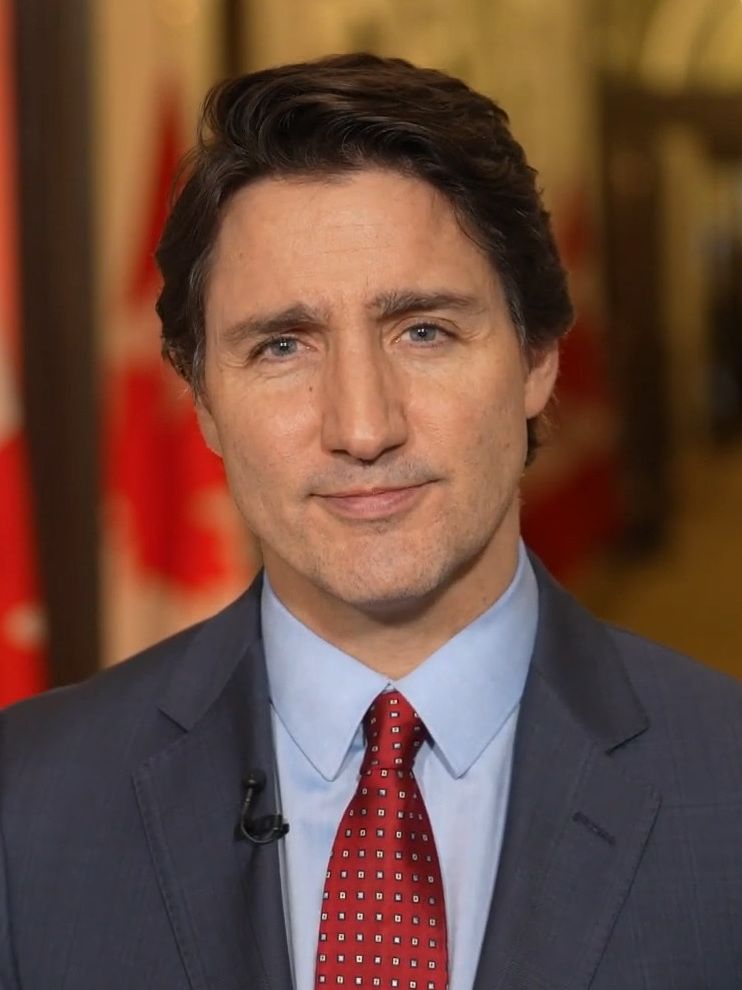
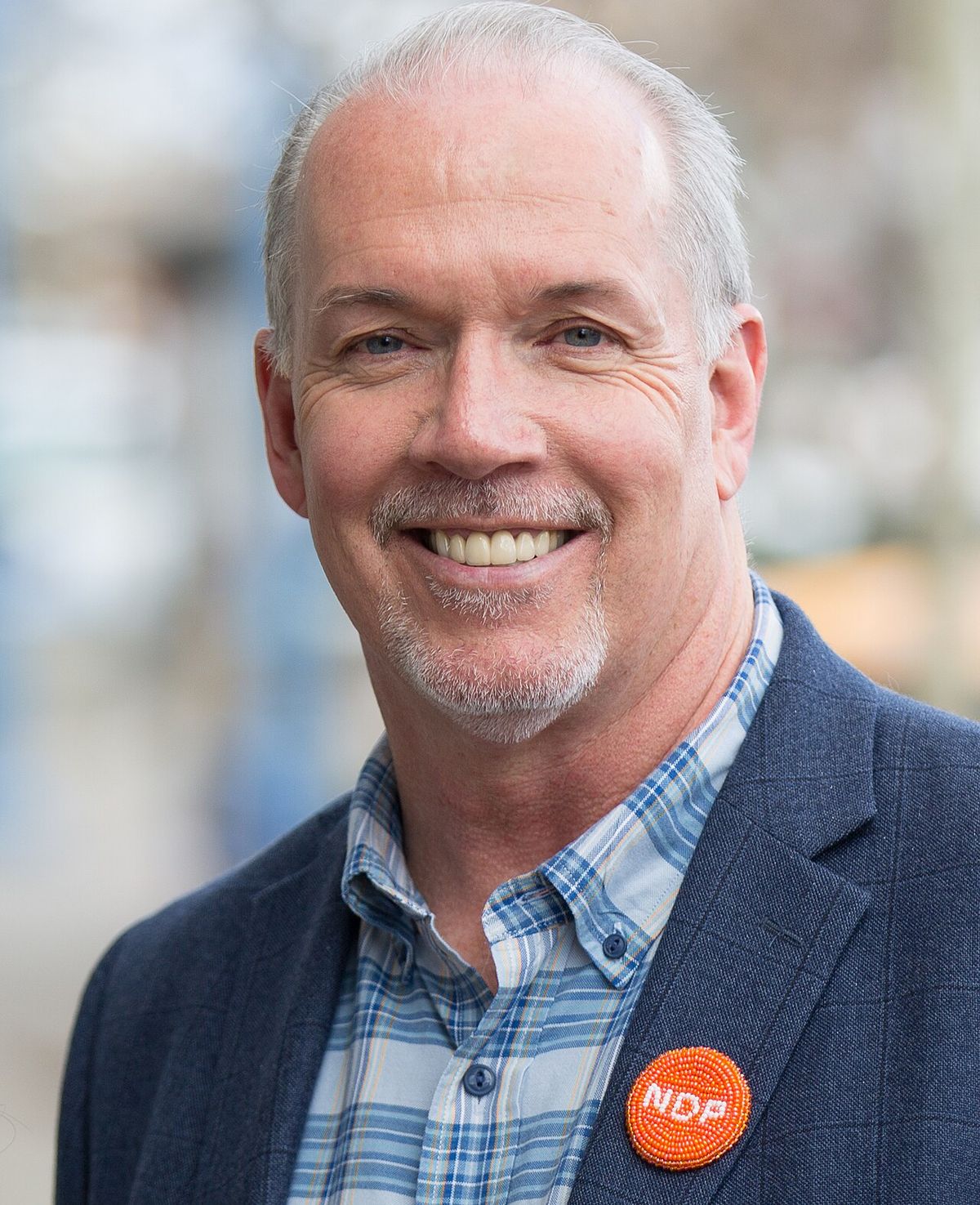
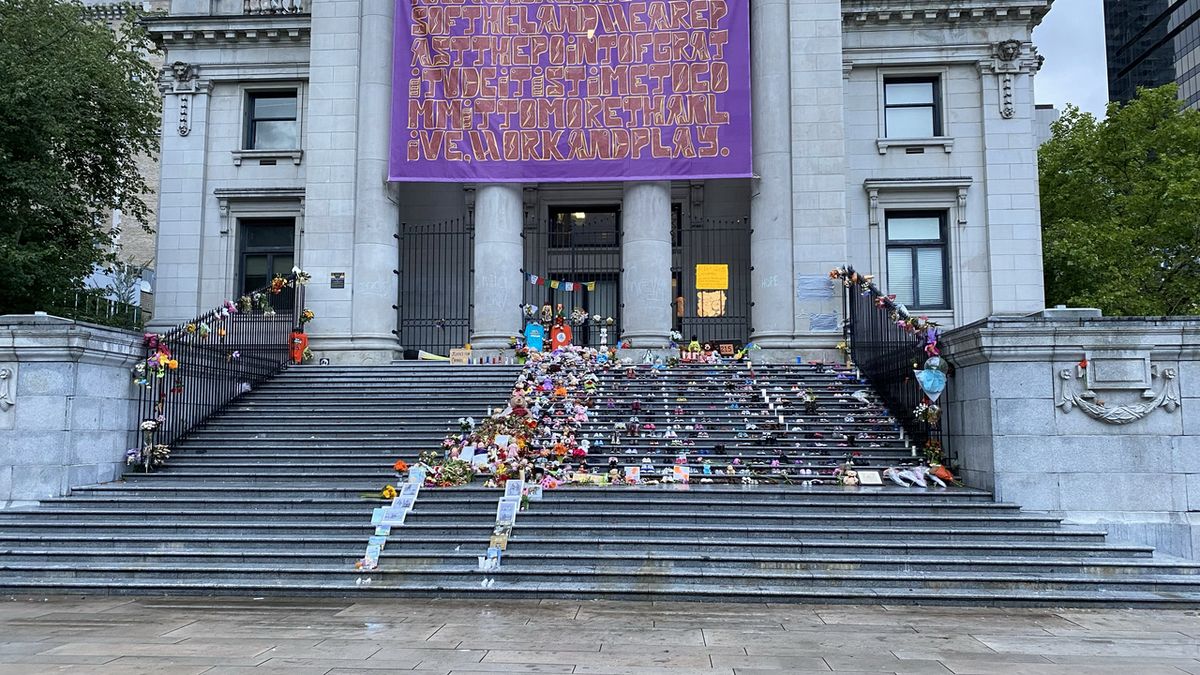
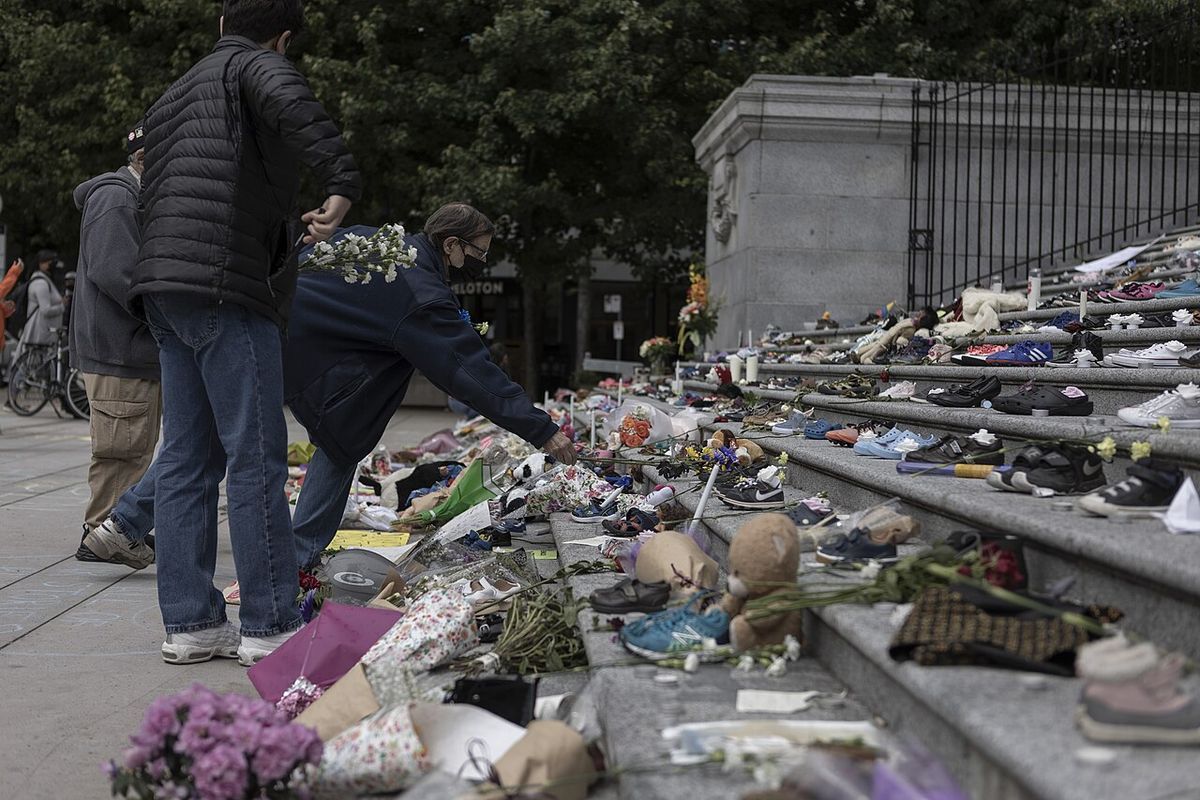
The 2021 announcement provoked widespread grief, solidarity, and political response across Canada and internationally. Chief Rosanne Casimir of Tk’emlúps te Secwépemc called the preliminary findings an unthinkable loss. Prime Minister Justin Trudeau described the news as heartbreaking and ordered flags on all federal buildings flown at half mast, a gesture mirrored by many provincial legislatures and municipalities, some for 215 hours. British Columbia Premier John Horgan said he was horrified and heartbroken, pledging support for further investigation. Memorials sprang up nationwide, most notably at the Vancouver Art Gallery where 215 pairs of children's shoes were laid out, with similar displays at churches and government buildings.
The reaction also included calls for accountability and concrete action. Angela White of the Indian Residential School Survivors Society urged the federal government and Catholic Church to move beyond words to meaningful reconciliation efforts. The United Nations human rights experts called on Canada and the Church to conduct thorough investigations. Pope Francis, addressing the discovery from St. Peter's Square, expressed sadness and urged authorities to shed light on this sad affair. In a notable international exchange in June 2021, the Chinese government criticized Canada's human rights record at the UN Human Rights Council, a move supported by several nations including Russia and North Korea, to which Prime Minister Trudeau contrasted Canada's Truth and Reconciliation Commission with China's lack of such a process.
- Flags were flown at half mast across Canada in remembrance.
- Memorials with children's shoes appeared at galleries and legislatures.
- The UN called for full investigations by Canada and the Catholic Church.
- Pope Francis urged authorities to shed light on the affair.
- China criticized Canada at the UN, prompting a rebuttal from Trudeau.
- Many Canada Day festivities in 2021 were modified or cancelled out of respect.
Commemoration and ongoing legacy
The legacy of the Kamloops Indian Residential School is actively commemorated and studied as a central chapter in Canada's history. In 2024, the site was formally designated as a National Historic Site, with a commemorative plaque installed at 330 Chief Alex Thomas Way in Kamloops. The plaque text, in English, Secwepemctsín, and Chinook Jargon, details the school's operation as part of a system designed to destroy Indigenous cultures, acknowledging the trauma as genocide. The Tk’emlúps te Secwépemc community preserves four of the original school buildings to share this history and revitalize Secwépemc language and culture.
The school's history is fundamental to the National Day for Truth and Reconciliation, observed annually on September 30. This federal day honours the children who never returned home from residential schools and supports survivors and their families. In September 2026, hundreds gathered near the school on the eve of this day for commemorative events. Related cultural initiatives continue, such as the Stseptékwles re Sk’elép (Coyote Stories) Indigenous Film Festival presented by the Kamloops Film Society and Tk’emlúps te Secwépemc. The ongoing public discourse was reflected in an August 2025 Angus Reid poll, which found that 63 percent of Canadians and 56 percent of Indigenous people believed exhumation and further evidence were necessary to confirm the presence of remains at the Kamloops site.
Notable individuals and institutional reckoning
The school's history is connected to several individuals whose roles have been scrutinized in the process of historical reckoning. Former student Leonard Marchand, a member of the Okanagan Indian Band, later became a Canadian politician. Another former student, George Manuel, became a noted Secwépemc leader. The school was also the subject of a 1962 Christmas documentary film titled Eyes of the Children, which followed 400 students preparing for Christmas and aired on CBC. A staff member featured in that film, Gerald Mathieu Moran, a boys' supervisor, was later charged in the 1990s with several dozen sex crimes committed at the school, to which he pled guilty and served three years in jail.
Institutional responses to the school's legacy have included reviews of past honours granted to its administrators. In 2021, following the GPR announcement, the University of British Columbia announced a review of the honorary degree it granted in 1986 to Bishop James Fergus O'Grady, a former principal of the school. O'Grady had written a 1948 letter to parents stating travel costs for Christmas break were the family's responsibility and threatening to withhold future breaks for tardy returns. His administration was also cited in the 2007 documentary The Fallen Feather, where survivor Ernie Philip described receiving 50 lashes from O'Grady after attempting to run away. These reassessments are part of a broader societal effort to confront the truths of the residential school system.
Questions about Kamloops Indian Residential School
When did the Kamloops Indian Residential School operate?
The Kamloops Indian Residential School operated from 1890 to 1978, a period of 88 years. It first opened as the Kamloops Industrial School on May 19, 1890. From 1893 until 1969, it was administered by the Catholic Church's Oblates of Mary Immaculate. The federal government took over operations in 1969, after which it functioned as a residence for students attending other schools until its permanent closure in 1978.
What were the conditions like for students at the school?
Conditions at the school were harsh and often dangerous. Students were forcibly separated from their families, forbidden from speaking their native languages, and punished severely for doing so. They endured physical, emotional, and sexual abuse, forced labour, and malnutrition. The buildings were poorly constructed, leading to widespread illness. A 1924 fire displaced 40 girls into freezing weather, and half the student body fell ill during a 1957 flu pandemic. The Truth and Reconciliation Commission concluded such schools were a system of cultural genocide.
What was found at the Kamloops school site in 2021?
In May 2021, Tk’emlúps te Secwépemc announced preliminary findings from a ground-penetrating radar survey of a former apple orchard on the school grounds. Anthropologist Dr. Sarah Beaulieu reported subsurface disruptions consistent with approximately 200 potential unmarked graves, which she described as probable burials or targets of interest. She stressed that only forensic excavation could confirm if they were human remains. As of 2026, no excavation had taken place and no human remains had been confirmed at the site.
How is the Kamloops school site commemorated today?
The former Kamloops Indian Residential School was designated a National Historic Site in 2024, with a trilingual commemorative plaque installed at the location. Tk’emlúps te Secwépemc preserves four of the original buildings to share the history and revitalize Secwépemc culture. In 2026, a Stop of Interest sign was unveiled at the site in collaboration with the BC government. The school's legacy is also central to the National Day for Truth and Reconciliation on September 30, with annual gatherings and events held there.
What has been the outcome of the investigation into unmarked graves?
As of May 2026, the investigation into potential unmarked graves at the Kamloops school site has not led to the confirmation of any human remains. A technical task force was formed in 2022, but the decision on whether to excavate the anomalies detected in 2021 remained unresolved. A Globe and Mail report in May 2026 stated that in the five years since the initial announcement, no human remains had been found. The Tk’emlúps te Secwépemc has proceeded with a confidential investigative process to preserve its integrity.
How many children attended the Kamloops school?
The Kamloops Indian Residential School was once the largest residential school in Canada, with its enrolment peaking at 500 in the 1950s. It operated for 88 years from 1890 to 1978. Hundreds of children attended, many forcibly removed from their homes after mandatory attendance laws were introduced in the 1920s. Students came from the local Secwépemc Nation and from many Indigenous Nations across British Columbia, representing 119 communities. Notable attendees included Canadian politician Leonard Marchand and Secwépemc leader George Manuel.
Sources and further reading
- Kamloops Indian Residential School (Wikipedia)
- The Former Kamloops Indian Residential School National ... (parks.canada.ca)
- National Day for Truth and Reconciliation (kamloops.ca)
- Residential school Stop of Interest sign unveiled, BC Gov News (news.gov.bc.ca)
- Fifth Anniversary of Tk'emlúps te Secwépemc Announcement (ubcic.bc.ca)
Checked by the Nosy Mag desk. Last updated 2026-10-24.