Indigenous self-government in Canada
Indigenous self-government in Canada refers to the formal structures and negotiated agreements through which First Nations, Inuit, and Métis communities exercise control over their own governance, lands, and resources. It is rooted in the recognition of an inherent right, affirmed in Section 35 of the Constitution Act, 1982, and represents a fundamental shift away from the colonial governance imposed by the Indian Act. The movement seeks to renew nation-to-nation relationships between Indigenous peoples and the Crown, enabling communities to make their own decisions on matters like education, health, and economic development. As of 2019, Canada had signed 25 comprehensive self-government agreements involving 43 Indigenous communities, with dozens more negotiations ongoing across the country.
Historical context and the Indian Act
For thousands of years before European contact, Indigenous peoples across the land now called Canada practised diverse and sophisticated forms of self-government suited to their cultures and environments. These systems ranged from band societies and tribal chiefdoms to confederacies and representative democracies, such as the Métis-led Legislative Assembly of Assiniboia. Early relationships with colonial powers were often forged through treaties, trade, and military alliances. This dynamic changed deeply with the passage of the Indian Act in 1876, which imposed a uniform system of band governance under strict federal control. The Act made the Minister of Indian Affairs the ultimate authority for most decisions on reserves, severely limiting Indigenous autonomy. For over a century, the Indian Act determined membership, governance, and land use for most First Nations, while Métis and Inuit peoples were generally integrated into standard Canadian municipal, provincial, and federal political structures without recognition of their distinct governance rights. The band system created under the Act allowed First Nations people to vote in band elections but they could not vote in federal elections before 1960 unless they renounced their status as Registered Indians through a process called enfranchisement.
The rationale for inherent right
The drive for self-government is grounded in both philosophical and legal arguments. Indigenous peoples assert an inherent right to self-government stemming from their original occupation of the land and their pre-existing sovereignty, which they argue was never extinguished. This perspective frames self-government not as a privilege granted by the Canadian state but as a pre-existing right that requires recognition. Internationally, the right to self-determination, as articulated in documents like the United Nations Declaration on the Rights of Indigenous Peoples (UNDRIP), provides a further legal foundation. Domestically, Section 35 of the Constitution Act, 1982, which recognizes and affirms existing Aboriginal and treaty rights, is the primary legal basis for this claim. Self-government arose as a proposed solution to free communities from the restrictions of the Indian Act, first passed in 1876, with the landmark James Bay and Northern Quebec Agreement in 1975 serving as an early model for new treaty-making between the federal government and First Nations and Inuit groups. The agreement was signed between the province of Quebec and the Cree and Inuit peoples.
Evolution of policy and negotiations
The modern push for self-government entered national political discourse in the late 1960s, galvanized by Indigenous opposition to the federal government's 1969 White Paper, which proposed abolishing the Indian Act and band governments and transferring service delivery to provincial governments. The 1983 Penner Report, formally the report of the Special Committee of the House of Commons on Indian Self-Government, was a landmark that recommended the federal government recognize First Nations as a distinct order of government within the Canadian federation and begin to negotiate self-government agreements with Indian bands. While attempts to entrench self-government in the constitution via the Meech Lake (1987) and Charlottetown (1992) accords failed, the latter did formally recognize an inherent Aboriginal right to self-government. The 1995 federal Inherent Right of Self-Government Policy marked a major shift, acknowledging the inherent right but channelling its implementation into community-by-community negotiations that resemble a delegation of authority from the Crown. This approach moved away from seeking a single constitutional amendment and towards crafting tailored agreements that transfer specific law-making powers from the Crown to Indigenous governments. The Royal Commission on Aboriginal Peoples issued its final report in 1996, recommending Indigenous governments become recognized as the third order of government in Canada alongside the federal government and the provinces. The Conservative government had earlier announced its Community-Based Self-Government (CBSG) policy in 1986 to enable negotiation of new Crown-Aboriginal relationships outside of the Indian Act on a community-by-community basis.
- 1969: White Paper on Indian Policy proposes abolishing band governments and transferring services to provinces.
- 1982: Section 35 of the Constitution Act recognizes and affirms Aboriginal and treaty rights.
- 1983: Penner Report recommends recognizing First Nations as a distinct order of government.
- 1986: Community-Based Self-Government (CBSG) policy announced by the Conservative government.
- 1987: Meech Lake Accord fails to include self-government provisions, leading to Indigenous opposition.
- 1992: Charlottetown Accord includes recognition of inherent right to self-government but is defeated in a national referendum.
- 1995: Federal government launches the Inherent Right of Self-Government Policy.
- 1996: Royal Commission on Aboriginal Peoples recommends Indigenous governments as a third order of government.
- 2019: Canada and the Métis Nation of Alberta sign the first Métis Government Recognition and Self-Government Agreement.
Models and examples of self-government
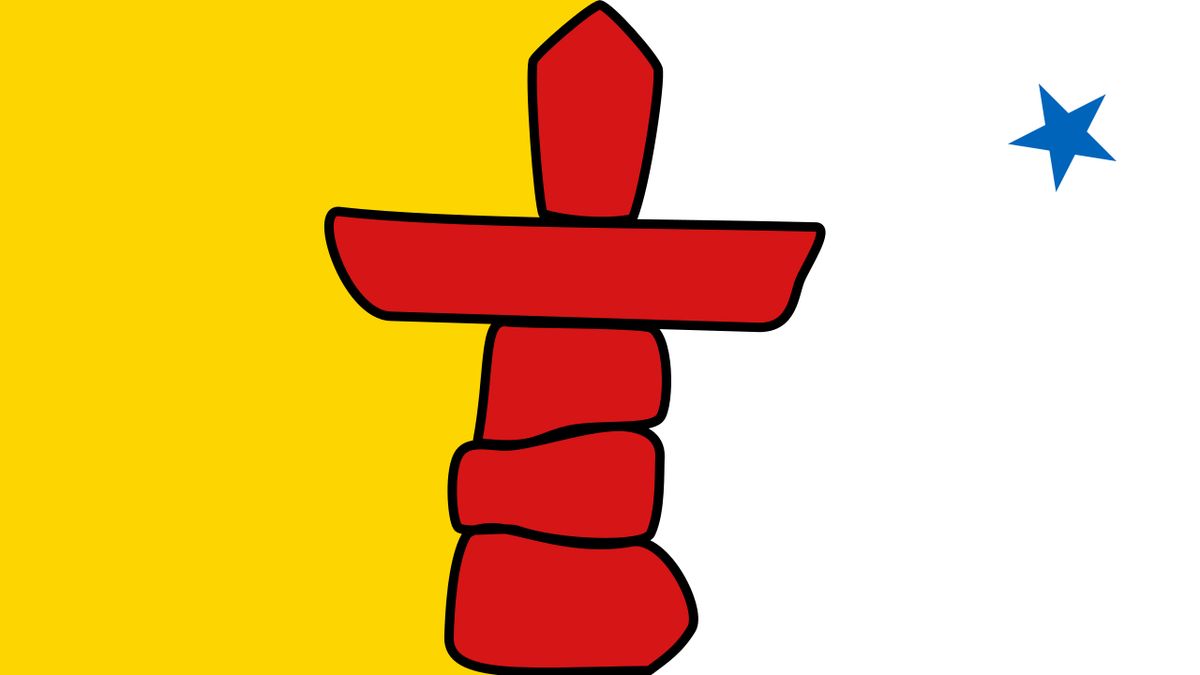
There is no single model for Indigenous self-government in Canada. Arrangements vary based on historical, cultural, and geographical circumstances. Comprehensive self-government agreements, often linked to modern treaties, provide the broadest range of powers. The Yukon First Nations agreements and the Nisga'a Final Agreement are prominent examples, covering governance, citizenship, lands, and resources. A unique public government model was established through the Nunavut Land Claims Agreement of 1993, which led to the creation of the Territory of Nunavut in 1999. While not exclusively for Inuit, the public government reflects the Inuit majority, with Inuktitut and Inuinnaqtun as official languages alongside English and French. In northern Quebec, the Cree operate under the Cree-Naskapi (of Quebec) Act of 1984, which replaced the Indian Act for nine Cree communities. The Cree Regional Authority and Grand Council of the Crees (Eeyou Istchee) govern, and a 2012 agreement with Quebec created the Eeyou Istchee James Bay Territory, a new regional government that merged Cree governance with local municipalities. As of 2014 the Grand Council of the Crees (Eeyou Istchee) were in talks with the federal government on a Cree Nation Governance Agreement to refine the new structure's relationship to federal authorities.
Sectoral or limited agreements focus on specific jurisdictions. The Anishinabek Nation Education Agreement (2017) in Ontario was the first case of an agreement regarding Indigenous self-governance over education in the province and involved the largest number of First Nations in an education self-governance agreement in Canada at that time. Similarly, some Mi'kmaq communities in Nova Scotia have education self-government agreements. For the Métis, a breakthrough came with the 2019 Métis Government Recognition and Self-Government Agreement with the Métis Nation of Alberta, which recognizes an inherent and constitutionally protected right to self-government and outlines a path to federal legislation recognizing law-making powers. The Métis Nation-Saskatchewan and Métis Nation of Ontario have signed similar agreements, and the federal government is engaged in Recognition of Rights and Self-Determination discussion tables with Métis groups.
Current status and agreements
As of 2019, the Government of Canada reported 25 signed comprehensive self-government agreements involving 43 Indigenous communities. This number includes agreements that have been signed but not yet brought into effect through legislation, such as the Yale Final Agreement and the Sioux Valley Final Agreement. A further 50 self-government negotiation tables were active across Canada at that time. The scope of these agreements is broad, typically transferring law-making authority in areas such as leadership selection and internal decision-making, social and economic development, education, health, and lands. Funding for self-governing communities is established through multi-year financial transfer agreements negotiated between the federal, provincial or territorial, and Indigenous governments. These agreements are designed to provide stable, predictable funding over a five-year period to support the exercise of self-government responsibilities, grounded in Canada’s collaborative self-government fiscal policy. The collaborative fiscal policy aims to promote a respectful, co-operative partnership with Indigenous governments and communities.
| Year | Agreements Signed | Communities Involved | Active Negotiation Tables |
|---|---|---|---|
| 2019 | 25 comprehensive agreements | 43 Indigenous communities | 50 tables |
Jurisdiction, laws, and rights
Self-government agreements carefully delineate law-making powers between Indigenous, federal, and provincial governments. While specific jurisdictions vary, core Canadian laws consistently apply to all people on Indigenous lands. The Canadian Charter of Rights and Freedoms, the Canadian Human Rights Act, and general laws like the Criminal Code remain in force. This means any person, including non-Indigenous residents, can challenge Indigenous government actions they believe infringe upon their Charter rights. Agreements often include provisions to ensure non-members living on First Nations land have a voice in decisions that affect them, such as through voting rights in local elections, candidacy for office, or appeal mechanisms for service levels or taxation rates. The rationale is that all individuals must be able to have input over issues that affect them directly. The Government of Canada's 2019 Indigenous Self-Government Report confirms that the Charter and other general laws continue to apply under self-government arrangements, ensuring a balance between collective Indigenous jurisdiction and the protection of individual rights for all residents. The federal government has taken steps to include non-Indigenous individuals who live on First Nations land in the decision making process through treaty provisions.
Financial and economic dimensions
The implementation of self-government requires stable and predictable funding mechanisms to support the exercise of new governmental responsibilities. Funding for Indigenous self-governing communities is governed by formal financial transfer agreements negotiated between the federal government, relevant provincial or territorial governments, and the Indigenous government. These agreements establish a five-year joint financial understanding and are grounded in Canada’s collaborative self-government fiscal policy, which aims to promote a respectful, co-operative partnership. The stability provided by these agreements is intended to open doors to new investments and economic growth within Indigenous communities. Research indicates that self-government can help people earn more and participate more in the local workforce, which benefits both the communities and the country overall. The shift to self-government is seen as a pathway to development that generates jobs and other economic benefits for Indigenous citizens through greater control over land development for revenue and the ability to form new business partnerships. Treaty provisions may include control over education, healthcare institutions, administration, land development for revenue, and decision-making authority.
The path forward and ongoing challenges
The transition towards self-government is a central component of Canada's reconciliation agenda and its commitment to implementing the United Nations Declaration on the Rights of Indigenous Peoples (UNDRIP). A key challenge remains the Indian Act itself, which still governs the majority of First Nations. Initiatives like the 2026 engagement plan by Indigenous Services Canada on options to support broader First Nation jurisdiction aim to co-develop pathways for communities to move away from the Act. This includes engaging on legislative options to support the transition to First Nation jurisdiction over membership, consistent with UNDRIP articles on self-determination. Some nations, like the Nipissing First Nation in Ontario, have acted unilaterally by adopting their own constitution in 2014 to replace the Indian Act as their supreme governing law, though such moves have not been tested in court. The work continues to be complex and community-driven, focusing on rebuilding nations, advancing self-determination, and creating the stability needed for economic growth and improved social outcomes in Indigenous communities across Canada. The federal government acknowledges that this requires working in partnership to undo federally imposed systems of governance in favour of Indigenous control and delivery.
Questions about Indigenous self-government in Canada
What is Indigenous self-government in Canada?
Indigenous self-government refers to the formal structures and agreements that allow First Nations, Inuit, and Métis communities to govern their own affairs. It is based on the recognition of an inherent right, affirmed in Canada's constitution, to make laws and decisions about their people, lands, and resources. This represents a move away from governance under the federal Indian Act. Through negotiated agreements, communities gain authority in areas like education, health, and economic development.
What is the difference between a modern treaty and self-government?
Modern treaties, also known as comprehensive land claim agreements, often include self-government provisions. They resolve questions about Aboriginal title to land and resources and typically establish a new governance relationship. Self-government agreements can be part of a modern treaty or be negotiated separately. They specifically outline the law-making powers an Indigenous government will exercise, such as over education or membership.
Do Canadian laws still apply in self-governing Indigenous communities?
Yes, core Canadian laws continue to apply. The Canadian Charter of Rights and Freedoms, the Canadian Human Rights Act, and general laws like the Criminal Code are in force on lands governed by self-government agreements. This ensures that the rights of all individuals, including non-Indigenous residents, are protected. Indigenous laws made under self-government agreements operate alongside these federal laws within the agreed-upon areas of jurisdiction.
What is the Métis Government Recognition and Self-Government Agreement?
The Métis Government Recognition and Self-Government Agreement was signed in 2019 between Canada and the Métis Nation of Alberta. This agreement was the first self-government agreement between Canada and any Métis government. It explicitly recognizes the Métis Nation within Alberta as having an inherent and constitutionally protected right to self-government. The agreement outlines steps for the Métis Nation of Alberta to be recognized as a government in federal legislation. It grants initial law-making powers over citizenship, leadership selection, and internal government operations.
How does self-government affect the Indian Act?
Self-government agreements provide a pathway for Indigenous communities to move out from under the authority of the Indian Act. When a community implements a self-government agreement, the sections of the Indian Act related to governance no longer apply to them. The community creates its own constitution and laws for internal governance. However, the Indian Act still determines Indian status for most First Nations people, and a majority of First Nations continue to be governed under it.
How many self-government agreements are there in Canada?
As of 2019, Canada had signed 25 comprehensive self-government agreements involving 43 Indigenous communities. This number includes agreements that have been signed but are not yet in effect. In addition to the signed agreements, there were 50 active self-government negotiation tables across Canada in 2019. The collaborative self-government fiscal policy governs the funding for these self-governing communities.
Sources and further reading
- Indigenous self-government in Canada (Wikipedia)
- Self-government (rcaanc-cirnac.gc.ca)
- How Many Self-Government Agreements Are There? (ictinc.ca)
- Self-Government in Canada (albertametis.com)
- Options to Support Broader First Nation Jurisdiction (sac-isc.gc.ca)
Checked by the Nosy Mag desk. Last updated 2026-10-29.