History of Nova Scotia
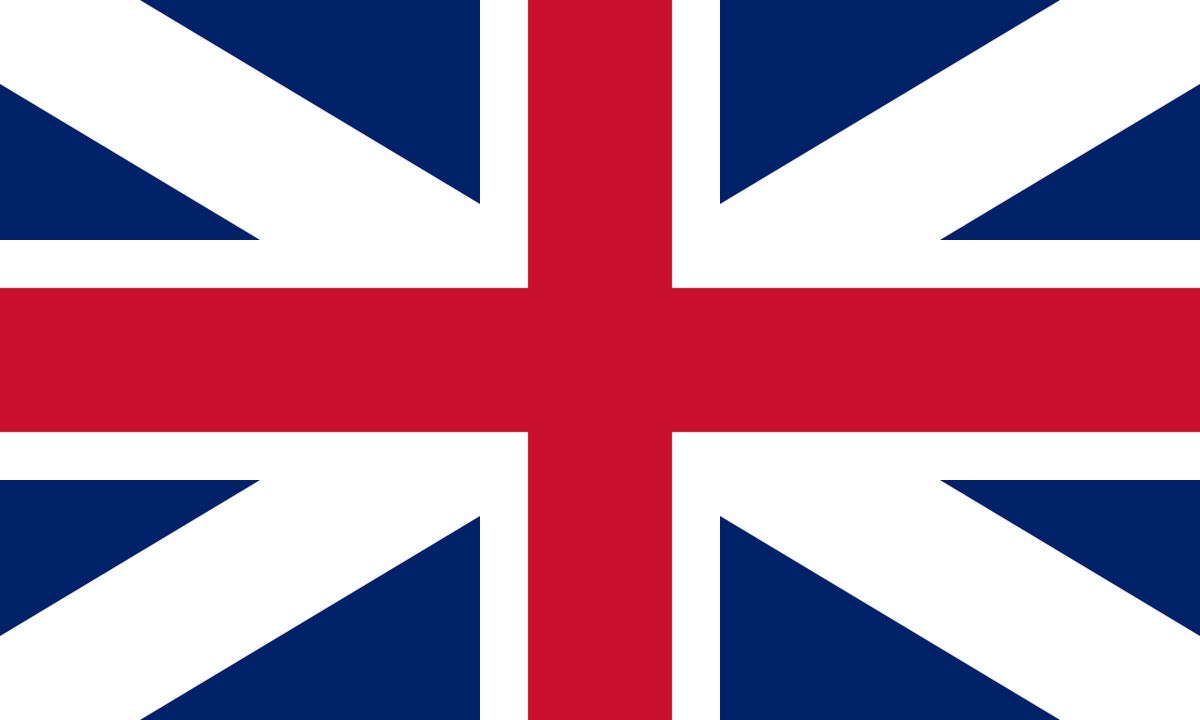
The history of Nova Scotia involves Indigenous habitation, European colonization, imperial conflict, and cultural convergence. The lands known as Mi'kma'ki have been home to the Mi'kmaq people for millennia, with European contact beginning in the late 15th century. The French colony of Acadia was established, followed by periods of Scottish and English control. The 18th century saw the expulsion of the Acadians and the founding of Halifax. Nova Scotia became the first British colony to achieve responsible government in 1848 and a founding province of Confederation in 1867.
Pre-European Contact and Mi'kma'ki
The earliest evidence of human habitation in the region dates back approximately 11,000 years, following the retreat of the glaciers. Paleo-Indians inhabited the area, with archaeological evidence from the Debert site indicating settlement around 10,600 years ago. These early peoples developed over millennia into the Mi'kmaq nation, whose territory, Mi'kma'ki, encompassed present-day Nova Scotia, the Maritimes, parts of Maine, Newfoundland, and the Gaspé Peninsula. The Mi'kmaq lived in a seasonal cycle, moving between interior winter camps and larger coastal communities in the summer, subsisting on fishing and hunting. Their society was governed by the Santé Mawiómi, or Grand Council, led by a Kji-saqmaw and composed of seven district chiefs (Nikanus), a Kji-Keptin (war chief), and a Putús (recorder). Mi'kma'ki was divided into seven largely sovereign districts, each with its own council of Sagamaws (local band chiefs) and Elders that enacted laws, ensured justice, and apportioned resources. European fishermen began landing on the coasts to dry-cure cod as early as the 1520s, initiating a trade relationship. By 1578, some 350 European ships were operating around the Saint Lawrence estuary, exploring the fur trade. On 24 June 1610, Grand Chief Membertou converted to Catholicism and was baptized. A Concordat was later signed between the Mi'kmaq Grand Council and the Pope, affirming Mi'kmaq sovereignty as a Catholic nation.
Early European Exploration and Rival Claims
Venetian explorer John Cabot, sailing under the English flag, made the first documented European landing on the North American mainland since the Norse, on 24 June 1497 in what would later be recognized as Nova Scotia. His voyage ushered in a new era of transatlantic exploration. Portuguese explorer João Álvares Fagundes established a short-lived fishing colony on Cape Breton around 1521. The French laid the most enduring early claim with the founding of Port Royal in 1605 by Pierre Dugua, Sieur de Monts, creating the colony of Acadia. This first permanent European settlement north of Florida became the heart of a distinct Acadian culture. Scotland established a colony named Nova Scotia from 1629 to 1632 under a charter granted to Sir William Alexander by King James I. The capital, Charles Fort, was located at the site of present-day Annapolis Royal, while Lord Ochiltree claimed Île Royale (Cape Breton) and settled at Baleine. This period involved battles with the French, including the Siege of Baleine (1629) and the Siege of Cap de Sable (1630), before the territory was returned to France by treaty. The French then re-established their capital at Port Royal after building Fort Ste. Marie de Grace on the LaHave River.
Seventeenth Century: Conflict and Acadian Development
The 17th century was marked by imperial rivalry and the solidification of Acadian settlements. Acadia experienced an internal conflict known as the Acadian Civil War from 1640 to 1645 between governors Charles de Menou d'Aulnay, based at Port Royal, and Charles de Saint-Étienne de la Tour, based at present-day Saint John, New Brunswick. The war featured four major battles, including la Tour's attack on Port Royal in 1640, d'Aulnay's five-month blockade of Saint John in 1643, and the final 1645 siege of Saint John where d'Aulnay was victorious. After d'Aulnay died in 1650, la Tour re-established himself in Acadia. External control shifted repeatedly, with an English colonial expedition under Robert Sedgwick and John Leverett capturing Acadia's principal ports in 1654. Oliver Cromwell later granted the province to proprietors Sir Thomas Temple and William Crowne, who divided the territory between them in 1658, with Crowne taking the western part including Fort Pentagouet. Temple established his headquarters at Penobscot and a trading post at Jemseg on the Saint John River to trade with the Maliseet. The colony was eventually restored to France in the 1667 Treaty of Breda, though the English did not relinquish control until 1670. In 1674, the Dutch briefly conquered Acadia, renaming it New Holland. Throughout these conflicts, the Acadian population expanded from Port Royal. During the last decades of the century, Acadians established the other major settlements that would define their homeland: Grand Pré, Chignecto, Cobequid, and Pisiguit. The French re-established their capital at Port Royal after the Peace of Ryswick in 1697, following a period of English occupation during King William's War where Acadia was integrated into the Province of Massachusetts Bay.
The Colonial Wars and the Acadian Expulsion
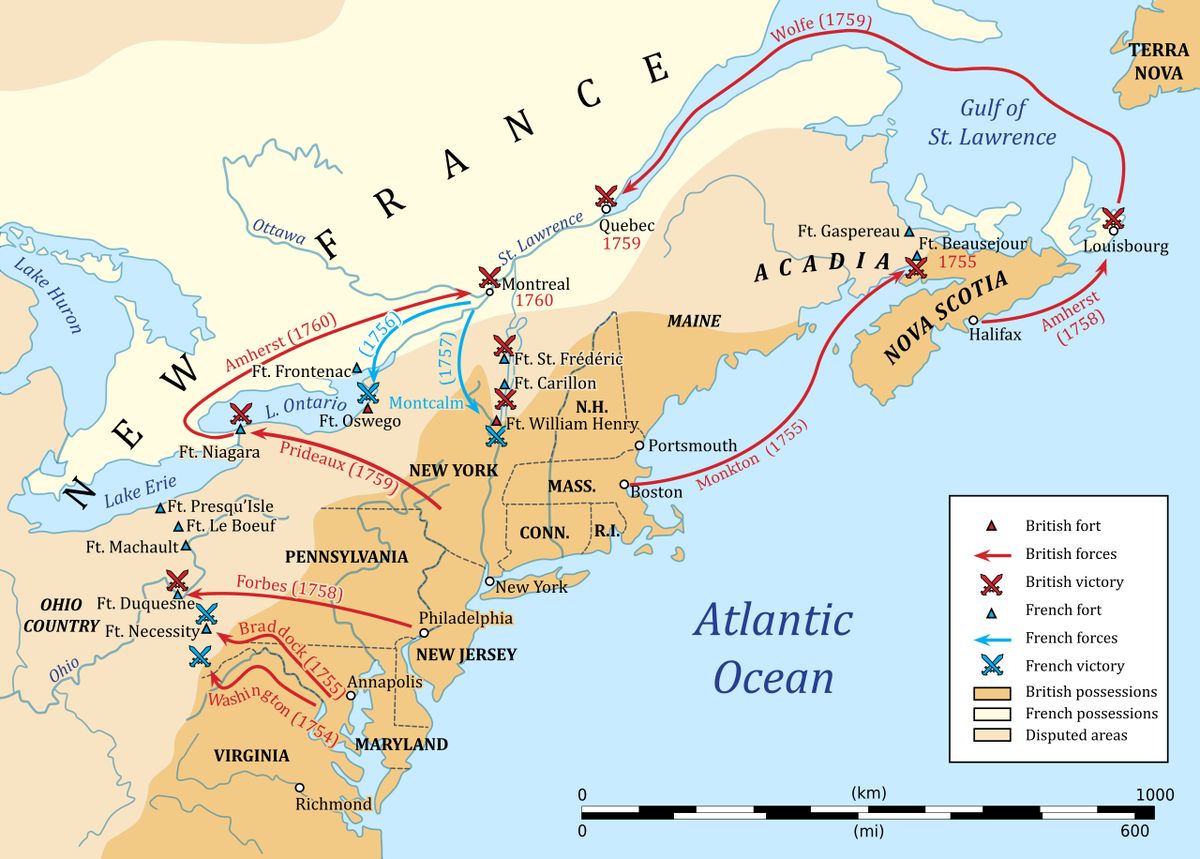
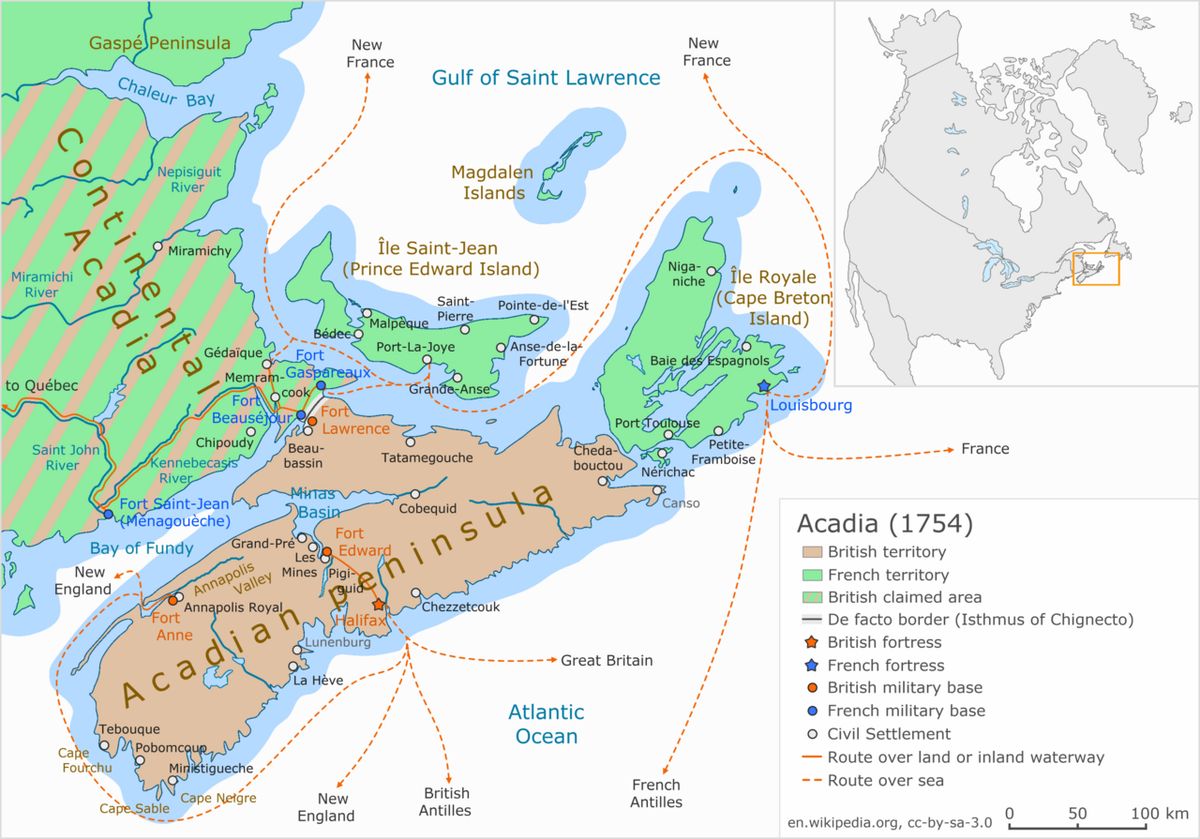
The 18th century was dominated by nearly continuous warfare over the territory, a series of conflicts known collectively as the French and Indian Wars along with Father Rale's War (1722 to 1725) and Father Le Loutre's War (1749 to 1755). These six colonial wars over seventy-five years were fought between New England and New France and their respective Mi'kmaq, Maliseet, and Acadian allies, with the border of Acadia contested at the Kennebec River in southern Maine. A major development came during Father Le Loutre's War when the British founded Halifax in 1749 under Edward Cornwallis, who arrived with 2,567 settlers, and moved the colonial capital there from Annapolis Royal. The warfare ended with the Burying the Hatchet ceremony and the Halifax Treaties between the British and the Mi'kmaq in 1761. The most traumatic event was the Expulsion of the Acadians (1755 to 1764) during the French and Indian War. After Acadian delegates refused to take an unconditional oath of allegiance to Britain, the British military began a systematic deportation. Of the 14,100 Acadians in the region, approximately 11,500 were deported, first to the Thirteen Colonies and after 1758 to Britain and France. Thousands died of disease or starvation. This cleared the way for a new wave of settlement, as between 1759 and 1768, about 8,000 New England Planters responded to Governor Charles Lawrence's call to occupy the vacated farmlands.
Post-War Resettlement and Political Evolution
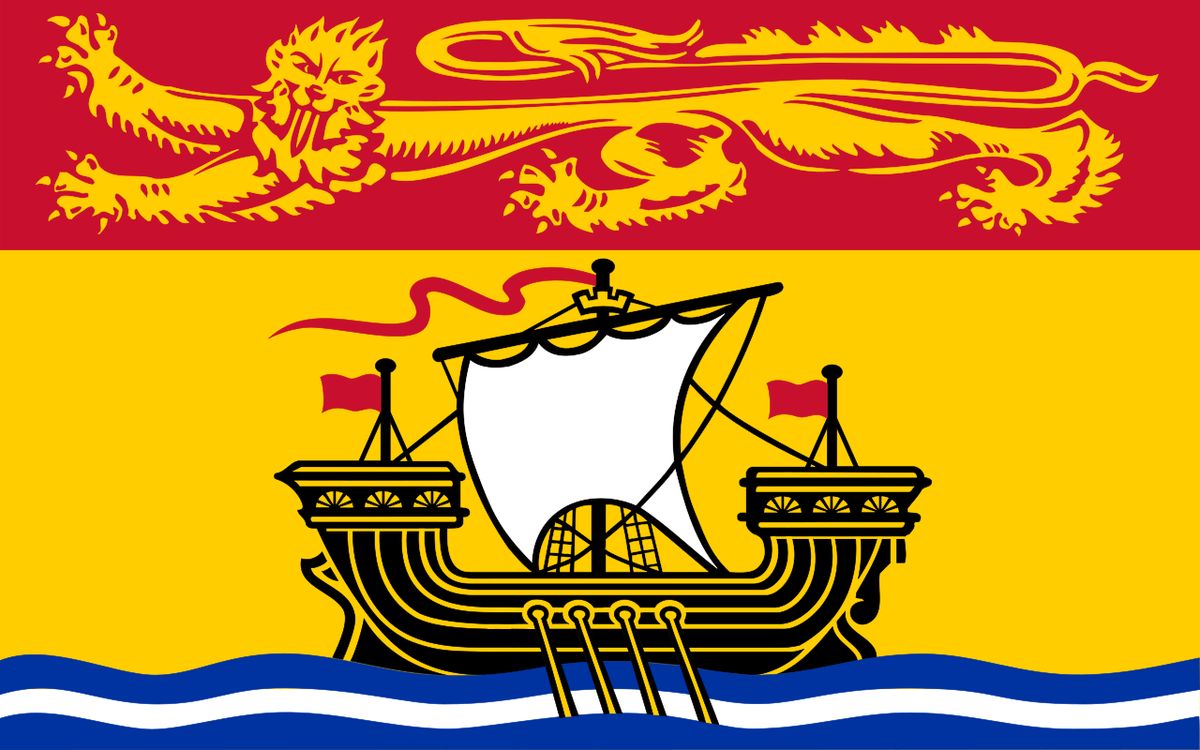
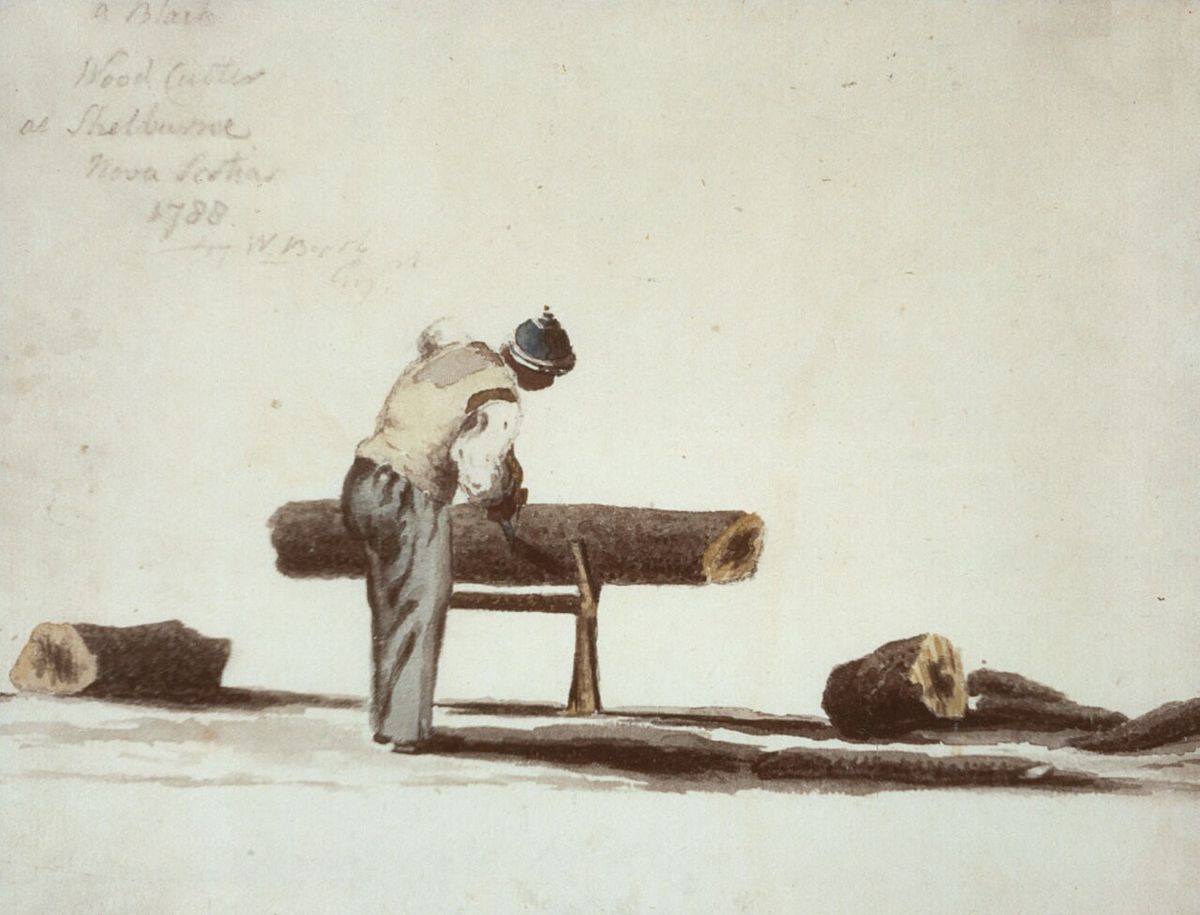
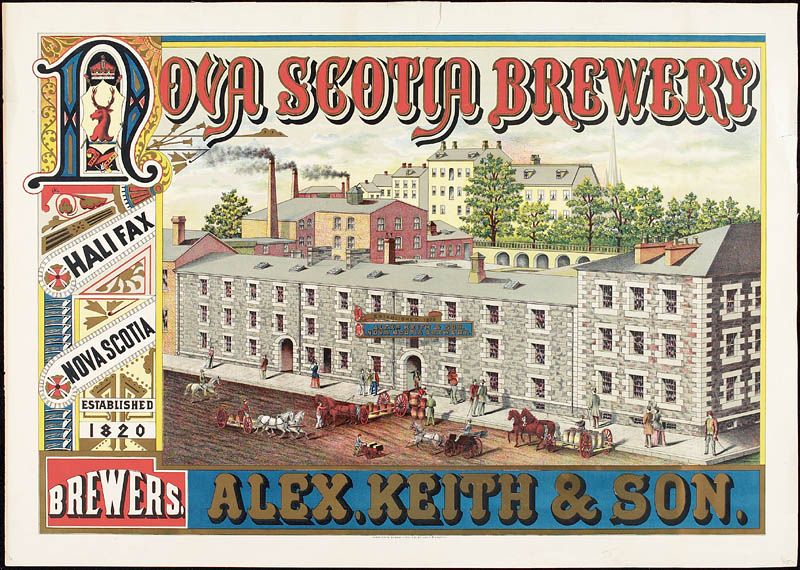
Following the British victory in North America in 1763, Nova Scotia's boundaries and governance underwent significant changes. Cape Breton Island was annexed to Nova Scotia that year, while St. John's Island (now Prince Edward Island) became a separate colony in 1769. The colony established key institutions, including a supreme court in 1754 with the appointment of Jonathan Belcher and the creation of the Legislative Assembly in 1758, the first popularly elected legislature in British North America which convened in Halifax. The influx of Loyalists after the American Revolution dramatically altered the demographic and political scene. Both white and black Loyalists migrated to the colony, promised land and freedom by the British. The population swell led the crown to partition the colony, creating the province of New Brunswick in 1784 from the mainland portion, while the county of Sunbury (which had included parts of Maine as far as the Penobscot River) was dissolved. The 1783 Treaty of Paris ended the American Revolution and set the international boundary, making the Maine territory part of the United States. Within Nova Scotia, the Black Loyalist community established enduring settlements, such as Birchtown near Shelburne, where Baptist preacher David George founded several Black Baptist churches in 1784. Stories of Loyalist resilience include that of Sylvia, Colonel John Creighton's servant in Lunenburg, who shuttled cartridges to soldiers during an American invasion. In the 19th century, Nova Scotia's economy grew with industries like shipbuilding, and the province saw the rise of notable businesses such as the Starr Manufacturing Company, Susannah Oland and Sons Co., and the Bank of Nova Scotia.
Path to Responsible Government and Confederation
The colony achieved a major milestone in 1848 when it became the first British colony to attain responsible government, meaning its executive council was responsible to the elected assembly rather than to the governor. This was achieved through the efforts of Joseph Howe. Nova Scotia was a centre of maritime trade, shipbuilding, and industry, and its political leaders actively debated the merits of joining a larger Canadian union. After the Charlottetown and Quebec conferences, Nova Scotia, led by Premier Charles Tupper, became one of the four founding provinces of the Dominion of Canada on 1 July 1867. This decision was deeply contentious, and strong anti-Confederation sentiment persisted in the province for many years after union. Despite this initial resistance, Nova Scotia's early political innovations provided a foundational model for the governance of the new Canadian nation. The movement for withdrawal, led by Joseph Howe, won 18 out of 19 federal seats in 1867, but ultimately shifted to seeking better terms within Confederation.
Cultural Heritage, Commemoration, and Modern Institutions
Nova Scotia's layered history is preserved and commemorated through numerous institutions, annual events, and heritage sites. The Royal Nova Scotia Historical Society, founded in 1878, holds monthly public lectures from September to May in the Lindsay Children’s Room at the Halifax Central Library. The province officially recognizes several heritage months that reflect its diverse origins. African Heritage Month is observed each February, coordinated by African Nova Scotian Affairs (ANSA). Mi'kmaw History Month is observed in October, leading up to Treaty Day on 1 October and the National Day for Truth and Reconciliation on 30 September. Nova Scotia also marks Emancipation Day on 1 August, reflecting on the history of slavery and the arrival of Black Loyalists, and Heritage Day on the third Monday in February honours figures such as Joseph Willie Comeau in 2026. The Acadian Federation of Nova Scotia was created in 1968 to promote the growth of the Acadian and Francophone community. In 1996, it helped establish the Acadian School Board (Conseil scolaire acadien provincial).
- Millbrook Cultural & Heritage Centre (multimedia presentations on Mi'kmaw history and Glooscap legend)
- Black Cultural Centre for Nova Scotia (hub for African Nova Scotian heritage)
- Kejimkujik National Park (site of ancient Mi'kmaq petroglyphs, the largest collection in Canada)
- Fortress of Louisbourg National Historic Site (major 18th-century French fortress)
- Grand-Pré National Historic Site (UNESCO site commemorating Acadian history and expulsion)
- Port-Royal National Historic Site (reconstruction of the 1605 French settlement)
- Museum of Natural History in Halifax (Ethnology Gallery with Mi'kmaq beadwork and quillwork)
- Eskasoni First Nation (largest Mi'kmaq community in the world, offering cultural tours and smudging ceremonies)
In 1997, the Mi'kmaq-Nova Scotia-Canada Tripartite Forum was established. The Miꞌkmaw Kinaꞌmatnewey is a successful First Nation Education Program. In 1982, the first Mi’kmaq operated school opened in Nova Scotia. By 1997, all education for Mi’kmaq on reserves were given the responsibility for their own education. There are now 11 band run schools in Nova Scotia. From 2011 to 2012 there was a 25 per cent increase of Mi’kmaq students going to university. Atlantic Canada has the highest rate of aboriginal students attending university in the country.
Significant Firsts and Foundational Events
Nova Scotia's historical timeline is marked by a number of notable firsts in Canadian history, many centred in its capital, Halifax. These milestones show the province's early and influential role in the political, social, and cultural development of the nation. The establishment of key institutions often set patterns that would be followed elsewhere in British North America and later Canada. From the first printing press to the first responsible government, Nova Scotia was a pioneer in creating the infrastructure of a modern society. The following table highlights some of these foundational events that originated in the province and left a lasting imprint on the country's development.
| Year | Event | Significance |
|---|---|---|
| 1754 | First supreme court | Jonathan Belcher appointed first chief justice. |
| 1758 | First elected legislature | First popularly elected assembly in British North America, convening in Halifax. |
| 1760 | First post office in Canada | Opened in Halifax. |
| 1784 | Founding of Black Baptist churches | David George founded several churches in Shelburne/Birchtown, initiating a Black self-help movement. |
| 1848 | Responsible government achieved | First British colony to attain responsible government. |
| 1867 | Joins Confederation | One of four founding provinces of the Dominion of Canada. |
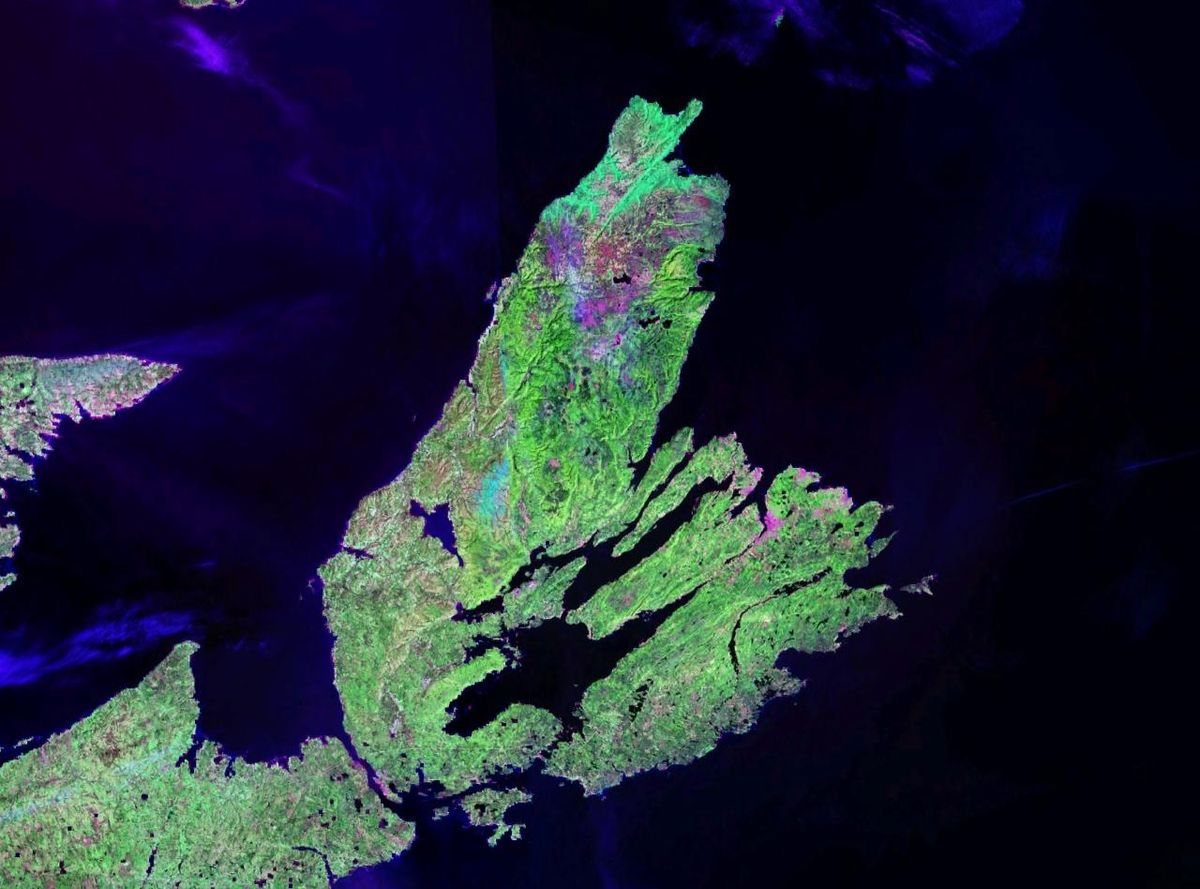
In 1763 Cape Breton Island and St. John's Island became part of Nova Scotia, but St. John's Island became a separate colony in 1769. The boundaries of Nova Scotia shifted during the eighteenth century, and included the present-day Canadian Maritime provinces and northern Maine. In 1784, the western, mainland portion of the colony was separated and became the province of New Brunswick. Cape Breton became a separate colony in 1784 and was returned to Nova Scotia in 1820.
Questions about History of Nova Scotia
Who were the first inhabitants of Nova Scotia?
The first inhabitants of Nova Scotia were Paleo-Indians, who arrived following the retreat of the glaciers approximately 11,000 years ago. Archaeological evidence, such as the Debert site dated to 10,600 years ago, confirms their presence. Over millennia, these peoples developed into the Mi'kmaq nation, who inhabited the territory they called Mi'kma'ki. The Mi'kmaq lived in a seasonal pattern and had a sophisticated governance system led by a Grand Council long before European contact in the late 15th century.
Why were the Acadians expelled from Nova Scotia?
The Acadians were expelled from Nova Scotia between 1755 and 1764 during the French and Indian War. British authorities, led by Governor Charles Lawrence, demanded that the Acadian population swear an unconditional oath of allegiance to the British Crown. When Acadian delegates refused, the British military began a systematic deportation. Approximately 11,500 Acadians were forcibly removed from their farms and settlements, with many deported to the Thirteen Colonies, Britain, and France. Thousands died of disease or starvation during the ordeal.
When did Nova Scotia become a part of Canada?
Nova Scotia became a part of Canada on 1 July 1867, as one of the four founding provinces of the new Dominion of Canada, alongside New Brunswick, Ontario, and Quebec. The decision to join Confederation was championed by Nova Scotia's Premier Charles Tupper, though it was deeply controversial within the province. The province had become self-governing in 1848 before entering this union. Strong anti-Confederation sentiment persisted for years after 1867, but the province remained within the Canadian union.
What was the significance of the founding of Halifax?
The founding of Halifax in 1749 was a major strategic move by the British to establish a permanent, fortified stronghold in Nova Scotia during Father Le Loutre's War. It was founded by Edward Cornwallis, who arrived with 2,567 settlers. Halifax replaced Annapolis Royal as the capital of Nova Scotia, providing a deep ice-free harbour and a powerful naval base to counter French influence at Louisbourg. Its establishment secured British control over the region and marked a shift in colonial power dynamics.
How is Mi'kmaw and Acadian heritage celebrated in Nova Scotia today?
Mi'kmaw and Acadian heritage are celebrated through numerous cultural events, heritage sites, and official commemorations. Mi'kmaw History Month is observed in October, culminating in Treaty Day on 1 October. Cultural centres like the Millbrook Cultural & Heritage Centre and sites like Kejimkujik National Park preserve and share Mi'kmaw history. Acadian culture is celebrated through festivals and sites such as the Grand-Pré National Historic Site, a UNESCO World Heritage Site commemorating the Expulsion. The Royal Nova Scotia Historical Society supports programs that honour these foundational cultures.
What is the historical significance of African Heritage Month in Nova Scotia?
African Heritage Month in Nova Scotia honours the history and contributions of people of African descent. Its historical significance is rooted in the migrations of Black Loyalists who came to the colony during and after the American War of Independence. The month provides a time to reflect on the shared history of slavery, as Nova Scotia officially designated August 1 as Emancipation Day. The observance connects to the long narrative of settlement and community building in the province.
Sources and further reading
- History of Nova Scotia (Wikipedia)
- Royal Nova Scotia Historical Society (rnshs.ca)
- Exploring Nova Scotia's historical past (canadiansky.co.uk)
- Nova Scotia (thecanadianencyclopedia.ca)
Checked by the Nosy Mag desk. Last updated 2026-10-23.