Annapolis Royal
Annapolis Royal is a town in and the county seat of Annapolis County, Nova Scotia, Canada. Founded by the French as Port Royal in 1605, it is one of the oldest European settlements in North America, predating Jamestown (1607), Quebec City (1608), and Plymouth (1620). Renamed in honour of Queen Anne after a British conquest in 1710, it served as the capital of Acadia and then Nova Scotia until 1749. The strategic settlement changed hands seven times and withstood thirteen military sieges, more than any other location in North America.
Indigenous and Early European Settlement
The area has been a significant site for the Mi'kmaq for generations, who named it Nme'juaqnek, meaning "the place of bountiful fish." The flat escarpment at the confluence of the Annapolis and Allain rivers served as a strategic hub for seasonal migration and governance. The first permanent European settlement in Canada was established here in 1605 by French explorers Pierre Dugua, François Gravé Du Pont, and Samuel de Champlain, who built the Habitation at Port Royal. This settlement, located about ten kilometres west of the modern town, was the first year-round European community in Canada and is credited with the likely introduction of apples to the country in 1606. The original Habitation was destroyed by attackers from Virginia in 1613. The French presence persisted through the Seigneury of Port Royal, a semi-feudal land grant system that remained in effect until 1733.
A Contested Fortress: Scottish, French, and British Rule
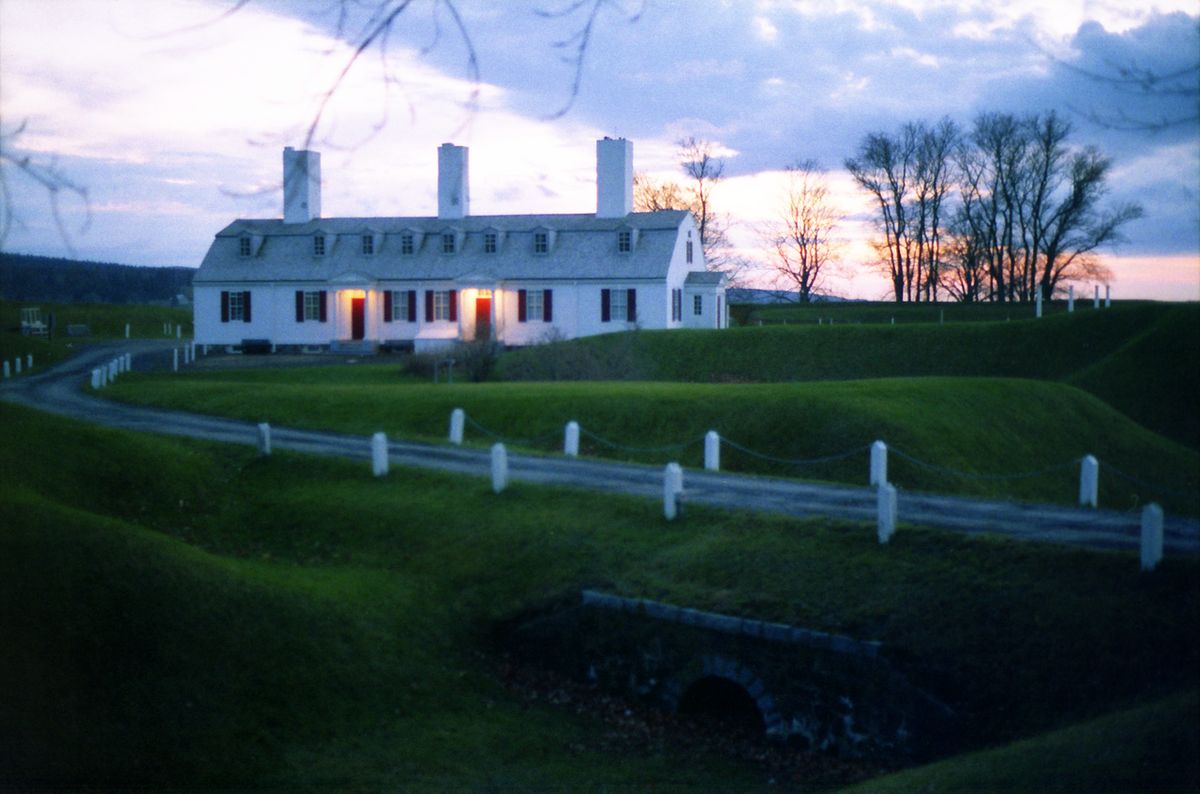
The strategic importance of the Annapolis Basin led to centuries of conflict. In August 1629, Scottish settlers under Sir William Alexander established Charles Fort on the site of present-day Fort Anne, acting on a royal charter from King James I granted in 1621. This was the only Scottish settlement of any permanence in Nova Scotia under that charter, but it was transferred back to French control in 1632 under the Treaty of Saint-Germain-en-Laye, with 47 Scottish settlers removed. For most of the 17th century, Port Royal remained a modest but self-sufficient French Acadian community, growing to a population of around 400 by 1671, though it was subject to repeated attacks and temporary captures by English forces. The town's decisive shift came in 1710 during Queen Anne's War, when a British siege resulted in the permanent conquest of peninsular Nova Scotia. The victors renamed the settlement Annapolis Royal in honour of Queen Anne, and it became the capital of the British province, with the Governor of Nova Scotia based there from 1710. The town's defences were tested repeatedly in the decades that followed, beginning with a failed 1711 siege by Acadians and Indigenous forces led by Bernard-Anselme d'Abbadie de Saint-Castin who lacked artillery.
- July 1722: During Dummer's War, Abenaki and Mi'kmaq forces attempted a blockade of the capital, countered by Lieutenant Governor John Doucett taking Mi'kmaq hostages.
- July 1724: A raid by Mi'kmaq and Maliseet warriors killed soldiers, burned houses, and took prisoners, prompting British retaliation including the execution of a Mi'kmaq hostage and the burning of three Acadian houses.
- July 1744: The first of four sieges during King George's War, led by Jean-Louis Le Loutre with 300 Mi'kmaq warriors, failed after four days when the fort received reinforcements.
- September 1744: A week-long siege by French officer François Dupont Duvivier and 200 men ended with the arrival of a New England ship carrying Ranger John Gorham.
- May 1745: A third siege led by Paul Marin de la Malgue was abandoned when French forces were recalled to defend Louisbourg.
- 1746: A final siege attempt by French commander Ramezay was abandoned after 23 days awaiting naval support from the ill-fated Duc d'Anville Expedition.
These failed assaults during King George's War solidified British control over Annapolis Royal. The town served as the capital of Nova Scotia from 1710 until the capital was transferred to the new settlement of Halifax in 1749. In 1720, Governor Richard Phillips formed the Nova Scotia Council at Annapolis Royal, which was the forerunner of the Nova Scotia House of Assembly. The Governor and Council governed from Annapolis Royal until the founding of Halifax.
The Acadian Deportation and Loyalist Arrival
The Seven Years' War brought deep tragedy to the Annapolis Royal area with the expulsion of the Acadian population. On December 8, 1755, a total of 1,664 Acadians, comprising 251 men, 263 women, and 1,150 children, were forcibly loaded onto seven ships at the Queen's Wharf at Fort Anne for deportation to American colonies including Massachusetts, Connecticut, New York, and North Carolina. By one account, 48 Acadian families fled the area beforehand. The British plan aimed at forced assimilation through the separation of families across different colonies, though the Le Blanc family sent to Massachusetts was permitted to stay together as an exception. In a daring act of resistance, 232 Acadians aboard the ship Pembroke overpowered their crew and sailed to safety on the Saint John River. It was not until 1764 that Acadians were legally permitted to return to the area, and very few did. The emptied lands were subsequently settled by New England Planters, with 8,000 arriving between 1759 and 1768 to occupy the Annapolis Valley and Saint John River Valley. Later, the American Revolutionary War brought another wave of migrants. During the war, the town was guarded by the 84th Regiment of Foot. On August 29, 1781, two large American privateer schooners attacked the undefended town, looting houses and taking two hostages. After the war, more than 30,000 United Empire Loyalists migrated to the Maritimes, many arriving in Annapolis Royal and straining local resources, with many later moving to found Digby and Clementsport. Notable Loyalists included Black Loyalists like Thomas Peters, a member of the Black Pioneers, and Rose Fortune, who founded a freight business and policed the waterfront, and Anglican minister Jacob Bailey.
19th and 20th Century Economic and Demographic Shifts
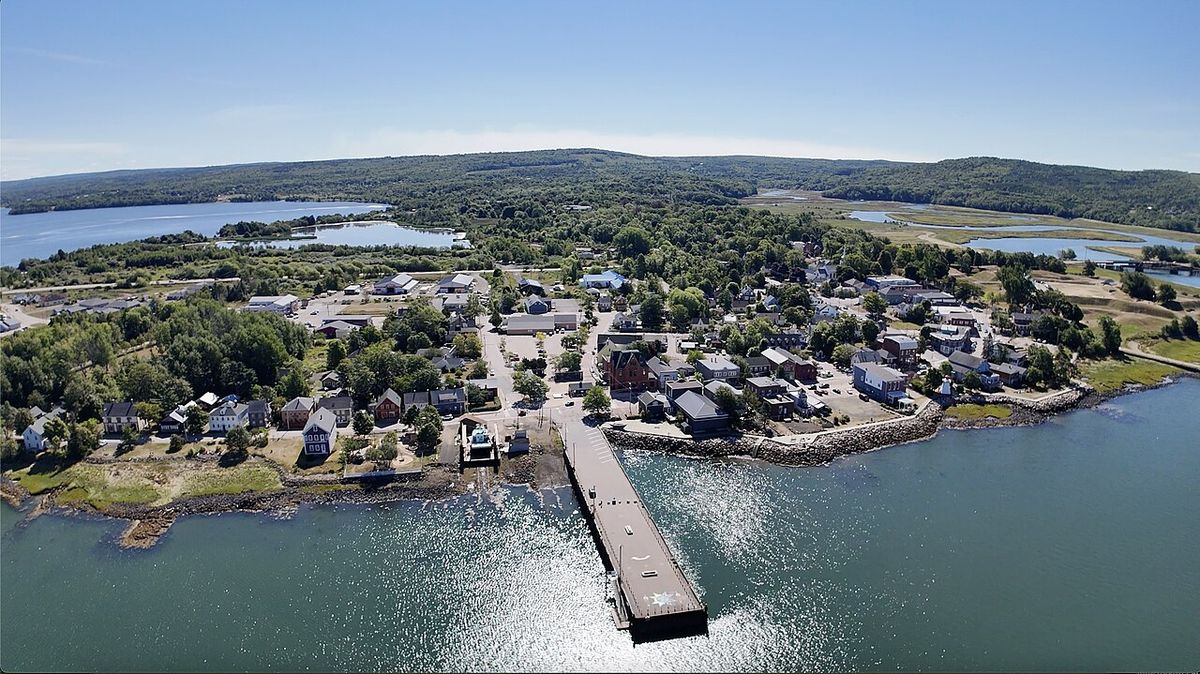
With the capital moved to Halifax, Annapolis Royal's military significance waned. The British garrison departed Fort Anne in 1854, relocating to the new citadel in Halifax. The town's economy, historically driven by military command and shipping, shifted toward local shipbuilding in partnership with Granville Ferry, apple exports, and a small trade limited by the basin's shallow waters and extreme tides. Among notable local mariners was Bessie Hall. A minor boom occurred in 1869 with the arrival of the Windsor and Annapolis Railway, which spurred the construction of two large railway piers and several factories. The town was officially incorporated in 1893 under the Nova Scotia Municipalities Act, but its population peaked around 1,500 in the 1870s before declining as deeper-water ports like Digby, connected by the Dominion Atlantic Railway, captured steamship commerce. By 1901, the population had shrunk to 1,019. The 20th century saw infrastructure changes, including the replacement of a long-running ferry service with a bridge in 1921, which later collapsed in 1961 and was replaced by a causeway. A significant technological project, the Annapolis Royal Generating Station, operated as North America's only tidal power station from 1984 until its closure in 2019, producing up to 20 MW of power twice daily. In a landmark moment for Canadian municipal politics, Annapolis Royal elected Daurene Lewis as mayor in 1984, making her the first female black mayor in the country.
Historic Sites and Preserved Heritage Landscape
Annapolis Royal's deep historical legacy is preserved in an exceptional concentration of heritage sites. The core of the town was designated the Annapolis Royal Historic District National Historic Site of Canada in 1994, encompassing over 135 municipal heritage properties and six provincially recognized heritage properties spanning the 18th to early 20th centuries. This district is anchored by Fort Anne National Historic Site, Canada's oldest extant fort, built on the site of the 1629 Charles Fort, and its first designated National Historic Site, which includes the Garrison Cemetery, one of the oldest cemeteries in Canada and the site of the former Acadian parish Church of Saint John the Baptist. Just west of town lies the Port-Royal National Historic Site, a reconstruction of the original 1605 Habitation and the first National Historic Site to feature a replica structure. The town's heritage is further enriched by the Annapolis Royal Historic Gardens, a 17-acre horticultural attraction that generated $537,892 in revenue in 2023. The broader region includes Kejimkujik National Park, a 404 km² area that is itself a National Historic Site and a core part of the UNESCO-designated Southwest Nova Biosphere Reserve. This park is also recognized as a dark-sky preserve by the International Dark Sky Association. Other notable sites include the De Gannes-Cosby House National Historic Site, dating from 1708, the Annapolis County Court House National Historic Site built in 1837, the Melanson Settlement, the Bloody Creek National Historic Site, the Sinclair Inn National Historic Site, the O'Dell House Museum, and the North Hills Museum in Granville Ferry.
Modern Economy, Tourism, and Community Development
The modern economy of Annapolis Royal is firmly rooted in tourism, heritage preservation, and local services, anchoring the wider Annapolis Valley region known for agriculture and manufacturing. Fort Anne and the Port-Royal Habitation are major tourism drivers, with ticketed admissions for the 2022 to 2023 fiscal year reaching 35,283 and 17,844 visitors respectively, figures that exclude visitors to the free public grounds. The Annapolis Royal Historic Gardens serves as another significant economic and cultural pillar. Local commerce is supported by retail shops, two grocery stores, galleries, artisan shops, a microbrewery, and the renowned Saturday Annapolis Royal Farmers and Traders Market, cited as Nova Scotia's largest outdoor market and the province's longest continuously operating farm market, hosting over 100 vendors. Community-focused economic development has been aided by Annapolis Investments in Rural Opportunity (AIRO), a micro-lending organization that invested $722,877 into local businesses and community projects between 2016 and 2021, facilitating the creation of over 183 full-time, part-time, and seasonal jobs. The town's cultural vibrancy is evident through annual events and venues like King's Theatre and the Oqwa'titek amphitheatre. The town maintains its own municipal police department and a volunteer fire department established in 1811.
Annual Events, Cultural Programming, and Visitor Engagement
A strong calendar of events sustains Annapolis Royal's community spirit and attracts visitors year-round. Natal Day is celebrated over the weekend of the first Monday in August, featuring a grand street parade, fireworks, and a street dance. A major cultural highlight is Paint the Town, an art event where registered artists create works on location throughout the community, followed by an online auction. The Fort-to-Fort Experience invites participants to walk, run, or cycle the historic route between Fort Anne and the Port-Royal Habitation. The Annapolis Royal Historic Gardens hosts numerous seasonal activities, from a Spring Cleanup volunteer week to rose celebrations. The Annapolis Heritage Society opens its sites from late May, and ARTSPLACE Gallery provides year-round exhibitions and programming. Other events include the North American Conker Championship at the Historic Gardens in October and a walk of remembrance for the Acadian deportation on December 8. The town has a long-time town crier and hosted the International Town Criers Competition in 2017.
| Event | Typical Date/Period | Key Feature |
|---|---|---|
| Natal Days | First Monday in August weekend | Grand Street Parade, fireworks, street dance |
| Paint the Town | August | Open-air art creation by artists, online auction |
| Fort-to-Fort Experience | August | Walk/run/cycle between historic forts |
| Historic Gardens Spring Cleanup | April | Volunteer gardening shifts |
| Rhapsody of Rhododendrons | May to June | Display of over 100 rhododendrons and azaleas |
| Celebrating Roses | Late June to July | Tours of one of Eastern Canada's largest rose collections |
| Acadian Deportation Remembrance | December 8 | Walk from Fort Anne's Odyssey Monument to Queen's Wharf |
| North American Conker Championship | October | Competition at the Annapolis Royal Historic Gardens |
Geography, Climate, and Regional Context
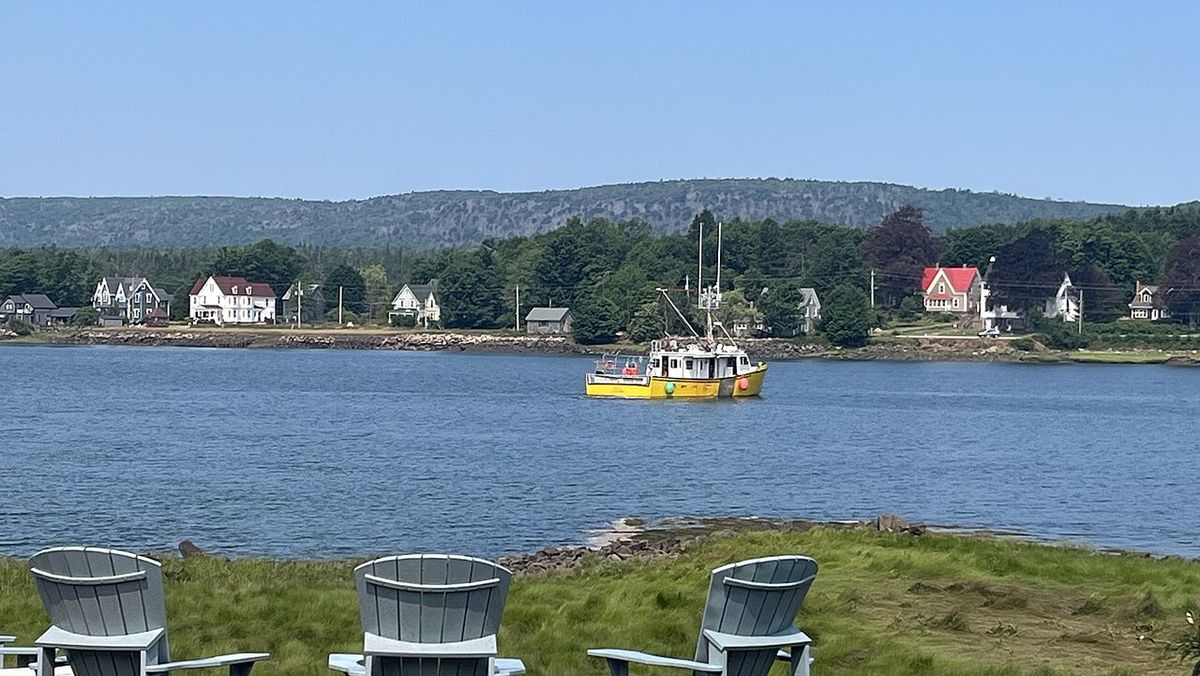
Annapolis Royal is situated on the south bank of the Annapolis River at the western end of the fertile Annapolis Valley, positioned between the North and South mountains which define the valley. The town faces the Annapolis Basin, a heavily tidal inlet of the Bay of Fundy, which is located 10 kilometres north of the town on the other side of North Mountain. The riverside forms the town's waterfront, directly opposite the community of Granville Ferry on the northern bank, and Allains Creek joins the Annapolis River at the town, defining its western side. The Annapolis Basin, Annapolis River, Annapolis County, and the Annapolis Valley all take their name from the town. The area experiences a humid continental climate (Köppen Dfb), characterized by mild summers, cold winters, and consistent precipitation throughout the year. The town's location within the Southwest Nova Biosphere Reserve shows its environmental significance alongside its historical value.
Questions about Annapolis Royal
What happened to the Acadians in Annapolis Royal?
During the Seven Years' War, the British authorities forcibly deported the Acadian population from Annapolis Royal. On December 8, 1755, a total of 1,664 Acadians were loaded onto ships at Fort Anne's wharf for expulsion to American colonies. Some 48 families fled beforehand, and 232 deportees aboard the ship Pembroke overpowered the crew and escaped to the Saint John River. Return was not permitted until 1764.
What is the oldest European settlement in Canada?
The oldest permanent European settlement in Canada is Port Royal, founded in 1605. This French settlement was established by Pierre Dugua, François Gravé Du Pont, and Samuel de Champlain at the Habitation, which was 10 kilometres west of present-day Annapolis Royal. The Port Royal settlement, comprising the habitation, mill, and farmland, was the first year-round European settlement in Canada. It was also likely the site where apples were first introduced to Canada in 1606.
Why is it called Annapolis Royal?
It is called Annapolis Royal in honour of Queen Anne, the reigning British monarch. The name was bestowed following the Siege of Port Royal in 1710, which resulted in the final British conquest of the French settlement during Queen Anne's War. The French settlement on the Annapolis Basin was renamed for the queen after this decisive event. From 1710 to 1749, the renamed Annapolis Royal served as the capital of Nova Scotia.
How many times did Annapolis Royal change hands?
The strategic settlement at Annapolis Royal changed hands between French and British forces seven times. It withstood thirteen military sieges, which is more than any other location in North America. These frequent changes in control occurred from its early history through the final British conquest in 1710. The settlement was situated on the boundary between the rival French and British colonial empires, leading to this turbulent history.
What are the main historical sites to visit in Annapolis Royal?
The main historical sites to visit are Fort Anne National Historic Site and the Port-Royal National Historic Site. Fort Anne was originally built as Charles Fort in 1629 and is Canada's oldest extant fort and first National Historic Site. The Port-Royal National Historic Site is the location of the 1605 French habitation, which was the first year-round European settlement in Canada. Other significant sites include the Annapolis Royal Historic District, which contains 135 heritage properties, and the Annapolis Royal Historic Gardens, a 17-acre horticultural site. Additional attractions are Kejimkujik National Park, the De Gannes-Cosby House from 1708, the Annapolis County Court House from 1837, and the Melanson Settlement archeological site.
Who was Daurene Lewis?
Daurene Lewis was elected mayor of Annapolis Royal in 1984, making her the first female black mayor in Canada. She led the community during a period when the town's economy had transitioned from military and shipping to a focus on tourism, heritage preservation, and the service sector. Her election was a significant milestone in Canadian municipal history. The town she governed is home to a nationally significant heritage picture, including Fort Anne and the Annapolis Royal Historic District.
Sources and further reading
- Annapolis Royal (Wikipedia)
- Calendar of events, Fort Anne National Historic Site (parks.canada.ca)
- Annapolis Royal Historic Gardens (historicgardens.com)
- Events & Activities, Annapolis Royal Historic Gardens (historicgardens.wordpress.com)
Checked by the Nosy Mag desk. Last updated 2026-10-26.