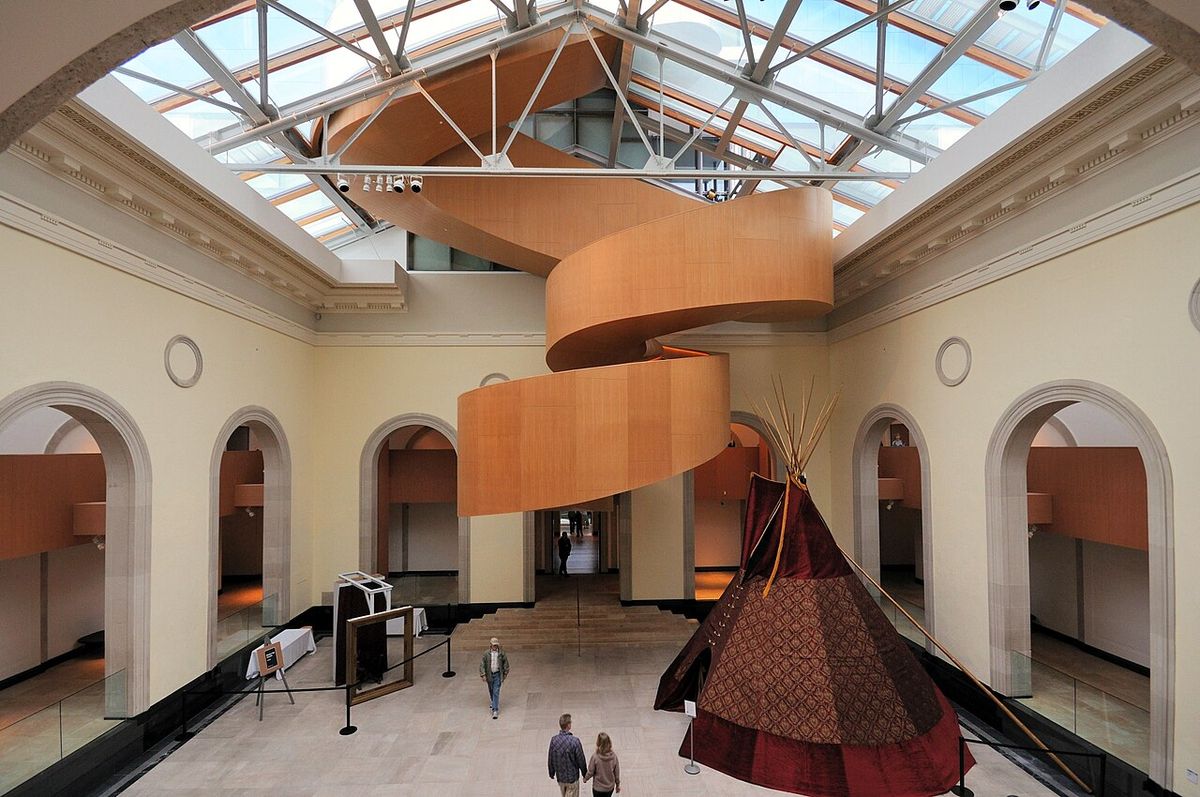
Canadian art
Canadian art encompasses the visual and plastic arts created within the geographical area of contemporary Canada, reflecting a history shaped by thousands of years of Indigenous habitation and successive waves of immigration. The artistic landscape has been influenced by European traditions, particularly from France and Britain, and later by global cultures, with artists adapting these influences to reflect Canadian realities. Government bodies like the Canada Council for the Arts, established in 1957, have played a significant role in fostering the nation's cultural development through grants and programs. From the early religious works of New France to the nationalist landscapes of the Group of Seven and the contemporary practices of diverse artists, Canadian art represents a dynamic and evolving synthesis of its varied origins.
Indigenous Art Traditions
Indigenous peoples have created art in the territory now called Canada for millennia, with traditions organized by cultural and regional groups such as the Northwest Coast, Plains, Eastern Woodlands, Subarctic, and Arctic. A key distinction from European traditions is a focus on art made for utilitarian, shamanistic, decorative purposes, or for pleasure, with objects ranging from venerated items to ephemeral creations. Many artworks preserved in museum collections date from the period after European contact, showing creative adaptation of trade goods like metal and glass beads. The distinct Métis cultures contributed new hybrid art forms arising from intercultural relationships. From the 19th century until the mid 20th century, government assimilation policies, enforced through the Indian Act, banned traditional ceremonies like the Sun Dance and Potlatch and their associated artworks. It was not until the 1950s and 1960s that Indigenous artists such as Mungo Martin, Bill Reid, and Norval Morrisseau began to publicly renew indigenous art traditions. Today, many Indigenous artists work across all media, with Edward Poitras and Rebecca Belmore having represented Canada at the Venice Biennale in 1995 and 2005 respectively. Toronto based Cree artist Kent Monkman was commissioned by The Metropolitan Museum of Art in 2019 to produce the diptych mistikôsiwak (Wooden Boat People).
The French Colonial Era (1665 to 1759)
The earliest European art in Canada consisted of sketches by explorers like Samuel de Champlain, who documented the landscape and conflicts with Indigenous peoples. The Roman Catholic Church around Quebec City became the primary patron of the arts, with Abbé Hughes Pommier considered the first painter in New France. Painters in this period, including Pommier and Claude François (Frère Luc), were influenced by High Renaissance ideals, creating formally composed religious depictions. As New France grew more isolated from Europe towards the end of the 17th century, fewer artists arrived, but local artists continued Church commissions, with two arts schools established. Pierre Le Ber, from a wealthy Montreal family, is a highly regarded self taught artist from this era, noted for his moving depiction of Saint Marguerite Bourgeoys. While formal religious painting revealed little of daily life, vivid impressions were offered by ex votos, or votive paintings, made to thank God or saints for answered prayers. The well known Ex votos des trois naufragés de Lévis from 1754 depicts Saint Anne saving three youths from a boating accident on the Saint Lawrence River, donated to the church at Sainte Anne de Beaupré as an offering of thanks. Early ports in Protestant areas like Nova Scotia and Newfoundland saw less artistic growth due to beliefs in simple church decoration, though itinerant artists like Gerard Edema worked there.
Art in British North America (1759 to 1820)
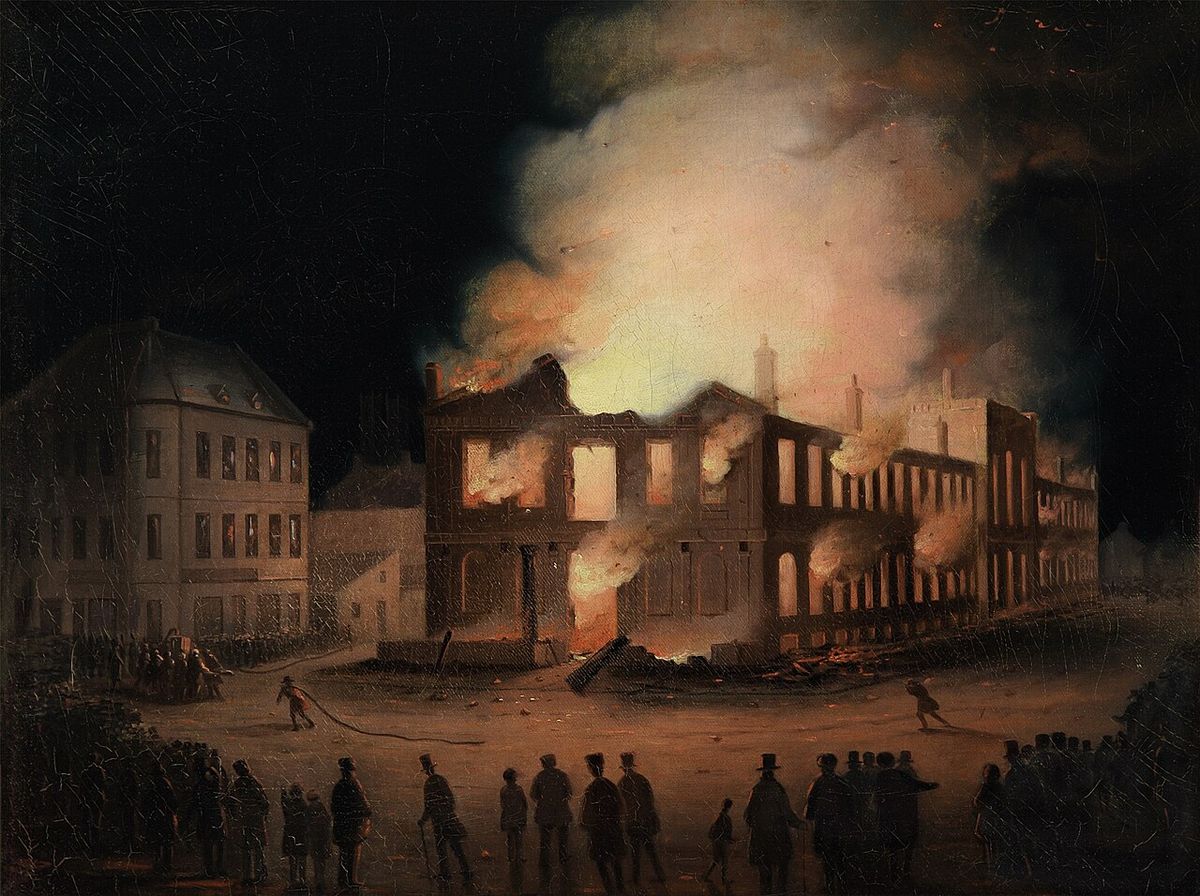
Following the British Conquest, many garrisoned soldiers sketched and painted the Canadian landscape and people, with their works often sold in European markets. Officers trained at the Royal Military Academy at Woolwich were taught watercolour to record terrain, a practice exemplified by artists like Thomas Davies, who recorded the capture of Louisburg and Montreal. Richard Short's drawings of the conquest of Quebec were reproduced as prints in 1761, while George Heriot settled in Canada and published Travels Through the Canadas with his aquatints in 1807. James Cockburn created many views of Quebec City and its surroundings. In Lower Canada, artistic activity prospered in the late 18th century with increased public and Church commissions, particularly in portrait painting. François Baillairgé, returning to Montreal in 1781 after studies in London and Paris, focused on sculpture and teaching influenced by Neoclassicism rather than the popular Rococo style. Artists evolved independently from France due to the French Revolution and Napoleonic Wars, with William Berczy, an immigrant from Europe, painting important portraits like those of Joseph Brant and The Woolsley Family in 1808 09. Art historian J. Russell Harper considered this era the first to develop a truly Canadian character. A second generation, including Joseph Légaré, known for disaster scenes, and his student Antoine Plamondon, who studied in France, continued this flourishing into the 1820s.
Nineteenth Century Developments and Confederation
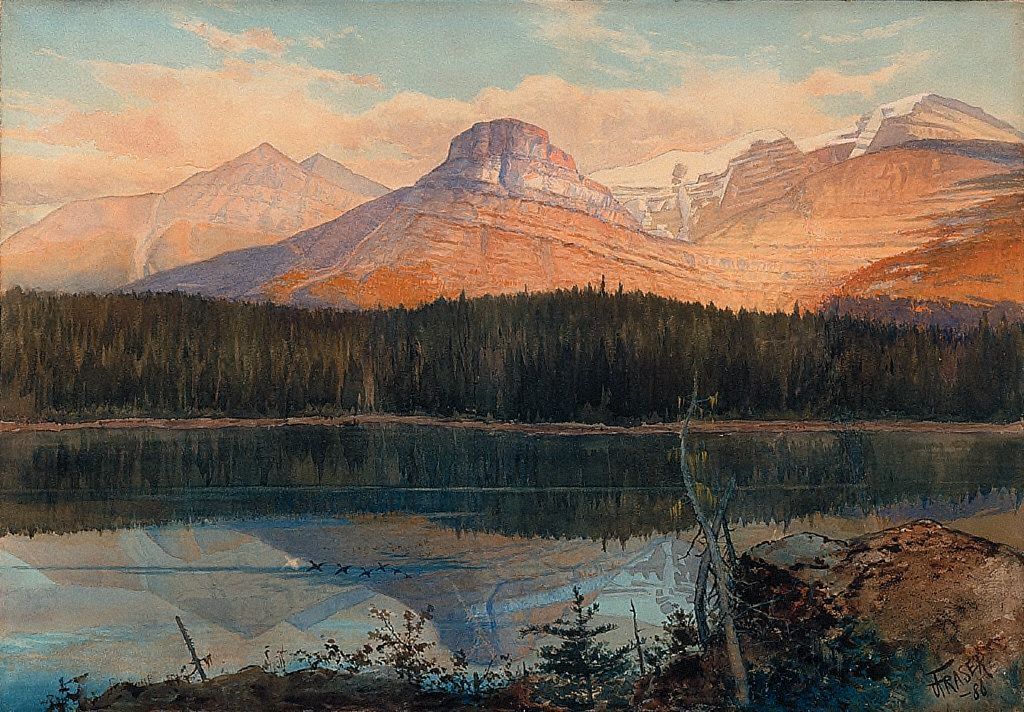
The mid 19th century saw artists like Cornelius Krieghoff, a Dutch born painter in Quebec, creating scenes of habitant life, while Paul Kane painted depictions of Indigenous life around the Great Lakes and Western Canada. Kane's works, such as The Death of Omoxesisixany (Big Snake), catered to overseas demand for stereotypical images and was his only mass marketed painting. Following Confederation in 1867, artists sought new exhibiting opportunities, leading to the formation of the Society of Canadian Artists in Montreal that same year. This group, including John Fraser and Adolphe Vogt, lacked a unified philosophy and primarily aimed to please the public for income, with Romanticism and Barbizon school inspired Realism practised by artists like Homer Watson being predominant influences. The society dissolved by 1872. In that year, the Ontario Society of Artists was founded in Toronto with objectives to foster original art, hold annual exhibitions, and form an art library, museum, and school, goals it fulfilled and continues to pursue today. The Royal Canadian Academy was established in 1880, modelled on the British Royal Academy, to provide a national vehicle for promoting visual arts and placing Canadian artists in international exhibitions like the 1904 Louisiana Purchase Exposition.
- The Society of Canadian Artists, formed in Montreal in 1867 (dissolved by 1872).
- The Ontario Society of Artists, founded in Toronto in 1872 (still active).
- The Royal Canadian Academy of Arts, founded in 1880 (still active).
The Group of Seven and National Identity
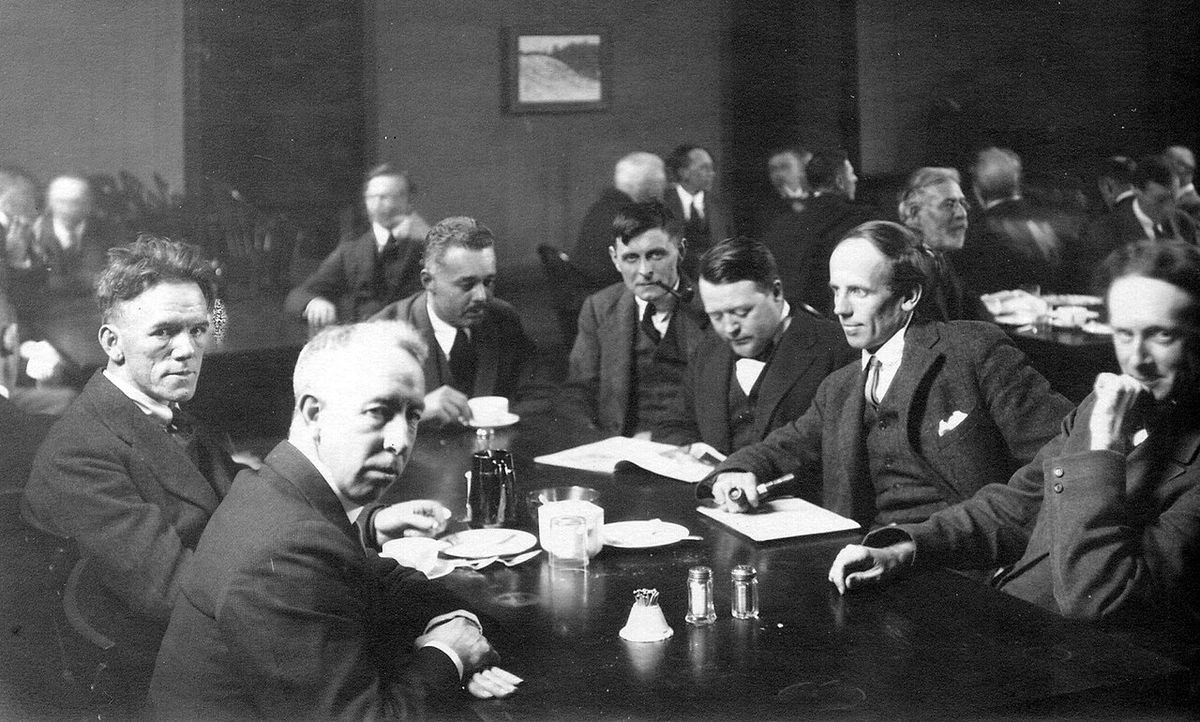
The Group of Seven, formed officially in 1920, asserted a distinct national identity through landscape painting, influenced by European modernism like Impressionism and Post Impressionism. Several members worked as commercial artists at Toronto's Grip Ltd. and were encouraged to paint outdoors, developing a practice of creating studio works from sketches made on location in Northern Ontario. The group's genesis was at Toronto's Arts and Letters Club before the First World War, with founding members Franklin Carmichael, Lawren Harris, A. Y. Jackson, Frank Johnston, Arthur Lismer, J. E. H. MacDonald, and Frederick Varley. Harris, with family wealth from the Massey Harris Company, funded the construction of the Studio Building in Toronto in 1913 and outfitted boxcars for northern painting excursions starting in 1919. Tom Thomson, who died in 1917, was a major influence though never an official member, while Emily Carr was associated with the group but not invited to join. In 1933, the group enlarged to form the Canadian Group of Painters, comprising 28 artists from across the country. Today, the work of the Group of Seven, Tom Thomson, and Emily Carr holds a significant place in the Canadian art market and national mythology, with Thomson's contribution recognized as part of North American Post Impressionism.
- Franklin Carmichael
- Lawren Harris
- A. Y. Jackson
- Frank Johnston
- Arthur Lismer
- J. E. H. MacDonald
- Frederick Varley
Twentieth Century Expansion and Abstraction
The early 20th century saw efforts to raise exhibition standards with the Canadian Art Club, active from 1907 to 1915, founded by Edmund Morris and Curtis Williamson with Homer Watson as its first president. The First World War sparked a wide range of government and privately sponsored artistic expression across media including photography, film, painting, and memorials. Parallel to the Group of Seven, the Beaver Hall Group formed in Montreal in 1920 as a collective of eighteen painters and one sculptor, named for their meeting and exhibition space. In the 1920s, artists like Kathleen Munn, Bertram Brooker, and Lowrie Warrener independently experimented with abstract or non objective art, often exploring symbolism and mysticism as part of their spirituality. After the Group of Seven expanded into the Canadian Group of Painters, Lawren Harris began painting abstractly around 1936. These early abstract artists indirectly influenced the post World War II generation by changing societal definitions of art and encouraging exploration of abstract themes, paving the way for later formal abstract art groups in Canada. The Eastern Group of Painters was founded in Montreal in 1938 to promote art for art's sake, evolving into the Contemporary Arts Society in 1939.
Contemporary Landscape and Major Events
The contemporary Canadian art scene is supported by a strong infrastructure of galleries, fairs, and government programs. The Canada Council for the Arts, established in 1957, serves as the national public arts funder, while the Canada Council Art Bank purchases and publicizes artists' work. The government has sponsored official war art programs, including the current Canadian Forces Artists Program. Major awards like the Molson Prize and the Governor General's Visual and Media Arts Awards recognize artistic achievement. The national calendar features significant events that highlight the activity of the art community, with several major gatherings scheduled for 2026. These events demonstrate the ongoing national and international engagement with Canadian art, from large scale fairs to academic conferences focused on the future of the cultural sector. The Canadian Art Hop is a nationwide weekend celebrating galleries and art, occurring from September 24 to 27, while Art Toronto, Canada's premier art fair, runs from October 29 to November 1 at the Metro Toronto Convention Centre. The international Communicating the Arts conference will be held in Ottawa from October 13 to 16, exploring the theme Building Trust, Bridging Worlds.
- Canadian Art Hop: A nationwide weekend celebrating galleries and art, occurring from September 24 to 27.
- Art Toronto: Canada's premier art fair, held at the Metro Toronto Convention Centre from October 29 to November 1.
- Communicating the Arts Conference: An international conference for cultural leaders in Ottawa, exploring the theme Building Trust, Bridging Worlds from October 13 to 16.
Government Support and Cultural Institutions
The Government of Canada has played a sustained role in developing Canadian culture primarily through the department of Canadian Heritage and its associated agencies. Canadian Heritage provides grants to art galleries and has helped establish and fund art schools across the country. The Canada Council for the Arts, created by an act of Parliament in 1957, is the national public arts funder, providing crucial support to artists, galleries, and periodicals, thereby contributing to the visual exposure of Canada's heritage. The parallel Canada Council Art Bank operates by purchasing works from living Canadian artists for its collection, which is then leased to government offices and public spaces, providing artists with income and exposure. In addition to peacetime support, the federal government has historically been a patron of war art, sponsoring four official programs. The first was the Canadian War Memorials Fund during the First World War, followed by the Canadian War Records in the Second World War, the Canadian Armed Forces Civilian Artists Program during the Cold War, and the ongoing Canadian Forces Artists Program. These initiatives ensure that artistic responses to national experiences are documented and preserved for future generations.
Questions about Canadian art
Who were the Group of Seven?
The Group of Seven was a collective of Canadian landscape painters formed in 1920, known for asserting a distinct national identity through their work. The founding members were Franklin Carmichael, Lawren Harris, A. Y. Jackson, Frank Johnston, Arthur Lismer, J. E. H. MacDonald, and Frederick Varley. Influenced by Tom Thomson and European modernism, they painted scenes of Northern Ontario and other Canadian landscapes, creating studio works from outdoor sketches. The group was instrumental in shaping a Canadian artistic mythology and later expanded to form the Canadian Group of Painters in 1933.
What is the oldest art in Canada?
The oldest art in Canada is Indigenous art, produced for thousands of years before European contact. These art traditions, organized by cultural and regional groups like the Northwest Coast and Plains, were often created for utilitarian, shamanistic, decorative purposes, or for pleasure. Early artworks included objects made from local materials, and after contact, Indigenous artists creatively adapted European trade goods like beads. The Indian Act of the late 19th and early 20th centuries banned many traditional artistic expressions, but a renewal began in the mid 20th century with artists like Norval Morrisseau and Bill Reid.
What government body supports Canadian artists?
The primary national body supporting Canadian artists is the Canada Council for the Arts, established by the federal government in 1957. It is the national public arts funder, providing grants and support to individual artists, art galleries, and periodicals. The Canada Council Art Bank also supports artists by purchasing their works for a national collection. The department of Canadian Heritage provides grants to galleries and arts institutions, and has been involved in establishing art schools. The government has also historically supported artists through official war art programs like the Canadian Forces Artists Program.
When is the next major Canadian art fair?
The next major Canadian art fair is Art Toronto. It is scheduled to run from October 29 to November 1, 2026, at the Metro Toronto Convention Centre. This event is considered Canada's premier art fair. Another significant nationwide event is the Canadian Art Hop, which is a weekend celebrating Canadian art and galleries across the country. The Canadian Art Hop is scheduled for September 24 to 27, 2026.
Who was the first painter in New France?
Abbé Hughes Pommier is believed to be the first painter in New France. He arrived from France in 1664 and worked as a priest before taking up painting extensively. Painters in this early colonial period, including Pommier and Claude François (Frère Luc), were influenced by High Renaissance art, creating religious works for the Catholic Church, which was the primary patron. Few artists from this era signed their works, making attributions difficult today.
Which Indigenous artists have represented Canada at the Venice Biennale?
Two Indigenous artists have represented Canada at the prestigious Venice Biennale. Edward Poitras, a Métis artist, represented Canada in 1995. Rebecca Belmore, an Anishinaabe artist, represented Canada in 2005. Their participation marks significant recognition of Indigenous contemporary art on the international stage. Other Canadian artists who have represented the country at the Venice Biennale include Janet Cardiff and George Bures Miller in 2001, Mark Lewis in 2009, Steven Shearer in 2011, Shary Boyle in 2013, and Geoffrey Farmer in 2017.
Sources and further reading
- Canadian art (Wikipedia)
- Art Toronto Canada's Art Fair (arttoronto.ca)
Checked by the Nosy Mag desk. Last updated 2026-11-01.