Section 2 of the Canadian Charter of Rights and Freedoms
Section 2 of the Canadian Charter of Rights and Freedoms is the section of the Constitution of Canada that lists fundamental freedoms for everyone in Canada, regardless of citizenship. As part of the Charter within the Constitution Act, 1982, it took legal effect on April 17, 1982. The section enumerates four core freedoms: freedom of conscience and religion, freedom of thought, belief, opinion and expression, freedom of peaceful assembly, and freedom of association. These freedoms apply to all levels of government and are enforceable by the courts.
Text and Constitutional Context
Section 2 is titled Fundamental Freedoms. It states that everyone has the following fundamental freedoms: freedom of conscience and religion. Freedom of thought, belief, opinion and expression, including freedom of the press and other media of communication. Freedom of peaceful assembly. And freedom of association. These rights are not absolute. Section 1 of the Charter permits Parliament or the provincial legislatures to enact laws that place reasonable limits on these freedoms if the limits are demonstrably justified in a free and democratic society. Section 33, the notwithstanding clause, allows Parliament or a legislature to declare that a law shall operate temporarily notwithstanding section 2. The rights in section 2 apply to everyone in Canada, including non-citizens and corporations, and are enforceable against federal, provincial, and territorial governments. Their roots can be traced to the 1960 Canadian Bill of Rights and to traditions under a theorized Implied Bill of Rights.
Freedom of Conscience and Religion
Freedom of conscience and religion, protected under section 2(a), has a long historical lineage in Canada. Its origins are often traced to 1759, when French Canadian Roman Catholics were allowed rights of worship by British authorities, a right later reconfirmed in the Quebec Act of 1774. Denominational school rights were provided in the Constitution Act, 1867 and are reaffirmed by section 29 of the Charter. Religious freedom was later included in the Canadian Bill of Rights. The Supreme Court first seriously considered section 2(a) in R v Big M Drug Mart Ltd. Chief Justice Brian Dickson wrote that this freedom includes the right to entertain religious beliefs, to declare them openly, and to manifest belief by worship and practice. The immediate consequence was the abolishment of federal Sunday closing laws.
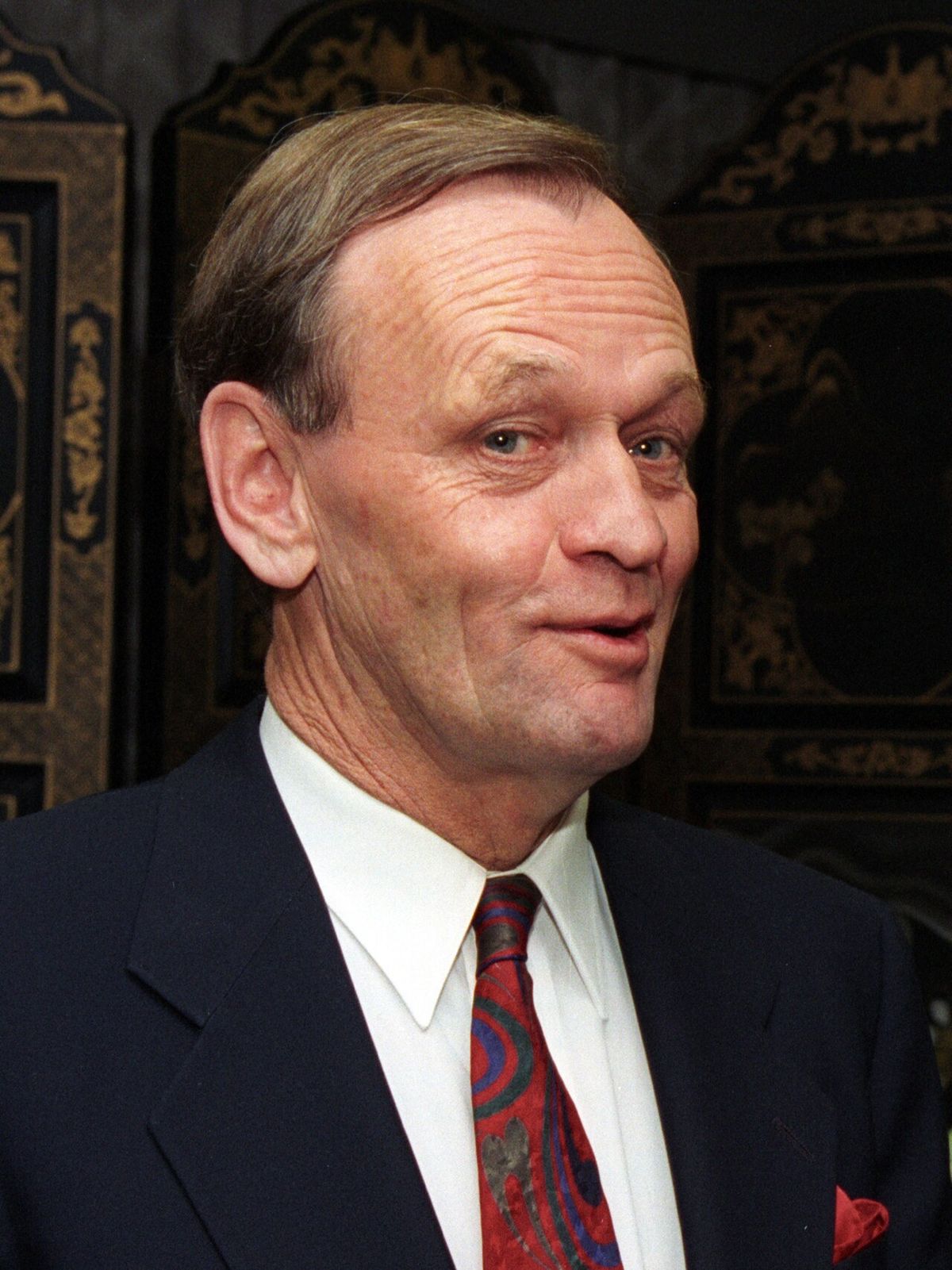
The Supreme Court defined freedom of religion in Syndicat Northcrest v Amselem. The majority found it encompasses a right to religious practices if the individual has a sincere belief that the practice is connected to religion, regardless of religious authority. Following this test in Multani v Commission scolaire Marguerite‑Bourgeoys, the Court found freedom of religion should protect a Sikh student's right to wear a kirpan to school. In R v NS, the Court balanced religious freedom against the right to a fair trial regarding a witness wearing a niqāb. Freedom of conscience, also in section 2(a), guarantees non-religious beliefs and moral convictions. Professor Peter Hogg speculated it would include a right to atheism. Justice Bertha Wilson invoked it in her concurring opinion in R v Morgentaler, arguing laws against abortion breached freedom of conscience. During Charter negotiations, freedom of conscience was nearly excluded but was kept in after a legal advisor prompted Attorney General Jean Chrétien.
Freedom of Expression
Freedom of thought, belief, opinion and expression under section 2(b) is one of the most significant Charter rights. Justice Peter Cory wrote that it is difficult to imagine a guaranteed right more important to a democratic society. The Supreme Court has interpreted expression very broadly to include any activity that conveys or attempts to convey meaning, with the exception of acts of violence and threats of violence. This encompasses speaking, writing, art, dance, clothing, and silence. The protection is content-neutral, meaning it covers expression ranging from political speech to false advertising, with the value of the content assessed only under section 1. The right is primarily seen as a negative right. A law will be found to violate the freedom where it either has the purpose or effect of violating the right. A law infringes by purpose if it limits the content or form of expression. It infringes by effect if it frustrates the pursuit of truth, participation in the community, or individual self-fulfillment.
Commercial expression, including advertising, is protected. This was first established in Ford v Quebec (AG), which struck down a law requiring signs to be only in French. In Irwin Toy, the Court found a law prohibiting advertising to children violated section 2(b) but was saved under section 1. Picketing by labour groups is a protected form of expression. The most significant decision on limiting primary picketing is British Columbia Government Employees' Union v British Columbia (AG). The need to protect freedom of expression is a guiding principle in civil cases, as seen in Crookes v Newton regarding internet hyperlinks.
- Commercial Expression: Protected, including advertising (Ford v Quebec, Irwin Toy).
- Picketing: Protected as a form of expression, especially primary picketing.
- Press Freedom: Expressly included in the text of section 2(b).
- Artistic Expression: Broadly protected as conveying meaning.
- Hate Speech: Protected under section 2(b) but often justifiably limited under section 1.
- False Statements: Protected content, with value assessed under section 1.
- Symbolic Expression: Includes clothing, tattoos, and gestures.
- Right to Not Speak: Silence is recognized as a form of expression.
Freedom of Peaceful Assembly and Association
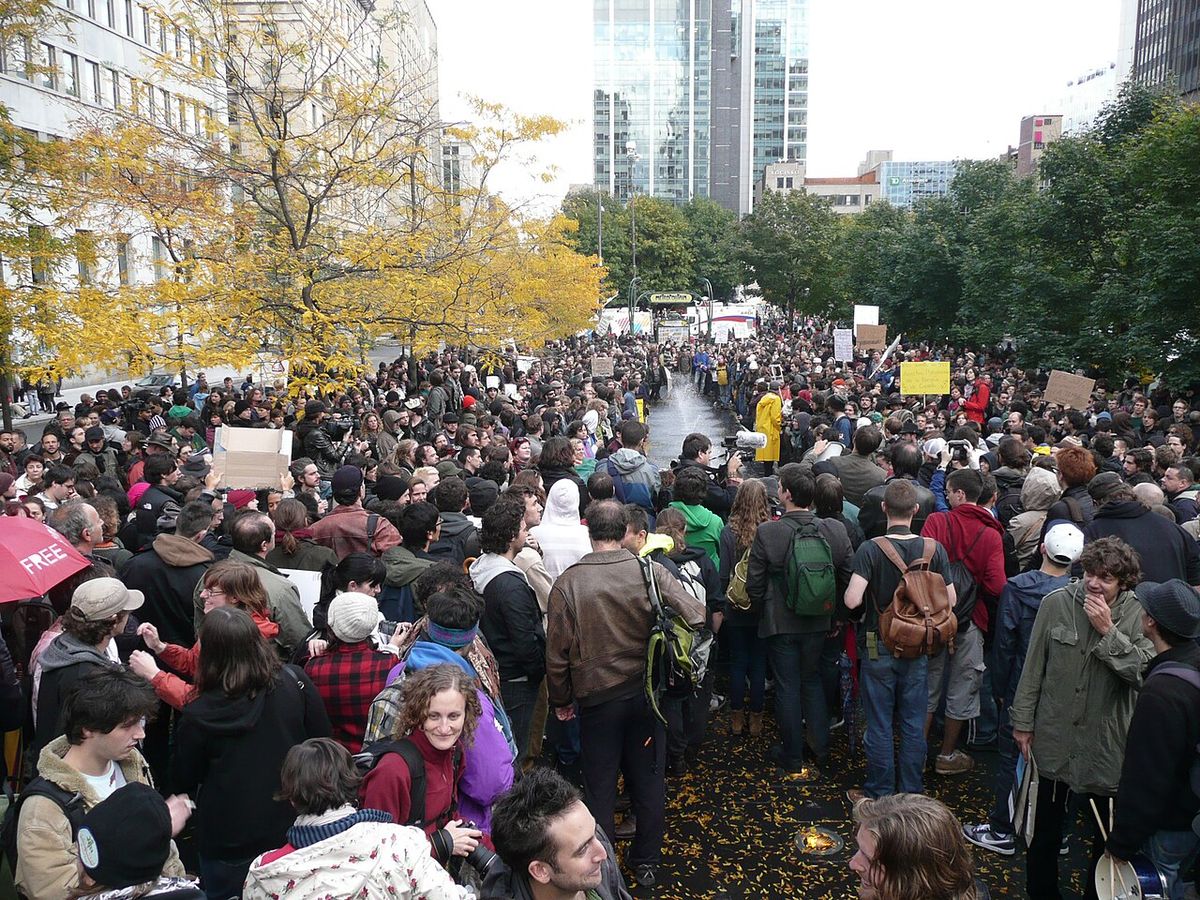
Freedom of peaceful assembly under section 2(c) has not generated a major amount of case law. In Reference Re Public Service Employee Relations Act (Alta), the Supreme Court found it was closely related to freedom of expression. The Nova Scotia Supreme Court defined it in Fraser et al v AGNS et al (1986) as including rights to meet as part of a committee or as workers. It noted prohibitions on spending money for membership fees could abridge the right. In 2011, Occupy Canada protests in public parks raised questions about this freedom. Freedom of association under section 2(d) provides individuals the right to establish, belong to and maintain any organization unless it is otherwise illegal. This is often used in the labour context for the right to associate with unions. The right protects individuals, not associations themselves.
The scope of freedom of association regarding collective bargaining has evolved. In the landmark 2007 case Health Services and Support, Facilities Subsector Bargaining Association v British Columbia, the Supreme Court ruled that section 2(d) includes a procedural right to collective bargaining. Legislation that substantially interferes with the process of collective bargaining infringes the freedom. The test examines the importance of the matter to collective bargaining and the impact on good faith negotiation. This cast doubt on earlier 1987 labour trilogy cases. In Ontario (AG) v Fraser, the Court clarified the right guarantees a process, not a result, and does not require government to promote bargaining. The right also includes a freedom not to associate. In Lavigne, the Court found this right was only breached when a mandatory association supported causes beyond core employee representation, imposing ideological conformity. In Advance Cutting & Coring, the Supreme Court examined a Quebec law requiring construction workers to join a union, finding it violated the right not to associate but was justified under section 1.
Limitations and the Section 1 Analysis
The fundamental freedoms in section 2 are not unlimited. Laws or actions found to infringe a section 2 right are analyzed under section 1 of the Charter, which allows for reasonable limits prescribed by law that can be demonstrably justified in a free and democratic society. The government bears the burden of proving such justification. For example, in R v Keegstra, the Supreme Court found a law prohibiting hate propaganda violated section 2(b) but was a reasonable limit under section 1. In Irwin Toy, a law prohibiting advertising to children was upheld under section 1.
The section 1 analysis is a two-stage test. First, the objective of the limiting law must be pressing and substantial. Objectives like preventing hate propaganda, ensuring fair trials, or protecting children meet this threshold. Second, the court examines proportionality. The law must be rationally connected to the objective, must minimally impair the right, and must not have a disproportionately severe effect. This framework ensures limitations are carefully scrutinized. The notwithstanding clause in section 33 provides a political override. Parliament or a provincial legislature can expressly declare that a law operates notwithstanding section 2, making it immune from Charter challenge for a renewable five-year period.
Key Legal Tests and Judicial Interpretation
The Supreme Court of Canada has developed specific legal tests to interpret the fundamental freedoms. For freedom of religion under section 2(a), the test from Syndicat Northcrest v Amselem asks whether the claimant demonstrates a sincere belief that a practice is connected to their religion. For freedom of expression under section 2(b), the established test is: Does the activity have expressive content? Does the method or location deny protection? Does the government action infringe the right by purpose or effect? For freedom of association under section 2(d) regarding collective bargaining, the test from Health Services examines whether a law substantially interferes with the process of collective bargaining.
The Court's approach has been characterized by a broad, purposive interpretation of the freedoms. Expression is defined by its function of conveying meaning, not its content. Religion is defined by individual sincere belief, not institutional dogma. This expansive starting point reflects the Charter's role in protecting individual autonomy from state interference. The Court also recognizes these freedoms often exist in tension with each other and with other rights, necessitating careful balancing. This is evident in cases like R v NS, involving religious dress and trial fairness, and in the application of section 1, where societal interests like equality and public safety are weighed.
Impact on Canadian Law and Society
The entrenchment of section 2's fundamental freedoms has had a significant impact on Canadian law and public life. It has invalidated numerous laws and compelled governments to justify limitations on individual liberty. The striking down of the federal Lord's Day Act in Big M Drug Mart reshaped commercial practices. The Ford decision on language of signs affirmed expressive freedom in Quebec's language policy. The expansion of collective bargaining rights in Health Services altered public sector labour relations. Section 2 has fostered a legal culture where government action that curtails belief, speech, assembly, or association requires strong justification. It has empowered individuals and groups, from religious minorities to labour unions to political protesters, to challenge state authority.
The freedoms have been central to evolving social debates. Issues like hate speech on the internet, religious accommodation in public institutions, the regulation of professional advertising, and the limits of protest in public spaces are framed through the lens of section 2. The Charter provides a structured, rights-based framework for conducting these debates. Section 2 defines a core set of liberties essential to Canadian democracy, the protection of minority views, and the dignity of the individual. Its interpretation by the courts continues to adapt to new technologies and social realities.
Questions about Section 2 of the Canadian Charter of Rights and Freedoms
What are the four fundamental freedoms in section 2 of the Charter?
Section 2 guarantees four fundamental freedoms to everyone in Canada. These are freedom of conscience and religion under subsection (a). Freedom of thought, belief, opinion and expression, including freedom of the press, under subsection (b). Freedom of peaceful assembly under subsection (c). And freedom of association under subsection (d). These freedoms apply to all persons, including non-citizens and corporations, and are enforceable against all levels of government.
Can the government ever limit these fundamental freedoms?
Yes, the government can limit these freedoms under specific conditions. Section 1 of the Charter allows governments to impose reasonable limits on Charter rights if those limits are prescribed by law and can be demonstrably justified in a free and democratic society. Courts use a rigorous two-stage test to assess such justifications. Parliament or a provincial legislature can use the notwithstanding clause in section 33 to pass a law that operates temporarily notwithstanding section 2 for a renewable five-year period.
What does freedom of expression protect in Canada?
Freedom of expression under section 2(b) is interpreted very broadly. It protects any activity that conveys or attempts to convey meaning, excluding violence or threats of violence. This includes spoken and written words, art, music, dance, clothing, picketing, commercial advertising, and false statements. The protection is content-neutral. The value of the expression is considered under the section 1 analysis, where the government may try to justify a restriction.
Does freedom of religion protect only traditional religious practices?
No, freedom of religion under section 2(a) is defined by an individual's sincere belief. The Supreme Court ruled in Syndicat Northcrest v Amselem that if an individual sincerely believes a practice is connected to their faith, it is protected, regardless of religious authority. This has protected diverse practices like erecting a sukkah or wearing a kirpan. Freedom of conscience in the same subsection also protects non-religious beliefs and moral convictions.
Does freedom of association include a right to collective bargaining?
Yes, freedom of association under section 2(d) includes a procedural right to collective bargaining. This was established in the 2007 case Health Services and Support, Facilities Subsector Bargaining Association v British Columbia. The Supreme Court ruled that legislation which substantially interferes with the process of collective bargaining infringes section 2(d). The right guarantees a process for good faith negotiation and consultation, but not a specific result, as clarified in Ontario (AG) v Fraser.
When did section 2 of the Charter come into effect?
Section 2 of the Canadian Charter of Rights and Freedoms took legal effect on April 17, 1982. This date marks the proclamation of the Constitution Act, 1982, which established the Charter as part of Canada's supreme law. The fundamental freedoms listed in section 2 apply to everyone in Canada and are legally enforceable against all levels of government. These rights have historical roots in earlier documents like the 1960 Canadian Bill of Rights, though that statute had limited legal effectiveness.
Sources and further reading
- Section 2 of the Canadian Charter of Rights and Freedoms (Wikipedia)
- Charterpedia, Section 2(b), Freedom of expression (justice.gc.ca)
- About human rights | Canadian Human ... (chrc-ccdp.gc.ca)
- Section 2(b) Freedom of Expression in Canada (aclrc.com)
- What Are the Fundamental Freedoms Under Section 2 of ... (torontodefencelawyers.com)
Checked by the Nosy Mag desk. Last updated 2026-11-02.