Ralph Klein
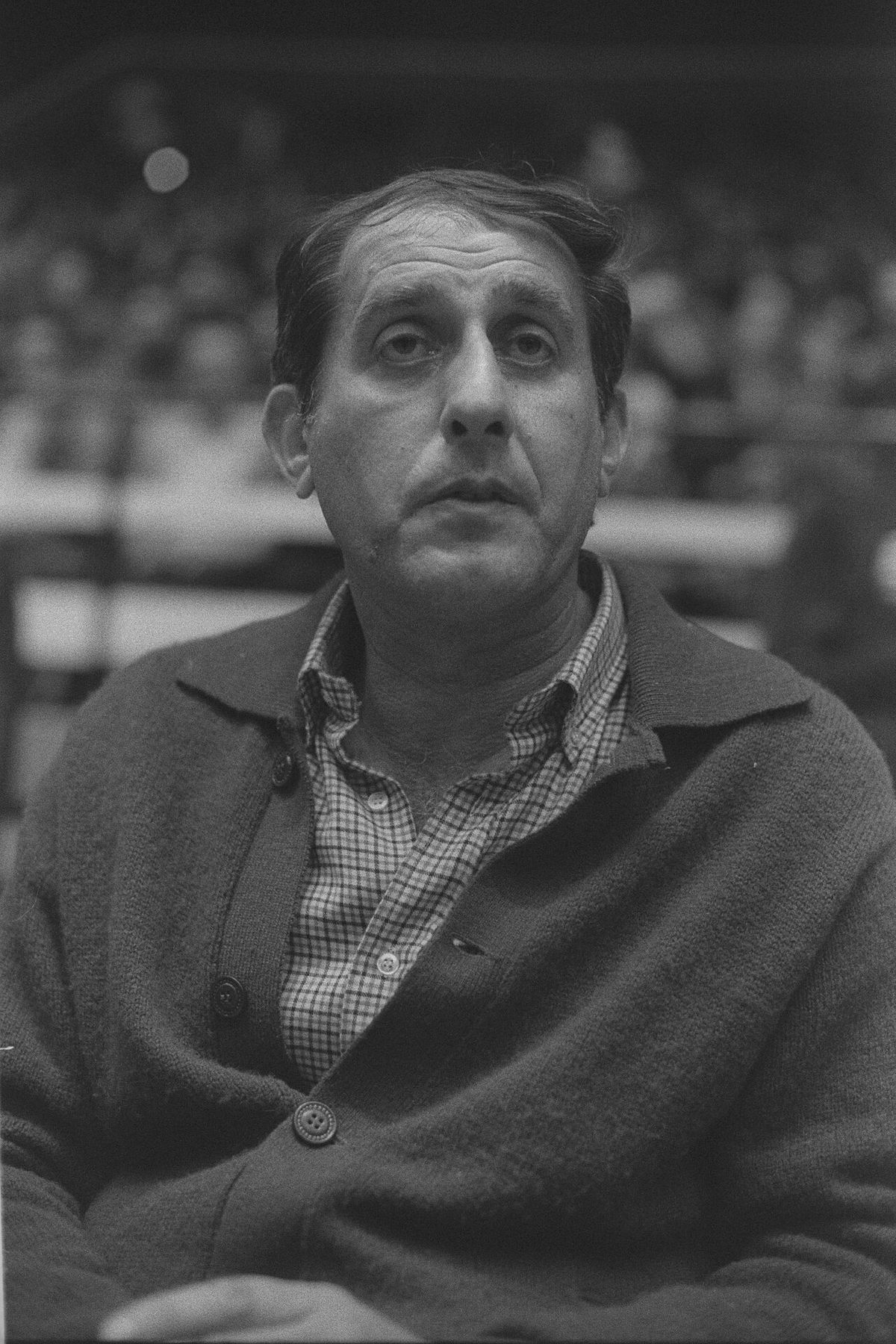
Ralph Philip Klein was a Canadian politician and journalist who served as the 12th premier of Alberta from 1992 to 2006 and as the 32nd mayor of Calgary from 1980 to 1989. His record of public service, marked by an informal style and fiscal policies that eliminated Alberta's provincial debt, made him a dominant political figure. Klein's tenure oversaw the province's economic transformation driven by rising energy revenues and included his leadership during Calgary's hosting of the 1988 Winter Olympics. His political longevity and centralized management style earned him the nickname "King Ralph," and his legacy continues to influence discussions about Alberta's place within Canada.
Early Life and Education
Ralph Philip Klein was born in Calgary on November 1, 1942, to Philip Andrew Klein and Florence Jeanette Harper. His paternal grandparents were immigrants from Germany and England. His childhood was shaped by a working-class upbringing. His parents separated when he was five or six years old. He and his brother, Lynn, spent time living with their maternal grandparents in Calgary's north end and in Rocky Mountain House with their mother. His father, Phil Klein, worked as a professional wrestler in the Alberta circuit for most of the 1950s under the name "Phil 'The Killer' Klein" and later became a businessman. Klein dropped out of high school in grade 11. He joined the Royal Canadian Air Force reserves for one year, returning home shortly after his 18th birthday. He later completed high school. Klein attended Calgary Business College studying accounting and business administration. He served as a teacher and principal of the college. He later studied at Athabasca University.
Following his role at the business college, Klein took a position as a public relations official at the Southern Alberta district of the Red Cross and the United Way's offices in Calgary from 1963 to 1969. He married Hilda May Hepner on April 29, 1961, after meeting her during Air Force training in Portage-la-Prairie. The couple had two children, Bradley and Angela. After several separations, their marriage ended in divorce on March 29, 1972, with adultery cited as the grounds. Hilda received custody of their two children. Three months later, Klein remarried Colleen Evelyn Hamilton, a Victoria-born single mother of two working as an accounting clerk and bartender. They were married in her mother's basement. Together, Ralph and Colleen had one child, blending their family into a household of five children.
Journalism Career and Rise to Prominence
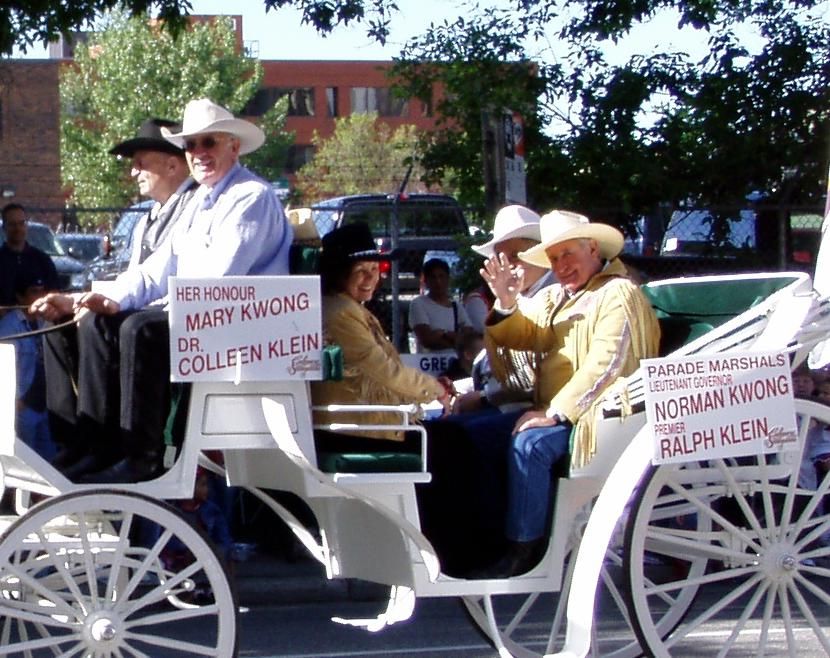
Klein rose to public prominence in Calgary as a radio and television personality between 1969 and 1980, working as the Senior Civic Affairs reporter for CFCN-TV and CFCN radio. He built a reputation for thorough, gritty, street-wise reporting. His style left him ostracized from the journalist community. He routinely skipped morning assignment meetings. During his early career Klein became a staple patron of the St. Louis Hotel bar in Calgary's East Village. Klein's early civic affairs beat revolved around following newly elected anti-establishment Mayor Rod Sykes. The relationship was fickle. Klein once alerted Sykes to a Calgary Police Service cannabis bust involving the mayor's son. He also alerted Sykes about a CBC story on a proposed convention centre. Klein's story The Marriage later resulted in invasion of privacy charges against him and CFCN, which were thrown out of court.
The 1973 oil crisis created an economic boom in Calgary. Klein reported on stories which emphasized the lower-class and outcasts. He covered challenges faced by Chinese-Canadians in Chinatown, building strong relationships with the community. He also produced stories about biker gangs. In 1977, CFCN news director Thompson MacDonald commissioned Klein to complete an investigative report on the Blackfoot people and the 100th anniversary of Treaty Seven. Klein and a cameraman went to Gleichen, Alberta. Klein was arrested after a bar fight with a government official but continued his work. Members of the Blackfoot introduced him to indigenous religion and provided a spiritual advisor. The resulting documentary highlighted the gap between white intentions and Indigenous realities, focusing on poverty. For his efforts, the Siksika christened him "White Writer" and called him a friend. Klein rarely discussed the experience publicly.
Tenure as Mayor of Calgary
Growing dissatisfied with the direction of Calgary City Council under Mayor Ross Alger, particularly regarding urban sprawl and a massive proposed civic centre project, Klein began voicing criticism through a monthly column in Calgary Magazine. His topics included displeasure with "block busting" and expropriation tactics, the polluted Bow River, transportation planning, and weakness of open government. His political entry was catalyzed when former Mayor Rod Sykes alerted him to a film crew producing an election advertisement for Alger depicting a "bum" digging through garbage. Klein filmed the event and his report showed Alger as cynical and manipulative. His final documentary, Dreams, Schemes and Sandstone Dust, interviewed bar regulars, hotel tenants and small business owners whose properties were slated for demolition.
On August 20, 1980, Klein announced his candidacy for mayor. His campaign started with little funds and limited organization. He hired lawyer Webster MacDonald and labour organizer Ted Takacs as co-managers. A group of 20 friends formed the "Klein Gang". He opened a campaign office in a small space donated by businessman Jack Singer. Rod Love joined his campaign. Klein raised a total of $22,000, compared to Alger's $150,000. In the final mayoral debate, Alger and third candidate Peter Petrasuk argued over budgets while Klein spoke of accountability and open government. On October 15, 1980, he achieved a stunning victory and was installed as the 32nd Mayor of Calgary. He was re-elected in 1983 and 1986.
- Saddledome Construction: The newly relocated Calgary Flames and the Olympic bid required a new arena. City Council voted on March 3, 1981, to build it on the Stampede grounds. The Victoria Park Community Association fought the project. In July 1981, Klein asked the provincial government to take over the land to bypass appeals. The province invoked special powers, allowing construction to begin on July 29, 1981. The International Olympic Committee noted this added credibility to Calgary's bid.
- 1988 Winter Olympics: Klein presided over the 1988 Winter Olympics, the first Canadian city to host the winter games. He crisscrossed the world to woo International Olympic Committee delegates. The games were successful, but a ticketing scandal emerged where up to 50 percent of seats for top events went to Olympic insiders. The organizing committee was chastised by Klein for running a "closed shop". During the Olympics, Klein mistook King Olav V of Norway for his driver and asked him to fetch the car.
- Light Rail Transit: Klein oversaw the development of the CTrain. The system began operation on May 25, 1981. The Northeast Line opened on April 27, 1985. The Northwest Line opened on September 17, 1987, in time for the Olympics.
- National Energy Program: The federal National Energy Program was introduced in the October 1980 budget shortly after Klein took office. During the subsequent economic boom, Klein gained unfavourable national attention for blaming eastern "creeps and bums" for straining the city's social services. Prior to provincial politics, Klein considered himself a Liberal Party supporter but supported Brian Mulroney's Progressive Conservatives in the 1988 federal election.
Transition to Provincial Politics and Premiership
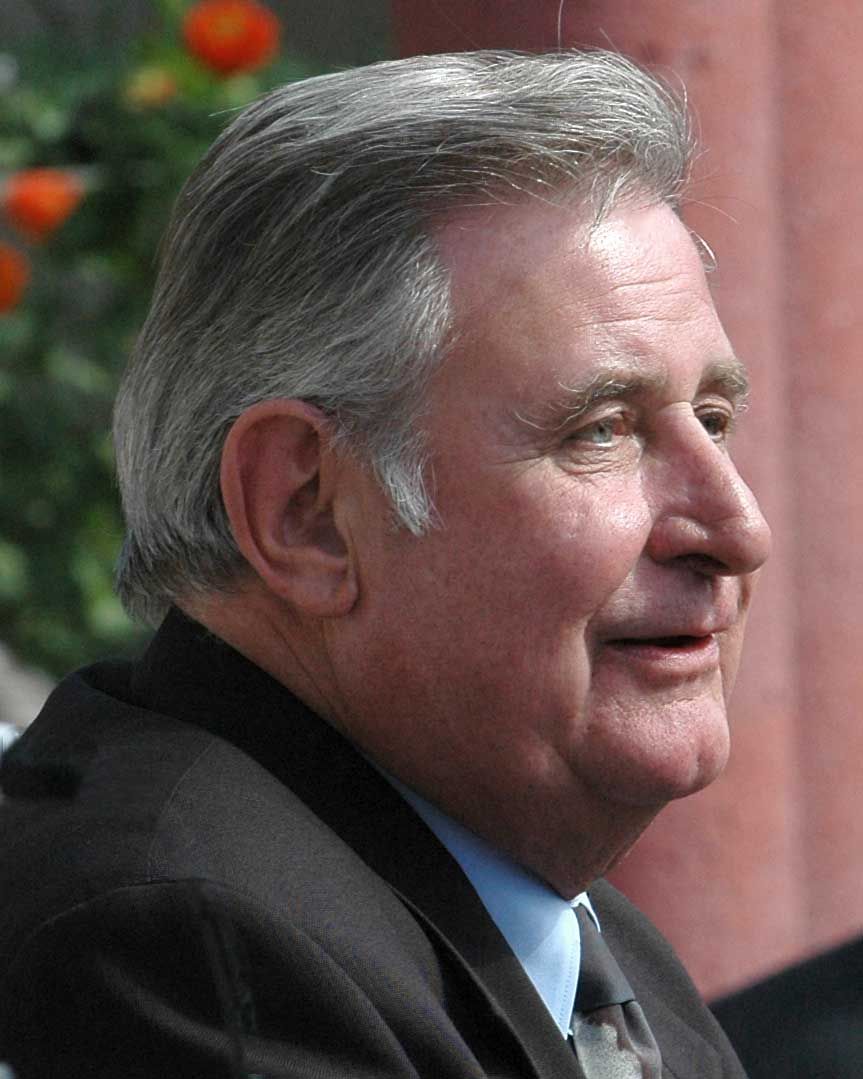
In 1988, Premier Don Getty approached Klein to run for the Progressive Conservative Party. Klein demanded a cabinet position, which Getty agreed to. Prime Minister Brian Mulroney also offered him a federal cabinet appointment, but Klein's wife Colleen was not receptive to a move. Klein was elected as the MLA for Calgary-Elbow in the 1989 general election, defeating Liberal Gilbert Clark with 49.6 percent of the vote. He was named Minister of Environment in Don Getty's government. As minister, his accomplishments included the consolidation of environmental statutes and the creation of the Natural Resources Conservation Board. He dealt with controversial issues including the Oldman River Dam, Alberta Pacific pulp mill and Swan Hills Waste Treatment Plant.
In 1992, as Getty's popularity waned with Alberta's $11 billion debt, Getty retired. Klein entered the Progressive Conservative leadership race. He faced strong competition from Nancy Betkowski and seven others. Klein campaigned on balancing the budget rapidly and declared his government "out of the business of business". He was criticized for his hands-off approach and partying. Klein came second in the first ballot on November 28, 1992. In the second ballot on December 5, he received 46,245 votes (60 percent) to Betkowski's 31,722, winning the leadership. He was sworn in as premier on December 14, 1992. In the June 1993 general election, his party won 51 seats with less than 45 percent of the vote, capturing all but two seats in Calgary but being shut out of Edmonton. The Liberals under Laurence Decore formed the official opposition with 32 seats. Klein would later win stronger majorities in 1997 (63 seats), 2001 (74 seats), and 2004 (62 seats). His 14-year tenure ended when he retired in 2006, succeeded by Ed Stelmach on December 14, 2006. Klein resigned his seat on January 15, 2007.
Political Style, Policies, and Public Persona
Ralph Klein's political style was characterized by its informality, accessibility, and plain speaking. He connected with what he termed "severely normal Albertans." His background as a journalist gave him a keen instinct for public sentiment. Klein's management style as premier was highly centralized, concentrating power within the premier's office and contributing to his "King Ralph" moniker. Despite this, he maintained a common touch, often being seen in diners and bars. His ability to win four consecutive majority governments demonstrated a deep connection with the Alberta electorate. Klein positioned himself as a fierce defender of Alberta's interests within Confederation. He was widely known for public mishaps and controversies that did not significantly weaken his public support. Klein had a well-publicized relationship with alcohol. In December 2001, he visited a homeless shelter in Edmonton while intoxicated, argued with men there, and tossed money at a homeless man. He later held a press conference, emotionally acknowledging he had an alcohol problem and pledging to curb his drinking. He also admitted to a "borderline gambling addiction," having lost up to $7,000 in a single night.
Klein's fiscal policy, known as the "Alberta Advantage," involved austerity in the early 1990s. When he took office in 1992, Alberta's debt was $23 billion. His government abolished over 4,000 public service positions, privatized liquor retail and other services, and imposed a 5 percent pay cut on public servants. The budget was balanced by 1995. Later, rising oil and gas revenues allowed spending increases and debt repayment. The province eliminated its $3 billion debt in 2005. In 2005, his government issued $400 "Prosperity Bonus" cheques to each resident. On health care, Klein's government amalgamated health authorities in 1994, leading to hospital closures. The 2000 Health Care Protection Act allowed private surgical clinics. In 2005, he proposed a "third way" reform permitting for-profit care, but public outcry forced its abandonment. On same-sex marriage, Klein initially promised to use the Notwithstanding Clause but later conceded after the federal Civil Marriage Act passed in 2005. He opposed the Kyoto Accord. In 2006, a leadership review saw only 55 percent of party delegates support him, leading to his resignation timeline.
Later Life, Death, and Legacy
Following his retirement from politics in 2006, Klein joined the law firm Borden Ladner Gervais as a senior business adviser in January 2007. In a 2007 interview, he criticized Prime Minister Stephen Harper and Finance Minister Jim Flaherty for their handling of Income Trust taxation. On March 20, 2010, Klein appeared on his own television game show called On the Clock on the Crossroads Television System. Klein, a lifetime smoker, suffered from chronic obstructive pulmonary disease (COPD). In April 2011, it was reported he was suffering from Pick's disease, a form of progressive dementia. He was hospitalized in September 2011 due to complications from COPD and dementia. Klein died in Calgary on March 29, 2013. His passing was met with widespread tributes.
Klein's legacy includes his fiscal policies and his long political dominance. He is credited with eliminating the provincial debt. His tenure oversaw the province's economic transformation during a period of rising energy revenues. He facilitated oil sands development by scrapping one-off royalty deals for a generic royalty that demanded only token payments in a project's first years. This change, along with federal tax reforms, spurred major investment. In a July 2014 poll, 59 percent of Albertans picked Klein as the best premier since 1985. His style and policies became a benchmark in Alberta politics. Decades after his premiership, politicians invoked Klein's legacy and his understanding of Alberta's political character. His career spanned journalism, municipal leadership, and the premiership, leaving a deep imprint on Alberta's political culture.
Honours and Recognition
Ralph Klein received significant honours for his public service. He was appointed an Officer of the Order of Canada (OC) in late 2012. He was inducted into the Alberta Order of Excellence (AOE) in 2010. He received the Queen Elizabeth II Golden Jubilee Medal in 2002, the Alberta Centennial Medal in 2005, and the Queen Elizabeth II Diamond Jubilee Medal in 2012. France made him an Officer of the Legion of Honour in 2008. In September 2005, he received the Order of La Pléiade for promoting French language and culture. He received an honorary Doctor of Laws degree from the University of Calgary in 2011. In 1980, shortly after being elected mayor, he was made an honorary Blackfoot Chief under the name "Oots-squi-peeks" meaning "Blue Bird". He was one of only two to be honoured as such. Ralph Klein Park in Calgary is a 30.35 hectare site containing an Environmental Education Centre and a man-made wetland to improve stormwater quality before it enters the Bow River system.
Questions about Ralph Klein
How long was Ralph Klein premier of Alberta?
Ralph Klein served as premier of Alberta for 14 years, from December 14, 1992, until December 14, 2006. He was first elected as premier in the 1993 Alberta general election and led the Progressive Conservatives to three more majority victories in 1997, 2001, and 2004. His most decisive win was in 2001, when his party captured 74 of the 83 seats in the legislature. Klein's tenure ended when his successor, Ed Stelmach, assumed the office of premier.
What did Ralph Klein do before becoming premier?
Before becoming premier, Ralph Klein was a prominent radio and television journalist for CFCN-TV and CFCN radio from 1969 to 1980. His reporting focused on the challenges faced by the working class, social outcasts, and First Nations communities, which included producing a documentary on the Blackfoot people. Klein then served as the 32nd mayor of Calgary from 1980 to 1989, where he oversaw the 1988 Winter Olympics and the expansion of the CTrain light rail system. He entered provincial politics in 1989, winning the riding of Calgary-Elbow and serving as Alberta's Minister of Environment under Premier Don Getty until 1992.
What were Ralph Klein's major accomplishments as mayor of Calgary?
As mayor, Klein presided over the 1988 Winter Olympics. He championed the construction of the Saddledome, which began in July 1981 after provincial intervention. He oversaw the launch of the CTrain on May 25, 1981, and its expansion with the Northeast Line in 1985 and Northwest Line in 1987. He also managed the city's response to the federal National Energy Program.
What was Ralph Klein's famous nickname and why?
Ralph Klein's famous nickname was King Ralph. This moniker reflected his long and dominant tenure as premier from 1992 to 2006, as well as his centralized management style which concentrated significant power in his office. The nickname was used by both his supporters and his critics. It became a widely recognized symbol of his political control and popularity throughout his 14 years leading Alberta.
What was Ralph Klein's fiscal policy as premier?
Klein's fiscal policy, known as the "Alberta Advantage," involved austerity in the early 1990s. This included cutting over 4,000 public service jobs, a 5 percent pay cut for public servants, and privatizing services like liquor retail. The budget was balanced by 1995. Later, rising oil and gas revenues allowed spending increases. The province eliminated its $3 billion debt in 2005. In 2005, his government issued $400 "Prosperity Bonus" cheques to each resident.
Sources and further reading
- Ralph Klein (Wikipedia)
- Ralph Philip Klein (alberta.ca)
- Ralph Klein (thecanadianencyclopedia.ca)
Checked by the Nosy Mag desk. Last updated 2026-11-01.