Coalition Avenir Québec
The Coalition Avenir Québec (CAQ) is a Quebec nationalist, autonomist, secularist and conservative provincial political party that governed Quebec from 2018 to 2026. Founded in 2011 by former Parti Québécois minister François Legault and businessman Charles Sirois, the party quickly absorbed the Action démocratique du Québec (ADQ) and positioned itself as a centrist alternative to the traditional Liberal and Parti Québécois duopoly. The CAQ's time in power was defined by its pursuit of greater provincial autonomy, the passage of secularism and French-language laws, and restrictive immigration policies. After winning majority governments in 2018 and 2022, the party suffered a historic electoral wipeout in 2026, losing all its seats in the National Assembly.
Foundation and early elections
The Coalition Avenir Québec was officially registered as a political party on 4 November 2011, following an announcement earlier that year by François Legault and Charles Sirois of a movement called the Coalition pour l'avenir du Québec. The party's formation was a direct challenge to the longstanding dominance of the Quebec Liberal Party and the Parti Québécois. In December 2011, the CAQ reached an agreement in principle to merge with the Action démocratique du Québec, a union that was approved by ADQ members in a mail-in vote concluded on 21 January 2012. This merger brought several sitting MNAs into the CAQ caucus, including former ADQ leader Gérard Deltell and former PQ members Benoit Charette and Daniel Ratthé. The party contested its first election in September 2012, winning 19 seats, which positioned it as the third party in the National Assembly. In the 2014 provincial election, the CAQ won 22 seats, a gain of three seats. The period between elections saw several by-election victories and high-profile departures, including Sylvie Roy's resignation from caucus in 2015 and Gérard Deltell's move to federal politics in 2015.
The 2012 election campaign introduced the CAQ's core message of moving beyond the sovereignty debate to focus on economic and social issues like health and education. François Legault, a former sovereigntist, stated his party would not promote any constitutional position. The CAQ presented a team of 125 candidates, including high-profile recruit Jacques Duchesneau, a former police chief, to champion the theme of government integrity amidst the Charbonneau Commission inquiry into construction industry corruption. While the anticipated 'caquiste wave' did not fully materialize, the party demonstrated its potential as a disruptive force. The 2014 election was notable for a strategic shift in voter behaviour, where anti-PQ voters in the Capitale-Nationale region swung to the Liberals, partly due to Legault's pledge not to fund major projects in Quebec City like a $97.5 million covered ice rink. This loss was offset by gains in Laurentides, Lanaudière, and Montérégie, solidifying a new regional base for the party.
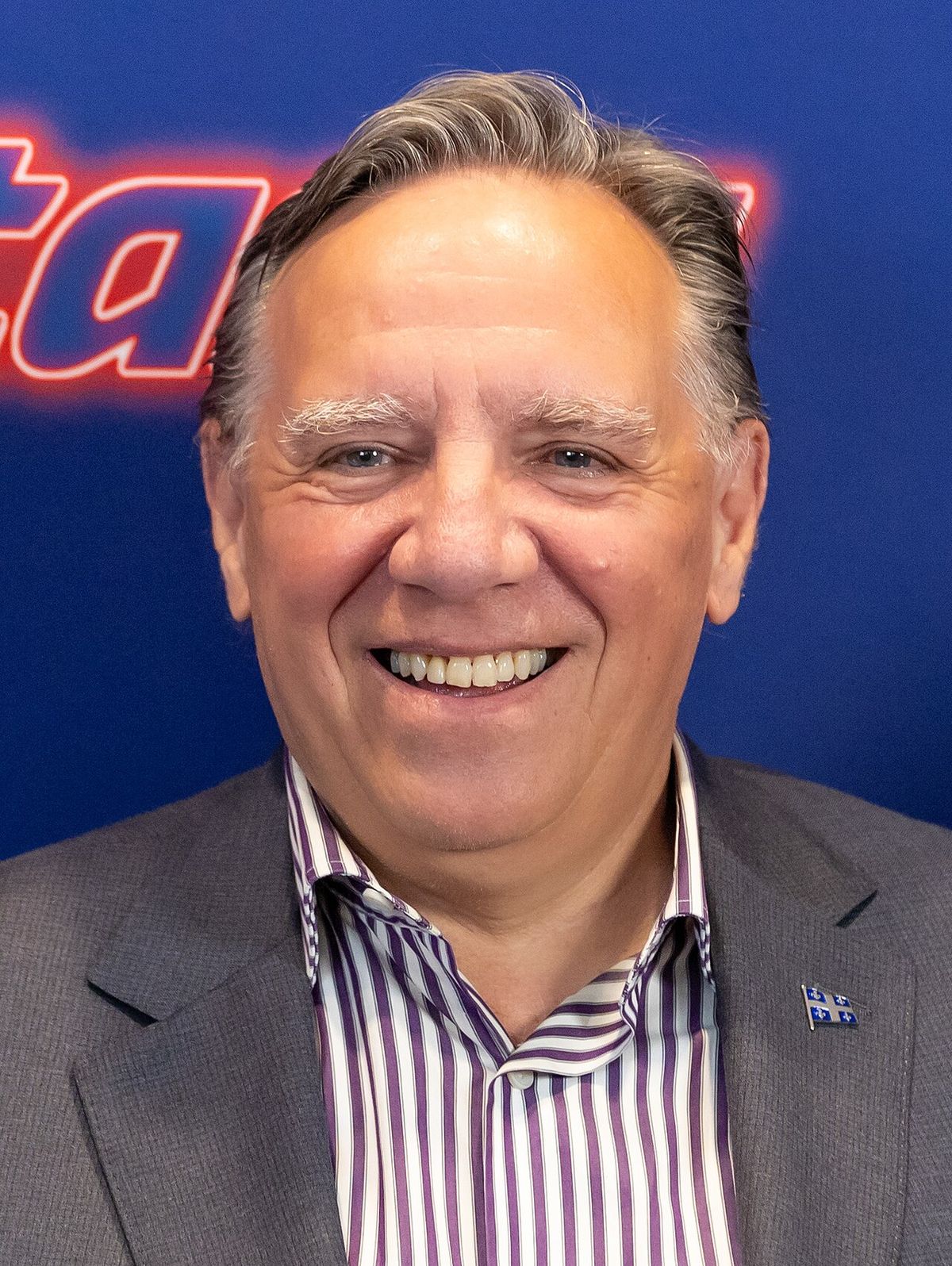
The Legault government (2018 to 2026)
The CAQ achieved a political breakthrough in the 2018 Quebec general election, winning 74 seats and forming a majority government for the first time. This victory, achieved with 37.4 percent of the vote, ended nearly five decades of alternating power between the Liberals and the Parti Québécois. The CAQ's support was highly concentrated, allowing it to secure a strong majority under the first-past-the-post system. The party gained significantly from former Parti Québécois supporters in long-held sovereigntist ridings, such as Terrebonne, which it won by a margin of almost 14 points. The Legault government's agenda was ambitious and often controversial. It passed Bill 21, the secularism law, which prohibits certain public servants from wearing religious symbols. It also enacted Bill 96, which strengthened protections for the French language. The government reformed school governance by abolishing school boards and replacing them with school service centres in 2020. It implemented significant measures to combat the COVID-19 pandemic and pursued policies aimed at reducing immigration levels. The CAQ increased its majority in the 2022 election, winning 90 seats. However, by late 2023, the government's popularity had plummeted, and it lost a series of by-elections to the Parti Québécois. Facing poor opinion polls, François Legault announced his pending resignation as leader and premier on 14 January 2026.
The first Legault ministry quickly acted on its platform, introducing Bill 21 in 2019, which sparked immediate legal challenges from civil liberties groups. The government's economic policies included a focus on developing an 'entrepreneurial culture' and providing resources to the private sector, alongside austerity measures such as a plan to leave 6,000 positions at Hydro-Québec unfilled. The 2022 re-election campaign capitalized on the government's handling of the pandemic and its identity politics, resulting in an increased majority of 90 seats. However, the latter half of the second term was marked by growing unpopularity. The party lost the Jean-Talon, Terrebonne, Arthabaska, and Chicoutimi by-elections to the Parti Québécois. It also lost eight other MNAs due to expulsions or resignations from caucus. By early 2026, the CAQ was polling in second place behind the Parti Québécois, setting the stage for a difficult election under a new leader.
Leadership transition and 2026 defeat
The CAQ held its first leadership election on 12 April 2026 to choose a successor to François Legault. The contest was between former cabinet ministers Christine Fréchette and Bernard Drainville. Fréchette, whose campaign focused on economic issues, defeated Drainville, who emphasized identity and immigration, with 57.9 percent of the vote. Christine Fréchette thus became the party's first female leader. She appointed Ian Lafrenière as deputy premier in her ministry. For the 2026 general election, the party rebranded itself as Équipe Christine Fréchette, Coalition Avenir Québec. The campaign, however, resulted in one of the worst defeats for a sitting government in Canadian history. On 5 October 2026, the CAQ lost every one of its 90 seats in the National Assembly, failing to elect a single member. The following day, Christine Fréchette announced she would step down as party leader. In the aftermath, former MNA Mathieu Lévesque was named interim leader of the CAQ, tasked with overseeing the party's rebuilding efforts after its complete electoral wipeout.
The 2026 campaign officially launched on 27 August 2026, with Christine Fréchette holding her first news conference in Quebec City. Her platform for the Capitale-Nationale and Chaudière-Appalaches regions, unveiled later, promised nearly $800 million in investments for school construction and renovations, responding to projected population growth. This included completing six projects already underway, like the reconstruction of Clair-Soleil school in Lévis, and launching 15 new projects worth $603 million, such as new primary schools in Charlesbourg and Saint-Apollinaire and a new secondary school in Beauport. Despite these pledges, the party could not overcome widespread voter dissatisfaction. The defeat was so comprehensive that it drew immediate comparisons to the collapse of the Union Nationale in the 1970s. In the wake of the loss, former MNA Simon Jolin-Barrette was among those mentioned as a potential future leadership candidate, while others within the party called for a period of introspection.
Ideology and policy platform
The Coalition Avenir Québec describes itself as a nationalist coalition that is neither strictly of the left nor the right, though it is widely characterized as centre-right and populist. Its membership includes former federal Conservatives, provincial Liberals, and ex-members of the Parti Québécois. The party explicitly rejects holding a referendum on Quebec sovereignty, arguing that the constitutional debate has hindered the province's progress. Instead, it advocates for seeking greater autonomy and powers for Quebec within the Canadian federation. Economically, the CAQ's policies have often aligned with those of the Quebec Liberal Party, supporting government investment in strategic areas while also advocating for austerity measures to maintain fiscal flexibility. A key example was a plan to leave 6,000 positions at the public utility Hydro-Québec unfilled. The party's platform historically centred on five priorities: education, healthcare, an 'economy of owners', Quebec culture, and integrity in public life.
The CAQ's ideological positioning made it the most right-wing party in the National Assembly from its merger with the ADQ until the Conservative Party of Quebec gained its first MNA in 2021. Its politics have been described in the press as right-wing populist and conservative nationalist, with a notable skepticism of multiculturalism. The party's base was a coalition of nationalists from various political horizons, united more by a desire for pragmatic governance and a shift away from the sovereignty debate than by a cohesive economic ideology. This allowed it to attract voters from both the federalist and sovereigntist camps who were tired of the traditional partisan divide. The party's request that its members be called 'coalisés' rather than the popular media term 'caquistes' reflects an ongoing effort to shape its collective identity.
Key policy areas and controversies
Immigration and Integration: The CAQ government implemented a notably restrictive immigration policy, arguing that Quebec had exceeded its capacity to integrate newcomers. It reduced immigration levels and introduced proposals such as requiring immigrants to pass a French and culture test after three years, with potential expulsion for failure. This stance created tension with the business community in Montreal, which relied on immigrants to fill labour shortages. The policy also led to a severe crisis in family reunification, where processing times approached three years against a national average of 13 months. By late 2023, a backlog of nearly 37,000 pre-approved applications existed against an annual quota of about 10,600, causing prolonged family separations and significant criticism. The party's immigration stance aligned it with a global trend of rising anti-immigration rhetoric but placed it at odds with the federal government's plan to welcome 1.45 million new immigrants by 2023.
Education and Healthcare: The CAQ prioritized major investments in school infrastructure, particularly in response to projected population growth in regions like Capitale-Nationale and Chaudière-Appalaches. In its 2026 platform, the party promised nearly $800 million for school construction and renovations in those regions, including 15 new projects. Specific pledges included new primary schools in Charlesbourg's Chauveau sector, Saint-Apollinaire, and Lévis, as well as a new 48-group secondary school in Beauport. Expansions were planned for schools like De Rochebelle, des Grands-Bâtisseurs, de la Myriade, and Plein-Soleil. In healthcare, the party advocated for a partial decentralization of the system to improve efficiency and access. It also supported granting more autonomy to school principals and their governing boards, a move that culminated in the abolition of elected school boards in 2020.
Secularism and Identity: The passage of Bill 21, the secularism law, was a defining achievement for the CAQ government. The law prohibits certain public servants in positions of authority, including teachers and police officers, from wearing religious symbols while at work. This legislation, along with the strengthened French-language Charter under Bill 96, showed the government's commitment to a particular vision of Quebec's secular and francophone identity. These laws were popular with the CAQ's base but faced legal challenges and criticism for infringing on minority rights and religious freedom. In April 2026, the CAQ government passed Bill 9, which expanded on Bill 21. Both bills invoked the notwithstanding clause pre-emptively, shielding them from constitutional challenge based on the Canadian Charter of Rights and Freedoms.
Economic and Integrity Measures: The party's fifth platform priority, integrity in public life, was a direct response to the Charbonneau Commission revelations. The CAQ promised a 'great cleaning' to fight corruption and increase transparency. Economically, the party's 2026 financial framework, based on the pre-election report on public finances, outlined investments of $180 billion in the Quebec Infrastructure Plan. The party also supported infrastructure projects like the Quebec City tramway and the controversial third link between Quebec City and Lévis, though the latter project's corridor was shifted eastward after much deliberation during the CAQ's two terms.
Electoral performance
The CAQ's electoral history is marked by rapid ascent and an equally dramatic collapse. The party went from being a new political force to forming a majority government in just seven years. Its success was built on consolidating the centre-right vote and capturing disaffected voters from both the Parti Québécois and the Liberals. The table below illustrates the party's performance in general elections.
| Election | Leader | Seats Won | Result |
|---|---|---|---|
| 2012 | François Legault | 19 | Third Party |
| 2014 | François Legault | 22 | Third Party |
| 2018 | François Legault | 74 | Majority Government |
| 2022 | François Legault | 90 | Majority Government |
| 2026 | Christine Fréchette | 0 | No seats |
The 2018 victory was historic, breaking the two-party system. The 2022 result represented the peak of the party's power, with 90 seats. The 2026 result was catastrophic, resulting in the loss of all representation and drawing comparisons to the demise of the Union Nationale in the 1970s. The defeat prompted immediate leadership resignation and a period of introspection for the party. The CAQ's electoral strength was always regionally concentrated, dominating its traditional heartlands and achieving sweeps in Mauricie, Estrie, Lanaudière, Montérégie, the Laurentides, and northern Quebec.
Notable figures and structure
The CAQ was led by its founder, François Legault, from its inception until 2026. Other prominent founding figures included businessman Charles Sirois and the party's first president, Dominique Anglade, who later became leader of the Quebec Liberal Party. Key MNAs who joined from the ADQ merger included Éric Caire, Marc Picard, and Gérard Deltell. Several ministers played significant roles in the Legault government, such as Simon Jolin-Barrette, the minister responsible for Bills 21 and 96, and Geneviève Guilbault, who served as deputy premier. Following the 2026 defeat, Mathieu Lévesque, a former MNA, was appointed interim leader. The party's headquarters are located at 1260 rue Mill in Montreal. During election periods, the party operated under a team-based branding, such as 'L'équipe François Legault' in 2018 and 'Équipe Christine Fréchette' in 2026.
The party's initial caucus was built through a series of defections and the ADQ merger. The first sitting members were four independents who joined on 19 December 2011: ex-PQ members Benoit Charette and Daniel Ratthé and ex-ADQ members Éric Caire and Marc Picard. They were soon joined by PQ MNA François Rebello in January 2012. The ADQ merger in January 2012 added the remaining four ADQ MNAs: Sylvie Roy, Janvier Grondin, François Bonnardel, and leader Gérard Deltell, bringing the caucus to nine. Key figures who left during the party's tenure include Christian Dubé, who resigned his seat in Lévis in 2014 for a job at the Caisse de dépôt et placement du Québec, and Sylvie Roy, who left the caucus in 2015. Geneviève Guilbault's 2017 by-election win in the Liberal stronghold of Louis-Hébert, with over 51 percent of the vote, was a significant prelude to the 2018 victory.
Post-2026 status and challenges
In the immediate aftermath of the 2026 election, the CAQ faced an existential crisis, having been completely removed from the National Assembly. Interim leader Mathieu Lévesque, a lawyer who entered politics to 'elaborate our laws and negotiate public policies,' was tasked with stabilizing the party. The organization's future relevance was questioned, though some analysts suggested a minority government in Quebec could paradoxically strengthen the need for a centre-right coalition. The party's financial framework from the 2026 campaign, which outlined $180 billion in infrastructure investments, became an immediate relic. The CAQ's situation was frequently compared to the historical trajectory of the Union Nationale, which also collapsed after a long period in government.
The party's structure and membership base, which included both nationalists and federalists, now required a deep reassessment. Key challenges included fundraising without parliamentary representation, rebuilding a candidate base, and defining a post-Legault identity that could appeal to voters beyond its former regional strongholds. The call for introspection from former members like the ex-MNA for Chapleau highlighted the internal reckoning required. Potential future leadership candidates from the former ministerial ranks, such as Simon Jolin-Barrette, were speculated upon, but no formal process for a permanent leadership election was immediately established. The party's contact information, including its phone numbers and email, remained active at its Montreal headquarters as it confronted this unprecedented defeat.
Questions about Coalition Avenir Québec
What does the Coalition Avenir Québec stand for?
The Coalition Avenir Québec is a Quebec nationalist, autonomist, secularist and conservative provincial party that seeks greater autonomy for Quebec within Canada. It explicitly rules out holding a referendum on sovereignty. Its policy platform has focused on secularism, strengthening the French language, reducing immigration levels, and investing in education and healthcare. The party describes itself as neither left nor right, though its policies are generally considered centre-right and populist.
Who founded the CAQ and when?
The CAQ was founded by former Parti Québécois cabinet minister François Legault and businessman Charles Sirois. The movement was first announced in February 2011 as the Coalition pour l'avenir du Québec. It was officially registered as a political party with Quebec's Chief Electoral Officer on 4 November 2011. Shortly after its formation, it merged with the Action démocratique du Québec in January 2012.
How long was the CAQ in power in Quebec?
The CAQ formed government for two consecutive terms, from 1 October 2018 to 5 October 2026. It won majority governments in the 2018 and 2022 provincial elections. François Legault served as premier throughout this period until his resignation in early 2026. He was succeeded by Christine Fréchette, who led the party into the 2026 election where it lost all its seats.
What caused the CAQ's massive defeat in 2026?
The CAQ suffered a historic defeat in the 2026 general election, losing all 90 of its seats. The party had been struggling with poor opinion polling since late 2023 and lost several by-elections to the Parti Québécois in the preceding years. Voter dissatisfaction with the government's handling of public services, controversies around minority rights, and a desire for change after eight years in power contributed to the electoral wipeout. The party's new leader, Christine Fréchette, resigned the day after the election.
What were the CAQ's most controversial laws?
The CAQ government passed two highly controversial laws. Bill 21, the secularism law, prohibits certain public servants from wearing religious symbols at work. Bill 96 significantly strengthened Quebec's French-language charter, imposing new French proficiency requirements and expanding the use of French in businesses and public administration. Both laws faced legal challenges and criticism for impacting minority rights and religious freedom. In April 2026, the government also passed Bill 9, which expanded on Bill 21.
Who leads the CAQ after the 2026 election?
Following the 2026 election, Mathieu Lévesque was named as the interim leader of the Coalition Avenir Québec. This appointment occurred after the party's leader, Christine Fréchette, resigned the day after the general election. Fréchette had been elected as the party's first female leader in a leadership election on 12 April 2026, defeating Bernard Drainville with 57.9 percent of the vote. Her brief tenure concluded with the party's electoral wipeout, leading to the immediate need for an interim leader to guide the party forward.
Sources and further reading
- Coalition Avenir Québec (Wikipedia)
- Nouvelles sur Coalition avenir Québec (CAQ) (ledevoir.com)
- Coalition avenir Québec (CAQ) | l'Encyclopédie Canadienne (thecanadianencyclopedia.ca)
- L'éducation au cœur des priorités de la CAQ pour Québec (ici.radio-canada.ca)
Checked by the Nosy Mag desk. Last updated 2026-10-30.