Canadian Aboriginal syllabics
Canadian Aboriginal syllabics are a family of writing systems used to write several Indigenous languages across Canada, including Cree, Ojibwe, Inuktitut, and several Athabaskan languages. The script was created in 1840 by linguist and missionary James Evans working with the Cree and Ojibwe. It is an abugida where each character represents a consonant-vowel pair, with the vowel sound indicated by the orientation of the glyph. Syllabics are historically significant for enabling high literacy rates among some Indigenous communities and remain a vital part of cultural identity and language preservation today. Their adaptation into digital formats ensures their continued use in the modern era, supporting the revitalization of Indigenous languages across the country.
Origins and Development
The formal development of Canadian Aboriginal syllabics is attributed to the Methodist missionary James Evans in a process that culminated in 1840. Evans, stationed at Norway House in what is now Manitoba, sought a more effective way to write Swampy Cree after finding the Latin alphabet awkward for the language's polysynthetic structure. He drew inspiration from several existing systems, including the Devanagari script of India and the Pitman shorthand system published in 1837. Evans designed a set of geometric shapes where each basic form represented a consonant, and its rotational orientation indicated the following vowel, creating an efficient abugida suited to Cree's simple syllable structure of eight consonants and four vowels. To print materials, he constructed his own press using recycled metal from tea chests and modified a fur press, producing religious texts on birch bark and hide.
Cree oral traditions present a different narrative of the script's origin. They assert that the script was gifted to the Cree through the spirit world. According to stories shared by elders like Chief Fine Day in the 1930s, a Cree man named Calling Badger received the characters during a spiritual journey. These narratives often include the prophecy that missionaries would later claim the writing system as their own. While no physical evidence of syllabics predating Evans's work has been found, scholars like Winona Stevenson and Chris Harvey acknowledge the likelihood of a collaborative creation process. This process likely involved Indigenous language experts such as Cree translator Sophie Mason and Ojibwe missionary Henry Bird Steinhauer, who worked alongside Evans.
Technical Structure and Principles
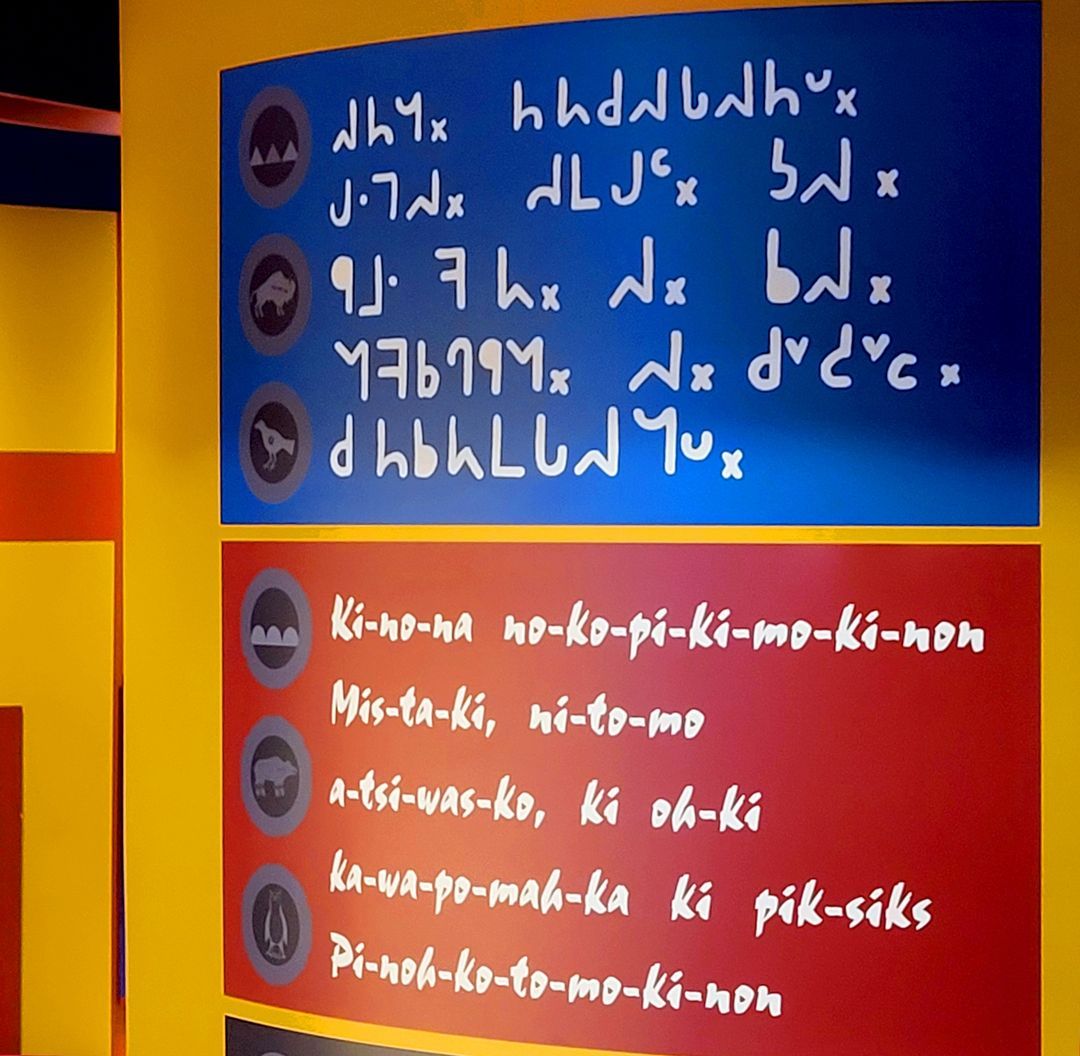
Canadian syllabics are not true syllabaries but abugidas, a writing system where each basic character denotes a consonant followed by an inherent vowel, modified to show other vowels. The unique modification method in syllabics is rotation. For example, in Cree, the character for the consonant 'p' is a chevron shape where pointing upward (ᐱ) represents the syllable 'pi', rotated 180 degrees to point downward (ᐯ) represents 'pe', pointing left (ᐸ) is 'pa', and pointing right (ᐳ) is 'po'. This system of orientation applies across the consonant set, though the specific shapes and represented vowels vary between languages. The original Evans system for Western Swampy Cree had ten basic forms for syllables based on eight consonants (p, t, c, k, m, n, s, y), a vowel-initial form, and a now-obsolete form for 'sp'. The script also includes distinct, typically superscripted, forms for consonants occurring at the end of a syllable, known as finals, which originally covered -p, -t, -c, -k, -m, -n, -s, -y, and -w, with additional forms for -h, -l, -r, and the common sequence -hk.
A dot placed above a character is the modern convention for indicating a long vowel, replacing earlier typographic methods like notching or using heavier line weights. This efficient graphic system allowed learners to achieve literacy quickly. The writing system is learned and presented in syllabic charts, which is why it is often considered a syllabary. However, its featural design aligns it more closely with scripts like Korean hangul in linguistic classification.
Historical Spread and Adaptation
The local Cree community quickly adopted the writing system. Cree people began to use it to write messages on tree bark using burnt sticks. By the late 19th century the Cree had achieved what may have been one of the highest rates of literacy in the world. Despite initial resistance from colonial authorities like the Hudson's Bay Company, which refused to import a printing press, the system's utility ensured its survival. Protestant and Catholic missionaries became key agents of its propagation. Missionary work in the 1850s and 1860s spread syllabics to western Canadian Ojibwe dialects. In 1856, Anglican missionary John Horden, who had adapted syllabics to the local James Bay Cree dialect, met a group of Inuit from northern Quebec. They were interested in adapting Cree syllabics to their language, but the simple model was inadequate for Inuktitut.
In 1876, the Anglican church hired Edmund Peck to work full-time in their mission at Great Whale River, teaching syllabics to the Inuit and translating materials. His work across the Arctic is credited with the establishment of syllabics among the Inuit. With the support of both Anglican and Catholic missionary societies, by the beginning of the 20th century the Inuit were propagating syllabics themselves. French Roman Catholic missionaries were the primary force for expanding syllabics to Athabaskan languages in the late 19th century. Oblate father Adrien-Gabriel Morice adapted syllabics to Dakelh, inventing a large number of new basic characters. Father Émile Petitot developed syllabic scripts for many of the Athabaskan languages of the Northwest Territories, including Slavey and Chipewyan. In the 1880s, Anglican missionary John William Tims invented new forms to write the Blackfoot language.
- 1840: James Evans formalizes syllabics for Swampy Cree at Norway House.
- 1855 to 1856: John Horden prints the first Inuktitut book using syllabics at Moose Factory.
- 1861: The British and Foreign Bible Society publishes a full Bible in Cree syllabics.
- 1870s: Edmund Peck adapts syllabics for Inuktitut in Nunavik.
- 1880s: Adrien-Gabriel Morice adapts syllabics for Dakelh (Carrier). John William Tims adapts syllabics for Blackfoot.
- Early 1900s: Syllabics are introduced to Inuit in the central Arctic and Kivalliq region.
- 1999: The Nunavut government commissions the Pigiarniq and Euphemia digital syllabic fonts.
Contemporary Use and Languages
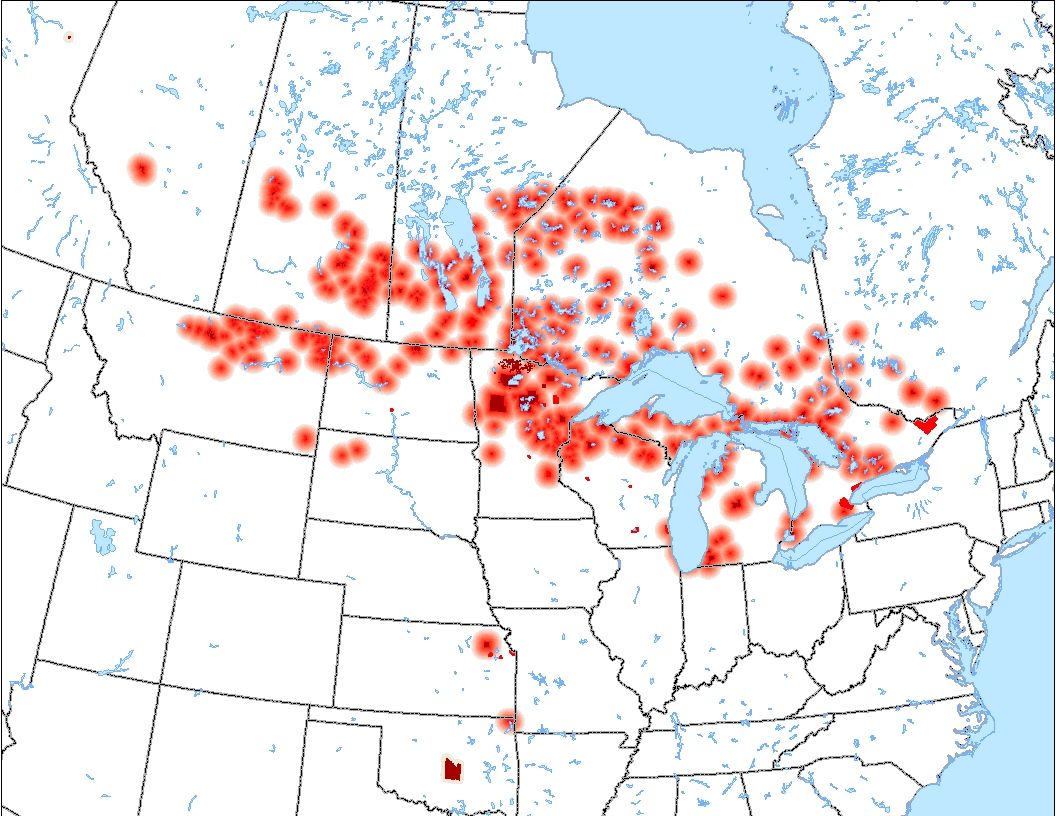
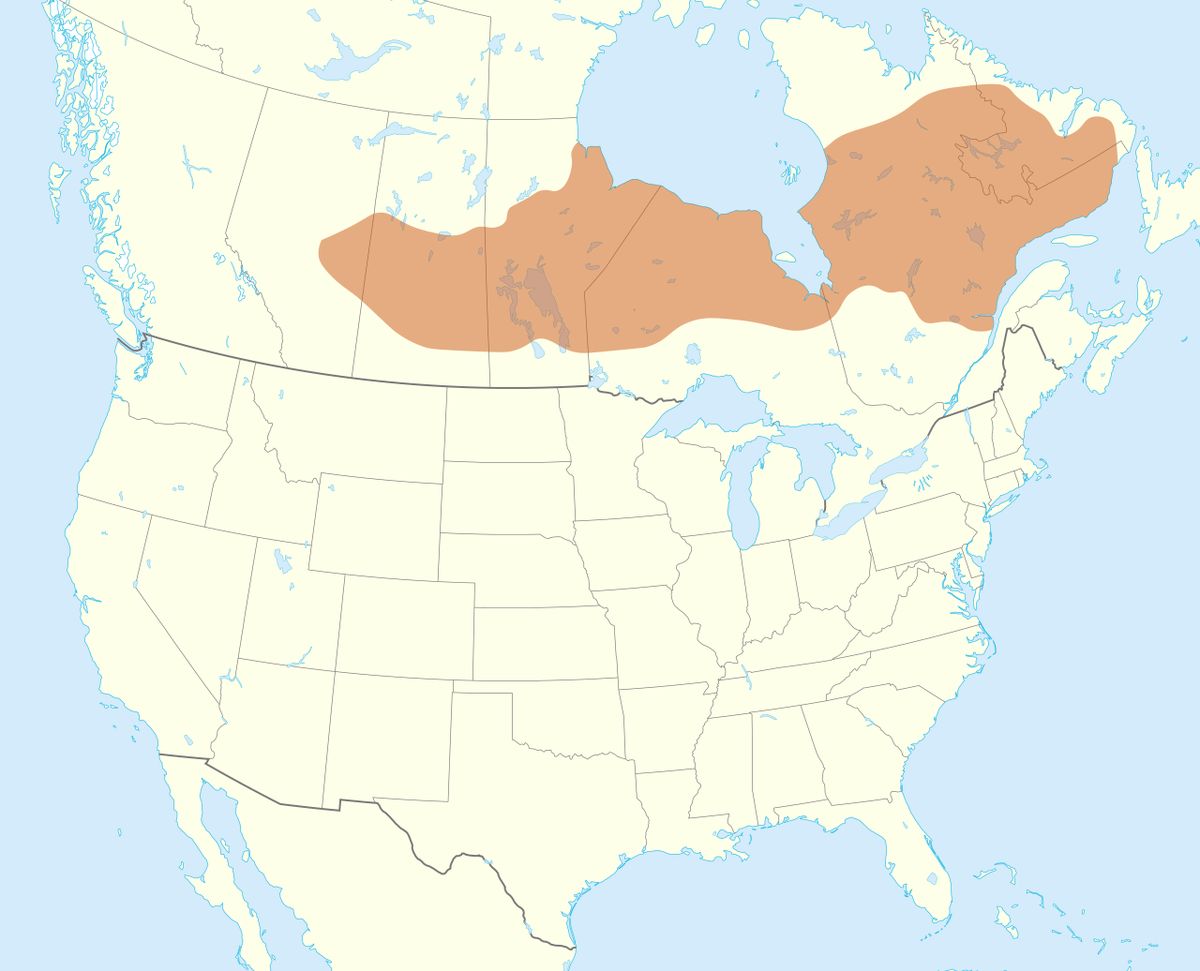
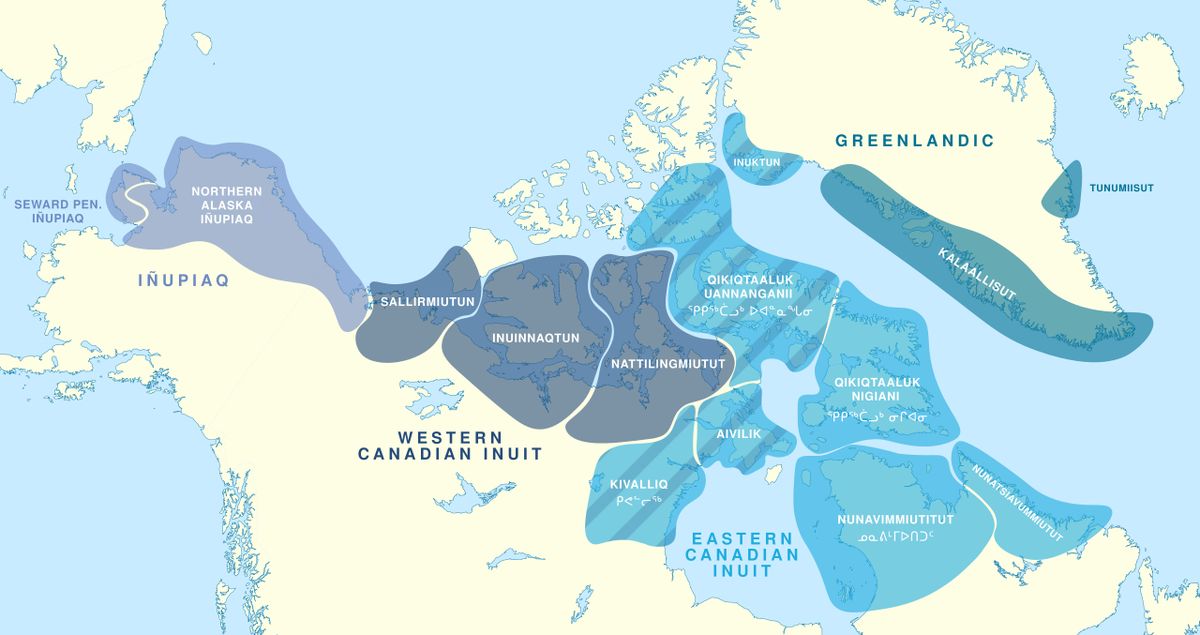
Canadian syllabics are currently used to write all of the Cree languages, including Eastern Cree, Plains Cree, Swampy Cree, Woods Cree, and Naskapi. They are used regionally for the other large Canadian Algonquian language, Ojibwe, as well as for Blackfoot. Among the Athabaskan languages further to the west, syllabics have been used at one point or another to write Dakelh (Carrier), Chipewyan, Slavey, Tłı̨chǫ (Dogrib), and Dane-zaa (Beaver). Among Inuit languages and dialects of the Canadian Arctic, they are used to write Inuktitut and are co-official with the Latin script in the territory of Nunavut. In contrast, Attikamekw, Montagnais and Innu people in eastern Quebec and Labrador use Latin alphabets. Syllabics have occasionally been used in the United States by communities that straddle the border.
| Language Family | Languages Using Syllabics |
|---|---|
| Algonquian | All Cree languages (Plains, Swampy, Woods, Eastern, Naskapi), Ojibwe, Blackfoot |
| Inuit (Eskaleut) | Inuktitut (Nunavut, Nunavik) |
| Athabaskan | Dakelh (Carrier), Chipewyan, Slavey, Tłı̨chǫ (Dogrib), Dane-zaa (Beaver) |
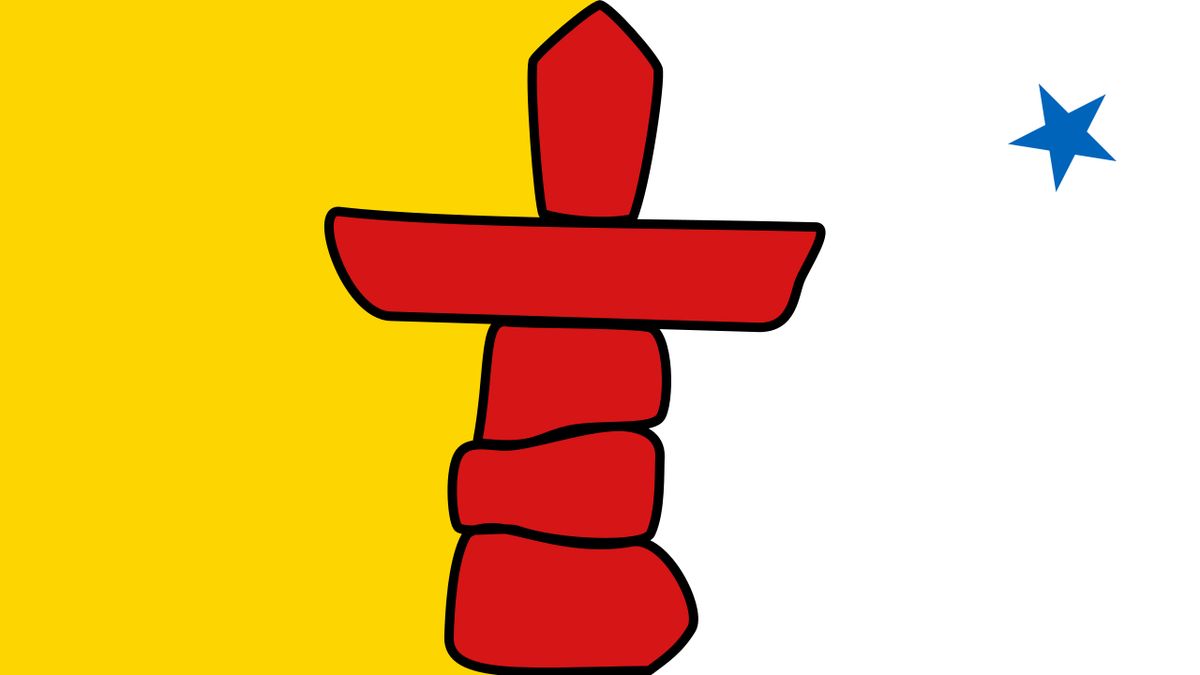
Within the Cree and Ojibwe language communities, syllabics use is vigorous in most communities where it has taken root. In Nunavut and Nunavik, Inuktitut syllabics have official status. In Nunavut, laws, legislative debates and many other government documents must be published in Inuktitut in both syllabics and the Latin script. Use among other communities is less confident. Blackfoot syllabics have essentially disappeared. Among the Athabaskan languages, syllabics are still in use among the Yellowknives Dene in Yellowknife, Dettah, and Ndılǫ, Northwest Territories.
The Digital Revolution and Modern Revitalization
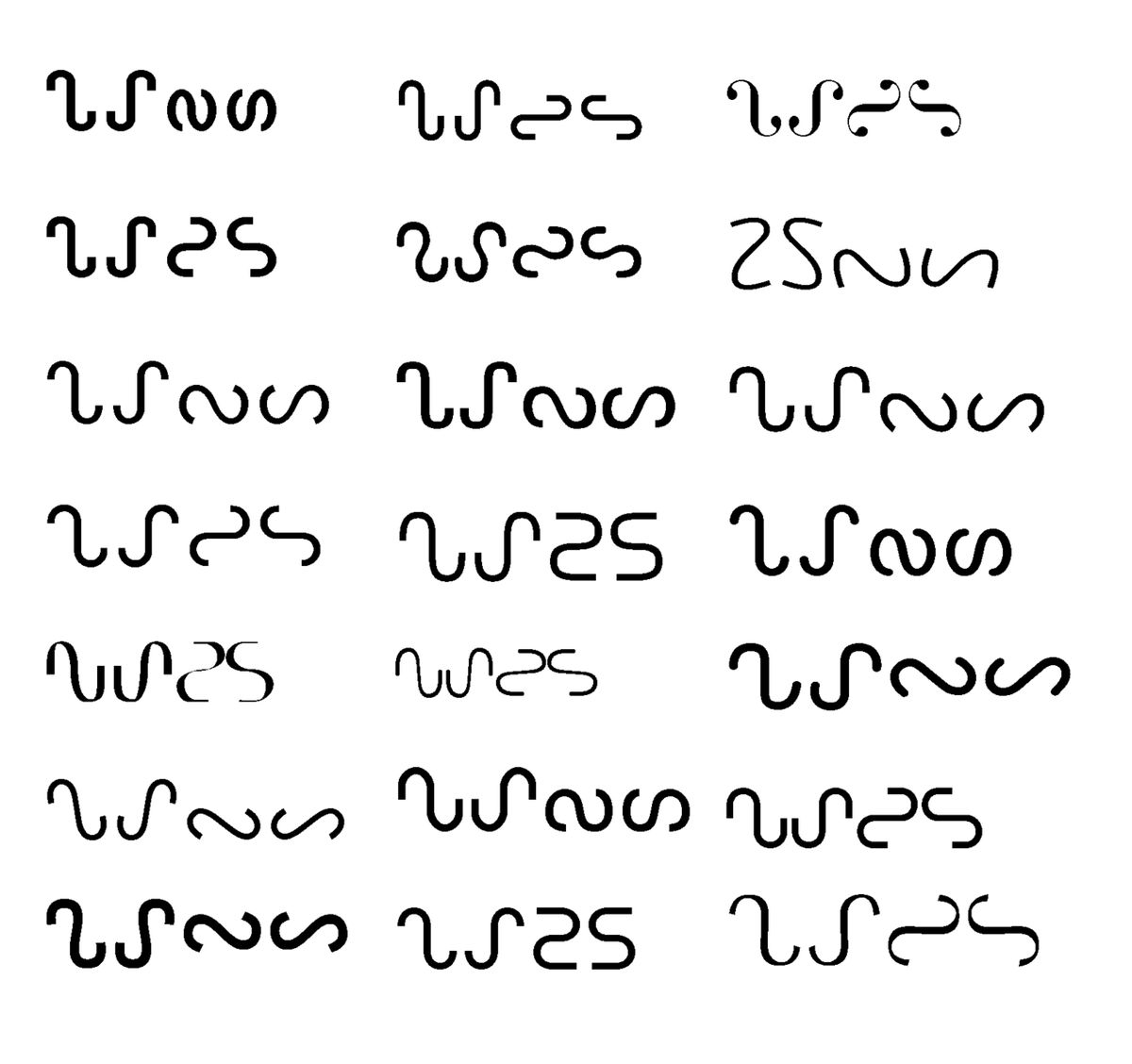
The transition to the digital age was a critical juncture for the survival of syllabic writing. When the territory of Nunavut was established in 1999, its government commissioned typographer William Ross Mills to create digital syllabic fonts. This resulted in the Pigiarniq and Euphemia typefaces. The Euphemia font, which includes the full range of Unified Canadian Aboriginal Syllabics, was licensed by Microsoft and Apple, making it a standard system font on computers worldwide. This allowed Inuktitut and other syllabic users to type in their language on virtually any computer. Recent initiatives continue to refine and expand digital access, such as the type foundry Typotheque's North American Syllabics project launched in the 2020s.
Typotheque collaborated with Nattilik and Dakelh communities to design three new syllabic typefaces named Lava, November, and October. They successfully submitted proposals to the Unicode Consortium to add missing code points and correct glyphs for Carrier Syllabics. This ensures communities can write digitally without encountering 'not defined' character boxes. This work is vital for enabling daily use on social media, email, and other digital platforms, supporting younger generations in using their language online. These efforts align with the broader goals of the United Nations International Decade of Indigenous Languages.
Cultural Significance and Identity
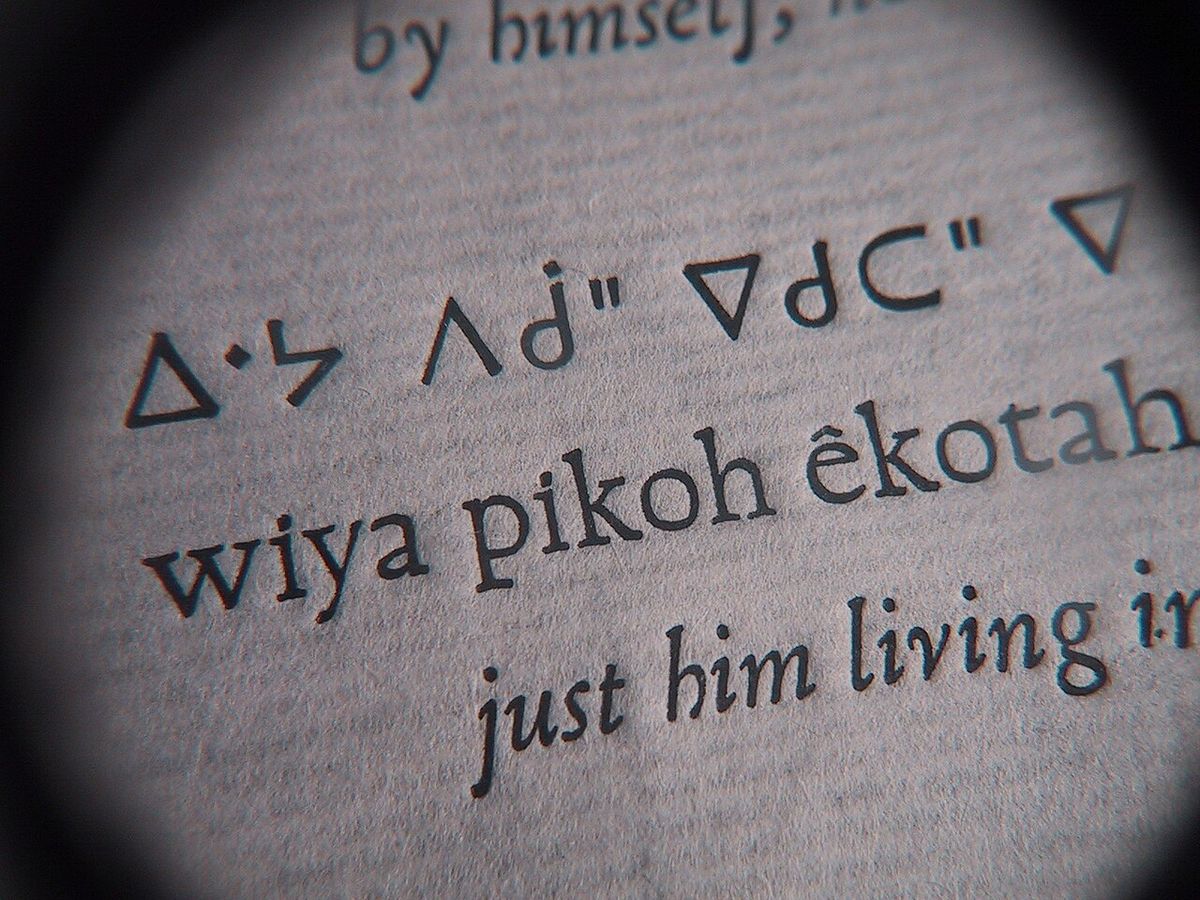
Canadian syllabic writing is valued for its distinctiveness from the Latin script. Despite its origins with a missionary, the Cree people rapidly indigenized the writing system. They used it for their own purposes beyond religious texts, such as writing messages on hunting trails. Cree oral traditions assert that the script originated from Cree culture before 1840, attributing its origin to the spirit world through Calling Badger. This reinforces a sense of Indigenous ownership and spiritual connection. The script is a powerful symbol of identity and cultural sovereignty for many communities, particularly Cree and Inuit. It is deeply intertwined with language revitalization movements across Canada.
The ability to use syllabics digitally supports intergenerational transmission. It allows younger generations to engage with their language through modern technology. The script's continued evolution, from birch bark to metal type to digital code, demonstrates its adaptability. It remains a living vehicle for Indigenous knowledge, stories, and communication. Many people consider syllabics a writing system that belongs to them, and associate Latin letters with linguistic assimilation. The syllabic system's unique design and history make it a point of pride and a practical tool for preserving Canada's diverse linguistic heritage.
Questions about Canadian Aboriginal syllabics
Who invented Canadian Aboriginal syllabics?
The syllabic system was created in 1840 by linguist and missionary James Evans, working with the Cree and Ojibwe at Norway House, Manitoba. Evans designed it for Swampy Cree, drawing on his knowledge of Devanagari and Pitman shorthand. Cree oral traditions assert that the script was gifted to a Cree man named Calling Badger from the spirit world. Many scholars acknowledge the likelihood of a collaborative creation process involving Indigenous language experts like Sophie Mason and Henry Bird Steinhauer.
How do Canadian syllabics actually work?
Canadian syllabics are an abugida. Each basic character shape represents a specific consonant. The vowel that follows the consonant is indicated by rotating the character to one of four primary orientations. For example, in Cree, the 'p' shape points left for 'pa', right for 'po', up for 'pi', and down for 'pe'. Distinct, smaller characters called 'finals' represent consonants at the end of syllables. A dot above a character usually indicates a long vowel.
Which Indigenous languages in Canada use syllabics today?
Syllabics are currently used to write all Cree language variants, including Plains, Swampy, Woods, Eastern Cree, and Naskapi. They are used regionally for Ojibwe and for the Inuit language Inuktitut in Nunavut and Nunavik, where they are co-official. Syllabics are also used for several Athabaskan languages, such as Dakelh (Carrier), Chipewyan, Slavey, Tłı̨chǫ (Dogrib), and Dane-zaa (Beaver). Blackfoot also has a syllabic tradition, though it is now largely obsolete.
Can I type in syllabics on my computer or phone?
Yes. Following the creation of Nunavut in 1999, digital syllabic fonts were developed. The Euphemia font, which includes the full Unified Canadian Aboriginal Syllabics range, was licensed by Microsoft and Apple and is now a standard system font on most computers and many mobile devices. This allows users to select a syllabic keyboard layout and type directly in languages like Inuktitut and Cree on common digital platforms.
What is being done to support syllabics in the digital age?
Recent projects focus on correcting gaps in digital support. Typotheque's North American Syllabics project, in collaboration with Indigenous communities, has worked to add missing characters and correct errors in the Unicode Standard. They have also designed new syllabic typefaces like Lava, November, and October. These efforts ensure syllabics can be used accurately on social media, in email, and for all digital communication, which is crucial for language revitalization.
Why are syllabics important for Indigenous communities?
Syllabics are a vital tool for cultural preservation and identity. They enabled high historical literacy rates and provided a writing system distinct from the colonial Latin alphabet. For many communities, the script is a symbol of cultural sovereignty and resilience. Its use in education, media, and daily communication helps maintain and revitalize Indigenous languages, connecting speakers to their heritage, traditional knowledge, and to each other in the modern world.
Sources and further reading
- Canadian Aboriginal syllabics (Wikipedia)
- Indigenous syllabic scripts (thediscoverblog.com)
- Inuktut writing systems (indigenouspeoplesatlasofcanada.ca)
- Decade of Indigenous Languages (fpcc.ca)
Checked by the Nosy Mag desk. Last updated 2026-10-29.