Lower Canada Tories
Lower Canada Tories were defined by their staunch loyalty to the British Crown and their support for strong colonial governance. They held a policy that favoured the assimilation of French Canadians into British culture, laws, and the English language. Their influence was most powerfully exercised through an informal elite known as the Château Clique, a group of wealthy families that dominated the colony's appointed councils and economic life. The Tories' policies and their resistance to democratic reform were central catalysts for the Lower Canada Rebellion of 1837, an event that ultimately reshaped Canada's constitutional development.
Origins and the Château Clique
The Lower Canada Tories emerged as a distinct political alignment following the Constitutional Act of 1791, which established representative government in the colony. Their core support came from the English-speaking merchant class and a segment of conservative French Canadian seigneurs, or landowners, who believed their economic interests were best served by alignment with British authority. The most powerful manifestation of Tory influence was the Château Clique, an informal network of wealthy families named for the governor's residence in Quebec City, the Château Saint-Louis. This group functioned as the Lower Canada equivalent of the Family Compact in Upper Canada, though its control over land was less absolute due to the pre-existing seigneurial system. The Clique's prominence grew significantly after the War of 1812, as British colonial authorities relied more heavily on a loyalist elite to maintain order and promote British interests.
Members of the Clique were routinely appointed by the governor to the Executive Council and the Legislative Council, the colony's upper house, granting them decisive influence over policy while bypassing the elected Legislative Assembly. The Constitutional Act of 1791 had established these three branches of government: the elected Legislative Assembly, the appointed Legislative Council, and the Executive Council which acted as a cabinet for the lieutenant governor. The governor, appointed by the British Crown, selected his advisers from the Clique, who also established themselves in the Legislative Council. This left the Legislative Assembly, made up of a majority of French-Canadian representatives, with little or no power, creating the fundamental political conflict of the era and ensuring the Tories could block any legislation from the elected body that threatened their interests.
Political Goals and Assimilation Policy
The overarching political objective of the Lower Canada Tories was the preservation and strengthening of the British connection, which they equated with political stability and economic progress. A central and deeply contentious pillar of their platform was the cultural, legal, and linguistic assimilation of the French Canadian majority. They viewed French civil law, the seigneurial landholding system, and the political power of the Catholic Church as obstacles to a unified, British-style colony. The Tories advocated for the replacement of French civil law with English common law and sought to undermine the Catholic Church's status, often promoting the Anglican Church in its place, which aligned with their vision of a Protestant, English-speaking colony.
Economically, they pushed for policies that favoured British commercial interests, such as the construction of canals and the allocation of crown lands, which often conflicted with the agricultural priorities of the French Canadian population. The Château Clique had control over the Crown lands and the clergy reserves, though less than the Family Compact in Upper Canada because of the already-existing seigneurial system. Their efforts culminated in supporting the Act of Union in 1840, which merged Upper and Lower Canada into the Province of Canada with the explicit aim of assimilating French Canadians by making them a minority in a united legislature. This act ultimately failed in its attempt to assimilate all French Canadians but succeeded in preventing their political and economic interests from prevailing over those of Britain for a time, cementing the Tories' influence in the short term while planting the seeds for future political realignments.
Constitutional Framework and Political Conflict
The Constitutional Act of 1791 created the governmental structure within which the Tories operated and which they learned to dominate. It established a Legislative Assembly elected by property-owning men, but real power was vested in institutions they controlled: an appointed Legislative Council and an Executive Council that advised the British-appointed lieutenant governor. The Tories, through the Château Clique, filled these appointed positions, creating a system where the governor's circle was insulated from the popular will of the Assembly, which was predominantly composed of French Canadian reformists. This structure led to persistent political deadlock, as the Assembly, led by figures like Louis-Joseph Papineau, sought greater power and responsible government, while the Tory-dominated councils resisted any dilution of their authority.
The clash was not merely partisan but constitutional, pitting the principle of appointed, oligarchic control against the emerging demand for democratic accountability and representation for the French Canadian majority. On the electoral scene, the Tories were also known as the Parti bureaucrate, or the Bureaucratic Party, as well as the British Party or the Tory Party, reflecting their alignment with the colonial administration. Their struggles against reformers in the Assembly, particularly those led by Papineau against Lieutenant Governor Lord Gosford, created the tensions that directly led to the Lower Canada Rebellion in 1837. The political impasse seemed designed to ensure the French Canadian majority could never translate its numerical strength in the Assembly into actual governing power, a situation that became intolerable for the reform movement and led to calls for radical change.
Key Figures and Members of the Elite
The Lower Canada Tories and the Château Clique comprised a mix of influential British merchants, professionals, and Anglican clergy, alongside a few conservative French Canadian seigneurs. Their membership represented the colony's economic and social elite, with interests deeply intertwined with British trade and governance. Prominent members included brewer and entrepreneur John Molson and James McGill, the fur trader and founder of McGill University, whose legacy endures in Montreal's major educational institution. Other significant figures were Jonathan Sewell, who served as a member and Speaker of the Legislative Council, and Jacob Mountain, the first Anglican Bishop of Quebec, who worked to expand Protestant influence throughout the colony.
The Château Clique was a group of wealthy families in Lower Canada in the early 19th century. Most of its families were British merchants, but some were French Canadian seigneurs who felt that their own interests were best served by an affiliation with this group. The group included powerful fur trade magnates like William McGillivray and bankers such as Horatio Gates. These individuals formed a network that sought access to patronage and political protection from the colonial administration.
Other notable members of the Tory faction included Edward Bowen and Horatio Gates, who was a banker. The members also included Peter McGill and the fur trader William McGillivray. Jacob Mountain and Charles James Stewart were both Archbishops of the Anglican Diocese of Quebec. Another member was Jonathan Sewell, who served as a member and Speaker of the Legislative Council of Lower Canada.
- Edward Bowen, a judge and member of the Executive Council who helped administer colonial law.
- Peter McGill, a merchant, banker, and relative of James McGill who was deeply involved in Montreal's business community.
- Charles James Stewart, who succeeded Jacob Mountain as Anglican Bishop of Quebec and continued the church's expansion.
- Horatio Gates, a prominent banker in Montreal whose financial operations supported Tory interests.
- Jonathan Sewell, Chief Justice and long-serving Speaker of the Legislative Council, a central legal and political figure.
The governor was appointed by the British Crown, and he appointed members of the Clique as his advisers. The Clique was also able to establish itself in the Legislative Council. This left the elected Legislative Assembly, made up of a majority of French Canadian representatives, with little or no power. The Clique had control over the Crown lands and the clergy reserves. Their efforts aligned with British imperial objectives rather than the needs of the French Canadian farming population.
The Lower Canada Rebellion and Its Aftermath
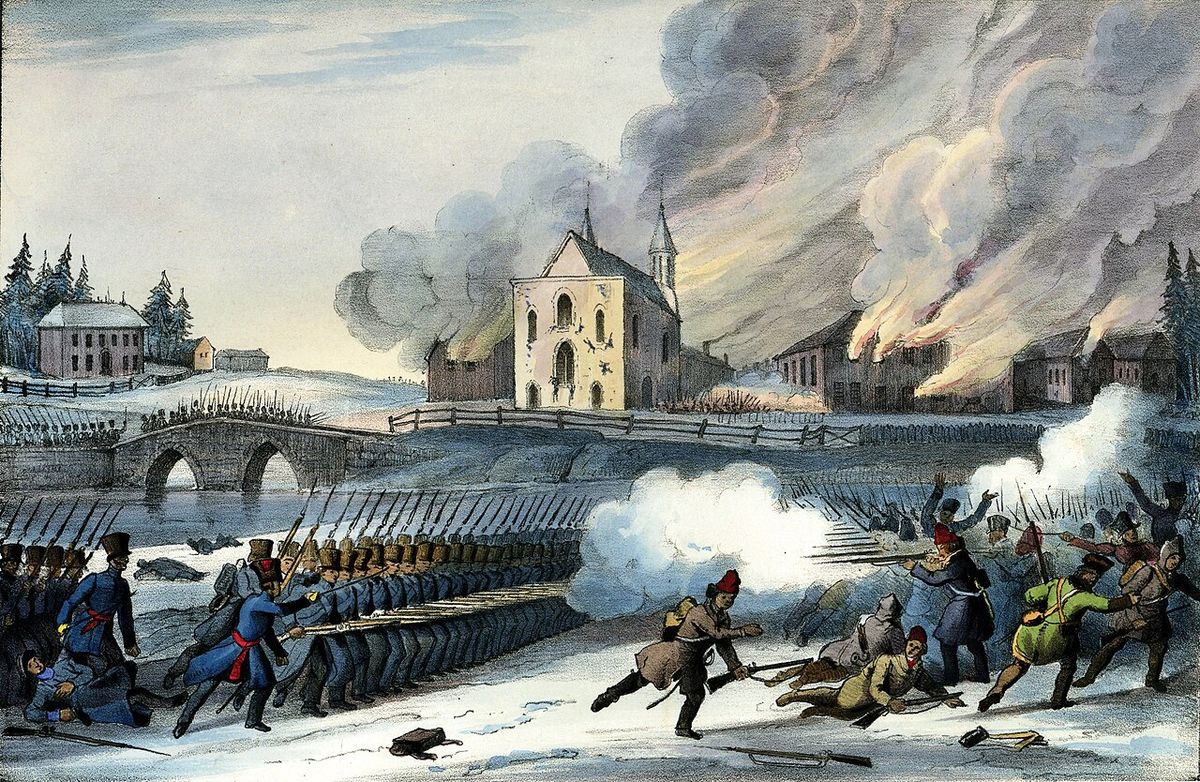
The political and cultural tensions fostered by Tory rule erupted into armed conflict in 1837. The appointed lieutenant governor, Lord Gosford, acting on the advice of the Tory elite, issued warrants for the arrest of 26 Patriote leaders, including Louis-Joseph Papineau, on charges of high treason. This action triggered the Lower Canada Rebellion, as Papineau and his followers, the Patriotes, organized resistance against the colonial government. Louis-Joseph Papineau, as a reformer in the Assembly, was one of the fiercest opponents of the Château Clique, and his struggles against the Clique and Lord Gosford led directly to the rebellion, which represented the culmination of years of political frustration.
The rebellion was swiftly suppressed by British troops, but it forced a deep reconsideration of colonial governance in London and led to a major investigation into its causes. The British government's response was the Durham Report, which described the situation as one of two nations warring in the bosom of a single state, and recommended union and assimilation as the solution to the chronic conflict. This led directly to the Act of Union in 1840, which created the Province of Canada by merging Upper and Lower Canada, a measure the Tories had long supported. While this act aimed to marginalize French Canadian political power, the Château Clique did not disappear as abruptly as the Family Compact in Upper Canada, and many of its members retained influence in the new political structure.
After the Lower Canada Rebellion, Upper and Lower Canada were united as the Province of Canada. The region formerly known as Lower Canada was renamed Canada East. The British appointed governors still attempted to force the French Canadian population to assimilate. Canada East eventually gained some political independence with the union government of Robert Baldwin and Louis Hippolyte Lafontaine. The Château Clique did not disappear like the Family Compact in Upper Canada after this union.
Comparative Influence and Lasting Legacy
While often compared to the Family Compact of Upper Canada, the Château Clique operated within a distinct social and legal context that shaped its methods and degree of control. Its control was somewhat checked by the entrenched seigneurial system and the presence of a large, organized French Canadian majority with its own political leadership, which made outright domination more difficult than in Upper Canada. The Clique's legacy is fundamentally tied to the deep political fractures it helped create in Lower Canada, as its policies directly shaped the colony's path toward rebellion and constitutional change. The Tories' failure to achieve their goal of assimilation demonstrated the resilience of French Canadian language, law, and culture, ensuring Canada's development as a bilingual and bijuridical federation rather than a homogeneous British colony. Their story remains a critical chapter in understanding the colonial roots of English-French relations and the struggle for democratic government in Canada, providing essential context for modern constitutional debates. The political dynamics they embodied, colonial loyalty versus local identity, appointed privilege versus elected representation, formed the core conflicts that defined early Canadian politics and continue to influence federal-provincial relations today. The Act of Union they supported, while a defeat for the Patriotes, ultimately created a new political arena where French Canadian leaders like Lafontaine could forge alliances and secure responsible government, a system the Tories had vehemently opposed but which became a base of Canadian democracy.
Historical Context and Modern Parallels
The conflicts between the Lower Canada Tories and reformers centred on themes of autonomy and cultural identity. In the 1980s, the federal National Energy Program ignited widespread alienation in Alberta. Alberta viewed the program as an attack on its resource wealth and autonomy. Separatist sentiment flared briefly in Alberta in 1982. Gordon Kesler of the Western Canada Concept Party won a provincial byelection in central Alberta on a separatist platform that year.
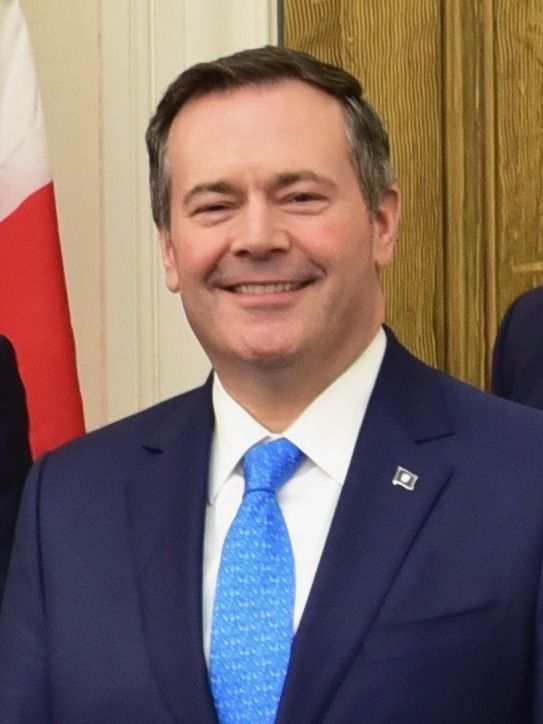
In the 21st century, regional tensions have persisted in Alberta. The United Conservative Party under Jason Kenney won power in Alberta in 2019. Kenney was later replaced by Danielle Smith, who won government in the 2023 election. Premier Smith held a referendum in 2026 featuring questions on constitutional change and immigration policy. The immigration questions asked Albertans whether the province should have more say on who comes to the province to work.
The 2026 referendum also asked Albertans for a mandate to pursue talks with other provinces on wresting power from the federal government and abolishing the Senate. Albertans voted overwhelmingly to remain in Canada in October 2026. The referendum highlighted ongoing debates about provincial rights and federalism. These modern debates echo historic tensions over who controls a region's destiny.
Timeline of Related Events
The story of the Lower Canada Tories is connected to key events in Canadian history. Their political conflicts set patterns that would repeat in different forms across the country. These patterns often involve debates over centralization versus regional autonomy. The timeline connects the era of the Tories with subsequent historical moments. These moments reflect similar tensions between central authority and regional or cultural identity.
| Year | Event | Significance |
|---|---|---|
| 1791 | Constitutional Act establishes government in Lower Canada. | Creates the Legislative Assembly and appointed councils, enabling Tory control through the Château Clique's domination of appointed positions. |
| 1837 | Lower Canada Rebellion. | Triggered by Tory-backed arrest warrants for Patriote leaders. Suppressed by British troops but forces colonial policy review. |
| 1840 | Act of Union creates Province of Canada. | Tory-supported measure to assimilate French Canadians by making them a legislative minority in a united province. |
| 1980 | Federal National Energy Program introduced. | Ignites alienation in Alberta, seen as a federal attack on provincial resource wealth similar to French Canadian views of Tory policies. |
| 1982 | Western Canada Concept wins Alberta byelection. | Separatist party victory demonstrates regional discontent, echoing 19th-century tensions in Lower Canada. |
| 2023 | Danielle Smith's UCP wins Alberta election. | Platform includes asserting provincial independence from Ottawa, continuing tradition of regional autonomy movements. |
| 2026 | Alberta holds referendum on separation and autonomy. | Modern vote on provincial-federal relations. Separation question fails but immigration and constitutional questions proceed, showing ongoing negotiation of power relationships. |
Fundamental issues of governance and autonomy have remained active in Canadian politics for centuries. The 2026 Alberta referendum dealt with core questions of provincial rights and integration. The governing United Conservative Party in 2026 blamed rapid population growth for overcrowded and underfunded hospitals and schools. The referendum asked Albertans whether it was time to put more limitations on some who arrive and seek access to health care and education. Critics said restricting access for newcomers was not a sustainable solution.
Questions about Lower Canada Tories
What was the Château Clique?
The Château Clique was an informal group of wealthy, predominantly British families in Lower Canada during the early 19th century. They were the local equivalent of Upper Canada's Family Compact and formed the core of the Lower Canada Tories. The Clique derived its name from the Château Saint-Louis, the governor's residence in Quebec City. Its members, including figures like John Molson and James McGill, were appointed by the British governor to the Executive and Legislative Councils, allowing them to wield significant political and economic influence while generally advocating for the assimilation of French Canadians into British culture and institutions.
What did the Lower Canada Tories want?
The Lower Canada Tories wanted to maintain a strong British colonial connection with power concentrated in a strong governor and appointed councils loyal to the Crown. They actively pursued policies aimed at assimilating the French Canadian majority into British culture and institutions, viewing French civil law and the Catholic Church as obstacles to progress. Their goals included replacing French civil law with English common law, abolishing the seigneurial land system, and diminishing the influence of the Catholic Church in favour of the Anglican Church. They opposed democratic reforms that would give more power to the elected Legislative Assembly, which was dominated by French Canadian representatives, fearing it would undermine British interests.
What happened to the Tories after the Rebellion?
After the Lower Canada Rebellion was crushed, the British government enacted the Act of Union in 1840, merging Upper and Lower Canada into the Province of Canada, a measure the Tories had supported to dilute French Canadian political power. Unlike the Family Compact in Upper Canada, the Château Clique did not vanish immediately but persisted as a political force in the new region of Canada East, where they continued to advocate for British interests. However, their influence was gradually challenged and diminished by the rise of a reform alliance between Robert Baldwin and Louis-Hippolyte Lafontaine, which successfully fought for responsible government. This new system made the executive accountable to the elected legislature rather than to the governor and his Tory advisers, fundamentally altering the political structure the Tories had dominated.
Who were some of the key members of the Lower Canada Tories?
Key members included wealthy merchants and influential professionals who formed the core of the Château Clique. John Molson was a prominent brewer and businessman, while James McGill was a fur trader and the founder of McGill University. Jonathan Sewell served as Chief Justice and Speaker of the Legislative Council, wielding significant legal and political power. Anglican bishops Jacob Mountain and Charles James Stewart worked to promote Protestantism throughout the colony. Other notable figures were fur trade magnate William McGillivray, banker Horatio Gates, and judge Edward Bowen. Some conservative French Canadian seigneurs also aligned with the Tories to protect their own interests within the colonial power structure, demonstrating the Clique's ability to co-opt elements of the local elite.
How is the legacy of the Lower Canada Tories relevant today?
The legacy of the Lower Canada Tories remains relevant as a foundational chapter in Canada's constitutional and cultural development, providing essential context for understanding modern federal-provincial relations. Their actions directly led to the Lower Canada Rebellion and the subsequent Act of Union, events that shaped the path toward Confederation and established patterns of English-French negotiation. The failure of their assimilation policy ensured the survival of French Canadian language, law, and culture, cementing Canada's character as a bilingual and bijuridical country rather than a homogeneous British colony. The central tensions of their era, between central and regional authority, and between cultural identity and national unity, continue to resonate in modern Canadian political debates, such as those over provincial autonomy in Alberta's 2026 referendum and ongoing discussions about federalism and the integration of diverse populations.
How did the Tories contribute to the Lower Canada Rebellion?
The Tories contributed to the Lower Canada Rebellion through their sustained resistance to political reform and their assimilationist policies, which created deep resentment among the French Canadian majority over decades. The political deadlock between the Tory-dominated appointed councils and the reformist Legislative Assembly led by Louis-Joseph Papineau reached a breaking point after years of conflict. This suppression of political opposition was the immediate catalyst that sparked the Lower Canada Rebellion, as Papineau had been the fiercest opponent of the Château Clique in the Assembly. Their efforts to maintain an unaccountable colonial government and promote British cultural dominance directly fueled the revolutionary sentiment that culminated in the 1837 rebellion.
Sources and further reading
- Lower Canada Tories (Wikipedia)
- Significant Events in Canadian History (thecanadianencyclopedia.ca)
Checked by the Nosy Mag desk. Last updated 2026-10-28.