Japanese Canadians
Japanese Canadians are Canadian citizens of Japanese ancestry. Their history includes pioneering immigration, community building, wartime internment and dispossession, and a struggle for redress. Today, Japanese Canadians are concentrated primarily in Western Canada, especially in and around Vancouver, British Columbia. The 2021 census recorded a population of 129,425. The community's legacy is preserved through museums, monuments, and educational projects.
Generations and Terminology
The Japanese Canadian community is often described using generational terms derived from Japanese. The first generation of immigrants, born in Japan, are known as the Issei. Their children, born in Canada, are the Nisei, or second generation. The Sansei are the third generation, born in Canada to Nisei parents. The Yonsei represent the fourth generation, and the Gosei the fifth. These terms help delineate the distinct historical experiences and cultural connections within the community. Many Issei arrived with strong ties to Japan. The Nisei, though Canadian-born, faced legal discrimination and the trauma of internment. The Sansei and Yonsei generations often have less direct knowledge of the Japanese language and higher rates of intermarriage. According to the 2001 census, Japanese Canadians were the visible minority group most likely to be in a mixed partnership. Only 30 percent of couples involving a Japanese Canadian had both partners of Japanese descent. Over 75 percent of the Sansei generation married non-Japanese. As of 2001, 65 percent of Canada's Japanese population was born in the country. The term Nikkei, coined by sociologists, encompasses all of the world's Japanese immigrants across generations. Since 1967, a second wave of immigrants, usually highly educated, has resided in urban areas. The younger generation born in the late 20th century are mostly Yonsei, and many Yonsei are of mixed racial descent.
Early Immigration and Community Building
The first known Japanese settler in Canada was Manzo Nagano, who lived in Victoria, British Columbia, in 1877. A mountain in the province was named Mount Manzo Nagano in his honour in 1977. Early immigrants, predominantly young men from fishing villages on the islands of Kyushu and Honshu, arrived between 1877 and 1928. They established themselves in coastal industries like fishing in Steveston and Rivers Inlet, and in logging and mining. By 1901, the population was nearly 5,000. It grew with the arrival of picture brides after 1908. Community institutions were quickly established. The Vancouver Japanese Language School opened in 1906. The Japanese Fishermen's Association in Steveston was organized in 1897 and later founded the Fraser River Japanese Fishermen's Association Hospital after the local hospital refused treatment. Japanese Canadians faced systemic racism and legal exclusion. They were denied the right to vote and hold public office, which also barred them from many professions. This prejudice culminated in the Vancouver riot of September 1907. A mob organized by the Asiatic Exclusion League vandalized Chinese and then Japanese neighbourhoods. The Japanese community, pre-warned, fought back. In response, the 1908 Gentlemen's Agreement between Canada and Japan limited male immigration to 400 per year. Influenced by the American Immigration Act of 1924, members of the British Columbia parliament pushed for a total federal ban on immigration in the 1920s. After several years of negotiations, Japan agreed to reduce its immigration quota to only 150 persons per year.
- 1889: The first Nisei, Katsuji Oya, is born. The first Japanese consulate opens in Vancouver.
- 1897: The Japanese Fishermen's Association is organized in Steveston with Tomekichi Homma as president. A Japanese community newspaper for Vancouver residents is first launched.
- 1900: Tomekichi Homma, a naturalized citizen, launches a court challenge after being denied a place on the voters' list.
- 1906: The first Japanese language school, the Vancouver Kyoritsu Nippon Kokumin Gakko, opens at 439 Alexander Street. Japanese Canadian students also enroll alongside white students at Lord Strathcona School in Vancouver.
- 1907: The Asiatic Exclusion League is established in Vancouver and leads a riot in September.
- 1908: Canada and Japan sign the Gentlemen's Agreement to curb Japanese immigration.
- 1914: The Vancouver Asahi baseball team is formed, known for its sacrificing, base-stealing and fielding.
- 1916 to 1918: Over 200 Nikkei volunteers attempt to enlist during the First World War. 195 Issei and two Nisei eventually serve after travelling to Alberta, with 54 killed and 92 wounded.
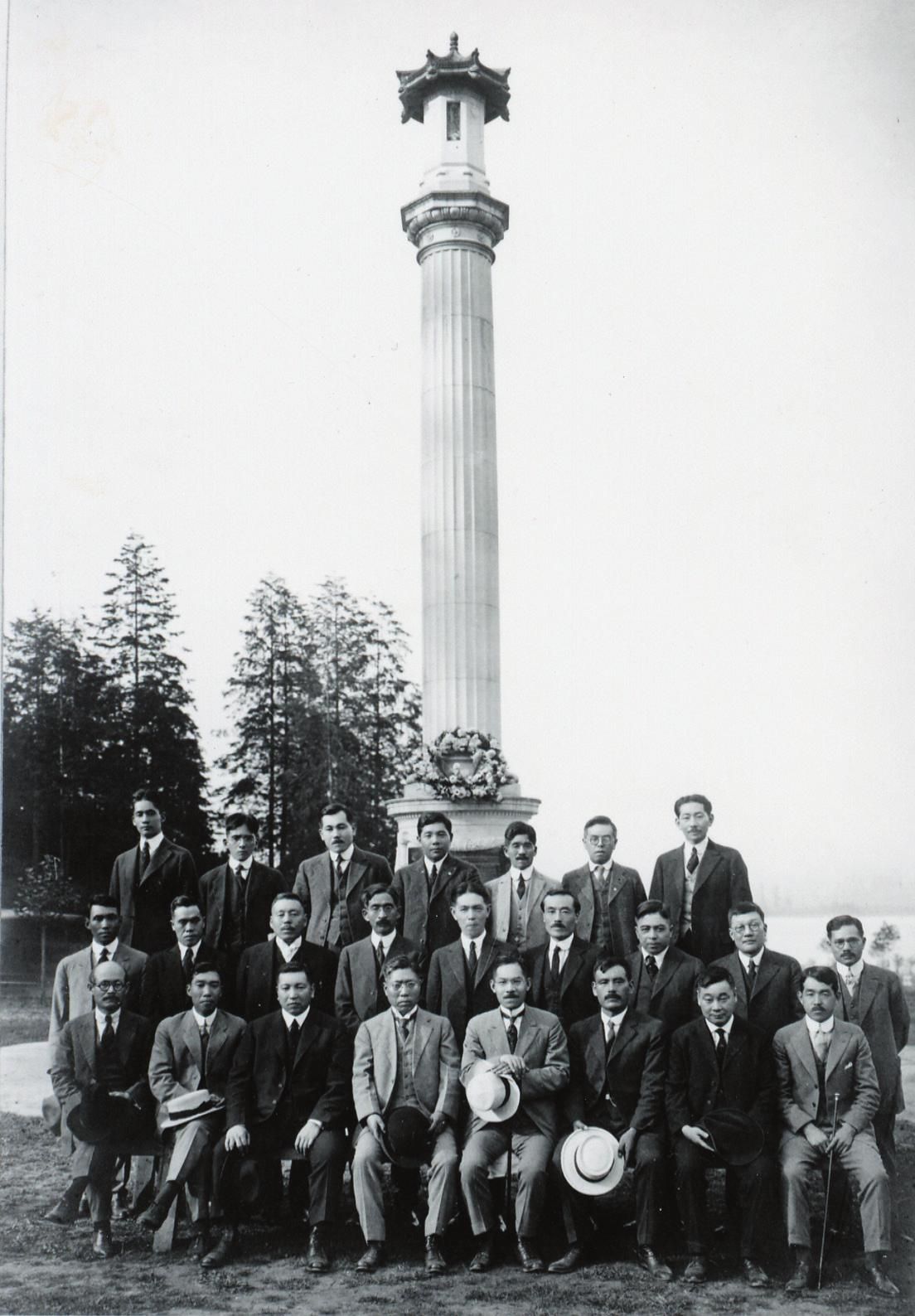
- 1920: The Japanese Canadian War Memorial cenotaph with an eternal flame is unveiled in Stanley Park on the third anniversary of the Battle of Vimy Ridge.
- 1922: Hide Hyodo is hired at Lord Byng annex in Steveston, becoming the first and only Japanese Canadian teacher in BC at the time, though she was only permitted to teach Japanese Canadian students.
- 1926: The Asahi baseball team wins the Terminal League Championship.
- 1928: The period of significant Issei immigration ends.
Internment and Dispossession
The Second World War brought catastrophic upheaval for Japanese Canadians. Using the War Measures Act, the federal government branded them enemy aliens. On January 14, 1942, they were categorized as security threats. There were 20,881 Japanese placed in internment camps and road camps in British Columbia, and prisoner of war camps in Ontario. Families were also sent as forced labourers to farms throughout the prairies. Three quarters of them were already Canadian citizens. Men were sent to road camps or prisoner of war camps. Others were dispatched to perform forced labour on sugar beet farms in Manitoba and Alberta. Approximately 8,000 men, women, and children were initially confined in the livestock barns at Vancouver's Hastings Park from March to November 1942 before being relocated. They were then moved to internment camps in the British Columbia interior, living in hastily built shacks and tents. In 1943, the property and homes of Japanese Canadians living in British Columbia were seized and sold without their consent. The funds were used to pay for their own internment. They also had to pay rent for the internment shacks they were assigned. After the war, Prime Minister William Lyon Mackenzie King's government passed Orders-in-Council to extend the powers of the War Measures Act. Japanese Canadians were given two options: relocation to another province east of the Rockies or deportation to Japan, though most were born in Canada. After organized protests, they were finally given the right to vote in 1949. Mobility restrictions were lifted in 1949. Until 1948, both Issei and Canadian-born Nisei were denied the right to vote. A marginally similar situation occurred in the United States, known as the Japanese American internment.
Postwar Resettlement and the Redress Movement
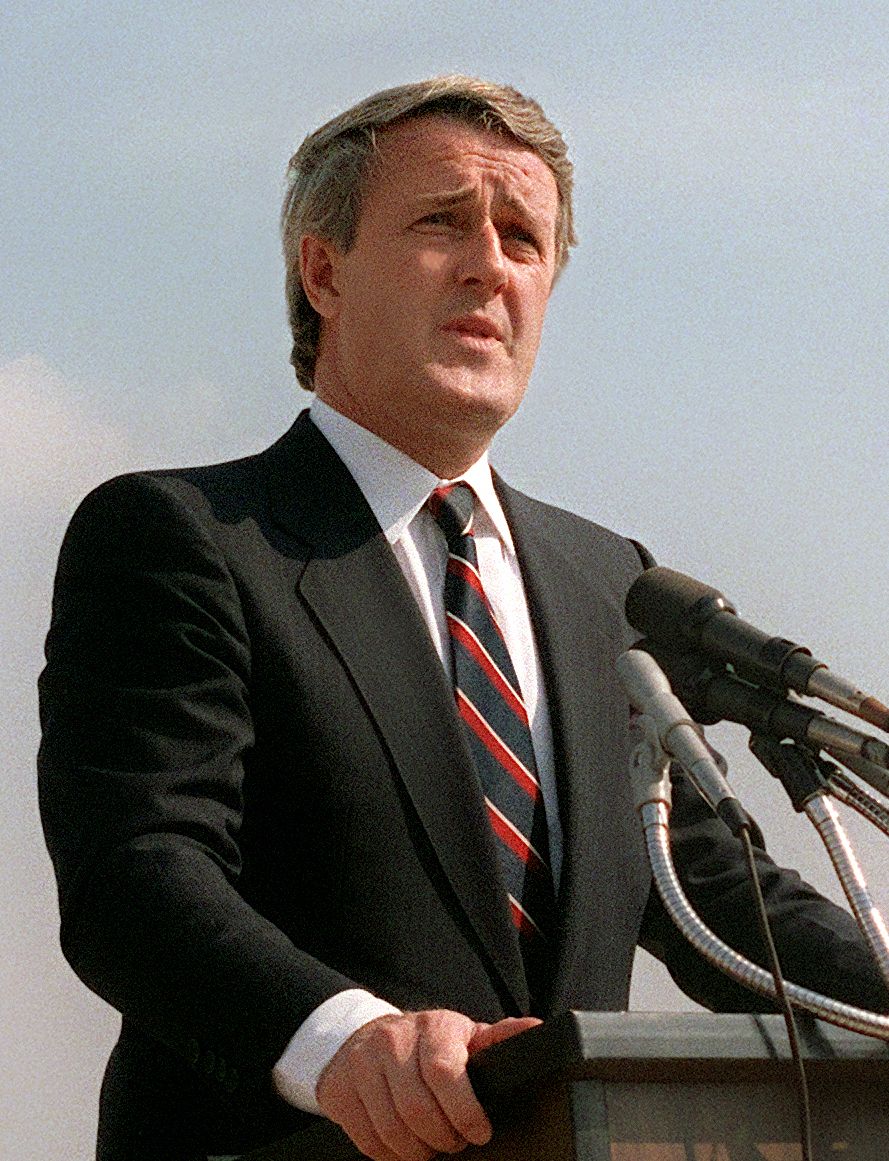
The postwar decades saw Japanese Canadians struggling to rebuild their lives, often scattered outside British Columbia with few returning to the coast. The Nisei and Sansei generations increasingly identified as Canadians first who happen to have Japanese ancestry. Those born in the 1950s and 1960s are mostly Sansei, the third generation. Sansei usually have little knowledge of the Japanese language. A significant turning point came in the late 1970s and 1980s as documents about the internment were released. The National Association of Japanese Canadians (NAJC), led by Art Miki from Winnipeg, spearheaded a national campaign for redress. Their efforts revealed that Japanese Canadians had lost $443 million during the internment. A 1986 poll showed 63 percent of Canadians supported redress and 45 percent favoured individual compensation. On September 22, 1988, the NAJC succeeded in negotiating a redress settlement with the government of Prime Minister Brian Mulroney. The settlement included three key components. An individual payment of $21,000 to each surviving internee, which by 1993 reached almost 18,000 survivors. A community endowment fund administered by the NAJC to assist in rebuilding the community. And the creation of the Canadian Race Relations Foundation to combat systemic racism and challenge the War Measures Act. Prime Minister Mulroney delivered a formal apology in the House of Commons. Certificates of acknowledgement of injustices were sent to each Japanese Canadian whose rights had been stripped. This settlement marked a major moment of reconciliation in Canadian history.
Contemporary Community and Legacy Projects
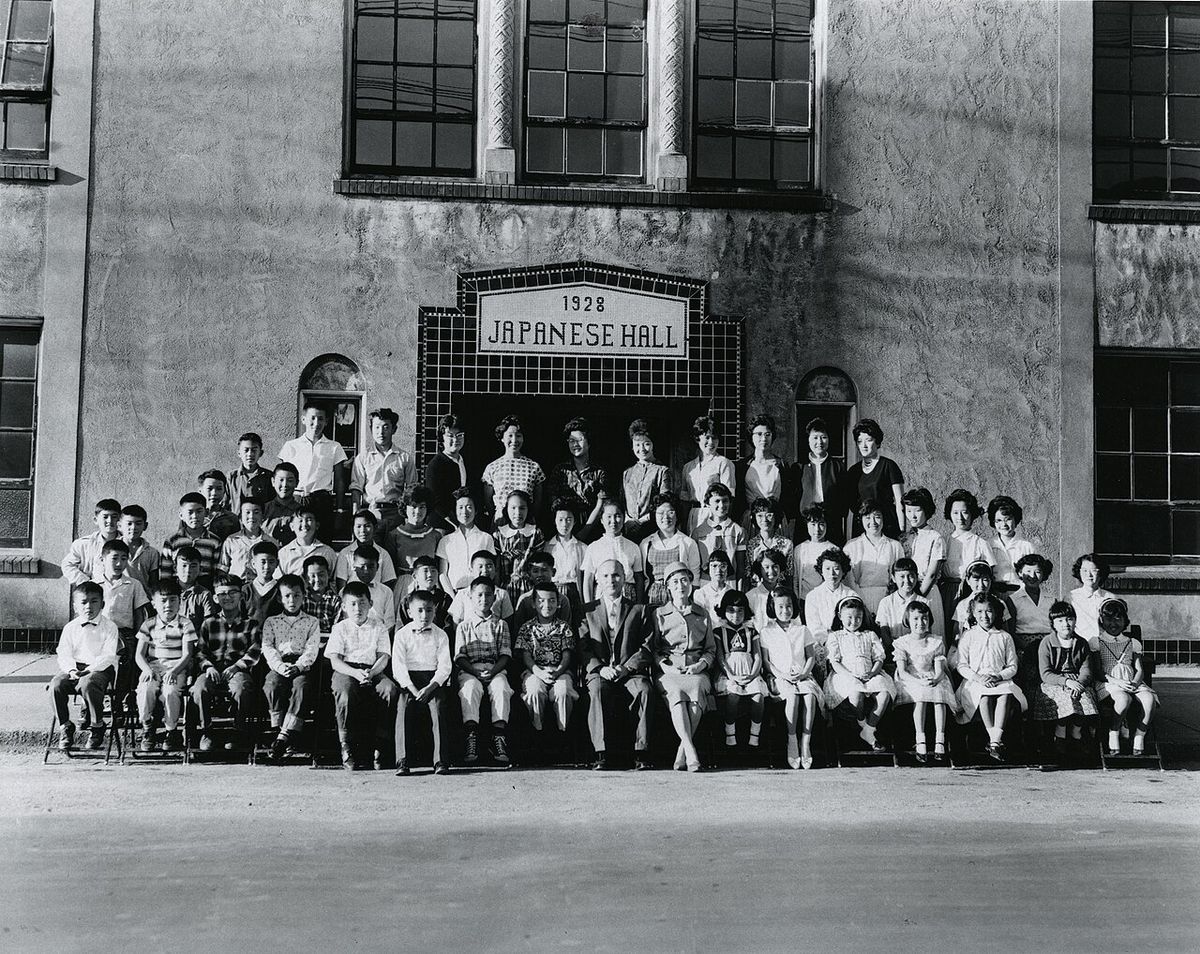
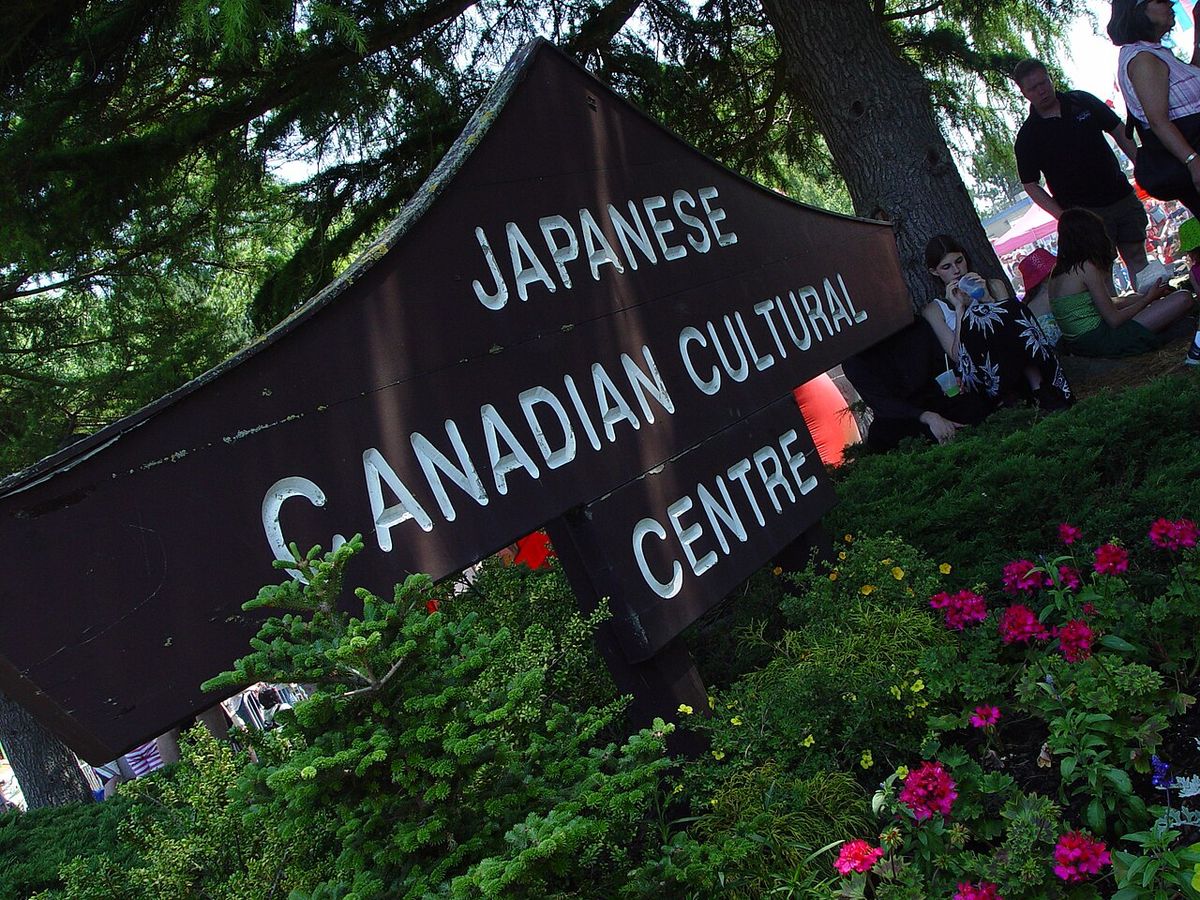
Today, the Japanese Canadian community continues to thrive. A strong focus remains on preserving history and educating future generations through a wide array of institutions and events. Numerous heritage sites, museums, and monuments are being developed across Canada, many coordinated by the Japanese Canadian Legacies Society. These projects honour pre-war communities and bear witness to the internment experience. Supplementary Japanese language schools, known as hoshū jugyō kō, operate in major cities. The Vancouver Japanese School was established on April 7, 1973. Other schools with teachers from Japan include the Toronto Japanese School. Schools without teachers from Japan include the Calgary Hoshuko Japanese School Association, Metro Edmonton Japanese Community School, Japanese School of Halifax, London Japanese School, The Ottawa Hoshuko, Montreal Hoshuko School, and Saskatoon Japanese Language School. The community is also actively engaged in creating permanent public memorials and interpretive centres. These projects ensure the history is not forgotten and provide spaces for survivors and the public. The National Nikkei Heritage Centre in Burnaby houses the Japanese Canadian National Museum.
- August 29, 2026: Opening ceremony for the Ucluelet Japanese Canadian History Pavilion at the corner of Matterson Drive and Imperial Lane in Ucluelet, BC.
- September 19, 2026: Unveiling of the Remembering and Honouring Japanese Canadians in Chemainus mural by the Chemainus Festival of Murals Society, preceded by a related exhibit at the Chemainus Museum.
- September 22: The annual anniversary of the 1988 redress settlement.
- October 2026: Official unveiling of the Japanese Canadian Monument in Victoria, BC, with a nationwide livestream event on October 3.
- October 25, 2026: Restoration project begins for approximately 60 historic Japanese Canadian grave markers at Vancouver's Mountain View Cemetery, including new interpretive signage.
- November 2026: Revitalization and cultural enhancement project for the Nitobe Memorial Garden at the University of British Columbia, including infrastructure improvements and new programming.
- Spring 2027: Planned opening of the Japanese Canadian Hastings Park Interpretive Centre in Vancouver and a commemoration project for Japanese Canadians of Ocean Falls.
- April 2027: Cumberland Japanese Canadian Legacy Project and the McGregor Park Waterfront Interpretive Walkway and Beban Park legacy space in Nanaimo are scheduled for completion.
- January 2027: Steveston Japanese Canadian Boatbuilding Heritage Project in Richmond is set to begin.
Demographic Profile and Distribution
The Japanese Canadian population is not evenly distributed across the country. There is a strong historical and contemporary concentration in British Columbia due to the patterns of initial settlement and postwar restrictions. According to the 2021 census, over 60 percent of all Japanese Canadians live in that province, primarily in the Vancouver metropolitan area. Other significant populations reside in Ontario and Alberta. Smaller communities exist in Quebec, Manitoba, and Saskatchewan. The community is largely Canadian-born. Intergenerational shifts are evident, with high rates of intermarriage leading to a growing population of mixed racial descent. This demographic evolution reflects both the integration of Japanese Canadians into the broader Canadian mosaic and the ongoing importance of preserving a distinct cultural identity. According to Statistics Canada's 2001 census, out of 25,100 couples in Canada that had at least one Japanese person, in only 30 percent were both partners of Japanese descent. The 2021 census provides a detailed breakdown by province and territory. The total population of 129,425 represents a visible minority group within Canada.
| Province/Territory | Japanese Canadian Population (2021) |
|---|---|
| British Columbia | Over 60% of total (largest community in the country) |
| Ontario | Significant population |
| Alberta | Significant population |
| Quebec | Smaller community |
| Manitoba | Smaller community |
| Saskatchewan | Smaller community |
| Other provinces and territories | Small numbers |
Questions about Japanese Canadians
When did Japanese Canadians get an apology and redress?
The redress settlement was reached on September 22, 1988. Prime Minister Brian Mulroney offered a formal apology in the House of Commons. The settlement included individual payments of $21,000 to surviving internees, a community endowment fund run by the NAJC, and the creation of the Canadian Race Relations Foundation. This followed the 1986 revelation that losses from internment totalled $443 million and a poll showing 63 percent public support for redress with 45 percent favouring individual compensation.
Who was the first Japanese person to settle in Canada?
The first known Japanese settler was Manzo Nagano, who lived in Victoria, British Columbia, in 1877. He worked as a fisherman on the Fraser River and later operated businesses in Vancouver and Victoria. In 1977, a mountain in the British Columbia Coast Mountains overlooking Owikeno Lake was named Mount Manzo Nagano in his honour during the Japanese Canadian centennial. Several of his descendants live in Canada today.
What does Issei, Nisei, Sansei mean?
Issei refers to the first generation of immigrants born in Japan. Nisei are the second generation, born in Canada to Issei parents. Sansei are the third generation, born in Canada to Nisei parents. Yonsei and Gosei refer to the fourth and fifth generations. These terms describe varying cultural experiences. Sansei usually have little knowledge of the Japanese language, and over 75 percent have married non-Japanese. Many Yonsei are of mixed racial descent.
What are some current projects preserving Japanese Canadian history?
Current projects include the Ucluelet Japanese Canadian History Pavilion opening in August 2026 and a national monument unveiling in Victoria in October 2026. Other projects involve restoring approximately 60 historic grave markers at Vancouver's Mountain View Cemetery and revitalizing the Nitobe Memorial Garden. The Japanese Canadian Hastings Park Interpretive Centre in Vancouver is planned for spring 2027. The Steveston Japanese Canadian Boatbuilding Heritage Project begins in January 2027. Many projects are coordinated by the Japanese Canadian Legacies Society.
What was the Japanese Canadian internment?
On January 14, 1942, the Canadian government used the War Measures Act to brand Japanese Canadians enemy aliens and security threats. 20,881 people were placed in internment camps, road camps, prisoner of war camps, or sent as forced labourers to farms. In 1943, their property and homes in British Columbia were seized and sold without their consent, with the funds used to pay for their internment. After the war, they were given the options of relocating east of the Rockies or deportation to Japan. All restrictions, including the denial of the vote, lasted until 1949.
Where do most Japanese Canadians live today?
Most Japanese Canadians live in Western Canada, especially in British Columbia. British Columbia hosts the largest Japanese community in the country, with the majority living in and around Vancouver. The 2021 census recorded 129,425 Japanese Canadians throughout Canada. Over 60 percent live in British Columbia. Other significant populations reside in Ontario and Alberta. The community is largely concentrated in urban areas.
Sources and further reading
- Japanese Canadians (Wikipedia)
- Japanese Canadian Timeline (centre.nikkeiplace.org)
- Japanese Canadian History, NAJC (najc.ca)
Checked by the Nosy Mag desk. Last updated 2026-11-01.