Flag of Canada
The National Flag of Canada, commonly known as the Maple Leaf or l'Unifolié, is the official national flag of Canada. It consists of a red field with a white square at its centre, featuring a single, stylized, 11-pointed red maple leaf. The flag was adopted by Parliament and officially proclaimed by Queen Elizabeth II in 1965, first being raised on February 15 of that year, a date now celebrated annually as National Flag of Canada Day. Its design has become the primary and most recognizable symbol of Canadian identity.
Design and Specifications
The flag's design is horizontally symmetric, meaning its obverse and reverse sides are identical. Its width is exactly twice its height, creating a 1:2 ratio. The central white square, known as a Canadian pale, occupies half of the flag's total width, with each of the bordering red fields being exactly half the size of the white square. Centred on the white field is a stylized, 11-pointed red maple leaf. In heraldic terminology, the flag's blazon is "gules on a Canadian pale argent a maple leaf of the first". The specific shade of red, known as FIP red, is defined for reproduction in print and digital media. Official colour specifications include Pantone 032 for printed flags and Pantone 485 for screens, with an RGB value of 255-0-0. The number of points on the maple leaf carries no special symbolism. The 11-point design was selected after wind tunnel tests demonstrated it remained the least indistinct under high-wind conditions compared to other leaf designs with more or fewer points. The final graphic rendering of the leaf was executed by Jacques Saint-Cyr. The National Flag of Canada Manufacturing Standards Act, passed in 1984, unified production standards for flags used in both indoor and outdoor settings. The Department of Canadian Heritage lists specific printing ink formulas for accurate reproduction, including General Printing Ink No. 0-712, Inmont Canada Ltd. No. 4T51577, Monarch Inks No. 62539/0, Rieger Inks No. 25564, and Sinclair and Valentine No. RL163929/0.
Historical Emblems and Pre-1965 Flags
The maple leaf has been associated with Canada since the 19th century, appearing on the coats of arms of Ontario and Quebec in 1868 and on the Canadian coat of arms in 1921. It featured on all Canadian coins from 1876 to 1901 and persisted on the penny thereafter. The patriotic song "The Maple Leaf Forever" was composed by Alexander Muir in 1867, becoming an unofficial anthem in English-speaking Canada. The 100th (Prince of Wales's Royal Canadian) Regiment of Foot used the maple leaf as a regimental symbol as early as 1860. During the First and Second World Wars, badges of the Canadian forces were often based on a maple leaf design, and the leaf later adorned the tombstones of Canadian military graves. The colours red and white were proclaimed as Canada's official colours by King George V in 1921, derived from Saint George's Cross and the French royal emblem. Before the adoption of the current flag, several other banners represented the country. The Royal Union Flag, or Union Jack, was used from the time of early British settlement after 1621. The United Empire Loyalist flag, that is very similar to the Union Jack, was used by Loyalist immigrants and continues to be a symbol of heritage. Following Confederation in 1867, the Canadian Red Ensign, a red flag with the Union Flag in the canton and a Canadian shield in the fly, began to be used unofficially. An Order in Council in 1945 officially approved its use as a "distinctive Canadian flag" where desired. The Red Ensign, with the composite shield replaced by the 1921 coat of arms, served as Canada's de facto national flag through the Second World War and into the 1960s. Attempts to establish an official flag were made by parliamentary committees in 1925 and 1945, but neither effort resulted in a change.
The Great Flag Debate and Adoption Process
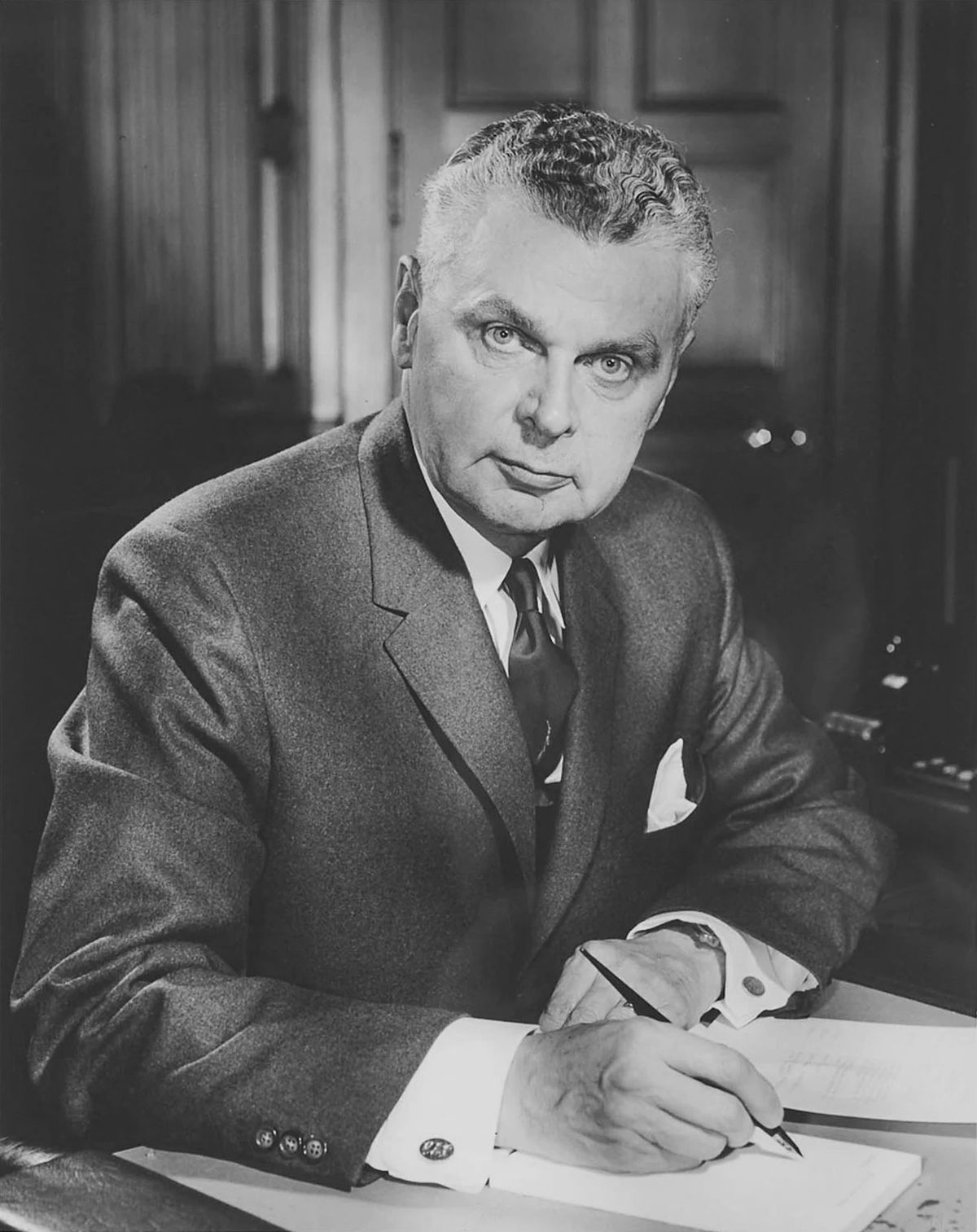
The push for a distinctive national flag gained critical momentum in the early 1960s under Prime Minister Lester B. Pearson. His experience during the 1956 Suez Crisis, where Egyptian officials objected to Canadian peacekeepers bearing the Red Ensign due to its inclusion of the Union Flag, convinced him of the need for a uniquely Canadian symbol. In 1963, Pearson formed a 15-member multi-party parliamentary committee to select a new design. The debate was highly contentious, with former Prime Minister John Diefenbaker leading the opposition to change and demanding a referendum. Pearson initially favoured a design known as the "Pearson Pennant," featuring three red maple leaves on a white field with blue borders, presented by artist and heraldic advisor Alan Beddoe. This design was widely criticized and derided by media as a "concession to Quebec". The new all-party committee formed in September 1964 comprised seven Liberals, five Conservatives, one New Democrat, one Social Crediter, and one Créditiste, with Herman Batten as chairman. The committee reviewed about 2,000 public suggestions plus 3,900 others from previous committees. Key witnesses included Archer Fortescue Duguid, who argued for three maple leaves. Historian Arthur R. M. Lower, who stressed the need for a distinctly Canadian emblem. And historian Marcel Trudel, who argued for symbols of Canada's founding nations and did not include the maple leaf. In a key committee vote, believing Liberal members would support the Pearson Pennant, Conservative committee members voted for the single-leaf design. The Liberals and other parties all voted for the single-leaf design as well, resulting in a unanimous 15 to 0 vote for the option created by George Stanley. Stanley's memorandum of March 23, 1964, warned against using "national or racial symbols that are of a divisive nature" like the Union Flag or fleur-de-lis, and included the first sketch of the red and white flag with a single leaf. The House of Commons passed the resolution adopting the new flag on December 15, 1964, by a vote of 163 to 78, after six months of debate and 308 speeches, with Senate approval following two days later.
The key figures involved in the flag's creation were Prime Minister Lester B. Pearson, who formed a committee to resolve the issue of an official flag. Historian George Stanley, Dean of Arts at the Royal Military College of Canada, proposed the maple leaf design based on the college's flag. John Matheson, a Liberal MP, acted as Pearson's right-hand man on the committee and collaborated with Stanley. The design featuring the stylized maple leaf was created by Jacques Saint-Cyr, and artist Alan Beddoe presented Pearson with an earlier three-leaf design known as the "Pearson Pennant". The flag was officially proclaimed by Queen Elizabeth II on January 28, 1965.
- Lester B. Pearson: Prime Minister and principal political proponent of a new flag.
- John Diefenbaker: Opposition leader and main opponent to changing the flag.
- George Stanley: Historian and Dean of Arts at RMC whose memorandum and sketch formed the basis of the selected design.
- John Matheson: Liberal MP who worked closely with Pearson and Stanley to shepherd the design through Parliament.
- Jacques Saint-Cyr: Graphic artist who executed the final rendering of the maple leaf.
- Alan Beddoe: Heraldic advisor who created the "Pearson Pennant" design.
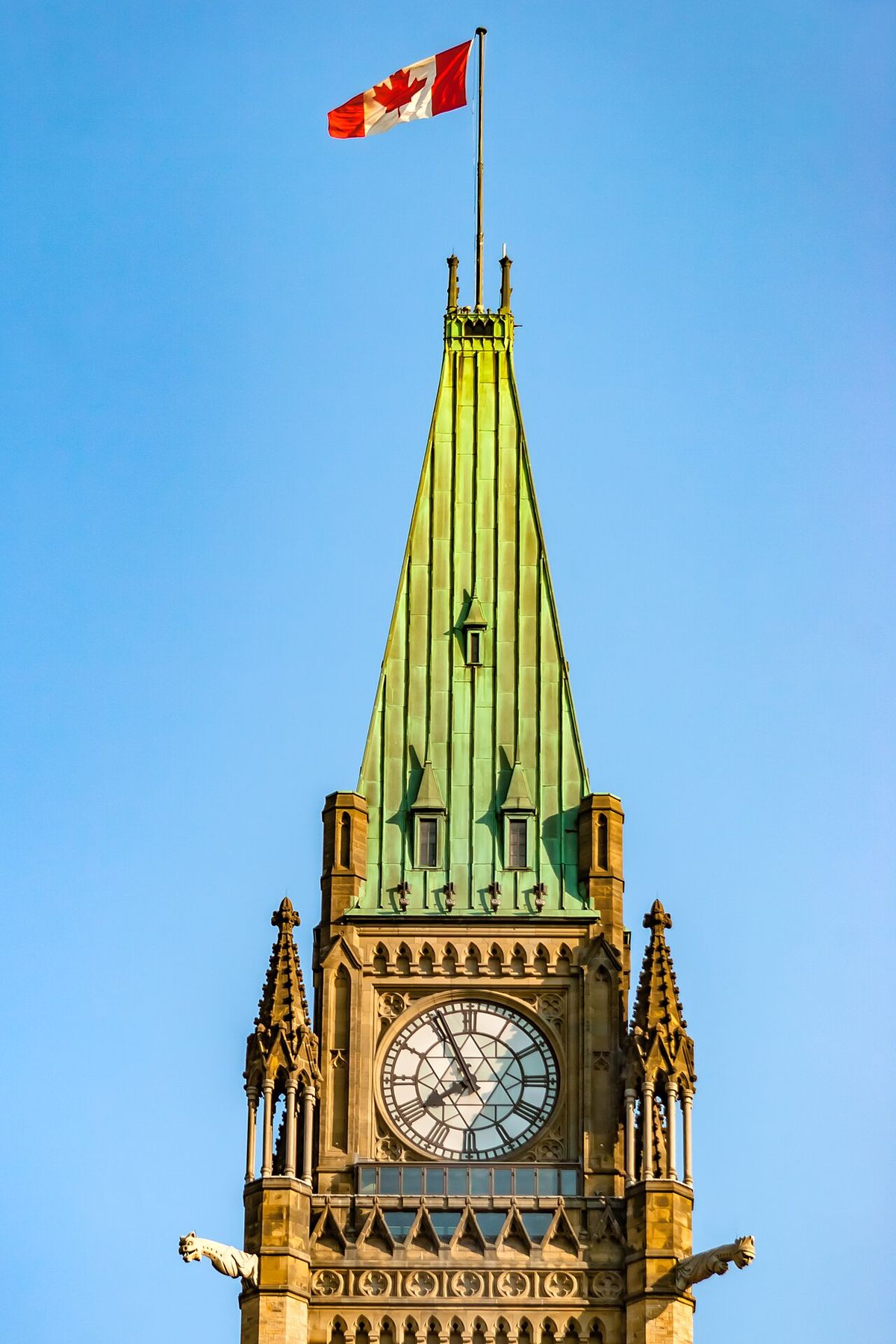
After the parliamentary resolutions, a proclamation was created as an illuminated vellum document with calligraphy by Yvonne Diceman and heraldic illustrations. It was signed by Queen Elizabeth II on January 28, 1965, Prime Minister Lester Pearson, and Attorney General Guy Favreau. The inaugural raising ceremony took place on Parliament Hill in Ottawa at noon on February 15, 1965, with the Red Ensign lowered and the new flag raised as the crowd sang "O Canada" and "God Save the Queen". Governor General Georges Vanier and Senate Speaker Maurice Bourget delivered speeches highlighting the flag as a symbol of national unity. Despite the official adoption, there was still opposition, and Stanley received threats for having "assassinated the flag," though he attended the ceremony.

Protocol, Use and Symbolism
While no law dictates the treatment of the national flag, long-standing conventions and protocols guide its display and establish its primacy in the Canadian order of precedence. The Maple Leaf flag takes precedence over all other flags on Canadian soil, including the Royal Union Flag and provincial flags. It is to be treated with dignity and should not be subjected to disrespectful use. The flag is flown at federal buildings and establishments across Canada and abroad. It is incorporated into the logos and wordmarks of many government departments and agencies. The maple leaf motif is also featured extensively in other Canadian symbols, including military badges, provincial and territorial flags, and the government's official wordmark. The flag's image is represented digitally by the Unicode emoji sequence U+1F1E8 U+1F1E6 (🇨🇦). The Department of Canadian Heritage provides detailed guidelines on the proper methods for flying, folding, and disposing of worn-out flags. Many different flags created by Canadian officials, government bodies, and military forces contain the maple leaf motif, either by having the Canadian flag in the canton or by including maple leaves in the design.
National Flag of Canada Day and Major Anniversaries
National Flag of Canada Day is observed annually on February 15 to commemorate the flag's inauguration in 1965. It is a day of observance but not a nationwide statutory holiday. Communities across Canada often hold ceremonies and educational events. The 50th anniversary in 2015 was marked with special commemorations, though the government of the day was criticized for a lack of an official ceremony on Parliament Hill. Governor General David Johnston presided over a ceremony in Ottawa's Confederation Park integrated with Winterlude, stating the flag is "so embedded in our national life and so emblematic of our national purpose that we simply cannot imagine our country without it". Queen Elizabeth II issued a statement celebrating the flag as a cherished symbol of Canadian identity. Canada Post and the Royal Canadian Mint issued commemorative stamps and coins, respectively. The original proclamation of the flag is preserved in a temperature and humidity-controlled plexiglass case to prevent the vellum from deteriorating. Since 1996, February 15 has been commemorated as National Flag of Canada Day. In 1996, Minister of Canadian Heritage Sheila Copps instituted the One in a Million National Flag Challenge. Canadian Heritage put the expenses at $15.5 million, with approximately a seventh of the cost offset by donations.
Other Official Flags and Their Regulated Use
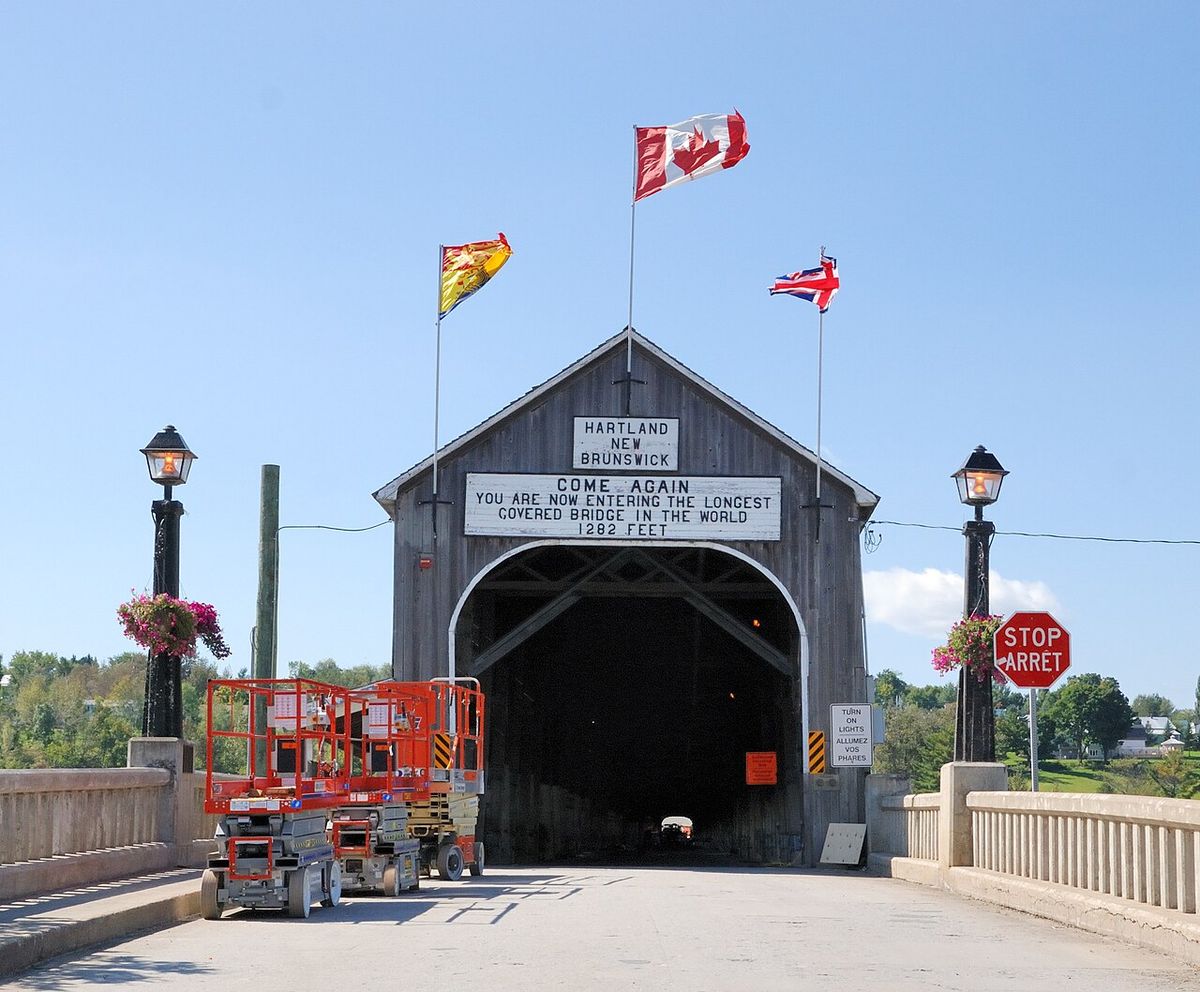
Several other flags retain official status in Canada alongside the national flag. The Royal Union Flag remains an official symbol of Canada's membership in the Commonwealth of Nations and its allegiance to the Crown. Federal regulations require it to be flown alongside the national flag on a second flagpole, where physically possible, on Commonwealth Day, Victoria Day, and the anniversary of the Statute of Westminster. It is also flown at ceremonies honouring Canada's military involvement with other Commonwealth nations, such as at the National War Memorial. The Canadian Red Ensign, while no longer an official national flag, is still used in historical contexts and by some veterans' groups. The flag of the governor general of Canada, featuring a lion crest on a blue field, is flown at buildings and events where the governor general is present. The following table outlines the days the Royal Union Flag is flown at federal installations.
| Occasion | Date |
|---|---|
| Commonwealth Day | Second Monday in March |
| Victoria Day | Same date as the sovereign's official birthday (Monday preceding May 25) |
| Anniversary of the Statute of Westminster | December 11 |
The Royal Union Flag is also part of the provincial flags of Ontario and Manitoba, forming the canton of these flags. A stylized version is used on the flag of British Columbia and the flag of Newfoundland and Labrador. Several of the provincial lieutenant governors formerly used a modified union flag as their flags of office. The last to abolish this design was the lieutenant governor of Nova Scotia in 2024.
Cultural Impact and Legal Status
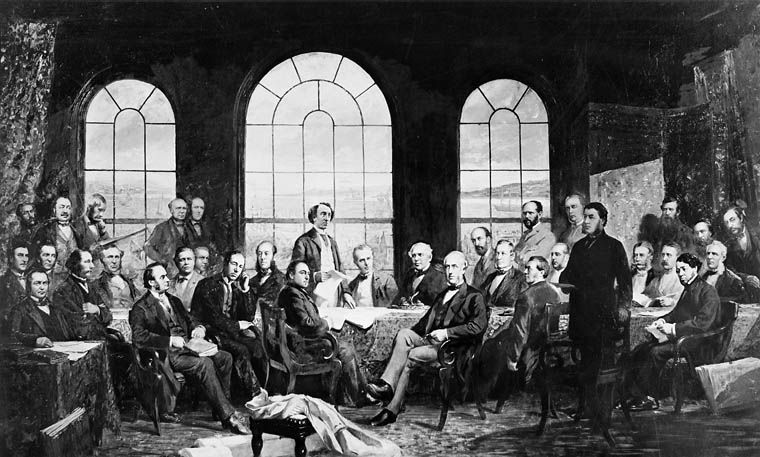
The flag's adoption marked a definitive step in Canada's visual identity as a sovereign nation. It is the first flag to have been adopted by both houses of Parliament and officially proclaimed by the Canadian monarch. The flag debate itself was a significant episode in Canadian political history, reflecting the country's evolving sense of self separate from its British colonial past. John Matheson noted that Pearson's "paramount and desperate objective" in introducing the new flag was keeping Quebec within Canada by adopting a neutral symbol. The flag quickly became entrenched in Canadian civic life, appearing on government publications, sporting uniforms, and as a symbol of Canadian diplomacy and peacekeeping abroad. Its simple, bold design is easily reproduced and recognized globally. The maple leaf, long a national emblem, was given its definitive form through the flag, solidifying its status. There is no specific criminal law governing misuse of the flag, but conventions and strong public sentiment guide its respectful treatment. The flag's design has proven enduring, with no serious movements to replace it since its adoption, indicating its broad acceptance as a unifying national symbol.
Early European Flags in Canada
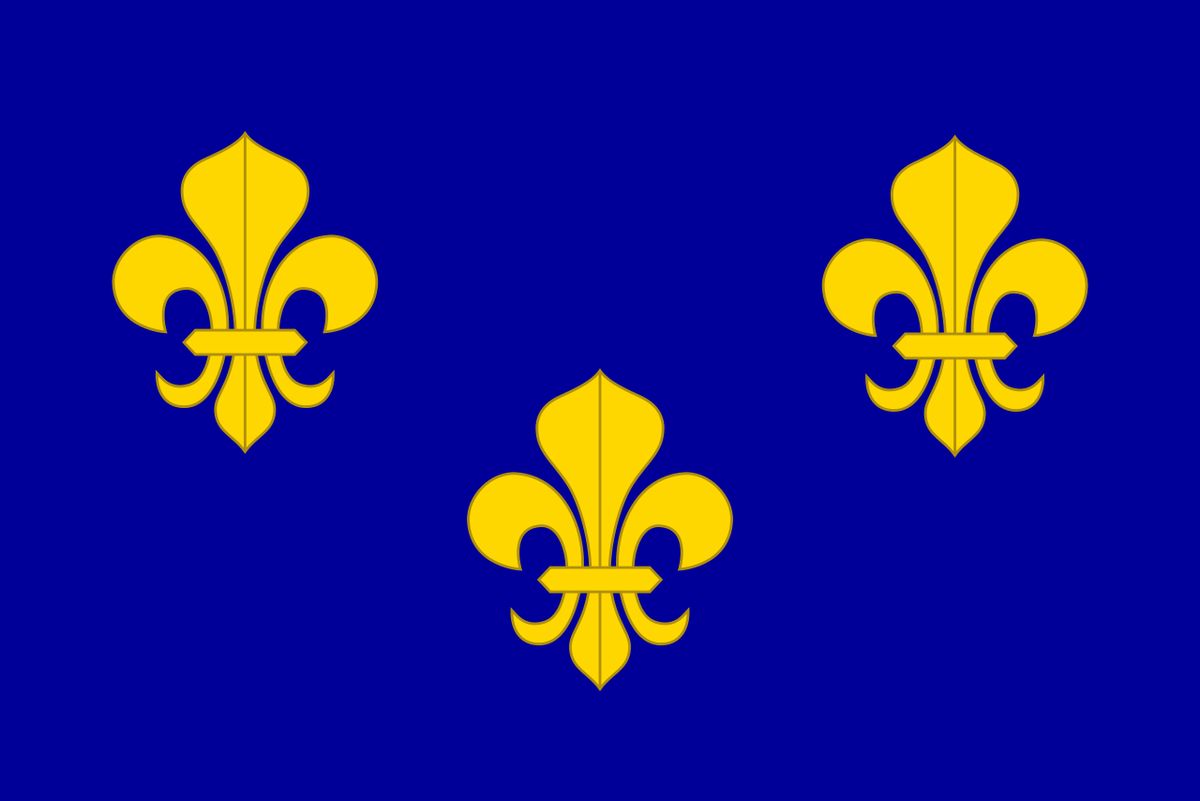
The history of flags in the territory that became Canada begins with early European exploration. The Saint George's Cross was carried by John Cabot when he reached Newfoundland in 1497. In 1534, Jacques Cartier planted a cross in Gaspé bearing the French royal coat of arms with the fleurs-de-lis. The Royal Banner of France, or Bourbon Flag, held a position of some prominence in New France, with evolving variations of French military flags being used over time. As the de facto British national flag, the Union Flag was used similarly in Canada from the time of British settlement in Nova Scotia after 1621. Its use continued after Canada's legislative independence from the United Kingdom in 1931 until the adoption of the current flag in 1965. The United Empire Loyalist flag, that is very similar to the Union Jack, was used by immigrants who remained loyal to the British crown during the American Revolutionary War. In present-day Canada, the United Empire Loyalist flag continues to be used as symbol of pride and heritage for loyalist townships and organizations. Shortly after Canadian Confederation in 1867, the need for distinctive Canadian flags emerged. The first Canadian flag was then used as the flag of the governor general of Canada, a Union Flag with a shield in the centre bearing the quartered arms of Ontario, Quebec, Nova Scotia, and New Brunswick, surrounded by a wreath of maple leaves.
Questions about Flag of Canada
Who designed the Canadian flag?
The concept for the flag's design is credited to historian George Stanley, who was inspired by the flag of the Royal Military College of Canada. He proposed a red and white flag with a single maple leaf in a March 1964 memorandum. The final graphic rendering of the 11-point maple leaf was executed by artist Jacques Saint-Cyr. The design was championed politically by Prime Minister Lester B. Pearson and shepherded through Parliament by MP John Matheson.
What do the colours and maple leaf on the flag represent?
Red and white were proclaimed as Canada's official colours by King George V in 1921. Red is derived from Saint George's Cross of England, and white from the French royal emblem. The maple leaf has been a symbol of Canada since the 19th century, representing the land and its people. The 11 points on the leaf have no specific symbolic meaning. The design was chosen for its visual clarity, particularly in windy conditions.
Is National Flag of Canada Day a statutory holiday?
National Flag of Canada Day, observed on February 15, is not a nationwide statutory holiday. It is a day of observance where ceremonies and educational events may be held, but there is no universal entitlement to a day off work. The day has been officially commemorated since 1996. In February 2025, former prime ministers encouraged Canadians to fly the flag to mark its upcoming 60th anniversary. The date itself marks the flag's inauguration on February 15, 1965.
What was Canada's flag before 1965?
Before 1965, Canada did not have an official national flag. The Canadian Red Ensign, a red flag with the Union Jack in the canton and the Canadian coat of arms in the fly, was used unofficially from the 1860s and was formally approved for use as a distinctive Canadian flag in 1945. The Royal Union Flag was also used, particularly as a symbol of allegiance to the Crown. The Red Ensign served as the de facto national flag for many decades.
How should the Canadian flag be displayed?
The national flag should be treated with respect and take precedence over all other flags on Canadian soil. It should be flown on its own flagpole or in the position of honour when grouped with others. The flag should not be tattered or soiled, and there are protocols for its proper folding and dignified disposal. The Department of Canadian Heritage provides detailed guidelines for its display, including rules for half-masting and lighting.
When was the Canadian flag adopted?
The Canadian flag was officially adopted on February 15, 1965. This date marks the inaugural ceremony on Parliament Hill in Ottawa where the new Maple Leaf flag was raised at noon, replacing the Canadian Red Ensign. The flag's adoption followed a parliamentary process where the design was passed by the House of Commons on December 15, 1964, and received Senate approval two days later. Queen Elizabeth II then signed the royal proclamation on January 28, 1965, making it official. February 15 is now celebrated annually as National Flag of Canada Day to commemorate this event.
Sources: Wikipedia and current public reporting, checked by the Nosy Mag desk. Last updated 2026-10-24.