Marriage in Canada
Marriage in Canada is a legal and social institution governed by a combination of federal and provincial laws. The Parliament of Canada holds exclusive authority over the legal capacity to marry and divorce, while provinces and territories regulate the solemnization of ceremonies and issue marriage licences. Since the national legalization of same-sex marriage in 2005, Canada has recognized the union of two persons regardless of gender. The institution has undergone significant transformation, marked by a long-term decline in marriage rates, a rise in common-law unions, and changes in the average age at first marriage.
Legal Framework and Jurisdiction
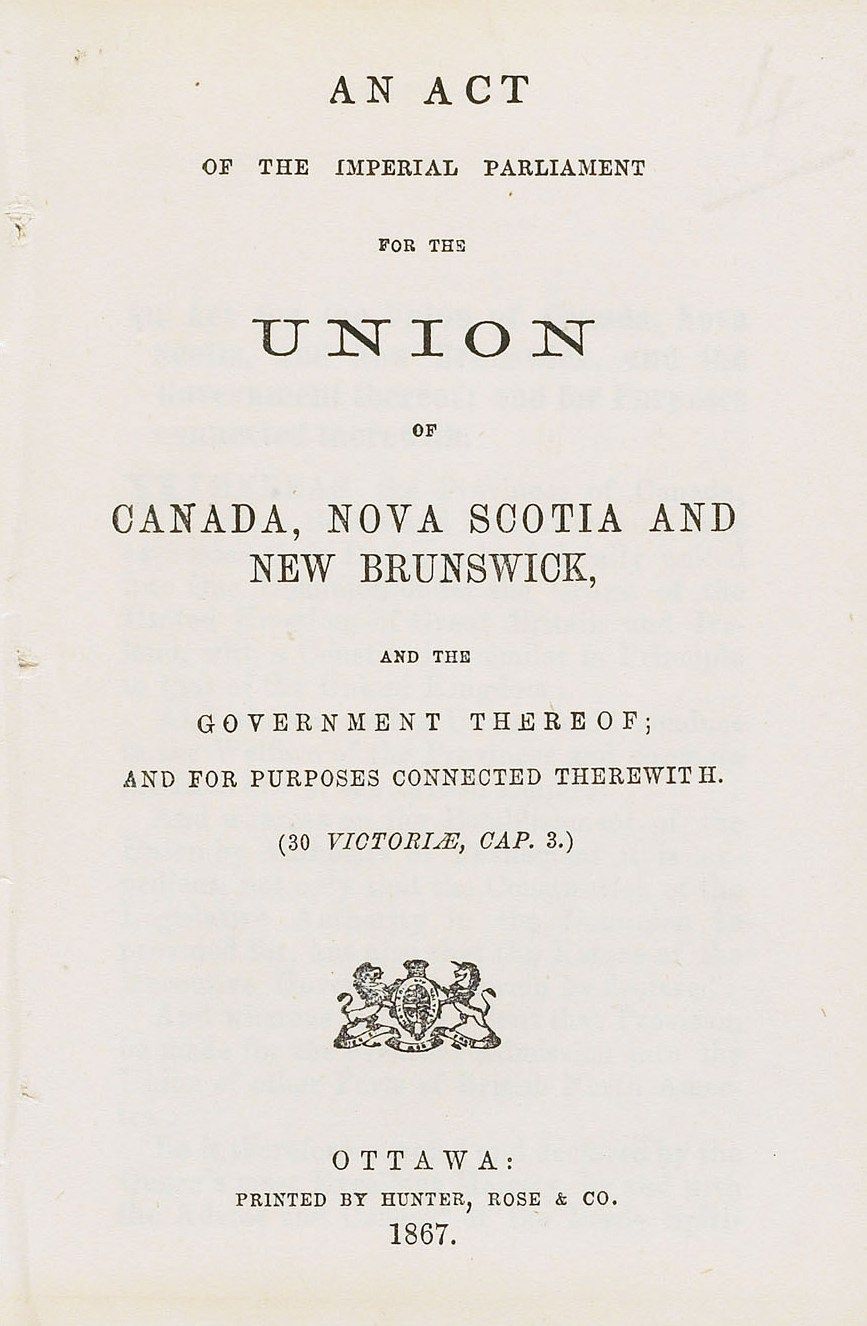
The legal foundation for marriage in Canada is established by the Constitution Act, 1867. Section 91(26) grants the federal Parliament exclusive legislative authority over marriage and divorce. This means federal law sets the rules for who can marry, the legal effects of marriage, and the grounds for divorce. The Civil Marriage Act, which legalized same-sex marriage nationally in 2005, and the Divorce Act are key federal statutes. In contrast, section 92(12) of the Constitution Act gives provincial and territorial legislatures the power to regulate the solemnization of marriage. This division of powers results in a uniform set of core marriage rules across the country, administered through varying provincial systems for licences and ceremonies. Provinces and territories authorize who can perform marriages, which includes members of the clergy, judges, justices of the peace, and appointed marriage commissioners. They also set the fees and processing times for marriage licences, which ranged from approximately $40 in Alberta to between $180 and $192 in Toronto and Ottawa as of 2026, with Quebec being an exception as it uses a publication system instead of licences.
Requirements and Restrictions
To contract a valid marriage in Canada, several legal requirements must be met, primarily established by federal law. Both parties must freely give their consent, and forcing someone to marry is a criminal offence under the Criminal Code. The federal Marriage (Prohibited Degrees) Act prohibits marriages between persons related lineally, such as parent and child, or as brother and sister, including half-siblings and those related by adoption. Since 2015, federal law has set the absolute minimum age for marriage at 16 years. Provinces and territories can set a higher minimum age, and all require individuals below the age of majority, which is 18 or 19, to obtain additional consents. It is a criminal offence to celebrate a marriage knowing one of the persons is under 16. The specific age rules with parental or judicial consent vary across jurisdictions. Before 2015, it was possible for children less than 16 years old to get married in some jurisdictions with parental consent or a court order.
Minimum Marriageable Ages by Province and Territory (with consent for minors)- British Columbia: 19, or 16 with parental consent.
- Alberta: 18, or 16 with consent of all parents and legal guardians.
- Saskatchewan: 18, or 16 with a signed parental consent form.
- Manitoba: 18, or 16 with judicial consent.
- Ontario: 18, or 16 with written consent from both parents.
- Quebec: 18, or 16 with court authorization.
- New Brunswick: 18, or 16 with an affidavit of consent signed by parents or guardians.
- Nova Scotia: 19, or 16 with a signed consent form.
- Prince Edward Island: 18, or 16 with a parental consent form.
- Newfoundland and Labrador: 19, or younger wherein special consents may be required.
- Yukon: 19, or younger with consent of parent(s) or legal guardian(s).
- Northwest Territories: 19, or younger with parental consent.
- Nunavut: 19, or 16 with parental consent.
Historical Trends and Demographic Shifts
Marriage trends in Canada have changed dramatically over the past century. The number of marriages generally increased from 71,254 in 1921 to a peak of 200,470 in 1972. Since then, a long-term decline has been observed, with 146,121 marriages in 2019 and a sharp drop to 98,355 in 2020, the lowest total since 1938, largely due to public health restrictions during the COVID-19 pandemic. The crude marriage rate, which is the number of marriages per 1,000 population, peaked at 9.0 in 1972 and fell to 2.6 by 2020. The probability of a Canadian ever marrying declined from 74 percent in 1991 to 44 percent in 2020. Concurrently, common-law unions have become far more prevalent, rising from representing 6 percent of couples in 1981 to 23 percent of all couples in 2021. This shift is especially pronounced in Quebec and Nunavut, where common-law unions accounted for 43 percent and 52 percent of couples, respectively, in 2021. The average age at first marriage has also risen steadily. In 1972, the average age was 23.0 years for women and 25.4 years for men. By 2008, it had increased to 29.6 years for women and 31.6 years for men, a trend that has continued. The proportion of families headed by married couples fell from 92 percent in 1961 to 65.8 percent in 2016.
Provincial and Territorial Variations
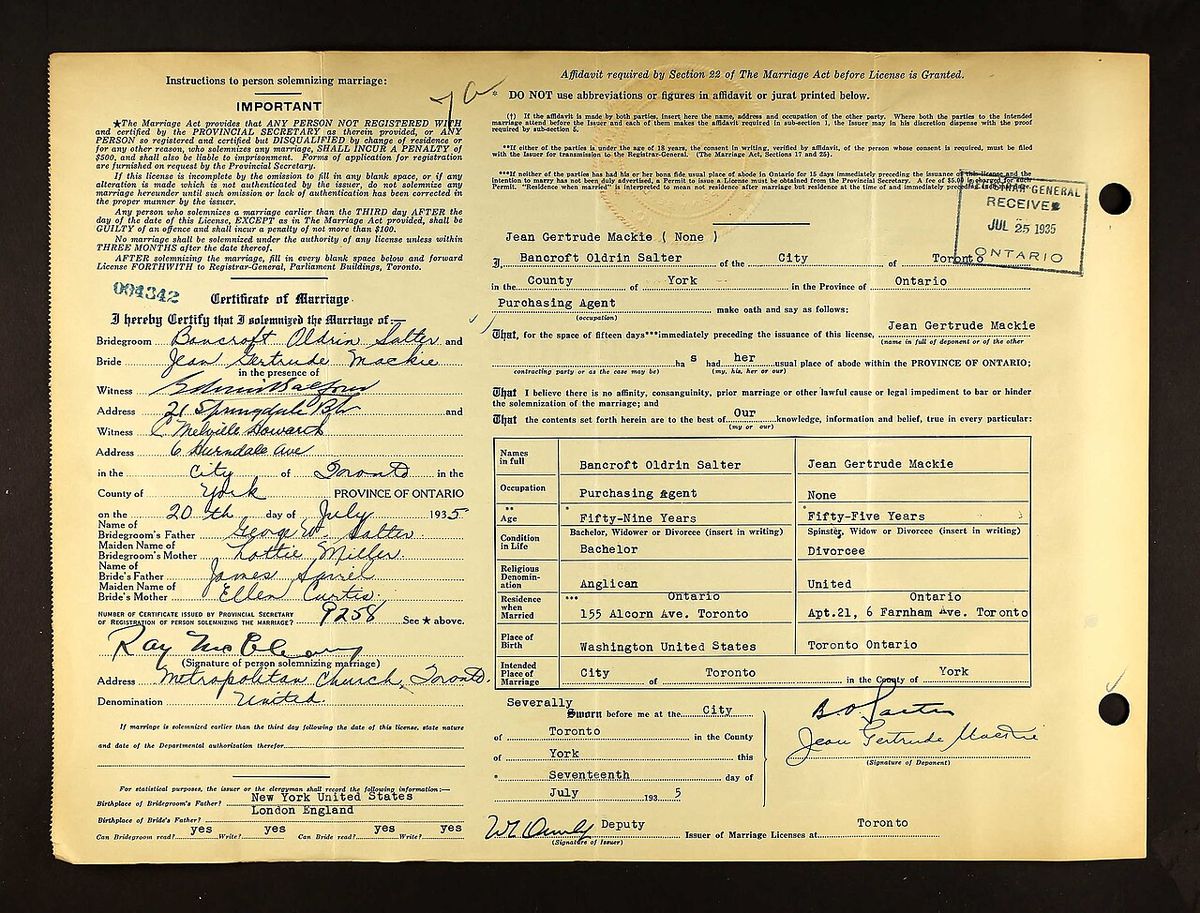
While federal law provides the framework, significant variations exist in how provinces and territories administer marriage. These differences are most apparent in licensing, fees, and specific procedural rules. For instance, Quebec does not have a marriage licence system. Instead, couples must file a notice of marriage, which is published on the Director of Civil Status website for a mandatory 20 days before the ceremony to allow for any legal objections. In all other jurisdictions, a marriage licence is required, with fees varying widely. The processing time for a marriage certificate after the ceremony was approximately 10 weeks in Ontario as of 2026. Provincial trends also show considerable variation in marriage rates and declines. In 2020, Prince Edward Island had the highest crude marriage rate at 6.5 marriages per 1,000 people, while Quebec had the lowest at 3.0 per 1,000. The decline in marriages between 1991 and 2020 was steepest in Newfoundland and Labrador at 68 percent, followed by Quebec at 61 percent and New Brunswick at 60 percent. Saskatchewan experienced the smallest decline in marriages in 2020 at 18 percent compared to the national average drop.
Ceremonies and Official Procedures
Marriage ceremonies in Canada are either religious or civil. A religious ceremony is performed by a member of the clergy registered with the provincial authorities, while a civil ceremony is conducted by a government-authorized official such as a judge, justice of the peace, or marriage commissioner. At the beginning of the 21st century, 76.4 percent of ceremonies were religious. The process for getting married typically involves obtaining a marriage licence from a provincial authority, for which processing times averaged 30 to 40 business days in 2026, though specific waits can vary. All ceremonies require two witnesses to be present. After the ceremony, the officiant submits the documentation for registration, and couples can then apply for a marriage certificate, with fees ranging from approximately $33.75 to $76.75 CAD as of 2026. The documents needed to apply for a licence usually include government-issued photo identification and, if applicable, proof of divorce or death of a previous spouse. In British Columbia, for example, the specific requirements include a 100 dollar marriage licence and an authorized officiant.
Divorce Law and Trends
The dissolution of marriage is governed exclusively by the federal Divorce Act. A divorce may be granted on the grounds that the marriage has broken down, which is established by the spouses living separate and apart for at least one year. Other grounds include adultery or physical or mental cruelty that makes continued cohabitation intolerable. The number of divorces in Canada peaked at 97,773 in 1987 following reforms to the Divorce Act. A long-term decline followed, with divorces hitting a 50-year low in 2020 at 42,933, a 25 percent drop from 2019, also influenced by pandemic disruptions. The Divorce Act covers key issues such as child support, spousal support, and custody orders. The risk of marriage dissolution is highest for those who marry as teenagers and lowest for those who marry in their mid-30s or later. The proportion of people remarrying after a divorce has also declined, from 20 percent of newlyweds in 1991 to 17 percent in 2020. Divorce applications and granted divorces both fell sharply in the early months of the COVID-19 pandemic, with applications dropping from 5,586 in February 2020 to 1,743 in April 2020.
| Year | Number of Divorces | Key Context |
|---|---|---|
| 1987 | 97,773 | Peak following Divorce Act reform |
| 2019 | 56,937 | Pre-pandemic level |
| 2020 | 42,933 | 50-year low, 25% drop from 2019 |
Same-Sex Marriage and Legal Evolution
Same-sex marriage has been legal across Canada since the federal Civil Marriage Act received royal assent on July 20, 2005. This followed a series of provincial court decisions starting in 2003 that had already legalized it in eight out of ten provinces and one of three territories. The federal law stipulates that marriage requires the free and enlightened consent of two persons to be the spouse of each other. While same-sex marriages performed in Canada are legally recognized, they are not recognized in many foreign countries, which is an important consideration for Canadians travelling or living abroad. The legalization marked a change in the definition of a married couple in Canada. This legal evolution is part of the broader transformation of marriage as a social institution in Canada since the 1960s.
Polygamy and Other Prohibited Arrangements
Polygamy, being married to more than one person at the same time, remains a criminal offence in Canada under the Criminal Code. Prosecutions are rare, but the law was upheld as constitutional by the Supreme Court of British Columbia in a 2011 reference case. In March 2014, Winston Blackmore and James Oler were charged with polygamy in British Columbia, marking the first such prosecutions in over sixty-five years. On March 9, 2018, the Supreme Court of British Columbia reaffirmed the constitutionality of Canada's anti-polygamy laws, upholding the July 2017 polygamy convictions of Blackmore and Oler. The legal prohibition stands in contrast to the recognition of same-sex marriage, reflecting the Canadian legal principle that marriage is the union of two persons to the exclusion of all others. Forcing someone to marry against their will is also a criminal offence under section 293.1 of the Criminal Code.
International Marriages and Considerations
Marriages that are legally performed in a foreign country are generally valid in Canada and do not need to be registered domestically. Canadian consular officials do not perform marriage ceremonies abroad and are not required to attend them. Individuals planning to marry overseas are advised to contact the embassy or consulate of the destination country to determine required documents, which may include a marriage search letter from a Canadian province, a single status affidavit, or a statement in lieu of a certificate of non-impediment issued by Canadian authorities. These documents often require authentication by Global Affairs Canada and translation into the local language. Canadians are cautioned that marrying a citizen of another country may have implications for their citizenship status and that laws and customs regarding relationships can vary significantly. The Government of Canada provides specific travel advisories on these matters, especially concerning same-sex marriages, which may not be recognized in the destination country. It also advises caution when going abroad to meet a marriage partner, especially if the relationship began online, due to risks of immigration fraud and personal safety.
Questions about Marriage in Canada
What is the legal age to get married in Canada?
Federal law sets the absolute minimum marriageable age at 16. However, provinces and territories can set a higher minimum age, and all require individuals under the age of majority (18 or 19) to obtain additional consent from parents or a court. For example, the minimum age is 19 in British Columbia, Nova Scotia, and Newfoundland and Labrador, and 18 in Ontario and Alberta, with provisions for 16-year-olds to marry with consent. It is a criminal offence to participate in a marriage ceremony knowing one of the parties is under 16.
How do I get a marriage licence in Canada?
You apply for a marriage licence from a provincial or territorial authority, such as a municipal office or service centre. Requirements include providing identification and, if applicable, documentation of divorce or death of a previous spouse. Processing times averaged 30 to 40 business days in 2026, and fees vary by province, ranging from about $40 in Alberta to roughly $180-$192 in Toronto and Ottawa. Quebec is the exception, using a mandatory 20-day publication of a notice of marriage instead of a licence system.
Is a foreign marriage recognized in Canada?
Yes, a marriage that is legally performed in a foreign country is usually valid in Canada, and you do not need to register it upon your return. However, you should ensure the marriage complies with the local laws of that country. It is recommended to contact that country's embassy in Canada to understand required documents, which may need authentication. Canadian consular officials abroad cannot perform marriage ceremonies.
What are the grounds for divorce in Canada?
The primary ground for divorce under the federal Divorce Act is the irretrievable breakdown of the marriage. This is typically proven by the spouses living separate and apart for at least one year. Other grounds include adultery or physical or mental cruelty that makes continued cohabitation intolerable. The vast majority of divorces are granted on the basis of one-year separation.
How has the marriage rate in Canada changed?
The marriage rate in Canada has been in long-term decline since its peak in 1972. The number of marriages fell from 200,470 in 1972 to 146,121 in 2019, then dropped sharply to 98,355 in 2020 due to the COVID-19 pandemic, the lowest total since 1938. The crude marriage rate (per 1,000 people) fell from 9.0 in 1972 to 2.6 in 2020. Concurrently, the proportion of Canadians ever marrying fell from 74% in 1991 to 44% in 2020, while common-law unions have become much more common.
What is the difference between a religious and a civil marriage ceremony?
A religious marriage ceremony is performed by an authorized member of the clergy, such as a priest, minister, rabbi, or imam, within the context of a religious service. A civil ceremony is performed by a government-authorized official like a judge, justice of the peace, or marriage commissioner in a non-religious setting. Both types of ceremonies are legally valid if the officiant is properly registered with the province or territory. In 2001, about 76.4% of ceremonies were religious.
Sources and further reading
- Marriage in Canada (Wikipedia)
- Marriage outside Canada, Travel and tourism (travel.gc.ca)
- Marriage and divorce trends in Canada, 1921 to 2020 (justice.gc.ca)
- Marriage in Canada (thecanadianencyclopedia.ca)
- Getting Married in Canada: Legal Requirements ... (silaws.com)
Checked by the Nosy Mag desk. Last updated 2026-10-29.