Copyright law of Canada
Copyright law in Canada governs the legally enforceable rights to creative and artistic works, providing a framework to protect creators while balancing public access to culture and knowledge. Established by the Copyright Act, first passed in 1921 and substantially amended in 1988, 1997, and 2012, it is a federal responsibility under the Constitution. The law protects a wide range of works, from literary and musical compositions to sound recordings and performances, granting exclusive rights to creators or owners for a limited term. A 2022 amendment extended the general copyright term to 70 years after the creator's death.
Historical Development
The origins of Canadian copyright law lie in colonial statutes and imperial British law. The first colonial copyright statute was the Copyright Act, 1832, passed by the Parliament of the Province of Lower Canada to encourage a local literary and artistic nation. After the unification of Upper and Lower Canada, this was replaced by the Copyright Act, 1841, which granted copyright only to residents for registered works like books and maps. The British Copyright Act 1842 then explicitly applied across the Empire, creating a monopoly for London publishers and making it unlawful for Canadian merchants to import cheaper American reprints. In response, Canada passed the 1847 Act to extend the Provincial Copyright Act to Persons Resident in the United Kingdom, which granted protection to British authors only if their works were printed and published in Canada.
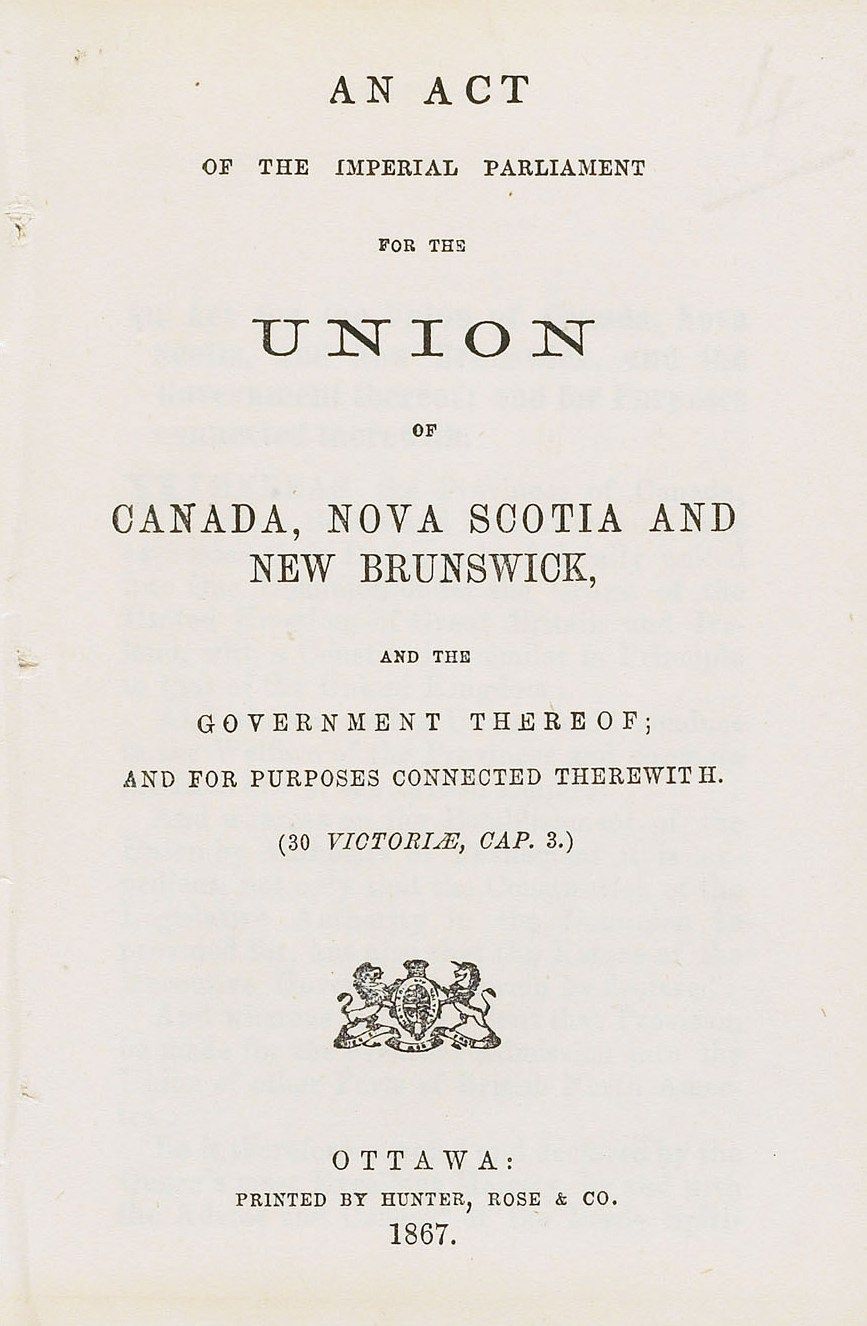
Upon Confederation in 1867, copyright became a federal power under section 91(23) of the Constitution Act, 1867. The Copyright Act of 1868 re-established the 1847 publication requirements, prompting British demands for revision. The Copyright Act, 1875, was a compromise that provided copyright for works printed and published in Canada, available to anyone domiciled in Canada or other British possessions. However, an 1877 Ontario Court of Appeal ruling confirmed that the Imperial Copyright Act 1842 continued to have effect in Canada, creating a dual system. This led to American authors temporarily residing in Canada to secure imperial copyright for works published in London. The UK's Copyright Act 1911 granted Canada the authority to assume complete jurisdiction, which it exercised by passing the Copyright Act, 1921, ending the application of imperial copyright law in Canada. Canada did not join the Buenos Aires Convention of 1910.
The Modern Copyright Act and Key Reforms
The Copyright Act, 1921, which came into force in 1924, formed the foundation of modern Canadian copyright law. It was closely modelled on the UK Copyright Act 1911 and introduced several key provisions. The general term of copyright was set at 50 years after the creator's death, and sound recordings were protected as if they were musical or literary works. The Act also abolished any remaining common law copyright. Following the UK Carwardine case, rights in performer's performances were also held to exist under the Canadian Act, though this was abolished in 1971. New technological developments later prompted calls for reform, leading to the Royal Commission on Patents, Copyright, and Industrial Design known as the Ilsley Commission which reported between 1954 and 1960.
Substantial reforms occurred in two main phases. Phase one in 1988 amended the Act to include computer programs as protected works, clarified moral rights, removed a compulsory license for musical works, established rules for orphan works, and reformed the Copyright Board of Canada. Phase two in 1997 introduced a new remuneration right for producers and performers of sound recordings when their work was broadcast, created a private copying levy on blank audio tapes, and granted protection to exclusive book distributors. It also introduced new copyright exceptions for non-profit educational institutions, libraries, museums, broadcasters, and people with disabilities. The 1997 reforms included a mandatory review clause and set copyright in unpublished works by creators who died after 1948 but before 1999 to last until 2049.
The most recent major overhaul was the Copyright Modernization Act of 2012, which implemented Canada's obligations under the World Intellectual Property Organization Internet Treaties. This act focused on anti-circumvention provisions for technical protection measures, the protection of authors' rights, and clarifying the public's rights concerning copying legally obtained materials. During its consideration, many groups opposed the digital lock specifications, arguing they infringed on legitimate usage, but the government rejected these criticisms. The 2012 amendments also updated the provision for a recurring five-year parliamentary review of the Act.
Scope and Subsistence of Copyright
Canadian copyright law protects a wide but defined range of creative works and subject matter. Protection arises automatically upon the creation and fixation of an original work into a material form. The Supreme Court of Canada has articulated a test for originality requiring the author to exercise skill and judgment that is not a purely mechanical exercise. Skill refers to the use of knowledge and developed aptitude, while judgment involves discernment in comparing options during production. The Act grants protection to published or unpublished original literary, dramatic, musical, and artistic works, as well as compilations, performers' performances, sound recordings, and communication signals.
The categories of works are broadly interpreted. Literary works include books and computer programs, dramatic works encompass plays and cinematographic works, musical works cover compositions with or without words, and artistic works include paintings, photographs, sculptures, and architectural works. Copyright also protects compilations and collective works, extending to the author's original skill and judgment in selecting or arranging the underlying material. A performer’s performance can be protected whether fixed or unfixed. Importantly, copyright protects the expression of ideas but not the underlying ideas, concepts, procedures, methods, or facts themselves. This exclusion preserves the free flow of knowledge. Works that are not fixed in a tangible medium are excluded, and copyright may not be enforceable in designs applied to useful articles where 50 or more copies are reproduced.
- Literary works: books, computer programs, speeches, essays.
- Dramatic works: plays, screenplays, choreographic works, cinematographic works.
- Musical works: musical compositions, with or without words.
- Artistic works: paintings, drawings, maps, photographs, sculptures, engravings, architectural works.
- Other subject matter: compilations, collective works, performers' performances, sound recordings, communication signals.
Ownership, Term, and the Public Domain
Copyright initially vests with the author or creator of a work, but ownership can be transferred through assignment to other parties such as publishers or production companies. Where the author is the first owner and subsequently assigns the copyright, the assignment only extends to 25 years after the author's death, after which copyright reverts to the author's estate. The duration of copyright protection is limited, after which works enter the public domain where they can be freely used by anyone. Historically, Canada adhered to the Berne Convention standard of life of the author plus 50 years. A significant change occurred in 2022 when Canada extended the general copyright term to 70 years after the death of the creator. This extension was implemented to fulfill obligations under the Canada United States Mexico Agreement. Consequently, very little will enter Canada's public domain until 2043, and the extension did not revive expired copyrights.
The term for other subject matter has also been adjusted. For sound recordings created on or after June 23, 2015, copyright lasts for 50 years after fixation, but if published before expiry, the term is the earlier of 70 years from publication or 100 years from fixation. For published pseudonymous or anonymous works, the term was extended by 25 years effective July 1, 2020, though this did not revive expired copyrights. For a work of joint authorship, copyright extends from the death of the last surviving author. Copyright expires at the end of the calendar year in which the relevant date falls. The extension of terms presents challenges, including the increased difficulty of locating copyright owners for older works, leading to more orphaned works.
Administration, Enforcement, and Recent Reviews
The Copyright Board of Canada is an evidence based decision making tribunal central to the copyright system. Its primary functions are to establish royalties users must pay for copyrighted works, oversee collective societies, and grant licenses for orphan works. Reforms to the Board's administration were implemented through Bill C-86 in 2018, which received royal assent on December 13, 2018, following a public consultation in 2017. The consultation highlighted significant time delays in tariff setting, leading to a 30 percent funding increase for the Board. Enforcement of copyright occurs through civil and criminal avenues. Civil remedies for infringement include damages, injunctions, and accounts of profit. Criminal offences for copyright infringement also exist under the Act.
As mandated by the 2012 amendments, a parliamentary review of the Copyright Act commenced in 2017. The House of Commons Standing Committee on Industry, Science and Technology led the review, collecting 192 written submissions and hearing from 209 witnesses before concluding in December 2018. Its final report in June 2019 contained 36 recommendations. A parallel study by the Standing Committee on Canadian Heritage on remuneration models for artists heard testimony from musician Bryan Adams in September 2018. Adams proposed amending the Act to have copyright assignments revert to the author 25 years after assignment, rather than 25 years after the author's death. These reviews occurred alongside trade negotiations for CUSMA, which required Canada to extend its copyright term.
| Review Body | Focus | Key Output | Year |
|---|---|---|---|
| House Standing Committee on Industry, Science and Technology | Parliamentary review of Copyright Act | 36 recommendations in final report | 2019 |
| House Standing Committee on Canadian Heritage | Study on remuneration models for artists | Testimony from Bryan Adams and others | 2018 |
| Innovation, Science and Economic Development Canada | Consultation on Copyright Board reform | Led to legislative amendments in Bill C-86 | 2017 |
Key Concepts and User Rights
A central feature of Canadian copyright law is the concept of fair dealing, which permits the use of copyrighted material without permission or payment in certain specific circumstances. These purposes include research, private study, education, parody, satire, criticism, review, and news reporting. The Supreme Court of Canada has emphasized that fair dealing is a user's right that must be given a large and liberal interpretation. In CCH Canadian Ltd v Law Society of Upper Canada, the Court established a two stage analysis for fair dealing, first identifying an allowable purpose and then assessing fairness based on factors like the purpose and amount of the dealing. Other key exceptions exist for non profit educational institutions, libraries, archives, and museums, allowing them to make copies for management and research. There are also exceptions for people with perceptual disabilities to convert works into accessible formats.
Registration of copyright is available but not required for protection to subsist. The Canadian Copyright Institute, founded in 1965, is an industry association representing creators, producers, publishers, and distributors. The balance in copyright law is constantly tested by new technologies. The 2012 reforms addressed digital locks, with anti circumvention rules making it unlawful to bypass technical protection measures even if not for infringement, though exceptions exist for accessibility and encryption research. Issues around online enforcement, user generated content, and the application of copyright to new forms of creation continue to evolve. The recurring parliamentary review process is designed to ensure the Act adapts to these changing circumstances.
Questions about Copyright law of Canada
How long does copyright last in Canada?
For most original works, copyright generally lasts for the life of the author plus 70 years, as of a 2022 extension. For sound recordings created on or after June 23, 2015, copyright lasts for 50 years after fixation, or if published earlier, for the earlier of 70 years from publication or 100 years from fixation. For published pseudonymous or anonymous works, the term was extended by 25 years in 2020. Once copyright expires, the work enters the public domain.
Do I need to register my work to have copyright in Canada?
No, registration is not a prerequisite for copyright protection in Canada. Copyright arises automatically as soon as an original work is created and fixed in a material form, such as being written down or recorded. However, voluntary registration with the Canadian Intellectual Property Office is available and provides a public record of ownership. This record can be helpful as evidence in legal disputes concerning copyright ownership or infringement.
What does the 'fair dealing' exception allow?
Fair dealing allows the unauthorized use of copyrighted material without permission for specific purposes defined in the Copyright Act. These purposes include research, private study, education, parody, satire, criticism, review, and news reporting. Whether a particular use qualifies as fair dealing depends on a case-by-case assessment of factors established by the Supreme Court of Canada, such as the purpose and character of the dealing and the amount of the work used. The landmark case outlining these factors is CCH Canadian Ltd v Law Society of Upper Canada.
What was the 2022 change to Canadian copyright term?
In 2022, Canada extended the general term of copyright protection from life of the author plus 50 years to life plus 70 years. This change implemented obligations under the Canada United States Mexico Agreement. A consequence is that few new works will enter the public domain in Canada until 2043. The extension did not revive previously expired copyrights.
What is the role of the Copyright Board of Canada?
The Copyright Board of Canada is an independent administrative tribunal with several key roles. It establishes the royalties that collective societies can charge users for the use of copyrighted works under its supervision. The Board also oversees agreements between users and these licensing bodies and can grant licenses for the use of orphan works where the copyright owner cannot be located. Its framework and supervision were part of the copyright reforms initiated in 1988.
What kinds of works are not protected by copyright in Canada?
Copyright does not protect ideas, concepts, procedures, methods of operation, or mathematical concepts themselves, only their original expression. Facts are also not protected. Works that are not fixed in a tangible form are excluded. Copyright protection may not be available for designs applied to useful articles if 50 or more copies are reproduced.
Sources and further reading
- Copyright law of Canada (Wikipedia)
- Canada Copyright Laws and Regulations 2026 (iclg.com)
- The 2026 Annotated Copyright Act (store.thomsonreuters.ca)
- About the Canadian Copyright Institute (thecci.ca)
- Canada's overzealous copyright law deprives us of our own cultural ... (policyoptions.irpp.org)
Checked by the Nosy Mag desk. Last updated 2026-11-02.