First Nations casinos in Canada
First Nations casinos in Canada are gaming and entertainment facilities owned and operated by Indigenous communities on reserve land, forming a significant part of the country's legal gambling industry. These establishments serve as vital economic engines, generating revenue for community development, infrastructure, and social programs while creating employment opportunities. The operations exist within a framework of provincial gaming regulations and agreements, with notable concentrations in Alberta, Saskatchewan, Ontario, and British Columbia. From the River Cree Resort near Edmonton to Casino Rama in Ontario, these venues offer slot machines, table games, hotels, and live entertainment, contributing to local economies and advancing Indigenous economic self-determination.
Economic Role and Regulatory Context
First Nations casinos operate as for-profit enterprises designed to stimulate economic development within Indigenous communities. The revenue generated is typically directed toward charitable and religious programs, infrastructure projects, housing, and social services that directly benefit the host First Nation. This model provides a stable source of income outside of federal transfers, advancing goals of economic self-determination. The legal foundation for these operations stems from 1985 amendments to the Criminal Code, which granted provinces jurisdiction over gambling. Provinces subsequently established regulatory regimes and, in most cases, cartel-like systems where they either own casinos or take a large share of profits. First Nations have generally had to integrate into these provincial systems, though Alberta has been more permissive in allowing casinos in major metropolitan markets like Edmonton and Calgary. Academic research indicates that casinos located in or near cities and popular resort destinations can have a marked positive impact on a community's well-being, as measured by Statistics Canada's Community Well-Being index. These urban casinos generate profits large enough to fund better housing and social services, and the money can also be leveraged for large-scale business and real-estate development, as is now happening in Edmonton and Calgary.
First Nations Casinos by Province
The distribution of First Nations casinos across Canada is uneven, reflecting different provincial policies and historical agreements. Alberta hosts several significant resort-style casinos, while Saskatchewan operates a network through a central authority. Ontario has three major facilities, and British Columbia has seen a recent wave of acquisitions by First Nations investment arms. Manitoba also has First Nations-run casinos, contributing to the provincial gaming industry. Each province has its own model for revenue sharing and licensing, which shapes the scale and impact of the operations. The total number of First Nation casinos in Canada is approximately 17, with five in Alberta, one in British Columbia on First Nations lands, two in Manitoba, three in Ontario, and six in Saskatchewan. This count does not include the eight recently acquired commercial casinos in B.C., which represent a new model of Indigenous ownership.
Alberta has five First Nation casinos. These include the River Cree Resort and Casino, which is located on Enoch Cree Nation land near Edmonton. Another notable casino is the Grey Eagle Resort and Casino, which is set on the Tsuut'ina Nation near Calgary. These facilities provide gaming, entertainment, and hospitality services.
Alberta's model involves Host First Nation charities licensed by Alberta Gaming, Liquor and Cannabis to conduct casino events on reserve land. The province is home to six Host First Nations casinos operating on reserve land, including two major urban resorts. Gaming proceeds are used for charitable and religious programs that directly benefit the Host First Nation’s community, such as education, sports, cultural activities, and elder support. Each casino has a designated licensed charity that operates under the Host First Nation Charitable Casino Policies Handbook, which has been developed to meet their unique community needs.
- Grey Eagle Resort & Casino (Tsuut'ina Nation, Calgary): This resort has 84,000 square feet of gaming space, a four-star hotel, four restaurants, and world-class concerts in a modern entertainment venue. It is located just minutes from downtown Calgary and about one hour from Banff National Park.
- Stoney Nakoda Resort & Casino (Stoney Nakoda First Nation, near Calgary): A full-service resort with a hotel, casino, event centre and multiple meeting rooms designed for meetings and events.
- Casino Dene (Cold Lake First Nation, Cold Lake).
- Bear Hills Casino & Travel Resort.
- Eagle River Casino & Travel Plaza.
Saskatchewan has six First Nation casinos. Most First Nations gaming in the province is consolidated under the Saskatchewan Indian Gaming Authority, which operates seven casinos across Saskatchewan. These SIGA casinos are located in North of Carlyle, South of Saskatoon, North Battleford, Lloydminster, Swift Current, and Yorkton. These facilities are significant employers and revenue generators for their partner First Nations.
In Saskatchewan, most First Nations gaming is consolidated under the Saskatchewan Indian Gaming Authority, which operates seven casinos across the province. These SIGA casinos are located in North of Carlyle, South of Saskatoon, North Battleford, Lloydminster, Swift Current, and Yorkton. These facilities are significant employers and revenue generators for their partner First Nations. They provide gaming options in various regions of Saskatchewan. Gaming on First Nation reserves is an important opportunity to stimulate economic development.
- Dakota Dunes Casino (South of Saskatoon).
- Northern Lights Casino (North Battleford).
- Gold Eagle Casino (North of Carlyle).
- Living Sky Casino (Swift Current).
- Painted Hand Casino (Yorkton).
- Bear Claw Casino & Hotel (Whitebear First Nation).
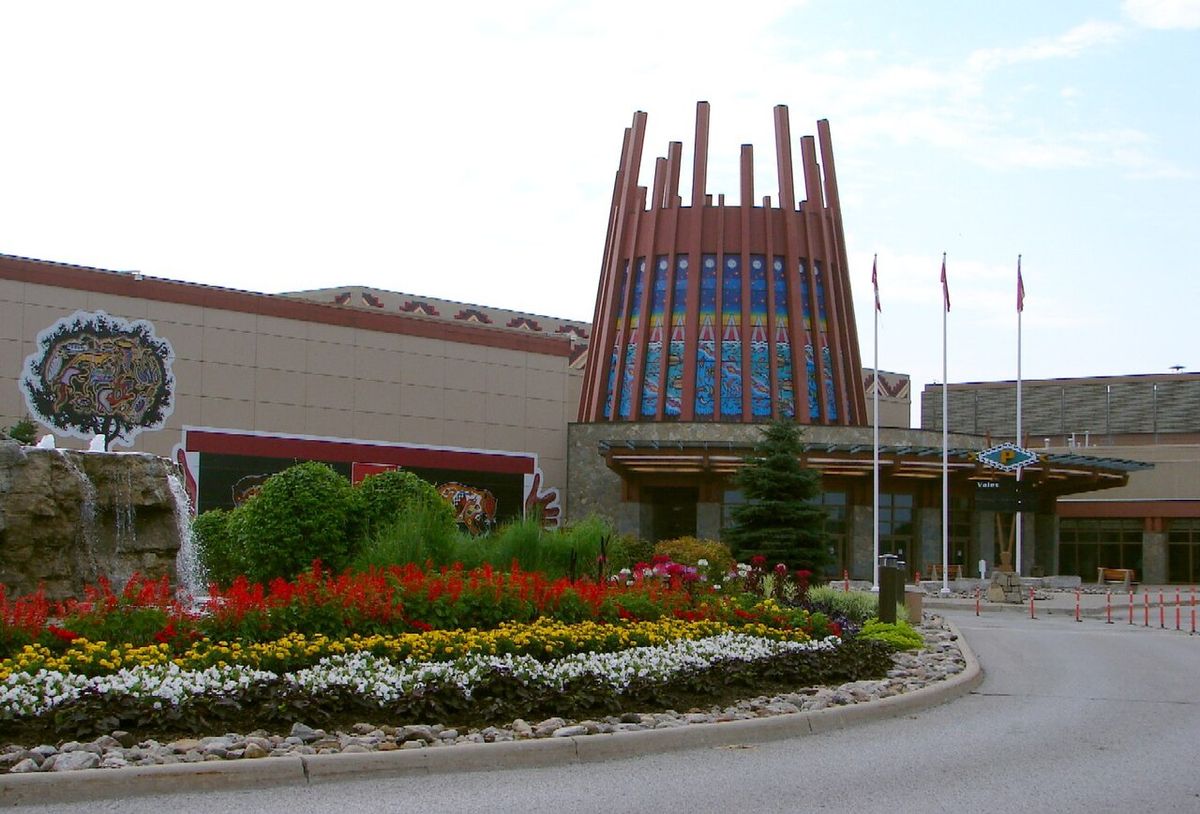
Ontario has three casinos located on First Nations reserve land. These are Casino Rama Resort, Golden Eagle Charitable Casino and Entertainment Centre, and Great Blue Heron Casino and Hotel. Casino Rama is a resort near Orillia, and Great Blue Heron Casino is located on Scugog Island. These casinos provide important revenue streams for their host communities.
Ontario has three casinos located on First Nations reserve land. These are Casino Rama Resort, Golden Eagle Charitable Casino and Entertainment Centre, and Great Blue Heron Casino and Hotel. Casino Rama is situated near Orillia, and Great Blue Heron Casino is on Scugog Island. These casinos provide important revenue streams for their host communities. They are key entertainment destinations in their regions.
- Casino Rama Resort (Rama First Nation, near Orillia): A major entertainment destination with a casino, hotel, and theatre.
- Great Blue Heron Casino (Mississaugas of Scugog Island First Nation, Port Perry): Features a casino, hotel, and an event space called The Nest which can host up to 800 guests for live performances and corporate gatherings. The hotel offers modern guest rooms steps away from the casino.
- Golden Eagle Charitable Casino & Entertainment Centre (Kitigan Zibi Anishinabeg, near Ottawa).
British Columbia has four First Nations casinos. These are Casino of the Rockies, Chances Cowichan, Chances Squamish and Chances Salmon Arm. Casino of the Rockies is a partnership of the Ktunaxa Nation, Chippewas of Rama First Nation and Samson Cree Nation. Chances Cowichan is located on the reserve lands of the Cowichan Tribes.
British Columbia has gaming on four First Nations lands, but a significant shift occurred between 2024 and 2026. During this period, eight casinos in southwest B.C. were sold by Great Canadian Entertainment to First Nations investment groups, reshaping ownership in the province. The original First Nations facilities include community gaming centres known as Chances locations. The recent acquisitions by nations like the Snuneymuxw First Nation include larger properties such as Casino Nanaimo and River Rock Casino Resort, moving ownership from international private equity to local Indigenous control. The First Nations involved have touted the businesses’ potential to advance economic self-determination and reinvest funds within the province.
- Casino of the Rockies (Ktunaxa Nation, Cranbrook): A partnership also involving the Chippewas of Rama First Nation and Samson Cree Nation, located at the St. Eugene Golf Resort. It was totally redesigned and upgraded in 2019 with a new look reflecting the essence of Nature and Ktunaxa culture.
- Chances Cowichan (Cowichan Tribes, Duncan): A community gaming centre on the reserve lands of the Cowichan Tribes on Vancouver Island at 436 Cowichan Way.
- Chances Salmon Arm (Adams Lake Indian Band): Located on reserve land of the Adams Lake Indian Band at 384 Trans-Canada Highway in Salmon Arm.
Manitoba is home to two First Nations casinos. These casinos contribute to the provincial gaming industry and provide economic benefits to their host communities. Gaming on First Nation reserves is an important opportunity to stimulate economic development, create jobs, and provide funding for infrastructure and social programs. Manitoba is home to two First Nations casinos. These casinos contribute to the provincial gaming industry and provide economic benefits to their host communities. Gaming on First Nation reserves is an important opportunity to stimulate economic development, create jobs, and provide funding for infrastructure and social programs. There are 17 First Nation casinos in Canada, with two located in Manitoba.
Recent Trends and Acquisitions in British Columbia
A notable trend in the Canadian gaming industry is the large-scale entry of First Nations as owners of existing casino properties in British Columbia. Between 2024 and 2026, eight casinos across southwest B.C. were sold by Great Canadian Entertainment to First Nations development corporations. This move represents a strategic shift for Indigenous communities to acquire stable, cash-flow-generating businesses. The Snuneymuxw First Nation's Petroglyph Development Corporation, led by CEO Yaatqumtun Ian Simpson, acquired five of these eight properties, including Casino Nanaimo and River Rock Casino Resort. Simpson stated the nation was attracted to the stability and strong cash flows these businesses produce, and they had been looking to acquire Casino Nanaimo since it moved to its current location in the 1990s. Other First Nations involved in the purchases include the Semiahmoo, Tsleil-Waututh, and the Ts’elxwéyeqw Tribe. This acquisition strategy allows First Nations to sidestep provincial restrictions on opening new casinos on reserves by instead investing in already-licensed operations. The trend is viewed as a milestone for economic self-determination, keeping profits within the province, creating local employment, and shifting ownership from foreign private equity firms like Apollo Global Management to B.C.-based Indigenous proprietors. The B.C. Lottery Corporation conducted due diligence on these ownership transfers but noted the sales were private transactions between companies. Great Canadian Entertainment, which began operating charity casinos in 1982, was purchased by Apollo-managed Raptor Acquisition in 2021 and has declined to comment on its reasons for selling the properties.
Community Impact and Revenue Distribution
The primary justification for First Nations involvement in gaming is the tangible community benefit derived from the proceeds. Revenue distribution is governed by agreements with provincial regulators and internal community policies. In Alberta, for example, proceeds are used by Host First Nation charities for programs that directly benefit their community, such as education scholarships, elder support, cultural programs, and sports facilities. Research using the Community Well-Being index shows that for casinos located in or near cities, the influx of casino revenue can act as an inflection point, accelerating improvements in income, employment, education, and housing scores for the host community. These funds are also leveraged for broader business and real-estate development projects, as seen with the Tsuut'ina Nation near Calgary and the Enoch Cree Nation near Edmonton. For casinos in more remote rural locations, the operations are still profitable and provide jobs and cash, but the revenues are often not large enough to create a discernible effect on the overall community well-being metrics. The CWB scores of less favourably located First Nation casinos have not risen more rapidly than the general rate of improvement for First Nations. The answer to whether casinos benefit host First Nations is an emphatic yes for the half-dozen casinos located in or near cities and destination resorts, and a qualified yes for those in rural areas where the revenue is useful but not major.
Policy Debates and Future Directions
The operation of First Nations casinos exists within ongoing policy debates about jurisdiction, equity, and economic development. Critics argue that the provincial cartel system limits First Nations to less profitable locations, taking only a share of the leftovers from major markets. Only Alberta has let First Nations into lucrative metropolitan markets, with one casino each in Edmonton and Calgary. Analysts and some First Nations leaders advocate for policy changes that would allow Indigenous communities a larger share of provincial gambling revenue or permit them to operate casinos in more lucrative urban markets. British Columbia and Manitoba plan to follow Ontario in giving First Nations a larger percentage of all gambling revenue in the province. Other analysts suggest allowing First Nations to keep a greater share of what they generate in their casinos. Some suggest that Ottawa could assume regulatory power over First Nations casinos, similar to the federal model in the United States, to provide a more level playing field. The most radical proposal calls for the abolition of provincial cartels altogether, allowing a freer market where First Nations, having demonstrated operational competence, could compete more broadly. If provinces will not take these steps, Ottawa could nudge them by threatening to resume jurisdiction over gambling, or leave general jurisdiction with the provinces but assume regulatory power over First Nations casinos. The recent acquisitions in B.C. demonstrate an alternative path, where First Nations use their investment capital to buy into existing profitable markets, a trend that may continue in other provinces as Indigenous economic capacity grows.
Provincial Gaming Revenue Sharing Models
Each province has developed its own framework for sharing gaming revenue with First Nations, which directly influences the scale and number of Indigenous-operated casinos. The table below outlines the key models and the number of First Nations casinos in major provinces. These models reflect differing provincial approaches to Indigenous economic participation in gaming. Saskatchewan's SIGA model is unique for its centralized authority representing many First Nations. Alberta's system allows for individual host First Nations to benefit directly from charitable gaming proceeds through licensed charities. The evolving situation in British Columbia, with First Nations purchasing existing commercial casinos, may inspire similar models elsewhere as Indigenous investment capital increases. This trend of casino acquisition comes as First Nations' investment arms start to get involved in sectors from real estate to cannabis and beyond, seeking consistent revenue-generators.
| Province | Approx. Number of First Nations Casinos | Key Revenue/Operational Model |
|---|---|---|
| Alberta | 6 | Host First Nation charitable licensing. Casinos in major urban markets like Edmonton and Calgary. Proceeds fund community programs under the AGLC handbook. |
| Saskatchewan | 7 | Centralized operation through Saskatchewan Indian Gaming Authority (SIGA). Profits support community development across partner First Nations. |
| Ontario | 3 | Direct ownership and operation on reserve land under provincial agreement. Locations include Casino Rama and Great Blue Heron. |
| British Columbia | 4 (plus recent acquisitions) | Mix of on-reserve operations and recent large-scale acquisitions of existing casinos by First Nations investment arms like Petroglyph Development. |
| Manitoba | 2 | First Nations ownership and operation under provincial licensing, with casinos situated not too far from Winnipeg. |
Operational Details and Gaming Offerings
First Nations casinos typically offer a full suite of gaming options comparable to other commercial casinos in their respective provinces. Common features include slot machines, electronic gaming terminals, and live table games such as blackjack, roulette, and baccarat. Many larger properties also include poker rooms, high-limit areas, and electronic table games. For instance, the River Cree Resort & Casino in Alberta features 1,665 slot machines, 46 table games, and a poker room with 14 tables. The resort also operates a separate smoke-friendly gaming centre called Embers with an additional 405 slot machines and 14 table games. Beyond gaming, these establishments often function as integrated resorts. They include hotel accommodations, multiple dining options ranging from quick-service to fine dining, entertainment venues for concerts and events, and conference facilities. The Great Blue Heron Casino in Ontario has a hotel and an event space called The Nest which can accommodate nearly 800 guests for live performances or corporate functions. Grey Eagle Resort & Casino in Calgary has 84,000 square feet of gaming space alongside a four-star hotel and world-class concert venue. These amenities make First Nations casinos significant entertainment destinations that draw visitors for more than just gambling, supporting local tourism and hospitality sectors.
Challenges and Academic Perspectives
First Nations gaming operations face specific challenges rooted in regulatory and historical contexts. Yale Belanger, a political science professor at the University of Lethbridge who has researched First Nations and gambling, notes that Indigenous communities still face many restrictions when it comes to fostering economic development. The Indian Act still has an incredible level of influence over how a local community is able to develop, involving government processes that can deter investors from sinking money into projects. Provinces can place restrictions on First Nations opening up casinos on reserves, which is why the strategy of buying existing casinos in B.C. is effective for sidestepping that hurdle. The academic analysis suggests that the current cartel system, created after provinces gained jurisdiction in 1985, forces First Nations to fit into the system and take leftovers, with exceptions for casinos located far from main urban centres. The research also indicates that the economic impact of a casino is closely tied to its location. Casinos in rural locations are generally profitable and honestly run, and they do generate useful amounts of cash and jobs for the host First Nations. However, in most cases hosting a casino in a remote location has no discernible effect on the Community Well-Being of the hosts because the revenues are not large enough. The ongoing challenge is to develop policies that allow First Nations to earn more from their gaming operations, whether through a larger share of provincial revenue or access to more profitable markets, potentially by allowing them to operate casinos in multiple locations or buy urban land for reserves.
Questions about First Nations casinos in Canada
How many First Nations casinos are there in Canada?
There are approximately 17 casinos in Canada that are owned and operated by First Nations on reserve land. These are distributed across several provinces, with the highest concentrations in Alberta, Saskatchewan, and Ontario. Alberta has five, Saskatchewan has six operated by SIGA, Ontario has three, British Columbia has four on First Nations lands plus several recently acquired properties, and Manitoba has two. The number can fluctuate with new developments, such as the recent acquisitions of existing casinos by First Nations in British Columbia. The total includes major resort destinations as well as smaller community gaming centres like the Chances locations in B.C.
What is the largest First Nations casino in Canada?
Several First Nations casinos are large-scale resort destinations. Casino Rama Resort in Ontario and the River Cree Resort & Casino in Alberta are among the largest in terms of gaming space and amenities. Grey Eagle Resort & Casino on Tsuut'ina Nation land near Calgary has 84,000 square feet of gaming space, a four-star hotel, and a concert venue. These urban casinos are major entertainment hubs that generate significant revenue for their host communities and operate 24 hours a day in many cases, with table games typically available from 11:00 am to 3:00 am.
Do First Nations casinos benefit their communities?
Yes, the primary purpose of First Nations casinos is to generate revenue for community benefit. Proceeds are typically directed toward charitable and religious programs, infrastructure, housing, education scholarships, elder care, and social services. Research indicates that for casinos located in or near metropolitan areas, the revenue can have a marked positive impact, accelerating improvements in the community's well-being as measured by income, employment, education, and housing data. These casinos also create direct employment opportunities for both community members and the surrounding region. In Alberta, funds are used according to the Host First Nation Charitable Casino Policies Handbook for programs that directly benefit the community, and the hosting of a casino has been an inflection point in the time series of CWB index scores for several nations.
Can anyone gamble at a First Nations casino?
Yes, First Nations casinos are open to the general public, subject to provincial age restrictions. The legal gambling age is 19 in most provinces, including Alberta, British Columbia, and Ontario, and 18 in Manitoba and Quebec. These facilities operate under provincial gaming licenses and regulations, ensuring they meet the same legal standards as other casinos in the province. They offer a range of gaming options such as slot machines, table games like blackjack and roulette, and often feature hotels, restaurants, and live entertainment, making them popular destinations for adults seeking gaming and leisure activities. All patrons must provide valid government-issued photo identification for age verification, such as a driver's licence or passport.
What is SIGA?
SIGA stands for the Saskatchewan Indian Gaming Authority. It is a non-profit, First Nations-owned corporation that operates seven casinos throughout Saskatchewan, including Dakota Dunes Casino and Northern Lights Casino. SIGA was established to generate economic and employment benefits for the people of Saskatchewan, with a focus on First Nations communities. The authority ensures that gaming proceeds are responsibly managed and distributed to support community development projects, cultural initiatives, and social programs across its partner First Nations in the province. SIGA casinos are located in North Battleford, Lloydminster, Swift Current, Yorkton, and other communities, forming a network of gaming facilities across the province.
Are First Nations buying casinos in British Columbia?
Yes, a significant trend occurred between 2024 and 2026 when eight casinos in southwest British Columbia were sold by Great Canadian Entertainment to First Nations development corporations. Nations involved include the Snuneymuxw, Semiahmoo, Tsleil-Waututh, and the Ts’elxwéyeqw Tribe. The Snuneymuxw First Nation's business arm, Petroglyph Development Corporation, acquired five properties, including River Rock Casino Resort and Casino Nanaimo. This move shifts ownership from international private equity firms like Apollo Global Management to local Indigenous control, allowing First Nations to secure stable revenue streams and advance economic self-determination without needing to manage the process of opening new casinos on reserve land. The B.C. Lottery Corporation completed due diligence on these ownership transfers but stated the sales were private business transactions.
Sources and further reading
- First Nations Casinos (500nations.com)
- Why First Nations in B.C. are buying up casinos (cbc.ca)
- Host First Nation casinos (aglc.ca)
- Cartels and Casinos: First Nations' Gaming in Canada (fraserinstitute.org)
- British Columbia Casinos (500nations.com)
- River Cree Resort & Casino: Casino & Events | Enoch, AB (rivercreeresort.com)
Checked by the Nosy Mag desk. Last updated 2026-11-19.