Gwichʼin
The Gwichʼin are an Athabaskan-speaking Indigenous nation whose traditional territory spans the northwestern limits of the boreal forest across the Alaska-Yukon border and into the Northwest Territories. With a total population estimated at over 6,000 people, they are one of the most northerly Indigenous peoples in North America, living in 15 communities. The Gwichʼin are renowned for their deep cultural connection to the Porcupine caribou herd, which is central to their diet, clothing, stories, and spiritual identity. In contemporary Canada, the Gwichʼin are recognized for their active advocacy for environmental protection in the Arctic and their ongoing negotiations to implement self-government agreements.
People, Name, and Identity
The name Gwichʼin translates as 'one who dwells' or 'resident of a region.' Historically, they were also known to outsiders as Kutchin or Loucheux, a term used by French traders and Anglican missionaries. The people often refer to themselves as Dinjii Zhuu, which literally means 'Small People' but is used figuratively to refer to all First Nations. They are part of the larger Athabaskan (or Dene) language family, which includes neighbouring groups like the Slavey, Dogrib, Han and Tutchone, but maintain a distinct language and cultural identity. At the time of contact with Euro-Canadians, the Gwichʼin were organized into bands across a vast territory stretching from interior Alaska through the Yukon and into the Mackenzie Valley. Traditional lands extended from the mountain headwaters of the Peel and Arctic Red Rivers to the Mackenzie Delta. Today, they maintain close family and cultural ties across the international border, with a shared identity rooted in their northern homeland. The Gwichʼin are one of the First Nations peoples of Canada and an Alaska Native people, living mostly north of the Arctic Circle.
Language and Oral Tradition
The Gwichʼin language, Dinjii Zhuh K'yàa, is an Athabaskan language with two main dialects, eastern and western, roughly divided by the Canada-United States border. It is now considered severely endangered, with UNESCO estimating fewer than 150 fluent speakers in Alaska and about 250 in northwest Canada. The Alaska Native Language Center cites approximately 300 speakers in Alaska. Innovative revitalization projects are underway, such as one involving elder and fluent speaker Kenneth Frank who works with linguists and young Gwichʼin speakers at the University of Alaska Fairbanks to document traditional knowledge. The Gwichʼin have a rich oral tradition, with stories often beginning with the phrase 'Deenaadai’' (In the ancient days), a time when people and animals could speak to each other. These stories serve as parables teaching protocols and a code of behaviour, with themes of equality, generosity, hard work, kindness, and just revenge. Major cycles include the comical 'Vazaagiitsak' (His Younger Brother Became Snagged) stories, and tales featuring characters like Googhwaii, Ool Ti’, Tł’oo Thal, K’aiheenjik, K’iizhazhal, and Shaanyaati’. Analysis of traditional place names indicates an ancient presence in the region, likely since the early Holocene around 8,000 years ago. The Old Crow people in the northern Yukon have approximately the same dialect as those bands living in Venetie and Arctic Village, Alaska.
- 'Tsyaa Too Oozhrii Gwizhit' (The Boy In The Moon).
- 'Zhoh Ts’à Nahtryaa' (The Wolf and the Wolverine).
- 'Vadzaih Luk Hàa' (The Caribou and the Fish).
- The 'Vazaagiitsak cycle,' focusing on a misfit's adventures, which includes bawdy humor.
- Important figures representing traditional belief structures include Johnny and Sarah Frank, Sahneuti, and Ch’eegwalti’.
Traditional Social Structure, Clans, and Communities
Traditional Gwichʼin society was organized into numerous bands or tribes, often named after geographical features, and a clan system that governed social relations and marriage rules. The many bands include the Deenduu, Draanjik, Di’haii, Gwichyaa, Kʼiitlʼit, Neetsaii or Neetsʼit, Ehdiitat, Danzhit Hanlaii, Teetlʼit, and Vuntut or Vantee. Three major clans survive from antiquity across Gwichʼin lands: the Nantsaii (First on the land), the Chitsʼyaa (The helpers, or second on the land), and the Tenjeraatsaii (In the middle). People are expected to marry outside their primary clan, with the Tenjeraatsaii clan having a secondary status often associated with those who married within a clan, which was considered incestuous. To a lesser degree, it is for children of people who are outside of the clan system. The Gwichʼin live in 15 communities across Alaska, Yukon, and the Northwest Territories, with a total population estimated at over 6,000. In the Northwest Territories, the four primary communities within the Gwichʼin Settlement Area are Fort McPherson (Tetlit Zheh), Tsiigehtchic (Gwichyaa Gwichʼin), Aklavik (Ehdiitat Gwichʼin), and Inuvik. The Vuntut Gwitchin First Nation is based in Old Crow, Yukon, and was the first Indigenous group in the Yukon to finish negotiations for land claims and self-government agreements. Alaskan communities include Arctic Village (Dihai-kutchin and Neetsaii Gwichʼin), Venetie (Dihai-kutchin and Neetsaii Gwichʼin), Fort Yukon (Gwichyaa Gwichʼin), Birch Creek (Deenduu Gwichʼin), Chalkyitsik (Draanjik Gwichʼin), Circle (Danzhit Hanlaii Gwichʼin), Stevens Village, Canyon Village, Christian, and Beaver (Gwichyaa Gwichʼin).
- Vuntut Gwitchin First Nation (Old Crow, Yukon).
- Tetlit Gwichʼin Band Council (Fort McPherson, NWT).
- Gwichya Gwichʼin Council (Tsiigehtchic, NWT).
- Edhiitat Gwichʼin Council (Aklavik, NWT).
- Nihtat Gwichʼin Council (Inuvik, NWT).
- Council of Athabascan Tribal Governments represents Alaskan Gwichʼin communities.
Material Culture, Subsistence, and Ethnobotany
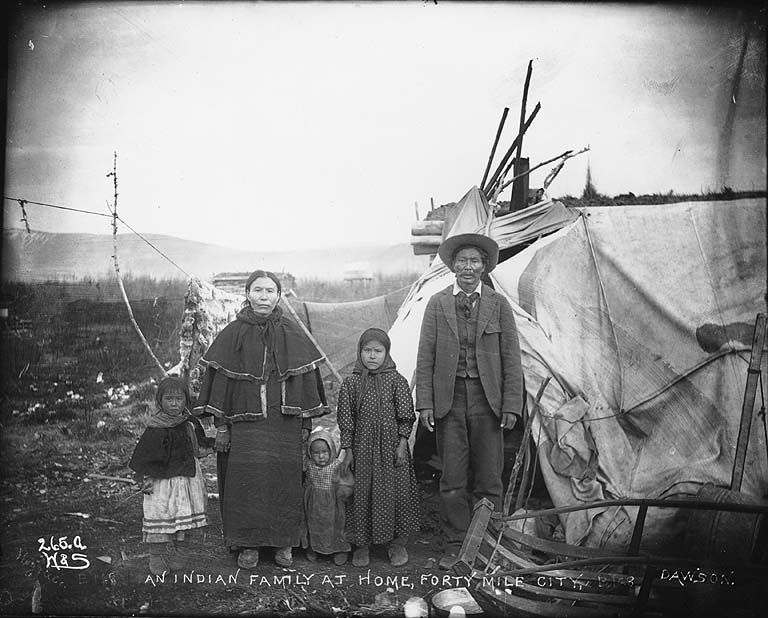
The Gwichʼin culture is intimately tied to the land and its animals, particularly the Porcupine caribou herd, which they call vadzaih. This relationship is encapsulated in the saying, 'We are the caribou people,' as the caribou provides food, clothing, tools, and spiritual meaning, with elders identifying at least 150 descriptive Gwichʼin names for caribou bones, organs, and tissues. Traditional crafting includes the making of snowshoes, birchbark canoes, two-way sleds, and highly regarded caribou-skin clothing adorned with ornate beadwork and porcupine quillwork embroidery. Drums were made of caribou hide, soap was made from boiled poplar tree ashes mixed with caribou fat, and caribou fur skins were placed on top of spruce branches as bedding and flooring. While many families still maintain seasonal hunting and fishing camps, the modern economy blends traditional subsistence activities like hunting caribou, moose, and fishing with seasonal wage employment. The Gwichʼin have a detailed ethnobotanical knowledge, documented in the 2002 book 'Gwichʼin Ethnobotany,' which describes dozens of plants used for food, medicine, shelter and tools, such as black spruce and white spruce (Ts’iivii), whose boiled cones and branches were used to treat colds. Other important aspects of material culture include traditional face tattoos, known as Yidįįłtoo among the Hän Gwich’in, and the continued production of caribou-skin overalls from white tanned hide. There is a stable population of woodland caribou throughout a large portion of the Gwichʼin Settlement Area, which are also harvested. The Gwichʼin prefer to hunt Porcupine caribou or the barren-ground Blue Nose herd, which travel in large herds, when they are available.
- Crafting of snowshoes, birchbark canoes, and the two-way sled.
- Beadwork and porcupine quillwork embroidery on caribou-skin clothing.
- Making traditional caribou-skin tents, overalls, and drums.
- Traditional face tattoos (Yidįįłtoo).
- Use of black spruce and white spruce for food, medicine, shelter, fuel, and tools.
- Creation of soap from boiled poplar ashes mixed with caribou fat.
- Harvesting of Porcupine caribou, barren-ground Blue Nose herd, and woodland caribou.
- Use of fish and other wild meats to supplement the diet.
- Caribou are an integral part of First Nations and Inuit oral histories and legends.
History of Contact, Christianity, and Cultural Change
The Gwichʼin first encountered European fur traders in the 1870s, which began a shift from a nomadic lifestyle to more settled living around trading posts that later became permanent communities. More sustained contact came with the Alaskan gold rush of the 1890s, particularly around Fort Yukon, which now has a significant non-Indigenous population. The introduction of Christianity in the 1840s by Anglican and Catholic missionaries led to widespread conversion, with these two sects remaining dominant today and producing notable Indigenous deacons like William Loola and Albert Tritt. Notable missionary figures include Archdeacon Hudson Stuck, William West Kirkby, and Robert McDonald, who contributed to the translation of the Takudh Bible, a complete translation of the King James Bible into Gwichʼin using a century-old orthography that is now hard to read. In the 1960s, linguist Richard Mueller designed a new, more accurate orthography that has become the standard for writing the language. The integration of Christianity is exemplified by figures like the Reverend Traditional Chief Trimble Gilbert of Arctic Village, who is both an Episcopal priest and the Second Traditional Chief of all Athabascan tribes in Interior Alaska through the Tanana Chiefs Conference. On 4 April 1975, Canada Post issued two stamps in the 'Indians of the Subarctic' series featuring the Gwichʼin, one titled 'Ceremonial Dress' and the other 'Dance of the Kutcha-Kutchin,' based on paintings by Lewis Parker and Alexander Hunter Murray respectively. The 8¢ stamps are perforated 12.5 and 13.5 and were printed by Ashton-Potter Limited and the Canadian Bank Note Company.
Land Claims, Self-Government, and Modern Governance
A major milestone in modern Gwichʼin history was the signing of the Gwich'in Comprehensive Land Claim Agreement (GCLCA) with the Government of Canada on April 22, 1992, which covers the Gwichʼin Settlement Region in the Northwest Territories. Building on this, the Gwichʼin have been actively negotiating a Gwich'in Government Agreement to implement their inherent right to self-government, as provided for in the GCLCA. The negotiating parties include the Gwich'in Tribal Council and its four community councils, Ehdiitat (Aklavik), Gwichya (Tsiigehtchic), Tetl’it (Fort McPherson), and Nihtat (Inuvik), along with the governments of Canada and the Northwest Territories. This agreement aims to establish a Gwichʼin Government with law-making powers over matters internal and integral to their people. In September 2019, the parties signed an Amending Agreement to the Process and Schedule Agreement, which temporarily removed the Nihtat Gwich’in Council of Inuvik from the negotiations. In Yukon, the Vuntut Gwitchin First Nation in Old Crow was the first Indigenous group in the territory to complete land claims and self-government agreements, and in 2024 the Supreme Court of Canada issued a decision in the case Dickson v. Vuntut Gwitchin First Nation, addressing constitutional questions involving this self-governing nation. Bobbi Jo Greenland Morgan is the head of the Gwichʼin Tribal Council.
- 1992: Signing of the Gwich'in Comprehensive Land Claim Agreement.
- Ongoing: Negotiations for a Regional Gwich'in Government Agreement.
- 2019: Signing of the Gwich’in Self-Government Negotiations Amending Agreement.
- 2024: Supreme Court of Canada decision in Dickson v. Vuntut Gwitchin First Nation.
- 2026: Scheduled 34th Gwich'in Annual General Assembly in Fort McPherson.
- Regular Biennial Gwich'in Gathering.
- Gwich'in Council International represents the nation across borders.
- Gwich'in Renewable Resource Board manages wildlife and habitat.
- Gwich'in Steering Committee advocates for protection of the Arctic National Wildlife Refuge.
Contemporary Advocacy, Environmental Stewardship, and Cultural Preservation
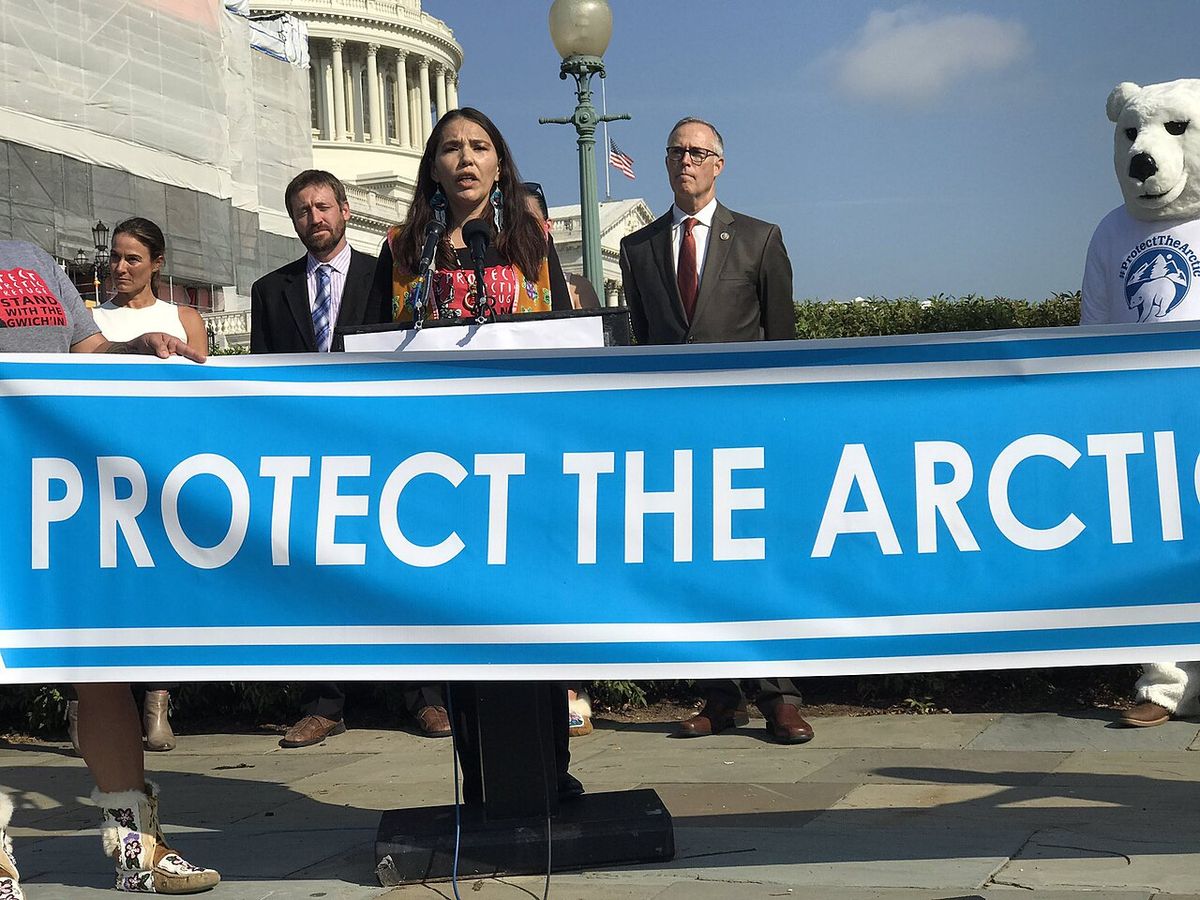
The Gwichʼin are internationally known for their steadfast advocacy to protect the Arctic National Wildlife Refuge (ANWR) coastal plain in Alaska, the primary calving grounds of the Porcupine caribou herd. They argue that oil drilling and development in this area would threaten the caribou population and, by extension, their culture and food security, leading to decades of protest and lobbying against proposed U.S. lease sales. Environment Canada formally expressed concerns in a letter to the U.S. Bureau of Land Management about potential transboundary impacts, aligning with the Gwichʼin position and international agreements to protect the herd. The Gwichʼin have also actively protested the development of oil in the Yukon Flats National Wildlife Refuge and a proposed land trade involving the U.S. National Wildlife Refuge System and Doyon, Limited. Concurrently, they are deeply engaged in cultural preservation through institutions like the Gwich'in Social and Cultural Institute and the Gwich'in Language Centre, working to revitalize their language and document traditional knowledge in projects like an interactive online Atlas of Gwich’in place names. The Gwich'in Social and Cultural Institute, in collaboration with the Aurora Research Institute and Parks Canada, published the comprehensive 'Gwichʼin Ethnobotany' in 2002, which details the use of trees, shrubs, berry plants, vascular plants, mosses, lichens, and fungi for food, medicine, shelter, and tools. The Gwichʼin are featured in documentaries such as 'Arctic Son,' 'Oil on Ice,' and 'Being Caribou.'
Population Distribution and Community Details
The Gwichʼin population is distributed across an international border, with significant communities in Canada's Northwest Territories and Yukon, and in Alaska, where they are part of the Alaska Native Claims Settlement Act enacted in 1971. Precise numbers are difficult to ascertain, but estimates suggest a total population of over 6,000. The 2021 Canadian census recorded 3,170 people claiming Gwichʼin ancestry. In the Northwest Territories, the four main communities within the Gwichʼin Settlement Area are Fort McPherson, Tsiigehtchic, Aklavik, and Inuvik. The Vuntut Gwitchin First Nation in Old Crow, Yukon, reported about 600 members in 2024. Alaskan communities include Arctic Village, Venetie, Fort Yukon, Birch Creek, Chalkyitsik, Circle, Stevens Village, Canyon Village, Christian, and Beaver. Residents of Arctic Village and Venetie opted for title to their pre-existing reservation under the Alaska Native Claims Settlement Act. The Gwichʼin economy consists mostly of hunting, fishing, and seasonal wage-paying employment.
| Region / Jurisdiction | Key Communities and Councils | Approximate Gwichʼin Population or Membership | Governing Note |
|---|---|---|---|
| Northwest Territories, Canada | Fort McPherson (Tetlit Gwichʼin), Tsiigehtchic (Gwichyaa), Aklavik (Ehdiitat), Inuvik (Nihtat) | Part of over 6,000 total | Gwich'in Comprehensive Land Claim Agreement (1992), negotiating Regional Government Agreement. |
| Yukon, Canada | Old Crow (Vuntut Gwitchin First Nation) | ~600 members (2024) | First Yukon First Nation with land claims and self-government agreements. |
| Alaska, United States | Arctic Village, Venetie, Fort Yukon, Birch Creek, Chalkyitsik, Circle, Stevens Village, Canyon Village, Christian, Beaver | Part of over 6,000 total | Under Alaska Native Claims Settlement Act (1971). Arctic Village & Venetie have reservation title. |
Questions about Gwichʼin
Why is the caribou so important to Gwichʼin culture?
The Porcupine caribou herd is a keystone subsistence species and cultural symbol for the Gwichʼin, central to their diet, clothing, tools, stories, and spiritual identity. As expressed by elder Sarah James, 'We are the caribou people. Caribou are not just what we eat. They are who we are.' Their creation story tells that the Gwichʼin and caribou separated from a single entity, and they have an encyclopedic knowledge of caribou anatomy with over 150 descriptive names. The potential disruption of the caribou's calving grounds in the Arctic National Wildlife Refuge is a major contemporary concern for the nation. Caribou are also an integral part of First Nations and Inuit oral histories and legends.
How many Gwichʼin people are there and where do they live?
Over 6,000 Gwichʼin live in 15 small communities in northern Alaska, the Yukon Territory, and the Northwest Territories of Canada, mostly north of the Arctic Circle. In Canada, major communities include Aklavik, Fort McPherson, Inuvik, Tsiigehtchic, and Old Crow. In Alaska, communities include Arctic Village, Fort Yukon, Venetie, Birch Creek, Chalkyitsik, Circle, Stevens Village, Canyon Village, Christian, and Beaver. They are one of the most northerly Indigenous peoples on the continent, living at the northwestern limits of the boreal forest.
Is the Gwichʼin language endangered?
Yes, the Gwichʼin language is severely endangered. According to UNESCO, there are fewer than 150 fluent speakers in Alaska and another 250 in northwest Canada. The Alaska Native Language Center estimates approximately 300 Alaskan Gwichʼin speak their language. The language has two main dialects, eastern and western, delineated roughly at the United States-Canada border. Innovative language revitalization projects are underway, such as one involving Gwichʼin elder Kenneth Frank and linguists, to document the language and enhance the writing and translation skills of younger speakers, often focusing on traditional knowledge like terms for caribou anatomy.
What is the Gwichʼin Comprehensive Land Claim Agreement?
The Gwichʼin of the Northwest Territories signed a comprehensive land claim agreement with Canada in 1992. This agreement is a foundational document for land ownership, resource management, and self determination in the Gwichʼin Settlement Region. The Gwichʼin are currently negotiating a Gwich'in Government Agreement to implement their inherent right to self government, which would establish a Gwichʼin Government with law-making powers. In the Yukon, the Vuntut Gwitchin were the first Indigenous group to finish negotiations for land claims and self government agreements, with their legislation coming into effect.
What are the Gwichʼin doing to protect the Porcupine caribou herd?
The Gwichʼin are very active in protesting and lobbying against oil drilling in the Arctic National Wildlife Refuge (ANWR), the calving ground of the Porcupine caribou herd. They fear drilling will deplete the herd, which is a keystone subsistence species central to their culture and survival. Their advocacy includes international outreach through the Gwich'in Steering Committee, with the Canadian government expressing formal concerns to the United States about potential transboundary impacts. For similar reasons, they have actively protested oil development in the Yukon Flats National Wildlife Refuge and a proposed land trade involving the U.S. National Wildlife Refuge System.
Sources and further reading
- Gwichʼin (Wikipedia)
- The Gwich'in (gwichincouncil.com)
- About the Gwich'in (gwichin.ca)
- Gwich'in | Language and Linguistics | Research Starters (ebsco.com)
- Gwich'in (Regional) | Executive and Indigenous Affairs (eia.gov.nt.ca)
Checked by the Nosy Mag desk. Last updated 2026-10-27.