Daylight saving time in Canada
Daylight saving time (DST) is the practice of advancing clocks by one hour during warmer months to extend evening daylight. In Canada, the observance and rules of DST are a provincial and territorial responsibility, leading to a complex patchwork of time observance across the country. Historically synchronized with the United States for economic reasons, recent years have seen a significant shift, with several western jurisdictions moving to adopt permanent daylight time and abolish biannual clock changes. This evolving situation directly impacts the daily routines, health, and business interactions of millions of Canadians.
Historical Development and Continental Synchronization
The history of daylight saving time in Canada is marked by local innovation followed by continental synchronization. The world's first known municipal enactment of DST occurred in Port Arthur, Ontario, on July 1, 1908. Before a national framework existed, several other Canadian cities adopted the practice by local ordinance in the early 20th century, creating a patchwork of local times. Regina, Saskatchewan, began using DST on April 23, 1914, followed by Brandon and Winnipeg, Manitoba, on April 24, 1916, and Halifax, Nova Scotia, on May 1, 1916. Hamilton, Ontario, enacted it on June 4, 1916. St. John's, Newfoundland, also used DST before 1918, though Newfoundland was not yet part of Canada. Germany became the first country to adopt DST nationally on April 30, 1916, during the First World War. For decades after, Canadian time observance remained a largely local and inconsistent matter. A major shift occurred in 1966 when the United States Congress passed the Uniform Time Act, standardizing DST periods across that country. Canada soon followed suit, aligning its DST schedule closely with the U.S. to maintain consistent economic and social ties, a practice that has defined Canadian time policy ever since. This alignment was further cemented in 1987 when Canada matched a U.S. extension of DST to the first Sunday in April, having already moved the end date to November in 1986. The synchronization process repeated between 2005 and 2007 following the U.S. Energy Policy Act of 2005, which added parts of March and November to the DST period starting in 2007. Every DST-observing Canadian province and territory except Saskatchewan adopted these new transition dates, ensuring Canada and the U.S. remained synchronized.
The Modern Shift to Permanent Daylight Time
Beginning in the late 2010s, a movement to end the practice of changing clocks twice a year gained significant momentum across Canada, driven by public sentiment citing health concerns, safety, and lifestyle disruptions. Saskatchewan has effectively observed a form of permanent daylight time since 1966 by remaining on Central Standard Time year-round. The Saskatchewan Time Act of 1966 designated Central Standard Time for eastern Saskatchewan and allowed western parts to use Mountain Standard Time, though by 1972 most western regions had switched to CST. The exception was Lloydminster, a city bisected by the Alberta border, which kept in sync with Alberta until Alberta's own policy change. Yukon made the official change in 2020, opting not to 'fall back' in November and remaining on UTC−7 year-round, which it calls Yukon Standard Time. The most significant wave of change occurred in 2026, fundamentally altering time observance in western Canada. British Columbia, after passing enabling legislation in 2019 following a massive public engagement, enacted permanent Pacific Daylight Time (UTC−7) starting with the spring forward on March 8, 2026. Alberta, following a 2026 public consultation that formally offered permanent standard time as an option, adopted permanent Mountain Daylight Time (UTC−6) in April 2026, a move criticized by some chronobiologists for misaligning with solar noon. The Northwest Territories passed legislation in 2021 and, after a 2022 consultation, announced in 2026 it would adopt UTC−6 year-round starting August 21, 2026, to stay aligned with Alberta. Manitoba announced in September 2026 it would stay on permanent Central Daylight Time (UTC-5). These changes mean that by late 2026, much of western and central Canada no longer changes its clocks.
By 2026, several key Canadian jurisdictions had adopted permanent daylight saving time. British Columbia enacted its 2019 bill in 2026 to observe Pacific Daylight Time, or UTC−7, year-round. In the same year, Alberta adopted permanent Mountain Daylight Time, which is UTC−6 year-round. Also in 2026, the Northwest Territories adopted UTC−6 year-round, while Manitoba adopted UTC−5 year round. These regions joined Saskatchewan and Yukon, which had made similar changes in 1966 and 2020, respectively.
- British Columbia (Pacific Daylight Time, UTC−7, effective March 8, 2026)
- Alberta (Mountain Daylight Time, UTC−6, effective April 2026)
- Saskatchewan (Central Standard Time, UTC−6, in effect since 1966)
- Manitoba (Central Daylight Time, UTC-5, effective September 2026)
- Northwest Territories (Mountain Daylight Time, UTC−6, effective August 21, 2026)
- Yukon (Yukon Standard Time, UTC−7, in effect since 2020)
Governments cited several primary motivations for adopting permanent daylight time. These motivations included improving public health by eliminating sleep cycle disruptions and increasing evening daylight for recreation and safety. Another key motivation was reducing scheduling chaos for families and businesses. British Columbia's 2019 public engagement recorded 93 percent support for year-round DST among 223,000 participants. Support across industry and occupational groups in British Columbia exceeded 90 percent. The British Columbia government cited benefits such as reduced disruptions for shift workers and pet owners, more stable routines for parents, and an extra hour of evening light in winter.
Current Observance and Regional Exceptions
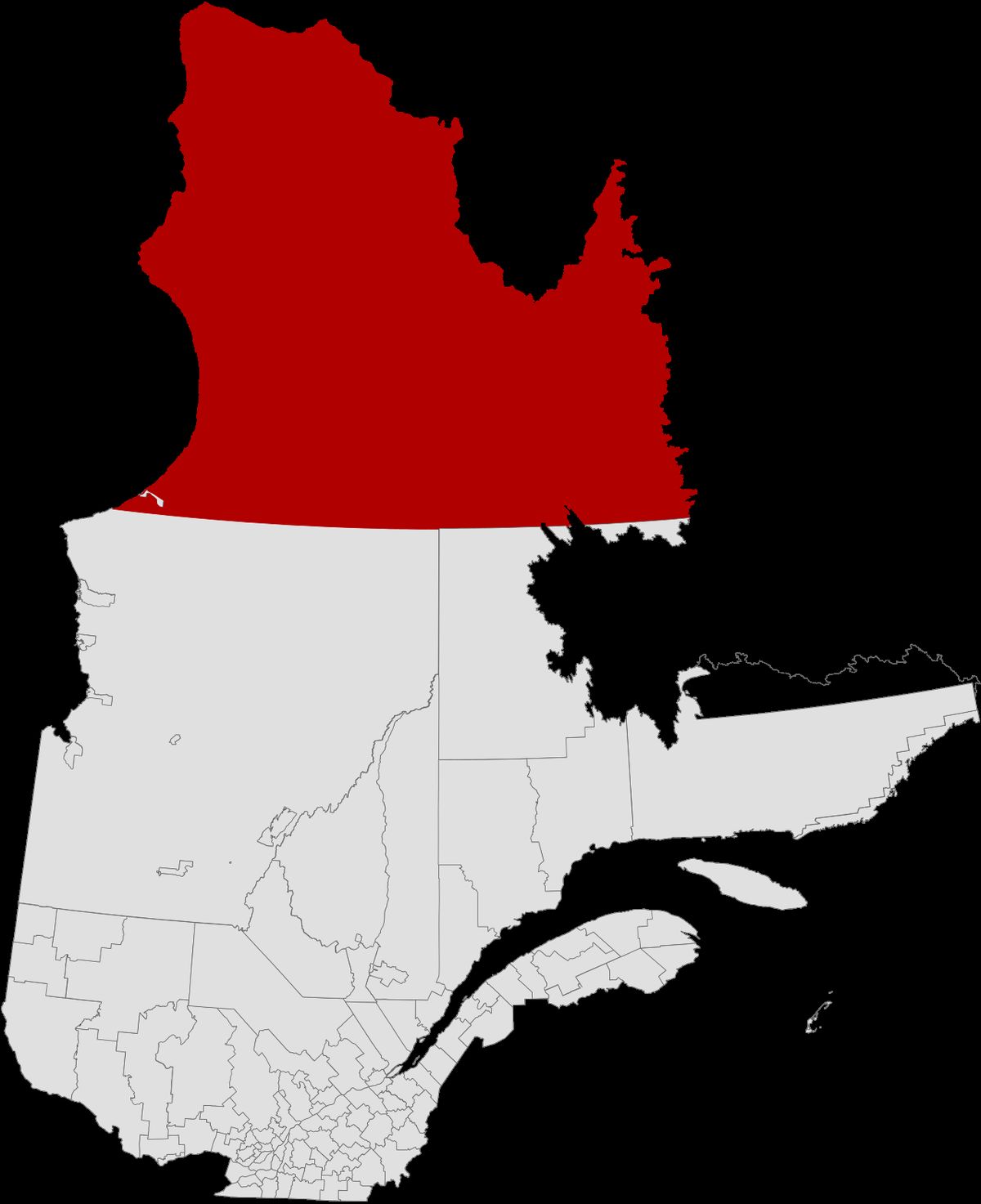
As of late 2026, Canada's time observance is divided between regions that continue seasonal clock changes and those on permanent offsets. The provinces and territories that still observe seasonal daylight saving time, beginning on the second Sunday of March and ending on the first Sunday in November, are New Brunswick, Newfoundland and Labrador, Nova Scotia, Prince Edward Island, most of Ontario, most of Quebec, and most of Nunavut. Within these regions, notable and legally defined exceptions exist, often due to geographic isolation or economic ties. In Ontario, the communities of Pickle Lake, Atikokan, and New Osnaburgh in the northwestern Central Time Zone observe Eastern Standard Time year-round. In October 2026, the Ontario government announced that remaining communities in that northwestern Central Time Zone would adopt permanent DST following consultations. In Quebec, the province's Time Act of 2006 accommodates three exceptions: the Magdalen Islands and the Listuguj Reserve observe Atlantic Time with DST, while the Le Golfe-du-Saint-Laurent Regional County Municipality remains on Atlantic Standard Time all year. Montreal was one of the early cities to use DST by local ordinance before 1918. A plan for Nunavik to adopt Eastern Daylight Time year-round in March 2026 was delayed to a target of November 2027. Nunavut observes DST across its three time zones except for Southampton Island, including Coral Harbour, and the Eureka research station on Ellesmere Island, both of which remain on Eastern Standard Time year-round.
Health, Economic, and Social Considerations in the Debate
The debate over daylight saving time involves a complex interplay of health science, economics, and social preference that has informed recent policy shifts. Proponents of ending clock changes, including many chronobiologists, argue that the biannual shift disrupts circadian rhythms, leading to short-term increases in heart attacks, strokes, and workplace accidents. They also contend that permanent daylight saving time, while providing more evening light in winter, can lead to chronic misalignment with solar noon, potentially exacerbating sleep deprivation and metabolic issues over the long term. This specific concern was raised regarding Alberta's adoption of permanent Mountain Daylight Time. Economically, the primary argument for maintaining synchronization with the United States, and increasingly among neighbouring Canadian provinces, is to ensure consistent cross-border trade, transportation schedules, and media broadcasting. Socially, public opinion has strongly favoured eliminating the clock changes, with many citizens valuing the extra hour of evening daylight for outdoor activities in the winter. Business groups have expressed mixed views, with some supporting stability for scheduling and others concerned about early morning darkness in winter affecting retail, construction, and school commute safety. The evidence cited by governments moving to permanent DST includes benefits like reduced energy consumption, fewer traffic accidents linked to darker evenings, and improved mental well-being from more afternoon sunlight.
Coordination with the United States and Cross-Border Impacts
Canada's time policies have been closely tied to those of the United States for over half a century, a relationship that continues to influence Canadian decisions despite recent unilateral moves. The synchronization began in earnest after the U.S. Uniform Time Act of 1966 and has been maintained through subsequent U.S. extensions of the DST period in 1987 and 2007. This coordination is considered vital for minimizing disruptions to supply chains, financial markets, travel itineraries, and television broadcasting across the world's longest undefended border. The recent moves by Canadian provinces to adopt permanent DST have occurred despite the lack of corresponding federal action in the United States. A U.S. Senate bill to make DST permanent passed in 2022 but later died in the House of Representatives, leaving the U.S. on a seasonal change schedule. Canadian jurisdictions like British Columbia and Ontario have explicitly stated that their preference is to coordinate any permanent change with their adjacent U.S. states. Premier David Eby of B.C. expressed hope that American neighbours would soon join them. However, British Columbia, Alberta, and others proceeded in 2026 without U.S. alignment, accepting the potential for temporary time differences with American neighbours. This creates scenarios where, for example, parts of British Columbia could be on a different clock than Washington State for parts of the year, testing the long-held principle of cross-border time unity.
Detailed Time Zone Framework and Specific Exceptions
The underlying time zones in Canada provide the framework upon which daylight saving rules are applied, but official observance often differs from strict geographical placement. Canada spans six primary time zones, but provincial legislation can mandate a different standard offset. Alberta and Saskatchewan are geographically within the Mountain Time Zone, but both officially observe time equivalent to Central Standard Time year-round. Saskatchewan's Time Act of 1966 set this precedent for most of the province. The city of Lloydminster, which straddles the Alberta-Saskatchewan border, historically followed Alberta's seasonal time until Alberta's 2026 change aligned it with Saskatchewan's permanent offset. Small eastern Saskatchewan towns like Denare Beach and Creighton once unofficially observed Central Daylight Time in summer to match neighbouring Manitoba communities, a practice made moot by Manitoba's own shift to a permanent offset one hour ahead. Nunavut spans three time zones: Mountain, Central, and Eastern, and observes DST except in its far eastern and northern extremities. The following table outlines the standard time offsets, common nomenclature, and 2026 observance status for key Canadian regions, illustrating the current complexity.
| Region | Standard Time Zone | Common Official Designation | 2026 Observance Status |
|---|---|---|---|
| British Columbia (most) | Pacific (UTC−8) | Pacific Time | Permanent PDT (UTC−7) |
| Alberta | Mountain (UTC−7) | Mountain Time / "Alberta Time" | Permanent MDT (UTC−6) |
| Saskatchewan (most) | Central (UTC−6) | Central Standard Time | Permanent CST (UTC−6) |
| Manitoba | Central (UTC−6) | Central Time | Permanent CDT (UTC−5) |
| Ontario (most) | Eastern (UTC−5) | Eastern Time | Seasonal DST (UTC−4 in summer) |
| Quebec (most) | Eastern (UTC−5) | Eastern Time | Seasonal DST (UTC−4 in summer) |
| Nova Scotia | Atlantic (UTC−4) | Atlantic Time | Seasonal DST (UTC−3 in summer) |
| Northwest Territories | Mountain (UTC−7) | Mountain Time | Permanent MDT (UTC−6) |
| Yukon | Mountain (UTC−7) | Yukon Standard Time | Permanent UTC−7 |
Future Prospects and Ongoing Regional Discussions
The future of time observance in Canada likely involves further regional consolidation and ongoing debate in the remaining seasonal-DST regions, with coordination with the United States remaining a key factor. In Atlantic Canada, the premiers of New Brunswick, Newfoundland and Labrador, Prince Edward Island, and Nova Scotia discussed adopting permanent daylight time in 2022 following the U.S. Senate's initial bill passage. As of 2026, no collective action has been taken, with the premier of Nova Scotia stating such a move would only happen in conjunction with the other Atlantic provinces and likely linked to potential movement in the neighbouring New England states. In Ontario, the enacted but not-yet-proclaimed law to adopt permanent DST awaits a proclamation decision based on coordination with Quebec and New York. In northern Quebec, the Nunavik region, represented by Makivvik, announced a plan in November 2025 to adopt Eastern Daylight Time year-round beginning in March 2026, but this was subsequently delayed to a target of November 2027. The trend suggests that the map of Canadian time observance will continue to evolve, driven by public health advocacy, the formation of regional economic blocs like the western provinces, and the complex task of aligning with an inconsistent American policy. The experience of jurisdictions like Alberta, which held a referendum in 2021 followed by a different policy outcome in 2026, demonstrates that public and governmental attitudes on this issue can shift based on new consultations and changing regional dynamics.
Legal Authority and Provincial Responsibility
The constitutional and legal framework for timekeeping in Canada delegates authority exclusively to the provinces and territories, not the federal government. Under the Canadian Constitution, laws related to timekeeping are a provincial and territorial matter, which is the root cause of the diverse array of observance across the country. Each province and territory has its own legislation governing time, such as Ontario's Time Amendment Act, British Columbia's Interpretation Amendment Act, Quebec's Time Act, and Manitoba's Official Time Act. This decentralization allows one province to adopt permanent daylight time while its neighbour maintains seasonal changes, as seen with Saskatchewan and Manitoba prior to 2026. It also permits specific intra-provincial exceptions, like those in northwestern Ontario or the Le Golfe-du-Saint-Laurent region in Quebec. When provinces decide to change their time observance, they conduct their own public consultations and legislative processes, as seen in Alberta's 2026 consultation and the Northwest Territories' 2022 survey. The role of the federal government is largely limited to setting time for its own operations and for federally regulated industries, but it cannot impose a uniform national time standard on the provinces. This system ensures regional preferences can be reflected but also guarantees that achieving nationwide consistency on an issue like permanent DST requires voluntary coordination among multiple independent governments.
Questions about Daylight saving time in Canada
When does daylight saving time start and end in Canada in 2026?
In the regions of Canada that still observe seasonal clock changes, daylight saving time begins at 2 a.m. local time on the second Sunday of March, which is March 8, 2026, when clocks spring forward one hour. It ends at 2 a.m. on the first Sunday in November, which is November 1, 2026, when clocks fall back one hour. This results in a DST period of 34 weeks, or about 65 percent of the year. These dates are consistent with the schedule adopted after the 2005 U.S. Energy Policy Act and are observed in provinces like Ontario, Quebec, and the Atlantic provinces.
Which Canadian provinces no longer change their clocks twice a year?
As of 2026, several provinces and territories have abolished seasonal time changes and adopted permanent daylight time offsets. These are British Columbia (on Pacific Daylight Time, UTC−7), Alberta (on Mountain Daylight Time, UTC−6), Saskatchewan (on Central Standard Time, UTC−6, since 1966), Manitoba (on Central Daylight Time, UTC−5), Yukon (on UTC−7, since 2020), and the Northwest Territories (on UTC−6). Residents in these jurisdictions no longer adjust their clocks in March and November. Saskatchewan's permanent time has been in effect for decades, while the other western changes were implemented in 2020 and 2026.
Why did British Columbia decide to adopt permanent daylight saving time?
The British Columbia government, led by Premier David Eby, decided to adopt permanent daylight saving time starting in March 2026 based on strong public support and identified benefits. A 2019 public engagement saw 93% of 223,000 participants favour year-round DST, with support across industry groups exceeding 90%. The government cited goals of improving public health by reducing sleep disruption, simplifying life for families and businesses, and providing an extra hour of evening light during winter months. The legal change was enabled by the Interpretation Amendment Act, and the final time change occurred on March 8, 2026.
Is Ontario getting rid of daylight saving time?
Ontario has passed legislation (Bill 214, the Time Amendment Act, 2020) to establish year-round observation of daylight saving time, but the law is not yet in force. It requires a proclamation by the Lieutenant Governor, advised by the attorney general. The government has stated the change will only be implemented in coordination with the neighbouring jurisdictions of Quebec and New York State to avoid creating different time zones. As of late 2026, most of Ontario continues to observe seasonal clock changes, though the province announced in October 2026 that northwestern communities in the Central Time Zone would adopt permanent DST following consultations.
What was the result of Alberta's referendum on daylight saving time?
Alberta held a referendum on adopting permanent daylight saving time in 2021, which was narrowly defeated with 50.2% voting against and 49.8% in favour. Critics noted the ballot question did not offer the alternative of permanent standard time, which they argued skewed the framing. Despite this result, the provincial government under Premier Danielle Smith conducted a new public consultation in 2026 that formally included permanent standard time as an option. The government then proceeded to adopt permanent Mountain Daylight Time (UTC−6) year-round in April 2026, characterizing it as 'Alberta Time'.
How does Canada's time policy relate to the United States?
Canada's daylight saving time schedule has been closely synchronized with the United States since the 1960s to facilitate consistent economic and social interaction. Canadian jurisdictions have historically followed U.S. extensions to the DST period, such as in 1987 and 2007. Recent Canadian moves to permanent DST, however, have occurred ahead of similar federal action in the U.S., where a bill to make DST permanent stalled in Congress. This has created situations where some Canadian provinces, like British Columbia, are on a different time schedule than neighbouring U.S. states, at least temporarily, testing the long-standing principle of cross-border time unity.
Sources and further reading
- Daylight saving time in Canada (Wikipedia)
- Adopting permanent daylight saving time, BC Gov News (news.gov.bc.ca)
Checked by the Nosy Mag desk. Last updated 2026-10-24.