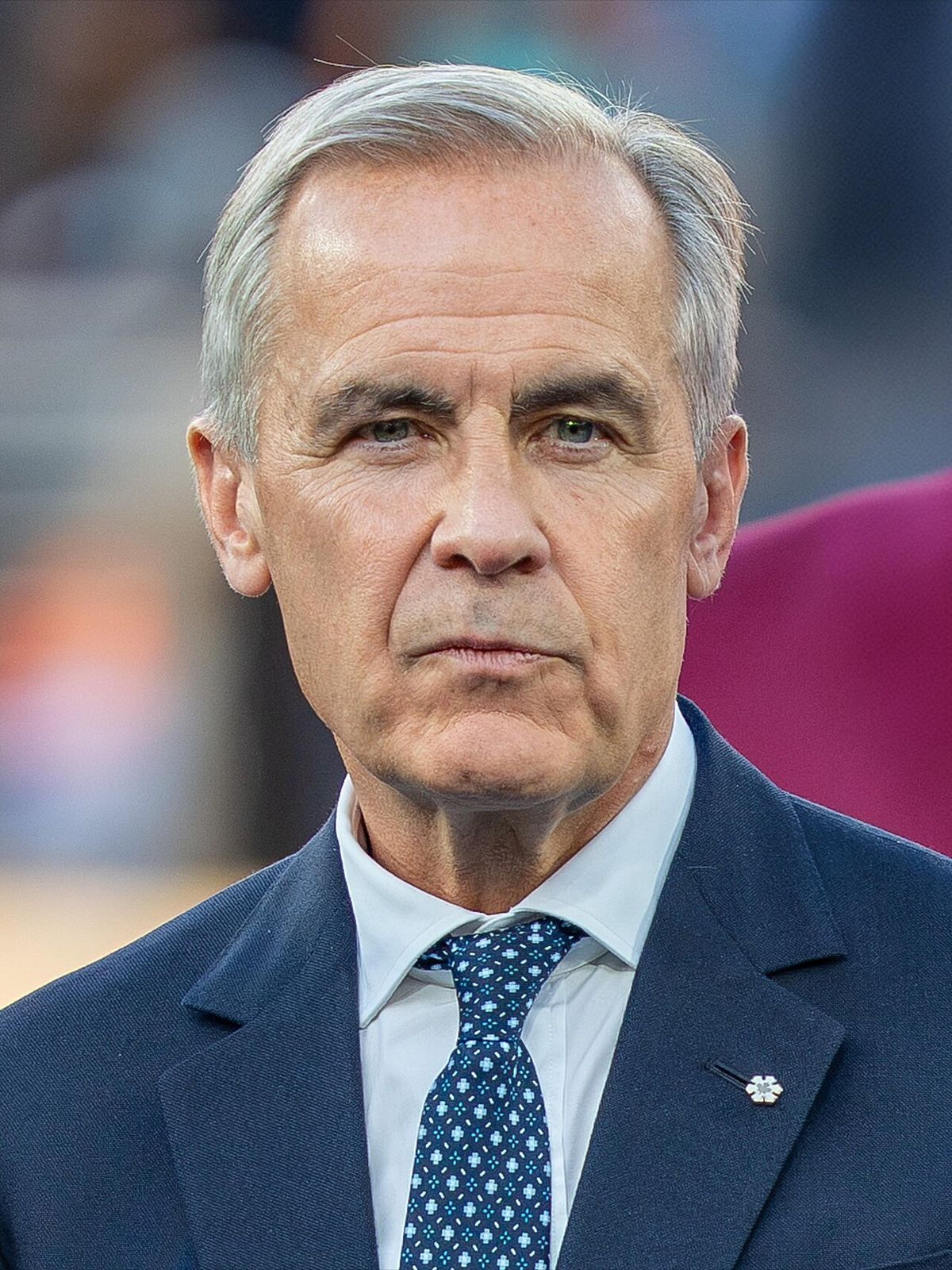
Ernie Eves
Ernest Larry 'Ernie' Eves is a Canadian lawyer and former Progressive Conservative politician who served as the 23rd premier of Ontario from 2002 to 2003. His tenure, which followed the resignation of Mike Harris, was brief and ended with a decisive electoral defeat to Dalton McGuinty's Liberals. Eves's political career spanned over two decades, marked by significant roles as deputy premier and minister of finance during the Harris government's era of tax cuts and fiscal restraint. His legacy is intertwined with major policy initiatives and a deep, lifelong connection to the Parry Sound region.
Early life and entry into politics
Ernie Eves was born in 1946 in Windsor, Ontario, to a working-class family, with his father Harry Lewis Eves employed as a factory worker. His mother was Julie Hawrelechko, and his maternal grandparents were of Ukrainian heritage. When he was a teenager, his family relocated to the town of Parry Sound in central Ontario, where he completed high school and developed a lasting affinity for the community. Eves pursued higher education at Osgoode Hall Law School, being called to the bar in 1972. He began his legal career in Parry Sound as a partner in the firm Green & Eves, mentored by local lawyer William Green, whose dedication to community service deeply influenced Eves. His early community involvement was extensive, including founding the local Big Brothers Association and serving as president of the Parry Sound Golf Club, Curling Club, and Kinsmen Club, for which he received a National Presidents Award for work with children with cystic fibrosis. He also served as deputy director of Legal Aid for the region.
Eves's entry into politics was encouraged by his mentor, Bill Green, who, despite being a Liberal, suggested he assist local Conservative candidate Gordon Aiken. Eves subsequently became president of the local Conservative Party Association. In 1981, when the sitting MPP Lorne Maeck retired, Eves ran for the provincial legislature in the riding of Parry Sound. He won the election by a margin of only six votes over Liberal candidate Richard Thomas, earning him the enduring nickname 'Landslide Ernie.' This victory began a twenty-year tenure representing the riding, during which he became a steadfast advocate for northern Ontario interests. He backed Mike Harris's bid for the party leadership in 1990.
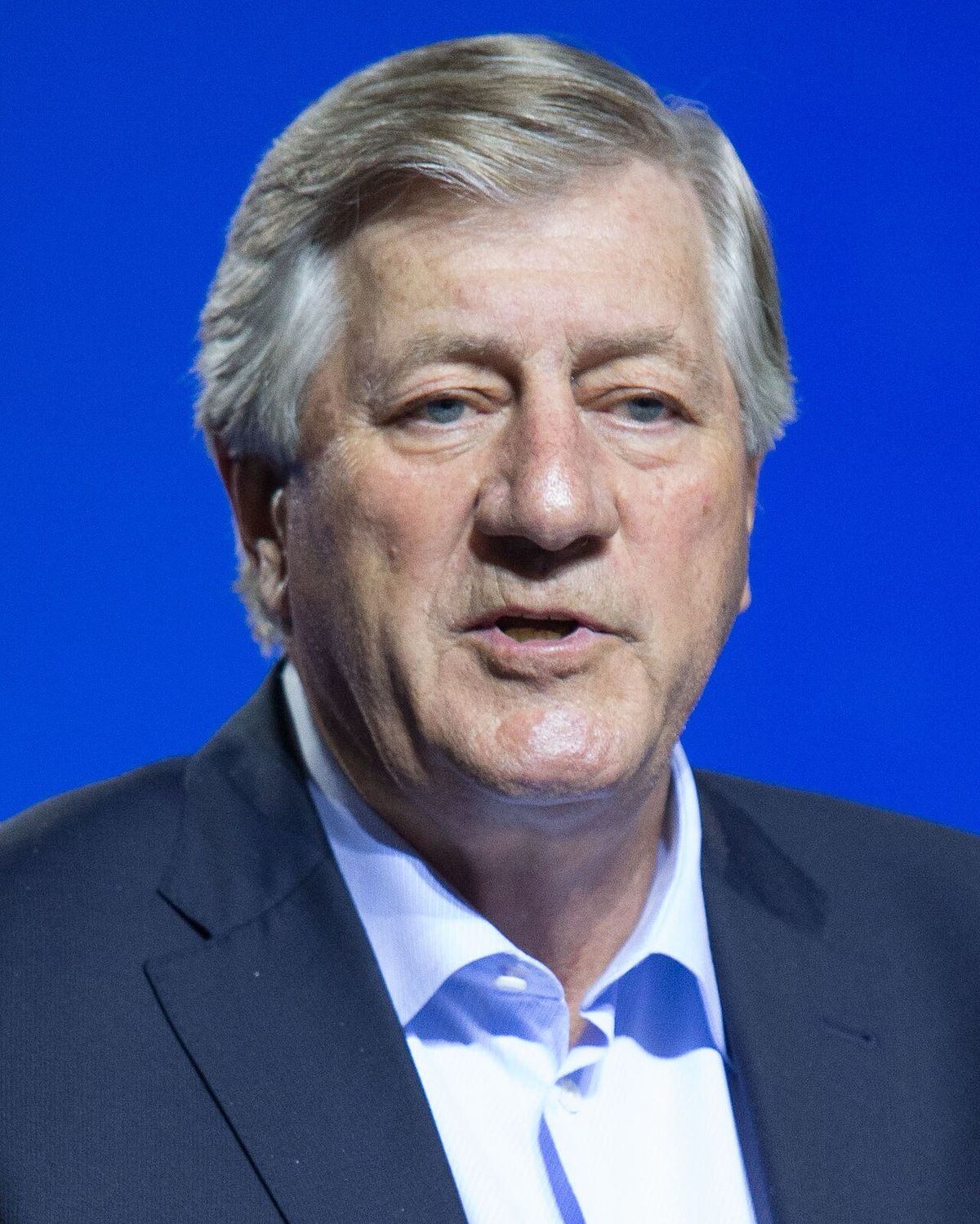
Early political career and opposition years
Eves entered the legislature as a backbencher but quickly gained experience as a parliamentary assistant. His first cabinet appointment came in 1985 under the short-lived government of Premier Frank Miller. He served as Provincial Secretary for Resources Development from February 8 to March 22, 1985, then as Minister of Skills Development and minister responsible for Native Affairs from March 22 to May 17, 1985, and finally as Minister of Community and Social Services from May 17 until the government's defeat on June 26, 1985. In his role as minister responsible for Native Affairs, Eves made a significant policy declaration by proclaiming Ontario's favour of Indigenous self-government, a historic step at the time. As Minister of Community and Social Services, he led reforms to social services and helped establish some of Ontario's first homes for abused women and children. The Miller government fell on a motion of no confidence after just a few months, returning Eves to the opposition benches. He remained there for a decade, through the governments of David Peterson and Bob Rae, until the Progressive Conservatives returned to power in 1995 under his close friend and ally, Mike Harris. During his opposition years, he was a member of the Standing Committee on Public Accounts and the Standing Committee on Resources Development.
Deputy premier and minister of finance under Mike Harris
Following the 1995 election victory on the 'Common Sense Revolution' platform, Premier Mike Harris appointed Ernie Eves as his deputy premier and minister of finance, making him the government's second-most powerful figure. In this role, Eves was the chief architect and implementer of the government's ambitious fiscal agenda, which centred on tax cuts, spending reductions, and deficit elimination. He supervised a 30 percent cut to provincial income taxes and a 22 percent reduction in welfare rates, a move he later admitted kept him up at night, which resulted in approximately 500,000 people being removed from the Ontario welfare rolls. The government also enacted cuts to education and health services, arguing they were necessary to tackle the provincial deficit. Reports indicated Eves was conflicted about the risks of adding $22 billion to the provincial debt by cutting taxes before balancing the budget.
Eves's tenure in finance was also marked by major privatization initiatives. He oversaw the long-term lease of the Bruce Nuclear Generating Station to British Energy and the controversial 99-year lease of Highway 407 to a consortium of primarily foreign investors. After an initial period of restraint, his later budgets increased spending on health care, and he ultimately succeeded in balancing the provincial budget early in the government's second term. Despite their close partnership, Eves and Harris had contrasting public images. While Harris cultivated a grassroots persona, Eves was known for his meticulous, expensive style, with court filings later revealing he spent $25,000 annually on clothing and $5,000 a year on jewelry and cufflinks, reinforcing a perception of him as a 'slick' politician.
His personal life during this period was marked by deep tragedy and change. His son, Justin, was killed in a traffic accident in Parry Sound. Soon after, his long-standing marriage ended, and he began a relationship with fellow cabinet minister Isabel Bassett. Citing these personal pressures, Eves resigned as finance minister and from the legislature on February 8, 2001, to take positions in the private sector as vice-chair of the investment bank Credit Suisse First Boston and a senior partner at a Toronto law firm. He was replaced as MPP for Parry Sound, Muskoka by Norm Miller, son of former Premier Frank Miller, in a March 2001 by-election.
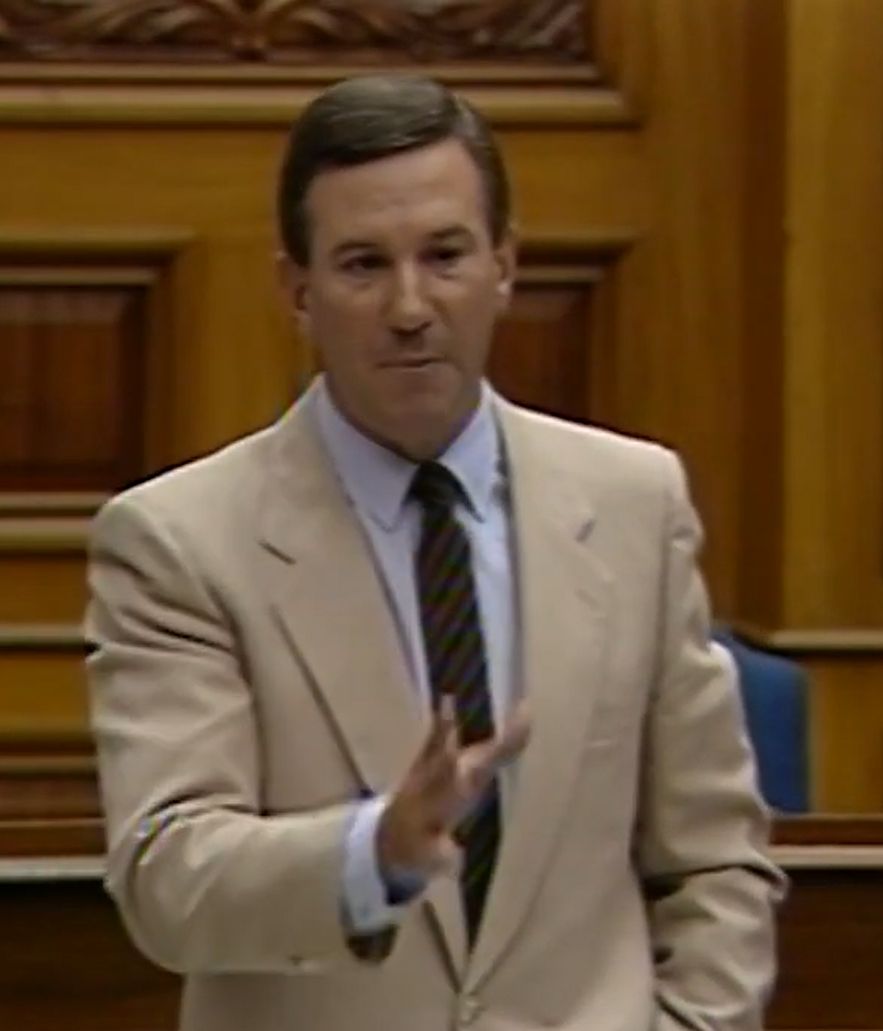
Return to politics and ascent to premier
Eves's retirement from public life was brief. When Mike Harris announced his resignation as party leader in 2001, Eves quickly entered the 2002 Ontario Progressive Conservative leadership race. He immediately became the front-runner, garnering support from most of the party's caucus and establishment. His main challenger was his successor as finance minister, Jim Flaherty, who ran on a hard-right platform and launched scathing personal attacks, labelling Eves a 'serial waffler' and a 'pale, pink imitation of Dalton McGuinty.' Eves won the leadership on the second ballot on March 23, 2002, and was subsequently sworn in as Ontario's 23rd premier on April 15, 2002. To regain a seat in the legislature, he ran in a by-election in the central Ontario riding of Dufferin, Peel, Wellington, Grey, which he won handily on May 2, 2002. He was the first premier in Ontario history to take office without holding a seat at the time of his selection as party leader.
Premiership and the 2003 election defeat
Eves's premiership, lasting just over 18 months, was dominated by a series of controversies and crises that eroded public confidence. A significant early problem was the energy file. Cost overruns at nuclear reactors, a hot summer, and problems in market regulation drove electricity prices up significantly, particularly in northern Ontario. The government was forced to cancel its privatization plans and cap hydro rates below cost, a subsidy that cost taxpayers hundreds of millions. In late 2002, the government was embarrassed by revelations that Mike Harris had arranged a secret tax break for professional sports teams on his last day in office, a move that caught Premier Eves unaware. Further scandals followed, including the forced resignation of Energy Minister Chris Stockwell in June 2003 after an ethics violation concerning a family trip to Europe paid for by a regulated company.
The government's most damaging public relations misstep was the so-called 'Magna Budget' of March 2003. Eves's advisors arranged for Finance Minister Janet Ecker to deliver the budget at a televised press conference at the headquarters of auto parts manufacturer Magna International, rather than in the legislature. The move was widely condemned as a stunt that flouted parliamentary tradition and avoided legislative scrutiny. The legislature's Speaker, PC member Gary Carr, ruled the action was prima facie contempt of the legislature, though the PC majority later overturned his ruling. The budget itself was criticized for assumptions that suggested a hidden deficit of around $2 billion and was intended to launch an election campaign but was so poorly received it delayed the vote. In June 2003, Eves appointed judge Archie Campbell to chair the SARS Commission inquiry into failures of the health system related to the SARS outbreak in Toronto.
That summer, the Northeast blackout of 2003 exposed the government's failure to invest in new power generation, forcing Ontario to buy expensive electricity from Quebec. Eves made daily television appeals for conservation during the crisis, which provided a temporary boost in his personal polling numbers. He called an election for October 2, 2003. The PC campaign, dubbed 'The Road Ahead,' was marred by negative tactics, including a staffer's press release that referred to Liberal leader Dalton McGuinty as an 'evil reptilian kitten-eater from another planet.' The Liberals ran a disciplined 'Choose Change' campaign that capitalized on voter fatigue and frustration with public services. On election day, the Liberals won a landslide majority of 72 seats in the 103-seat legislature, while the Progressive Conservatives were reduced to just 24 seats, a loss of 35 from their previous total. Eves won his own seat by the largest margin of any PC candidate.
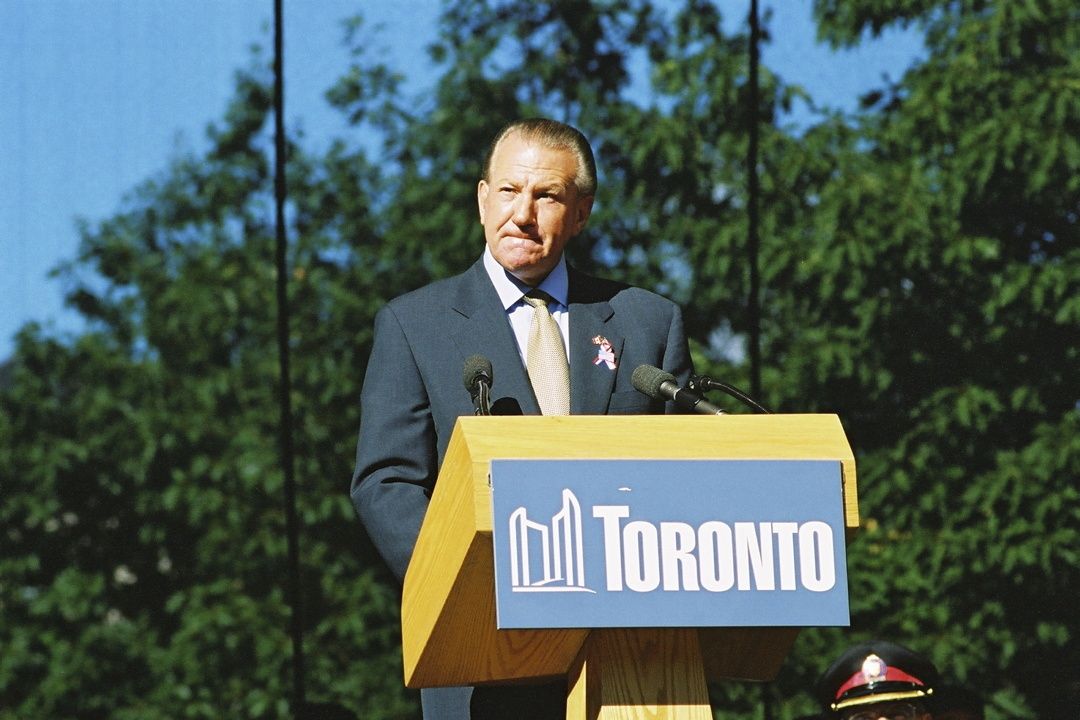
Post-premiership and later career
After the defeat, Eves led the Official Opposition for a brief period, attacking the new McGuinty government's first budget, which introduced an Ontario Health Premium and broke a campaign promise not to raise taxes. The budget also eliminated health services such as eye examinations and physical therapy. Despite being a lame-duck leader, polls showed him leading in popularity during this time. In early 2004, he announced his intention to resign as party leader before the fall legislative session. The subsequent leadership contest in September 2004 was won by John Tory, a fellow Red Tory. Eves remained officially neutral in the race.
Eves's final departure from the legislature was protracted. Widely expected to resign his seat to allow John Tory to enter the legislature via a by-election, Eves delayed his resignation after news of it was leaked by Tory's office. Reports suggested he was seeking a patronage appointment to the Canadian Senate or a public board. Eves finally resigned his seat on January 31, 2005, and returned to the private sector. In 2007, Ernie Eves was appointed as Executive Chairman of Jacob & Company Securities Inc. (later Jacob Securities Inc.), a Toronto-based boutique investment bank specializing in renewable energy and clean technology. He served in that position until July 2012. In 2015, Eves became chairman of Timeless Herbal Care, a medical cannabis firm in Jamaica.
Key political achievements and advocacy
Throughout his career, Ernie Eves was a determined advocate for his constituents and specific policy causes. A relentless fighter for northern Ontario, he successfully secured official northern status for the Parry Sound District, a designation that had been sought for decades and brought associated economic benefits. As a local MPP and later as a senior minister, he championed critical infrastructure projects, most notably the four-laning of Highway 69. His persistent lobbying as minister of finance ensured funding for the expansion of Highway 400, a stretch sometimes colloquially referred to as the 'Ernie Eves Highway.' Eves's policy work extended into social services and Indigenous relations, as he was a pioneer in advancing the concept of Indigenous self-government in Ontario during his time as minister responsible for Native Affairs in 1985. He also played a major role in merging local hospital boards to establish the West Parry Sound Health Centre.
Federal political involvement and affiliations
Eves's political loyalties extended to the federal arena, where he was a longstanding supporter of the Progressive Conservative Party of Canada. He backed Joe Clark from the first ballot at the party's 1976 leadership convention and remained a federal Tory supporter throughout the 1990s despite the rise of the rival Reform Party. In 1998, he endorsed Hugh Segal's bid for the federal PC leadership. His affiliation briefly shifted in 2000 when he took out a membership in the Canadian Alliance to support Tom Long's leadership campaign, but he rejoined the PCs after Stockwell Day won the Alliance leadership. During his 2002 Ontario leadership race, Eves and his supporters invited federal PC leader Joe Clark as an honorary delegate, pointedly not extending a similar invitation to Canadian Alliance leader Stephen Harper. Harper later attended the provincial PC convention in 2004 as leader of the newly formed Conservative Party of Canada.
Major policy initiatives and financial actions
Ernie Eves was appointed Deputy Premier and Minister of Finance by Premier Mike Harris after the Progressive Conservatives returned to power in 1995. As Minister of Finance, Eves supervised significant cuts to taxes and public spending. Provincial income taxes were cut by 30 percent and welfare rates were reduced by 22 percent. He also oversaw the privatization of the Bruce nuclear generating station and the 99-year lease of Highway 407. These fiscal actions defined the Harris government's approach. The tax cuts and spending reductions were justified as necessary to eliminate the provincial deficit. Eves eventually succeeded in balancing the budget early in the government's second term. Some believe Eves was responsible for restraining some of Harris's more radical initiatives during their time in office.
- A 30 percent cut to provincial personal income tax rates.
- A 22 percent reduction in welfare rates, removing approximately 500,000 people from the rolls.
- The long-term lease of the Bruce Nuclear Generating Station to British Energy.
- The 99-year lease of Highway 407 to a private, mainly foreign consortium.
- Balancing the provincial budget early in the government's second term.
- Implementing later budget increases to health care spending after initial restraint.
- Overseeing cuts to education and health services as part of deficit reduction.
Community service and honours in Parry Sound
Long before and during his political career, Ernie Eves was deeply involved in the civic life of Parry Sound. His extensive volunteer work and leadership in local organizations demonstrated a commitment to community building that predated his election to Queen's Park. His efforts were recognized with awards and left a legacy on local institutions. He was instrumental in assisting the local First Nations community and the Children's Aid Society. A highlight of his premiership was his May 2003 meeting with Ukrainian opposition leader Victor Yushchenko in Toronto, where Eves was described as a leading Canadian of Ukrainian heritage.
- Founder of the local Big Brothers Association in Parry Sound.
- President of the Parry Sound Golf Club and the Parry Sound Curling Club.
- President of the Kinsmen Club, receiving the National Presidents Award for work with cystic fibrosis.
- Deputy Director of Legal Aid for the region.
- Key advocate for community projects including the West Parry Sound Health Centre, the Stockey Centre for the Performing Arts, and the Bobby Orr Hall of Fame.
- Active in the local Conservative Party Association before his election.
Chronology of key political offices held
Ernie Eves was first elected as the MPP for Parry Sound in 1981. He served as a cabinet minister in Frank Miller's government in 1985. After years in opposition, he became Deputy Premier and Minister of Finance under Mike Harris in 1995. He served as the 23rd Premier of Ontario from 2002 to 2003 after winning the party leadership. His career in the legislature spanned 24 years, with a break in 2001.
- Member of Provincial Parliament for Parry Sound (October 22, 1981 to February 8, 2001).
- Provincial Secretary for Resources Development (February 8 to March 22, 1985).
- Minister of Skills Development and minister responsible for Native Affairs (March 22 to May 17, 1985).
- Minister of Community and Social Services (May 17 to June 26, 1985).
- Deputy Premier of Ontario (June 26, 1995 to February 8, 2001).
- Minister of Finance (June 26, 1995 to February 8, 2001).
- Leader of the Ontario Progressive Conservative Party (March 23, 2002 to September 18, 2004).
- 23rd Premier of Ontario (April 15, 2002 to October 23, 2003).
- Member of Provincial Parliament for Dufferin, Peel, Wellington, Grey (May 2, 2002 to January 31, 2005).
Questions about Ernie Eves
How long was Ernie Eves premier of Ontario?
Ernie Eves served as premier of Ontario for approximately 18 months. He was sworn in as the 23rd premier on April 15, 2002, following his victory in the Progressive Conservative leadership race. His tenure ended after the October 2, 2003, provincial election. He officially remained premier until the new government was sworn in on October 23, 2003, making his total time in office about one year and six months.
What was Ernie Eves's role in the Mike Harris government?
In the Mike Harris government elected in 1995, Ernie Eves held the two most senior positions after the premier. He was appointed deputy premier and minister of finance, making him the chief architect of the government's 'Common Sense Revolution' fiscal policy. In this role, he implemented a 30 percent income tax cut, a 22 percent welfare rate reduction, and oversaw the privatization leases of Highway 407 and the Bruce Nuclear Generating Station. He balanced the provincial budget early in the government's second term before resigning in 2001.
What was the 'Magna Budget' scandal?
The 'Magna Budget' was a major public relations disaster for the Eves government in March 2003. Instead of presenting the provincial budget in the legislature as per parliamentary tradition, Finance Minister Janet Ecker delivered it at a televised press conference at the headquarters of Magna International. The move was widely condemned as a stunt to avoid legislative scrutiny. The Speaker of the legislature ruled it a contempt of parliament. The budget included assumptions suggesting a hidden $2 billion deficit and was so poorly received it delayed the election call.
What did Ernie Eves do after leaving politics?
After resigning from the legislature in 2005, Eves returned to the private sector. He joined the boutique investment bank Jacob Securities Inc. in 2007, where he served as executive chairman until July 2012. In 2015, he became chairman of Timeless Herbal Care, a medical cannabis company based in Jamaica. He had previously worked as vice-chair of Credit Suisse First Boston and as a senior partner at a Toronto law firm after his first resignation in 2001.
What were Ernie Eves's key achievements for Parry Sound?
Eves was a relentless advocate for his home region of Parry Sound. His most significant achievements include securing official 'Northern Ontario' status for the Parry Sound District, which unlocked economic benefits. He championed and secured funding for the four-laning of Highways 69 and 400. He played a major role in merging local hospital boards to establish the West Parry Sound Health Centre and supported community projects like the Stockey Centre and the Bobby Orr Hall of Fame. He also founded the local Big Brothers Association.
Why is Ernie Eves called 'Landslide Ernie'?
Ernie Eves earned the nickname 'Landslide Ernie' after his first election victory in 1981. He ran for the Progressive Conservatives in the northern Ontario riding of Parry Sound and defeated Liberal candidate Richard Thomas by a margin of only six votes. This remarkably slim victory led to the humorous and ironic nickname. He retained that seat for twenty years, demonstrating his lasting political appeal despite the narrow initial win.
Sources and further reading
- Ernie Eves (Wikipedia)
- Ernie Eves < Bobby Orr Hall of Fame (bobbyorrhalloffame.com)
Checked by the Nosy Mag desk. Last updated 2026-10-26.