Mohawk Institute Residential School
The Mohawk Institute Residential School, often called the Mush Hole, was the oldest and longest-running Indian residential school in Canada. Located in Brantford, Ontario, it operated from 1831 until its closure on June 27, 1970. Over its history, an estimated 15,000 Indigenous children from more than 60 communities were sent to the institution, where they suffered systematic cultural erasure and widespread abuse. Today, the preserved building serves as an interpretive historic site and the home of the Woodland Cultural Centre, standing as physical evidence of this chapter in Canadian history and a focal point for education and reconciliation.
Founding and early operation
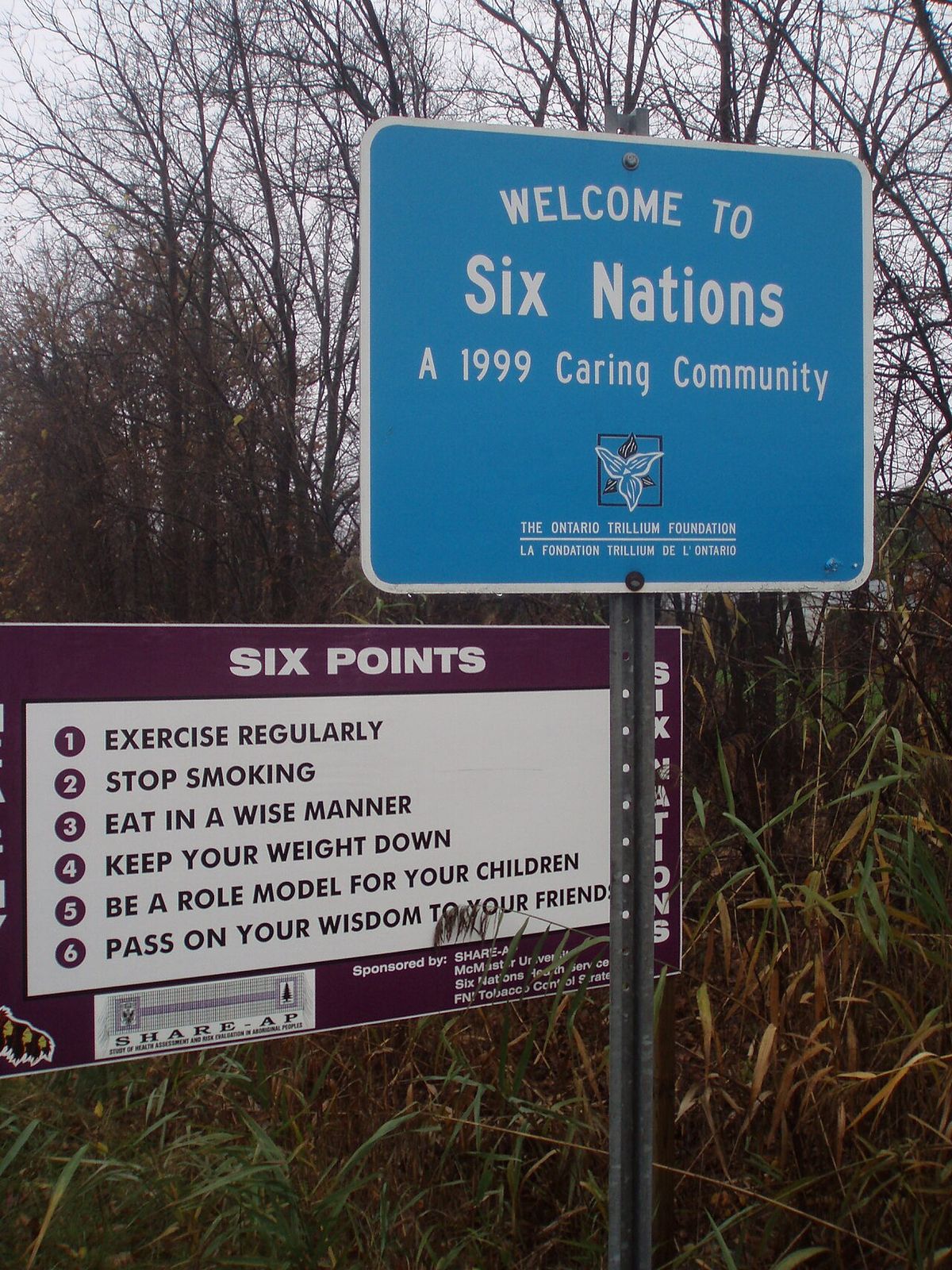
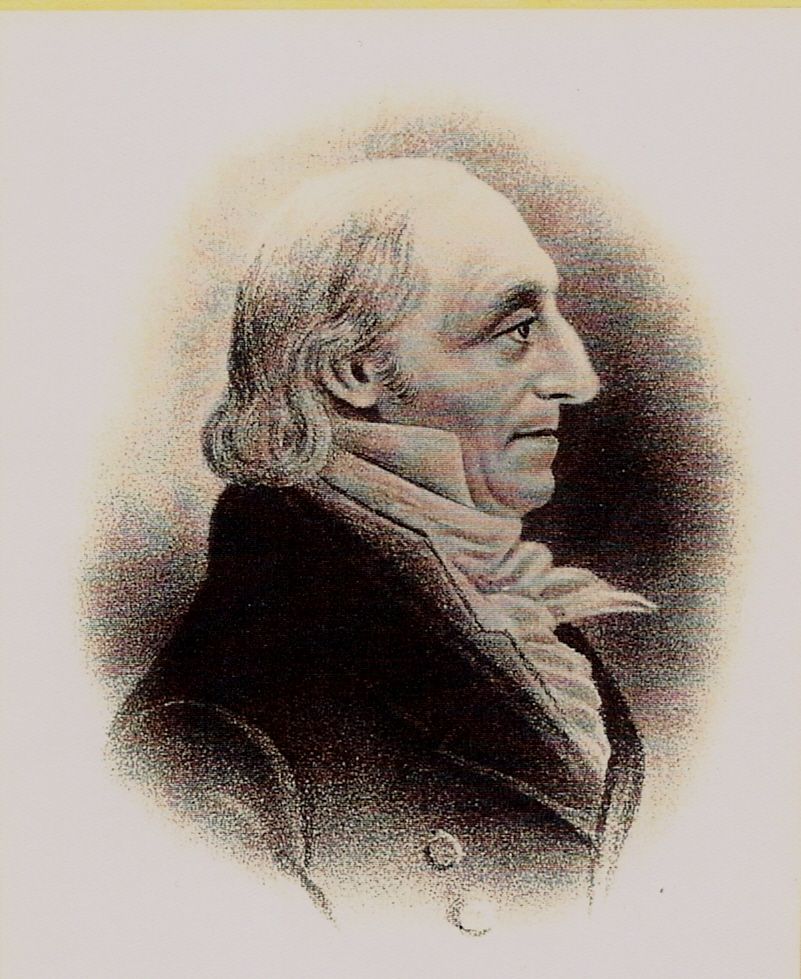
The Mohawk Institute originated from a day school for boys established by the New England Company, a British Anglican missionary society also known as the Society for the Propagation of the Gospel in New England, on the Six Nations of the Grand River reserve in 1828. It transitioned to a residential school for boys in 1831, with Indigenous girls beginning to attend starting in 1834. The initial students came primarily from Six Nations and nearby communities such as New Credit and Moraviantown. The school was built on 350 acres of farmland that was part of the Six Nations reserve. In 1837, the colonial government of Upper Canada ordered Six Nations residents to resettle south of the Grand River, kilometres away from the institution, further separating children from their families. Between 1854 and 1859, the original building was destroyed by fire and rebuilt a few hundred metres from its first location, with farming becoming a central part of student life during this period. The school's operations were managed by the New England Company from its founding until 1922. Students were later drawn from a widening circle of reserves including Sarnia, Walpole Island, Muncey, Scugog, Stoney Point, Saugeen, Bay of Quinte, and Kahnawake, though Six Nations remained the core source. This period established the institutional patterns of manual labour and separation from community that would define the school for over a century.
Expansion and government takeover
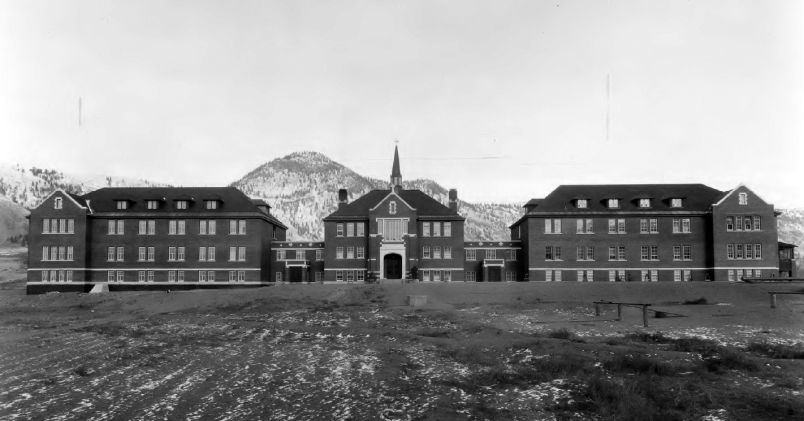
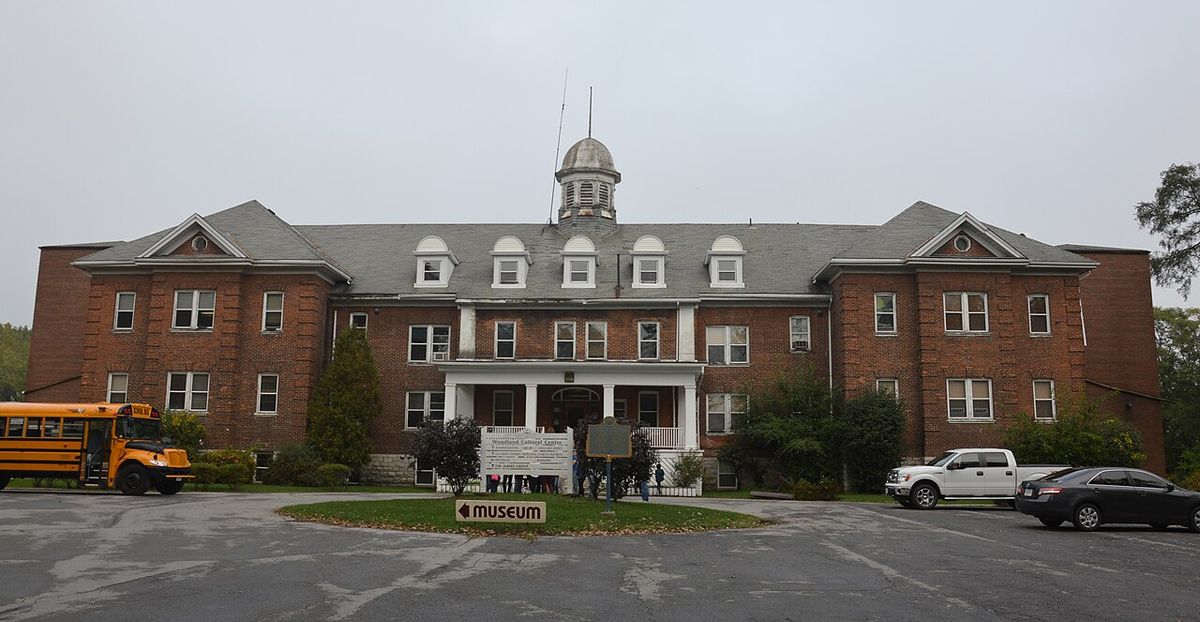
The school began accepting students from reserves beyond Six Nations in 1885, broadening its reach across Ontario. On April 19, 1903, the main school building was destroyed by fire, an event attributed to students. Subsequent fires in May and June of that year also destroyed the barns and a temporary boys' dormitory. A new, larger building designed to hold 150 students was constructed the following year, featuring separate wings for boys and girls, quarters for staff, and extensive agricultural outbuildings. In 1922, the Canadian federal government formally took over the daily management of the school, though the New England Company retained ownership and the agreement stipulated that the principal must be Anglican. A chapel was added to the school complex in 1930, and by 1955 enrollment had reached 185 children. Farming activities, which had long required student labour, were discontinued in 1963 as the curriculum shifted to a full day of academic instruction. Enrollment at the school ranged from 90 to 200 students per year throughout its operation. The end of farming in 1963 and the construction of schools on reserves led to declining attendance, culminating in the closure seven years later.
Life and abuse at the Mush Hole
Life for students at the Mohawk Institute was characterized by harsh discipline, neglect, and systematic abuse, leading to its grim nickname, the Mush Hole, derived from the poor quality of food served. Former students have provided extensive testimony of the physical, emotional, and sexual abuse they endured. Children frequently had all their hair cut off and were branded Mush Hole Baldies as a form of humiliation and control. Students who wet their beds were subjected to electric shock treatments using a battery-powered device. The staff built a prison cell in the basement to hold captured runaways, a dark closet where children were locked for days at a time. Sexual abuse was reported in locations like the boiler room, where screams could not be heard over the machinery. In 1914, two former students successfully sued the principal for physical abuse and imprisonment, winning $400 in damages. Male children were forcibly subjected to medical procedures like circumcision and tonsillectomies. The pervasive abuse and cultural suppression led to frequent escape attempts and deep trauma for survivors. Specific survivor accounts detail the brutality of daily life. Lorna, who attended from 1940 to 1945, described the shock treatment for bedwetting, noting the device would jerk her body and the treatment was administered three times. Dawn Hill, another survivor, recalled sexual abuse occurring in the basement boiler room, a location chosen because the noise drowned out cries. Sally General, who was at the school from age four to thirteen, remembered being locked in a dark room with a friend and being told by staff that rats would get them, a punishment she later realized was for not speaking English. After reporting a sexual assault to the nurse, Sally was beaten and accused of lying. The 1914 court case, which went to trial on March 31, established legal recognition of the abuse but did not stop the systemic mistreatment.
Closure and the Save the Evidence campaign
The Mohawk Institute closed on June 27, 1970, as enrollment declined due to the construction of schools on reserves across Ontario. The Six Nations assumed ownership of the building and land the following year. In 1972, the Woodland Cultural Centre opened on the site, focusing initially on research and history before expanding into Indigenous arts and culture. In 2013, major roof leaks caused significant damage to the vacant school building, prompting a community consultation within Six Nations to decide its future. An overwhelming 98 percent of participants voted to preserve the historic structure. This led to the launch of the Save the Evidence campaign in March 2014, a fundraising and awareness initiative dedicated to restoring the Mohawk Institute as evidence of the residential school system. The campaign raised over $26 million across a decade-long restoration project. The work included replacing roofs, installing modern HVAC and plumbing, removing hazardous materials like lead and asbestos, repairing the foundation, and adding an elevator for accessibility. The restored site opened to the public as a fully realized interpretive historic site on September 30, 2025. The restoration was a meticulous process guided by survivor wishes and archaeological sensitivity. Before any work began, former Woodland Executive Director Janice Bomberry conducted community consultations, confirming survivor support for the project. An archaeological review preceded all major foundational or plumbing work to ensure no historical evidence was disturbed. The final interpretative stage involved designing exhibits and installing features like listening stations and replica furniture. The campaign, initially organized by Amos Key Jr. and a group of supporters, successfully transformed a dilapidated structure into a modernized, accessible site built to last.
The search for missing children and commemorative art
Following the 2021 discovery of unmarked burials at the Kamloops Indian Residential School, Six Nations of the Grand River Chief Mark Hill called for a search for missing children on the grounds of the Mohawk Institute. This ground search began around November 2021, and by September 2022 approximately 1.5 percent of the total grounds had been examined. Separately, a survivors group leading an investigation through document review had identified 97 deaths with ties to the Mohawk Institute. The history of the school has deeply influenced Indigenous artists and authors, resulting in powerful works of commemoration and testimony. The ongoing search for burial sites, coupled with the documentary research, shows the tragic scale of loss associated with the school, with current estimates placing the number of children who died while enrolled at at least 105.
- The Mush Hole: Life at Two Indian Residential Schools (1997) by Elizabeth Graham, published by Heffle Publishing in Waterloo, Ontario.
- Mush-hole Memories of a Residential School (1993) by Maddie Harper, published by The Turtle Island Publication Group in Toronto.
- Mush Hole Remembered: R.G. Miller, a series of paintings by artist R.G. Miller based on his personal experiences as a student at the institute.
- Opening Doors to Dialogue, a community art project led by Samuel Thomas and the Woodland Cultural Centre that used the physical building as inspiration for community dialogue, healing, and artistic expression.
The Mohawk Institute today: education and remembrance
The former Mohawk Institute, now fully restored, operates as an interpretive historic site within the Woodland Cultural Centre at 184 Mohawk Street in Brantford. The site is designed to bear witness to the experiences of survivors, featuring listening stations where visitors hear survivor testimonies in their own voices. Replica furniture, including desks handcrafted by the Mennonite community in Kitchener-Waterloo, recreates the dining hall and classrooms, with survivor quotes engraved on the surfaces. Exhibits display artefacts found in the building, such as children's toys hidden in walls. The tours guide visitors through key spaces like the boys' and girls' dormitories, cafeteria, laundry room, and basement, conveying the harsh realities of institutional life. The Woodland Cultural Centre also offers virtual tours, such as the Silent No More experience, to reach wider audiences. The centre's education team develops age-appropriate tours for younger visitors. The site is a place of national significance, attracting thousands of visitors, including over 3,000 attendees on Truth and Reconciliation Day in 2026. It houses the Woodland Cultural Centre's entire library and language archives, safeguarding Indigenous knowledge and culture once targeted for eradication. The interpretive experience is carefully constructed to facilitate understanding and reflection. Interactive video displays share historical information, while a recreated hole in a wall shows a hiding place where children sought respite and left behind toys. The Silent No More virtual tour, offered in partnership with the Canadian Race Relations Foundation, includes guided exploration and interviews with five survivors, including Dawn Hill and Doug George. Public events, like the Stolen Childhoods exhibition opening at Huron University in October 2026, extend the educational reach. Executive Director Heather George has emphasized that the site allows people to bear witness to history where it happened. The site also serves as a community hub for truth and reconciliation events. On the National Day for Truth and Reconciliation in 2026, hundreds gathered to hear survivors like Dawn Hill, Doug George, and Tony Bomberry share their stories. Cleve Thomas of the Haudenosaunee Confederacy Chiefs Council spoke about the importance of passing knowledge to younger generations and the resilience shown in reclaiming language and culture. Visitors could explore vendor crafts, participate in social dances, and tour the gallery spaces.
Questions about Mohawk Institute Residential School
Why was the Mohawk Institute called the Mush Hole?
The school earned the nickname the Mush Hole from the students due to the consistently poor quality of food served, which often consisted of a porridge-like mush. This moniker became a widely recognized symbol of the neglect and harsh conditions within the institution. For example, former student Sally General recalled that students who had their hair cut off were branded Mush Hole Baldies. The nickname reflects the daily reality of inadequate nutrition that the children endured.
How many children attended the Mohawk Institute Residential School?
According to the Survivors' Secretariat, an estimated 15,000 Indigenous children from more than 60 different communities were sent to the Mohawk Institute over its history. Annual enrollment ranged from 90 to 200 students, reaching a peak of 185 children in 1955. The school accepted students from Six Nations and other reserves including New Credit, Moraviantown, Sarnia, and Kahnawake. This large number of students passed through the institution from its opening in 1831 until its closure in 1970.
What happened to the building after the school closed?
After closing in 1970, the building was transferred to Six Nations the following year. In 1972, the Woodland Cultural Centre opened on the site. Following roof damage in 2013 and a community consultation, the Save the Evidence campaign launched in 2014. After a $26 million restoration, the preserved building reopened on September 30, 2025, as an interpretive historic site.
Have there been searches for unmarked graves at the Mohawk Institute?
Yes, following the discovery at Kamloops in 2021, Six Nations Chief Mark Hill called for a search of the school grounds. A physical ground search began around November 2021, and by September 2022 about 1.5 percent of the total area had been examined. Separately, the survivors group leading the investigation has identified 97 deaths with ties to the Mohawk Institute through a review of documents. This search is ongoing on the school's 350-acre grounds in Brantford, Ontario.
How can I visit or learn about the Mohawk Institute today?
The public can visit the preserved Mohawk Institute building as part of the Woodland Cultural Centre in Brantford, Ontario, which offers in-person guided tours. The centre also provides virtual tours, such as the Silent No More experience. The site features listening stations, replica furniture, and artefacts to help visitors understand the survivor experience. The Woodland Cultural Centre opened on the site in 1972 and uses the historic building to teach about residential school history.
What was the Save the Evidence campaign?
The Save the Evidence campaign was a community-driven initiative launched in March 2014 to preserve the Mohawk Institute building as physical evidence of the residential school system. It began after a 2013 roof leak caused significant damage and a community vote showed 98 percent support for saving the building. The campaign raised funds to restore the historic structure and to raise awareness about residential schools. This work ensures the building remains a site for education and remembrance.
Sources and further reading
- Mohawk Institute Residential School (Wikipedia)
- Silent No More: Virtual Tour of the Former Mohawk Institute ... (lsnl.ca)
- Honouring survivors of the former Mohawk Institute (brantbeacon.ca)
- A Virtual Tour of The Former Mohawk Institute Residential ... (ticketscene.ca)
- former Mohawk Institute Residential School transformed ... (haldimandpress.com)
Checked by the Nosy Mag desk. Last updated 2026-10-30.