Miꞌkmaq language
The Miꞌkmaq language, known to its speakers as Lnuismk, Miꞌkmawiꞌsimk or Miꞌkmwei, is an Eastern Algonquian language spoken by the Miꞌkmaq people. It is a vital part of the cultural heritage of Atlantic Canada, with nearly 11,000 speakers across Canada and the United States within a total ethnic population of roughly 20,000. The language is considered vulnerable but is the focus of significant community-led revitalization efforts, including immersion schooling and public celebration. Its influence extends into English and French through loanwords and numerous place names across the region, marking its deep connection to the land of Miꞌkmaꞌki.
Historical and linguistic context
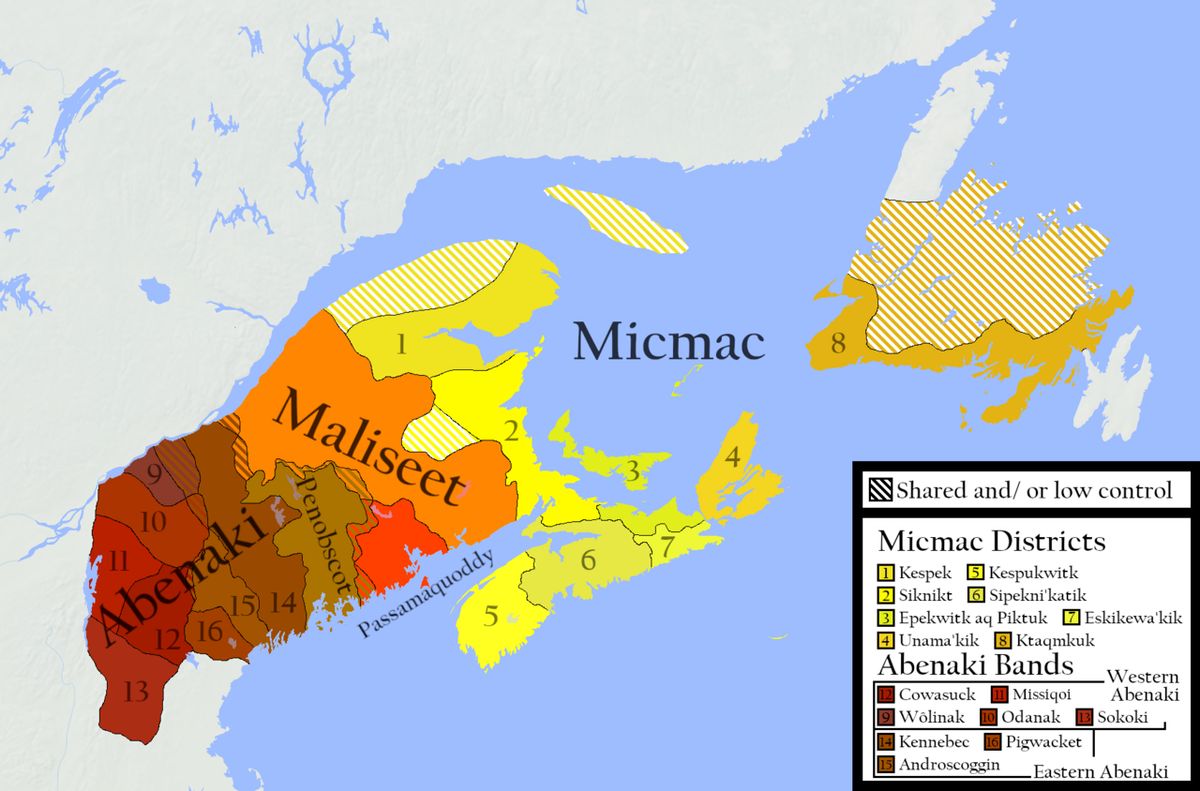
Miꞌkmaq is part of the Algic language family and specifically belongs to the Eastern Algonquian subgroup, which includes languages spoken along the Atlantic coast. It is closely related to languages like Malecite-Passamaquoddy and Massachusett, and was historically allied with other Wabanaki Confederacy tribes, leading to long-term language contact. The language shares many cognates with its relatives, such as the word for 'white', wapeꞌt in Miꞌkmaq, which is similar to wapi in Maliseet and waapii in Munsee. A distinctive grammatical feature common to Algonquian languages is its system of noun classification into animate and inanimate categories, which directly affects verb conjugation. For example, the verb 'I see' is nemitu for an inanimate object but nemiꞌk for an animate one. The historical depth of Miꞌkmaq includes its status as one of the few pre-colonial Native American languages with a writing system, using hieroglyphic script.
The language has also been a source of loanwords for European languages due to centuries of contact. The English words 'caribou' and 'toboggan' are borrowings from Miꞌkmaq, with 'caribou' likely derived from the Miꞌkmaq word xalibu or Qalipu meaning 'the one who paws'. Extensive trade with Basque whalers in the 16th century led to the development of an Algonquian-Basque pidgin with a strong Miꞌkmaq imprint, which remained in use into the 18th century. Acadian French and Chiac contain many words rooted in Miꞌkmaq, a legacy of the peoples living together before the Expulsion of the Acadians. This linguistic exchange is also evident in the landscape, with many place names in Quebec and Nova Scotia, such as Antigonish, Shubenacadie, and Quebec itself (from Miꞌkmaq Gepèèg), originating from the Miꞌkmaq language.
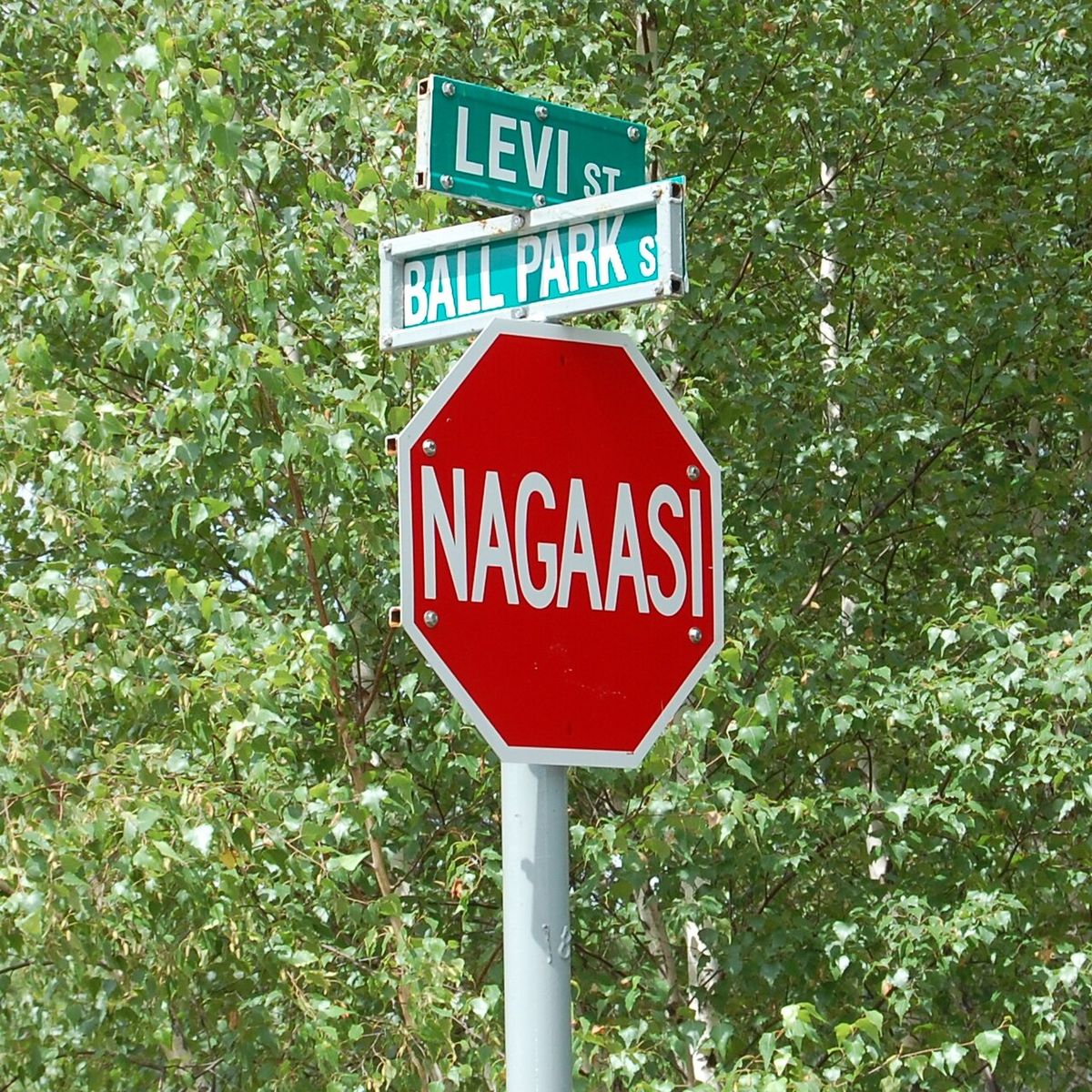
Language revitalization and current status
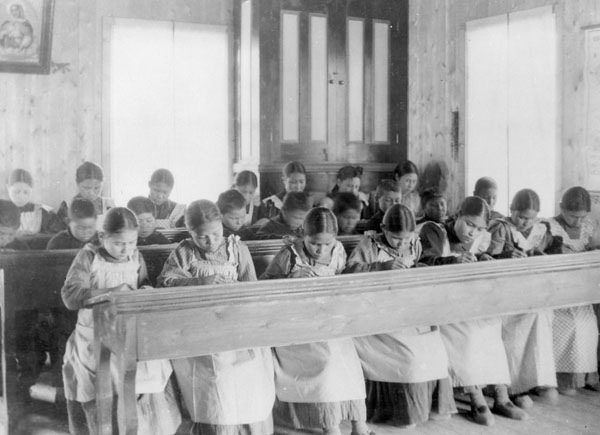
The Miꞌkmaq language is classified as vulnerable by UNESCO, meaning it is not used consistently and faces pressure from dominant languages like English. This situation is a direct result of the cultural genocide perpetrated through the Canadian Indian residential school system, which aimed to assimilate Indigenous children by severing their connection to language and culture. In response, communities across Miꞌkmaꞌki have launched powerful revitalization initiatives. The community of Wagmatcook in Cape Breton has developed age-specific children's books and established Miꞌkmaq immersion schools, which have successfully increased language proficiency and strengthened Indigenous identity among youth. Community member educators in Wagmatcook have also participated in programs to obtain a Certificate in Aboriginal Literacy Education to increase their own fluency.
Other institutions are central to this work, such as Cape Breton University's Unamaꞌki College, which specializes in Miꞌkmaq history, culture and education and serves about 250 Indigenous students. At the Lnu Siꞌpuk Kinaꞌmuokuom Miꞌkmaq school in Indian Brook, Miꞌkmaq language courses are mandatory from Primary to Grade 12, and evening classes for community members have been offered since October 2013. Public engagement is growing, with Miꞌkmaq greetings becoming more common in places like Lunenburg County, Nova Scotia, where the Miꞌkmaq Burial Grounds Association had about forty students in revitalization classes in 2013. High-profile projects like Eskasoni First Nation member Emma Stevens's 2021 Miꞌkmaq-language cover of 'Blackbird' have also raised national awareness for these revitalization efforts.
According to 2021 Census data, the number of people learning Miꞌkmaq as a second language is increasing, a crucial factor in reviving the language. On the East Coast, a larger share of First Nations children aged 14 and younger know Mi’kmaq than those aged 65 and older, indicating a promising shift. The passage of the Indigenous Languages Act in 2019 and the creation of the Office of the Commissioner of Indigenous Languages provide federal support for these community-driven actions to reclaim, revitalize, maintain and strengthen Indigenous languages including Miꞌkmaq. The 2021 Census also noted that 66,880 Indigenous people had learned an Indigenous language as a second language, up 6% from 2016.
Phonology and sound system
The sound system of Miꞌkmaq can be divided into two primary groups: obstruents and sonorants. The obstruents include sounds like /p, t, k, kʷ, t͡ʃ, s, x, xʷ/ and have a wide range of pronunciations depending on their position in a word. When they appear at the beginning of a word or next to another obstruent, they are voiceless, as in [p, t, k, kʷ, t͡ʃ, s, x, xʷ]. However, when situated between sonorants like vowels or nasals, these same sounds become voiced, appearing as [b, d, ɡ, ɡʷ, d͡ʒ, z, ɣ, ɣʷ]. Word-finally, plosives and the affricate may be aspirated, sounding like [pʰ, tʰ, kʰ, kʷʰ, tʃʰ]. Sonorants in Miꞌkmaq include sounds like /m, n, w, l, j/ and all vowels, which are consistently voiced.
Miꞌkmaq makes a phonemic distinction between long and short vowels and consonants. Long consonants are often indicated by doubling the letter in the Listuguj orthography and can insert a schwa sound when they precede other consonants. For instance, the word written as 'ennmit' (to stick into) is pronounced /en.nə.mit/, with a schwa between the long 'n' and the 'm', while 'enmitg' (flow away) is pronounced /en.mitk/. Apparent word-initial consonant clusters in writing, such as in 'gtaꞌn' (ocean) or 'mgumi' (ice), are actually pronounced with a leading schwa, making them /ək.taːn/ and /əm.ku.mi/ respectively. In contrast, word-final clusters like in 'asigetg' (instigate) are pronounced as a single syllable, /a.si.ketk/, unlike a word like 'mestꞌg' (taste) which is pronounced /mes.tək/ over two syllables. This complex interaction between orthography and pronunciation is a key feature of the language's phonology.
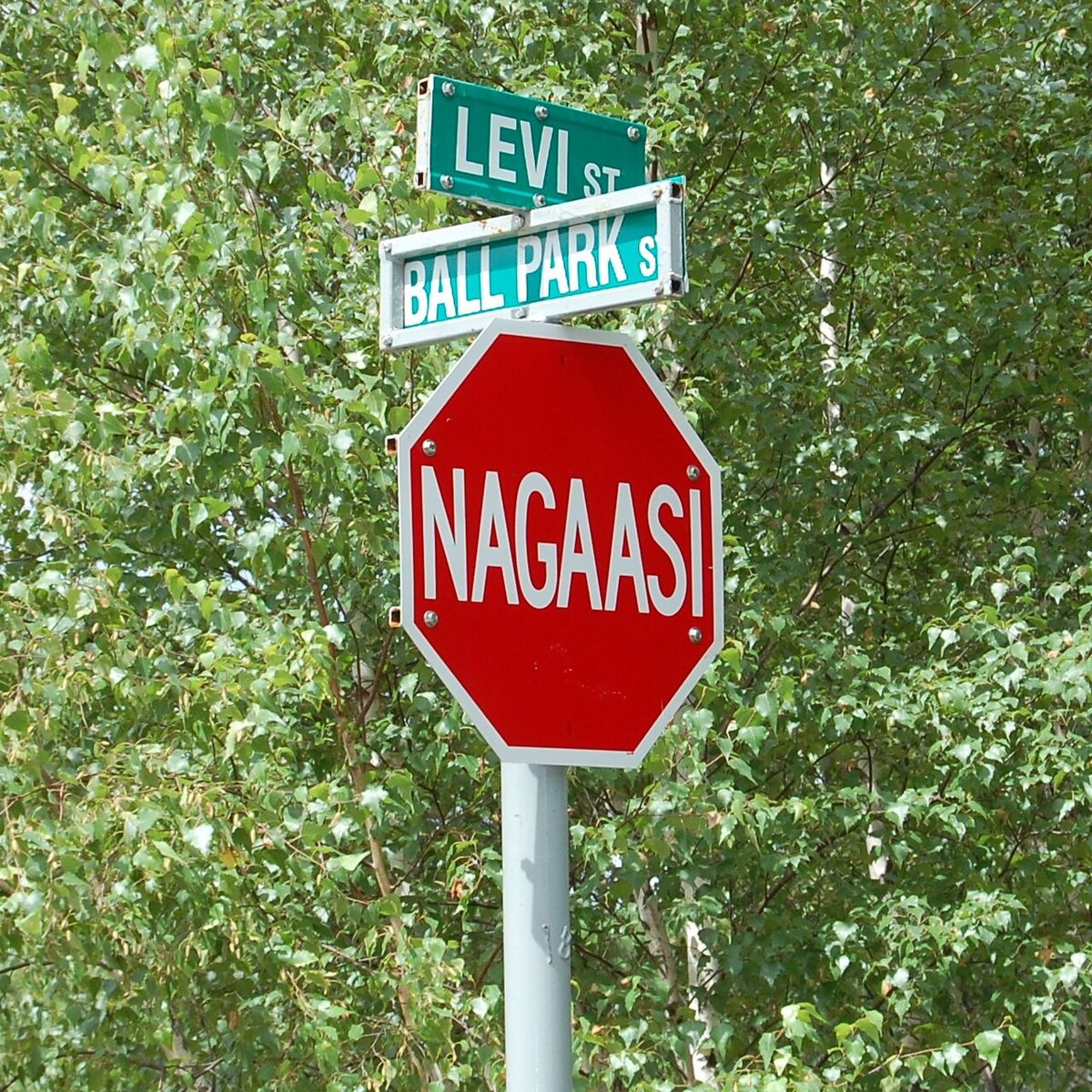
Grammar and syntax
Miꞌkmaq is a polysynthetic language, meaning words, especially verbs, can be extremely complex and contain meanings that would require entire sentences in English. A core feature of its grammar is the use of free word order, where sentence structure is based on emphasis rather than a fixed sequence of subject, object and verb. For example, the sentence 'I saw a moose standing right there on the hill' can be structured as 'sapmiꞌk ala nemaqtꞌk na tett tiaꞌm kaqamit' or 'sapmiꞌk ala tiaꞌm nemaqtꞌk na tett kaqamit', with the earlier placement of 'tiaꞌm' (moose) serving to highlight it. The verb itself often contains the subject and object. The word 'sapmiꞌk' translates directly to 'I saw him'.
While word order is fluid, certain elements within verb morphology have fixed positions. The aspect marker, such as the completive prefix 'kisi', always appears first in the verb complex. The negative marker consistently appears directly after the verb root. An example is the verb 'kisipawnatqaꞌtiꞌw' (they cannot get out), which breaks down as kisi-paw-natq-aꞌti-w, where 'kisi-' is the completive aspect and the negative marker 'w' follows the root 'aꞌti' (the two move). Beyond these fixed elements, other markers like those for animacy can appear in various places within the verb depending on emphasis. Verbs are also marked for tense, adding another layer of meaning to these word constructions. The animacy of nouns, a grammatical gender-like system, is fundamental and requires verb agreement, as seen in the different forms for 'I see' used with animate versus inanimate nouns.
Writing systems and orthography
Miꞌkmaq has been written using several Latin-based orthographies developed since the 19th century by missionaries. Prior to European contact, the language employed a unique hieroglyphic writing system, making it one of the few Native American languages with a pre-colonial script. The contemporary standard is the Francis-Smith orthography, developed in 1974 and adopted as the official orthography of the Míkmaq Nation in 1980. It is the most widely used system, employed by the Miꞌkmaq Grand Council and in Nova Scotia. It uses the straight apostrophe ⟨ꞌ⟩ or the acute accent ⟨´⟩ to mark vowel length, and the barred-i ⟨ɨ⟩ or circumflex-i ⟨î⟩ for the schwa sound. The straight apostrophe was the original symbol, but the acute accent became an accepted alternative due to software autocorrect issues.
Other orthographies include the Listuguj system, which uses an apostrophe for long vowels and schwa, and substitutes the letter ⟨g⟩ for ⟨k⟩. The 19th-century Pacifique orthography omits the letters ⟨w⟩ and ⟨y⟩, using ⟨o⟩ and ⟨i⟩ instead, and does not indicate vowel length. Silas Tertius Rand also created a complex orthography in the 19th century using characters from Isaac Pitman's Phonotypic Alphabet, employing various specialized letters for vowel sounds. The variation in writing systems reflects the language's historical engagement with different scholars and communities, though the Francis-Smith orthography now provides a common standard for education and official use.
Numerical system
The Miꞌkmaq number system is decimal and involves combining numeral roots and prefixes. The numbers one through nine are unique words: newt, ta'pu, si'st, ne'w, na'n, as'gom, l'uikn, ugumuljin, pesgunateg. Every multiple-digit number is formed using one of the first nine numerals as a prefix or preceding word. The number ten, neꞌwtisgaq, combines the prefix neꞌwt- with the root isgaꞌq, a pattern seen in tapuisgaꞌq for twenty and nesisgaꞌq for thirty. For the tens from sixty to ninety, the numeral word precedes a separate word for ten, teꞌsisgaꞌq, as in asꞌgom teꞌsisgaꞌq for sixty. Numbers between tens are stated as phrases using the connecting word jel (and), such as tapuisgaꞌq jel ugumuljin for twenty-eight.
For numbers beyond 99, Miꞌkmaq uses numeral words preceding separate roots for hundred (gasgꞌptnnaqan) and thousand (pituimtlnaqn). Three hundred is siꞌst gasgꞌptnnaqan, and two thousand is taꞌpu pituimtlnaqn, while one hundred and one thousand are simply the roots themselves. The connecting word jel is used between thousands and hundreds, and hundreds and tens, as in siꞌst pituimtlnaqn jel neꞌw gasgꞌptnnaqan jel naꞌnisgaq jel taꞌpu for 3,452. A critical grammatical rule is that numbers must agree in animacy with the nouns they count, using different suffixes. For example, 'two people' is taꞌpusijik (using the animate suffix -ijik), while 'two days' is taꞌpugnaꞌq (using the inanimate suffix -gnaꞌq). The specific animacy-marking suffixes are somewhat fluid and vary by number and dialect.
Place names and geographical legacy
The deep connection between the Miꞌkmaq language and the land is deeply evident in the place names across Eastern Canada, many of which describe geographical features. These names are a lasting record of Miꞌkmaq presence and perception of the landscape. The 2012 book 'The Language of this Land, Miꞌkmaꞌki' by linguist Bernie Francis and anthropologist Trudy Sable is dedicated to examining this intrinsic relationship. The names often provide descriptive information about the location, such as the nature of the water, landforms, or specific activities associated with the place. Numerous towns, counties, and natural features bear names of Miꞌkmaq origin, from Antigonish and Shubenacadie in Nova Scotia to locations throughout Quebec and New Brunswick.
For example, Aroostook County derives from a Miꞌkmaq word meaning 'beautiful or clear water', while Bouctouche comes from Tjipogtotjg (Chebooktoosk) meaning 'great little harbour'. The name Cascapédia combines kaska ('broad') and pegiag ('river'), and Matapédia comes from matapegiag ('river junction'). Other names reflect specific characteristics, like Causapscal (from Gesôpsgigel, meaning 'stony bottom' or 'swift water') and Paspébiac (from papgeg ipsigiag, meaning 'split flats' or 'lagoon'). This linguistic legacy is not confined to rural areas. Major locations like the Gaspé Peninsula (from Gespedeg, 'land recently acquired') and the province of Quebec (from Gepèèg) also have Miꞌkmaq etymologies.
| Place Name | Mi'kmaq Origin | Meaning |
|---|---|---|
| Quebec | Gepèèg | |
| Gaspé Peninsula | Gespedeg | land recently acquired |
| Gaspé, Quebec | Gespeg | land's end |
| Kouchibouguac, NB | Pijeboogwek | river of long tides |
| Tatamagouche | Takamegoochk | barred across the entrance with sand |
| Shediac | Es-ed-ei-ik | running far in |
| Matapédia | matapegiag | river junction |
| Causapscal | Gesôpsgigel | stony bottom, swift water |
| Restigouche | Listuguj | |
| Lac-Humqui | amqui | place of amusement or pleasure |
| Sayabec | Sakpediak | |
| Amqui | amqui | place of amusement or pleasure |
Many place names in regions historically occupied by the Miꞌkmaq people are derived from the Miꞌkmaq language. These include geographical names in Quebec and several towns in Nova Scotia such as Antigonish and Shubenacadie. Specific examples include the name Quebec, which comes from the Miꞌkmaq word Gepèèg, and the Gaspé Peninsula, derived from Gespedeg meaning 'land recently acquired'. The widespread use of these Miꞌkmaq place names shows the language's historical role as a geographical lexicon across Eastern Canada.
Questions about Miꞌkmaq language
How many people speak the Mi'kmaq language?
Nearly 11,000 people speak Miꞌkmaq in Canada and the United States. The total ethnic Miꞌkmaq population is roughly 20,000. According to the 2021 Census, there is a positive trend in language revitalization, with a larger share of First Nations children aged 14 and younger knowing Miꞌkmaq than those aged 65 and older. This indicates that recent educational efforts are helping to increase the number of speakers among younger generations.
Is the Mi'kmaq language endangered?
Yes, UNESCO classifies the Mi'kmaq language as vulnerable. This means it is not used consistently in daily life and faces pressure from dominant languages like English. This status is largely a consequence of the historical suppression of Indigenous languages through policies like the residential school system. However, significant community-led revitalization efforts, including immersion schools and public advocacy, are actively working to strengthen the language and increase the number of fluent speakers.
What English words come from Mi'kmaq?
Several common English words are loanwords from the Mi'kmaq language. The most notable examples are 'caribou', derived from the Mi'kmaq word xalibu or Qalipu meaning 'the one who paws', and 'toboggan'. The term 'caribou' was recorded in French by Marc Lescarbot as early as 1610. These words entered English through early contact between Mi'kmaq people and European settlers. Linguist Peter Bakker also identified two Basque loanwords in Mi'kmaq from 16th-century trade contact.
How is the Mi'kmaq language being taught and revitalized?
Revitalization occurs through multiple channels. Immersion schools, such as those in Wagmatcook and the Lnu Siꞌpuk Kinaꞌmuokuom Miꞌkmaq school in Indian Brook, make the language mandatory from primary grades. Communities develop children's books and offer adult evening classes. Institutions like Cape Breton University's Unamaꞌki College provide higher education focused on Mi'kmaq culture. Federal support via the 2019 Indigenous Languages Act and the Office of the Commissioner of Indigenous Languages also aids these efforts.
What is unique about Mi'kmaq grammar?
Miꞌkmaq grammar is characterized by its polysynthetic nature and free word order. Verbs are highly complex, often containing the subject and object within a single word, and sentence structure is based on emphasis rather than a fixed order. The language also has a grammatical gender system based on animacy, where nouns are classified as animate or inanimate, and verbs change form accordingly. For instance, 'I see' is 'nemitu' for an inanimate object but 'nemiꞌk' for an animate one. Numbers must also agree with the animacy of what is being counted.
What writing system does Mi'kmaq use?
Miꞌkmaq is primarily written using Latin-based orthographies. The official standard since 1980 is the Francis-Smith orthography, which uses a straight apostrophe or acute accent to mark long vowels. Historically, the language used a pre-colonial hieroglyphic writing system. Other writing systems include the Listuguj orthography, which uses 'g' instead of 'k', and older missionary systems like the Pacifique and Rand orthographies from the 19th century. The variation reflects the language's history, though Francis-Smith is now the most widely used for education and official purposes.
Sources and further reading
- Miꞌkmaq language (Wikipedia)
- Message from the Governor General on National ... (gg.ca)
- Indigenous Languages Day: An opportunity to honour the ... (statcan.gc.ca)
Checked by the Nosy Mag desk. Last updated 2026-11-01.