Canadian Indian residential school gravesites
The discovery of unmarked graves at former Canadian Indian residential school sites is a profound and ongoing chapter in Canada's reckoning with its colonial history. From 1828 to 1997, a government-funded, church-administered network of boarding schools forcibly removed Indigenous children from their families with the aim of assimilation. Students endured neglect, abuse, and disease, with over 4,000 documented deaths, though the true number is estimated to be far higher. The use of ground-penetrating radar since 2018 has revealed hundreds of potential burial anomalies across the country, making tangible the long-suspected scale of loss and igniting national grief, calls for accountability, and a movement of denialism.
Historical context of the residential school system
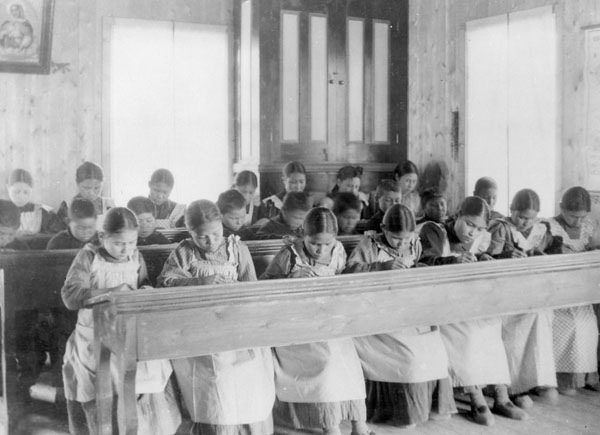
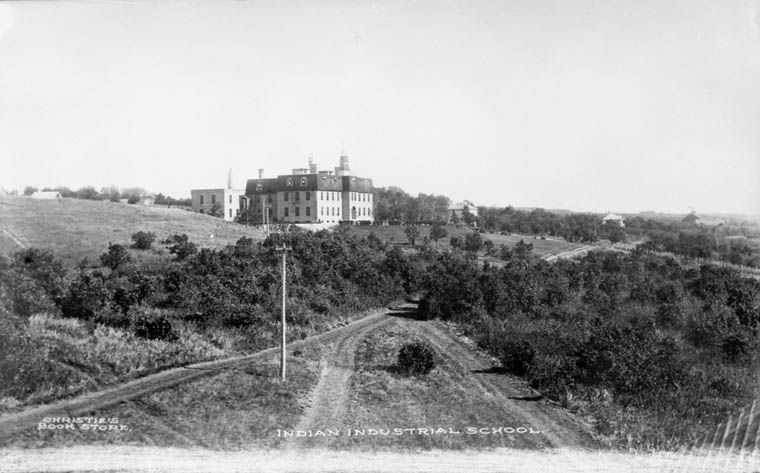
The Canadian Indian residential school system was established through federal policy, notably the 1876 Act to Promote the Gradual Assimilation of the Indian Tribes of Canada, which provided its legal framework. The network was funded by the Government of Canada and administered primarily by Roman Catholic, Anglican, Methodist, Presbyterian, and United Church entities. Its explicit purpose was to isolate Indigenous children from their families, languages, and cultures to assimilate them into Euro-Canadian society. Over 150,000 First Nations, Inuit, and Métis children were placed in these institutions between the 1860s and the 1990s. The last federally operated residential school closed in 1997, marking the end of an era of state-sponsored cultural suppression.
Conditions within the schools were often deplorable, with chronic underfunding leading to overcrowded dormitories, poor sanitation, and inadequate nutrition. These factors created environments ripe for the spread of infectious diseases, particularly tuberculosis, which caused many deaths. The Truth and Reconciliation Commission (TRC), established in 2008, documented systemic physical, emotional, and sexual abuse perpetrated against students by staff and religious authorities. The commission's final report, released in 2015, concluded that the system constituted a form of cultural genocide against Indigenous peoples in Canada.
When children died at the schools, their bodies were frequently not returned to their home communities. Burials were conducted on or near school grounds, often in dedicated cemeteries. Over time, wooden crosses and other markers deteriorated or were removed, leaving graves unmarked. The TRC's Missing Children and Unmarked Burials Project worked to document these deaths, ultimately publishing a list of 4,037 children who died while attending the schools. However, the commission's chair, Justice Murray Sinclair, has estimated the true number of deaths could range between 6,000 and 25,000, acknowledging the incompleteness of historical records.
The search for unmarked graves
Beginning around 2018, many First Nations communities initiated searches for unmarked graves using non-invasive technologies like ground-penetrating radar (GPR) and cadaver dogs. These searches were often prompted by survivor testimony and community knowledge of burial sites that had been lost to official records. The process is guided by the wishes of the communities, which hold the authority over how and when to proceed with investigations. In May 2021, the announcement by Tk’emlúps te Secwépemc First Nation of 215 radar anomalies at the former Kamloops Indian Residential School site captured international attention and became a symbolic catalyst for similar searches nationwide.
The discoveries are typically announced as 'potential gravesites' or 'anomalies' detected by radar, which indicate soil disturbances consistent with burials. Forensic excavation is required to confirm the presence of human remains, a step many communities have been hesitant to take out of respect for the deceased and the need for community consensus. As of December 2025, only the site of St. Joseph's Residential School in Fort Resolution had confirmed remains based on GPR and dog information. Partial excavations at three other schools had not yet found remains. The searches are complex, often covering large areas where schools once stood, and involve meticulous historical research alongside technical surveys.
Key searches and announcements across Canada include the following major findings. The Kamloops announcement in May 2021 involved 215 potential unmarked graves, while Cowessess First Nation reported 751 unmarked graves at the Marieval Indian Residential School cemetery in June 2021. In March 2022, Kapawe'no First Nation identified 169 potential gravesites near St. Bernard's Residential School in Grouard, Alberta. By January 2023, Williams Lake First Nation reported a total of 159 potential burial sites at Saint Joseph's Mission in British Columbia. Penelakut First Nation referenced at least 160 undocumented graves at the former Kuper Island school in July 2021, and an ongoing investigation continues at the Brandon Indian Residential School in Manitoba. These community-led investigations are supported by federal funding, including investments announced in Budget 2022. The work is deeply emotional for survivors and intergenerational trauma carriers, reopening wounds while also seeking to honour missing children and bring a measure of truth to their families.
Documentation and national registers
In response to the Truth and Reconciliation Commission's Calls to Action, the Canadian government has partnered with the National Centre for Truth and Reconciliation (NCTR) to establish official registers documenting the tragedy. Call to Action 72 focuses on creating a National Residential School Student Death Register and a public Memorial Register. The NCTR launched the public Memorial Register in September 2019, a searchable online database containing the names of children who died or went missing while attending residential school. Budget 2022 allocated $6 million over five years to support this ongoing work, which involves continuously reviewing and analyzing historical documents to update the records.
Call to Action 73 concerns the development of a National Residential School Cemetery Register to document the location and condition of burial sites associated with the schools. This register also relies on engagement with Survivors and Indigenous communities, who decide what information to share. An investment of $7.6 million over five years from Budget 2022 supports this implementation. The work builds upon the TRC's original Missing Children and Unmarked Burials Project, acknowledging that significant documentation was still required after the commission's mandate ended. These registers serve as crucial repositories of evidence and memory, countering historical erasure.
The following table outlines the key national registers established to document residential school deaths and burial sites. The National Residential School Student Death Register is an internal database holding analyzed information on children who died, led by the NCTR and in ongoing development since 2017. The Memorial Register is the public-facing, searchable online registry launched in September 2019. The National Residential School Cemetery Register, focused on documenting cemetery locations and conditions, is in development and supported by the 2022 funding. The establishment of these registers represents a formal, institutional effort to compile the fragmented and often deliberately obscured records of student deaths. Their maintenance and expansion depend on continued collaboration between government agencies, the NCTR, and Indigenous communities, ensuring that the process remains survivor- and community-led.
| Register Name | Purpose | Lead Organization | Status |
|---|---|---|---|
| National Residential School Student Death Register | Internal database holding analyzed information on children who died at school | National Centre for Truth and Reconciliation | Ongoing development since 2017 |
| Memorial Register | Public-facing, searchable online registry of children who died or went missing | National Centre for Truth and Reconciliation | Launched September 2019 |
| National Residential School Cemetery Register | Documentation of cemetery locations and conditions | National Centre for Truth and Reconciliation with Crown-Indigenous Relations | In development, supported by 2022 funding |
Political and institutional responses
The discoveries of potential gravesites have precipitated significant political and institutional responses. In October 2022, the House of Commons unanimously passed a motion calling on the federal government to recognize the residential school system as genocide, building on the TRC's finding of cultural genocide. This parliamentary acknowledgment followed the 2008 formal apology by the Government of Canada for the residential school system. The emotional and political climate also led to a series of acts of vandalism and arson against Christian churches across Canada in the summer of 2021, which law enforcement and officials linked to anger over the church's role in the schools.
A central moment in ecclesiastical response was the visit of Pope Francis to Canada in July 2022. Following a delegation of survivors to the Vatican in March 2022, where the Pope apologized for the role of Catholic members, he undertook a 'pilgrimage of penance' to Edmonton, Quebec City, and Iqaluit. During his visit, he delivered penitential speeches to First Nations, Inuit, and Métis peoples. However, many Indigenous leaders noted the apologies stopped short of denouncing the Church's systemic role or addressing specific Calls to Action, such as formally revoking the Doctrine of Discovery or returning sacred items held by the Vatican.
Within the Canadian government, the issue of residential school denialism has emerged. Following public disputes over the evidence from GPR searches, some politicians and commentators have downplayed or questioned the findings. In 2023, then Justice Minister David Lametti stated he was open to outlawing residential school denialism. His successor, Arif Virani, who became Justice Minister in 2023, did not take a public position on the issue. Denialist actions have included individuals going to suspected burial sites with shovels to attempt to disprove the presence of graves, causing further distress to affected communities. Indigenous groups and academics have consistently dismissed claims of a 'mass grave hoax,' clarifying the nature of the findings and the public misinterpretation that followed initial announcements.
Notable site investigations by province
Investigations have taken place at numerous former school sites across Canada, each with its own history and findings. In British Columbia, the search at the former Alberni Indian Residential School led by Tseshaht First Nation involved survivor interviews that identified 67 students who died there. Their phase one GPR survey in early 2023 reported 17 suspected graves, and historical records reviewed by the TRC included 29 children. At St. Augustine's in Sechelt, Shíshálh Nation announced in April 2023 the discovery of 40 unmarked children's graves described as shallow and sized for a fetal position. The Stó:lō Nation documented that at least 158 of their children died across three schools and a hospital, prompting a multi-year search for unmarked graves in the Fraser Valley which began in 2021.
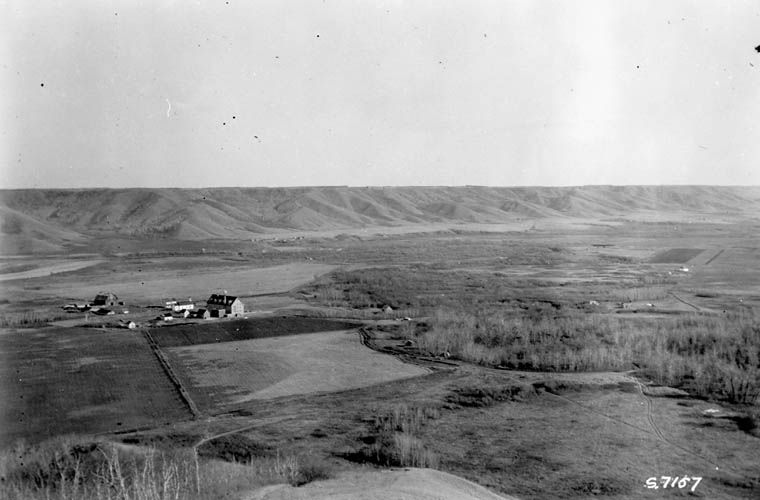
In Alberta, multiple investigations have yielded results. Near the Blue Quills school at Saddle Lake Cree Nation, partial remains have been repeatedly discovered in the community cemetery since 2004, with a 2023 GPR survey identifying 19 anomalies and the remains of one child found in October 2023. A 2023 report on St. Bruno's school identified 88 potential unmarked graves, with 14 listed as 'likely.' The site of St. Joseph's Industrial School (Dunbow) saw 34 children's remains exposed by a flood in 1996 and re-interred in 2001, with a local researcher working to identify the deceased. Saskatchewan was the site of the largest single announcement, where Cowessess First Nation reported 751 unmarked graves at the Marieval Indian Residential School cemetery in June 2021. Chief Cadmus Delorme clarified these were unmarked graves in a cemetery, not a mass grave, and suggested markers may have been removed by the church that oversaw the site. In Manitoba, the investigation at the Brandon Indian Residential School, a collaboration between Sioux Valley Dakota Nation and Simon Fraser University, has been examining two cemetery sites, though work was delayed by the COVID-19 pandemic. The school was one of more than 130 such institutions that operated across the country.
Ongoing challenges and community impact
The process of searching for and commemorating lost children presents profound ongoing challenges for Indigenous communities. The work is emotionally taxing, reopening intergenerational trauma for survivors and their families. Communities must make difficult decisions about whether to conduct forensic excavations, balancing the desire for conclusive identification with the wish to avoid disturbing resting places. The technical work of GPR surveys and historical archival research requires significant expertise and funding, which has been a point of federal support but also of community-led initiative. Many communities have erected memorials and held ceremonies to honour the children, integrating cultural practices that were once forbidden.
The phenomenon of residential school denialism poses a distinct challenge, causing additional pain by publicly questioning the lived experiences of survivors and the evidence gathered by communities. Indigenous groups and academics have countered claims of a 'mass grave hoax,' noting that mainstream media largely did not use the term 'mass graves' and that public misinterpretation followed the initial announcements. The debate has entered the political sphere, with discussions about potentially criminalizing such denialism. Meanwhile, communities continue their work with dignity, focusing on healing and truth-telling. The legacy of the gravesite discoveries has also influenced broader Canadian society, leading to cancelled Canada Day celebrations in several provinces in 2021, the toppling or removal of statues of figures associated with the residential school system like John A. Macdonald, and intensified national conversations about reconciliation. For Indigenous peoples, the searches are part of a longer journey to reclaim history, honour their ancestors, and seek justice for the crimes of the past, ensuring that the children who never came home are never forgotten. This ongoing process involves managing grief, pursuing accountability, and fostering a national understanding of this painful history.
Questions about Canadian Indian residential school gravesites
How many children died in Canadian residential schools?
The Truth and Reconciliation Commission documented 4,037 deaths in its records, but noted this number is incomplete due to lost or destroyed documents. The commission's chair, Justice Murray Sinclair, has estimated the true number of children who died could range between 6,000 and 25,000. Deaths were caused by disease, malnutrition, accidents, neglect, and abuse. Many children were buried in school cemeteries, often in unmarked graves, and their families were frequently not informed of the circumstances of their death.
What was found at the Kamloops Indian Residential School?
In May 2021, Tk’emlúps te Secwépemc First Nation announced that a ground-penetrating radar survey had detected 215 soil anomalies with characteristics consistent with unmarked graves. The announcement specified these were potential burial sites, and confirmation would require forensic excavation. As of September 2024, no human remains have been excavated or confirmed at the site. The Kamloops announcement was a catalyst for similar searches across Canada and brought international attention to the issue of missing children from residential schools.
What is the largest discovery of unmarked graves?
The largest single-site announcement to date was made in June 2021 by Cowessess First Nation in Saskatchewan. They reported 751 unmarked graves at the cemetery of the former Marieval Indian Residential School. Chief Cadmus Delorme clarified that this was a cemetery with unmarked graves, not a 'mass grave,' and suggested grave markers may have been removed by the Roman Catholic church that operated the cemetery. It is not yet known if all the graves belong to children who attended the school.
What is residential school denialism?
Residential school denialism refers to a movement that downplays, questions, or outright denies the existence of unmarked graves and the scale of abuses and deaths within the residential school system. This has included public figures disputing ground-penetrating radar evidence and individuals attempting to excavate suspected sites. In 2023, then Justice Minister David Lametti said he was open to outlawing such denialism. Indigenous groups and academics have dismissed these claims, noting they cause further trauma to survivors and communities.
Has the Catholic Church apologized for residential schools?
Yes, Pope Francis apologized for Church members' roles in the genocide. This apology occurred during a visit to Canada following the House of Commons's unanimous motion in October 2022 to recognize the residential school system as genocide. The residential school system was administered by various Christian churches, including the Roman Catholic Church, from 1828 to 1997. The Truth and Reconciliation Commission's findings included recognition of past colonial genocide. Anger over the schools and gravesites has been linked to acts of vandalism against Christian churches since June 2021.
What is the National Centre for Truth and Reconciliation's role?
The National Centre for Truth and Reconciliation is the permanent repository for all statements, documents, and materials gathered by the Truth and Reconciliation Commission. It maintains key national registers, including the National Residential School Student Death Register. The Truth and Reconciliation Commission was formed by the Government of Canada in 2008 and found records of 4037 deaths at the schools, publishing a list. Commission chairman Murray Sinclair estimated the true number of deaths could be much higher. The centre's records are crucial for ongoing searches, as many burial sites and the names of children have been lost.
Sources and further reading
- Canadian Indian residential school gravesites (Wikipedia)
- Missing children and burial information (rcaanc-cirnac.gc.ca)
- Canada: 751 unmarked graves found at residential school (bbc.com)
- Residential Institutions & Reconciliation (afn.ca)
- 'Cultural genocide': the shameful history of Canada's ... (theguardian.com)
Checked by the Nosy Mag desk. Last updated 2026-10-20.