Murray Sinclair
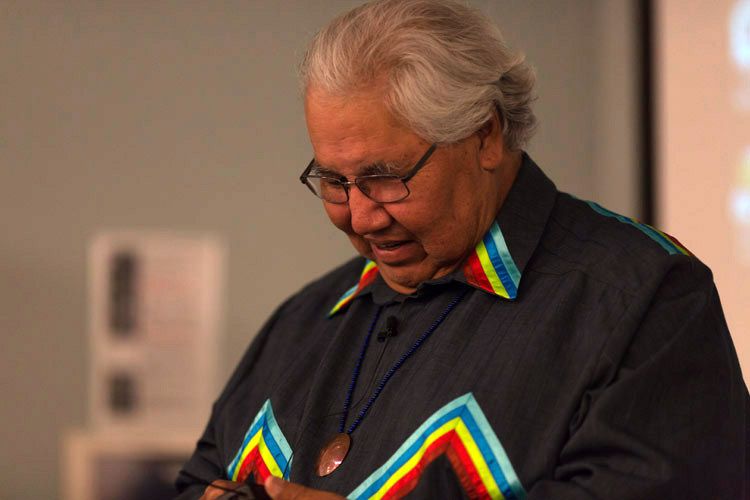
The Honourable Murray Sinclair was a distinguished Canadian jurist, senator, and the chair of the Truth and Reconciliation Commission (TRC). An Ojibwe lawyer from the Peguis First Nation in Manitoba, he became the first Indigenous judge in his province and the second in Canada. His leadership of the TRC from 2009 to 2015 produced a landmark final report that documented cultural genocide and issued 94 Calls to Action. Sinclair later served as an independent senator from 2016 to 2021 and as the 15th Chancellor of Queen's University.
Early life and education
Calvin Murray Sinclair was born on January 24, 1951, and raised on the former St. Peter's Indian Reserve in the Selkirk area north of Winnipeg, Manitoba. His parents were Henry and Florence (née Mason) Sinclair. His siblings were Richard, Henry Jr. (Buddy) and Dianne. An older sister had died in infancy. After his mother died in April 1952 following a stroke, he and his siblings were raised by their grandparents Henry James Sinclair and Catherine Simard in St. Peter's. He graduated from Selkirk Collegiate Institute as class valedictorian and Athlete of the Year in 1968. Sinclair attended the University of Manitoba's School of Physical Education but left before graduating to care for his ailing grandmother after his grandfather died in 1970.
Sinclair then worked at the Selkirk Friendship Centre as an administrator and youth worker. He was elected vice president of the Manitoba Métis Federation for the Interlake Region in 1971. In 1972, he began work as executive assistant to Howard Pawley, who was then the Member of the Legislative Assembly for Selkirk and the Attorney General of Manitoba. Sinclair resumed his studies in 1976 at the University of Winnipeg, focusing on sociology and history before entering the Faculty of Law at the University of Manitoba, from which he graduated in 1979. He won the A.J. Christie Prize, awarded to the top student in litigation, in his second year of legal studies. He also spent his teenage years as an air cadet with the 6 Jim Whitecross Royal Canadian Air Cadet Squadron. After law school, he articled with a law firm in his hometown of Selkirk.
Legal and judicial career
Murray Sinclair was called to the Manitoba Bar in 1980 and began a legal practice focused on civil and criminal litigation, human rights law, and Indigenous law. He represented a cross-section of clients but was particularly known for his representation of Indigenous people and his deep knowledge of Indigenous legal issues, having taught courses on Indigenous People and the Law in the Department of Native Studies at the University of Manitoba since 1981. He acted as legal counsel for the First Nations of Manitoba, representing them in complex matters including land claims, legislative initiatives, funding negotiations and the negotiation of Child Welfare Agreements following the release of the Kimelman Report into Child Welfare in Manitoba. His early career also included serving as legal counsel for the Manitoba Human Rights Commission and as an adjunct professor of law and an adjunct professor in the Faculty of Graduate Studies at the University of Manitoba.
In March 1988, Sinclair was appointed associate chief judge of the Provincial Court of Manitoba, becoming the province's first Indigenous judge. Shortly after this appointment, he was named co-commissioner, alongside Court of Queen's Bench Associate Chief Justice A. C. Hamilton, of Manitoba's Public Inquiry into the Administration of Justice and Aboriginal People, commonly known as the Aboriginal Justice Inquiry. The AJI report was an extensive study of issues plaguing the relationship between Indigenous people in Manitoba and the justice system and had a significant impact on law and legal policy in Canada. In November 2000, Sinclair completed the Report of the Pediatric Cardiac Surgery Inquest, a study into the deaths of twelve children in the pediatric cardiac surgery program of the Winnipeg Health Sciences Centre in 1994. That report led to significant changes in pediatric cardiac surgery in Manitoba and the study of medical and systemic errors in Canada.
Sinclair was appointed to the Court of Queen's Bench of Manitoba in January 2001, another first as the province's first Indigenous person appointed to that court. While serving as a judge, he was approached to chair the Truth and Reconciliation Commission, a request he initially declined due to the expected emotional toll of the work. After the initial TRC chair resigned and the other commissioners were replaced, he was asked again and agreed in 2009, on the condition the commission operate by consensus rather than voting. Following the TRC's completion in 2015, he retired from the bench. As of 2022, he returned to legal practice at the Winnipeg law firm Cochrane Saxberg.
Truth and Reconciliation Commission
Appointed chair of Canada's Indian Residential Schools Truth and Reconciliation Commission in June 2009, Murray Sinclair oversaw a monumental national undertaking born from the Indian Residential Schools Settlement Agreement. The commission's mandate was to inform all Canadians about what happened in the schools and to document the accounts of survivors, former staff, families, and communities personally affected, creating a permanent record. Over six years, the TRC held hundreds of public and private hearings across the country, collecting over 6,000 survivor statements and more than 200 from former staff, creating an unprecedented archive of personal testimony. This vast collection formed the basis of the commission's massive multi-volume final report, released on December 15, 2015.
The TRC's final report concluded that Canada's policy of forcibly removing Indigenous children from their families and communities for the primary purpose of eliminating their cultures and racial identity constituted cultural genocide. It documented that the Government of Canada had legally mandated this forcible removal to stop children from speaking their languages or following their cultural beliefs, aiming to assimilate them into Euro-Canadian culture. The report also noted critical exclusions from the settlement agreement, including schools Indigenous children were sent to by government direction but that were managed by churches or other organizations, and schools in Newfoundland and Labrador before it entered into Confederation in 1949, calling for these issues to be addressed collaboratively. The commission's work culminated in the 94 Calls to Action, a detailed roadmap for reconciliation addressing child welfare, education, justice, language, and other areas.
In his final speech upon releasing the report's summary on June 2, 2015, Sinclair acknowledged the difficulty of the journey ahead, stating that reconciliation might be harder than uncovering the truth. He told Canadians, "We have described for you a mountain. We have shown you the way to the top. We call upon you to do the climbing." He wrote that reconciliation is not an Indigenous problem but a Canadian one in which all Canadians are implicated. The TRC's key findings and outputs under Sinclair's leadership include:
- Documentation of over 6,000 statements from residential school survivors.
- Collection of more than 200 statements from former school staff.
- A final report released on December 15, 2015, concluding Canada committed cultural genocide.
- The issuance of 94 Calls to Action addressing child welfare, education, justice, and language.
- The finding that the residential school system was established to eliminate Indigenous cultures.
- A call to address excluded schools in Newfoundland and Labrador (pre-1949).
- The creation of a permanent historical record and archive of testimony.
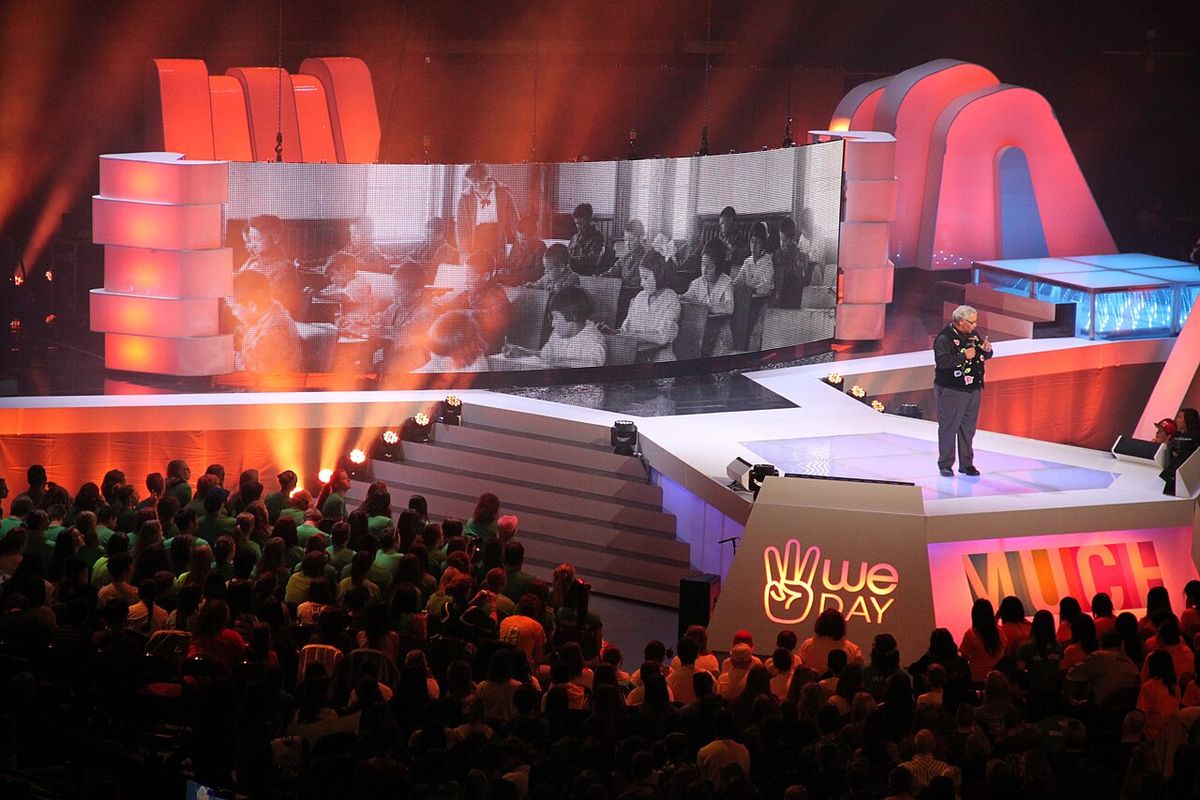
Senate tenure and public service
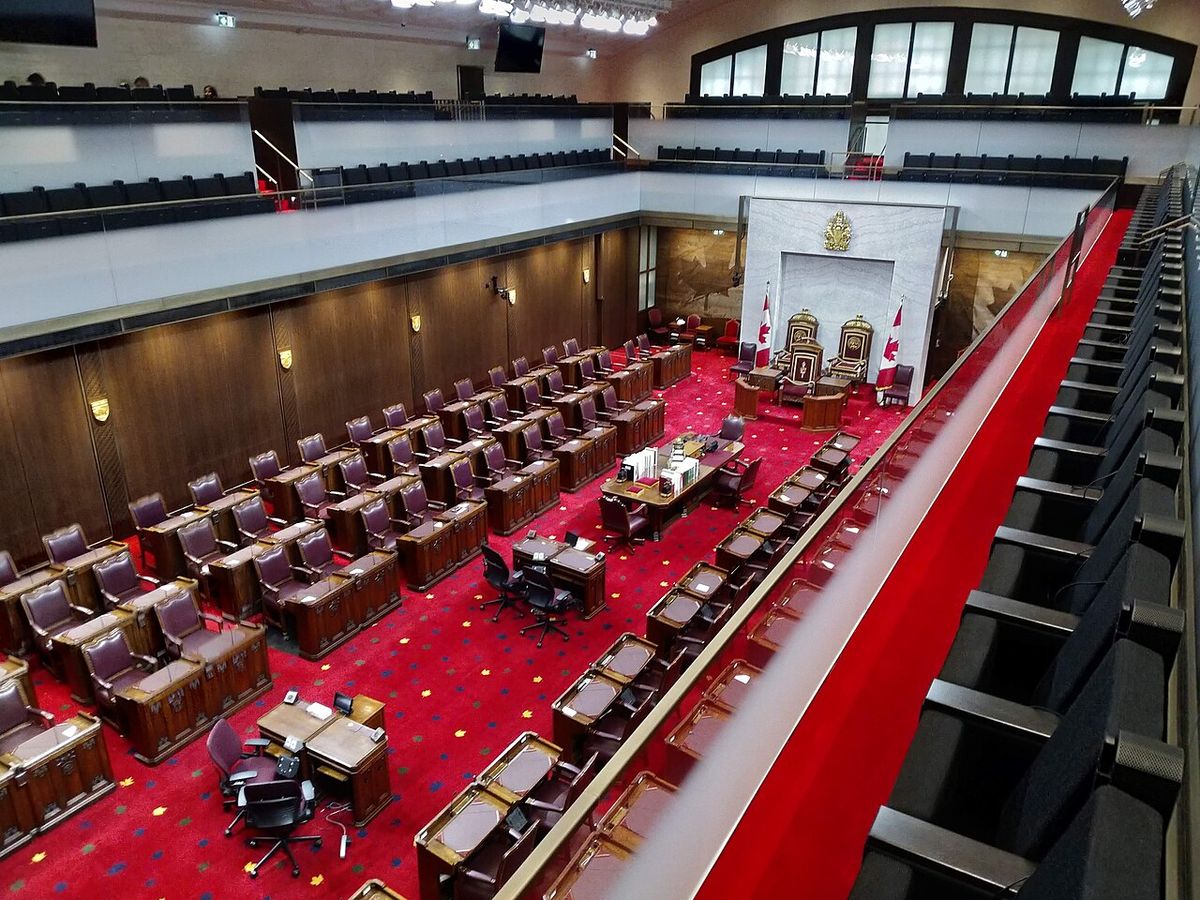
Following the completion of the TRC, leaders of Manitoba's Indigenous community nominated Murray Sinclair for appointment to the Senate of Canada, and with his family's support, he agreed. He was appointed as a senator from Manitoba by Prime Minister Justin Trudeau on April 2, 2016, serving until his resignation on January 31, 2021. In the Senate, he helped form the Independent Senators Group and sat on several standing committees including the Senate Standing Committees on Aboriginal Peoples, Fisheries and Oceans, Legal and Constitutional Affairs, and Rules, Ethics and Conflicts of Interest. Beyond his committee work, Sinclair continued his role as a mediator and made numerous public appearances on matters relating to Indigenous issues and the Senate. In 2018, he was asked to investigate the role of the Police Services Board of Thunder Bay, Ontario, in light of allegations of systemic racism in policing in that community, producing a report that was finalized in October 2018. His Senate office also served as a platform for ongoing advocacy related to the TRC's Calls to Action. He was the subject of the 2021 film "Honour to Senator Murray" by Abenaki filmmaker Alanis Obomsawin. Throughout his career, Sinclair served on numerous community boards, reflecting his commitment to social service, justice, and education. His board service began early, with roles at the Selkirk Friendship Centre. A comprehensive list of his board service includes:
- The Jemima Centre for the Handicapped.
- Scouts Canada.
- The John Howard Society.
- The Royal Canadian Air Cadets.
- The Canadian Club.
- The Canadian Native Law Students Association.
- The Indigenous Bar Association (formerly Canadian Indian Lawyers Association).
- The Social Planning Council of Winnipeg.
- The Ma Mawi Wi Chi Itata Centre.
- The AbinochiZhawaynDakooziwin Ojibway Immersion Nursery School Board.
- The Manitoba Provincial Judges Association.
- The Manitoba Bar Association.
- The National Judicial Institute.
- The board of regents of the University of Winnipeg.
This extensive volunteer work complemented his professional roles and demonstrated his deep engagement with community organizations across sectors. He served on the boards of The Jemima Centre for the Handicapped, Scouts Canada, and The John Howard Society. His involvement also included The Royal Canadian Air Cadets, The Canadian Club, and The Canadian Native Law Students Association. He contributed to the Social Planning Council of Winnipeg, the Ma Mawi Wi Chi Itata Centre, and the AbinochiZhawaynDakooziwin Ojibway Immersion Nursery School Board.
Later roles and university chancellorship
After leaving the Senate, Murray Sinclair was installed as the 15th Chancellor of Queen's University on July 1, 2021, succeeding Jim Leech. He served a three-year term, declining to seek reappointment, with his chancellorship concluding on June 30, 2024. Instead of a second term, he accepted a new role as Chancellor Emeritus and Special Advisor to the Principal on Reconciliation at Queen's, continuing to guide the university's efforts in this critical area based on the TRC's Calls to Action. In this advisory capacity, he worked directly with the university's principal to develop and implement strategies that advanced reconciliation across academic programs, governance, and community engagement. His influence extended beyond formal ceremonies, shaping the university's approach to Indigenous inclusion and the integration of Indigenous knowledge systems. The role of Chancellor Emeritus and Special Advisor was a fitting culmination to his lifelong advocacy, linking the national work of the TRC with concrete actions within a major Canadian university. His tenure at Queen's represented a continued, practical application of the reconciliation principles he championed on the national stage, influencing institutional policy and curriculum development.
Honours and recognition
Throughout his life, Murray Sinclair received widespread recognition for his contributions to justice, reconciliation, and public service. His many honours include the National Aboriginal Achievement Award, now the Indspire Awards, which he received twice: in the field of Justice in 1994 and for Lifetime Achievement in 2017, making him the first double-laureate since the awards began in 1993. He was awarded the Mahatma Gandhi Prize for Peace from the Gandhi Foundation, Canada's World Peace Award from the World Federalist Movement-Canada in 2016, the Mandela Award, and the Tarnopolski Award for Human Rights from the International Federation of Jurists in 2017. In 2019, he received the Symons Medal, awarded for exceptional contributions to Canadian life and presented at the Confederation Centre of the Arts in Prince Edward Island on November 1, 2019. He was awarded this medal due to his service with the justice system in Manitoba for over 25 years, being the second Indigenous Judge appointed in Canada, and serving as the Chief Commissioner of the TRC.
Sinclair was also the recipient of 20 honorary degrees from universities across Canada for his work in the field of Aboriginal justice, a remarkable academic tribute. He received the Meritorious Service Cross for his service on the Truth and Reconciliation Commission and was appointed a Companion of the Order of Canada in 2022, one of the country's highest civilian honours. In 2024, he was appointed a member of the Order of Manitoba and designated King's Counsel. In 2016 he received a Peace Patron Award from The Mosaic Institute, an NGO based in Toronto working to promote pluralism. His early recognition included winning the A.J. Christie Prize in Civil Litigation during law school in 1979. A summary of selected major honours includes:
- National Aboriginal Achievement Award (Indspire) for Justice (1994).
- Indspire Lifetime Achievement Award (2017).
- World Peace Award, World Federalist Movement-Canada (2016).
- Peace Patron Award, The Mosaic Institute (2016).
- Meritorious Service Cross (M.S.C.).
- Symons Medal (2019).
- Companion of the Order of Canada (C.C., 2022).
- Member of the Order of Manitoba (O.M., 2024).
- King's Counsel (K.C., 2024).
Personal life and death
Murray Sinclair was a member of the Peguis First Nation and held the traditional Ojibwe name Mazina Giizhik, meaning "the One Who Speaks of Pictures in the Sky," given to him by Traditional Ojibwe Teacher and Elder Onaubinisay (Jim Dumont). He was a Fourth Degree Midewiwin member of the Three Fires Society, a traditional Ojibwe medicine society of great significance to the Ojibwe people. Sinclair was first married to Jeanette Warren, with whom he had two children, including son Niigaan Sinclair, a noted academic, writer and commentator. He was later married to Katherine Morrisseau-Sinclair (1955 to 2024), also known as Animiki-quay, until her death in 2024, and they had a daughter together. The Sinclair family also adopted two daughters, creating a blended family of five children. He had five grandchildren.
Sinclair died on November 4, 2024, at St. Boniface Hospital in Winnipeg at the age of 73, after a period of hospitalization related to congestive heart failure. His passing was described as peaceful and surrounded by love from his family. His death was marked by a sacred fire and a teepee on the grounds of the Manitoba Legislative Building where the public could pay respects and offer tobacco. Flags on the Peace Tower and across Canada were flown at half-mast until sunset on November 10, 2024, the day of a national commemorative ceremony. He was interred at Glen Eden Cemetery in Winnipeg, survived by his children and grandchildren. His legacy continues through the ongoing work toward reconciliation guided by the TRC's Calls to Action.
Questions about Murray Sinclair
What was Murray Sinclair's role in the Truth and Reconciliation Commission?
Murray Sinclair served as the chair of Canada's Truth and Reconciliation Commission from June 2009 until December 2015. He oversaw the collection of over 6,000 statements from residential school survivors and guided the production of the commission's six-volume final report. That report concluded Canada's residential school policy constituted cultural genocide and issued the historic 94 Calls to Action. Sinclair emphasized that reconciliation was a Canadian responsibility, stating it is "not an Indigenous problem. It is a Canadian one. He also ensured the commission's decision-making process operated by consensus.
When did Murray Sinclair serve in the Senate and what did he do?
Murray Sinclair was appointed to the Senate of Canada on April 2, 2016, and served until his resignation on January 31, 2021. Representing Manitoba, he helped form the Independent Senators Group and served on key committees including Aboriginal Peoples, Fisheries and Oceans, and Legal and Constitutional Affairs. He also conducted an independent investigation into systemic racism in the Thunder Bay Police Services Board, completing a report in October 2018. His Senate work extended his advocacy for the TRC's Calls to Action within the federal legislative framework and included mediation and public speaking.
What was Murray Sinclair's connection to Queen's University?
Murray Sinclair became the 15th Chancellor of Queen's University on July 1, 2021. He succeeded Jim Leech and served a single three-year term until June 30, 2024, declining reappointment. Instead, he accepted a new role as the Chancellor Emeritus and Special Advisor to the Principal on Reconciliation of Queen's University. In this capacity, he advised on implementing the TRC's Calls to Action within the university's academic programs, governance, and community engagement strategies.
What honours and awards did Murray Sinclair receive?
Murray Sinclair received numerous honours, including the National Aboriginal Achievement Award (Indspire) in 1994 and again for Lifetime Achievement in 2017, making him a double-laureate. He was awarded the Meritorious Service Cross, the Symons Medal in 2019, and was appointed a Companion of the Order of Canada in 2022. In 2024, he was named a member of the Order of Manitoba and designated King's Counsel. He also received 20 honorary degrees, the World Peace Award (2016), the Tarnopolski Award for Human Rights (2017), a Peace Patron Award from The Mosaic Institute (2016), and the Mahatma Gandhi Prize for Peace.
When and how did Murray Sinclair die?
Murray Sinclair died on November 4, 2024, at St. Boniface Hospital in Winnipeg at the age of 73. His death followed a battle with congestive heart failure and a period of hospitalization. He was surrounded by family, and his passing was commemorated with a sacred fire and teepee at the Manitoba legislature where the public could offer tobacco and pay respects. National flags, including on the Peace Tower, were flown at half-mast until November 10. He was buried at Glen Eden Cemetery in Winnipeg.
What were Murray Sinclair's firsts as a judge?
Murray Sinclair was the first Indigenous judge in Manitoba when he was appointed associate chief judge of the Provincial Court of Manitoba in March 1988. Later, in January 2001, he was appointed to the Court of Queen's Bench of Manitoba, becoming the province's first Indigenous person appointed to that court. These appointments were preceded by his significant work as co-commissioner of Manitoba's Aboriginal Justice Inquiry. His judicial career was dedicated to addressing systemic issues within the justice and health care systems affecting Indigenous communities.
Sources and further reading
- Murray Sinclair (Wikipedia)
- Murray Sinclair, former senator who led Truth and ... (iphcc.ca)
- Hon. Justice Murray Sinclair, Doctor of Civil Laws ('21) (convocation.acadiau.ca)
- Senator Murray Sinclair (indspire.ca)
- Vale Mizanay Gheezhik, The Honourable Murray Sinclair ... (ourchildrenourway.ca)
Checked by the Nosy Mag desk. Last updated 2026-11-01.