Prince Edward, Duke of Kent and Strathearn
Prince Edward, Duke of Kent and Strathearn (2 November 1767 to 23 January 1820) was the fourth son and fifth child of King George III and the father of Queen Victoria. He lived in Lower Canada and Nova Scotia from 1791 to 1800, where he served as commander-in-chief of British forces in the Maritime Provinces of North America. He is often styled the 'Father of the Canadian Crown' for his early advocacy of colonial union and his role in fostering a distinct Canadian identity, notably being the first public figure on record to use the term 'Canadian' inclusively for both French and English settlers in 1792. His legacy is physically commemorated across the country, most prominently in the naming of Prince Edward Island.
Early Life and Military Beginnings
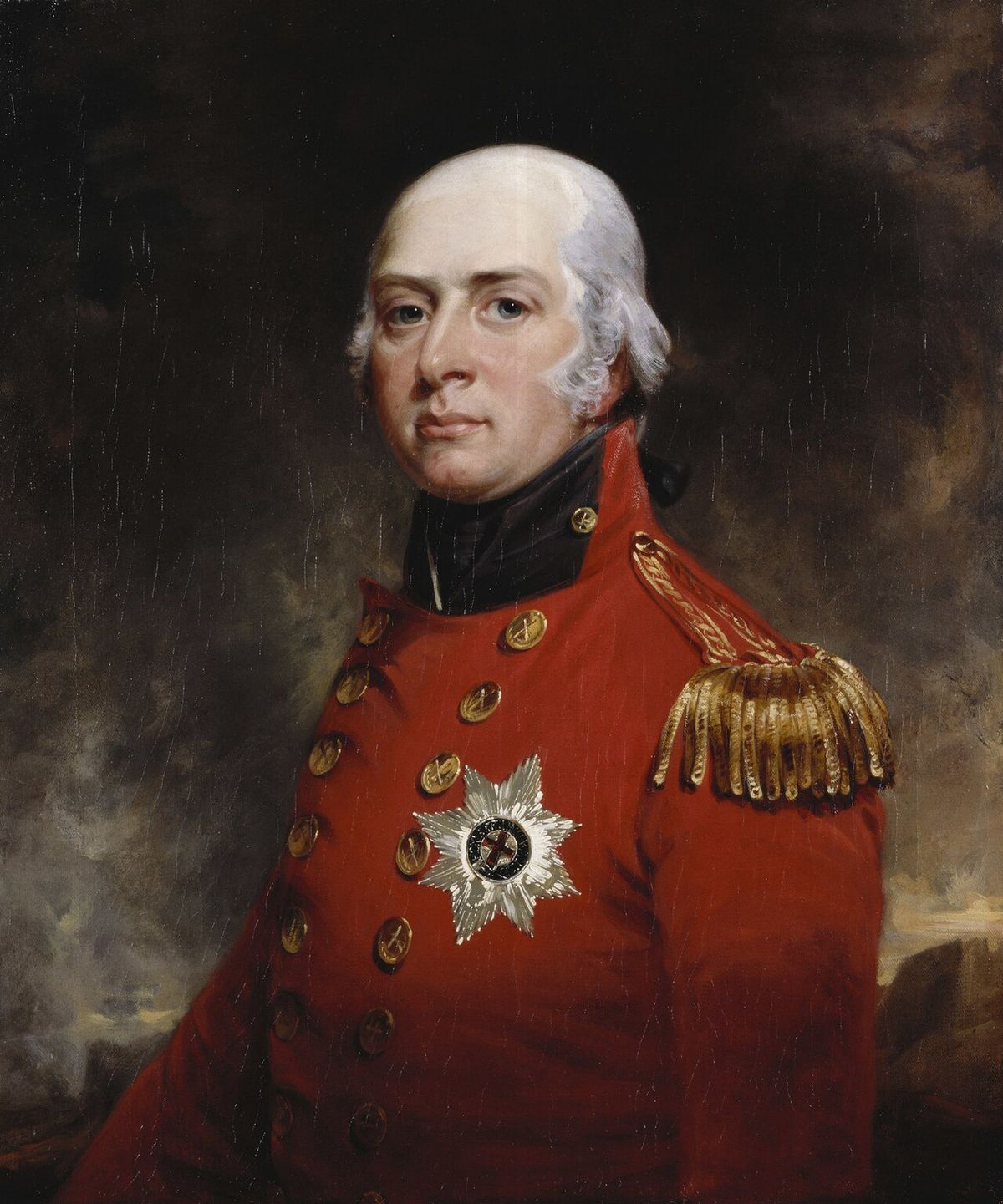
Prince Edward Augustus was born on 2 November 1767 at Buckingham House in London, the fourth son and fifth child of King George III and Queen Charlotte. He was baptised on 30 November 1767 with his godparents including the Hereditary Prince of Brunswick-Lüneburg and Duke Charles of Mecklenburg-Strelitz. As a child he was tutored by John Fisher. His military training began in the Electorate of Hanover in 1785, where he was accompanied by his German tutor, Lieutenant Colonel George von Wangenheim. On 30 May 1786, he was appointed a brevet colonel in the British Army. From 1788 to 1789, he completed his education in Geneva. On 5 August 1789, he was initiated into Freemasonry at the L'Union lodge. In Geneva, he had two mistresses, Adelaide Dubus and Anne Moré. Dubus died at the birth of her daughter Adelaide Victoria Augusta Dubus (1789 to 1790). Moré was the mother of Edward Schenker Scheener (1789 to 1853), who later worked as a clerk in the Foreign Office from 1809. In 1789, he was appointed colonel of the 7th Regiment of Foot (Royal Fusiliers). In 1790, he returned to England without leave and was sent to Gibraltar as an ordinary officer, joined there by his new mistress, Julie de Saint-Laurent.
Posting to British North America
Due to the extreme Mediterranean heat, Edward requested a transfer to Canada, arriving in Quebec City in 1791. He was present for the proclamation of the Constitutional Act of 1791 and was received by Governor Guy Carleton, Lord Dorchester. Edward and his mistress, Julie St. Laurent, became close friends with the French Canadian family of Ignace-Michel-Louis-Antoine d'Irumberry de Salaberry. The prince mentored all of the family's sons throughout their military careers, notably guiding Charles de Salaberry, who later achieved fame at the Battle of Chateauguay. He became the first member of the royal family to tour Upper Canada in 1792, visiting settlements from Cornwall to Newark. Edward was promoted to major-general in October 1793. He served in the West Indies campaign in 1794, commanding the British camp at La Coste during the Battle of Martinique, for which he was mentioned in dispatches by General Charles Grey and received the thanks of Parliament.
After 1794, Edward lived at the headquarters of the Royal Navy's North American Station in Halifax, Nova Scotia. He was instrumental in shaping the settlement's military defences and protecting its important Royal Navy base. Edward was responsible for the construction of Halifax's Garrison Clock and St. George's Round Church. Lieutenant Governor Sir John Wentworth and Lady Francis Wentworth provided their country residence, which became known as Prince's Lodge and hosted dignitaries including the future King of the French, Louis-Philippe of Orléans. After a fall from his horse in late 1798, he returned to England. On 24 April 1799, Edward was created Duke of Kent and Strathearn and Earl of Dublin, granted an annual income of £12,000, and promoted to general. In May 1799, he was appointed Commander-in-Chief of British forces in North America. He returned to Halifax in July 1799 and held the post until his final departure in August 1800. During his time in North America, he also became the first British prince to visit the United States after British recognition of its independence, travelling on foot to Boston from Lower Canada in 1794.
Canadian Legacy and Advocacy for Union
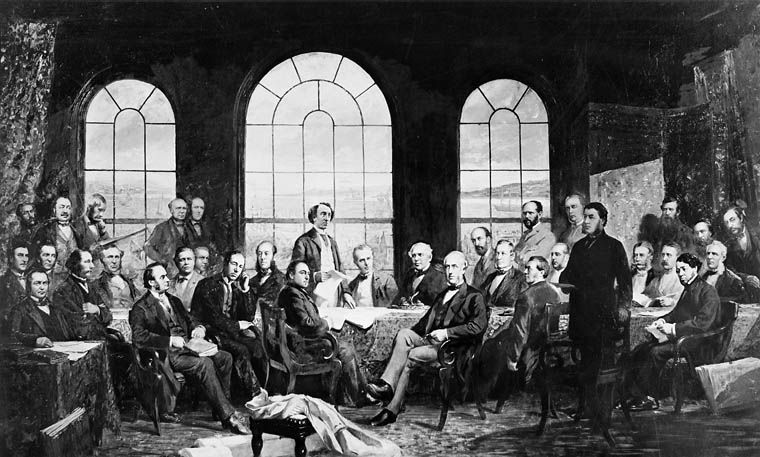
Prince Edward's impact on Canada is rooted in his direct engagement with colonial society and his forward-thinking political views. He is credited with the first use of the term Canadian to mean both French and English settlers, using it to quell a riot at a polling station in Charlesbourg, Lower Canada, on 27 June 1792. His advocacy for colonial union was demonstrated in his detailed 1814 correspondence with Jonathan Sewell, the Attorney General and later Chief Justice of Lower Canada. Sewell had sent him a plan for a federal union of the British North American colonies. Edward's reply offered critiques on the structure of a proposed representative assembly and suggested two lieutenant governors, one for the Canadas and one for New Brunswick, Prince Edward Island, and Cape Breton. This input was later cited by Lord Durham in his 1839 report and by participants of the Charlottetown and Quebec Conferences in 1864. Edward's nine-year residence and civic projects left a lasting institutional legacy.
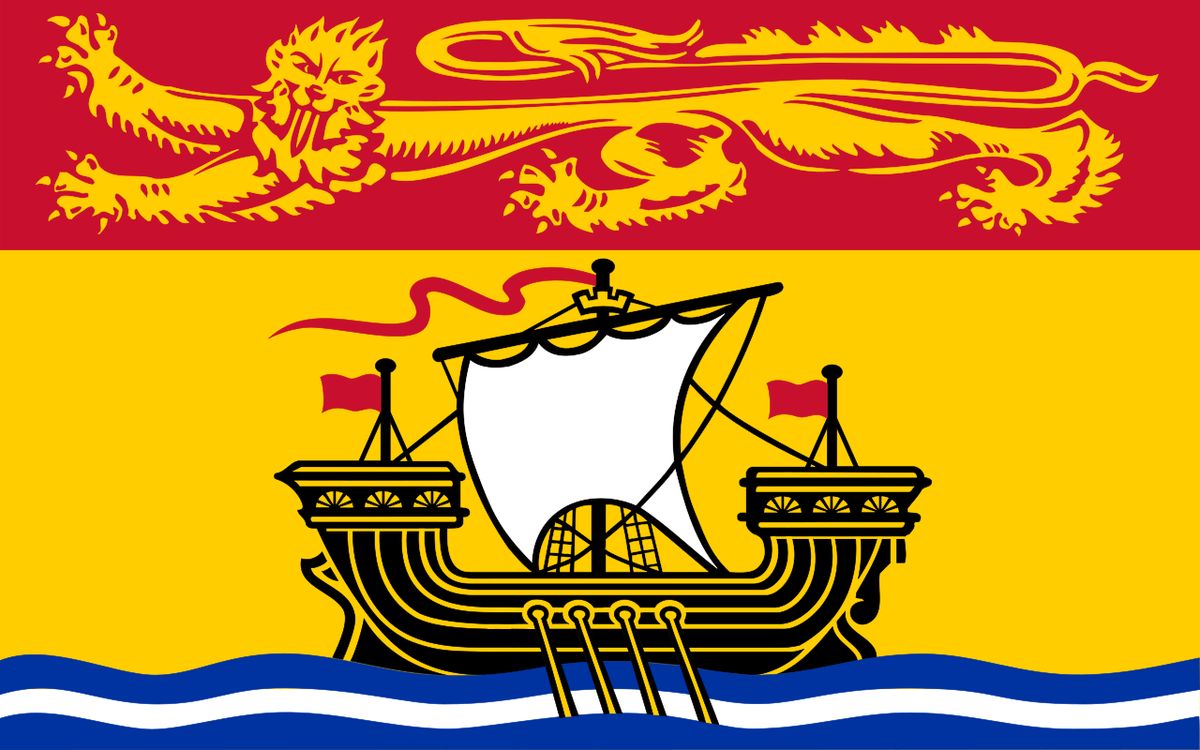
- Prince Edward Island: The colony, originally St. John's Island, was renamed in his honour in 1798.
- Prince Edward County, Ontario: Named for him following his 1792 tour of Upper Canada.
- Kentville, Nova Scotia: The town's name commemorates his ducal title.
- Duke Street, Halifax: A major downtown street named in his honour.
- Garrison Clock, Halifax: Built under his orders in 1803 to regulate the military garrison's daily routine.
- Prince's Lodge, Halifax: His country estate, of which only a small rotunda built for his regimental band survives.
- Julie's Pond, Halifax: A pond in Hemlock Ravine Park named for his companion, Julie de Saint-Laurent.
- The Prince Edward Islands: A subantarctic archipelago in the southern Indian Ocean named for him.
Governor of Gibraltar and Later Military Career
Appointed Governor of Gibraltar by the War Office on 23 March 1802, Edward took up his post on 24 May with express orders to restore discipline among the troops. His harsh methods, which may have been influenced by his tutor Baron Wangenheim, precipitated a mutiny by soldiers of his own and the 25th Regiment on Christmas Eve 1802. His brother, the Duke of York, then Commander-in-Chief of the Forces, recalled him in May 1803 after receiving reports of the mutiny. Edward refused to leave until his successor arrived. He was forbidden from returning to Gibraltar, though he nominally retained the governorship until his death. As a consolation for the end of his active military career at age 35, he was promoted to field marshal on 5 September 1805 and appointed Ranger of Hampton Court Park, which provided him with a residence known as The Pavilion. He continued to serve as honorary colonel of the 1st Regiment of Foot (the Royal Scots) until his death. The Duke of Wellington considered him a first-class speaker. He took a continuing interest in the social experiments of Robert Owen, voted for Catholic emancipation, and supported literary, Bible, and abolitionist societies.
Marriage, Fatherhood, and the Succession Crisis
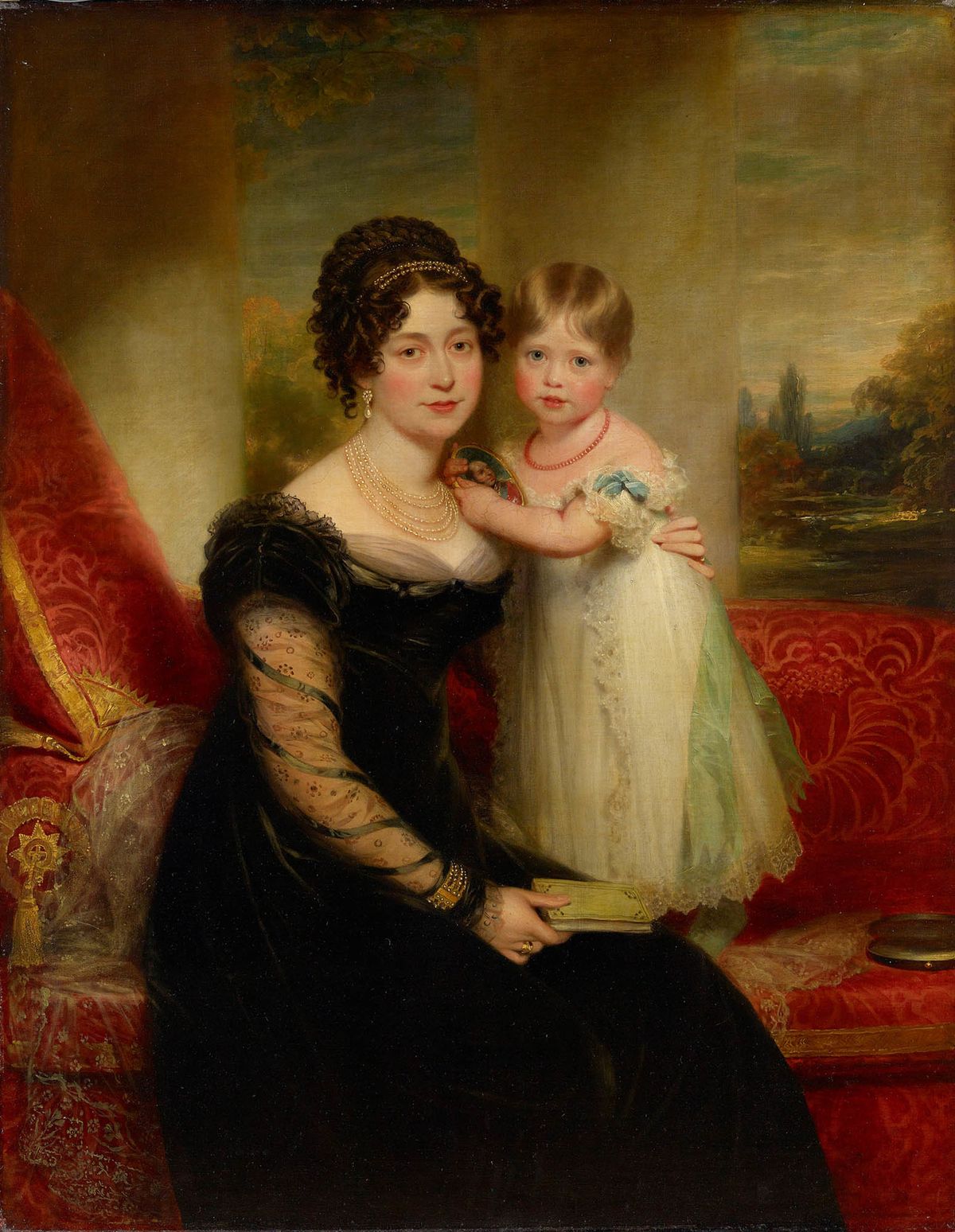
Following the death in November 1817 of Princess Charlotte of Wales, the only legitimate grandchild of George III, the royal succession was in jeopardy. The Prince Regent and the Duke of York were estranged from their wives and childless. The King's unmarried sons, including the 50-year-old Duke of Kent, rushed to contract lawful marriages. Edward became engaged to Princess Victoria of Saxe-Coburg-Saalfeld, the widow of Emich Carl, 2nd Prince of Leiningen and sister of Prince Leopold of Saxe-Coburg-Saalfeld. They were married twice, first in a Lutheran rite at Ehrenburg Palace in Coburg on 29 May 1818, and again at Kew Palace on 11 July 1818. Princess Victoria had two children from her first marriage, Karl, 3rd Prince of Leiningen, and Princess Feodora. Their only child together, Alexandrina Victoria, was born at Kensington Palace on 24 May 1819. The Duke took great pride in his daughter, telling friends to look at her well for she would be Queen of the United Kingdom, a prediction that proved accurate.
Final Years, Death, and Dynastic Consequences
Following the birth of Princess Victoria, the Duke and Duchess, concerned with managing the Duke's considerable debts, sought an inexpensive place to live. They leased Woolbrook Cottage in Sidmouth, Devon, in late 1819 from a General Baynes. Edward died of pneumonia there on 23 January 1820, aged 52, just six days before the death of his father, King George III. He was interred in St. George's Chapel, Windsor Castle. In 1829, his former aide-de-camp purchased his unoccupied London home, Castle Hill Lodge, from the Duchess in an attempt to reduce the debts, which were finally discharged after Victoria took the throne and paid them over time from her income. Since none of his elder brothers had any surviving legitimate children, his daughter Victoria succeeded her uncle, William IV, to the throne in 1837, reigning until 1901. Edward is the direct progenitor of the modern British royal family, including the current Canadian monarch. A bronze statue of the prince by Sebastian Gahagan was installed in Park Crescent, London, in January 1824.
Personal Interests, Character and Honours
Prince Edward held a range of progressive social and intellectual interests that distinguished him from some of his brothers. He was noted for his friendliness toward others and popularity with household servants, contrasting with his reputation for strict military discipline. He applied the same discipline to his own duties and is credited with introducing the first regimental school. In Freemasonry, he played a central administrative role, becoming Grand Master of the Antient Grand Lodge of England in December 1813 and working with his brother the Duke of Sussex to finalize the articles of union that created the United Grand Lodge of England later that month. His daughter, Queen Victoria, recorded in her private journal on 1 August 1838 that from all she had heard, her father was 'the best of all' the sons of George III. Edward received several honours during his life. He was made a Knight of the Order of St Patrick on 11 March 1783, a Royal Knight of the Garter on 2 June 1786, a Privy Councillor on 5 September 1799, a Knight Grand Cross of the Order of the Bath on 2 January 1815, and a Knight Grand Cross of the Royal Hanoverian Guelphic Order on 12 April 1815.
Questions about Prince Edward, Duke of Kent and Strathearn
Why is Prince Edward, Duke of Kent important to Canada?
Prince Edward lived in Lower Canada and Nova Scotia from 1791 to 1800 as commander-in-chief. He shaped Halifax's defences, built civic projects like the Garrison Clock, and used the term 'Canadian' inclusively in 1792. His 1814 support for Jonathan Sewell's plan for a federal union influenced later discussions leading to Canadian Confederation. He also became the first British prince to visit the United States after 1783, walking to Boston in 1794.
Is Prince Edward Island named after him?
Yes, Prince Edward Island is named after him. The colony originally known as St John's Island was renamed Prince Edward Island in 1798 during his time stationed in British North America. Other places named in his honour include Prince Edward County in Ontario, Kentville in Nova Scotia, and Duke Street in Halifax, Nova Scotia. The subantarctic Prince Edward Islands also bear his name. A bronze statue of the Duke was installed in London's Park Crescent in January 1824.
Was he the father of Queen Victoria?
Yes, his only legitimate child was Alexandrina Victoria, born 24 May 1819. She succeeded her uncle William IV in 1837. Edward's marriage in 1818 was part of a rush by the king's unmarried sons to provide an heir after the death of Princess Charlotte of Wales in 1817. He accurately predicted his daughter would become queen.
Did he have a relationship with a Canadian woman?
He had a 28-year relationship with his mistress, Julie de Saint-Laurent, who accompanied him to Canada in 1791. Archival research at Windsor Castle established that no children were born from their relationship. They became close friends with the French Canadian de Salaberry family in Quebec. A pond in Halifax's Hemlock Ravine Park is named Julie's Pond in her honour.
Where did he die and where is he buried?
He died of pneumonia on 23 January 1820 at Woolbrook Cottage in Sidmouth, Devon, which he leased to manage his debts. He was interred in St George's Chapel at Windsor Castle. His death occurred six days before his father, King George III, died. His daughter Queen Victoria later paid off his remaining debts from her royal income.
Sources and further reading
- Prince Edward, Duke of Kent and Strathearn (Wikipedia)
- Prince Edward, Duke of Kent and Strathearn (thecanadianencyclopedia.ca)
Checked by the Nosy Mag desk. Last updated 2026-10-28.