Mining in Canada
Mining is a significant part of the Canadian economy. Industrial mining began in the late 18th century. Canada is a leading global producer of minerals including potash, uranium, and gold. Toronto is the world's primary hub for mining equity trading. The sector contributes substantially to national GDP and employment, and Canadian mining companies have a large global presence.
Early History and Industrial Beginnings
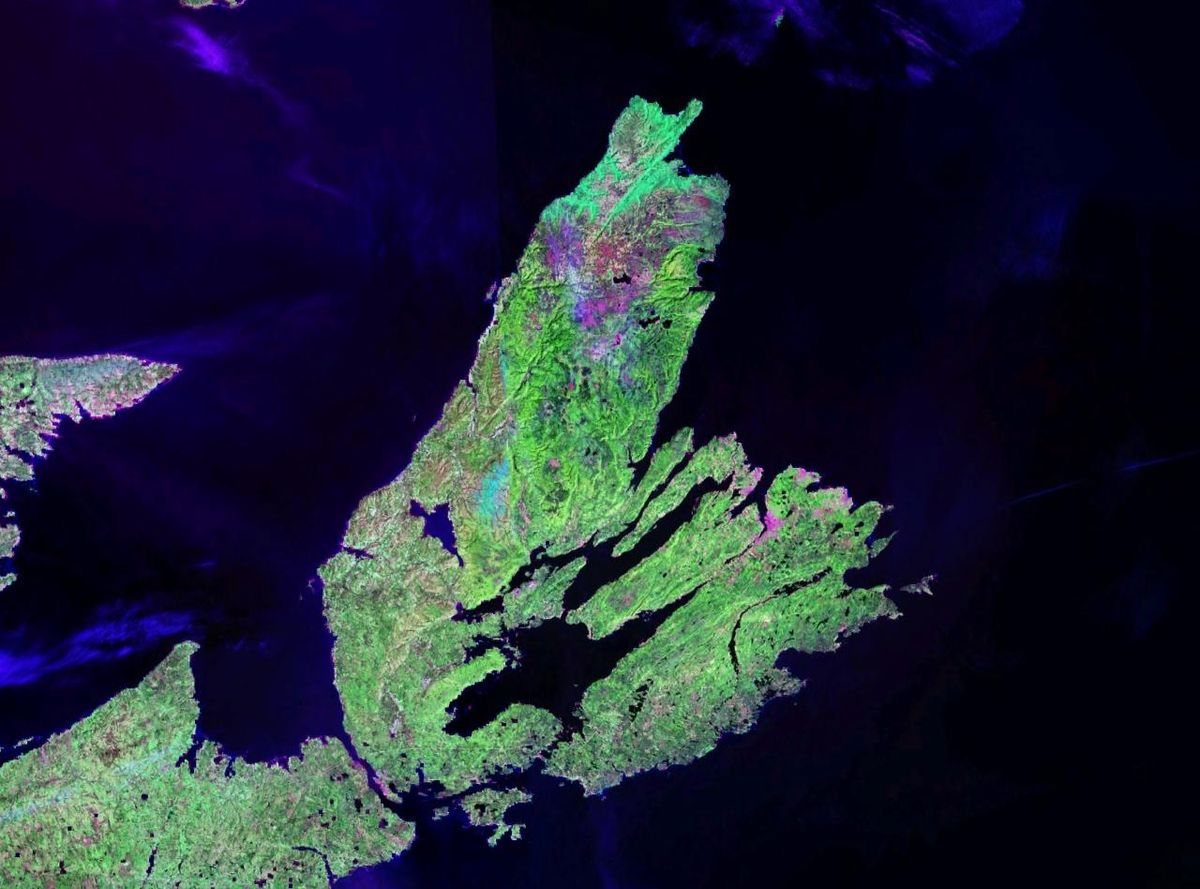
The history of mining in Canada goes back to the 16th century. In the 1570s, the English explorer Martin Frobisher made a brief and unsuccessful attempt to mine what he believed was gold on Baffin Island. In 1672, French settlers identified coal deposits on Cape Breton Island. The search for minerals continued inland, with the Dene leader Matonabbee and explorer Samuel Hearne seeking copper in the Hudson Bay region during the 1770s.
The first industrial mining operation in present-day Canada was the iron mine at Forges du Saint-Maurice near Trois-Rivières, Quebec, which operated from 1738 to 1883. Copper mining at Bruce Mines, Ontario began in 1848 and was the first industrial-scale mine for a substance other than iron. The Canadian mining industry continued to expand nationwide through the 19th century and became one of the world's largest by the 20th century, particularly after World War II. The staples thesis, which posits that the Canadian economy developed through exploiting natural resources, remains a viable model of Canadian political economy. The industry's development is documented in historical works such as Donald A. Cranstone's 2002 report for Natural Resources Canada.
Modern Scale and Global Rankings
By the 20th and 21st centuries, Canadian mining had grown into a global leader. Production data from 2019 illustrates the country's significant position. Canada was the world's largest producer of potash and the second largest producer of niobium. It was the fourth largest producer of platinum and titanium. Canada was the fifth largest producer of gold and nickel. It also ranked among the top ten global producers of copper, iron ore, sulfur, molybdenum, cobalt, lithium, zinc, and graphite. In 2018, Canada was the world's second largest producer of uranium.
This production diversity shows the vast mineral wealth found across Canadian geology, from the nickel and copper of the Sudbury Basin to the gold deposits of Ontario and Quebec, and the massive potash beds of Saskatchewan. The industry's scale includes materials critical for modern technology and the green energy transition, such as lithium and cobalt for batteries. Canada was also the world's sixth largest producer of salt, the eighth largest producer of lithium and zinc, the tenth largest producer of graphite, the thirteenth largest producer of gypsum, and the fourteenth largest producer of antimony in 2019. The country's mineral output is tracked and analyzed by organizations like the Mining Association of Canada.
Domestic Economic Impact
Mining is a major part of the Canadian economy, contributing substantial revenue, jobs, and investment. In 2018, mining revenues totalled 47 billion dollars. By 2021, the sector's contribution to Canada's gross domestic product reached 156.5 billion dollars, representing 7.9 percent of the nation's total economic output of 1.8 trillion dollars. This contribution is broken down into several components, including 36.1 billion dollars from extraction, 17.7 billion from primary manufacturing, 25 billion from downstream manufacturing, and 12 billion from mining-related services.
Toronto has emerged as the world's preeminent hub for mining capital. As of 2016, approximately 80 percent of all global equity trades in mining stocks were conducted on Toronto's markets. More than half of the world's publicly listed exploration and mining companies were headquartered in Canada as of 2013. The industry's economic impact is also deeply regional. In Northern Canada, hardrock mining has long been one of the most significant sources of economic development and employment for remote communities. Studies, such as those in the 2015 volume Mining and Communities in Northern Canada, examine this history and its social impacts.
The industry's history is marked by cycles of boom and bust. The 1980s and 1990s were characterized by a prolonged slump, while the 2000s and 2010s largely experienced boom periods driven by high global commodity prices. Government policy has also played a role. Canada taxes mining companies at a relatively low rate by international standards, a factor identified by scholar Shafiq Alam as a key reason the country has established itself as an attractive global jurisdiction for mining investment.
Key Regions and Commodities
While mining occurs across Canada, certain regions are globally renowned for specific commodities. Saskatchewan is a world leader in uranium production, generating approximately 15 percent of the global supply. Uranium was first discovered in the province in the 1930s and, by the 1950s, had become Canada's most valuable resource export. The province is also a central part of Canada's position as the world's top potash producer. Ontario and Quebec form the historic heartland of Canada's base and precious metals mining, hosting major camps for gold, nickel, copper, and zinc. The Sudbury Basin in Ontario is one of the world's largest nickel-copper mining regions.
British Columbia has a rich history in coal and metal mining, with important mines and smelters opening in the southern part of the province during the 1880s and 1890s. The territories in Northern Canada are focal points for diamond mining, gold, and critical minerals. Diamond mining began in the Northwest Territories in the 1990s. This geographic distribution means the benefits and challenges of mining are felt differently across the country, influencing provincial economies and policies. Other notable mining areas include coal mining in Saskatchewan and gold mining across various provinces.
- Saskatchewan: World-leading producer of uranium and potash.
- Ontario & Quebec: Major producers of gold, nickel, copper, and zinc.
- British Columbia: Historic producer of coal, silver, and copper.
- Northern Canada (NWT, Nunavut, Yukon): Source of diamonds, gold, and critical minerals.
International Expansion and Presence
The influence of Canadian mining extends far beyond the country's borders. Canadian-domiciled mining companies have developed an extensive and dominant global presence, with international expansion actively championed by the government of Canada. Canadian mining investment abroad has been particularly significant in Latin America and the Caribbean and in African countries, where companies are involved in numerous large-scale extraction projects. This expansion has been analyzed in academic works such as Paula Butler's Colonial Extractions: Race and Canadian Mining in Contemporary Africa.
Canadian expertise and capital are exported worldwide, with companies often listed on the Toronto Stock Exchange or TSX Venture Exchange while operating mines on several continents. This international focus is reflected in the industry's event calendar, which includes Canadian participation and organization of major trade missions and conferences across the globe. This outward orientation shows the industry's role as a globalized sector headquartered in Canada. Canadian mining operations have been the subject of scrutiny regarding environmental and social practices internationally, leading to legal cases and discussions on business and human rights standards.
Industry Events and Conventions
The Canadian mining calendar is filled with major conferences and conventions that facilitate networking, investment, and the exchange of technical knowledge. The Prospectors & Developers Association of Canada (PDAC) convention in Toronto is one of the world's largest annual mining gatherings, typically held in March. The industry's event schedule for 2026 presents a busy agenda with events focused on exploration, investment, and technology. Toronto serves as the host city for several premier events. The Red Cloud Fall Mining event is scheduled for October 28-29, 2026, at the Omni King Edward Hotel, connecting investors with junior mining companies. Other significant national events include the Central Canada Mineral Exploration Convention (CCMEC), the Mineral Resource and Mineral Reserve Conference (MRMR) in Montreal, and MiningTech North America in Vancouver. These conventions are essential for deal-making and innovation. Additional notable gatherings include the Ontario Critical Minerals Forum and the Future Minerals Forum which features Canadian participation.
- PDAC Convention: Premier global mining event held annually in Toronto each March.
- Red Cloud Fall Mining event 2026: Investor-focused event in Toronto (Oct 28-29).
- Canadian Mining Expo: Annual exhibition held in Timmins, Ontario, in June.
- MRMR 2026: Mineral Resource and Reserve conference in Montreal (Nov 3-6).
- MiningTech North America: Technology and innovation expo in Vancouver (Nov 9-10, 2026).
- Exploration, Mining and Petroleum Conference: 50th annual event in Fredericton, NB (Oct 25-27, 2026).
- Electra Mining Africa: A major international event where Canadian companies exhibit.
Contemporary Focus and Future Direction
The Canadian mining industry is currently focused on several key themes that will define its future. Critical minerals, essential for clean energy technologies, electric vehicles, and national security, are a major priority for both industry and government. This includes minerals like lithium, cobalt, graphite, and rare earth elements. Federal and provincial strategies aim to secure these supply chains. Technological innovation is another dominant trend, with conferences dedicated to automation, artificial intelligence, and digital transformation in mining operations to improve efficiency, safety, and environmental performance.
The industry is also deeply engaged with issues of environmental, social, and governance (ESG) performance, community relations, and Indigenous partnerships. The use of Impact Benefit Agreements (IBAs) with Aboriginal communities, particularly in Northern Canada, has become a common practice for new projects, as studied by scholars like Suzanne Mills and Brendan Sweeney. The industry continues to manage its extensive international operations amidst evolving global standards for business and human rights, a subject addressed in the Canadian Yearbook of International Law. Mining is seen as a foundation for economic prosperity, national defence, and the transition to a low-carbon future, aligning with national economic policies.
Questions about Mining in Canada
What minerals does Canada produce the most of?
As of 2019, Canada was the world's largest producer of potash and the second largest producer of niobium. It was the fourth largest producer of platinum and titanium. Canada was the fifth largest producer of gold and nickel. It also ranked among the top ten global producers of copper, iron ore, sulfur, molybdenum, cobalt, lithium, zinc, and graphite. In 2018, Canada was the world's second largest producer of uranium. Canada also produced significant amounts of salt (6th), gypsum (13th), and antimony (14th) in 2019.
How important is mining to the Canadian economy?
Mining is a major contributor. In 2021, the sector contributed 156.5 billion dollars to the national GDP, accounting for 7.9 percent of the total 1.8 trillion dollar economy. The breakdown includes 36.1 billion from extraction, 17.7 billion from primary manufacturing, 25 billion from downstream manufacturing, and 12 billion from services. Toronto is the world's financial hub for mining, with about 80 percent of global mining equity trades happening there as of 2016. Over half of the world's publicly listed mining companies were headquartered in Canada as of 2013.
Do Canadian mining companies operate internationally?
Yes, Canadian mining companies have a dominant global presence, described by scholars as having an extensive and dominant global presence. International expansion is supported by the Canadian government. Canadian mining investment is particularly significant in Latin America and the Caribbean and in African countries. Canadian-domiciled companies operate large-scale projects worldwide. This has led to academic and legal scrutiny of their environmental and social practices abroad.
What are the major mining conferences in Canada?
Major conferences include the PDAC convention in Toronto each March, which is one of the world's largest mining events. Key events for 2026 are the Red Cloud Fall Mining event in Toronto from October 28 to 29 and the Canadian Mining Expo in Timmins in June. Other notable 2026 conferences are the Mineral Resource and Mineral Reserve Conference in Montreal from November 3 to 6, MiningTech North America in Vancouver on November 9 and 10, and the 50th Exploration, Mining and Petroleum Conference in Fredericton from October 25 to 27. Canadian mining companies also take part in significant international events such as Exposibram, Arminera, and Electra Mining Africa.
When did industrial mining begin in Canada?
Industrial mining in present-day Canada began in 1738 with the opening of the Forges du Saint-Maurice iron mine near Trois-Rivières, Quebec, which operated until 1883. Earlier non-industrial attempts include Martin Frobisher's expedition to Baffin Island in the 1570s and French settlers detecting coal in Cape Breton in 1672. The first industrial-scale mine for a substance other than iron was the Bruce Mines copper operation in Ontario, which started in 1848. The industry expanded through the 19th century.
Which Canadian province is a global leader in uranium production?
Saskatchewan is a global leader in uranium production, responsible for approximately 15 percent of the world's supply. The metal was first discovered in the province in the 1930s and became Canada's most valuable resource export by the 1950s. This positions Canada as the world's second largest producer of uranium as of 2018. Saskatchewan's mining sector is also integral to Canada's position as the world's largest producer of potash.
Sources and further reading
- Mining in Canada (Wikipedia)
- Industry Events, Canadian Mining Magazine (canadianminingmagazine.com)
- International Mining Events (mstacanada.ca)
- Central Canada Mineral Exploration Convention (ccme-convention.ca)
- Mining Conferences in Canada 2026 to 2027 | CA (conferencealerts.co.in)
Checked by the Nosy Mag desk. Last updated 2026-11-01.