Julian Byng, 1st Viscount Byng of Vimy
Julian Hedworth George Byng, 1st Viscount Byng of Vimy, was a British Army field marshal whose leadership of the Canadian Corps during the First World War cemented his place in Canadian history. He is best remembered for planning and executing the successful Canadian assault on Vimy Ridge in April 1917, a victory that became a powerful symbol of emerging Canadian nationhood. Following the war, Byng served as Canada's 12th governor general from 1921 to 1926, a tenure that included the significant constitutional episode known as the King-Byng Affair. His military service and viceregal role made him a prominent and popular figure in Canada, with his legacy enduring in the national memory of Vimy and the evolution of the governor general's office.
Early Life and Military Beginnings
Julian Byng was born on 11 September 1862 at the family seat of Wrotham Park in Hertfordshire, the 13th and youngest child of George Byng, 2nd Earl of Strafford, and Harriet Elizabeth Cavendish. He was educated at Eton College until the age of 17, although he did not enter the sixth form. He was nicknamed 'Bungo' to differentiate him from his older brothers, and his academic record was poor. With the family unable to afford a regular army commission for a seventh son, Byng began his military career in the militia, becoming a second lieutenant in the 2nd (Edmonton) Royal Middlesex Rifles on 12 December 1879. His fortunes changed in 1883 when the Prince of Wales, a friend of his father, offered him a place in his own prestigious regiment, the 10th Royal Hussars. Byng financed his transfer through trading polo ponies and joined the regiment in Lucknow, India. His early combat experience came in 1884 during the Suakin Expedition in Sudan, where he saw action at the Battles of El Teb and Tamai, was mentioned in despatches, and had a horse killed under him.
Career Before the First World War
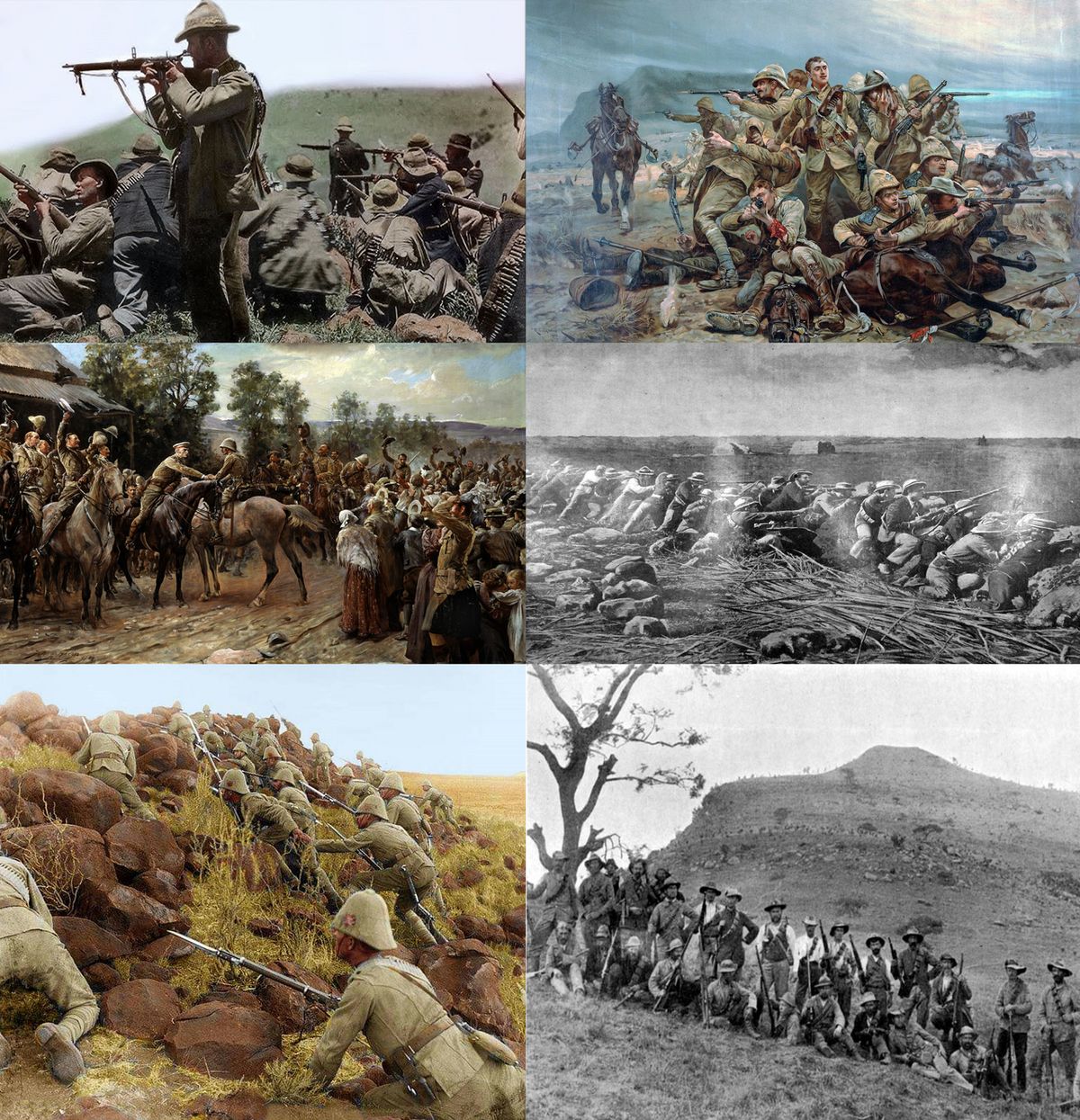
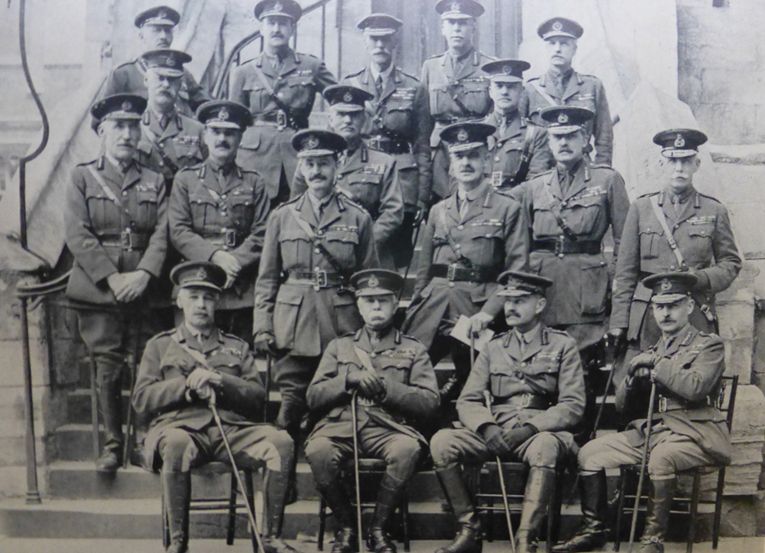
Byng's career advanced through a series of postings and professional development. He served as regimental adjutant from 1886 and developed an interest in social reform, suggesting retired soldiers maintain order in London's Rowton Houses. After being promoted to captain in 1890, he dedicated himself to study and entered the Staff College at Camberley in 1892, graduating in December 1894. Following staff college, he commanded a squadron of his regiment before taking on staff appointments at Aldershot. In 1899, he was deployed to South Africa for the Second Boer War, where he was given the local rank of lieutenant colonel and tasked with raising and commanding the South African Light Horse. He was mentioned in despatches five times for his service, including by Lord Kitchener on 23 June 1902. After the war, he married Marie Evelyn Moreton on 30 April 1902, and the couple were unable to have children. Promoted to substantive lieutenant colonel later that year, he commanded the 10th Hussars in India. After a serious polo injury in 1904, he recovered to become the first commandant of the new cavalry school at Netheravon. His commands expanded to include the 2nd Cavalry Brigade in 1905 and the 1st Cavalry Brigade in Aldershot. He was promoted to major general in April 1909 and took command of the East Anglian Division of the Territorial Force in 1910. From May 1912 until the outbreak of the First World War, he served as General Officer Commanding British Troops in Egypt.
First World War Command
Recalled to Britain at the war's outbreak, Byng was given command of the newly formed 3rd Cavalry Division in September 1914 and led it to the Western Front. He and his division saw action at the First Battle of Ypres, for which he was appointed a Knight Commander of the Order of St Michael and St George in March 1915. By May 1915, he was commanding the Cavalry Corps during the Second Battle of Ypres. In August 1915, he was sent to Gallipoli to command the IX Corps, where he oversaw the remarkably successful evacuation of Allied forces from Suvla Bay and Anzac Cove between December 1915 and January 1916. For this, he was made a Knight Commander of the Order of the Bath on 1 January 1916. After a brief stint commanding the Suez Canal defences, he returned to the Western Front to lead the XVII Corps in February 1916. In May 1916, Byng was appointed commander of the Canadian Corps. He swiftly implemented reforms to improve training and cohesion, establishing a Corps school and appointing more Canadian staff officers. The Canadian troops, who began referring to themselves as 'The Byng Boys' after a popular music hall act, grew to respect and admire him. He led the corps through the latter stages of the Battle of the Somme in 1916. His meticulous planning and the intensive training he instigated culminated in the corps' greatest achievement, the capture of Vimy Ridge. The assault began on 9 April 1917. After four days of brutal fighting, the Canadians secured the ridge, a victory hailed as a landmark achievement that distinguished Canada from Britain.
Later War Service and Peerage
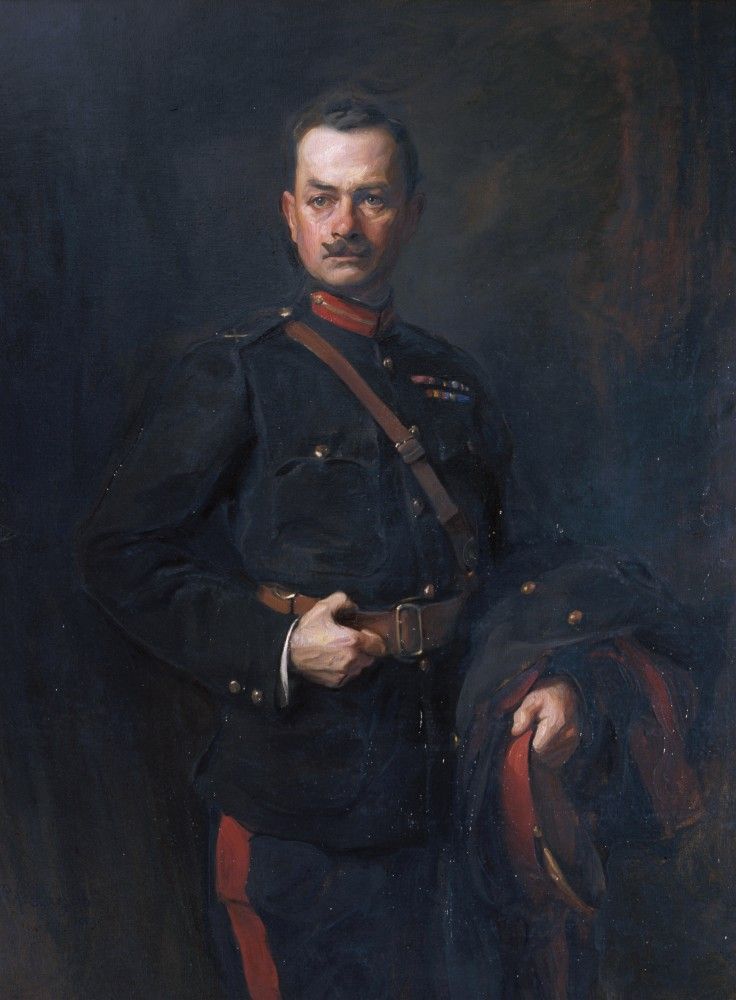
In June 1917, following the victory at Vimy, Byng was promoted to general and given command of the British Third Army. He led this force for the remainder of the war. In November 1917, he commanded the First Battle of Cambrai, which featured the first large-scale, surprise attack using tanks in history. Although initially successful, the battle ultimately failed to achieve a decisive breakthrough. For his service, Byng was made a Knight Grand Cross of the Order of the Bath in the 1919 New Year Honours. His Third Army faced the German Spring Offensive in March 1918, retreating in good order under heavy pressure. In the Allied counter-offensives of late 1918, Byng's army broke through the formidable Hindenburg Line on 27 September and advanced to Maubeuge by 10 November, the day before the Armistice. After the war, Byng was raised to the peerage on 7 October 1919 as Baron Byng of Vimy, of Thorpe-le-Soken in Essex. He chose the title in honour of the Canadian victory. He retired from the army in November 1919 and moved to his home, Thorpe Hall. In the United States, his exploits were commemorated near Ada, Oklahoma, leading to the later emergence of the town of Byng.
Governor General of Canada
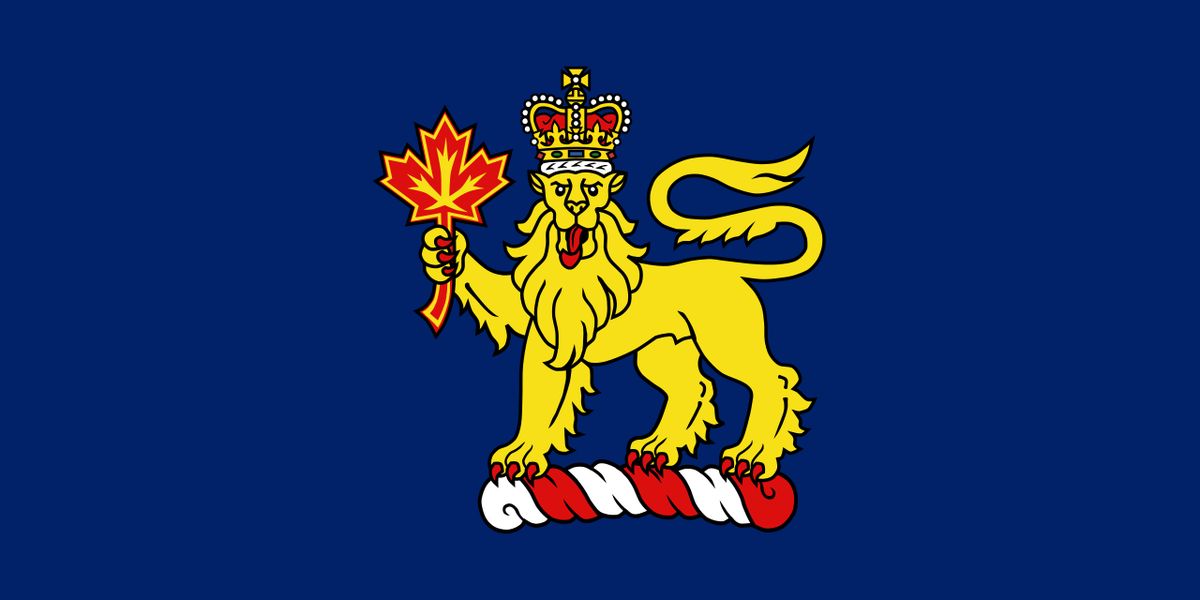
On 2 August 1921, it was announced that King George V had approved Byng's appointment as governor general of Canada on the recommendation of British Prime Minister David Lloyd George. Byng, who was also made a Knight Grand Cross of the Order of St Michael and St George that July, proved a popular viceregal representative due to his war record and approachable manner. He served from 1921 until 1926. He was the first governor general to appoint Canadians as his aides-de-camp, one of whom was future Governor General Georges Vanier. He travelled extensively across Canada and developed a love for ice hockey, rarely missing a game played by the Ottawa Senators. His wife, Lady Byng, donated the Lady Byng Memorial Trophy to the National Hockey League in 1925. His tenure is most famously defined by the 1926 constitutional crisis known as the King-Byng Affair. In June of that year, Prime Minister William Lyon Mackenzie King, facing a vote of non-confidence in the House of Commons, requested Byng dissolve Parliament and call an election. Byng refused, believing the opposition Conservative Party under Arthur Meighen should be given the chance to form a government. Meighen did so briefly, but his government quickly fell, leading to an election that King won. The affair became a catalyst for the 1926 Imperial Conference and the subsequent Balfour Report, which redefined the relationship between Britain and its dominions.
Later Life and Legacy
After leaving Canada in 1926, Byng returned to the United Kingdom. In January 1928, he was created Viscount Byng of Vimy. Later that year, he was appointed as the Commissioner of Police of the Metropolis, leading the London Metropolitan Police. Before his retirement in 1931, he introduced reforms including promotion based on merit, police boxes, and a central radio control room. In July 1932, he was promoted to the rank of field marshal. Julian Byng died suddenly of an abdominal blockage at his home, Thorpe Hall in Essex, on 6 June 1935. He was buried at the parish church of St Leonard in Beaumont-cum-Moze. His legacy in Canada is dominated by his military leadership at Vimy Ridge. The constitutional principles clarified by the King-Byng Affair significantly shaped the modern, independent role of the governor general. Geographic locations and schools in Canada are named in his honour, including Mount Byng in Alberta and Lord Byng Secondary School in Vancouver. Honours and Awards Byng received numerous honours throughout his career.
- Mentioned in Despatches (1884, and multiple times during the Boer War and First World War)
- Member of the Royal Victorian Order, 4th Class (MVO), 2 May 1902
- Companion of the Order of the Bath (CB), 29 June 1906
- Knight Commander of the Order of St Michael and St George (KCMG), March 1915
- Knight Commander of the Order of the Bath (KCB), 1 January 1916
- Knight Grand Cross of the Order of the Bath (GCB), 1 January 1919
- Knight Grand Cross of the Order of St Michael and St George (GCMG), July 1921
- Baron Byng of Vimy (peerage), 7 October 1919
- Viscount Byng of Vimy (peerage), January 1928
- Foreign honours included the French Croix de guerre and Grand Officer of the Legion of Honour.
Questions about Julian Byng, 1st Viscount Byng of Vimy
What was Julian Byng's role in the Battle of Vimy Ridge?
Julian Byng was the commander of the Canadian Corps during the Battle of Vimy Ridge in April 1917. Appointed in May 1916, he spent months preparing the corps for the assault, implementing rigorous training programs, establishing a Corps school, and emphasizing detailed planning with scale models and rehearsal trenches. His leadership and the tactics he championed, including the creeping artillery barrage, were crucial to the Canadian victory in capturing the entire ridge, a feat that had eluded previous French attacks. The success made him a hero in Canada and he later took the title Viscount Byng of Vimy in honour of this achievement.
Why is the King-Byng Affair important in Canadian history?
The King-Byng Affair of 1926 was a major constitutional crisis during Byng's tenure as governor general. Prime Minister William Lyon Mackenzie King, facing a non-confidence vote, asked Byng to dissolve Parliament for an election. Byng refused, believing the opposition should try to govern. This decision sparked a national controversy. The affair directly led to the 1926 Imperial Conference and the Balfour Report, which established that the governor general of a dominion was not a representative of the British government but of the Crown, acting only on the advice of local ministers. This was a major step toward Canadian constitutional autonomy.
Why were Canadian soldiers called 'The Byng Boys'?
Canadian soldiers under Byng's command in the Canadian Corps during the First World War affectionately referred to themselves as 'The Byng Boys'. This nickname was adopted from a popular music hall act of the era called 'The Bing Boys'. It reflected the troops' fondness and respect for their commander, who was seen as approachable, effective, and genuinely concerned for their welfare. The nickname symbolized the strong esprit de corps that developed under Byng's leadership.
How long did Julian Byng serve as Governor General of Canada?
Julian Byng served as Governor General of Canada from 2 August 1921 until 30 September 1926. He was appointed by King George V on the recommendation of British Prime Minister David Lloyd George to replace Victor Cavendish, the 9th Duke of Devonshire. Byng was the 12th Governor General since Confederation and his viceregal tenure ended when he was succeeded by Freeman Freeman-Thomas, 1st Viscount Willingdon in 1926. His time in office is notably remembered for the constitutional event known as the King-Byng Affair.
What did Julian Byng do after being Governor General?
After his viceregal tenure ended in 1926, Julian Byng returned to the United Kingdom. In January 1928, he was created Viscount Byng of Vimy. Later that year, he was appointed as the Commissioner of Police of the Metropolis, leading the London Metropolitan Police until his retirement in 1931. He introduced several reforms to the force. In July 1932, he was promoted to the rank of field marshal. He died at his home, Thorpe Hall, on 6 June 1935.
What are some places named after Julian Byng?
Several places in Canada and the United States are named in honour of Julian Byng. In Canada, these include Mount Byng in Alberta, Camp Byng in Roberts Creek, British Columbia, and Byng Avenue in Toronto, Ontario. Schools named for him include Lord Byng Secondary School in Vancouver, Baron Byng High School in Montreal, and General Byng School in Winnipeg. The town of Byng, Oklahoma, which emerged from a post office and power plant named for him in 1917, also bears his name.
Sources and further reading
- Julian Byng, 1st Viscount Byng of Vimy (Wikipedia)
- Viscount Byng of Vimy (thecanadianencyclopedia.ca)
- Generals, Sir Julian Byng | Canada and the First World War (warmuseum.ca)
- Vimy commander's medals donated to Canadian War ... (cbc.ca)
- Byng and Currie | The Road to Vimy Ridge, Valour Canada (vimyridge.valourcanada.ca)
Checked by the Nosy Mag desk. Last updated 2026-10-28.