HMCS Bras d'Or (FHE 400)
HMCS Bras d'Or (FHE 400) was a hydrofoil that served in the Canadian Forces from 1968 to 1971. During sea trials in 1969, the vessel exceeded 63 knots (117 km/h. 72 mph), making her the fastest unarmed warship in the world at the time. The vessel was originally built from 1960 to 1967 for the Royal Canadian Navy as a project for testing anti-submarine warfare technology on an ocean-going hydrofoil. The RCN was replaced on 1 February 1968 by the unified Canadian Armed Forces, and Bras d'Or was commissioned into that service. The ship was named after Bras d'Or Lake in Nova Scotia, where Alexander Graham Bell performed hydrofoil experiments. The project was cancelled in 1971 due to changing defence priorities and cost overruns.
Origins and Development
The concept for HMCS Bras d'Or emerged from post-Second World War studies by the Royal Canadian Navy and the British Admiralty into the use of hydrofoils for anti-submarine warfare and coastal patrol. These studies led to the construction of a 17-tonne experimental hydrofoil prototype named R-103, built by Saunders-Roe in the United Kingdom and tested in Canadian waters. The foil configuration tested on the R-103 directly informed the design of the larger, ocean-going Bras d'Or. The project was driven by Canada's established expertise in ASW, a role solidified during the Battle of the Atlantic and continued within the NATO alliance in the Cold War era. The goal was to create a vessel that was faster and cheaper than traditional frigates, capable of rapidly responding to submarine contacts in littoral waters. The formal contract for a Fast Hydrofoil Escort, designated with hull number 400 (FHE-400), was awarded to de Havilland Canada in August 1960. de Havilland recruited numerous engineers from the recently cancelled Avro Arrow jet fighter program, bringing advanced aerospace expertise to the naval project. The actual construction of the hull, deck, and superstructure was subcontracted to Marine Industries Limited in Sorel, Quebec. The Principal Naval Overseer for the project was Commander Donald Clark of the Royal Canadian Navy, who initiated the work following the launch of the destroyer escort HMCS Nipigon in 1964.
Design and Construction
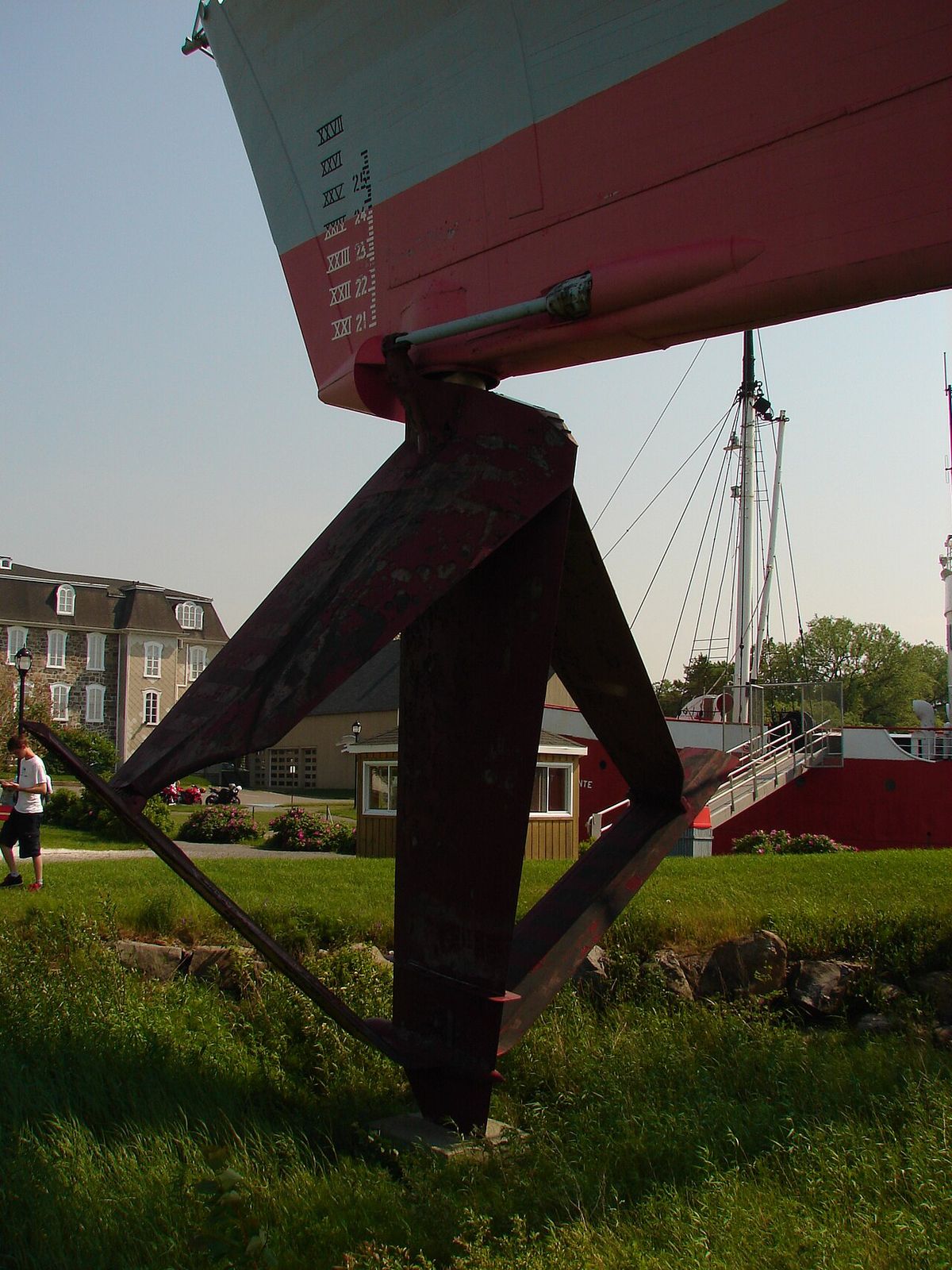
HMCS Bras d'Or was a technological marvel that blended shipbuilding with aircraft engineering. Its hull was constructed entirely of aluminum and was built upside down at the Sorel shipyard before being rotated upright on 22 January 1966. The vessel flew on a set of surface-piercing foils in a canard configuration, featuring a smaller steerable foil at the bow and a larger load-bearing foil at the stern. These foils were constructed from maraging steel, a high-strength alloy, but their susceptibility to saltwater corrosion was a persistent problem despite attempts to coat them with neoprene. The complex main foil assembly consisted of multiple anhedral and dihedral sections, with a centre high-speed foil, creating a distinctive diamond shape when viewed from the front.
The ship's propulsion system was uniquely divided for its two operational modes. For hullborne operation at lower speeds, power was provided by a Paxman Ventura 16YJCM sixteen-cylinder diesel engine driving a pair of variable-pitch propellers. When the vessel rose onto its foils, a Pratt & Whitney FT4A-2 gas turbine, developing 25,500 horsepower, took over, driving two three-bladed supercavitating propellers through General Electric gearboxes. Auxiliary electrical power while foilborne was supplied by a Pratt & Whitney ST6A-53 gas turbine. The complexity of these systems, coupled with the use of highly flammable JP5 aviation fuel for the gas turbines, created a hazardous engineering environment. A serious fire broke out on 5 November 1966 when hydraulic fluid ignited on a hot exhaust joint, causing significant damage, delaying the launch, and adding $5.7 million to the project's cost.
The vessel's operation demanded a highly specialized crew. The ship's helmsman had to be qualified as both a sea pilot and an aircraft pilot. The original construction budget was approximately ten million dollars. By 1966, costs had ballooned to an estimated twenty three million dollars. This figure did not include an additional projected seven million dollars for weapons and sensor systems. Those systems were never installed on the vessel. The ship was built from 1960 to 1967.
Sea Trials and Performance
HMCS Bras d'Or was launched on 12 July 1968 and commissioned into the Canadian Armed Forces in 1968. Its first successful foilborne flight occurred on 9 April 1969 in waters near Chebucto Head, at the entrance to Halifax Harbour. During subsequent trials, the hydrofoil demonstrated exceptional seakeeping abilities, proving to be more stable in rough weather at 40 knots than a conventional ship travelling at 18 knots. The pinnacle of its testing came when it exceeded 63 knots (117 km/h), a speed that unofficially made it the fastest warship in the world at the time. Bras d'Or never carried any armament or combat systems, so it is historically classified as the fastest unarmed warship. The title of fastest fully equipped warship is now held by other vessels, such as the Abu Dhabi MAR WP-18 Interceptor.
The trials revealed ongoing technical challenges. The maraging steel foils suffered from corrosion despite a protective coating. These issues contributed to the project's growing costs and operational concerns. The vessel served in the Canadian Forces from 1968 until its cancellation in 1971.
Project Cancellation and Fate
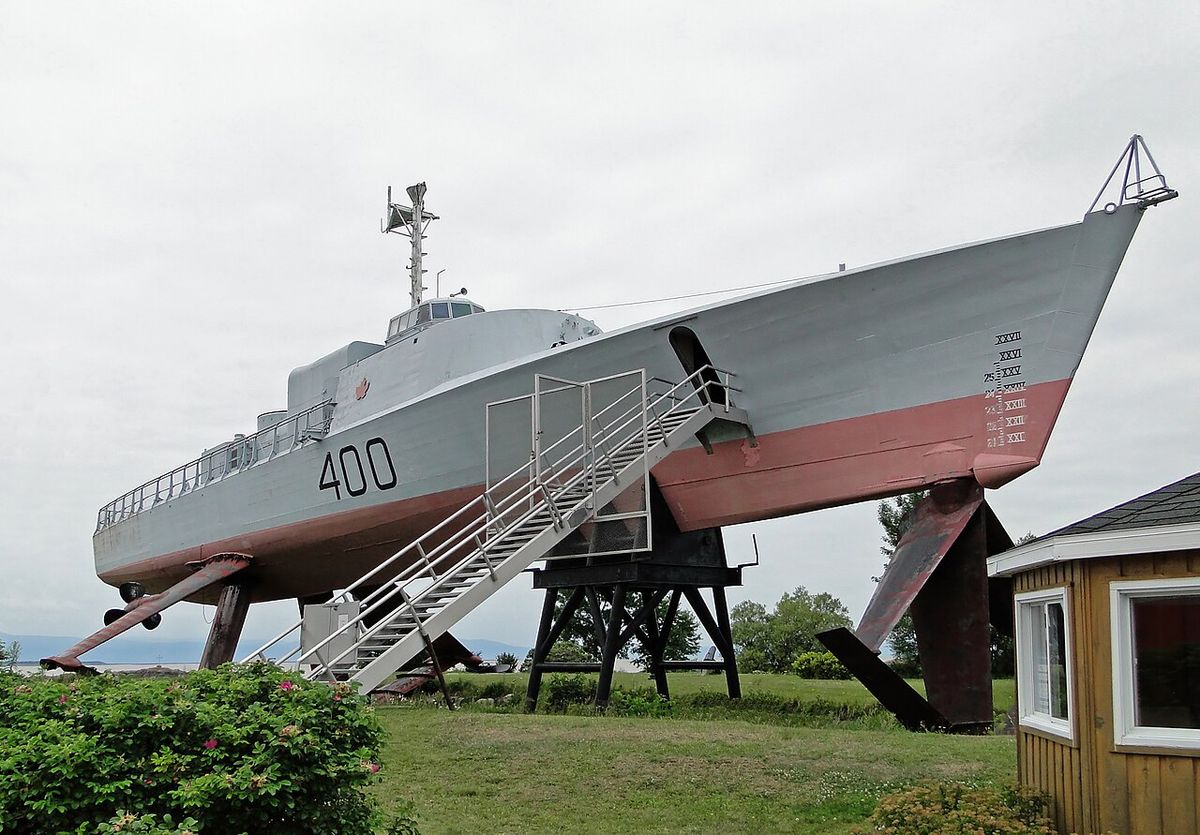
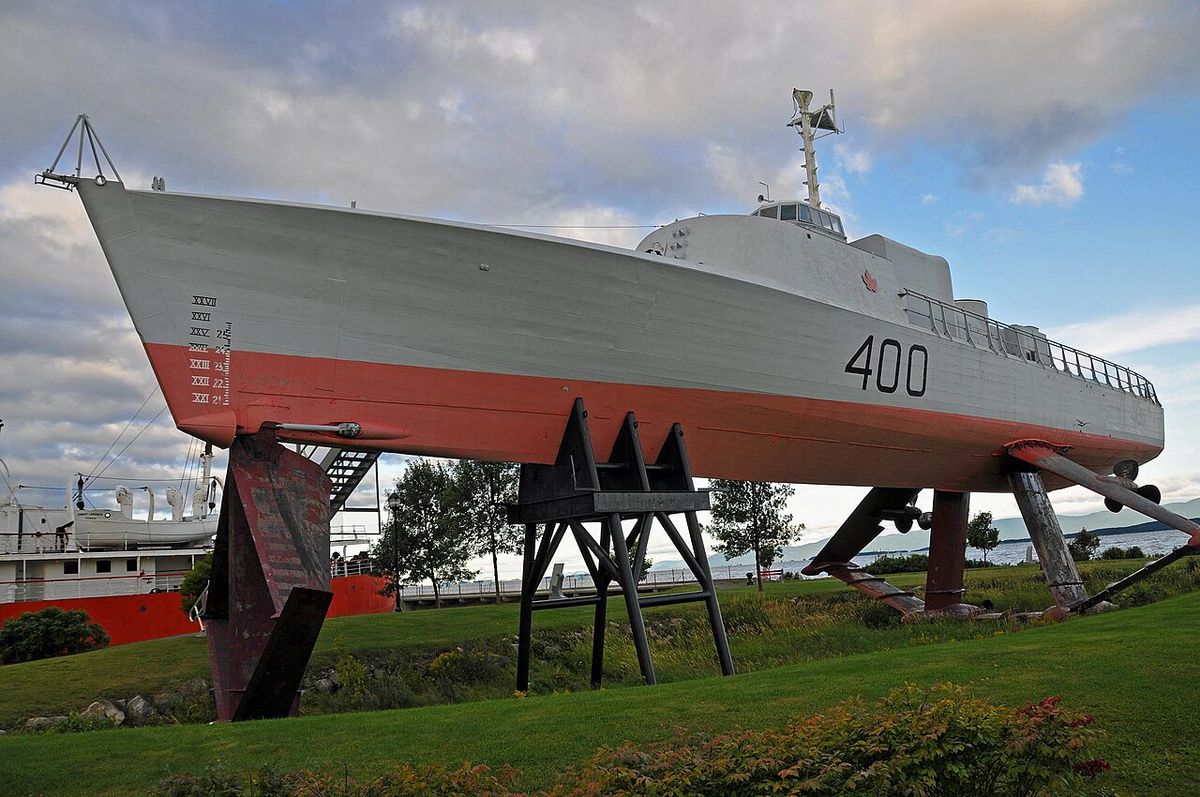
The promising trial program for Bras d'Or was abruptly terminated on 2 November 1971 by the Minister of National Defence, Donald S. Macdonald. The official reason cited was a strategic shift in defence priorities away from dedicated anti-submarine warfare and towards broader sovereignty protection and surveillance roles. The vessel was immediately paid off from service and placed in layup. After five years in reserve, the program was completely cancelled by the government of Prime Minister Pierre Elliott Trudeau. Following cancellation, most of the ship's valuable components, including its powerful gas turbine engines, were removed and sold off by Crown Assets or scrapped. The stripped hull of Bras d'Or was saved from the scrapyard through donation to the Musée Maritime du Québec at L'Islet-sur-Mer, Quebec, where it remains on display.
Technical Specifications and Systems
HMCS Bras d'Or was a vessel defined by its sophisticated and dual purpose systems. It had two propulsion systems, one for foilborne operation and one for hullborne operation. Foilborne power was provided by a powerful FT4A-2 gas turbine. Hullborne propulsion was driven by a Paxman Ventura diesel engine. The foils were constructed from maraging steel and were in a canard configuration. The ship's complex design pushed the boundaries of marine engineering.
- Hull Material: All-aluminum construction.
- Foil Material: Maraging steel, coated with neoprene for corrosion protection.
- Foil Configuration: Surface-piercing canard layout (small front foil, large rear foil).
- Foilborne Propulsion: One Pratt & Whitney FT4A-2 gas turbine, 25,500 hp.
- Foilborne Propellers: Two three-bladed supercavitating propellers.
- Hullborne Propulsion: One Paxman Ventura 16YJCM 16-cylinder diesel engine.
- Hullborne Propellers: Two variable-pitch propellers.
- Auxiliary Power (Foilborne): One Pratt & Whitney ST6A-53 gas turbine.
- Emergency Power: One Garrett GTCP85-291 gas turbine.
- Crew Requirement: Helmsman required dual qualification as sea and aircraft pilot.
The integration of these systems was extraordinarily complex. The gas turbines, adapted from aircraft, demanded specific fuel and careful management, while the specialized foils and propellers were engineered for minimal drag at high speeds. The control systems bridged maritime and aeronautical principles, creating a vessel that was as much an aircraft as it was a ship when operating at peak performance. The fire on 5 November 1966 highlighted the risks of this complexity, as a hydraulic fluid leak on the hot ST6 turbine exhaust caused a flash fire that took local firefighters one and a half hours to extinguish.
Historical Context and Namesake
HMCS Bras d'Or was the third vessel to bear the name in Canadian service. The first was an auxiliary minesweeper used during the Second World War, and the second was a former US Navy patrol torpedo boat acquired under lend-lease. The name itself honours Bras d'Or Lake on Cape Breton Island, Nova Scotia, a location deeply connected to Canadian innovation. It was here that Alexander Graham Bell, aided by engineer Casey Baldwin, conducted pioneering hydrofoil experiments in the early 20th century. On 9 September 1919, their hydrofoil boat, the HD-4, set a world watercraft speed record of 114 km/h on the lake. This legacy of speed and innovation made the name a fitting choice for the advanced FHE 400.
The project also existed within a specific niche of international hydrofoil development. While the British focused on hovercraft and the Americans on fully submerged foil systems, Canada's program specialized in surface-piercing foil technology. This placed Bras d'Or among a small family of experimental military hydrofoils developed globally during the Cold War, such as the Soviet Matka and Sarancha classes, the Italian Sparviero class, and the later US Navy Pegasus class. Although the Canadian program was short-lived, it contributed significant data to the broader field of high-speed naval craft design. The vessel's story is also a proof to the transfer of technology and talent from the cancelled Avro Arrow project to another ambitious Canadian aerospace-maritime endeavour.
Comparative Hydrofoil Projects
The development of HMCS Bras d'Or occurred alongside other international hydrofoil projects. The Royal Canadian Navy and British Admiralty studied hydrofoils for anti submarine work after the Second World War. Other nations developed their own military hydrofoils during the Cold War. These included the American Pegasus class and the Soviet Matka class. Unlike those foreign vessels, HMCS Bras d'Or was never fitted with any weapons or weapons systems. It remained an unarmed experimental platform.
| Vessel / Class | Country | Primary Role | Notable Armament |
|---|---|---|---|
| HMCS Bras d'Or (FHE 400) | Canada | ASW Escort (Experimental) | None fitted |
| Matka-class | Soviet Union | Missile Boat | SS-N-2 Styx missiles |
| Sparviero-class | Italy | Patrol Boat | Missiles |
| Pegasus-class | United States | Missile Boat | Harpoon missiles |
| Sarancha-class | Soviet Union | Missile Boat | SS-N-9 Siren missiles |
Questions about HMCS Bras d'Or (FHE 400)
How fast did HMCS Bras d'Or go?
During sea trials in 1969, HMCS Bras d'Or exceeded 63 knots (117 km/h. 72 mph). This made her the fastest unarmed warship in the world at that time. The vessel achieved this high speed while operating in a foilborne state.
Why was the Bras d'Or project cancelled?
The project was officially cancelled on 2 November 1971 by Defence Minister Donald S. Macdonald, who cited a change in national defence priorities from anti-submarine warfare to sovereignty protection. The program also suffered from significant cost overruns, with the budget increasing from an initial $10 million to over $23 million, not including millions more for planned weapons systems. Technical challenges, such as the inadequate neoprene coating on the maraging steel foils which failed to prevent corrosion, further contributed to the decision. The ship was laid up for five years before the program was completely cancelled by the Liberal Government under Prime Minister Pierre Elliott Trudeau.
Where can I see HMCS Bras d'Or today?
HMCS Bras d'Or is on permanent display at the Musée Maritime du Québec in L'Islet-sur-Mer, Quebec. The ship was donated to the museum after the project was cancelled. The hydrofoil is open to visitors. The museum also displays other historic vessels like the icebreaker CCGS Ernest Lapointe.
What was the purpose of building a hydrofoil warship?
The Royal Canadian Navy built Bras d'Or as a project for testing anti-submarine warfare technology on an ocean-going hydrofoil. The goal was to create a fast hydrofoil escort vessel capable of rapid response to submarine contacts, a concept studied by the RCN and British Admiralty after the Second World War. This initiative leveraged Canada's post-war expertise in ASW and aimed to provide a cheaper and faster alternative to traditional frigates for littoral defence. The project originated from tests with a 17-tonne prototype called the R-103, which was built by Saunders-Roe in the UK and sea-trialled in Canada.
Why did the helmsman need to be both a sea and air pilot?
Operating HMCS Bras d'Or required skills from both maritime and aviation disciplines. When the ship rose onto its hydrofoils, it behaved more like an aircraft, requiring an understanding of aerodynamic principles of lift and control. The complex control systems in the bridge were analogous to an aircraft cockpit. Therefore, the helmsman needed a sea pilot's license for standard naval navigation and an aircraft pilot's license to safely manage the vessel's high-speed, foilborne operations.
What is the connection to Alexander Graham Bell?
The ship is named after Bras d'Or Lake in Nova Scotia, where Alexander Graham Bell had his summer estate, Beinn Bhreagh. Bell and his colleague Casey Baldwin conducted extensive hydrofoil experiments there. On 9 September 1919, their hydrofoil boat, the HD-4, set a world watercraft speed record of 114 km/h on the lake. Bell's Aerial Experiment Association also conducted the first flight of an aircraft in Canada and the British Commonwealth, the Silver Dart, over the frozen lake in 1909.
Sources and further reading
- HMCS Bras d'Or (FHE 400) (Wikipedia)
- The Ignominious HMCS Bras d'Or, Jim Chung's Ramblings (jimchungblog.com)
- NAC News, Edition FHE 400 HMCS Bras d'Or (navalassoc.ca)
- Bras d'Or, Ship Museum | Musée maritime du Québec (mmq.qc.ca)
Checked by the Nosy Mag desk. Last updated 2026-11-01.