Helge Ingstad
Helge Marcus Ingstad (30 December 1899 to 29 March 2001) was a Norwegian explorer, author, and lawyer. He is best known in Canada for his 1960 discovery, alongside his archaeologist wife Anne Stine Ingstad, of the Norse settlement at L'Anse aux Meadows in Newfoundland. This discovery provided the first conclusive archaeological proof that Vikings from Greenland and Iceland, such as Leif Ericson, reached North America around the year 1000, centuries before Christopher Columbus. Ingstad's life of Arctic exploration, his deep engagement with Indigenous cultures in Canada and Alaska, and his prolific writings have cemented his legacy as a central figure in North Atlantic history.
Early Life and Career Shift
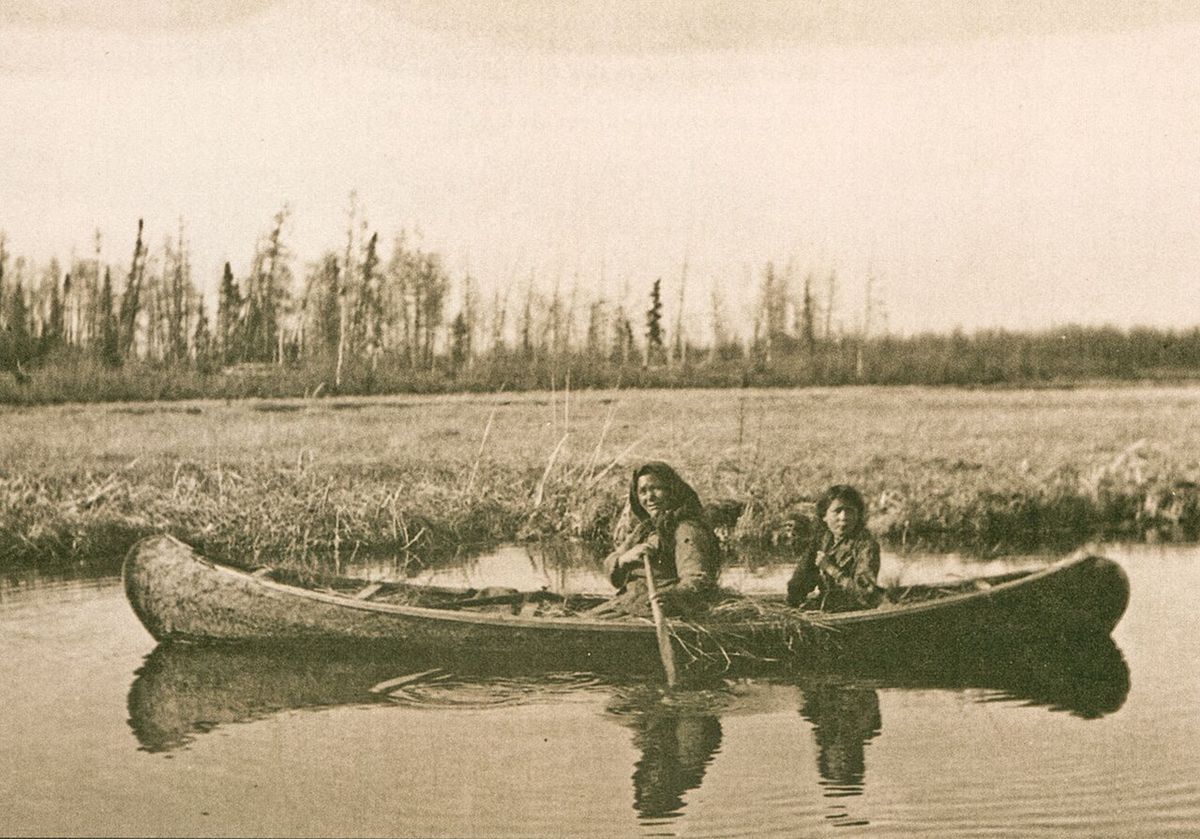
Helge Ingstad was born in Meråker, Norway, the son of municipal engineer Olav Ingstad and Olga Marie Qvam, and the grandson of lawyer professor Marcus Pløen Ingstad. His father held the title of factory supervisor in Tromsø. The family moved to Bergen in 1915 where he attended Bergen Katedralskole, graduating in 1918 before pursuing a legal education. He earned his law degree in 1922 and established a successful legal practice in Levanger. Despite his professional success, Ingstad's passion for the outdoors led him to make a dramatic career change in 1926 when he sold his practice and travelled to Canada's Northwest Territories. He lived for three years as a trapper, travelling extensively with the local Chipewyan Dene group known as the Caribou-Eaters or Ethen-eldeli, immersing himself in their way of life and the northern wilderness. Upon his return to Norway, he chronicled these experiences in his bestselling book Pelsjegerliv, published in English as The Land of Feast and Famine by Knopf in 1933, a book that established his literary reputation.
Arctic Governance and Marriage
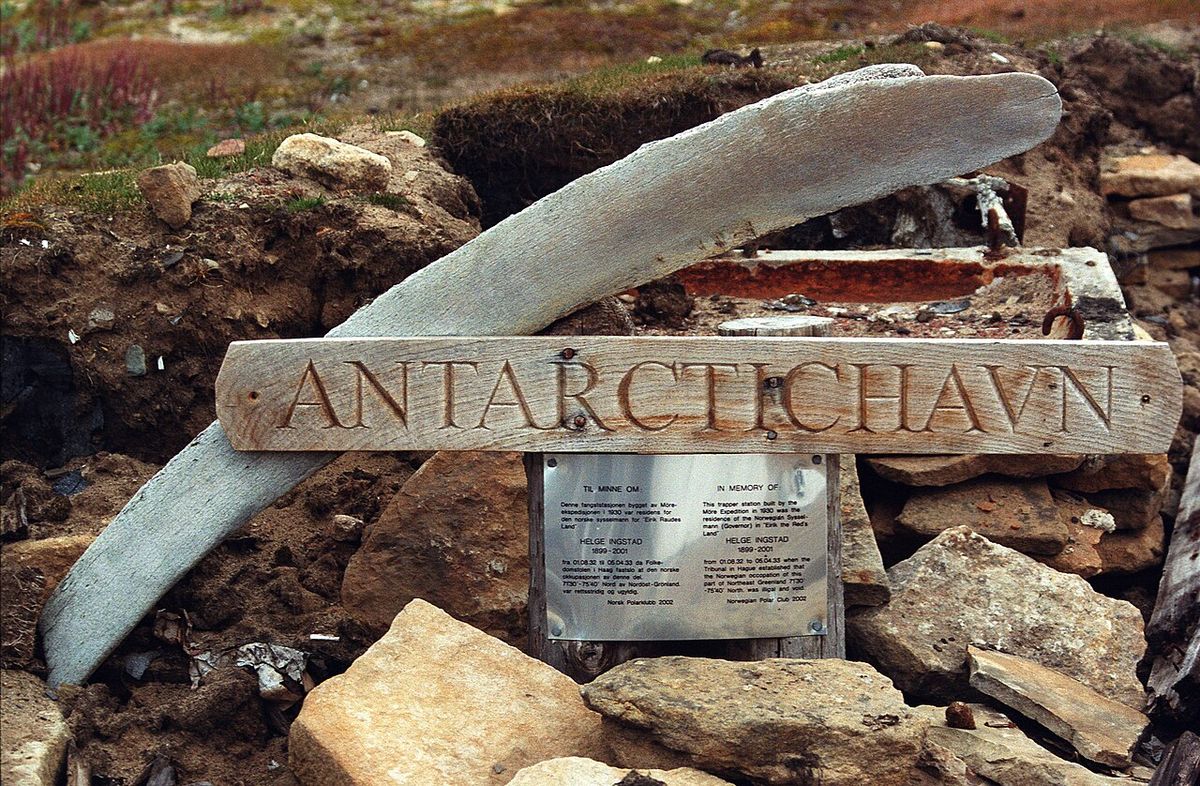
Ingstad's Arctic expertise led to his appointment as the governor of Erik the Red's Land in eastern Greenland from 1932 to 1933, during a brief period of Norwegian annexation. Following a Permanent Court of International Justice ruling that returned the territory to Denmark, the Norwegian government appointed him governor of Svalbard. It was during his tenure on Svalbard that he met Anne Stine Moe, a young woman nearly twenty years his junior who had read his books from Canada and Greenland with great admiration. They began a correspondence, became engaged, and married in 1941, forming a personal and professional partnership. The couple made their home near the Holmenkollen area of Oslo in 1946, where they lived when not travelling, and they had one daughter, Benedicte, who later became a professor of medical anthropology at the University of Oslo. From her teenage years, Benedicte often accompanied her parents on their expeditions.
Literary Works and Cultural Documentation
Helge Ingstad was a popular author whose books on his visits to remote parts of the world gained him fame in Norway. His 1931 book, The Land of Feast or Famine, was republished by McGill-Queens University Press in 1992 after being out of print for over forty years. His other works include East of the Great Glacier (1935) on Greenland, The Land With the Chilly Coasts on Svalbard, The Apaches, The Hunt for the Lost Tribe (1939) on the Apache people of northwestern Mexico, and Nunamiut, Among Alaska's Inland Eskimos (1954) on the Nunamiut Iñupiat. In his final years, he worked to preserve Nunamiut culture, compiling a booklet and CD titled Songs of the Nunamiut from 141 songs he recorded in 1950, an effort that preserved cultural material otherwise lost locally. His other notable books include Land under the Pole Star (1966) on Greenland, Westward to Vinland (1969), The Viking Discovery of America (2001) with his wife, and Oppdagelsen av det nye land (1996).
- The Land of Feast and Famine (1933, republished 1992)
- East of the Great Glacier (1935)
- Landet med de kalde kyster (The Land With the Chilly Coasts)
- Apache-indianerne, jakten på den tapte stamme (1939, English translation 2004)
- Nunamiut, blant Alaskas innlandseskimoer (1954, published in English as Nunamiut. Among Alaska's Inland Eskimos)
- Land under the Pole Star (1966, on Greenland)
- Vesterveg til Vinland (1965, translated as Westward to Vinland in 1969)
- The Viking Discovery of America (with Anne Stine Ingstad, 2001)
- Songs of the Nunamiut (1998)
- Oppdagelsen av det nye land (1996)
The Discovery and Excavation of L'Anse aux Meadows
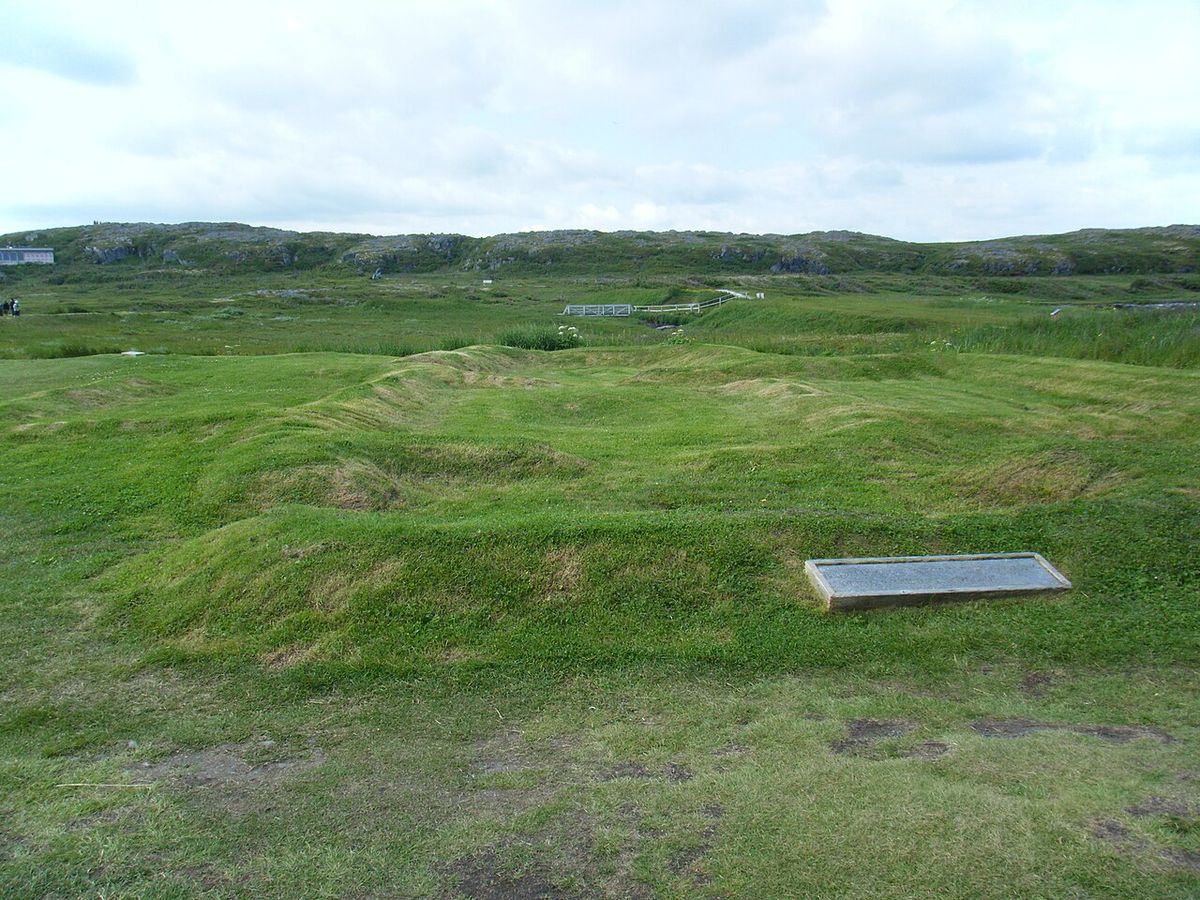
In 1960, after years of studying Norse sagas like The Saga of the Greenlanders and The Saga of Eric the Red and mapping potential settlement sites, Helge Ingstad's search led him to the northern tip of Newfoundland. He was guided by a reinterpretation of the Viking term 'Vinland,' rejecting the assumption it referred solely to grapes and instead looking for a northern coastal landscape with meadows, which matched the Old Norse word 'vin.' At a place called L'Anse aux Meadows, originally named L'Anse aux Méduses or Jellyfish Cove, he noticed faint outlines of what appeared to be very old sod huts barely visible under tall grasses and wild berry bushes. He later described the moment in his 1969 book, writing he felt as if he had 'hooked a large salmon,' noting the open, inviting verdant countryside. Convinced of the site's potential, he and Anne Stine initiated archaeological excavations that would continue for seven seasons, with Anne Stine leading the international dig team. The discovery faced initial skepticism and accusations of being a hoax, but was definitively validated by the unearthing of a smooth soapstone Norse spindle-whorl on 14 August 1964 and subsequent radiocarbon dating that placed the settlement between 980 and 1020 AD, the time of Leif Ericson's expeditions. The excavations, later taken over by Parks Canada in the 1970s, revealed the remains of eight buildings constructed of sod placed over a wooden frame, which were reburied after each excavation period to protect the cultural resources.
Significance of L'Anse aux Meadows and World Heritage Status
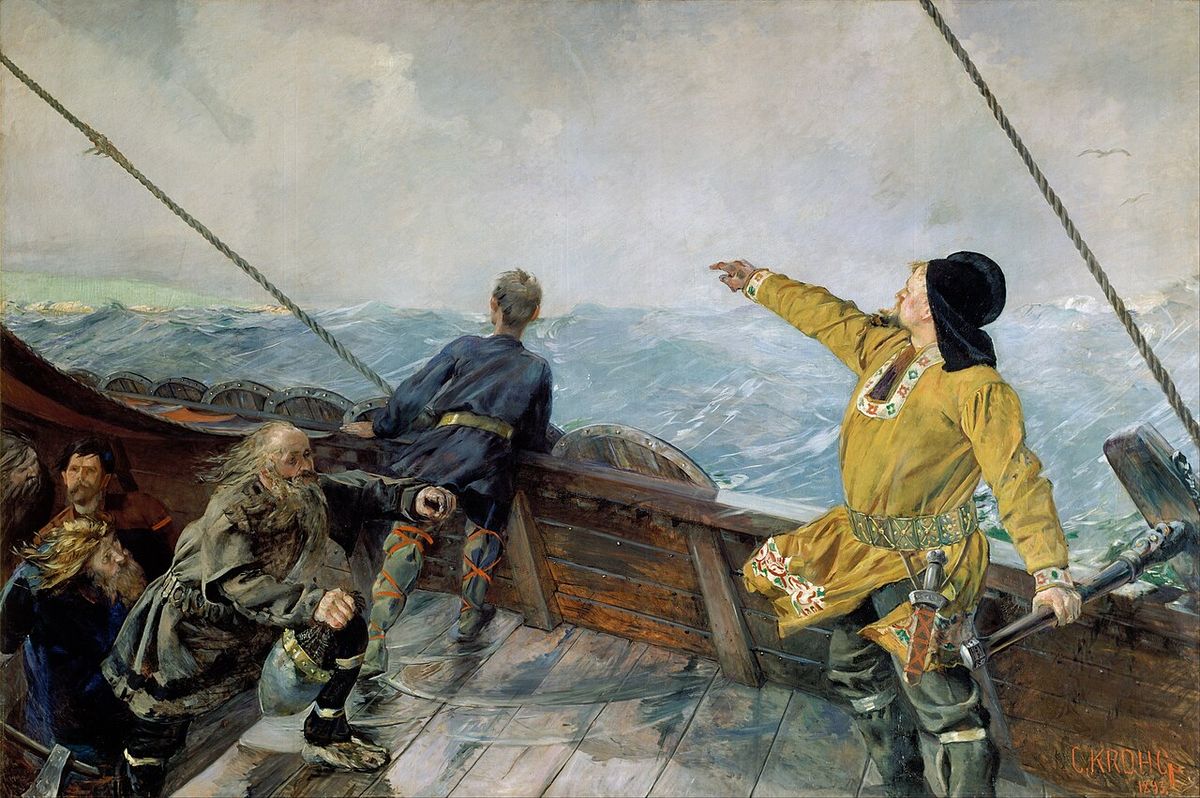
The settlement at L'Anse aux Meadows is dated to approximately 1,000 years ago. It is possible the site was the fabled Vinland of Leif Ericson, or more probably the northernmost part of it, perhaps the settlement Leifsbudir mentioned in the Greenlanders Saga. The discovery proved conclusively that Icelandic and Greenlandic Norsemen had found a way across the Atlantic Ocean to North America roughly 500 years before Christopher Columbus and John Cabot. In 1978, L'Anse aux Meadows was inscribed as a UNESCO World Heritage Site, one of the first twelve sites to receive the designation globally. It is also a Canadian National Historic Site, and today visitors can see reconstructed buildings and a bronze statue of the Ingstads honouring their work. Ingstad also theorized that the mysterious disappearance of the Greenland Norse Settlements in the 14th and 15th centuries could be explained by their emigration to North America, though this remains a subject of historical debate. The site's status as the only widely accepted instance of pre-Columbian trans-oceanic contact gives it a unique and critical importance in the history of the Americas.
Honours and Recognition
Helge Ingstad received numerous honours for his contributions to exploration, archaeology, and culture. He was an honorary member of the Norwegian Academy of Science and Letters and received honorary doctorates from the University of Oslo, Memorial University of Newfoundland, and St. Olaf College in Minnesota. His service was recognized with Norway's highest civilian honour. He was awarded the Grand Cross of the Royal Norwegian Order of St. Olav in 1991, following earlier appointments as Knight First Class in 1965 and Commander in 1970. He also received the Norwegian Red Cross Badge of Honour for his efforts in Finnmark during World War II, was a Knight of the Order of Vasa, and received a lifetime government grant from the Norwegian government from 1970 onward. His legacy is physically commemorated in several ways. The Royal Norwegian Navy named the fourth of its five Fridtjof Nansen-class frigates HNoMS Helge Ingstad (F313) after him. The inner main-belt asteroid 8993 Ingstad was discovered by Danish astronomer Richard Martin West at ESO's La Silla Observatory in Chile in 1980 and named in his memory in 2002. In Canada, the Helge and Anne Stine Ingstad Building on the St. John's campus of Memorial University houses the university's Print and Mail Services. He was also the subject of a 1981 National Film Board of Canada documentary The Man Who Discovered America and appeared with his wife in the 1984 NFB film The Vinland Mystery. In 1986, he was presented with Arts Council Norway's honour award for his cultural contributions.
Later Life, Legacy, and Named Features
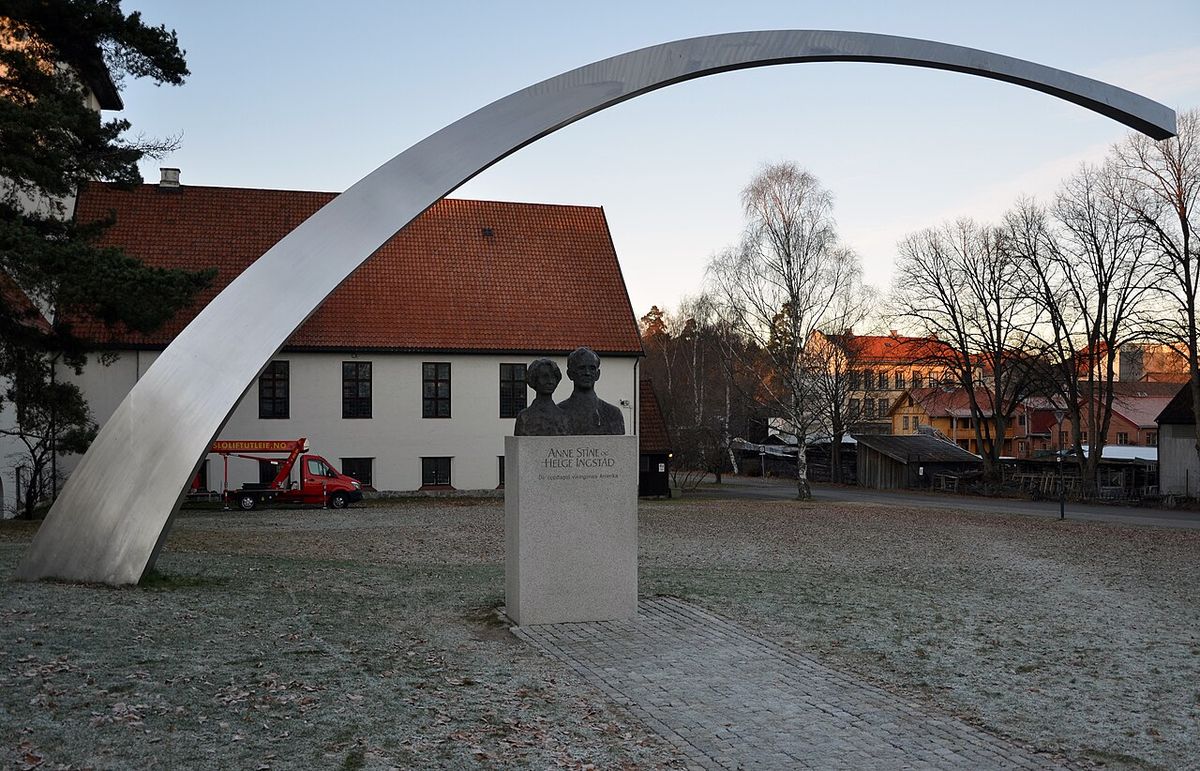
Helge Ingstad lived to be 101 years old, passing away at Diakonhjemmet Hospital in Oslo in 2001. His remarkable life spanned three centuries, having been born in the last days of 1899. His and his wife's contributions are honoured by a bronze statue at L'Anse aux Meadows National Historic Site, and their busts are displayed outside the Viking Ship Museum in Oslo. His name is permanently etched on the North American landscape through two geographic features. In Canada, a small river called Ingstad Creek flows into Great Slave Lake in the Northwest Territories. In Alaska, the United States Board on Geographic Names officially approved the name Ingstad Mountain for a 1,461-metre peak in the Brooks Range on 19 April 2006. This name was suggested by the Nunamiut tribe in gratitude for Ingstad's earlier work documenting their culture. The frigate named in his honour, HNoMS Helge Ingstad, was involved in a major maritime incident on 8 November 2018, colliding with the oil tanker Sola TS outside the Sture Terminal in the Hjeltefjord. The frigate, with 137 crew members aboard, was severely damaged, deliberately run aground, and subsequently sank after the crew evacuated. A joint international investigation by Norwegian, Maltese, and Spanish authorities resulted in 28 safety recommendations, and the vessel was declared a total loss, salvaged, and scrapped.
Archaeological Findings at L'Anse aux Meadows
The archaeological work at L'Anse aux Meadows provided a detailed picture of a small Norse outpost. The excavations identified the specific functions of the buildings and the range of activities undertaken by its inhabitants. The artifacts tell a story of a self-sufficient community capable of metalworking, woodworking, and boat maintenance, while also engaging in typical domestic tasks. The site included distinct workshops that revealed the scope of Norse activity. An iron smithy contained a forge and iron slag, a carpentry workshop generated wood debris, and a specialized boat repair area contained worn rivets. The largest dwelling measured 28.8 by 15.6 metres and consisted of several rooms. Other everyday Norse artifacts found included a stone oil lamp, a whetstone, a bronze fastening pin, a bone knitting needle, and part of a spindle. The presence of the spindle and needle strongly indicated that women were among the settlers. Food remains like butternuts, which do not grow naturally north of New Brunswick, suggested the Norse travelled farther south, perhaps into the Gulf of St. Lawrence. Archaeologists concluded the site was inhabited by the Norse for a relatively short period. The following table summarizes the key types of evidence found and their significance, illustrating the comprehensive nature of the settlement's operations and its connections to broader Norse exploration.
| Type of Evidence | Specific Finds | Significance |
|---|---|---|
| Metalworking | Smithy with forge, iron slag | Proof of on-site iron production, a critical technology for tools and ship repairs. |
| Woodworking | Carpentry workshop, wood debris | Shows construction and repair activities, essential for building and maintaining shelters and ships. |
| Marine Repair | Boat repair area, worn rivets | Confirms the site was a base for maritime expeditions and maintenance of Norse vessels. |
| Domestic Artifacts | Spindle-whorl, knitting needle, lamp, pin | Evidence of daily life, textile work, and lighting. Spindle and needle suggest presence of women. |
| Food Evidence | Butternut shells | Indicates travel south of the site, expanding known range of Norse exploration in North America. |
| Dating Evidence | Radiocarbon dates (980 to 1020 AD) | Conclusively places the settlement in the Viking Age, correlating with the saga accounts. |
Questions about Helge Ingstad
What did Helge Ingstad discover in Canada?
In 1960, Helge Ingstad and his wife, archaeologist Anne Stine Ingstad, discovered the archaeological remains of a Norse Viking settlement at L'Anse aux Meadows on the northern tip of Newfoundland. This is the only confirmed Norse settlement in North America outside of Greenland. The discovery provided conclusive proof that Vikings from Iceland and Greenland, such as Leif Ericson, reached the continent around the year 1000, approximately 500 years before Christopher Columbus. The site contains the remains of eight buildings, including dwellings and workshops like a smithy and a boat repair area.
Why is L'Anse aux Meadows important?
L'Anse aux Meadows is a site of global historical significance as the only widely accepted evidence of pre-Columbian trans-oceanic contact. Dating to between 980 and 1020 AD, it confirms the Viking sagas describing voyages to North America. The site, which includes the remains of eight buildings and workshops like a smithy, was designated a UNESCO World Heritage Site in 1978, one of the first ever listed, and is also a Canadian National Historic Site. It fundamentally altered our understanding of early exploration and European contact with the Americas, proving Norse presence centuries before other European explorers.
What was Helge Ingstad's connection to Indigenous peoples in Canada?
After leaving his law career in 1926, Ingstad spent three years in Canada's Northwest Territories as a trapper. He lived and travelled extensively with the Chipewyan Dene group known as the Caribou-Eaters or Ethen-eldeli, deeply immersing himself in their culture and the northern wilderness. He later documented this experience in his bestselling book The Land of Feast and Famine. He also lived among and documented the culture of the Nunamiut Iñupiat in Alaska's Brooks Range, preserving their songs in a 1998 publication that became a vital record as much of the material was lost locally.
What happened to the Norwegian warship named after Helge Ingstad?
The Royal Norwegian Navy frigate HNoMS Helge Ingstad (F313) collided with the oil tanker Sola TS in the Hjeltefjord near the Sture Terminal on 8 November 2018. The collision caused severe damage, and the frigate was deliberately run aground to prevent sinking. The crew of 137 was evacuated, with seven sustaining minor injuries. Despite efforts to save it, the vessel sank after water ingress through unsecured openings. An international investigation by Norwegian, Maltese, and Spanish authorities concluded the ship was a total loss, and it was later salvaged and scrapped.
What honours did Helge Ingstad receive?
Ingstad received Norway's highest civilian honour, the Grand Cross of the Order of St. Olav, in 1991, having previously been made a Knight and Commander. He held honorary doctorates from the University of Oslo, Memorial University of Newfoundland, and St. Olaf College. He was an honorary member of the Norwegian Academy of Science and Letters, received a lifetime government grant, and was awarded the Norwegian Red Cross Badge of Honour. An asteroid (8993 Ingstad) and a university building at Memorial University are also named after him and his wife, and he was the subject of two National Film Board of Canada documentaries.
How did Helge Ingstad identify the location of L'Anse aux Meadows?
Helge Ingstad identified the location by mapping Norse settlements and theorizing about the Viking term 'Vinland.' He thought the Old Norse word 'vin' could mean meadow or grassland. He therefore searched for a northern coastal site with an inviting, open landscape. This led him to survey the northern Newfoundland coast. At L'Anse aux Meadows, he saw the remains of very old sod huts and decided to excavate there. The site's meadows matched his criteria for what the Norsemen were looking for.
Sources and further reading
- Helge Ingstad (Wikipedia)
- Jerry Amernic: Helge Ingstad and Canada's Viking history (thehub.ca)
- Scientist of the Day, Helge Ingstad, Norwegian Explorer (lindahall.org)
Checked by the Nosy Mag desk. Last updated 2026-10-31.