Colony of Vancouver Island
The Colony of Vancouver Island, officially known as the Island of Vancouver and its Dependencies, was a Crown colony of British North America from 1849 to 1866. Established through a grant to the Hudson's Bay Company, its creation was a British move to secure sovereignty over the Pacific Northwest following the Oregon Treaty. The colony's history was defined by the fur trade, the Fraser and Cariboo gold rushes, complex relations with First Nations, and a gradual evolution towards representative government. Its union with the mainland Colony of British Columbia in 1866 was a precursor to the united colony joining Canadian Confederation in 1871.
European Exploration and Sovereignty Disputes
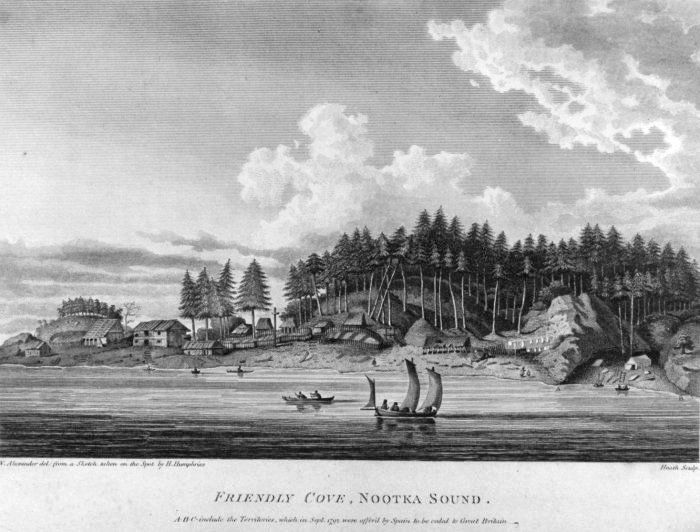
European contact with Vancouver Island began with the arrival of Captain James Cook in 1778, who spent a month at Nootka Sound. The maritime fur trade attracted other Europeans, including British trader John Meares, who established a trading post at Yuquot (Friendly Cove) in 1788. This British activity triggered a sovereignty dispute with the Spanish Empire. In 1789, Spanish Commandant Esteban José Martínez built a fort at Friendly Cove and seized British ships, bringing the two nations to the brink of conflict in the Nootka Crisis. A series of diplomatic agreements, the Nootka Conventions of 1790 to 1794, resolved the dispute. Spain agreed to dismantle its fort and withdraw, ceding sovereignty over Vancouver Island and the Gulf Islands to Britain. The first Nootka Convention in 1790 recognized the rights of both nations to the area. The second Convention in 1793 and the third in 1794 finalized the Spanish withdrawal. This period also saw the arrival of Captain George Vancouver in 1792 to negotiate with Spanish commander Juan Francisco de la Bodega y Quadra, though their talks failed to settle the competing claims.
Establishment and the Hudson's Bay Company Era
The British government sought a cost effective way to colonize Vancouver Island after the 1846 Oregon Treaty set the border at the 49th parallel. On 13 January 1849, a Royal Charter of Grant gave the Hudson's Bay Company proprietary rights to the island for ten years at an annual rent of seven shillings. The company was obligated to promote settlement. The HBC moved its western headquarters from Fort Vancouver on the Columbia River to Fort Victoria that same year. Chief Factor James Douglas was placed in charge. The Colonial Office appointed Richard Blanshard as the colony's first governor in 1849, but he did not arrive until March 1850. Blanshard found the HBC's control over the colony absolute and resigned within a year. The colonial office then appointed James Douglas as governor in 1851. The HBC's lease was for a ten year term ending in 1859. The colony comprised Vancouver Island and the Gulf Islands of the Strait of Georgia. The fort was originally named Fort Albert before being renamed Fort Victoria.
Governance and Settlement Under James Douglas
Governor James Douglas served as both the colony's civil governor and the senior HBC officer. His administration focused on encouraging British settlement, but progress was slow. The HBC set land prices at one pound per acre with a minimum purchase of 20 acres. Larger purchasers were required to bring out labourers, replicating a British class system. By the mid 1850s, the non Indigenous population was still fewer than 500. Douglas established a domestic militia and oversaw the development of early industries like coal mining at Fort Nanaimo and Fort Rupert. He also assisted the British government in establishing a naval base at Esquimalt to check Russian and American expansionism. He completed fourteen separate treaties with First Nations, known as the Douglas Treaties. Under these treaties, nations surrendered title to land within designated areas in exchange for small cash payments and the retained right to hunt and fish on unoccupied territories. Growing settler agitation led to the creation of the Legislative Assembly of Vancouver Island in 1855, though its initial electorate was tiny and dominated by HBC employees. The first election for the assembly was held in 1856.
The Gold Rush Era and Creation of British Columbia
The colony's trajectory was altered by the discovery of gold. Rumours of gold in the Thompson River area reached Victoria in 1857. Almost overnight, some ten to twenty thousand men, predominantly Americans from California, moved into the mainland region then known as New Caledonia. Victoria became a tent city as the essential supply point. Douglas, who had no official authority over the mainland, stationed a gunboat at the Fraser River mouth to collect licences from miners. To formalize British authority and undercut any HBC claims to the resource wealth, the British government established the mainland as the separate Colony of British Columbia on 2 August 1858. Douglas was offered the governorship of the new colony on condition he sever his ties with the HBC, which he did, accepting a knighthood. For the next six years, he governed both colonies from Victoria. A second major gold discovery sparked the Cariboo Gold Rush in the early 1860s. This period also saw the San Juan Boundary Dispute in 1859, leading to a twelve year military standoff on San Juan Island. The gold rushes intensified calls for the union of the two colonies and for responsible government.
Later Administration and Push for Union
Douglas retired in 1864 and was succeeded by Sir Arthur Edward Kennedy, a career colonial administrator who had previously served as governor of Sierra Leone and Western Australia. Kennedy's appointment was initially popular, but he soon faced a recalcitrant Legislative Assembly. The assembly resisted his efforts to secure a permanent civil list in return for control of Crown lands and temporarily withheld his salary and housing. Kennedy made administrative reforms, including the passage of the Common Schools Act in 1865 to fund public education, reforming the civil service, and introducing budget audits. He struggled with the colony's dire finances, which were collapsing by 1865 due to the end of the gold rush boom. Pressure for amalgamation with the more financially stable Colony of British Columbia grew. Kennedy authorized a naval bombardment of Ahousaht villages in Clayoquot Sound in 1864 in retaliation for the murder of a trading vessel's crew. This resulted in thirteen Indigenous deaths and the destruction of nine villages. The City of Victoria was incorporated in 1862 with Thomas Harris elected as its first mayor.
Merger and Path to Confederation
The economic and administrative pressures culminated in the merger of the two colonies. The British Imperial Parliament passed the Act for the Union in 1866, creating the united Colony of British Columbia effective 6 August of that year. Sir Arthur Kennedy served briefly as the first governor of the united colony before departing later in 1866 to become Governor of the West African Settlements. The merger designated Victoria as the capital, though the legislative assembly initially remained in New Westminster on the mainland before being moved permanently to Victoria in 1868. Discussions about joining Canadian Confederation, accomplished by the British North America Act of 1867, gained momentum. The united colony's key condition for entry was the construction of a transcontinental railway. This promise was secured, and on 20 July 1871, the Colony of British Columbia became the sixth province to join Canada, with Victoria as the provincial capital. Three delegates from the province were appointed to the new federal government in Ottawa.
Key Events and Developments
The history of the Colony of Vancouver Island is traced through key events. 1778 : Captain James Cook lands at Nootka Sound. 1789 to 1794 : The Nootka Crisis and subsequent Conventions resolve the Anglo Spanish sovereignty dispute. 1843 : Hudson's Bay Company establishes Fort Victoria at Camosack (Camosun). 13 January 1849 : Royal Charter grants Vancouver Island to the HBC, creating the colony. 1855 : The first Legislative Assembly of Vancouver Island is established. 1858 : Fraser River Gold Rush begins. The Colony of British Columbia is created. 1862 : Fort Victoria is incorporated as the City of Victoria. 1865 : The Common Schools Act is passed. 6 August 1866 : The Colony of Vancouver Island merges with the Colony of British Columbia. 20 July 1871 : The united Colony of British Columbia joins Canadian Confederation. Other significant events include the 1856, 1860, and 1863 elections to the Legislative Assembly.
Population and Economic Indicators
Quantifying the colony's development is challenging due to limited early records. The First Nations population at the time of contact was estimated to be upwards of 30,000. European settlement began very slowly under the HBC's restrictive policies. The non Indigenous population was still under 500 by the mid 1850s. The Fraser River Gold Rush of 1858 caused a demographic and economic explosion, with Victoria's temporary population swelling as thousands of prospectors passed through. This event shifted the economy from a fur trade monopoly to a more diversified commercial centre. The following table outlines key demographic and economic shifts.
| Period | Key Development | Approximate Non Indigenous Population | Additional Notes |
|---|---|---|---|
| Pre 1849 | Fur trade outposts, HBC operations | Very small (HBC employees only) | Fort Victoria established 1843 at Songhees settlement of Camosack. |
| 1849 to 1857 | Slow agricultural settlement under HBC grant | Under 500 by 1855 | Land sales required bringing labourers. Sawmill and coal mining began at Fort Nanaimo and Fort Rupert. |
| 1858 to 1865 | Fraser and Cariboo Gold Rushes, commercial boom | Victoria's permanent population grew significantly | Victoria served as staging point. The colony's budget collapsed after the gold rush ended. |
| 1866 | Merger with Colony of British Columbia | Incorporated into larger colony's census | The united colony faced the challenge of integrating two administrations and economies. |
Questions about Colony of Vancouver Island
When was the Colony of Vancouver Island established?
The Colony of Vancouver Island was officially established by a Royal Charter of Grant on 13 January 1849. The British Colonial Office designated it a Crown colony on that date. The first governor, Richard Blanshard, arrived at the colony's capital, Fort Victoria, in March 1850. The colony existed as a separate entity until it was merged with the Colony of British Columbia in August 1866. The HBC's proprietary lease lasted for ten years, from 1849 to 1859.
Why was the Hudson's Bay Company given control of the colony?
The British Colonial Office sought a cost effective way to colonize Vancouver Island and avoid the expense of direct administration. The Hudson's Bay Company was granted control in 1849 because it possessed the necessary capital, ships, and extensive regional knowledge from the fur trade. The HBC also had a vested interest in Fort Victoria as its western headquarters. In exchange for an annual rent of seven shillings, the Company promised to promote British settlement on the island and establish a colony of resident colonists.
How did the gold rush affect the Colony of Vancouver Island?
The Fraser River Gold Rush of 1858 had a major impact. Victoria became the primary supply and departure point for tens of thousands of prospectors, leading to an economic boom and rapid growth from a small settlement to a busy tent city. The rush prompted the British government to create the separate Colony of British Columbia on the mainland in 1858 to assert authority over the mineral wealth. Governor Douglas governed both colonies from Victoria. The subsequent Cariboo Gold Rush in the early 1860s further cemented Victoria's role as a commercial hub.
Who were the governors of the Colony of Vancouver Island?
The colony had three governors. Richard Blanshard served from 1849 to 1851 but resigned due to the overwhelming power of the Hudson's Bay Company. Sir James Douglas, the HBC Chief Factor, was governor from 1851 to 1864, overseeing the gold rush era and also governing the mainland colony after 1858. Sir Arthur Edward Kennedy was the final governor from 1864 to 1866, managing the colony's difficult final years, its financial collapse, and its merger with British Columbia. He later became Governor of the West African Settlements.
How did the Colony of Vancouver Island become part of Canada?
The Colony of Vancouver Island first ceased to exist as a separate entity when it was merged with the Colony of British Columbia in 1866 to form the united Colony of British Columbia. This larger colony then entered into negotiations to join the newly formed Canadian Confederation, established by the British North America Act of 1867. A key condition for entry was the promise of a transcontinental railway to connect British Columbia to eastern Canada. The terms were agreed upon, and the united colony became the province of British Columbia, joining Canada on 20 July 1871.
What were the Douglas Treaties?
The Douglas Treaties were a series of fourteen separate treaties completed by Governor James Douglas with various First Nations on Vancouver Island. Under the terms of these treaties, the nations surrendered title to all land within a designated area, with the exception of their villages and cultivated areas, in perpetuity. They were given a one time cash payment of a few shillings per person. In return, they retained the permission to hunt and fish over unoccupied territories. These treaties covered land around Victoria, Saanich, Sooke, Nanaimo, and Port Hardy.
Sources and further reading
- Colony of Vancouver Island (Wikipedia)
- 1849 - Vancouver Island Becomes a Colony (leg.bc.ca)
- B.C. History Moments in Time (canadashistory.ca)
Checked by the Nosy Mag desk. Last updated 2026-10-31.