Colony of British Columbia (1858 to 1866)
The Colony of British Columbia was a crown colony in British North America that existed from 1858 until its union with the Colony of Vancouver Island in 1866. It was established by the British Parliament in response to the Fraser Canyon Gold Rush, which brought a sudden influx of American prospectors and raised fears of American annexation. The colony was founded by Colonel Richard Clement Moody, who arrived with the Royal Engineers Columbia Detachment to impose British order and lay the groundwork for its administration and capital. Its creation marked the formal beginning of British colonial government on the mainland of what is now the Canadian province of British Columbia.
Origins and the Catalyst of the Gold Rush
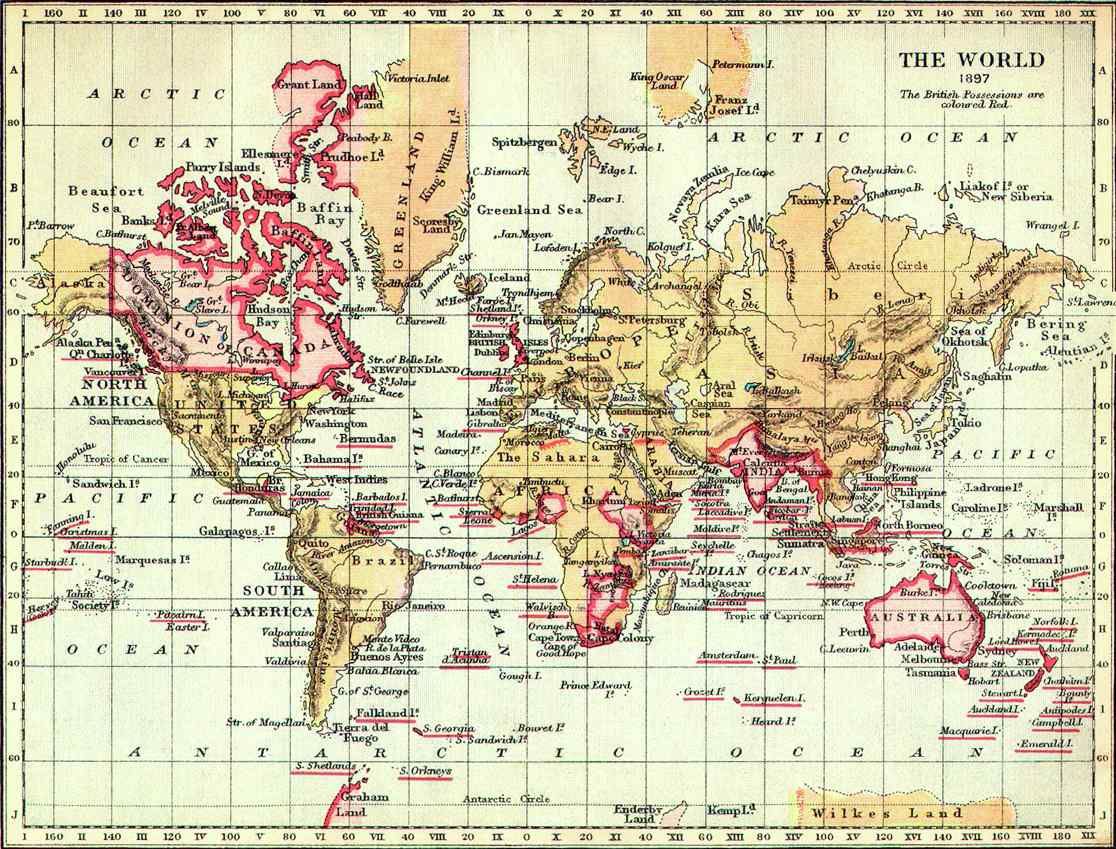
Prior to 1858, the mainland region was an unorganized British territory under the de facto control of the Hudson's Bay Company, comprising the fur trading districts of New Caledonia, north of the Thompson River, and the Columbia District to the south. The non-Indigenous population was minuscule, with fewer than 150 people concentrated at Fort Victoria, mostly HBC employees and their families. This changed in 1857 when rumours and then confirmation of gold in the Thompson River area reached California. The Fraser Canyon Gold Rush drew an estimated ten to twenty thousand men, a significant proportion American, into the region around present-day Yale. Governor James Douglas of the Colony of Vancouver Island, who had no legal authority over the mainland, acted to assert a British presence by stationing a gunboat at the entrance to the Fraser River to collect licences from prospectors. The British government, alarmed by the potential for American annexation, moved quickly. On 2 August 1858, the British Parliament passed the law establishing the Crown Colony of British Columbia. Queen Victoria decided upon the name 'British Columbia', with 'Columbia' deriving from the Columbia River. The colony's initial boundaries excluded Vancouver Island and coastal islands but included the Colony of the Queen Charlotte Islands, stretching from the summit of the Rocky Mountains to the Pacific Ocean and from the 49th parallel north to the Finlay and Nass rivers. The colony was enlarged in 1863 by the British Columbia Boundaries Act, extending its northern boundary to the 60th parallel and its northeastern boundary to the 120th meridian.
The Douglas Administration and Establishing Order
Sir James Douglas, already Governor of Vancouver Island, was offered the governorship of the new colony by Colonial Secretary Sir Edward Bulwer-Lytton, provided he sever his employment with the Hudson's Bay Company. Douglas agreed, received a knighthood, and governed both colonies simultaneously from 1858 to 1864. To manage the gold rush, Douglas was granted temporary power to legislate by proclamation. He acted to create a basic administrative framework, appointing magistrates and constables, drawing up mining regulations, and surveying official town sites at Yale, Hope, and Fort Langley. He also initiated the construction of roads into the areas of greatest mining activity around Lillooet and Lytton. The colony was not immediately granted a representative colonial assembly, as the British government was uncertain whether the gold rush would yield a stable population. The initial rush was short-lived, and an exodus of miners began. However, new gold discoveries farther inland in the Cariboo region in 1860 signalled a second gold rush, making the construction of more substantial wagon roads a pressing necessity. Douglas negotiated several treaties with First Nations on Vancouver Island, but no treaties were made on the mainland during his governorship.
Richard Clement Moody and the Founding Vision
Colonial Secretary Sir Edward Bulwer-Lytton requested the War Office recommend a field officer to lead a corps of Royal Engineers to the new colony. The War Office chose Colonel Richard Clement Moody, citing his military record and previous success as Governor of the Falkland Islands. Lytton desired to send 'representatives of the best of British culture' and saw Moody as the man to 'found a second England on the shores of the Pacific'. Moody, his wife Mary, their four children, and 172 Royal Engineers of the Columbia Detachment arrived at Fort Langley in December 1858. Moody was sworn in as the first Lieutenant-Governor of British Columbia and appointed Chief Commissioner of Lands and Works. His contingent included key officers such as Captains Robert Mann Parsons, John Marshall Grant, and Henry Reynolds Luard, his secretary Robert Burnaby, Doctor John Vernon Seddall, and Chaplain John Sheepshanks. Upon arrival, Moody confronted a rebellion at Hill's Bar led by the American outlaw Ned McGowan. Moody suppressed this incident, later dubbed 'Ned McGowan's War', without loss of life. Moody selected a site on the Fraser River for the new capital. He founded and designed New Westminster, intending its style and location to reinforce the authority of the Crown. The Royal Engineers built Kingsway connecting New Westminster to False Creek, and the North Road between Port Moody and New Westminster. Moody established the port and defensive site of Port Moody, named after him. He named Burnaby Lake after his secretary and Mary Hill in Port Coquitlam after his wife, designed the first coat of arms of British Columbia, and established the town of Hastings. Moody's vision was impeded by insufficient funds from the Colonial Office and opposition from Governor James Douglas. The Royal Engineers, Columbia Detachment was disbanded in July 1863. 130 of the original Columbia Detachment decided to remain in British Columbia as settlers. Moody and 22 others returned to England.
Land Policy, Settlement, and First Nations
The governance and distribution of land were contentious issues from the colony's first days. The Pre-emption Act of 1860 was enacted to regulate settlement but lacked specific conditions for distribution, leading to large speculative purchases. Under orders from the Colonial Office, Moody requisitioned 3,750 acres for himself, building a model farm called Mayfield near New Westminster. The vast majority of First Nations traditional territory was absorbed into the new colony without treaty. While Governor Douglas had negotiated several treaties with First Nations on Vancouver Island, no such treaties were made on the mainland. This established the foundational colonial policy that the land was available for settlement without prior purchase or treaty, a refusal to recognize Aboriginal title. This pattern was entrenched by later officials like Chief Commissioner of Lands and Works Joseph Trutch, who actively reduced the size of existing reserves. As a result, British Columbia is unique in Canada as a province largely existing on unceded Indigenous land, a direct legacy of the colonial administration. The colony's first Supreme Court judge was Matthew Baillie Begbie, appointed in 1858, who served until his death in 1894.
Governance Evolution and the Seymour Administration
James Douglas retired in 1864 and was succeeded by Frederick Seymour, a career colonial administrator with experience in Van Diemen's Land, the British West Indies, and British Honduras. Seymour's appointment in April 1864 coincided with the creation of a legislative council for the colony. During this period, the colony's boundaries were significantly expanded north and northeast to the 60th parallel and the 120th meridian by the British Columbia Boundaries Act of 1863. Seymour oversaw the continuation of critical infrastructure projects like the Cariboo Wagon Road. However, the colony faced severe financial strain. The enormous debt incurred from building roads could not be supported by declining gold revenues. This financial crisis became the primary impetus for union with the Colony of Vancouver Island. An Act for the Union of the colonies was passed by the Imperial Parliament in August 1866. At noon on 19 November 1866, the Colony of British Columbia (1858 to 1866) ceased to exist, formally merging with Vancouver Island to create the new Colony of British Columbia (1866 to 1871), with its capital established at Victoria. Seymour opposed the union but eventually relented, unsuccessfully recommending New Westminster remain the capital.
Demographics and Social Composition
The population of the colony was transient, diverse, and overwhelmingly male, shaped by the gold rushes. The initial wave of the Fraser Rush brought tens of thousands, primarily American miners, but also included British, Chinese, and other prospectors. A notable migration was that of Black pioneers from California, who arrived in 1858 to 1859. The colonial government and the Royal Engineers represented a deliberate implantation of British military and administrative culture. The detachment of 172 Royal Engineers was a significant social force. When the unit was disbanded in July 1863, 130 men chose to remain in British Columbia as settlers. The colony also had a small but influential class of merchants and newspaper editors, such as John Robson of the British Columbian, who were early advocates for responsible government and Confederation. Underlying all colonial society was the enduring and much larger population of First Nations. The colonial administration included appointed officials such as Attorney General Henry Pering Pellew Crease and Collector of Customs Wymond Ogilvy Hamley.
Infrastructure and Economic Development
The economic life of the colony was initially focused on placer gold mining, first in the Fraser Canyon and then in the Cariboo. This dictated the government's priorities: building transportation links to the interior goldfields was the single largest expenditure. The Royal Engineers began this work with local trails and roads. The critical Cariboo Wagon Road, completed later in the 1860s, was a direct result of the colony's need to provision the Cariboo mines. The establishment of New Westminster and the road network connecting it to Burrard Inlet was strategically aimed at creating a commercial and administrative hub. Port Moody was established as a defensive military outpost and anticipated Pacific terminus for a transcontinental railway. The Pre-emption Act of 1860 attempted to encourage agricultural settlement, but with limited immediate success. The colony's economy remained precarious, overly dependent on finite mineral wealth, which led to boom-and-bust cycles and the crippling debt that ultimately forced union. The colony also faced the costs of suppressing the Chilcotin War of 1864, which added approximately 18,000 pounds to its debt.
Legacy and Path to Confederation
The eight-year history of the Colony of British Columbia established the enduring geopolitical entity of the mainland. It secured the region for the British Empire and later Canada, against American pressure during the gold rushes. The infrastructure legacy, particularly the road network and the planning of New Westminster, shaped the physical development of the Lower Mainland. The colony's financial struggles were a direct cause of the 1866 union, and the combined colony's debt and security concerns following the US purchase of Alaska in 1867 became central arguments for joining Canadian Confederation. Politicians like Amor De Cosmos and John Robson led the Confederation League, which held a convention in Yale in 1868. The death of the anti-Confederation Governor Frederick Seymour in 1869 and his replacement by the pro-union Anthony Musgrave helped clear the final path to British Columbia joining Canada in 1871. The most deep legacy is the land question. By establishing a colony without treaties, the colonial government created the reality of unceded First Nations territory, a fundamental issue that continues to define relations in British Columbia today. Commemoration includes Moody Park and Square in New Westminster and a monument to Moody unveiled in 1984.
Questions about Colony of British Columbia (1858 to 1866)
Why was the Colony of British Columbia created in 1858?
The colony was created in direct response to the Fraser Canyon Gold Rush, which began in 1857. The sudden influx of thousands of American prospectors raised British fears of American annexation. The British Parliament acted to assert formal sovereignty, secure the gold resources, and establish British law and order over the previously unorganized mainland, which had been under the control of the Hudson's Bay Company. The act also cancelled the HBC's exclusive trade rights on the mainland.
Who was the first governor of the Colony of British Columbia?
Sir James Douglas, who was already the Governor of the Colony of Vancouver Island, was appointed as the first Governor of British Columbia in August 1858. He served in both roles simultaneously until his retirement in 1864. The first Lieutenant-Governor specifically for British Columbia was Colonel Richard Clement Moody, who arrived in December 1858 to found the colony. Moody was sworn in as Lieutenant-Governor and also served as the colony's Chief Commissioner of Lands and Works.
What was the capital of the Colony of British Columbia and why was it chosen?
The capital was New Westminster, founded and designed by Colonel Richard Clement Moody on the banks of the Fraser River in 1859. Moody selected the site for its strategic defensive position, its quality port, and its majestic scenery, which he felt was 'worthy of the entrance to the Queen of England's dominions on the Pacific'. He planned the city to reinforce British authority and his Royal Engineers built its initial road network. It served as the capital until the colony merged with Vancouver Island in 1866.
What was the role of the Royal Engineers in the colony?
The Royal Engineers, Columbia Detachment, led by Colonel Richard Clement Moody, were responsible for surveying, engineering, and military duties. They built the capital at New Westminster, laid out key roads like Kingsway and the North Road, began the Cariboo Road, established Port Moody, and designed the first coat of arms. When disbanded in 1863, 130 of them chose to stay as settlers. They also designed Stanley Park as a strategic area for defence.
How did the creation of the colony affect Indigenous peoples?
The creation of the colony led to the annexation of vast First Nations territories without treaty. Unlike on Vancouver Island where Governor Douglas had negotiated some treaties, no treaties were made on the mainland during this colonial period. Colonial authorities operated on the principle that Aboriginal title did not exist, establishing the reality of unceded Indigenous territory in British Columbia. This was later reinforced by officials like Joseph Trutch.
How did the Colony of British Columbia end?
The Colony of British Columbia ended on 19 November 1866 when it was merged with the Colony of Vancouver Island by an Imperial Act passed by the British Parliament in August 1866. The new entity was named the Colony of British Columbia (1866 to 1871). The merger was driven by significant administrative and financial pressures, including the mainland colony's debt of approximately 200,000 pounds. Governor Frederick Seymour initially opposed but eventually relented to the union, which created a single colonial administration.
Sources and further reading
- Colony of British Columbia (1858 to 1866) (Wikipedia)
- The Mainland of British Columbia Becomes a Crown Colony (leg.bc.ca)
- British Columbia and Confederation (thecanadianencyclopedia.ca)
- The Governor's Letters: Uncovering Colonial British Columbia (govlet.ca)
Checked by the Nosy Mag desk. Last updated 2026-11-01.