Nootka Crisis
The Nootka Crisis, also known as the Spanish Armament, was a late 18th-century international incident that brought Spain and Great Britain to the brink of war over sovereignty and trade rights on the Pacific Northwest coast. Centred on Nootka Sound on Vancouver Island, the crisis began in the summer of 1789 when Spanish forces seized British trading vessels and arrested their crews. The dispute, rooted in competing imperial claims and the lucrative maritime fur trade, escalated into a major diplomatic confrontation involving naval mobilizations. Its peaceful resolution through the Nootka Conventions reshaped the geopolitical situation of the region, curtailing Spanish exclusivity and opening the coast to British trade and exploration, events that would influence the future development of British Columbia and Canada.
Imperial Rivalry in the Pacific Northwest
The Pacific Northwest coast remained largely unexplored by European powers until the latter half of the 18th century, when it became a focal point for imperial competition. Spain based its centuries-old claim to the entire Pacific coast on papal bulls, the 1494 Treaty of Tordesillas, and the 1513 sighting of the ocean by Vasco Núñez de Balboa. To counter Russian exploration and settlement in Alaska, Spain established a naval base at San Blas, Mexico, and launched a series of reconnaissance voyages northward starting in 1774. These expeditions, which reached as far as Sitka Sound by 1775, were intended to establish prior discovery and support Spain's assertion of exclusive sovereignty. Concurrently, British interest was ignited by the published journals of Captain James Cook's 1778 voyage, which detailed the rich fur trade potential of the region, particularly around Nootka Sound. British traders, inspired by the profits of early voyages like that of James Hanna in 1785, began arriving in numbers, setting the stage for a direct clash with Spanish claims of monopoly over trade and navigation.
The Buildup to Confrontation at Nootka Sound
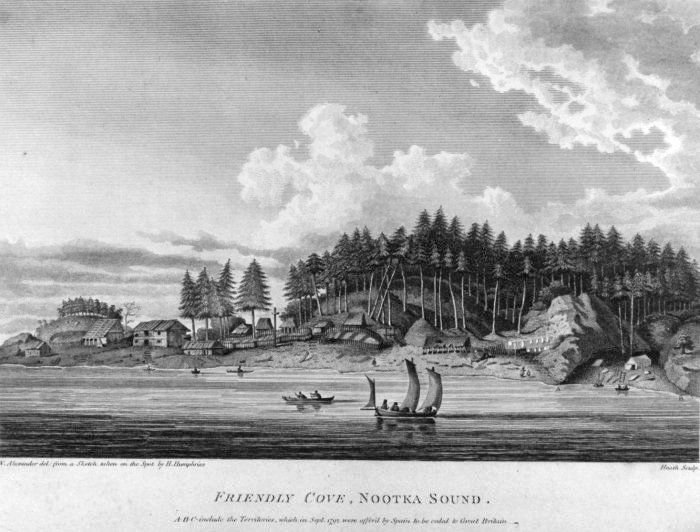
By the late 1780s, Nootka Sound had emerged as the most important anchorage on the northwest coast, attracting traders from several nations. The British trader John Meares played a central role in escalating tensions. In 1788, he arrived at Nootka Sound and later claimed to have purchased land from Chief Maquinna of the Nuu-chah-nulth people and erected a building, establishing a British foothold. That same year, his crew built the sloop North West America, the first non-indigenous vessel constructed in the Pacific Northwest. Meanwhile, Spanish intelligence indicated that Russia intended to fortify Nootka Sound, prompting a decisive response from the Viceroy of New Spain. In early 1789, Esteban José Martínez was dispatched with explicit orders to occupy the sound, build a settlement, and fortify Spain's claim. His expedition constructed Santa Cruz de Nuca, which included houses, a hospital, and Fort San Miguel, representing the first European settlement in what is now British Columbia. This move directly challenged the activities and claims of British traders who were, at that very moment, organizing a larger commercial effort under the command of James Colnett, with instructions to establish a permanent post at Nootka.
The 1789 Incident and Escalation
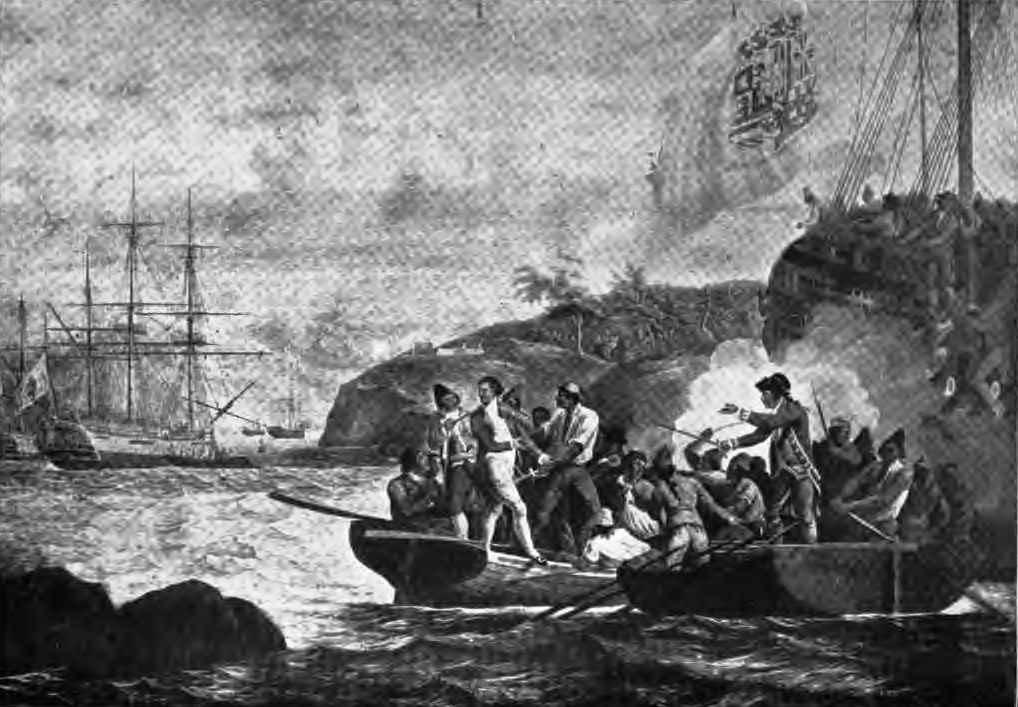
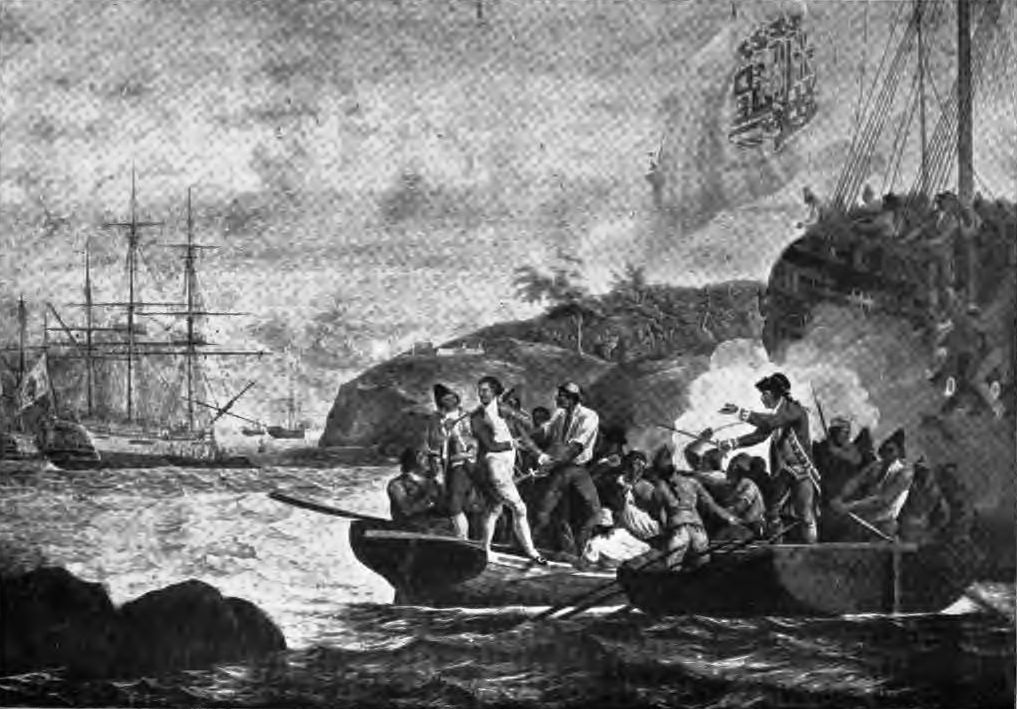
Martínez arrived at Nootka Sound on May 5, 1789, and quickly moved to assert Spanish authority. He found American ships present but focused on British vessels, beginning with the seizure of the North West America on June 8. On June 24, he performed a formal ceremony claiming the entire northwest coast for Spain. The crisis intensified with the July arrival of the British ships Princess Royal and Argonaut. Martínez arrested Argonaut's captain, James Colnett, after a heated argument, seizing the ship and its cargo of Chinese labourers and construction materials intended for a settlement. The captured Chinese workforce was later used to build Fort San Miguel. A tragic event occurred on July 13 when Callicum, a Nuu-chah-nulth leader and brother of Maquinna, was shot and killed during an altercation with Spanish forces aboard a captured ship. This event severely damaged Spanish-Indigenous relations, causing Maquinna to flee Yuquot with his people. By the end of July, Martínez had seized multiple British vessels and sent prisoners to San Blas, though he left American traders largely unmolested. Despite orders to evacuate by year's end, a new Spanish viceroy reversed course, and a larger force reoccupied Nootka Sound under Francisco de Eliza in early 1790.
Diplomatic Crisis and Naval Mobilization
News of the seizures reached London in January 1790, sparking public outrage. The British Prime Minister, William Pitt the Younger, adopted a hardline stance, asserting a British right to trade in any area not effectively occupied by Spain. In April, John Meares arrived in England and fuelled the flames with his account, including disputed claims of prior land purchase and construction at Nootka. In May, the British Parliament authorized the establishment of a penal colony at Nootka Sound and the Royal Navy mobilized for war, delivering an ultimatum to Spain. Both nations assembled powerful fleets in a show of force. The Dutch Republic aligned with Britain, testing the new Triple Alliance. The critical factor was France, Spain's traditional ally under the Bourbon Family Compact. Although France initially mobilized its navy, the ongoing French Revolution and internal instability led the revolutionary government to refuse military support for Spain by the end of August 1790. Isolated and facing the combined might of the British and Dutch navies, Spain was forced to seek a diplomatic solution.
Resolution Through the Nootka Conventions
The Nootka Crisis was resolved through a series of three diplomatic agreements known collectively as the Nootka Conventions, negotiated between 1790 and 1794. The first convention, signed on October 28, 1790, required Spain to restore the buildings and lands seized from British subjects and provide compensation for the captured vessels. It granted British subjects the right to trade and establish settlements in unoccupied areas of the Pacific Northwest coast up to ten leagues from shorelines already occupied by Spain in April 1789. This agreement effectively ended Spain's claim to an exclusive monopoly over trade and navigation in the region. The final convention stipulated that neither Spain nor Britain would maintain permanent garrisons or factories at Nootka Sound, that it would be a free port open to other nations, and that neither could claim exclusive sovereignty. To implement these terms, British Captain George Vancouver and Spanish Captain Juan Francisco de la Bodega y Quadra met at Nootka Sound in 1792. Although they developed a mutual respect, they could not agree on the specifics of the handover and referred the matter back to their governments. The final withdrawal of both nations from Nootka Sound was completed on March 28, 1795.
Key Figures in the Dispute
The crisis involved a cast of ambitious officers, traders, and diplomats whose actions dictated its course. On the Spanish side, Esteban José Martínez was the volatile commandant whose seizures ignited the conflict, though he later became a scapegoat after a change in viceroys. He was succeeded by the more diplomatic Juan Francisco de la Bodega y Quadra, who negotiated with George Vancouver. The Spanish position was ultimately directed by Chief Minister José Moñino y Redondo, conde de Floridablanca. For Britain, the merchant John Meares was a central and controversial figure whose reports and published Voyages in 1790 galvanized British public opinion and government action, despite the disputed nature of some of his claims. Captain James Colnett was the trader arrested by Martínez, whose plans for a permanent settlement directly challenged Spanish authority. The British diplomatic and military response was orchestrated by Prime Minister William Pitt the Younger. The Indigenous perspective was represented by Maquinna, the powerful Mowachaht chief whose territory was at the centre of the dispute, and his brother Callicum, whose death marked a tragic moment in the conflict.
- Esteban José Martínez: Spanish naval officer who seized British ships at Nootka Sound in 1789 and built Fort San Miguel.
- John Meares: British fur trader and former naval officer whose accounts and memorials drove the British diplomatic response.
- James Colnett: British merchant captain arrested by Martínez in July 1789 while commanding the Argonaut.
- Juan Francisco de la Bodega y Quadra: Senior Spanish naval commander who took over negotiations at Nootka and met with George Vancouver in 1792.
- Maquinna: Mowachaht chief whose people had inhabited Yuquot for millennia and who dealt with successive European visitors.
- Callicum: Nuu-chah-nulth leader and brother of Maquinna who was killed during the 1789 incident.
- William Pitt the Younger: British Prime Minister who oversaw the naval mobilization and diplomatic strategy.
- George Vancouver: British captain tasked with receiving the restitution of Nootka Sound from Spain in 1792.
Legacy and Historical Significance
The Nootka Crisis had consequences for the Pacific Northwest and for Canada. Its resolution marked a shift in imperial influence, as Spanish power in the region waned while British commercial and political interests were strengthened. The conventions averted a major European war but did so by imposing a European diplomatic framework on Indigenous territory without the consent of the Nuu-chah-nulth and other coastal nations. The principle of effective occupation was enshrined as a key criterion for sovereignty, undermining older claims based solely on discovery or papal decree. This change favoured British expansion and later American ambitions in the region. For the Indigenous inhabitants, the crisis was an intrusive episode in a longer history of contact and conflict. Both European powers withdrew from their physical posts at Nootka Sound by 1795, and the site returned to Mowachaht control. The crisis cleared the way for increased British exploration, charting by figures like George Vancouver, and the eventual establishment of the Crown colony of Vancouver Island, shaping the process that would lead to British Columbia's entry into Canadian Confederation. In 1957, the Spanish government presented stained glass windows commemorating the conventions to the church of Friendly Cove as a gift to the Nuu-chah-nulth people.
Questions about Nootka Crisis
What was the main cause of the Nootka Crisis?
The primary cause was the clash between Spanish claims of exclusive sovereignty over the Pacific Northwest coast and British ambitions to participate in the lucrative maritime fur trade based out of Nootka Sound. Spain, citing centuries-old papal decrees and treaties, sought to enforce a monopoly. British traders, inspired by Captain Cook's voyages, established a commercial presence there. The immediate trigger was the seizure of British vessels and the arrest of their crews by Spanish commandant Esteban José Martínez in the summer of 1789.
How did the Nootka Crisis almost lead to war?
The crisis nearly led to war due to the escalation of diplomatic demands and full naval mobilizations by both Britain and Spain. After news of the seizures reached London, public and political outrage pushed Prime Minister William Pitt to issue an ultimatum and prepare the Royal Navy for hostilities. Spain also mobilized its fleet, hoping for support from its ally France. Both nations sent powerful war fleets to sea in a show of force. The situation was only defused when France, in the throes of revolution, withdrew its support for Spain, leaving the Spanish diplomatically isolated.
What were the Nootka Conventions?
The Nootka Conventions were a series of three diplomatic agreements signed between Spain and Great Britain between 1790 and 1794 to resolve the crisis. The first convention in 1790 required Spain to compensate Britain for seized ships and restore properties. It granted British subjects the right to trade and settle in unoccupied areas of the coast up to ten leagues from shorelines already occupied by Spain in April 1789. The final 1794 convention established that neither nation would maintain permanent installations or claim exclusive sovereignty at Nootka Sound.
What role did Indigenous peoples play in the Nootka Crisis?
The Nuu-chah-nulth peoples, particularly the Mowachaht led by Chief Maquinna, were central yet often sidelined participants. Their territory at Yuquot (Friendly Cove) in Nootka Sound was the physical ground over which the European powers disputed. Maquinna engaged in trade and land negotiations with figures like John Meares. The death of Maquinna's brother, Callicum, during a confrontation with Spanish forces in July 1789 was a tragic event that damaged Spanish-Indigenous relations. The diplomatic conventions were imposed without Indigenous consent.
Why is the Nootka Crisis significant to Canadian history?
The Nootka Crisis is significant to Canadian history as it marked a turning point in the control of what would become British Columbia. The conventions ended Spanish exclusivity and opened the Pacific Northwest coast to British trade and settlement, paving the way for increased British exploration, such as the detailed surveys by Captain George Vancouver. The establishment of the principle that sovereignty required effective occupation favoured British colonial expansion. This shift was a direct precursor to the establishment of the Crown colony of Vancouver Island and later British Columbia.
What happened to the Spanish fort at Nootka Sound?
The Spanish fort, Fort San Miguel, was part of the settlement of Santa Cruz de Nuca established in 1789. After the initial evacuation ordered later that year, Spanish forces reoccupied the site in 1790. However, under the terms of the Nootka Conventions, Spain agreed not to maintain permanent garrisons. Following the final convention in 1794, the Spanish completed their withdrawal from Nootka Sound on March 28, 1795. The fort and other structures were abandoned. The site at Yuquot returned to the control of the Mowachaht people.
Sources and further reading
- Nootka Crisis (Wikipedia)
- The Nootka Crisis, A history talk, Catherine's Corner (cathgilb.wordpress.com)
- The Nootka Sound Crisis (cortesmuseum.com)
- The Nootka Crisis, a history talk (catherinegilbert.ca)
- Nootka Sound Controversy (thecanadianencyclopedia.ca)
Checked by the Nosy Mag desk. Last updated 2026-10-28.