Canadian Centennial
The Canadian Centennial was a yearlong celebration held in 1967 to mark the 100th anniversary of Canadian Confederation. The festivities culminated on Dominion Day, July 1. The year's centrepiece was Expo 67, the world's fair in Montreal. Communities across Canada engaged in centennial projects, ranging from special events to the construction of lasting infrastructure. Children born in 1967 were declared Centennial babies.
Planning and Organization
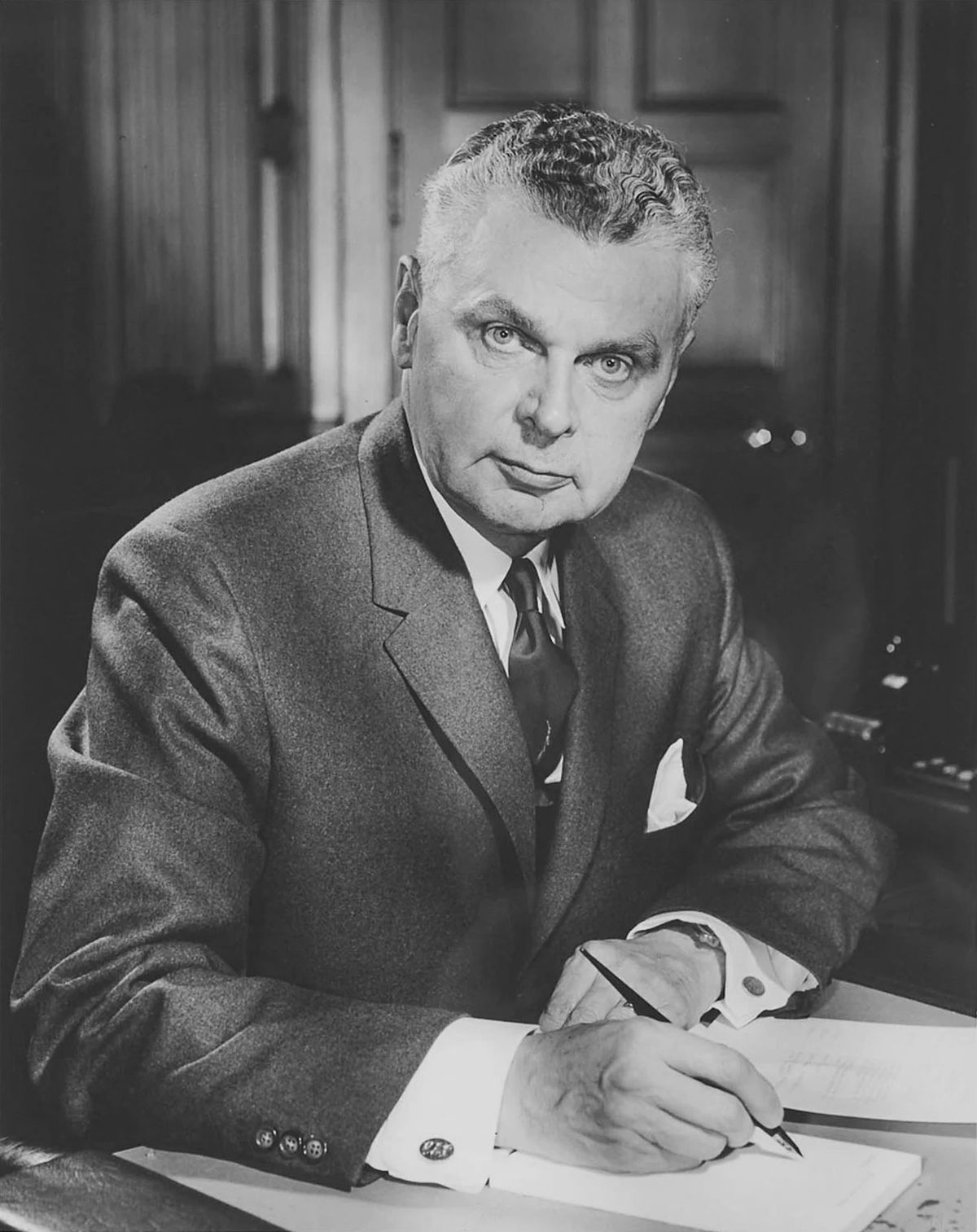
In 1961, Prime Minister John Diefenbaker announced federal funding for the construction of about 860 buildings as centennial projects. Official federal planning commenced with the convening of the Centennial Commission in January 1963, a body that continued its work under Prime Minister Lester Pearson. The commission was led by publicist John Fisher, who served as Centennial commissioner, assisted by associate commissioners Georges E. Gauthier and Gilles Bergeron. Its mandate was to encourage, coordinate, and fund celebrations across the country. A key financial mechanism was a cost sharing program where each dollar a municipality spent on an approved centennial project was matched by one dollar from the federal government and another from the respective provincial government.
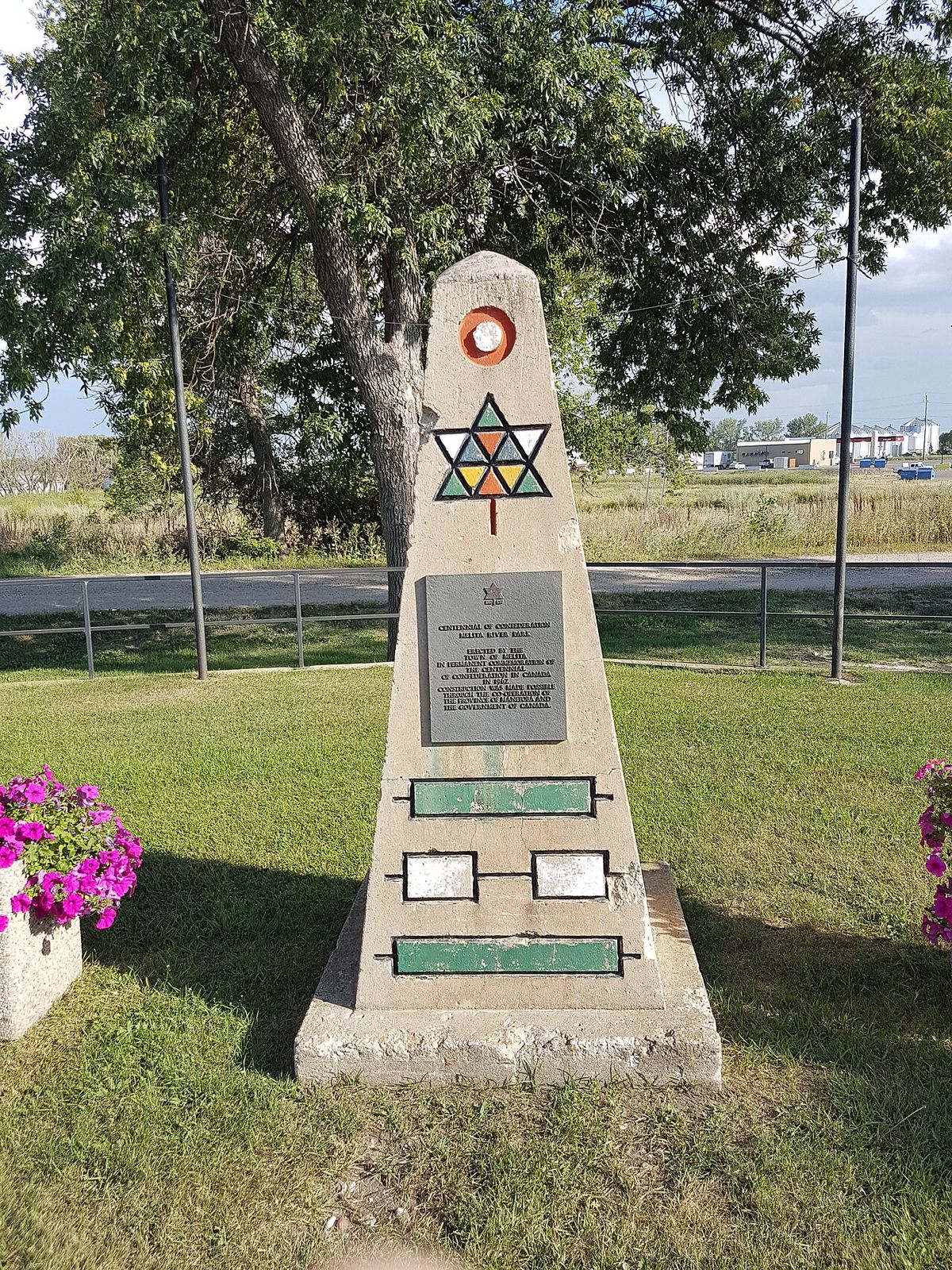
This financial incentive encouraged the construction of lasting community facilities, with the federal Centennial Commission setting aside $25 million. The commission also oversaw the creation of a unifying visual identity, commissioning a logo designed by Stuart Ash. The logo consisted of a stylized maple leaf composed of 11 equilateral triangles, representing Canada's 10 provinces and the Northwest Territories. In 1965, Prime Minister Lester Pearson appointed a committee headed by Ernest Côté to plan events in the national capital, Ottawa, for 1967. The commission's work involved mobilizing Canadian society to an unprecedented degree across all fields of endeavour.
Major National Projects and Events
The Centennial year featured a wide array of major projects and spectacles. The single largest event was Expo 67, the Category One World's Fair held in Montreal from April 27 to October 29, which served as Canada's main centennial celebration. The Confederation Train was a travelling exhibit proposed by Prime Minister Diefenbaker. It consisted of six exhibit cars and seven staff cars pulled by two diesel locomotives from Canadian Pacific Railway and Canadian National Railway, painted in a special purple, grey, and black livery. The locomotives had a custom air horn that sounded the first four notes of O Canada. The train was inaugurated on January 9 in Victoria, British Columbia, and made 83 stops across the country before its final stop in Montreal on December 5.
The Centennial Voyageur Canoe Pageant was a marathon canoe race that began on May 24 in the Rocky Mountains. Ten teams representing eight provinces and the two territories paddled and portaged 3,283 miles over 104 days, arriving in Montreal on September 4. The Canadian Armed Forces Tattoo 1967 was a massive military theatrical production involving 1,700 service personnel. It was formed in Picton, Ontario in February 1967 and performed over 150 shows across Canada from March to November, depicting Canadian military history from 1665 to 1967. The National Film Board of Canada launched the Challenge for Change participatory film project in 1967, funded by eight government departments. The Confederation of Tomorrow conference, a summit of provincial premiers called by Ontario Premier John Robarts, was held at the Toronto Dominion Bank Tower in November 1967.
- Expo 67: World's fair in Montreal from April 27 to October 29, Canada's main centennial celebration.
- Confederation Train: Travelling history exhibit that visited 83 communities, with locomotives sounding O Canada.
- Centennial Voyageur Canoe Pageant: 3,283-mile race from the Rockies to Montreal over 104 days.
- Canadian Armed Forces Tattoo 1967: Military spectacle with 1,700 participants, the largest peacetime undertaking.
- Challenge for Change: National Film Board participatory film project launched in 1967 and active until 1980.
- Confederation of Tomorrow Conference: Summit of provincial premiers held in Toronto in November 1967.
Local and Community Celebrations
Beyond the major spectacles, communities across Canada undertook their own centennial projects. These ranged from special one time events to permanent local improvement projects, with funding often supported by the three level government cost sharing program. Communities celebrated with bathtub races, parades, period costume parties, and countless local festivals. The town of St. Paul, Alberta, built a landing pad for UFOs as its centennial project. In Toronto, the Caribbean community launched the Caribana parade and festival as a gift to the nation and a tribute to the Centennial year.
Many communities chose to build lasting infrastructure. These projects included libraries, art galleries, theatres, sports complexes, municipal arenas, and parks. Examples include the 1,500 seat Norbrock Stadium in Kamloops, British Columbia, the Centennial Building in Fredericton, and the National Arts Centre in Ottawa. Some projects, such as the Ontario Science Centre, were completed after 1967. The Yukon River Flotilla was a Centennial project organized by the Yukon Fish and Game Association. On August 6, 54 craft departed Whitehorse on a ten day voyage to Dawson City, carrying 108 adults, 45 children, and 9 dogs. Participants came from four provinces, thirteen American states, and one European country, using craft like canoes, kayaks, and Amphicars.
Commemorative Issues and Symbols
The Centennial was commemorated through a variety of official symbols, medals, and currency. The most prominent new symbol was the Centennial Flame, a gas powered monument added to Parliament Hill in Ottawa. It was lit at midnight on December 31, 1966, by Prime Minister Lester Pearson to launch the year's festivities. The government also instituted the Canadian Centennial Medal to recognize individuals who had made valuable contributions to the country. Designed by Bruce W. Beatty, approximately 30,000 medals were conferred, with about 30 per cent awarded to members of the Canadian Armed Forces. Nominations came from governments, cultural organizations, veterans' groups, and other associations.
A special commemorative coinage was issued for 1967, with designs by artist Alexander Colville winning a government competition. The coins featured Canadian wildlife on the reverse, including a dove on the penny, a rabbit on the five cent piece, a mackerel on the ten cent piece, and a bobcat on the twenty five cent piece. The Bank of Canada issued a redesigned one dollar banknote, part of the 1954 Series. It featured a green monochrome adaptation of the centennial maple leaf logo and an image of the original Parliament Buildings. Two variants were printed one with the serial number at the top and a more common one with the years 1867 and 1967 printed twice. The federal government commissioned typographer Carl Dair to create Cartier, a new typeface, with the first proof published as the first Canadian type for text composition. The Canadian Broadcasting Corporation commissioned Gordon Lightfoot to write Canadian Railroad Trilogy for broadcast on January 1, 1967.
Cultural and Historical Significance
The Canadian Centennial arrived at a moment of national optimism and is often viewed as a high point in Canadian aspirations prior to the more anxious decade of the 1970s. Expo 67 was a powerful signifier of this national mood, projecting an image of a modern, confident country to the world. In a political and cultural context, Expo 67 was seen as a landmark moment in Canadian history. Popular historian Pierre Berton later referred to the centennial as the last good year in his book 1967 The Last Good Year. The year's events mobilized all facets of Canadian society from the creative and performing arts to sports, businesses, and cultural organizations.
The celebrations occurred amidst underlying tensions, and the Centennial Commission itself was a response to a desire to foster national unity. The Confederation of Tomorrow conference highlighted ongoing debates about the country's future structure and led to a new round of federal provincial constitutional negotiations. The Centennial's focus on 1867 held different meanings across the country. In Western Canada, where settlement occurred later, the 1967 celebrations themselves often held more immediate significance than the 1867 Confederation date. Children born in 1967 were declared Centennial babies. The centennial is seen as a high point prior to the nation becoming divided over issues like inflation, economic recession, and Quebec separatism in the 1970s.
Financial Scope and Lasting Infrastructure
The scale of the Centennial celebrations was supported by significant financial investment from all levels of government. The federal Centennial Commission's $25 million fund for local projects was a central part of this effort. This money was distributed through a matching grants program that effectively tripled local municipal spending on approved projects. The program financed a wide variety of buildings and facilities intended as permanent gifts, ensuring the year left a tangible mark on hundreds of communities. The buildings served as daily reminders of the 1967 celebrations for decades.
The Canadian Centennial Commission provided funding for about 860 building projects across the country. These projects included facilities such as libraries, art galleries, theatres, and sports complexes. Each province acquired a centennial memorial building. The federal government set aside $25 million for these local projects, with municipal funding matched dollar for dollar by both the province and the federal government. This initiative was part of Prime Minister Diefenbaker's 1961 announcement. The projects were a concrete reminder of the centennial year celebrations and housed cultural, recreational, and governmental activities.
| Project Type | Example | Location |
|---|---|---|
| Sports Stadium | Norbrock Stadium (1,500 seats) | Kamloops, British Columbia |
| Performing Arts Centre | National Arts Centre | Ottawa, Ontario |
| Provincial Government Building | Centennial Building | Fredericton, New Brunswick |
| Science Museum | Ontario Science Centre | Toronto, Ontario (completed post-1967) |
| Community Arenas and Parks | Numerous municipal facilities | Nationwide |
| Libraries and Art Galleries | Various local institutions | Nationwide |
Questions about Canadian Centennial
What was the most important event of the Canadian Centennial?
The most important event was Expo 67, the Category One World's Fair held in Montreal from April 27 to October 29, 1967. Expo 67 was Canada's main celebration during the centennial year. It was seen as a landmark moment in Canadian history, signifying a mood of extreme optimism and confidence. In retrospect, the centennial and Expo 67 are often viewed as a high point of Canadian aspirations prior to the more anxious decade of the 1970s.
How did the government fund Centennial projects in local communities?
The federal government, through the Centennial Commission, established a cost sharing program. For every dollar a municipality spent on an approved centennial project, the federal government and the respective provincial government each contributed one matching dollar. This tripled local investment. The federal commission set aside $25 million for this matching fund, which helped finance about 860 building projects nationwide. This was part of Prime Minister Diefenbaker's 1961 announcement.
What was the Confederation Train?
The Confederation Train was a travelling museum exhibit proposed by Prime Minister John Diefenbaker in 1961. It consisted of six exhibit cars and seven staff cars, pulled by two specially painted diesel locomotives from CP and CN Rail. The locomotives had a custom air horn that sounded the first four notes of O Canada. The train toured Canada from January to December 1967, making 83 stops. It was inaugurated in Victoria on January 9 and concluded its journey in Montreal on December 5.
What special coins or money were issued for the Centennial?
A special commemorative coin series was minted for 1967, with designs by artist Alexander Colville. The coins featured Canadian animals on the reverse, such as a dove on the penny and a rabbit on the nickel. The Bank of Canada issued a redesigned one dollar banknote bearing the Centennial logo and an image of the original Parliament Buildings. Two variants of this banknote design were printed. The federal government also commissioned the Cartier typeface to mark the centenary.
What is the Centennial Flame on Parliament Hill?
The Centennial Flame is a gas powered fountain monument added to Parliament Hill in Ottawa during the centennial year. It was lit at midnight on December 31, 1966, in a ceremony involving Prime Minister Lester Pearson to officially launch the Centennial celebrations. The flame was intended as a permanent commemorative feature and continues to burn on Parliament Hill as a concrete reminder of the 1967 celebrations. This monument was one of many projects created to mark the 100th anniversary of Canadian Confederation.
How were individuals honoured during the Centennial year?
The Canadian Centennial Medal was created to honour Canadians who made valuable contributions to the country. Designed by Bruce W. Beatty, approximately 30,000 medals were awarded to individuals selected from all sectors of society. Nominations came from governments, cultural organizations, veterans' groups, and other associations. About 30 per cent of the medals were awarded to members of the Canadian Armed Forces. The medal commemorated the 100th anniversary of Confederation.
Sources and further reading
- Canadian Centennial (Wikipedia)
- Canada's Centennial Celebrations, 1967 (thecanadianencyclopedia.ca)
- Celebrating 100 years (legion.ca)
- Ottawa's Centenary (historicalsocietyottawa.ca)
- Celebrating the Centennial (canadashistory.ca)
Checked by the Nosy Mag desk. Last updated 2026-10-27.