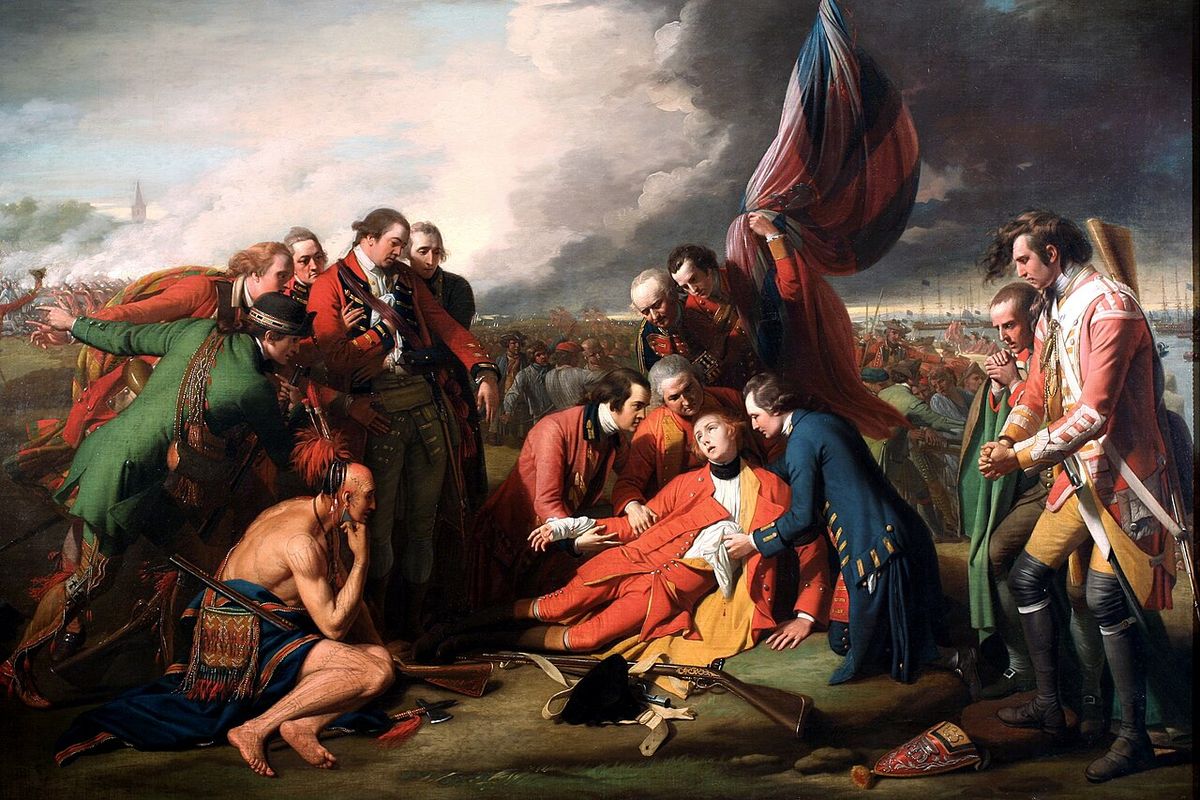
Canada in World War I
Canada's involvement in the First World War began automatically on August 4, 1914, when Britain declared war on Germany, but the nation's level of commitment was a sovereign choice. The Canadian government, led by Prime Minister Robert Borden, offered assistance to Great Britain which was quickly accepted, leading to the raising of an independent Canadian Expeditionary Force rather than mobilizing the existing Militia. Canadian forces fought with distinction in major battles such as the Somme, Vimy Ridge, and Passchendaele, and their successes, particularly the 1917 victory at Vimy, became powerful symbols of emerging national identity. The war effort deeply divided the country, most acutely during the 1917 conscription crisis which was vehemently opposed in Quebec. Its human and political legacies, including over 67,000 killed and 173,000 wounded, shaped the nation's path to greater independence.
Entry into the War and Mobilization
As a Dominion of the British Empire, Canada was legally at war when Britain declared war on Germany on August 4, 1914. Prime Minister Sir Robert Borden offered substantial military assistance, which Britain accepted. The country's pre-war permanent army was minuscule, consisting of only 3,110 men, necessitating the rapid creation of a new force under Minister of Militia and Defence Sam Hughes. The government chose to raise an independent Canadian Expeditionary Force (CEF) based on numbered battalions rather than mobilize the existing militia. To govern the domestic war effort, the Canadian Parliament passed the War Measures Act, granting the government sweeping powers including censorship, arrest and detention without charge, and control over private property.
The initial call for volunteers met with an overwhelming response, particularly from Canadians of British descent. Sir Wilfrid Laurier spoke for the majority of English Canadians when he proclaimed that all Canadians were behind the Mother Country. Around 600,000 men and women participated in the war by enlisting as nurses, soldiers, and chaplains. The force was raised quickly, but it was riven with political patronage and lacked a solid core of professional officers and NCOs. The Chief of the General Staff, Willoughby Gwatkin, had planned for a mass mobilization of the Canadian Militia, but these plans were scrapped in favour of the new CEF reporting to a separate Ministry of Overseas Forces of Canada.
Formation of the Canadian Corps
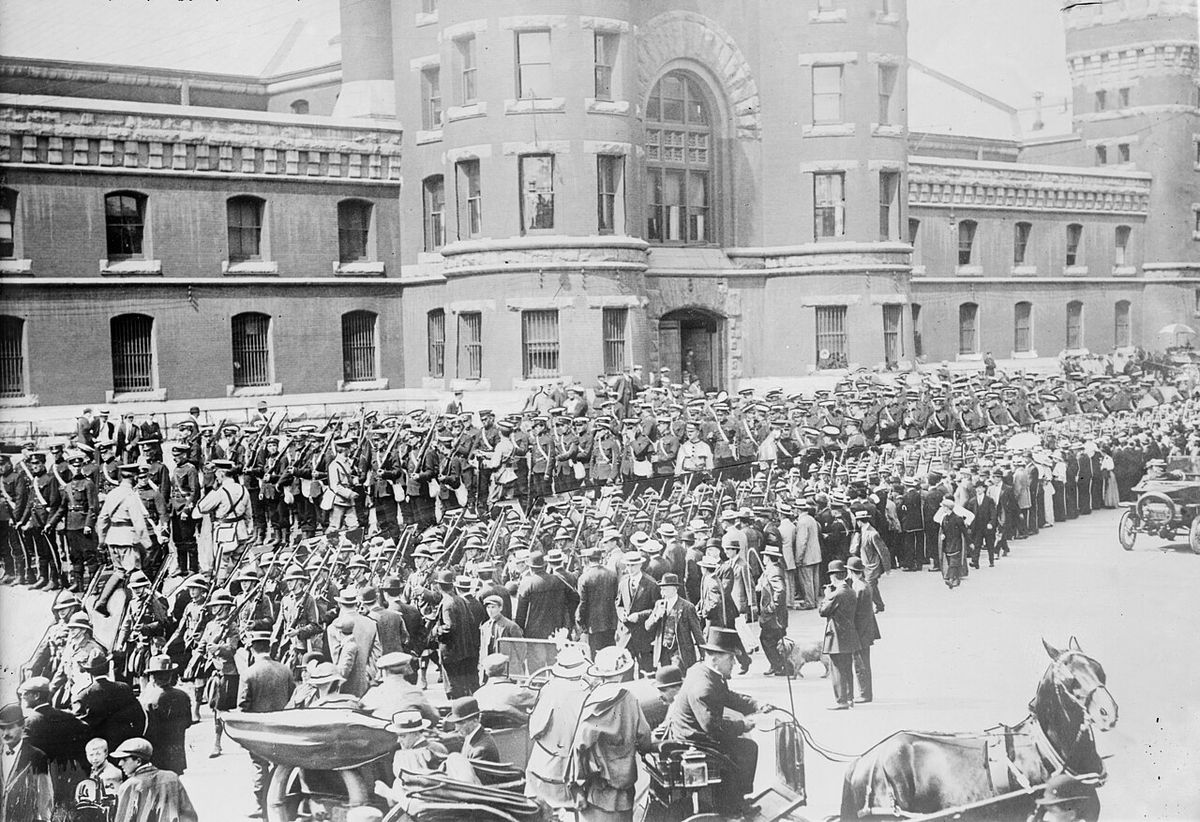
The Canadian Corps was established as a distinct field formation of the CEF in September 1915 following the arrival of the 2nd Canadian Division in France. It expanded with the addition of the 3rd Canadian Division in December 1915 and the 4th Canadian Division in August 1916. Plans for a 5th Canadian Division began in February 1917, but it was disbanded in February 1918 before being fully formed, with its personnel used to reinforce the other four divisions. This unified structure was crucial for developing a distinct military identity and improving battlefield coordination. The corps remained under the overall command of the British Army, but Canadian leaders successfully argued against having its divisions scattered among British units.
The corps was initially commanded by British officer Lieutenant General Sir Edwin Alderson. Command passed in 1916 to Lieutenant General Sir Julian Byng, who later became Governor General of Canada. In the summer of 1917, command passed to General Sir Arthur Currie, giving the corps its first Canadian commander. Under Currie's leadership, the Canadian Corps was among the most effective and respected formations on the Western Front. A separate formation, the Canadian Cavalry Brigade, arrived in France in 1915. It became an all Canadian formation in January 1916 and engaged in several battles, notably the Battle of Moreuil Wood on 30 March 1918. The brigade was deployed separately from the Canadian Corps under various British cavalry divisions.
Major Campaigns and Battles
Canadian forces experienced their first major combat during the Second Battle of Ypres in April 1915. The 1st Canadian Division faced the first large-scale use of chlorine gas on the Western Front, which caused French colonial troops to retreat and opened a large gap in the Allied line. Over 48 hours, the Canadians fought to hold their position, suffering more than 6,000 casualties, including over 2,000 killed. Their successful defence under this horrific new weapon marked their arrival as a formidable fighting force. Earlier in March, Canadians had their first taste of battle at Neuve Chapelle, where they learned critical lessons about artillery support and communications. They found that artillery bombardment was too light to suppress enemy trenches and that systems of communication were too vulnerable.
The Battle of the Somme began on July 1, 1916. The Royal Newfoundland Regiment, fighting as part of the British 29th Division, was nearly annihilated at Beaumont-Hamel. Of the 801 men in the regiment the day before, only 68 reported for roll call on July 2. The Canadian Corps entered the battle in September when it was tasked to secure the town of Courcelette. By November 11, the 4th Canadian Division finally secured most of the German trenches there. The Battle of the Somme claimed more than 24,000 Canadian casualties but gave Canadian units the reputation of a formidable assault force. British Prime Minister Lloyd George later wrote that the Germans prepared for the worst whenever the Canadian Corps came into the line.
The Battle of Vimy Ridge began on 9 April 1917. Every artillery piece at the disposal of the Canadian Corps began firing. The attack used a creeping barrage that advanced 100 yards every three minutes. The 1st, 2nd, and 3rd Canadian Divisions captured their first objectives quickly, but the 4th Division faced trouble. The corps suffered 10,602 casualties at Vimy Ridge with 3,598 killed and 7,004 wounded. Four Victoria Crosses were awarded during the battle. The success of the operation has often been interpreted as a defining moment in the emergence of Canadian national identity. Later in 1917, the four divisions of the Canadian Corps were transferred to the Ypres Salient for the Battle of Passchendaele. The Canadian Corps operation at Passchendaele was executed in a series of three attacks with limited objectives from 26 October to 10 November, costing 15,654 casualties with over 4,000 dead. The final action to capture Hill 52 occurred on 11 November 1918.
Canada's Hundred Days and the End of the War
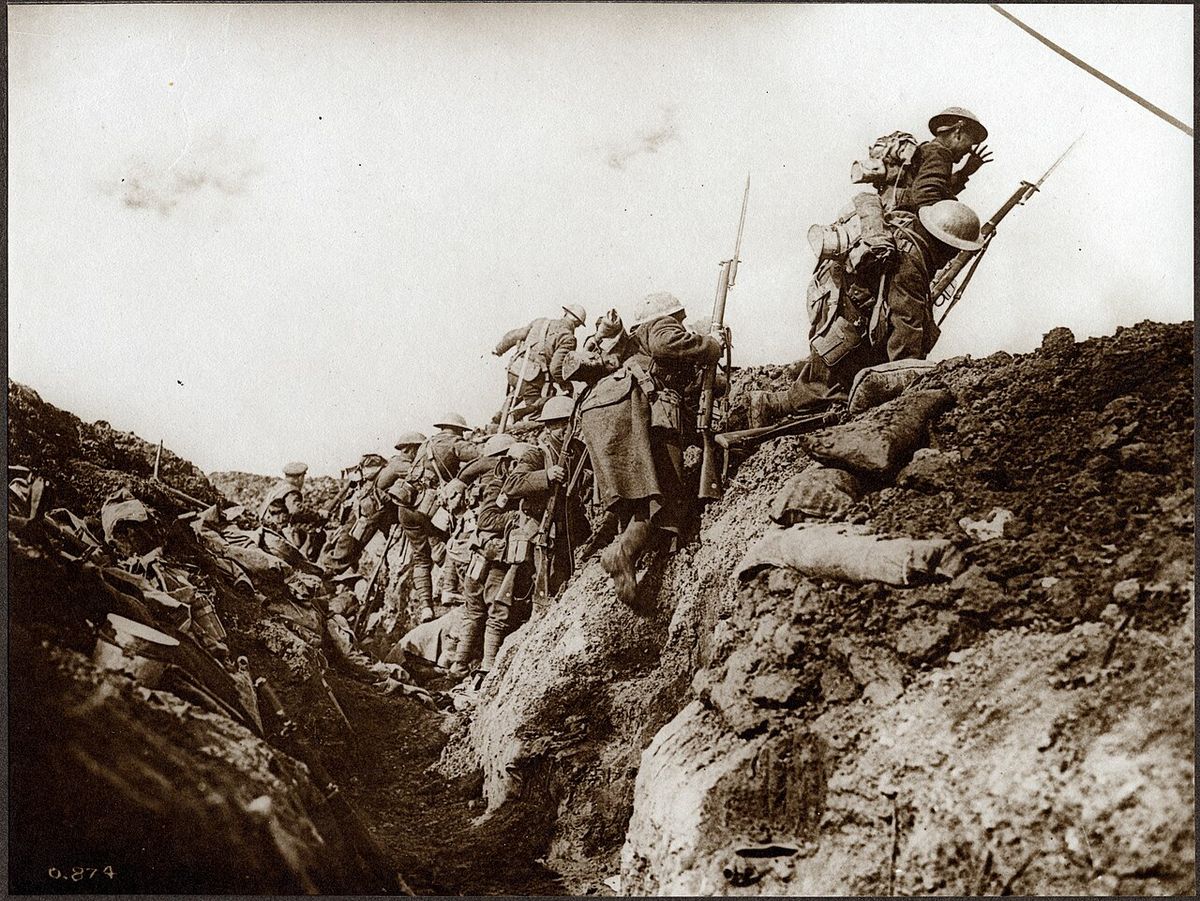
In the war's final months, from August 8 to November 11, 1918, the Canadian Corps played a leading role in the Allied offensive known as the Hundred Days Campaign. Canadian forces, employing sophisticated combined arms tactics, were at the forefront of this relentless advance. They broke through German lines at the Battle of Amiens on 8 August, a day German General Ludendorff called a black day for the German army. The Canadians then cracked the Hindenburg Line, smashing through a dry section of the Canal du Nord on 27 September 1918. They drove the Germans out of Cambrai by 11 October and marched to Mons by the final day of the war. The war ended with the armistice coming into effect at 11 a.m. on November 11, 1918. The last Canadian killed was Private George Lawrence Price, two minutes before the armistice. The human cost for Canada was immense, with a casualty rate of approximately 39 percent of those mobilized. The Canadian Corps suffered 46,000 casualties in the final hundred days.
| Category | Figure |
|---|---|
| Canadians who served in CEF | 619,636 |
| Newfoundlanders who served | Approx. 3,000 |
| Total killed | 61,000 |
| Total wounded | 172,000 |
| Casualties in Hundred Days | 46,000 |
| Soldiers treated for venereal disease by 1915 | 29% of all troops |
Many survivors returned home with physical disabilities or psychological trauma. They faced significant challenges in reintegrating into civilian life, including discrimination and reduced employment opportunities. During 1914 to 1919, half of the nation's medical resources were devoted to the war effort in the Canadian Army Medical Corps. The CAMC expanded from 23 officers to include 1,525 medical officers, 1,901 nursing sisters, and 15,624 other ranks, managing 36,000 hospital beds overseas.
Diversity and Discrimination in the War Effort
While the call to arms was answered by hundreds of thousands, Canada's military recruitment was marked by widespread racial discrimination. At the war's outset, non-white volunteers were often explicitly turned away, as when Black men from Sydney, Nova Scotia were told it was a white man's war. Persistent prejudice initially barred many Indigenous, Black, and Asian Canadians from enlisting. In 1915, Indigenous peoples were permitted to enlist, with approximately 3,500 serving, many in the 114th Battalion. The most notable segregated unit was the No. 2 Construction Battalion, formed in 1916 after lobbying by Black community leaders. It was the first and only all-Black battalion in Canadian military history, comprising men from Canada and the United States who remained segregated throughout their service.
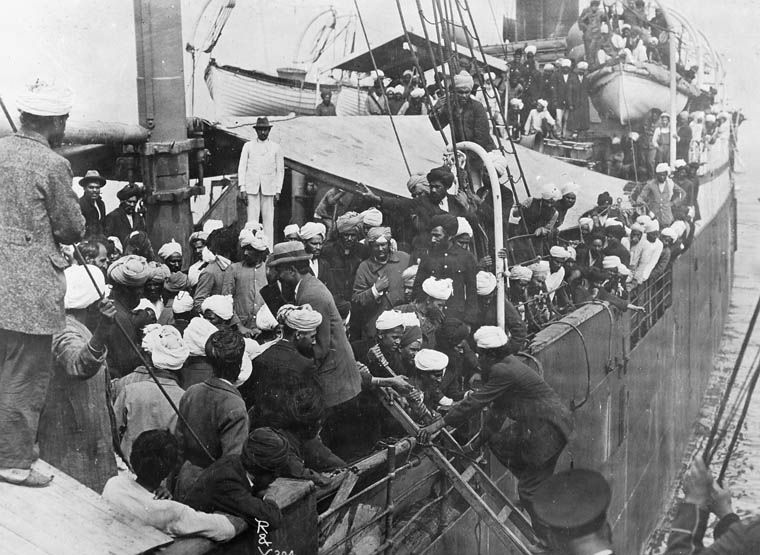
The Canadian Japanese Association in British Columbia put forward a volunteer reserve force of 227 men. Some of these men were later admitted into the military. A deal between the Chinese government and the allies resulted in the enlistment of thousands of Chinese who formed the Chinese Labour Corps for non-combatant roles. The Canadian government had restricted the arrival of all Asians and the CLC were secretly landed in Victoria, British Columbia. They were drilled at the old quarantine station at William Head and secretly shipped across Canada in cattle trucks. Indian nationalists from the Ghadar Party were also active in Canada, involved in the Komagata Maru incident in 1914.
- Indigenous soldiers were allowed to enlist starting in 1915, with an estimated 3,500 serving.
- The No. 2 Construction Battalion, formed in 1916, was the only all-Black unit in Canadian military history.
- The Canadian Japanese Association raised a 227-man volunteer reserve force in British Columbia.
- The Chinese Labour Corps was secretly brought to Canada and shipped overseas.
- About 70 percent of CEF enlistees were British immigrants, though they were just 11 percent of Canada's population.
The Conscription Crisis of 1917
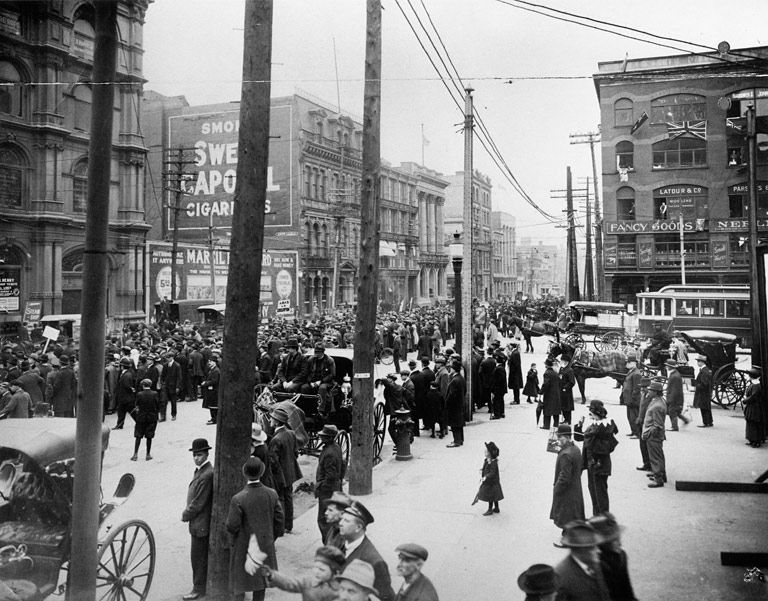
As volunteer numbers dwindled amid the high casualties of 1916 and 1917, Prime Minister Robert Borden's government introduced the Military Service Act in 1917, making military service compulsory for eligible men. Support for conscription was strongest among English-speaking Canadians, British immigrants, families of soldiers, and older citizens. Opposition was widespread among French Canadians, farmers, unionized workers, and non-British immigrants. Henri Bourassa, a leading French-Canadian nationalist, joined former Prime Minister Sir Wilfrid Laurier in leading the opposition. In the 1917 election, Borden's Union government won 153 seats, nearly all from English Canada, while the Liberals won 82 seats, including only 3 in Quebec. Of the 96,000 conscripts listed on strength with the CEF, 47,589 were sent overseas and 24,132 had joined units in France by the war's end. They arrived in time to aid the rebuilding of the Canadian Corps and the Hundred Days campaign. The crisis opened a deep and lasting rift between the French and English speaking populations.
Legacy and Commemoration
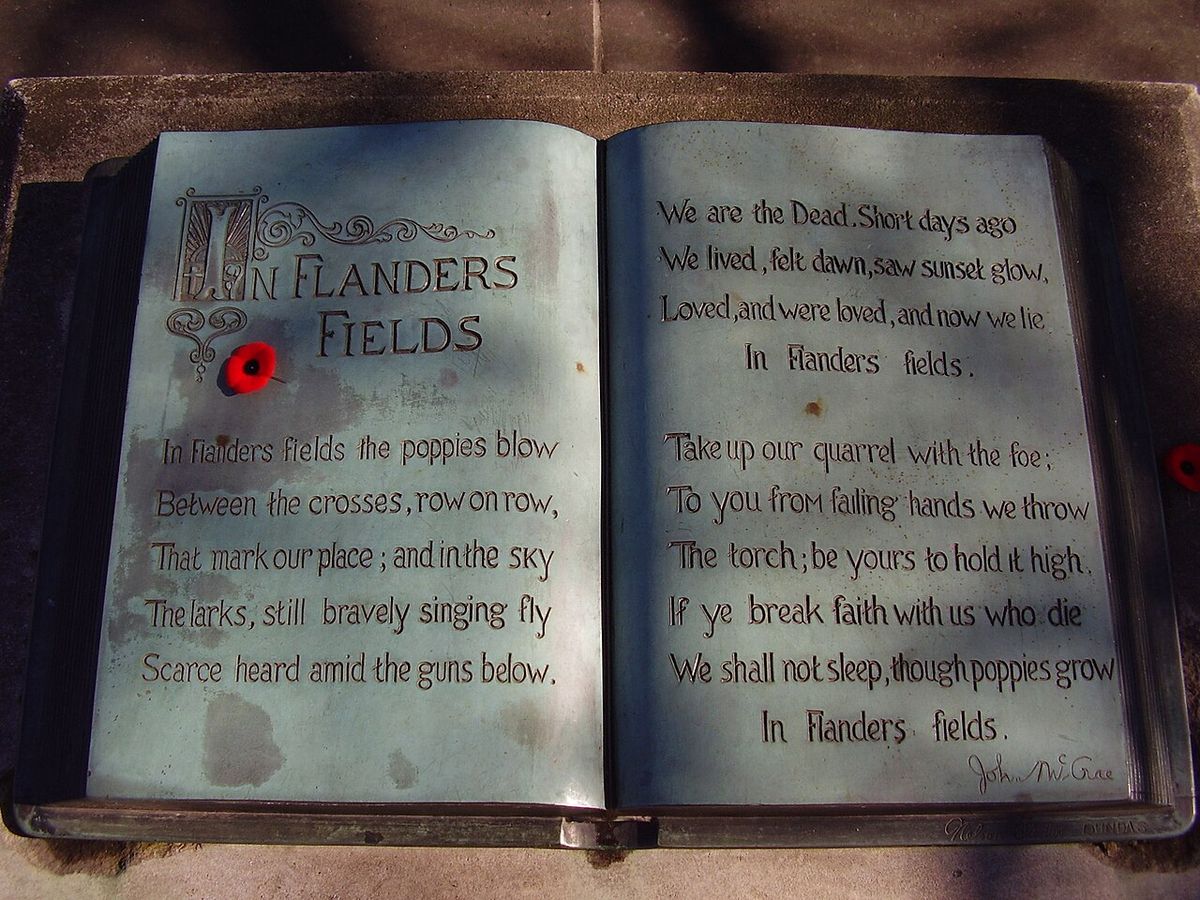
The First World War was a deeply important event for Canada, accelerating its journey toward full nationhood. The war's human cost was staggering, leaving communities across the country in mourning. The conscription crisis exposed and deepened the rift between French and English Canada. Canada maintains a strong tradition of commemorating the sacrifices of the First World War. Annual Remembrance Day ceremonies on November 11 honour all who have served. Historic sites like the Newfoundland Memorial at Beaumont-Hamel and the Canadian National Vimy Memorial in France serve as permanent monuments to the fallen. The war also influenced Canadian art and literature. The poem "In Flanders Fields" by Canadian Expeditionary Force member John McCrae, written after the Second Battle of Ypres, is a central symbol of Remembrance Day. The novel Rilla of Ingleside by Lucy Maud Montgomery chronicles the Canadian home front during the war.
- The Canadian National Vimy Memorial in France commemorates the 1917 battle and all Canadians who served in the war.
- The Beaumont-Hamel Newfoundland Memorial preserves the site of the Newfoundland Regiment's devastating 1916 battle.
- Remembrance Day ceremonies are held annually on November 11 across Canada.
- The poem "In Flanders Fields" by John McCrae is a symbol of Remembrance Day throughout the Commonwealth.
- The novel Rilla of Ingleside by Lucy Maud Montgomery is a contemporary novel about the war from the perspective of Canadian women.
- Canadian war art and the collections of the Canadian War Museum preserve the visual record of the conflict.
Questions about Canada in World War I
Did Indigenous and Black Canadians serve in World War I?
Yes, but they faced significant discrimination. Approximately 3,500 Indigenous people served, many in battalions like the 114th. The No. 2 Construction Battalion, formed in 1916, was the first and only all-Black unit in Canadian military history. Black Canadians in this battalion remained segregated during their service, which included non-combatant roles. Some Asian Canadians also served, such as the 227-man volunteer reserve force raised by the Canadian Japanese Association.
How is Canada's role in World War I commemorated today?
Canada commemorates its First World War service through annual Remembrance Day ceremonies on November 11. Major memorials like the Canadian National Vimy Memorial in France and the Beaumont-Hamel Newfoundland Memorial honour the fallen. The poem "In Flanders Fields" and the remembrance poppy are central symbols. Museums like the Canadian War Museum and educational programs also preserve this history. Significant anniversaries of battles are formally marked.
Why did Canada enter World War I?
Canada entered World War I automatically on August 4, 1914, when the United Kingdom declared war on Germany. This was due to Canada's legal status as a British Dominion, which left foreign policy decisions in the hands of the British parliament at that time. The Canadian government under Prime Minister Robert Borden then determined the country's specific level of involvement, offering assistance which was accepted. This led to the mobilization of the Canadian Expeditionary Force, a distinct volunteer army raised for overseas service.
How many Canadians served and were casualties in World War I?
Approximately 619,636 people were mobilized in the Canadian Expeditionary Force. Canada's total casualties were about 61,000 killed and 172,000 wounded. This means that 39 percent of the mobilized force became casualties. In the final Hundred Days offensive alone, the Canadian Corps suffered 46,000 casualties. The Canadian Army Medical Corps treated 154,000 wounded soldiers who survived, with 12,000 later dying of wounds.
What was the significance of the Battle of Vimy Ridge?
The Battle of Vimy Ridge, fought from April 9 to 12, 1917, was the first time all four divisions of the Canadian Corps fought together as a unified formation. Their victory, using a precise creeping artillery barrage, resulted in the capture of the heavily fortified German ridge. The Canadian Corps suffered 10,602 casualties. The success has often been interpreted as a defining moment in the emergence of a distinct Canadian national identity, though about half the men who fought there were British immigrants.
What was the Conscription Crisis of 1917?
The Conscription Crisis of 1917 was a deep political rift over mandatory military service introduced by the Military Service Act. It was strongly supported in English Canada but vehemently opposed in Quebec, led by Henri Bourassa and Sir Wilfrid Laurier. The 1917 election result, where the government won 153 seats but only 3 in Quebec, highlighted the intense linguistic division. Ultimately, 47,589 conscripts were sent overseas and 24,132 joined units in France, aiding the final Hundred Days campaign.
Sources and further reading
- Canada in World War I (Wikipedia)
- Key Canadian Events | Canada and the First World War (warmuseum.ca)
- Significant Events in Canadian History (thecanadianencyclopedia.ca)
- Commemorative events (veterans.gc.ca)
- Canada in World War I: A Detailed Summary (historycrunch.com)
Checked by the Nosy Mag desk. Last updated 2026-10-26.