Canada at the Olympics
Canada has sent athletes to every Winter Olympic Games and every Summer Olympic Games since its debut at the 1900 games, with the exception of the 1980 Summer Olympics, which it boycotted. Canada has won at least one medal at every Olympics in which it has competed. The nation has twice hosted the Winter Olympics, in Calgary in 1988 and Vancouver in 2010, with the latter seeing the country lead the gold medal count for the first time. Governed by the Canadian Olympic Committee, Canadian athletes have established numerous records.
Historical Participation and Boycott
Canadian athletes first competed at the Olympic Games in 1900 in Paris. The nation has also participated in every edition of the Winter Olympic Games since their inception in 1924. This streak was interrupted only once, when Canada joined the United States-led boycott of the 1980 Summer Olympics in Moscow. Despite this absence, Canada maintains the record of having won at least one medal at every Olympic Games in which its athletes have competed. The early Olympic Games attributed athletes to nations based on their club or team affiliation rather than personal nationality, which affected the medal tally for Canada's first Olympians. For instance, Canadian-born George Orton won a gold and bronze in athletics at the 1900 Games, but his medals are credited to the United States as he represented the University of Pennsylvania. Canada also won one gold and one silver medal at the 1906 Intercalated Games in Athens, but those results are not included in official Olympic records as the International Olympic Committee does not recognize that edition.
Canada as an Olympic Host
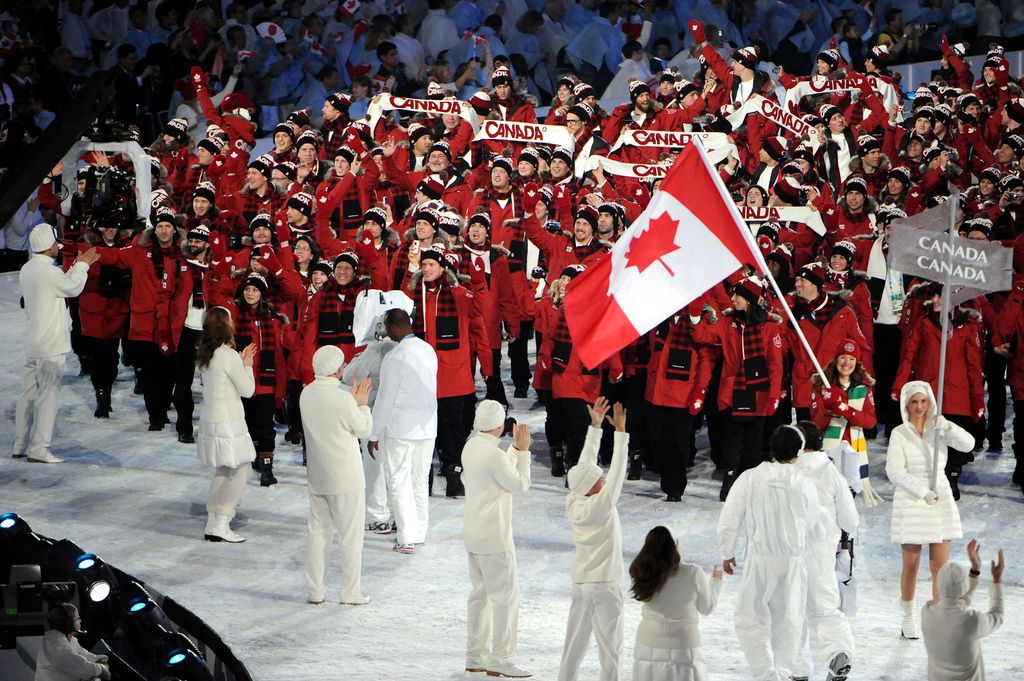
Canada has hosted the Olympic Winter Games on two occasions. The first was the 1988 Winter Olympics in Calgary, Alberta, which followed several previous unsuccessful bids by the city. These Games introduced new events and venues that left a legacy for winter sport in the region. More than two decades later, Canada hosted the 2010 Winter Olympics in Vancouver, British Columbia. The Vancouver Games are particularly remembered for a landmark achievement in Canadian Olympic history. During those Games, Canadian athletes won more gold medals than any other competing nation, a first for the country, culminating in a gold medal victory in men's ice hockey. The success of these home Games was supported by initiatives like Own the Podium, which focused on strategic investment in high-performance sport. The nation has also hosted the Summer Olympics once, in Montreal in 1976.
Summer Olympic Medal Performance
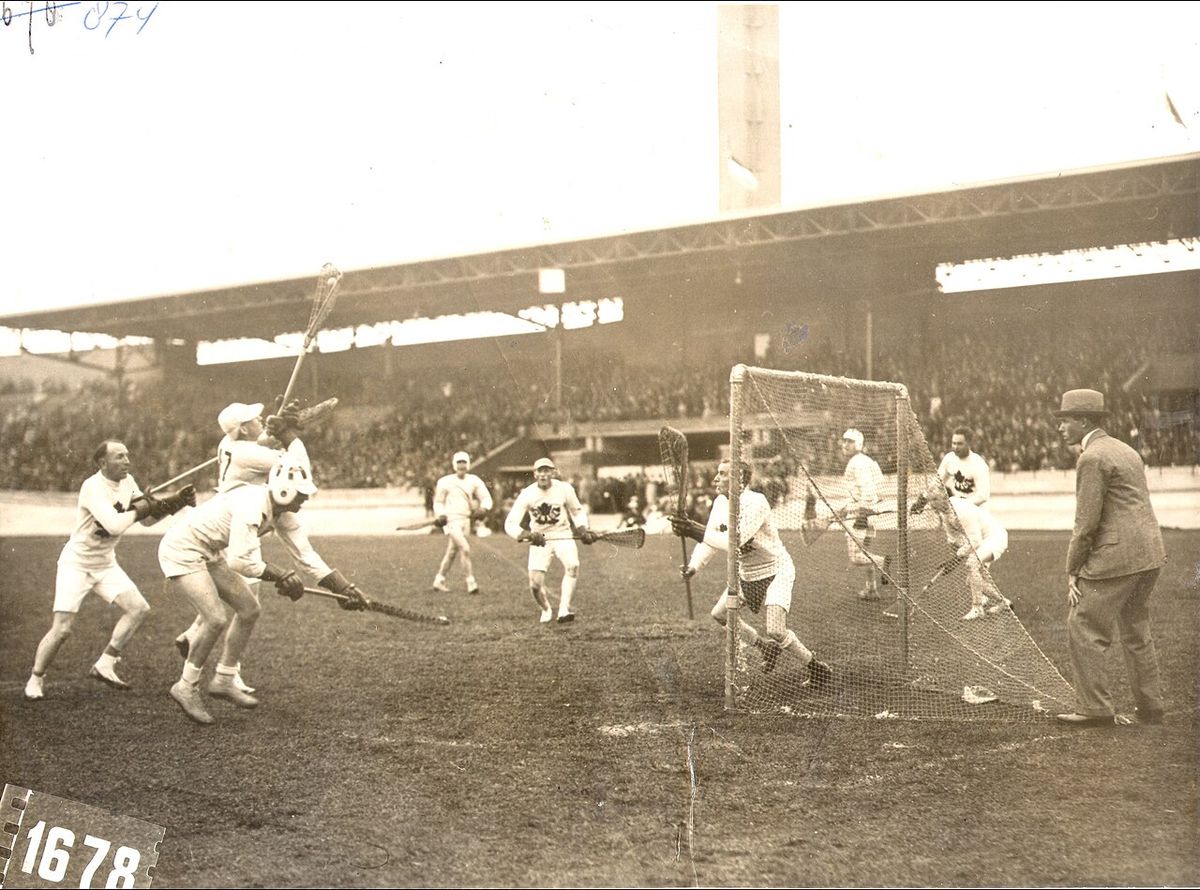
Canada has accumulated a substantial medal haul over more than a century of Summer Olympic competition. The nation's athletes have reached the podium in a wide variety of sports, though some disciplines remain unconquered. Canadian competitors have never won an Olympic medal in several current summer sports including water polo, archery, badminton, baseball, handball, karate, modern pentathlon, skateboarding, sport climbing, surfing, table tennis, indoor volleyball, and Greco-Roman wrestling. the official medal tables do not include results from the 1906 Intercalated Games, where Canada won one gold and one silver, as those Games are not recognized by the International Olympic Committee. Art competitions, which were part of the Olympic program from 1912 to 1948, are also excluded from the official count, though Canada won two medals in those events in 1932 and 1948. A unique historical case involves ice hockey, where one of Canada's gold medals was awarded at the 1920 Summer Olympics in Antwerp before the Winter Games existed, creating a discrepancy in how medals are categorized between summer and winter totals.
| Games | Gold | Silver | Bronze | Total |
|---|---|---|---|---|
| 1900 Paris | 1 | 0 | 1 | 2 |
| 1920 Antwerp | 3 | 3 | 3 | 9 |
| 1984 Los Angeles | 10 | 18 | 16 | 44 |
| 1996 Atlanta | 3 | 11 | 8 | 22 |
| 2012 London | 1 | 5 | 12 | 18 |
| 2016 Rio | 4 | 3 | 15 | 22 |
Winter Olympic Medal Performance and Records
Canada has been a leading nation at the Winter Olympic Games, consistently ranking among the top countries in the medal standings. The country has won medals in most winter sport disciplines, with the exceptions of nordic combined and ski mountaineering. The nation's most successful Winter Olympics in terms of total medals was the 2018 PyeongChang Games, where Canadian athletes won 29 medals. The 2010 Vancouver Games also stand out not only as a home Games but for producing a leading gold medal count of 14. More recently, Canada secured 26 medals at the 2022 Beijing Games and 21 at the 2026 Milano Cortina Games. Canadian athletes have set several notable records for medal accumulation and repeat victories at the Winter Games. Speed skater Cindy Klassen and short track speed skater Charles Hamelin hold the Canadian record for most Winter Olympic medals with six each. Catriona Le May Doan became the first Canadian to defend an Olympic gold medal when she won the women's 500m speed skating event in both 1998 and 2002. Alexandre Bilodeau later became the first Canadian man to defend a gold medal, winning men's moguls freestyle skiing in 2010 and 2014.
- 2010 Vancouver: Topped the gold medal standings with 14 golds among 26 total medals.
- 2014 Sochi: Won 25 total medals.
- 2018 PyeongChang: Record total medal haul of 29 (11 gold, 8 silver, 10 bronze).
- 2022 Beijing: Won 26 total medals (4 gold, 8 silver, 14 bronze).
- 2026 Milano Cortina: Won 21 total medals (5 gold, 7 silver, 9 bronze), finishing eighth overall.
Ice dancers Tessa Virtue and Scott Moir are the most decorated figure skaters in Olympic history. They won five medals, three gold and two silver, across three Games. In 2014, curler Jennifer Jones skipped the Canadian women's team to a gold medal. She is the first female skip in Olympic history to be undefeated throughout the tournament. Her team had an 11-0 record. Other notable Canadian records include Clara Hughes, who is the only Olympian of any country to win medals at both the Summer and Winter Games.
Notable Canadian Olympic Records and Firsts
Canadian Olympians have set numerous records that highlight exceptional longevity, versatility, and dominance in their sports. Equestrian Ian Millar competed at ten Summer Olympics, tying the global record for most Games appearances, and was named to eleven consecutive teams though he did not compete in 1980 due to the boycott. Clara Hughes stands alone as the only Olympian from any nation to win multiple medals at both the Summer and Winter Games, earning two bronze medals in cycling in 1996 and four speed skating medals between 2002 and 2010. In terms of total medals, swimmer Penny Oleksiak and sprinter Andre De Grasse share the Canadian Summer Games record with seven medals each, while speed skater Cindy Klassen and short track skater Charles Hamelin hold the Winter record with six apiece. Several Canadians have been the first to successfully defend Olympic titles in their sports, including speed skater Catriona Le May Doan, freestyle skier Alexandre Bilodeau, and trampolinist Rosie MacLennan. Figure skaters Tessa Virtue and Scott Moir became the most decorated figure skaters in Olympic history with five medals, including three golds, and were the first ice dancers from North America to win Olympic gold in 2010. Swimmer Penny Oleksiak, at age 16 in 2016, became the first Canadian to win four medals at a single Summer Games and was among the first Olympic medalists born in the 21st century. Broadcaster Richard Garneau covered 23 Olympic Games, a record for a journalist, and was posthumously awarded the Pierre de Coubertin Medal for his service to the Olympic movement.
The 2026 Milano Cortina Winter Games
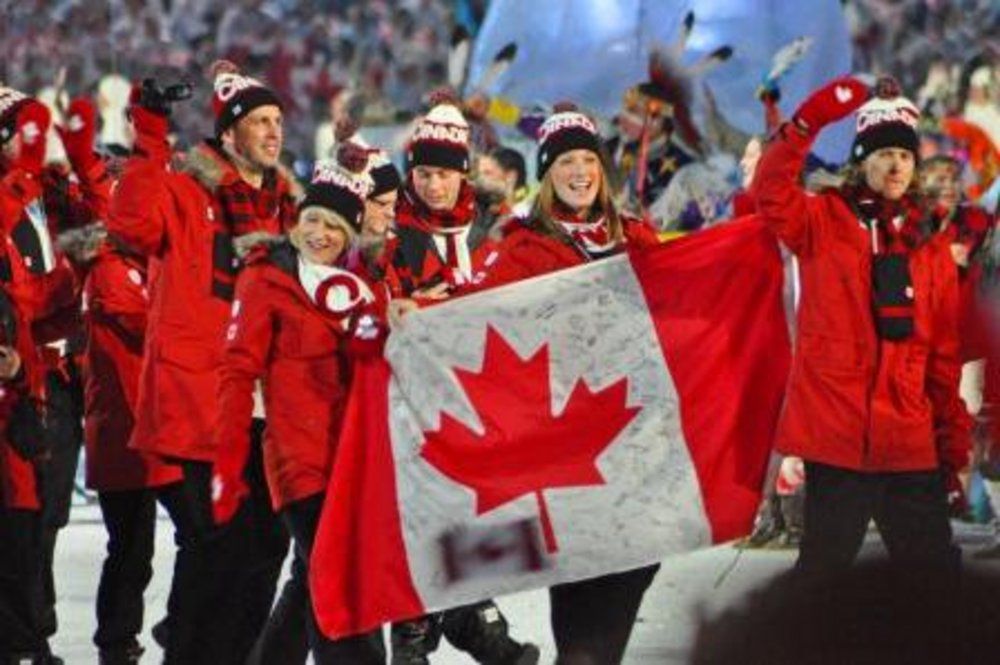
Canada sent a delegation of 206 athletes to the 2026 Winter Olympics in Milan and Cortina d'Ampezzo, Italy, which was held from February 4 to 22. This team was historic for its composition, featuring 107 female athletes and 99 male athletes, marking the first time Canada had more women than men at a Winter Olympics. The team included 97 returning Olympians and 109 first-time participants. Veteran athletes included hockey player Marie-Philip Poulin, ski jumper Mackenzie Boyd-Clowes, and speed skater Valérie Maltais, all competing in their fifth Winter Games. The team finished the competition with 21 total medals, comprising five gold, seven silver, and nine bronze, placing Canada eighth in the overall medal standings. This total represented a decrease from the 26 medals won in Beijing 2022 and the record 29 from PyeongChang 2018. Speed skating was the most productive discipline for Canada, contributing ten of the 21 medals across both long track and short track events. The opening ceremony flag bearers were freestyle skiers Mikaël Kingsbury and Marielle Thompson, while the closing ceremony flag bearers were speed skaters Steven Dubois and Valérie Maltais.
- Valérie Maltais won Canada's first medal, a bronze in the women's 3000m long track speed skating, and added two more medals for a total of three.
- Mikaël Kingsbury won gold in the inaugural Olympic men's dual moguls event and silver in moguls, later announcing his retirement after the Games.
- The men's curling team, skipped by Brad Jacobs and featuring returning Olympians Marc Kennedy and Ben Hebert, won gold, the fourth for Canada in the event.
- Steven Dubois won gold in the men's 500m short track and a silver, while Courtney Sarault won four medals (one silver, three bronze).
- For the first time since 2014, NHL players were permitted to compete, allowing stars like Connor McDavid and Nathan MacKinnon to make their Olympic debuts.
- Brett Gallant became the first Canadian to compete in both mixed doubles and four-player curling at the same Olympic Games.
Administration, Funding and Systemic Challenges
The Canadian Olympic Committee (COC) is the National Olympic Committee responsible for representing Canada at the Olympic Games, selecting host city bids, and supporting Canadian athletes. A key high-performance funding program is Own the Podium, a non-profit organization that works with national sport bodies to direct investment and develop training strategies aimed at increasing medal potential. In recent years, the funding landscape for Canadian Olympic sport has faced significant scrutiny. Core operational funding for national sport organizations has remained stagnant since 2005, a point emphasized by COC chief executive David Shoemaker following the 2026 Games. This funding is critical for supporting athletes, coaches, and the developmental pathway from grassroots to elite performance. The federal budget in 2024 did include a raise in monthly athlete assistance payments, but did not allocate the requested increase in core support for the sport organizations themselves. Ann Rucklinger, CEO of Own the Podium, stated that the correlation between funding and athletic results is very direct, and that national sport organizations had not seen an increase in core support funding for 15 to 20 years. This financial pressure is seen as a direct challenge to maintaining Canada's competitive position on the international stage, particularly looking ahead to the 2030 Winter Olympics in the French Alps. The discussion around the 2026 medal total of 21, lower than recent Games, highlighted concerns about a shallower athlete pool and structural issues such as cost of living pressures and shrinking access to grassroots winter sport.
Demographics and Generational Athletes
The composition of Canadian Olympic teams often reflects a blend of seasoned veterans and promising newcomers, with many athletes coming from families with deep sporting traditions. At the 2026 Games, the oldest athlete on the team was curler Marc Kennedy, who turned 44 the day before the Opening Ceremony and became the first Canadian curler to compete in four Olympics. The oldest female athlete was figure skater Deanna Stellato-Dudek, who at 42 was the oldest woman to compete in Olympic figure skating since 1928. The youngest athletes were snowboarders Eli Bouchard, who was 18, and Felicity Geremia, who was six months older. The team featured several sets of siblings, including ski cross racers Hannah and Jared Schmidt, alpine skiers Brodie and Riley Seger, cross-country skiers Jasmine and Rémi Drolet, and speed skaters Laura and Daniel Hall. Many of these athletes are second-generation Olympians, following in their parents' footsteps. For example, the Hall siblings' father Mike competed in speed skating at Lillehammer 1994, while cross-country skier Xavier McKeever's parents, Robin McKeever and Milaine Thérault, were both Olympians in the sport. This intergenerational transfer of experience and legacy is a common thread within Canadian Olympic teams, contributing to a culture of high performance that spans decades.
Questions about Canada at the Olympics
How many times has Canada hosted the Olympic Games?
Canada has hosted the Olympic Games on three occasions. The nation hosted the 1976 Summer Olympics in Montreal, Quebec. It has also hosted the Winter Olympics twice, with the 1988 Winter Games in Calgary, Alberta, and the 2010 Winter Games in Vancouver, British Columbia. The 2010 Games saw Canada win more gold medals than any other nation for the first time.
Who is Canada's most decorated Olympian?
The title of Canada's most decorated Olympian is shared between two athletes for the Summer Games. Swimmer Penny Oleksiak and sprinter Andre De Grasse have each won seven Olympic medals. For the Winter Games, speed skater Cindy Klassen and short track speed skater Charles Hamelin hold the record with six medals each. Clara Hughes is also notable as the only Olympian from any country to win medals in both Summer and Winter Games.
What was unique about Canada's team at the 2026 Winter Olympics?
Canada's team at the 2026 Milano Cortina Olympics was historic for its gender composition. For the first time at a Winter Games, Canada had more female athletes (107) than male athletes (99) on its team. The delegation of 206 athletes included 109 Olympic rookies and three athletes competing in their fifth Winter Games: hockey player Marie-Philip Poulin, ski jumper Mackenzie Boyd-Clowes, and speed skater Valérie Maltais. This information is not present in the provided Wikipedia text.
Has Canada ever boycotted an Olympic Games?
Yes, Canada has boycotted an Olympic Games. The country did not participate in the 1980 Summer Olympics in Moscow, joining a United States-led boycott. This protest was in response to the Soviet Union's invasion of Afghanistan. This boycott marks the only Summer Olympics Canada has missed since its debut in 1900.
How many Olympic Games has Canada hosted?
Canada has hosted the Olympic Games on two occasions. These were the 1988 Winter Olympics in Calgary, Alberta, and the 2010 Winter Olympics in Vancouver, British Columbia. The 2010 Games were particularly notable as Canada won more gold medals than any other competing nation for the first time. The Canadian Olympic Committee (COC) is the National Olympic Committee responsible for these events. Hosting these games has been a significant part of Canada's Olympic history.
Which Canadian athlete has competed in the most Olympic Games?
Equestrian show jumper Ian Millar holds the record for most Olympic appearances by a Canadian. He competed at his tenth Summer Olympics in 2012, tying a global record. Millar has been named to eleven straight Olympic teams but did not compete at the 1980 Summer Olympics due to the Canadian boycott. He won his first Olympic medal, a silver in team jumping, at the 2008 Beijing Games. His longevity and dedication are remarkable in Canadian sports history.
Sources and further reading
- Canada at the Olympics (Wikipedia)
- Fun facts about Team Canada heading into Milano Cortina ... (olympic.ca)
- Canada at the 2026 Olympic Winter Games (thecanadianencyclopedia.ca)
- Canada won fewer Olympic medals than past years. Why ... (globalnews.ca)
Checked by the Nosy Mag desk. Last updated 2026-11-02.