Black Watch (Royal Highland Regiment) of Canada
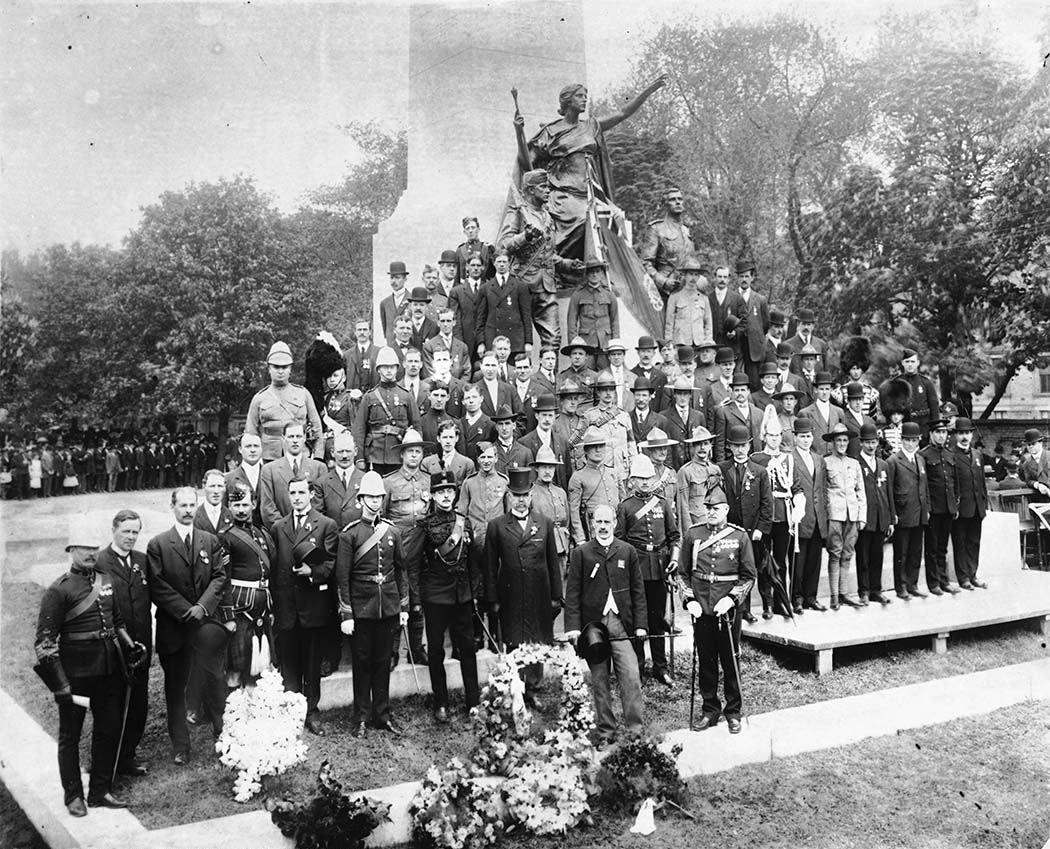
The Black Watch (Royal Highland Regiment) of Canada is a reserve infantry regiment based in Montreal, Quebec, and part of 34 Canadian Brigade Group, 2nd Canadian Division. Originating on 31 January 1862, it is Canada's senior Scottish regiment with a history of service in major conflicts from the Fenian raids to the World Wars, NATO operations, and domestic disaster relief. The regiment's Montreal armoury was designated a National Historic Site of Canada in 2008. Commanded by Lieutenant-Colonel D.M. Serapins, the Black Watch maintains a distinct Highland identity through its traditions, including its renowned Pipes and Drums, the oldest organized pipe band in North America and the Canadian Army.
Regimental Origins and Evolution
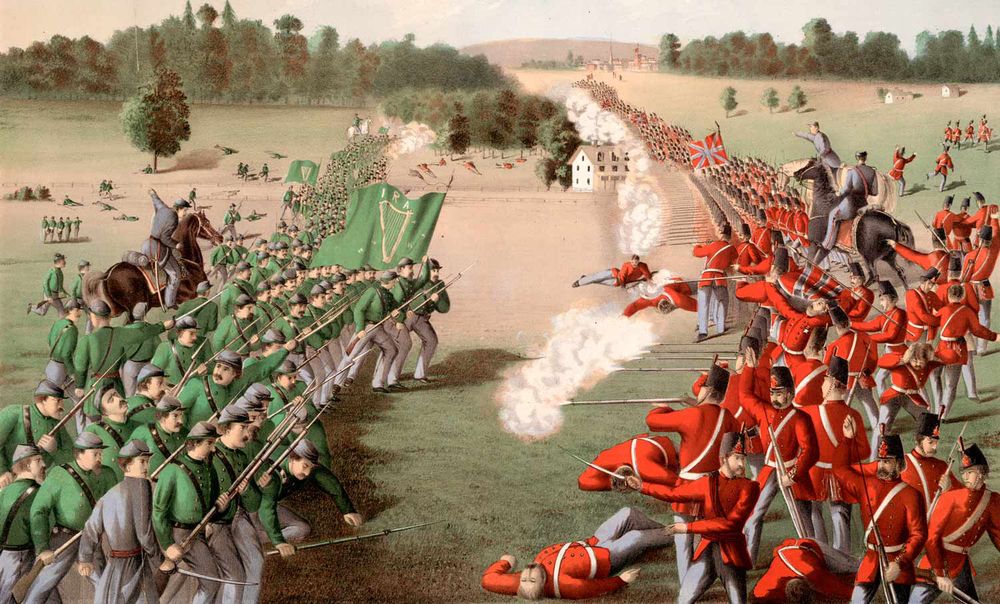
The Black Watch was formed during the American Civil War as Canadian authorities bolstered local defences. On 31 January 1862, six Montreal Scottish community leaders each raised an infantry company, forming the 5th Battalion, Volunteer Militia Rifles of Canada. This unit saw early active service during the Fenian raids of 1866 and 1870, guarding Canada's south-eastern frontier. Over the subsequent decades, the regiment underwent a series of redesignations. It became the 5th Battalion, 'The Royal Light Infantry of Montreal' on 7 November 1862, the 5th Battalion, 'Royal Scots of Canada' on 29 February 1884, and the 5th Regiment 'Royal Highlanders of Canada' on 1 October 1906. The famous 'Black Watch' title was formally adopted on 1 January 1930, with the current designation, The Black Watch (Royal Highland Regiment) of Canada, taking effect on 1 July 1935.
The regiment's structure expanded during the Cold War. On 16 October 1953, it amalgamated with two Active Force units, the 1st Canadian Highland Battalion and the 2nd Canadian Highland Battalion, which became its 1st and 2nd Battalions respectively. The existing Reserve component concurrently became the 3rd Battalion. This tri-battalion structure lasted until 1 July 1970, when the 1st and 2nd Battalions were reduced to nil strength and transferred to the Supplementary Order of Battle. Following this change, the remaining Reserve Force battalion relinquished its numerical designation, continuing service as the single battalion of the Black Watch that exists today. The 1st Canadian Highland Battalion originated in Valcartier, Quebec on 4 May 1951. The 2nd Canadian Highland Battalion originated in Aldershot, Nova Scotia on 10 April 1952. The regiment also mobilized a 2nd Battalion for home defence during the Second World War on 18 March 1942, which served in Canada in a home defence role as part of Atlantic Command until it was disbanded on 15 August 1943.

Service in the World Wars
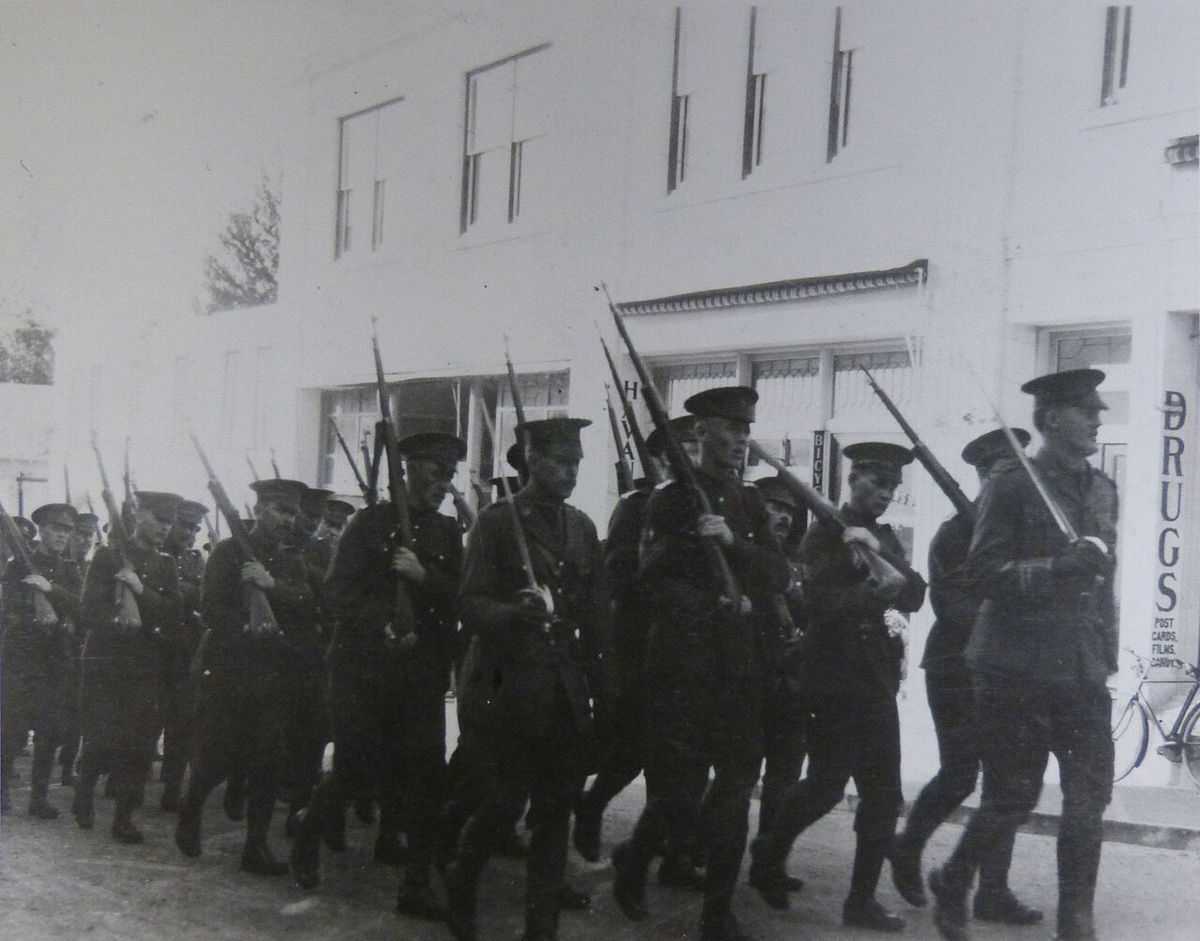
The Black Watch's commitment was demonstrated during the First World War. Details of the 5th Regiment, Royal Highlanders of Canada, were placed on active service for local protective duty on 6 August 1914. The regiment raised three battalions for overseas service with the Canadian Expeditionary Force. The 13th Battalion (Royal Highlanders of Canada) was authorized on 1 September 1914 and fought as part of the 3rd Infantry Brigade, 1st Canadian Division from February 1915. The 42nd Battalion was authorized on 7 November 1914 and served in the 7th Infantry Brigade, 3rd Canadian Division from October 1915. The 73rd Battalion was authorized on 10 July 1915 and fought with the 12th Infantry Brigade, 4th Canadian Division from August 1916 until it was broken up for reinforcements after the Battle of Vimy Ridge in April 1917. The 13th and 42nd Battalions continued fighting in France and Flanders until the Armistice, with both being disbanded on 15 September 1920. The 73rd Battalion was officially disbanded on 19 April 1917.
In the Second World War, the regiment mobilized the 1st Battalion for overseas service. After duty in Newfoundland from 22 June to 11 August 1940 and in the United Kingdom, three of its platoons participated in the Dieppe Raid on 19 August 1942. The battalion landed in Normandy on 6 July 1944 as part of the 5th Infantry Brigade, 2nd Canadian Infantry Division. The 1st Battalion suffered more casualties than any other Canadian infantry battalion in Northwest Europe. It suffered grievous losses during the Battle of Verrières Ridge on 25 July 1944, where an attack by 325 men saw only 15 return to friendly lines. Another devastating day was 13 October 1944, known as 'Black Friday', during the Battle of the Scheldt, where an assault near Hoogerheide resulted in all four company commanders being killed and one company of 90 men reduced to just four survivors. The battalion also sustained 85 casualties during the Battle of the Walcheren Causeway. The 1st Battalion was disbanded on 30 November 1945. During the voyage to France on the day of the Dieppe Raid, the unit also suffered casualties from a grenade priming accident on board their ship, HMS Duke of Wellington.
Post-War and Modern Deployments
Following the Second World War, the Black Watch contributed to Canada's NATO and UN commitments. On 4 May 1951, the regiment mobilized two temporary Active Force companies designated 'E' and 'F' Companies. Personnel from 'E' Company were incorporated into the newly formed 1st Canadian Highland Battalion for NATO service in Germany. Personnel from 'F' Company helped form the 2nd Canadian Highland Battalion for United Nations duty in Korea. These two battalions were amalgamated into the Black Watch on 16 October 1953, becoming its 1st and 2nd Battalions. The 2nd Battalion, commanded by Lieutenant-Colonel R.M. Ross, served in Korea with the 25th Canadian Infantry Brigade from 29 October 1953 to 3 November 1954, maintaining the peace following the armistice. The temporary companies 'E' and 'F' were both disbanded on 29 July 1953. In addition to these international missions, the regiment has consistently answered the call for domestic aid. Black Watch soldiers assisted during the January 1998 North American ice storm under Operation Assistance. They were also deployed for flood relief in Quebec during Operations Lentus in 2011, 2017, and 2019. The regiment also contributed volunteers for the 2nd (Special Service) Battalion, Royal Canadian Regiment of Infantry during the South African War.
Regimental Traditions and Identity
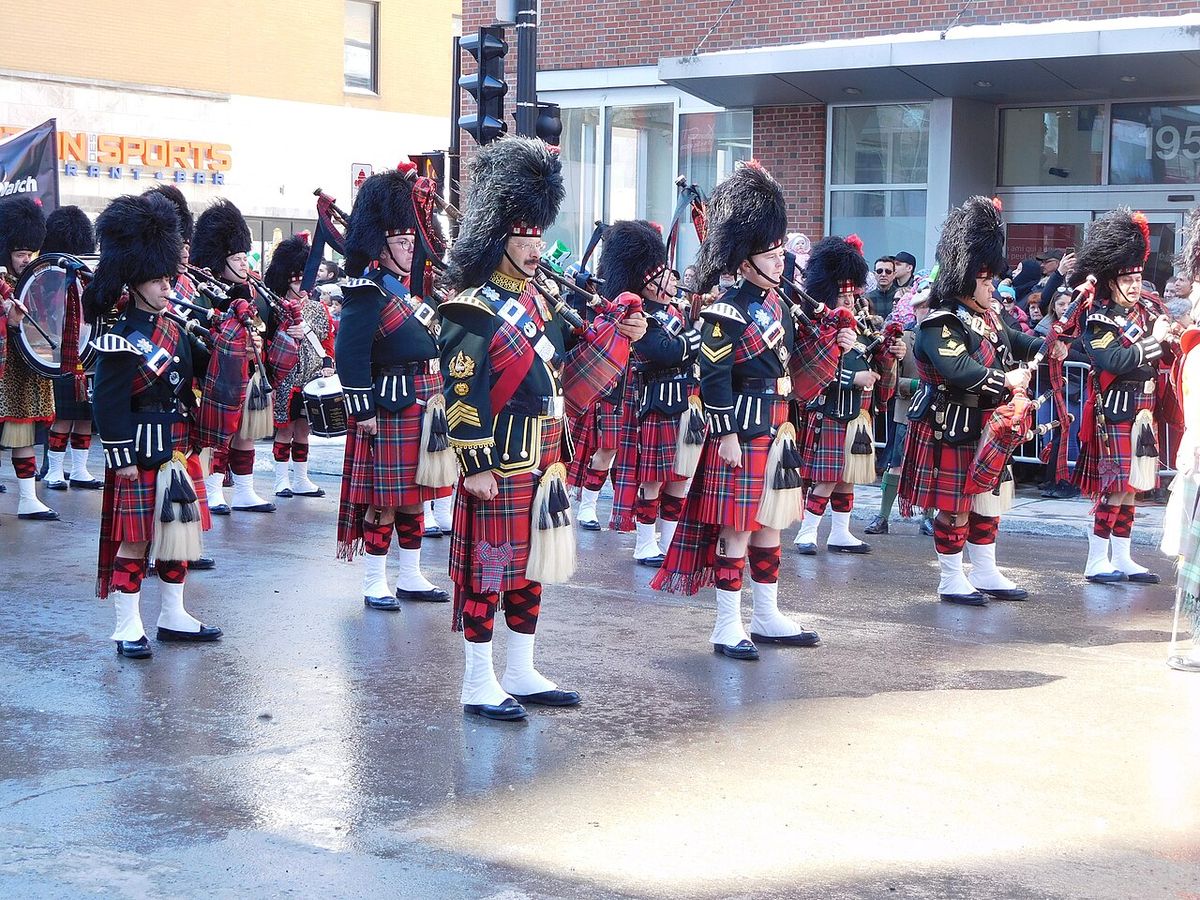
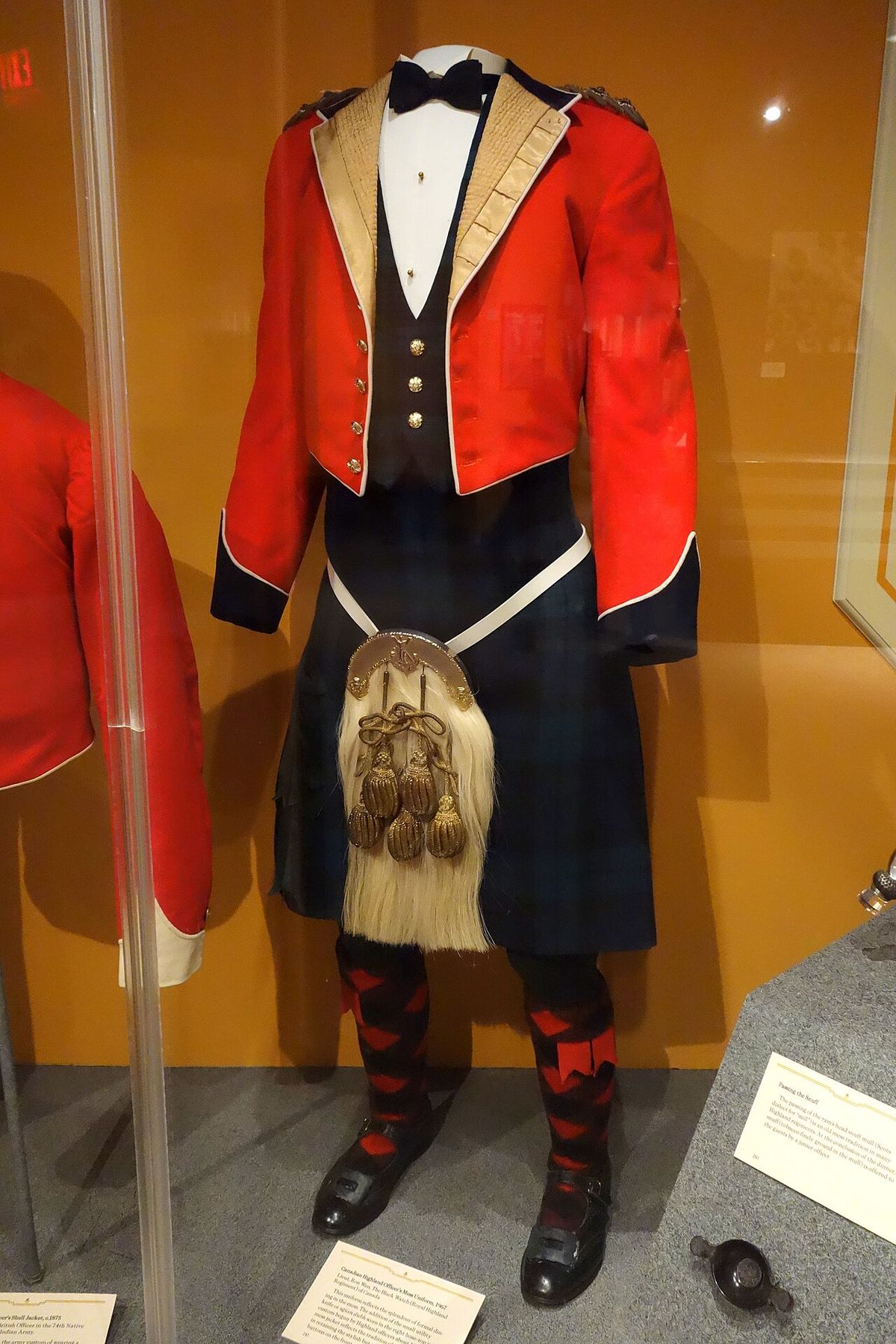
The Black Watch proudly maintains the customs and dress of a Highland regiment. As a royal regiment, its pipers wear the Royal Stewart tartan, which is the personal tartan of the monarch. The regiment's drummers wear the dark Government tartan, which became globally known as the Black Watch tartan. The regiment's alliance with the British Army's Royal Regiment of Scotland, specifically the 3rd Battalion, The Black Watch, reinforces this shared heritage. The Black Watch of Canada Pipes and Drums is the oldest organized pipe band in North America and in the Canadian Army. It is a descendant of the 42nd Battalion Royal Highlanders of Canada Pipes and Drums from the First World War. Commanded by Pipe Major Sergeant Robert Kerr and Drum Major Warrant Officer Hugues Vanden Abeele, the band has performed at prestigious events across the continent and abroad.
- The band performed on The Ed Sullivan Show.
- It played at the United States Bicentennial in 1976.
- It was the only foreign band to march in the parade celebrating the Bicentennial of the American Constitution.
- It has performed at Trooping the Colour in London.
- It participated in the Queen Elizabeth The Queen Mother's 90th and 100th birthday celebrations on Horse Guards Parade.
- It regularly performs at highland games and tattoos throughout North America, including at Fort Ticonderoga, Miami, and the Stone Mountain Highland Games and Tattoo near Atlanta.
The regiment maintains a long standing affiliation with the Bishop's College School Cadet Corps #2. This cadet corps has been affiliated with the Royal Highland Regiment of Canada since 1936. In early May each year, the corps sends two platoons and the colour party to march with the regiment in its annual Church Parade. The regiment's music includes 'Gallant Black Watch', a Scotch style march and two-step composed by Bert L. Billings and published in Toronto around 1906.
The Regimental Home and Legacy
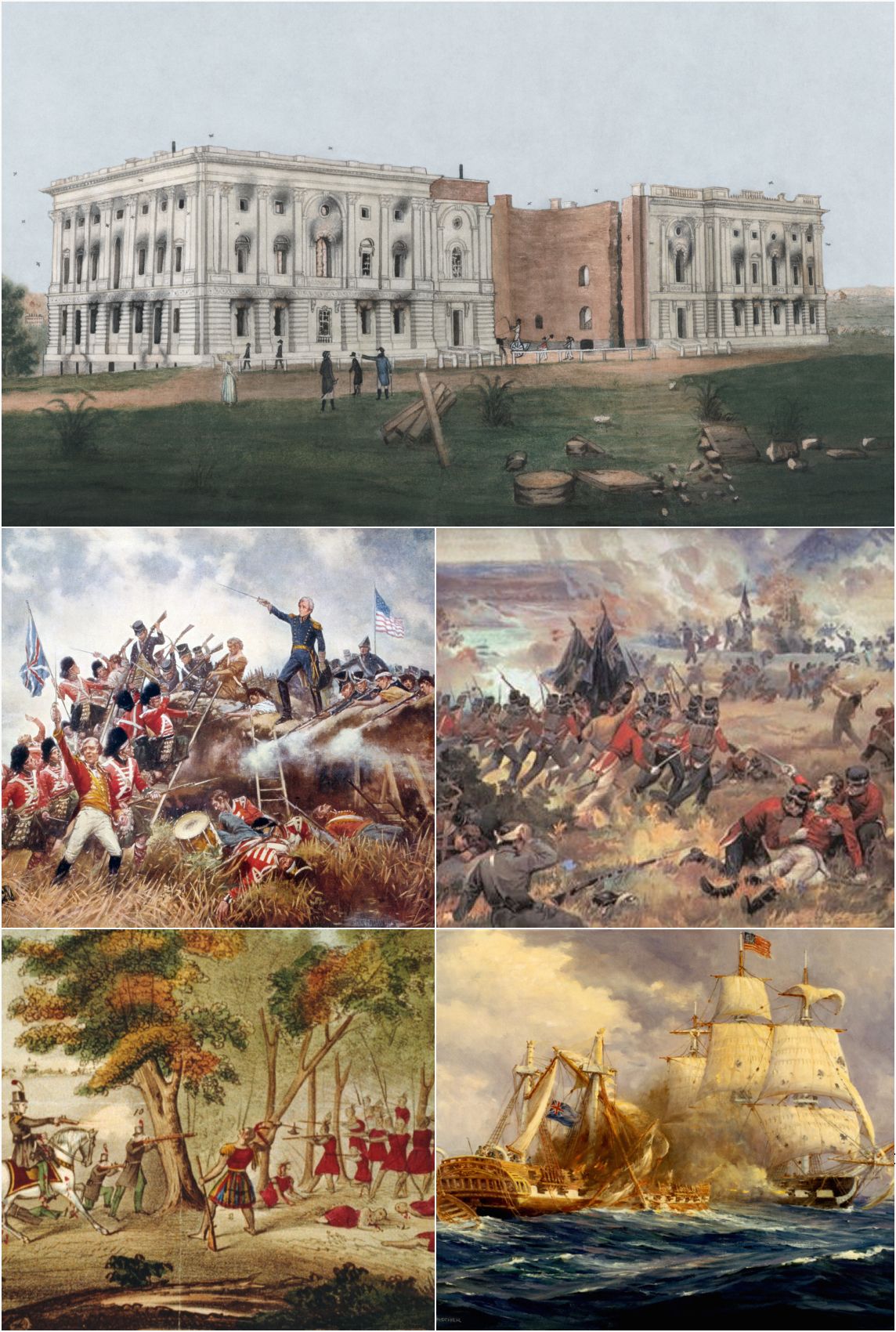
The Black Watch's home is the regimental armoury at 2067 Bleury Street in downtown Montreal, a building designated a National Historic Site of Canada in 2008. This armoury serves as the administrative and ceremonial heart of the regiment. The regiment's history and artefacts are preserved and displayed through its Regimental Museum and Archives. The legacy of service is also captured in publications, notably the definitive regimental history titled 'The History of the Black Watch (Royal Highland Regiment) of Canada'. The regimental family actively works to preserve this heritage through initiatives like the 'Legacy' campaign, a national effort to strengthen the regiment and support its people. The regiment is authorized to emblazon battle honours from the War of 1812, South African War, First World War, Second World War, and War in Afghanistan on its colours. It also perpetuates the 5th Battalion, Select Embodied Militia from the War of 1812.
Perpetuated Units and Battle Honours
The Black Watch perpetuates the memory of several historical Canadian units. From the War of 1812, it perpetuates the 5th Battalion, Select Embodied Militia. From the First World War, it perpetuates three Canadian Expeditionary Force battalions it raised: the 13th, 42nd, and 73rd Battalions (Royal Highlanders of Canada). This perpetuation authorizes the regiment to carry forward the battle honours earned by these units. The regiment's battle honours span major conflicts, with those in bold type authorized to be emblazoned on the regimental colours. Battle honours in capitals were awarded for participation in large operations and campaigns, while those in lowercase indicate honours granted for more specific battles.
| Conflict | Notable Battle Honours (Examples) |
|---|---|
| War of 1812 | Châteauguay |
| South African War | South Africa 1900 |
| First World War | Ypres 1915, '17, Mount Sorrel, Somme 1916, Vimy 1917, Hill 70, Passchendaele |
| Second World War | Dieppe, Normandy Landing, The Scheldt, The Rhineland, Walcheren Causeway |
| War in Afghanistan | Afghanistan |
The regiment's Victoria Cross recipient is Piper James Richardson of the 13th Battalion. He was awarded the honour posthumously for his actions at the Second Battle of Ypres in April 1915. The regiment also holds alliances, including one with the United Kingdom's Royal Regiment of Scotland. This alliance is specifically with the 3rd Battalion, The Black Watch.
Questions about Black Watch (Royal Highland Regiment) of Canada
What is the Black Watch (Royal Highland Regiment) of Canada?
The Black Watch is a Primary Reserve infantry regiment of the Canadian Army, based in Montreal, Quebec. It is the senior Canadian-Scottish regiment, originating on 31 January 1862. The regiment serves as part of 34 Canadian Brigade Group, 2nd Canadian Division. Its distinctive Highland identity is marked by traditions like wearing the Black Watch tartan and maintaining the oldest organized pipe band in North America and the Canadian Army.
Where is the Black Watch regiment located in Canada?
The Black Watch (Royal Highland Regiment) of Canada is located in Montreal, Quebec. Its regimental armoury is at 2067 Bleury Street. This armoury was designated a National Historic Site of Canada in 2008. The regiment is part of 34 Canadian Brigade Group, 2nd Canadian Division, of the Canadian Army.
Did the Black Watch fight in World War II?
Yes, the Black Watch fought in the Second World War. The regiment's 1st Battalion served in the 5th Infantry Brigade of the 2nd Canadian Infantry Division. It participated in the Dieppe Raid in 1942 and landed in Normandy in July 1944. The battalion fought through the campaigns in Northwest Europe, including the battles of Verrières Ridge, the Scheldt, and the Walcheren Causeway. It sustained the highest casualty rate of any Canadian infantry battalion in the theatre. The regiment also mobilized a 2nd Battalion for home defence in Canada from 1942 to 1943.
Who is the colonel-in-chief of the Black Watch?
Queen Elizabeth The Queen Mother was appointed colonel-in-chief in 1947 and served until her death in 2002. The Prince of Wales was then appointed to the role in 2004, and he is now known as King Charles III. This appointment was made in 2004, following the death of the previous colonel-in-chief. The position represents the regiment's longstanding connection to the Canadian Crown.
What is the Black Watch Pipes and Drums?
The Black Watch of Canada Pipes and Drums is the regimental pipe band. It holds the distinction of being the oldest organized pipe band in North America and within the Canadian Army. Based in Montreal, the band performs at regimental ceremonies, public events, and international tattoos. It has performed for historic occasions like the US Bicentennial and Trooping the Colour. The band is a descendant of the 42nd Battalion Pipes and Drums from the First World War.
How can someone join the Black Watch regiment?
As a Primary Reserve unit, the Black Watch recruits citizens and permanent residents of Canada who live in or around Montreal. Interested individuals can apply through the Canadian Forces recruiting system. Recruits undergo basic military training and trade training, after which they serve part-time, typically one evening per week and one weekend per month, while receiving pay and benefits. The regiment is part of the order of precedence for Canadian infantry regiments.
Sources and further reading
- Black Watch (Royal Highland Regiment) of Canada (Wikipedia)
- The Black Watch (Royal Highland Regiment) of Canada ... (blackwatchcanada.ca)
- The History of the Black Watch (Royal Highland Regiment ... (mqup.ca)
- The Black Watch Regiment (veterans.gc.ca)
Checked by the Nosy Mag desk. Last updated 2026-11-01.