Hate speech laws in Canada
Hate speech laws in Canada are legal provisions that prohibit expression promoting hatred against identifiable groups. These laws exist in the federal Criminal Code and in the human rights legislation of some provinces and territories. The laws restrict expression as a reasonable limit on freedom of speech under the Canadian Charter of Rights and Freedoms to protect vulnerable communities. The legal framework was updated with the passage of the Combatting Hate Act in 2026, which introduced new offences related to hate symbols and obstruction of access to religious and cultural spaces.
Legal Foundations and Constitutional Framework
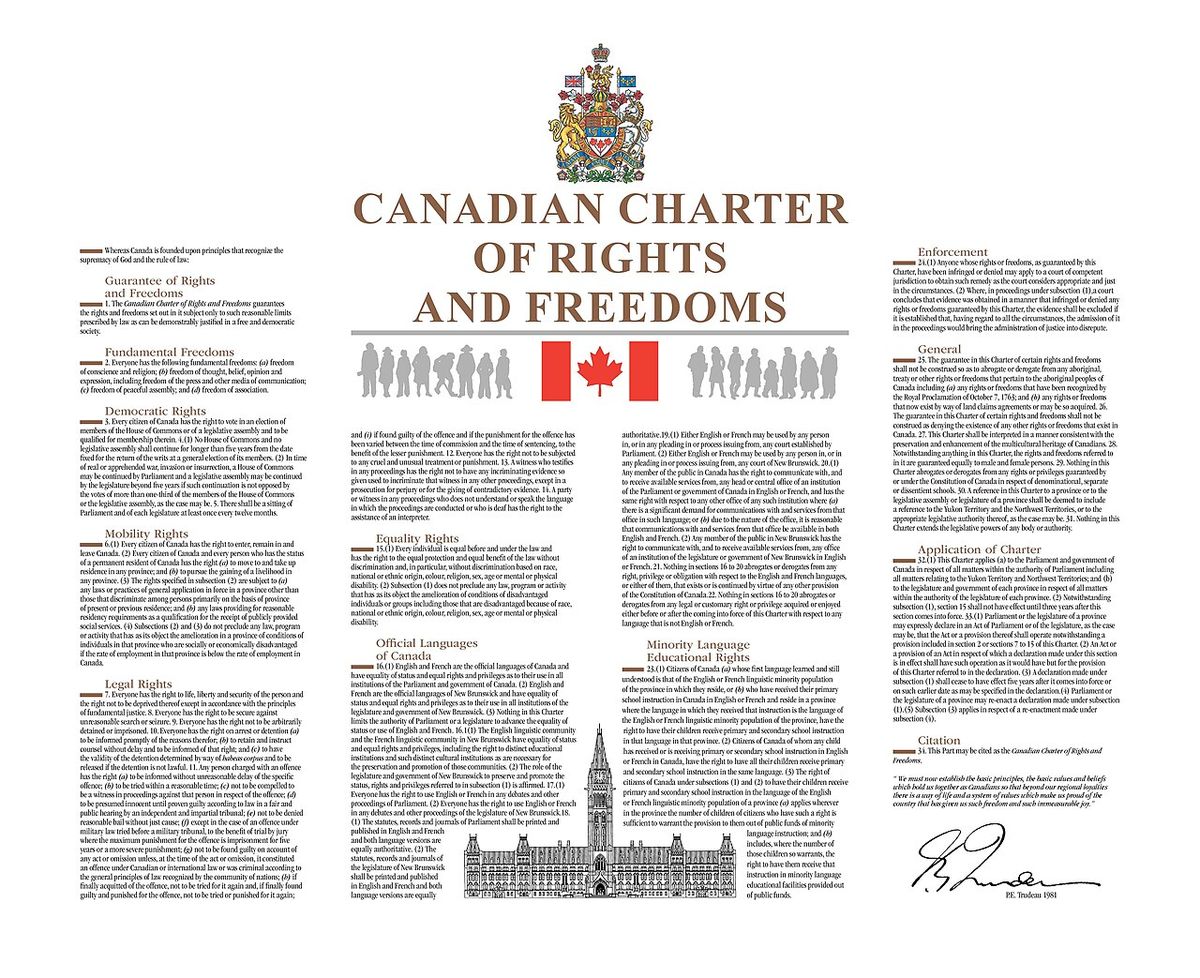
Canadian hate speech laws operate within a constitutional framework defined by the Canadian Charter of Rights and Freedoms. Section 2(b) of the Charter guarantees freedom of expression. This right is subject to reasonable limits under section 1 that are demonstrably justified in a free and democratic society. The Supreme Court of Canada has ruled that hate speech laws constitute a justifiable limit under section 1. The Court emphasizes the harm hate propaganda causes to targeted groups and to societal equality.
The federal government has exclusive jurisdiction over criminal law, which is the basis for the hate propaganda offences in the Criminal Code. The provinces of Alberta, British Columbia, and Saskatchewan, along with the Northwest Territories, have enacted civil remedies for hate publications within their human rights codes. These laws allow complaints to be filed with human rights tribunals, which can order remedies such as damages or injunctions. This dual system means hateful expressions can be addressed through both criminal courts and human rights processes.

Historical Development and the Cohen Committee
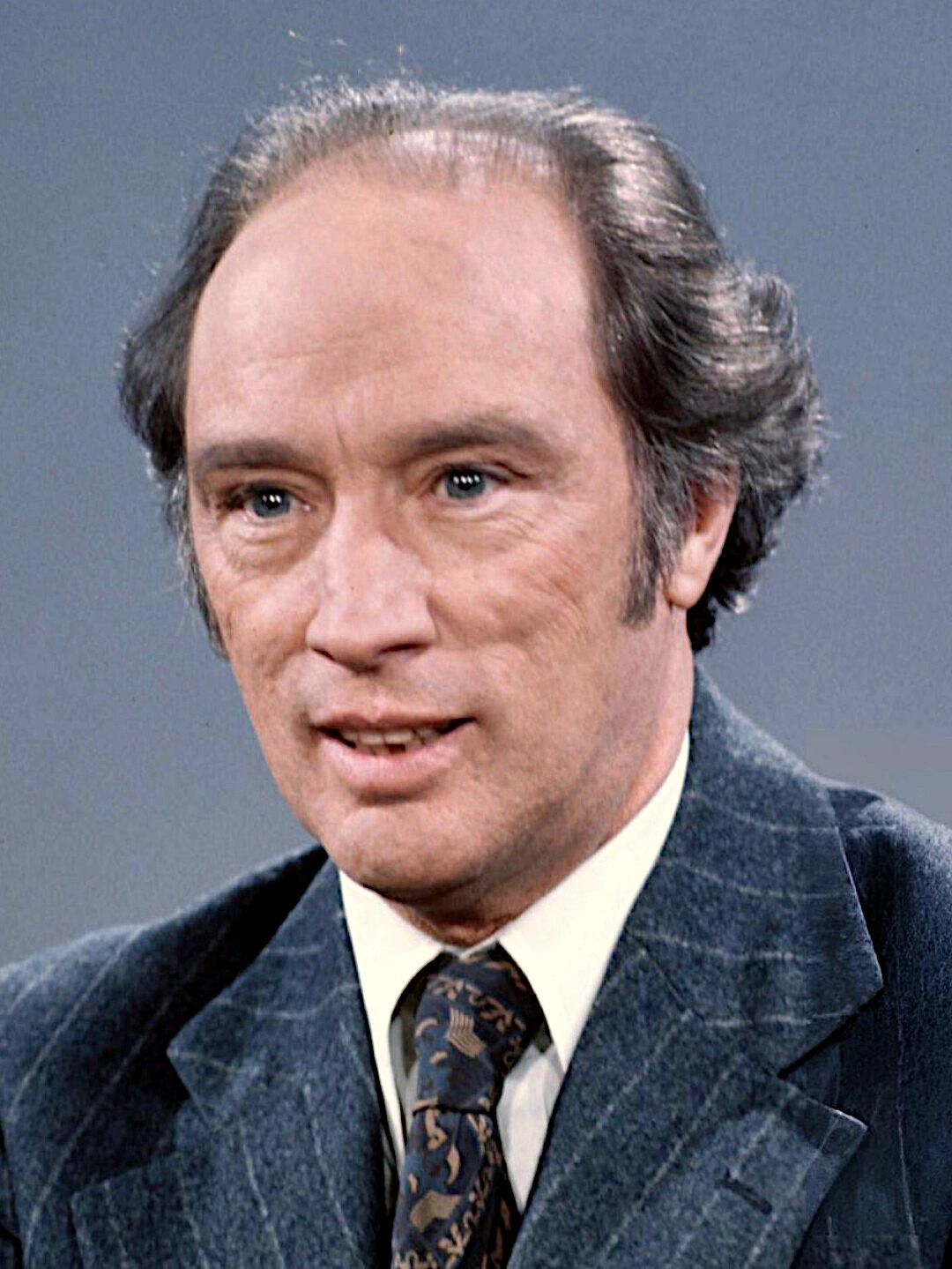
The modern framework for criminalizing hate propaganda in Canada originated in the 1960s amid concern over racist and antisemitic materials. In response to advocacy, Prime Minister Lester Pearson's government appointed the Special Committee on Hate Propaganda in Canada in January 1965. Chaired by McGill University law dean Maxwell Cohen, the committee included academics and community leaders such as University of Montreal law professor Pierre Elliott Trudeau. The committee delivered its report in 1966. It recommended Parliament enact legislation to combat hate speech and genocide. The government introduced a bill proposing three new Criminal Code offences: advocating genocide, publicly inciting hatred likely to lead to a breach of the peace, and wilfully promoting hatred. The bill passed into law in 1970 under the government of Prime Minister Pierre Trudeau. This legislation formed the core of Canada's hate propaganda laws for decades, establishing the offences found in sections 318 and 319 of the Criminal Code.
Federal Criminal Code Offences
The Criminal Code contains several offences related to hate propaganda. Section 318 makes it an indictable offence to advocate or promote genocide, defined as killing members of an identifiable group or deliberately inflicting conditions of life to bring about the group's physical destruction. This offence carries a maximum penalty of five years imprisonment, and charges require the consent of the provincial Attorney General. Section 319 contains two related offences. Section 319(1) prohibits publicly inciting hatred against an identifiable group where such incitement is likely to lead to a breach of the peace, with a maximum penalty of two years imprisonment. Section 319(2) prohibits wilfully promoting hatred against an identifiable group, other than in private conversation, also carrying a maximum two-year sentence.
Section 319(3) provides specific statutory defences to a charge of promoting hatred. A person will not be convicted if they establish that the communicated statements were true. Other defences apply if the person expressed in good faith an opinion on a religious subject or based on a religious text, if the statements were relevant to a subject of public interest and believed on reasonable grounds to be true, or if the person intended in good faith to point out hateful matters for removal. Sections 320 and 320.1 allow judges to order the seizure of hate propaganda in physical or electronic formats and to mandate the removal of such material from the internet.
- Section 318: Advocating genocide (max. 5 years imprisonment).
- Section 319(1): Publicly inciting hatred likely to cause a breach of the peace (max. 2 years).
- Section 319(2): Wilfully promoting hatred (max. 2 years).
- Section 319(3): Defences including truth, good faith religious opinion, and public benefit.
- Sections 320/320.1: Seizure and takedown orders for hate propaganda.
Key Judicial Interpretations and Cases
The Supreme Court of Canada has played a definitive role in interpreting and upholding Canada's hate speech laws. The landmark 1990 decision in R v Keegstra involved a high school teacher in Alberta who taught antisemitic conspiracy theories. The Court, in a 4-3 decision, ruled that while section 319(2) infringed freedom of expression, it constituted a reasonable limit under section 1 of the Charter. The majority emphasized the severe harm of hate propaganda and the importance of promoting equality. In a companion case, R v Andrews, the Court upheld the convictions of white supremacist party leaders for promoting hatred against Jewish and Black people.
Other significant cases have further shaped the application of the law. In R v Krymowski (2005), the Supreme Court overturned an acquittal in a case involving anti-Roma protests, ruling that the term gypsies referred to the Roma people. The 2005 case of Mugesera v Canada considered the offence of advocating genocide in the context of a deportation proceeding for a Rwandan national. Lower court cases have grappled with the intent requirement, as seen in R v Buzzanga and Durocher (1979). More recent prosecutions have involved online hate, such as the 2007 case of Jean-Sebastien Presseault, who was sentenced to six months in jail for hate content on his website.
| Case | Year | Key Point |
|---|---|---|
| R v Keegstra | 1990 | Upheld constitutionality of s. 319(2). |
| R v Andrews | 1990 | Upheld convictions for promoting hatred. |
| R v Krymowski | 2005 | Term "gypsies" understood as Roma people. |
| Mugesera v Canada | 2005 | Speech calling for killing Tutsis would be advocating genocide. |
| R v Presseault | 2007 | Six-month jail sentence for online hate. |
| R v Popescu | 2009 | 18 months probation for promoting hatred against homosexuals. |
| R v Ahenakew | 2009 | Acquitted. Remarks were revolting but did not constitute promoting hatred. |
| Your Ward News | 2019 | First conviction in Ontario for promoting hate against women. |
The 2026 Combatting Hate Act Reforms
In response to rising concerns about antisemitism, Islamophobia, and other forms of hate, the Parliament of Canada passed the Combatting Hate Act, which received Royal Assent on June 18, 2026. This legislation introduced several new offences and modifications to the existing Criminal Code framework. It created a new offence of promoting hatred by publicly displaying specified hate symbols. These symbols include the Nazi Hakenkreuz (swastika), the Nazi double Sig-Rune (SS bolts), symbols principally associated with listed terrorist entities, and symbols that closely resemble them. The law includes exemptions for displays for legitimate educational, artistic, journalistic, or removal purposes.
The Act also created two new offences aimed at protecting access to community spaces. Both offences are hybrid, with a maximum penalty of ten years imprisonment if prosecuted by indictment. The Act repealed the specific good faith defence for religious opinion that existed in section 319(3)(b), while adding clarification clauses to affirm that the offences do not capture good faith religious, educational, or political discussion. Finally, the law added a statutory definition of hatred to the Criminal Code, codifying the Supreme Court's jurisprudence by defining it as an emotion of an intense and extreme nature clearly associated with vilification and detestation.
Provincial and Territorial Human Rights Laws
In addition to the federal criminal law, four jurisdictions in Canada have enacted civil hate speech provisions within their human rights legislation. Alberta, British Columbia, Saskatchewan, and the Northwest Territories prohibit the publication, issuance, or display of statements, publications, notices, signs, or symbols that expose or are likely to expose individuals or groups to hatred, contempt, or ridicule on the basis of protected characteristics. These laws operate differently from the Criminal Code. Complaints are filed with provincial human rights commissions or tribunals rather than with police, and the process is administrative and civil. The standard of proof is typically a balance of probabilities, lower than the criminal standard.
Successful complaints under provincial human rights laws can result in civil remedies such as monetary damages or injunctive relief. The Supreme Court of Canada has rejected constitutional challenges to the hate publication provisions in human rights legislation. In the 2013 case Saskatchewan (Human Rights Commission) v Whatcott, the Court affirmed that such prohibitions are justifiable limits on freedom of expression under section 1 of the Charter. This civil system focuses on remedying harm rather than imposing penal sanctions like imprisonment.
| Jurisdiction | Act | Key Provision |
|---|---|---|
| Alberta | Alberta Human Rights Act | Prohibits signs likely to expose a person to hatred based on listed grounds. |
| British Columbia | Human Rights Code | Prohibits publications likely to expose a person to hatred based on listed grounds. |
| Saskatchewan | Saskatchewan Human Rights Code, 2018 | Prohibits publications that expose to hatred based on prohibited grounds. |
| Northwest Territories | Human Rights Act | Prohibits statements likely to expose any individual to hatred on prohibited grounds. |
Application, Enforcement and Public Debate
Enforcement of hate speech laws involves multiple actors, including police services, Crown prosecutors, and human rights tribunals. For Criminal Code offences, police investigate complaints and recommend charges to Crown counsel. Prosecutors must assess whether there is a substantial likelihood of conviction and whether a prosecution is in the public interest. The requirement for the Attorney General's consent for a genocide charge adds an additional layer of scrutiny. The 2026 reforms introduced an escalating penalty structure for a new hate crime offence, where if an underlying crime like uttering threats or mischief is motivated by hatred, the maximum penalty is increased.
The evolution of hate speech laws continues to generate significant public and legal debate. Proponents argue the laws are necessary to protect the dignity and safety of vulnerable minorities and to uphold Canada's commitment to multiculturalism and equality. Critics often contend that the laws risk chilling legitimate political and religious discourse and that the definitions of hatred can be subjective. The balance between protecting free expression and preventing social harm remains a dynamic area of Canadian law.
Questions about Hate speech laws in Canada
What is the legal definition of hate speech in Canada?
Canadian law does not provide a single statutory definition of hate speech. The Supreme Court of Canada has defined hatred as an extreme emotion that thrives on insensitivity, bigotry, and destruction, associated with vilification and detestation. For an expression to be criminal hate propaganda under the Criminal Code, it must wilfully promote hatred against an identifiable group. The 2026 Combatting Hate Act added a codified definition, stating hatred means an emotion of an intense and extreme nature that is clearly associated with vilification and detestation.
What are the penalties for hate speech crimes in Canada?
Penalties vary depending on the specific offence. Advocating genocide under section 318 carries a maximum penalty of five years imprisonment. Publicly inciting hatred or wilfully promoting hatred under section 319 each carry a maximum penalty of two years imprisonment. The new offence of promoting hatred by displaying specified symbols like the Nazi swastika also carries a maximum two-year sentence. The 2026 reforms introduced stricter penalties for hate-motivated crimes, such as intimidation or obstruction of access to a religious building, which can result in up to ten years imprisonment.
Can you go to jail for something you post online?
Yes, the Criminal Code's hate speech provisions apply to communications made available to the public by electronic means. Individuals have been convicted and sentenced to jail for wilfully promoting hatred through websites. For example, in 2007, Jean-Sebastien Presseault was sentenced to six months in jail for hate content on his website targeting Black and Jewish people. The provisions for seizing hate propaganda in section 320.1 also allow judges to order the takedown of online hate material.
Does the law protect freedom of religion and debate?
Yes, the law includes specific protections. Section 319(3) of the Criminal Code provides defences, including that an accused expressed in good faith an opinion on a religious subject or based on a religious text. Although the 2026 Combatting Hate Act repealed this specific religious opinion defence, it added clarification clauses stating that the offences do not prohibit communications on matters of public interest, including religious, educational, or political statements, provided the person does not wilfully promote hatred. Private conversations are explicitly excluded from the offence of promoting hatred.
What is the difference between a hate crime and hate speech?
Hate speech or hate propaganda refers specifically to the communication of hatred itself, as criminalized in sections 318 and 319 of the Criminal Code. A hate crime refers to any other Criminal Code offence that is motivated by hatred based on listed grounds such as race or religion. For example, if someone vandalizes a synagogue and is motivated by antisemitism, they could be charged with mischief. In such a case, the hate crime sentencing provision would apply, which can lead to a higher potential penalty for the underlying offence.
What notable cases involved the provincial human rights laws?
Several notable cases have been decided under provincial human rights laws. In Saskatchewan (Human Rights Commission) v Whatcott (2013), the Supreme Court upheld the constitutionality of Saskatchewan's hate publication provision. In Lund v Boissoin (2012), the Alberta Court of Appeal overturned a human rights ruling against a letter criticizing homosexuality. In Saskatchewan Human Rights Commission v Owens (2006), the Saskatchewan Court of Appeal ruled that an advertisement with Bible verses and a symbol did not infringe the Code. The 2019 Your Ward News case in Ontario resulted in the first conviction for promoting hate against women.
Sources and further reading
- Hate speech laws in Canada (Wikipedia)
- Combatting Hate Act: Legislation to protect communities ... (justice.gc.ca)
- Hate speech Q and A (bchumanrights.ca)
- Hate crime legislation in Canada | HCRW (hatecrime.osce.org)
Checked by the Nosy Mag desk. Last updated 2026-11-01.