Blackjack double down
Doubling down is a fundamental player option in the casino game of blackjack, allowing a participant to double their initial wager after seeing their first two cards in exchange for receiving exactly one more card. This strategic move is a key component of basic strategy, a mathematically derived set of decisions that minimizes the house edge. In Canadian casinos, both in-person and online, the specific rules governing when a player can double down can vary, affecting the game's odds and optimal play. Understanding when and how to double down is essential for any blackjack player looking to make informed decisions at the table.
Definition and Basic Mechanics
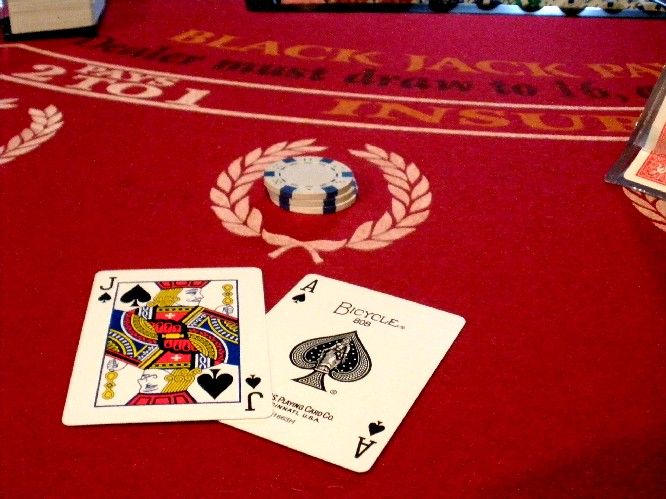
In blackjack, to double down is to place an additional wager equal to or less than the total of the player's initial bet after receiving their first two cards. The player then receives exactly one more card face up and is forced to stand, meaning they cannot draw any further cards for that hand. This action is a calculated risk, as it doubles the potential win but also doubles the potential loss for that round. The option is typically available on any initial two-card hand, though some casino rule sets may impose restrictions, such as not allowing a double down on a hand that is already a blackjack. The core mechanic is consistent across most blackjack games, whether played with a single deck or multiple decks shuffled together in a shoe.
Strategic Application: When to Double Down
The decision to double down is not based on intuition but on the mathematical probabilities derived from the player's hand total and the dealer's visible upcard. Basic strategy dictates specific scenarios where doubling is the statistically optimal play. For hard totals, which contain no ace counted as 11, the primary doubling opportunities are with a total of 9, 10, or 11. With a soft total, which includes an ace that can be valued as 1 or 11, the strategy calls for doubling on soft 13 through soft 18 under certain conditions. The dealer's upcard is the critical factor, as the player's advantage shifts based on the dealer's perceived weakness. For instance, a player with a hard 10 should double down against a dealer showing a 2 through 9, but simply hit if the dealer shows a 10 or Ace. These decisions are compiled into basic strategy charts that players can memorize or reference.
The logic behind these recommendations is rooted in card composition and dealer bust probabilities. A hand total of 10 or 11 is strong for doubling because there is a high probability of drawing a 10-value card, creating a total of 20 or 21. Similarly, soft hands are good candidates because the flexibility of the ace reduces the risk of busting with the single draw. The strategy adjusts slightly based on the number of decks in play and whether the dealer checks for blackjack before players act, a rule known as 'peek' or American-style blackjack. In European-style 'no-hole-card' games, where the dealer takes their second card after player actions, the strategy for a hard 11 against a dealer 10 changes from double to hit to avoid losing the extra bet if the dealer reveals a blackjack.
Common Rule Variations and Their Impact
Casinos, both in Canada and internationally, implement different rule sets that directly affect the double down option and the overall house edge. One significant variation is the rule on 'doubling after split' (DAS). When DAS is allowed, a player who splits a pair into two separate hands is permitted to double down on each of those new hands if they receive a favourable two-card total. This rule is favourable to the player and reduces the house edge. Another common variation is whether the dealer must 'hit soft 17' or 'stand on all 17s'. A rule where the dealer hits soft 17 increases the house edge slightly, which in turn can make some doubling decisions marginally less profitable. Canadian provincial gaming operators like BCLC specify that a player may double down on any two-card hand but cannot double down on a blackjack. Other restrictions can include limiting doubling to specific hand totals, such as only on 9, 10, or 11, or restricting the amount of the additional wager.
- Double After Split (DAS): Allows doubling on hands created from a split pair, improving player odds.
- Dealer Hits Soft 17: Increases house edge, slightly altering optimal doubling strategy.
- Double on Any Two Cards: The most common and player-friendly rule in standard games.
- Double for Less: Permits an additional wager smaller than the original bet.
- Restricted Doubling: Some tables may only allow doubling on hard totals of 9, 10, or 11.
The Double Down Madness Variant
Double Down Madness is a notable blackjack variant developed by the gaming company Light and Wonder. It debuted in July 2024 at casinos in Las Vegas and Iowa. This game features radically liberalized doubling rules, allowing players to double their wager one or more times after receiving each card, not just on the initial two. In this variant, players are typically allowed to hit after doubling, breaking the standard rule of standing after the one extra card. The trade-off for these player-friendly rules is a major rule change for the dealer. In Double Down Madness, if the dealer's hand totals exactly 22, all player hands that are still in play result in a push, or tie, instead of a dealer win. This 'Push 22' rule significantly alters the game's dynamics and house edge. Analysis of the game assuming six decks and a dealer who hits soft 17 shows a house edge that is higher than a standard blackjack game with good rules.
The game also features unique basic strategy. For example, with a 10-point card as a first card, the player should always double, and with an Ace as a first card, the player should almost always double. The game does not allow splitting pairs or surrendering. The average final wager in Double Down Madness is about 1.57 units due to the frequent doubling, which increases the element of risk, defined as the expected loss per unit wagered.
Comparison of Standard and Variant Rules
The table below outlines key differences between a standard multi-deck blackjack game and the Double Down Madness variant. In Double Down Madness, players can double their wager one or more times to improve their hand after each card they receive. This variant does not allow splitting or surrendering, and the dealer hits on a soft 17. These rule changes affect player strategy and the casino's advantage. Players should review the specific rules of any blackjack variant before playing.
| Rule Feature | Standard Blackjack (Favourable Rules) | Double Down Madness |
|---|---|---|
| Doubling Allowed On | Any initial two-card hand | After any card received, multiple times |
| Hit After Double | No | Yes |
| Splitting Pairs | Yes | No |
| Surrender | Often available | No |
| Dealer 22 Outcome | Dealer busts, player wins | Push for all standing player hands |
As shown, the liberal doubling rules in Double Down Madness are counterbalanced by other rule changes. The removal of player options like splitting alters the strategic landscape. This combination creates a different risk profile for the player. The cost of play is generally higher compared to a well-structured traditional blackjack game. Therefore, the novelty of frequent doubling does not necessarily translate to better odds for the player.
Practical Execution at the Table
To execute a double down at a physical blackjack table, the player must place an additional bet next to their original wager, within the betting circle. The additional bet must be at least the table minimum and up to the amount of the original bet, unless specific table rules state otherwise. Players can signal their intention by verbally stating "double down" while placing the chips, or by placing the chips and using a hand gesture, such as pointing with one finger. The dealer will then deal one card face up, usually at an angle, and the player's turn for that hand is complete. In online blackjack, the process is automated by clicking a clearly marked "Double" or "Double Down" button on the interface, after which the bet is doubled and the final card is dealt. It is crucial for players to understand their budget, as doubling down effectively doubles the rate at which money is risked. This move should be used selectively according to basic strategy, not on a whim. Players must also be aware of table limits, as the double down bet must fall within the posted minimum and maximum. In Canadian casinos, operated by provincial authorities like BCLC or Loto-Québec, all rules are clearly displayed, and dealers will explain them upon request.
Interaction with Other Player Options
Doubling down is one of several strategic options a player has, alongside hitting, standing, splitting, and sometimes surrendering. Its use is often considered in contrast to splitting pairs. While doubling requires one additional bet for one more card, splitting requires a second bet equal to the original to create two separate hands from a pair. Basic strategy provides clear guidelines for when to choose one over the other. For example, a player should never split two fives, as the hard total of 10 is an excellent doubling hand. Conversely, a pair of eights, a hard 16, is almost always split because it is a very weak total, and splitting provides two chances to improve. The ability to double after a split (DAS) is a valuable rule that enhances the power of the split option.
When DAS is allowed, the strategic recommendations for splitting certain pairs, like twos, threes, sixes, and sevens, become more aggressive. If DAS is not allowed, the strategy adjusts, and splitting becomes less advantageous in some marginal cases. The double down decision is mutually exclusive with taking insurance, a side bet offered when the dealer shows an Ace. Basic strategy almost universally advises against taking insurance, as it carries a high house edge, and recommends focusing on the optimal play for the main hand, which may be to double down.
- Split Aces and Eights: Always split these pairs for better long-term odds.
- Never Split Fives or Tens: A pair of fives makes a strong 10 for doubling. A pair of tens is a strong 20.
- Double vs. Split: The choice depends on the pair and the dealer's upcard, as defined by strategy charts.
- Double After Split (DAS): A favourable rule that allows doubling on hands created from a split.
- Insurance: A separate side bet with a high house edge, not related to the doubling decision.
Questions about Blackjack double down
What does it mean to double down in blackjack?
Doubling down in blackjack is a player option where you double your initial wager after receiving your first two cards. In exchange, you receive exactly one more card and then must stand, ending your turn for that hand. This move is a strategic gamble that increases your potential win or loss for the round. It is a standard option in almost all blackjack games, though specific table rules may apply.
When should you double down in blackjack?
You should double down according to basic strategy, which is based on mathematical probability. For hard totals, double on 9, 10, or 11 when the dealer shows a weak upcard, typically 2 through 6 for a 9, and 2 through 9 for a 10 or 11. For soft totals, double on soft 13 through 18 against specific dealer upcards, such as a 4, 5, or 6. The exact decision depends on the number of decks and whether the dealer hits or stands on soft 17.
Can you double down after splitting in blackjack?
Whether you can double down after splitting depends on the specific table rules. The rule 'double after split' (DAS) is common in many casinos and is favourable to players. When DAS is allowed, if you split a pair into two separate hands and are dealt a favourable two-card total on either new hand, you may double down on that hand. If DAS is not allowed, you cannot double on any hand created from a split pair.
What is Double Down Madness blackjack?
Double Down Madness is a blackjack variant by Light and Wonder that features extremely liberal doubling rules. Players can double their wager multiple times, even after each card received, and can usually hit after doubling. The trade-off is a 'Push 22' rule where if the dealer's hand totals 22, all player hands that have not busted tie. The game debuted in July 2024 and does not allow splitting or surrendering.
Is doubling down a good strategy?
Doubling down is a good strategy when used in the specific situations outlined by basic strategy. It allows you to increase your bet when you have a statistical advantage over the dealer. Using it incorrectly or too frequently, however, can quickly deplete your bankroll. Following the basic strategy chart for your specific game's rules is the best way to ensure doubling down is used profitably over the long term.
What are the rules for doubling down in Canadian casinos?
In Canadian casinos operated by provincial authorities, common rules allow doubling down on any initial two-card hand, but not on a hand that is already a blackjack. The additional bet is usually required to be equal to the original bet, up to the table maximum. Rules can vary between casinos and even between tables, so players should always check the posted rules. For example, BCLC rules state a player may double down on any two-card hand by placing an additional bet.
Sources and further reading
- Double Down Madness Blackjack | Casinos et Salons de jeux (casinos.lotoquebec.com)
- What Does It Mean To Double Down in Blackjack? - BetMGM Casino (betmgm.ca)
- Blackjack Double Down or Split Strategy (gambling.com)
- Double Down Madness Blackjack | Casinos et Salons de jeux (casinos.lotoquebec.com)
- Double Down Madness (wizardofodds.com)
- Double Down Madness Blackjack | Casinos et Salons de jeux (casinos.lotoquebec.com)
Checked by the Nosy Mag desk. Last updated 2026-11-19.