Chrystia Freeland
Christina Alexandra Freeland is a Canadian politician and journalist who served as the tenth deputy prime minister of Canada from 2019 to 2024. A member of the Liberal Party, she was first elected as the member of Parliament for Toronto Centre in a 2013 by-election and later represented University, Rosedale from 2015 to 2026. She held several key portfolios, including minister of international trade from 2015 to 2017, minister of foreign affairs from 2017 to 2019, and minister of finance from 2020 to 2024, becoming the first woman to serve in the latter role. Following her departure from Canadian politics in early 2026, Freeland assumed roles as an unpaid economic adviser to the Ukrainian government and as the warden of Rhodes House and chief executive officer of the Rhodes Trust starting in July 2026.
Early Life and Education
Christina Alexandra Freeland was born on August 2, 1968, in Peace River, Alberta. Her father, Donald Freeland, was a farmer, lawyer, and Liberal Party member. Her mother, Halyna Chomiak (1946 to 2007), was a lawyer of Ukrainian descent who ran for the New Democratic Party in the 1988 federal election in Edmonton Strathcona. Her maternal grandfather was Michael Chomiak, a Nazi collaborator who edited the newspaper Krakivs'ki Visti for the Nazi regime. Her parents divorced when she was nine. Freeland organized a school strike in grade five to protest exclusive enrichment classes. She attended Old Scona Academic High School in Edmonton before earning a merit scholarship to attend the United World College of the Adriatic in Italy, a project promoting international peace. She then studied Russian history and literature at Harvard University. In the 1988-89 academic year, she was an exchange student at Taras Shevchenko State University in Kyiv, where she became fluent in Ukrainian. She worked with New York Times journalist Bill Keller to document evidence of Stalinist-era mass graves at Bykivnia, where the NKVD disposed of tens of thousands of dissidents. Her activism attracted the attention of the KGB, which surveilled her, tapped her phone, gave her the code name "Frida," and documented her delivering money and equipment to contacts. She used Canadian diplomatic pouches at the Embassy of Canada in Moscow to send material abroad and was denied re-entry to the Soviet Union in March 1989. A later KGB report described her as a remarkable, erudite, and persistent individual. She worked as an intern for United Press International in London in summer 1990. She completed her education as a Rhodes Scholar at St Antony's College, University of Oxford, earning a Master of Studies in Slavonic studies in 1993.
Journalism Career and Authorship
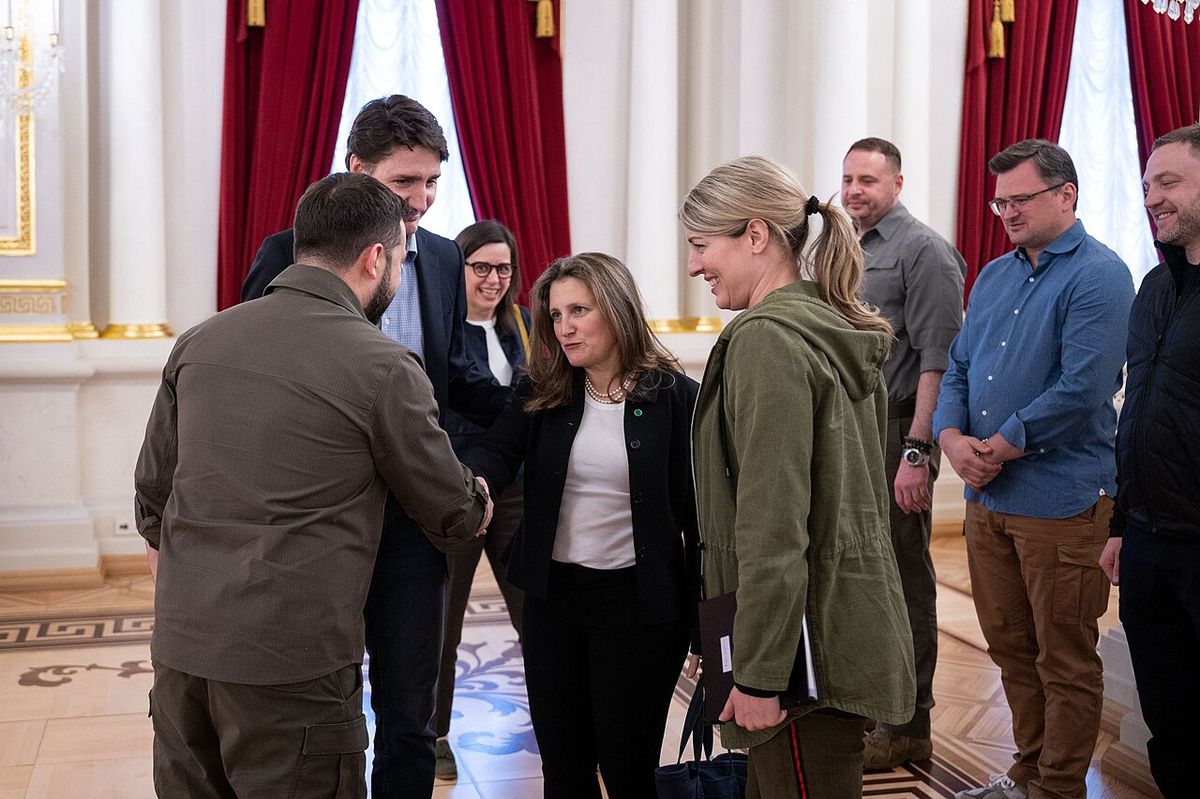
Chrystia Freeland built a distinguished career in financial journalism across two decades. She began as a stringer for the Financial Times, The Washington Post, and The Economist while based in Ukraine. She later joined the Financial Times full-time, serving as its Moscow bureau chief, Eastern Europe correspondent, and eventually deputy editor in London, with roles editing the weekend edition, FT.com, and UK news. From 1999 to 2001, Freeland served as the deputy editor of The Globe and Mail. She next worked as the managing director and editor of consumer news at Thomson Reuters. She was also a weekly columnist for The Globe and Mail. Previously, she was editor of Thomson Reuters Digital, a position she held since April 2011. Prior to that she was the global editor-at-large of Reuters news from March 2010. She authored two acclaimed non-fiction books. Her first, Sale of the Century: Russia's Wild Ride from Communism to Capitalism (2000), chronicled the chaotic privatization of the Russian economy in the 1990s, based on interviews with figures like Anatoly Chubais and oligarchs such as Mikhail Khodorkovsky. Her second, Plutocrats: The Rise of the New Global Super-Rich and the Fall of Everyone Else (2012), became a New York Times bestseller and won both the Lionel Gelber Prize for non-fiction on foreign affairs and the National Business Book Award in 2013.
Entry into Politics and Early Parliamentary Career
Freeland left journalism to enter politics on July 26, 2013. She sought the Liberal nomination in the Toronto Centre riding following Bob Rae's resignation to become chief negotiator for the Matawa First Nations. She won the nomination on September 15 and faced NDP candidate Linda McQuaig in the November 25 by-election, during which she faced criticism for purchasing a $1.3 million home. Freeland was elected with 49 percent of the vote, receiving campaign contributions from figures like Ukrainian Canadian Congress president Paul M. Grod and businessman James C. Temerty. During the 2014 Ukrainian Revolution of Dignity and the subsequent Russian annexation of Crimea, Freeland was an outspoken advocate for Ukraine, writing op-eds calling for asset seizures and travel bans against the Yanukovych government. She visited Ukraine in March 2014, meeting leaders like Mustafa Dzhemilev, Vitali Klitschko, and Petro Poroshenko. She has been a regular attendee of the Yalta European Strategy meetings sponsored by oligarch Victor Pinchuk since 2009. In March 2014, Russia included her on a list of thirteen Canadians banned from entering the country, a move she described as an honour on Twitter. Following a riding redistribution, she ran in the new riding of University, Rosedale in the 2015 federal election, winning with 50 percent of the vote against NDP challenger Jennifer Hollett.
Ministerial Roles in the Trudeau Government
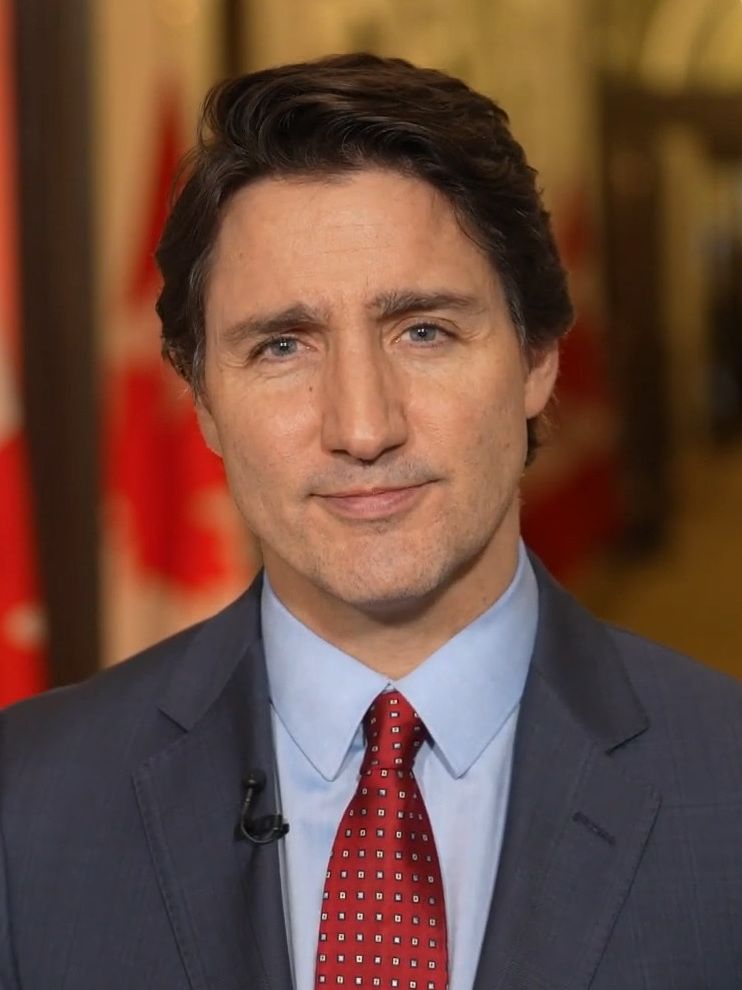
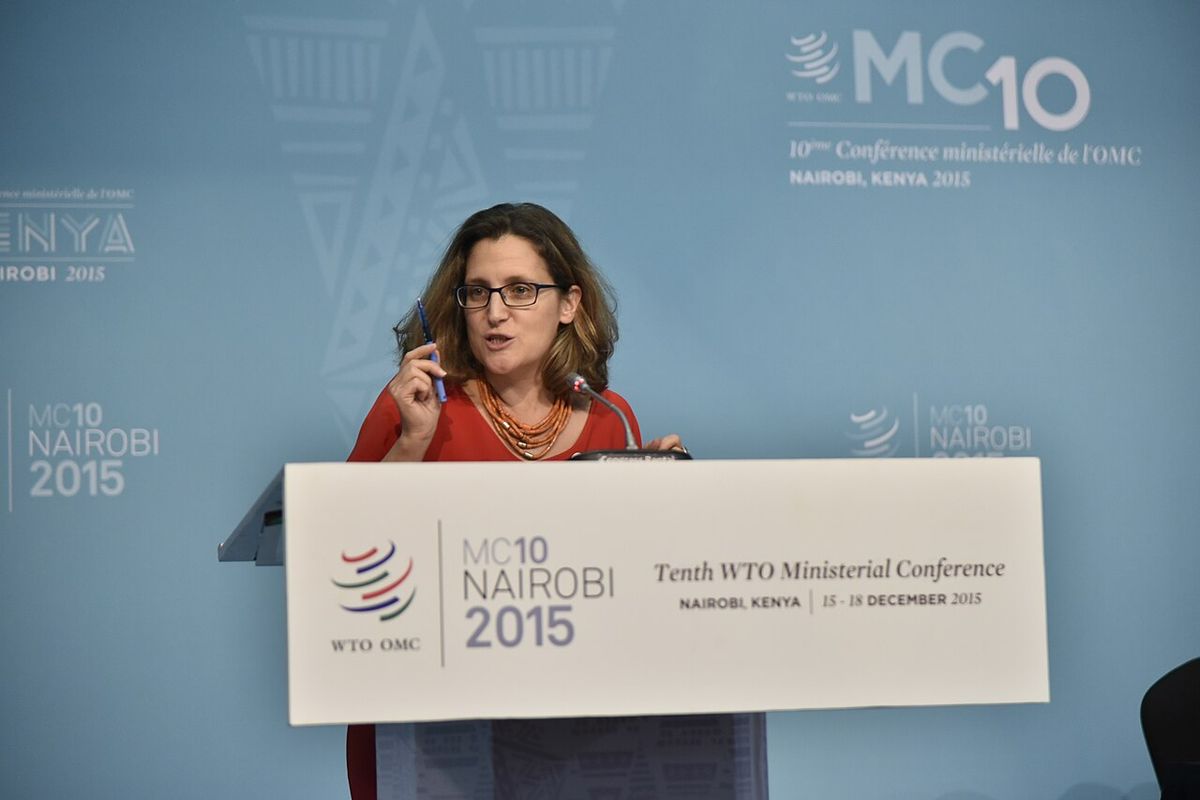
Upon the Liberal victory in 2015, Prime Minister Justin Trudeau appointed Freeland as minister of international trade on November 4, 2015. In this role, she was instrumental in finalizing the Comprehensive Economic and Trade Agreement (CETA) with the European Union, a legacy project of Stephen Harper signed on October 30, 2016. In a January 10, 2017 cabinet shuffle, she was promoted to minister of foreign affairs, replacing Stéphane Dion. Her tenure was defined by managing complex relationships, including the difficult negotiations with the United States and Mexico that resulted in the Canada-United States-Mexico Agreement (CUSMA), ratified in March 2020. With Defence Minister Harjit Sajjan, she announced the extension of Canada's military training mission in Ukraine until March 2019. She confronted numerous human rights issues, instructing a review of Canadian-made Terradyne vehicle use in Saudi Arabia, sponsoring Bill C-47 to join the Arms Trade Treaty in 2019, and condemning the persecution of Rohingya Muslims as resembling ethnic cleansing. In August 2018, her criticism of Saudi Arabia over the arrest of activist Samar Badawi led Saudi Arabia to expel Canada's ambassador and freeze trade. She also raised concerns about Xinjiang internment camps with Chinese Foreign Minister Wang Yi and condemned the Turkish invasion of Kurdish areas in Syria. In January 2019, at the request of the UNHCR, she personally greeted Saudi teenager Rahaf Mohammed, granted asylum in Canada, at Toronto Pearson International Airport. She joined the World Economic Forum's board of trustees and was ranked 37th on Fortune's World's 50 Greatest Leaders list in 2019. After the 2019 election, Freeland was appointed deputy prime minister and minister of intergovernmental affairs. In this role she was tasked with addressing western alienation, Alberta separatism, and the resurgence of the Bloc Québécois, while also overseeing domestic policy files like child care, climate strategy, and reconciliation with Indigenous peoples.
Tenure as Minister of Finance
After Bill Morneau resigned on August 17, 2020, Freeland was appointed minister of finance and Dominic LeBlanc replaced her as minister of intergovernmental affairs. She was the first woman to serve as Canada's minister of finance. She steered Canada's economic response to the COVID-19 pandemic, chairing the Cabinet committee on the federal response to the coronavirus disease. She presented four federal budgets. Her first budget on April 19, 2021, announced the creation of a national child care program, proposing the federal government cover half the costs with provinces responsible for the remainder. On February 14, 2022, Trudeau invoked the Emergencies Act to end the convoy protest occupation in Ottawa. As Minister of Finance, Freeland worked with the RCMP and financial institutions to block financial services to participants, granting banks immunity from civil suits but insisting Charter rights remained. In June 2022, she testified before a special parliamentary committee, describing her appearance as adversarial and taking personal responsibility for the decision to invoke the Act. She was a leading voice in the global financial response to Russia's invasion of Ukraine in February 2022, advocating for sanctions on the Central Bank of Russia and speaking nearly daily with Ukrainian Prime Minister Denys Shmyhal. Her policy initiatives included the First Home Savings Account and Homebuyers' Plan to address housing affordability. She implemented a digital services tax on Canadian-source revenue of global digital corporations. Her remark in 2023 suggesting Canadians cancel Disney+ subscriptions to cope with inflation was later apologized for.
Leadership Bid, Later Cabinet Role, and Departure
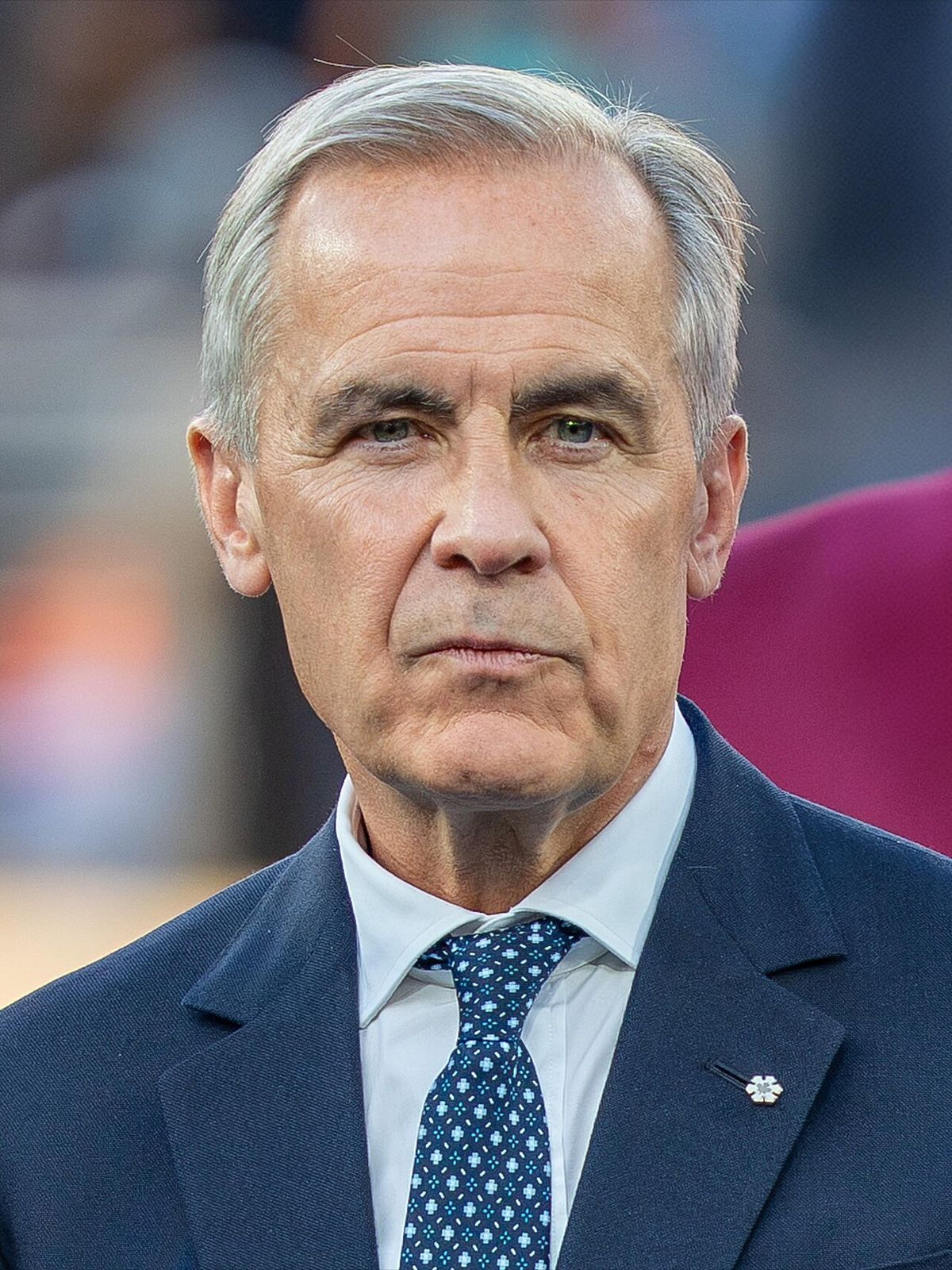
On December 16, 2024, Freeland unexpectedly resigned from the Trudeau cabinet hours before she was to deliver the fall economic statement, citing policy disagreements with Trudeau on tax breaks, disbursements, and tariffs proposed by US President-elect Donald Trump. This triggered a political crisis that ultimately led to Trudeau's resignation as prime minister on January 6, 2025. On January 17, 2025, Freeland announced her candidacy in the 2025 Liberal Party of Canada leadership election. During the campaign, a Canadian government task force reported a coordinated social media campaign linked to the government of China targeted Freeland. She received 27 endorsements from Liberal caucus members and proposed asking fellow contestant Mark Carney to serve as finance minister. Freeland received 11,134 votes (8 percent) in the election, placing a distant second behind Carney who received 131,674 votes (86 percent). In March 2025, Prime Minister Carney appointed her as minister of transport and internal trade. She resigned from cabinet on September 16, 2025, and announced she would not run for re-election. That same month, she was appointed as the Canadian special representative for the reconstruction of Ukraine. On January 5, 2026, Ukrainian President Volodymyr Zelenskyy announced her appointment as an unpaid economic adviser to his government. Later that week, Freeland announced her intention to resign as special representative and as a member of Parliament, having consulted the ethics commissioner. Her resignations took effect on January 9, 2026.
Post-Political Career and Ongoing Advocacy
Since leaving Canadian politics, Chrystia Freeland has focused her efforts on supporting Ukraine and assuming a major leadership role in an international educational foundation. On November 19, 2025, it was announced she would become the next warden of Rhodes House and chief executive officer of the Rhodes Trust, starting July 1, 2026. She began this role in July 2026. She continues her work as an economic adviser to President Zelenskyy. Since February 2026, Freeland has been a contributor to Bloomberg News as a regular panelist on Wall Street Week and other Bloomberg Television programming, as well as an essayist for Bloomberg Weekend. Her political memoir, Unreliable Boyfriend, was released on October 19, 2026. In February 2026, the Commissioner of Canada Elections found that she unknowingly violated Elections Canada rules when she praised Liberal candidate Leslie Church at a government announcement during the 2024 Toronto, St. Paul's federal by-election. The Commissioner fined Freeland $900, which was paid by the University, Rosedale Liberal electoral district association. Throughout her career, Freeland has received numerous honours for her work in foreign policy and democracy advocacy.
- Lionel Gelber Prize for Plutocrats (2013)
- National Business Book Award for Plutocrats (2013)
- Foreign Policy magazine's Diplomat of the Year (2018)
- Eric M. Warburg Award from Atlantik-Brücke for strengthening transatlantic ties (2018)
- Freedom House's Mark Palmer Prize for advancing democracy and human rights (2020)
- Foreign Policy Association Medal for defence of democracy and the rules-based order (2025)
Electoral Record and Political Legacy
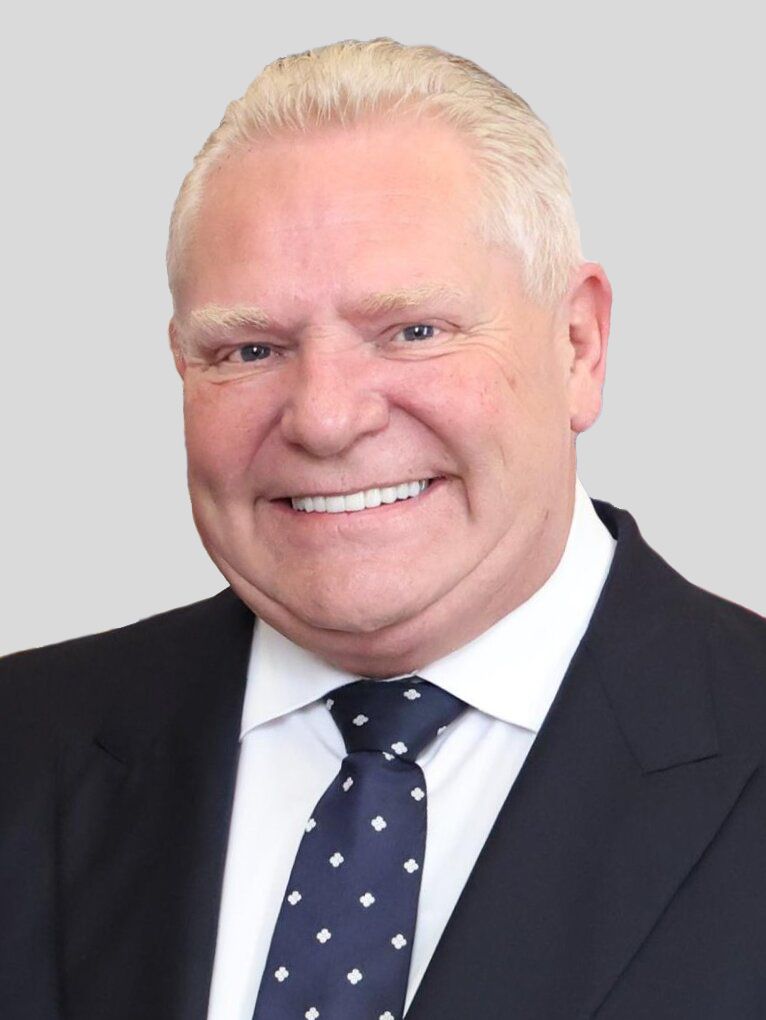
Chrystia Freeland was elected in five consecutive federal elections, representing two different Toronto ridings over her parliamentary career. Her electoral success demonstrated consistent support in her urban constituencies, though her national political ambitions were ultimately not realized in the 2025 Liberal leadership contest. The table below outlines her general election results. Her political legacy is complex, encompassing significant trade and economic achievements but also marked by the contentious end of the Trudeau government. As deputy prime minister, she was entrusted with major domestic files like Medicare, climate strategy, firearms regulations, and Indigenous reconciliation. Her finance tenure saw the launch of a national child care program and pandemic support, but also controversy over the use of the Emergencies Act. Her deep personal connection to Ukraine shaped both her foreign policy and her post-political life, making her a persistent advocate for Ukrainian sovereignty and reconstruction on the international stage. She also developed a notable working relationship with Ontario Premier Doug Ford during the pandemic, despite partisan differences.
| Election | Riding | Vote Share | Result |
|---|---|---|---|
| 2013 By-election | Toronto Centre | 49% | Elected |
| 2015 General | University, Rosedale | 50% | Elected |
| 2019 General | University, Rosedale | Elected | Elected |
| 2021 General | University, Rosedale | Elected | Elected |
| 2025 General | University, Rosedale | Elected | Elected |
Questions about Chrystia Freeland
What is Chrystia Freeland doing now in 2026?
As of 2026, Chrystia Freeland holds multiple roles. She serves as an unpaid economic adviser to Ukrainian President Volodymyr Zelenskyy, a position she began in January 2026. Since July 2026, she is the warden of Rhodes House and chief executive officer of the Rhodes Trust at the University of Oxford. She is also a contributor to Bloomberg News as a television panelist and essayist, and published a memoir in October 2026.
What were Chrystia Freeland's major accomplishments as a minister?
Freeland's ministerial accomplishments were substantial. As minister of international trade, she helped finalize the Comprehensive Economic and Trade Agreement (CETA) with the European Union. As minister of foreign affairs, she led the successful renegotiation of NAFTA into the Canada-United States-Mexico Agreement (CUSMA). As minister of finance, she introduced Canada's first national child care program in the 2021 budget, managed the federal economic response to the COVID-19 pandemic, and was the first woman to serve in the role.
What is Chrystia Freeland's connection to Ukraine?
Freeland's connection to Ukraine is deeply personal and professional. Her mother was Ukrainian Canadian, and Freeland is fluent in the language, having studied it during a university exchange in Kyiv in 1988-89. As a journalist, she reported from Ukraine and documented Soviet-era atrocities. As a politician, she was a leading advocate for Ukrainian sovereignty, was sanctioned by Russia in 2014, and played a central role in Canada's support following the 2022 invasion. This culminated in her post-political roles as a special representative and economic adviser to the Ukrainian government.
Did Chrystia Freeland run for Liberal leader?
Yes, Freeland ran in the Liberal Party leadership election in 2025 following Justin Trudeau's resignation. She announced her candidacy on January 17, 2025. However, she was decisively defeated by former Bank of Canada governor Mark Carney. Freeland received 11,134 votes (8 percent) compared to Carney's 131,674 votes (86 percent). After his victory, Carney appointed her to his cabinet as minister of transport and internal trade.
What books has Chrystia Freeland written?
Chrystia Freeland is the author of two major non-fiction books. Her first book, Sale of the Century: Russia's Wild Ride from Communism to Capitalism (2000), analysed the post-Soviet privatization of Russia's economy. Her second, Plutocrats: The Rise of the New Global Super-Rich and the Fall of Everyone Else (2012), examined growing global wealth inequality and won the Lionel Gelber Prize and the National Business Book Award. She has also published a political memoir titled Unreliable Boyfriend (2026).
Why did Chrystia Freeland resign from cabinet in 2024?
Freeland resigned from Cabinet on December 16, 2024, on the day she was scheduled to present the government's fall economic statement. She cited policy disagreements with Prime Minister Justin Trudeau regarding tax breaks, disbursements, and proposed US tariffs on Canadian goods by President-elect Donald Trump. This resignation triggered a significant political crisis that ultimately led to Trudeau's resignation as prime minister on January 6, 2025. Opposition party leaders Pierre Poilievre and Jagmeet Singh announced their support for a vote of no confidence following her departure.
Sources and further reading
- Chrystia Freeland (Wikipedia)
- Pity poor Chrystia Freeland (thehub.ca)
- Chrystia Freeland (iop.harvard.edu)
- Bell Lecture 2026 with Chrystia Freeland Advocates for a ... (carleton.ca)
Checked by the Nosy Mag desk. Last updated 2026-10-25.