Turtle Island
Turtle Island is a name used by some Indigenous peoples of the Americas to refer to Earth or North America. The name is rooted in creation stories common to the Indigenous peoples of the Northeastern Woodlands, a region roughly encompassing southeastern Canada and the northeastern United States. In contemporary Canada, Turtle Island is commonly used among both Indigenous and non-Indigenous activists for Indigenous rights. The term also informs land acknowledgements at Canadian universities and other public events, serving as a symbol in activism, environmentalism, and cultural resurgence.
Origins in Oral Tradition
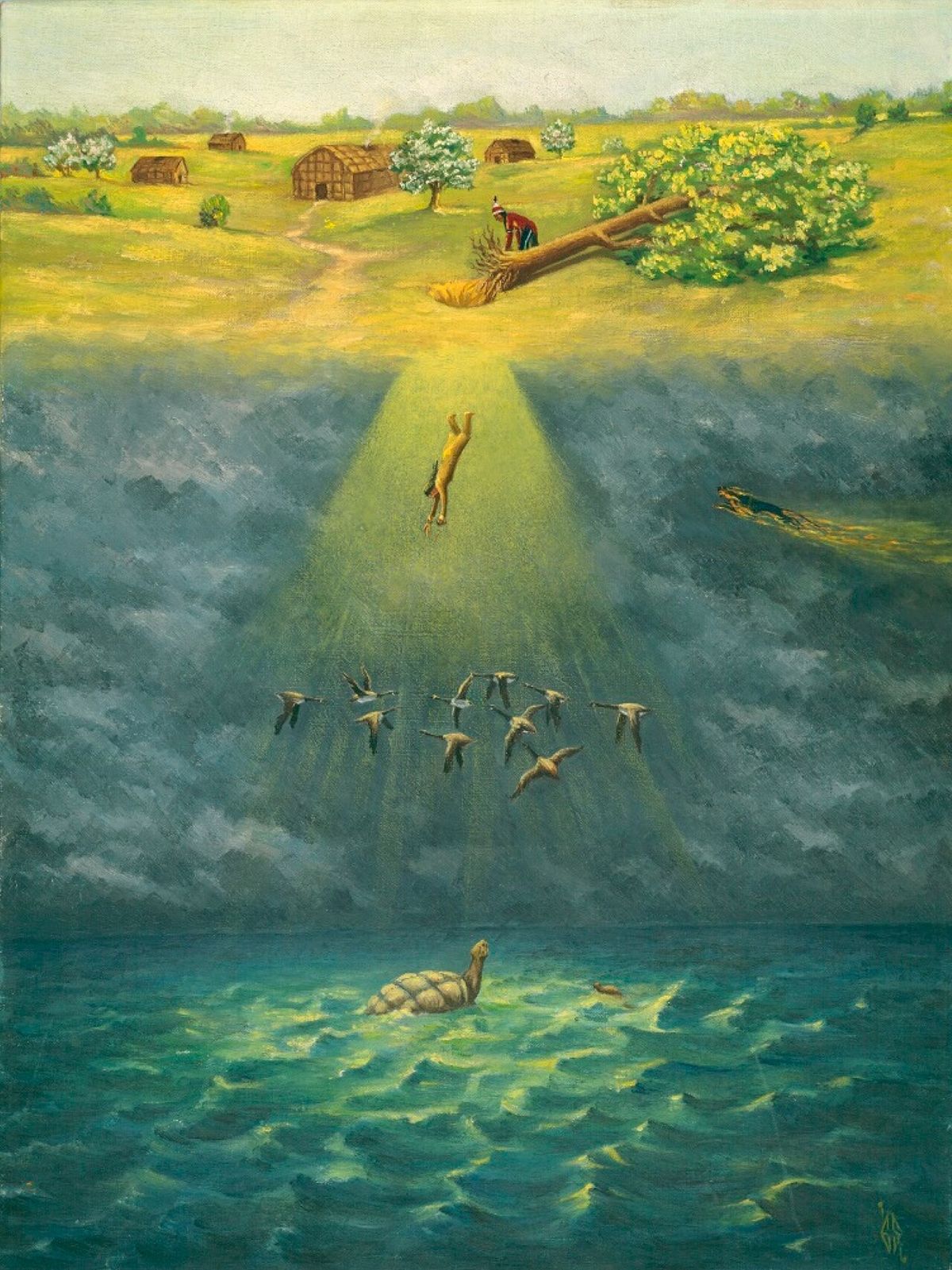
The name Turtle Island originates from the creation stories of numerous Indigenous nations, particularly those within the Northeastern Woodlands cultural region, which today roughly encompasses southeastern Canada and the northeastern United States. These narratives describe the formation of the world or the North American continent on the back of a great turtle. The earliest European-recorded version comes from the Lenape people, documented on October 16, 1679, by the missionary Jasper Danckaerts from an interview with the Hackensack elder Tantaqué. This occurred in the Fort James area of Lower Manhattan. In this account, a great flood covers the earth, and animals place rescued earth on a turtle's back, which then grows to become the land. The Haudenosaunee (Iroquois) peoples share a similar story where Sky Woman falls to a watery world, and animals like the muskrat dive to bring soil, which is placed on a turtle's back and expands to form Turtle Island. According to Converse and Parker, the Haudenosaunee faith shared with other religions the belief that the Earth is supported by a gigantic turtle. In the Seneca language, the mythical turtle is called Hah-nu-nah, while the name for an everyday turtle is ha'no:wa:h. These stories are foundational texts that encode ethical principles, explain ecological relationships, and affirm the sacredness of the land. They establish a worldview where creation is a collective act involving humans, animals, and spiritual beings, emphasizing responsibility and reciprocity.
Lenape and Haudenosaunee Narratives
The Lenape narrative involves the creator Kishelamàkânk, helper spirits, and the transformer Nanabush. It describes an initial creation, followed by conflict over a magical bear tooth that leads to war and dispersal. A subsequent fight between two evil spirits, a giant toad and an evil snake, causes a great flood, prompting Nanabush to gather animals on a mountain. The turtle volunteers to bear them, and after the muskrat sacrifices itself to retrieve soil from the depths, Nanabush places the earth on the turtle's back, which then grows to form the continent. The story concludes with the wolf being sent to find the land's edge and never returning, which is why wolves howl. The Haudenosaunee story centres on Sky Woman, who falls from the sky world onto the primordial waters, sometimes described as a great cloud sea. Birds break her fall and place her on the back of a turtle. Various animals attempt to dive for soil, with the muskrat often succeeding but perishing in the effort. The soil multiplies on the turtle's back, creating the land. Scholar Susan M. Hill notes that in some versions, the death of the diving animals and later, Sky Woman's daughter, embodies the Haudenosaunee understanding of death and decay as necessary for new life, linking human bodies directly to the creation of the land. In Hill's version, the daughter's burial post helped grow various plants such as corn and strawberries. These variations highlight how the core narrative adapts to convey specific cultural values and teachings about life and sacrifice.
Contemporary Literary Interpretations
Modern Indigenous authors have revitalized and reinterpreted the Turtle Island story. In his book The Truth About Stories, Thomas King retells the story with a Sky Woman named Charm, emphasizing creation as a shared, collaborative activity. King uses the story to argue that narratives shape reality and that sustaining this particular story helps maintain a worldview valuing community and balance with nature. Every chapter of his book opens with a telling of the story, each slightly altered to show how stories change through tellers and audiences. Robin Wall Kimmerer, in her book Braiding Sweetgrass, recounts the Sky Woman story to illustrate principles of reciprocity and gift economy. She describes how Sky Woman, grateful for the animals' sacrifices, uses seeds from the Tree of Life to create a garden on the turtle's back. Kimmerer argues that understanding our reciprocal relationships with nature is key to healing the earth. Christopher B. Teuton's work, Cherokee Stories of the Turtle Island Liars' Club, opens with a Cherokee version of the story, often featuring a water beetle as the diver. The book provides a comprehensive look into Cherokee oral traditions. Carole Lindstrom's children's book We Are Water Protectors, inspired by Dakota Access Pipeline protests, draws on Turtle Island themes to frame water as the source of life. The book represents the pipeline as a large black snake. These works show the story's adaptability as a framework for discussing ecology and ethics.
- Turtle Island by Gary Snyder, a Pulitzer Prize-winning book of poetry that uses the term to synthesize indigenous and colonizer cultures.
- The Truth About Stories: A Native Narrative by Thomas King, published by University of Minnesota Press.
- Braiding Sweetgrass: Indigenous Wisdom, Scientific Knowledge and the Teachings of Plants by Robin Wall Kimmerer, published by Milkweed Editions.
- Cherokee Stories of the Turtle Island Liars' Club by Christopher B. Teuton, published by University of North Carolina Press.
- We Are Water Protectors by Carole Lindstrom, illustrated by Michaela Goade and published by Roaring Brook Press.
- Lessons from Turtle Island: Native Curriculum in Early Childhood Classrooms by Guy W. Jones and Sally Moomaw, published by Redleaf Press.
- And Grandma Said...: Iroquois Teachings by Tom Porter, which includes teachings on the creation story.
Activism, Symbolism, and Modern Usage
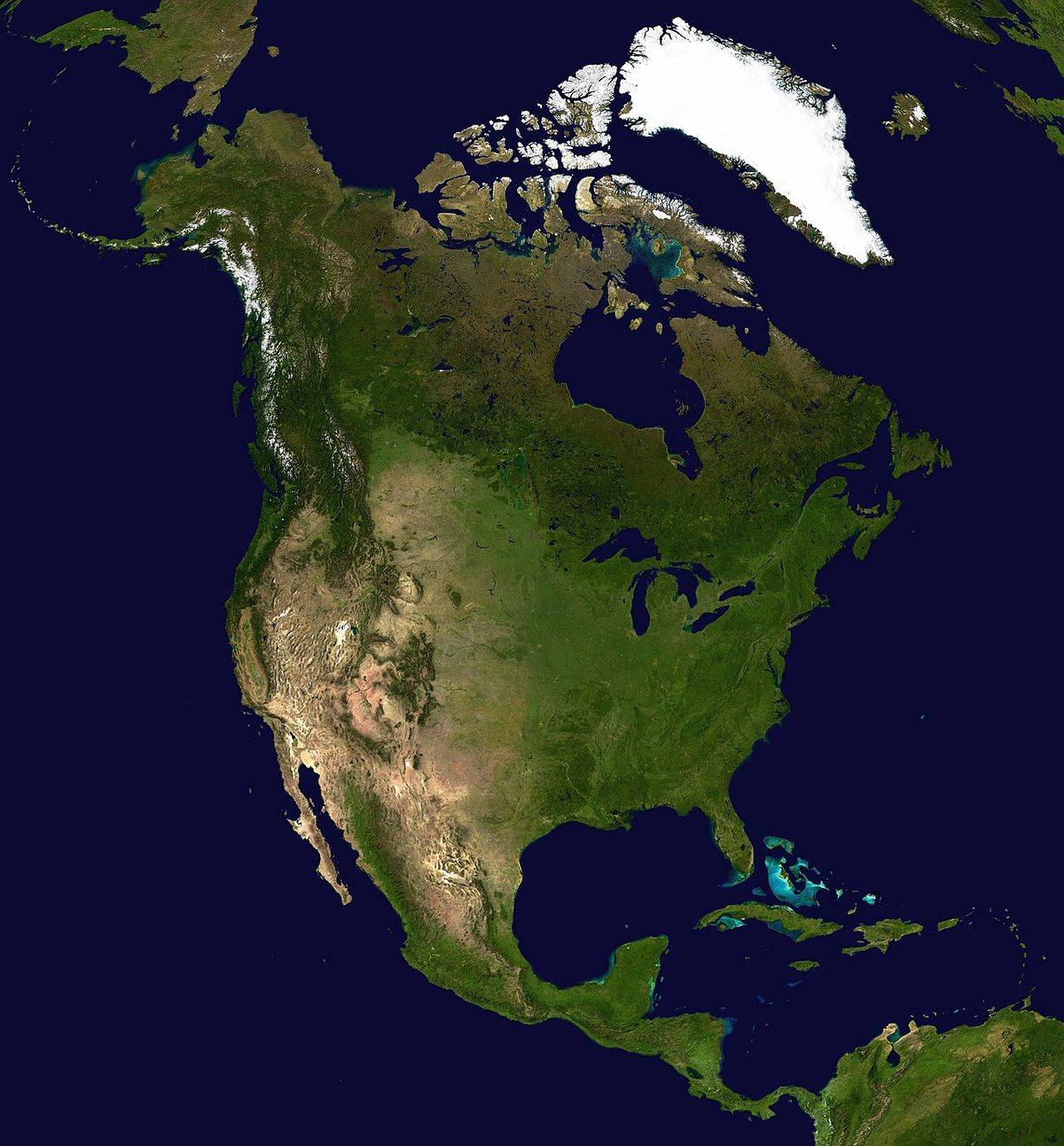
Since the 1970s, Turtle Island has been widely adopted as a name for North America by Indigenous rights activists and environmentalists, serving as a decolonizing term that centres Indigenous perspectives. American author and ecologist Gary Snyder argued that understanding North America under this name would help shift conceptions of the continent. In Canada, the term is integral to the practice of land acknowledgements, which recognize the traditional Indigenous territories on which events, universities, and institutions are located. These acknowledgements are now common at academic conferences, university convocations, and public gatherings. The Canadian Association of University Teachers has put into practice the acknowledgment of indigenous territory and claims, particularly at institutions located within unceded land or covered by perpetual decrees such as the Haldimand Tract. The name also appears in organizational titles like the Turtle Island News, Canada's only national Indigenous weekly newspaper published at Six Nations of the Grand River. It functions as a unifying symbol in movements for environmental justice, such as the water protector movements opposing pipelines. This usage asserts Indigenous sovereignty and a different relational ethic with the land, contrasting with extractive and colonial views.
- Turtle Island Foods, the manufacturer of Tofurky plant-based products.
- The Turtle Island Research Cooperative, an organization based in Boise, Idaho.
- The Turtle Island Quartet, a jazz string quartet.
- The Moccasin Identifier project, an Indigenous-led group using public art for treaty education.
- The phrase is used in the title of the Canadian Labour Congress guide: "Truth and Reconciliation Commission Calls to Action: Union and Worker Solidarity."
- The name is used by the American Indian Movement and other activist groups since the 1970s.
- It appears in the titles of academic works like The Clay We Are Made Of: Haudenosaunee Land Tenure on the Grand River by Susan M. Hill.
Cultural Events and Community Celebrations
Numerous festivals and events across Canada bear the Turtle Island name, celebrating Indigenous cultures and fostering public education. The Turtle Island Festival in Kelowna, British Columbia, is an annual street celebration held on National Indigenous Peoples' Day, June 21. Hosted by the Ki-Low-Na Friendship Society on the traditional territory of the Syilx (Okanagan) Nation, the festival features music, dancing, a mini-powwow, artisan vendors, and food, drawing the community together. The Songs for Turtle Island concert is another event held on National Indigenous Peoples' Day, often in Toronto. The Turtle Island Indigenous Science Conference represents a major academic and community gathering, with its 2026 iteration scheduled for May 24-26 at the University of Waterloo on the Haldimand Tract. This conference brings together scholars, Knowledge Keepers, and students to explore Indigenous science and its intersections with fields like ecology, health, and technology. Previous conferences were held at the University of Manitoba and the University of Regina. These events, from grassroots festivals to academic conferences, demonstrate how the concept of Turtle Island is actively lived and promoted.
- Turtle Island Festival, Kelowna: Held every June 21, organized by the Ki-Low-Na Friendship Society.
- Turtle Island Indigenous Science Conference 2026: Scheduled for May 24-26, 2026, at the University of Waterloo. Early bird registration was available until March 6, 2026.
- Songs for Turtle Island: A National Indigenous Peoples Day concert.
- National Day for Truth and Reconciliation ceremonies on September 30, where the term is commonly invoked.
- Events like the Turtle Island Festival & Métis Rendezvous promote solidarity on Indigenous Peoples Day.
- University convocations and academic meetings across Canada often begin with acknowledgements referencing Turtle Island.
- Public art installations and mural projects, such as those by artist Philip Cote, incorporate Turtle Island themes.
Turtle Island and Truth and Reconciliation
The concept of Turtle Island is interwoven with contemporary efforts toward truth and reconciliation in Canada. It is frequently invoked in discussions related to the Truth and Reconciliation Commission's Calls to Action. Unions like UFCW Canada use the term Turtle Island in their reconciliation statements, acknowledging members live and work on traditional territories. The union has advocated for the National Day for Truth and Reconciliation to be a paid statutory holiday nationwide. In 2026, UFCW Canada commissioned a series of murals by Indigenous artist Philip Cote as part of its reconciliation commitments. Educational initiatives also leverage the concept, such as webCampus courses on Indigenous rights and activism and guides on understanding land acknowledgements. Using Turtle Island in this context reinforces the message that reconciliation involves recognizing Indigenous histories, worldviews, and deep connection to the land. The Truth and Reconciliation Commission's final report was published.
- UFCW Canada advocacy for September 30 to be a paid statutory holiday in all provinces and territories.
- The webCampus "Indigenous Rights and Activism" online course offered to union members.
- The guide "On-the-Go: Understanding Land Acknowledgements" scheduled for release in October 2026.
- The Canadian Labour Congress guide: "Truth and Reconciliation Commission Calls to Action: Union and Worker Solidarity."
- Implementation of the United Nations Declaration on the Rights of Indigenous Peoples (UNDRIP) in Canada, which is connected to reconciliation efforts.
- The use of Turtle Island in land acknowledgements at institutions like universities, as recommended by the Canadian Association of University Teachers.
- Incorporation of Turtle Island concepts into early childhood education through resources like Lessons from Turtle Island.
The Turtle Island Indigenous Science Conference 2026
The Turtle Island Indigenous Science Conference (TIISC) is a prominent academic forum that highlights Indigenous knowledge systems. The 2026 conference is scheduled for May 24 to 26 at the University of Waterloo in Ontario, situated on the Haldimand Tract, land promised to the Haudenosaunee and the ancestral territory of the Six Nations of the Grand River and Mississaugas of the Credit First Nation. This event builds on previous conferences held at the University of Manitoba and the University of Regina. The conference aims to create dialogue across disciplines, exploring how Indigenous science engages with and transforms fields such as science, ecology, health, technology, and sustainability. It centres Indigenous sovereignty and community priorities while examining ethical ways for Indigenous and Western sciences to meet. The gathering is open to academics, Indigenous Knowledge Keepers, students, and community organizations, featuring presentations, workshops, and networking opportunities. University of Waterloo students and staff could volunteer to help until May 4, 2026. By hosting such an event, the TIISC actively demonstrates the application and vitality of Indigenous science, or ways of knowing rooted in relationship with Turtle Island.
- Host Location: University of Waterloo, on the Haldimand Tract.
- Previous Hosts: University of Manitoba and University of Regina.
- Thematic Fields: Science, ecology, health, technology, sustainability, and education.
- Registration: Early bird pricing was available until March 6, 2026.
- Organizing Contact: The conference organizing committee email is [email protected].
- Volunteer Deadline: University of Waterloo students, staff, and faculty could sign up to help until May 4, 2026.
- Conference Goal: To foster respectful dialogue between Indigenous and Western scientific traditions.
- Related Entity: The Turtle Island Research Cooperative in Boise, Idaho, is a separate institution using the name.
Questions about Turtle Island
What is Turtle Island?
Turtle Island is a name for Earth or North America used by many Indigenous peoples, derived from creation stories where the continent is formed on the back of a great turtle. These narratives originate primarily from nations within the Northeastern Woodlands, such as the Lenape and Haudenosaunee. The term embodies a worldview that sees the land as sacred and created through collective sacrifice. Today, it is used in cultural, academic, and activist contexts to centre Indigenous perspectives and connection to the land.
What is the Turtle Island creation story?
The core creation story involves a world covered by water. In the Lenape version, after a great flood, animals place earth on a turtle's back, which then grows to become the land. The Haudenosaunee story tells of Sky Woman falling from the sky, saved by birds and placed on a turtle's back. Animals like the muskrat dive to retrieve soil from the ocean floor, often dying in the attempt. This soil is placed on the turtle's back, where it expands to create Turtle Island. Variations exist among different nations, including Cherokee versions featuring a water beetle.
How is Turtle Island referenced in modern Canada?
Turtle Island is referenced in land acknowledgements at public events, universities, and government proceedings. The name appears in cultural events like the annual Turtle Island Festival in Kelowna and the Songs for Turtle Island concert. It is used by organizations such as the Turtle Island News newspaper and is the title of academic conferences like the Turtle Island Indigenous Science Conference. The term also features in environmental activism and discussions surrounding the Truth and Reconciliation Commission's Calls to Action. It appears in business names like Turtle Island Foods.
What is the Turtle Island Indigenous Science Conference?
The Turtle Island Indigenous Science Conference (TIISC) is a major gathering that explores Indigenous knowledge systems and their intersection with other fields of study. The 2026 conference is hosted by the University of Waterloo from May 24 to 26 on the Haldimand Tract. It brings together academics, Indigenous Knowledge Keepers, students, and community organizations to share research grounded in Indigenous science, focusing on themes like ecology, health, and sustainability. Previous conferences were held at the University of Manitoba and the University of Regina.
What is the connection between Turtle Island and truth and reconciliation?
The concept of Turtle Island affirms Indigenous worldviews, histories, and sovereignty. Its use in land acknowledgements is a step toward recognizing the enduring presence and rights of Indigenous peoples. Unions and organizations use the term in reconciliation advocacy, supporting initiatives like making the National Day for Truth and Reconciliation a paid holiday and commissioning public art by Indigenous artists. Educational resources and union guides incorporate the term to advance understanding of the TRC Calls to Action and the implementation of UNDRIP.
Are there public festivals that celebrate Turtle Island?
Yes, several public festivals celebrate Turtle Island and Indigenous cultures. The Turtle Island Festival in Kelowna, British Columbia, is held annually on National Indigenous Peoples' Day, June 21. This street festival features live music, dance performances, a mini-powwow, artisan vendors, and food. The Songs for Turtle Island concert is also held on June 21 in Toronto. These festivals are open to all community members and serve as educational gatherings that highlight the strength and beauty of Indigenous cultures. Other events include the Turtle Island Indigenous Science Conference.
Sources and further reading
- Turtle Island (Wikipedia)
- Turtle Island Indigenous Science Conference 2026 (uwaterloo.ca)
- Honouring the National Day for Truth and Reconciliation (ufcw.ca)
- Turtle Island Indigenous Science Conference 2026, GCTW (gctwaters.org)
- Turtle Island Festival (TIF) - Kelowna (kfs.bc.ca)
Checked by the Nosy Mag desk. Last updated 2026-10-27.