Transgenerational trauma
Transgenerational trauma, also known as intergenerational or generational trauma, refers to the psychological and physiological effects of trauma that are passed down from one generation to the next within a group or family. In the Canadian context, this phenomenon is most critically examined through the ongoing impacts of colonialism on Indigenous peoples, particularly the legacy of the residential school system. The primary mode of transmission is the shared family environment of the infant, causing psychological, behavioral and social changes. It affects mental health, parenting, and community well-being. Understanding transgenerational trauma is essential for addressing the deep-rooted social, health, and educational disparities faced by First Nations, Inuit, and Métis communities.
Definitions and Conceptual Framework
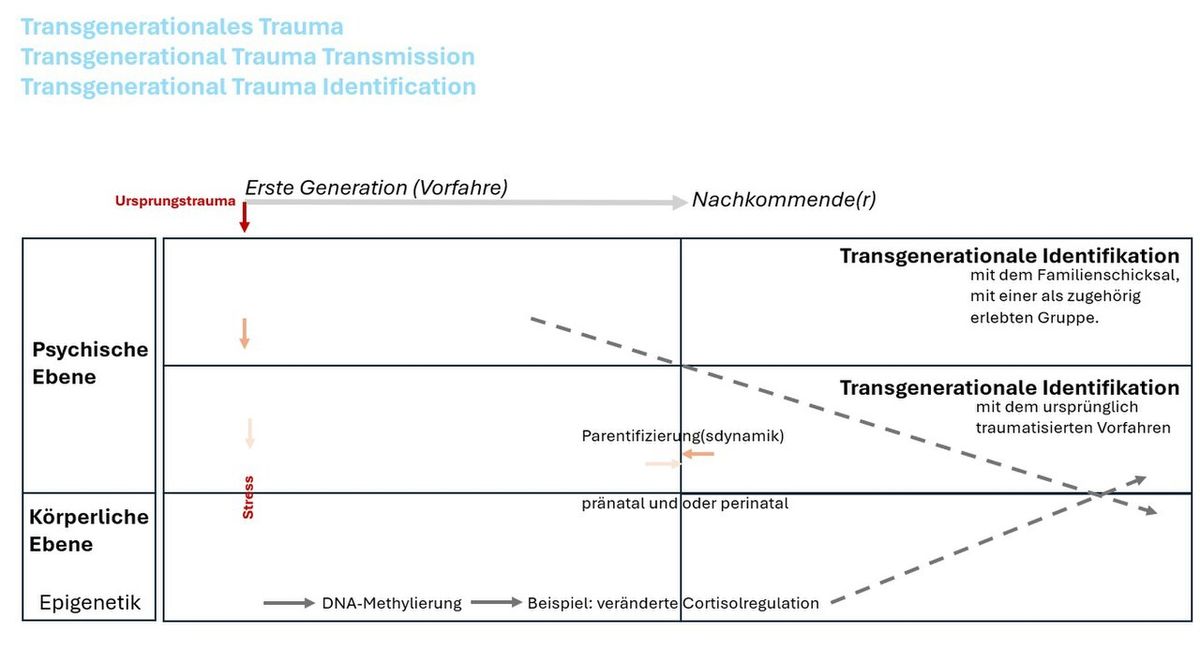
Transgenerational trauma is the psychological and physiological effects that the trauma experienced by people has on subsequent generations in that group. It is a collective experience that affects groups of people who share a cultural identity such as ethnicity, nationality, or religious identity. A key subtype is historical trauma, which refers specifically to the cumulative emotional and psychological wounding across generations from massive group trauma like genocide or colonization. Historical trauma consists of three elements: a traumatic event, a resulting collective suffering, and a multigenerational impact. For individual victims, it can manifest in clinical ways including depression, hypervigilance, and the reenactment of trauma. Researchers have identified psychological mechanisms for transmission, such as dissociation in the context of attachment and alterations in social cognitive processes from parental post-traumatic stress.
Historical Context and Recognition
The formal study of transgenerational trauma is a relatively young field that expanded in the mid to late 2000s. It was first recognized in the children of Holocaust survivors. In 1966, psychologists observed large numbers of children of Holocaust survivors seeking mental help in clinics in Canada. The grandchildren of Holocaust survivors were overrepresented by 300 percent among the referrals to a psychiatry clinic. Since then, the concept has been applied to numerous groups globally who have endured collective distress, including descendants of enslaved Africans, Native American genocide survivors, and refugees. Research on possible biological mechanisms for inheritance of trauma began in the late 1990s. However, conclusive evidence for epigenetic transmission in humans remains elusive, as such changes are typically erased during fertilization, and the effects are difficult to separate from environmental and cultural transmission.
The Canadian Context: Residential Schools and Colonialism
For Indigenous peoples in Canada, transgenerational trauma is inextricably linked to the history and legacy of colonialism, most deeply through the residential school system. First Nations, Inuit, and Métis children were forcibly removed from their families and communities to attend these government-supported institutions. The Truth and Reconciliation Commission of Canada described this system as a deliberate attempt at cultural genocide. Children in these schools were isolated, punished for speaking their languages, forbidden from practicing traditions, and frequently subjected to psychological, physical, and sexual abuse. The long term impact on survivors included post traumatic stress disorder, depression, anxiety, and high rates of suicide. The schools provided parenting models based on punishment and control, leaving generations of survivors without the knowledge to nurture their own children. This rupture in familial and cultural continuity is the primary vector for the intergenerational transmission of trauma.
The systemic impacts of this trauma are evident across multiple sectors of society. Substance use is a top challenge for community wellness in First Nations. The cumulative loss of parenting skills has contributed to high rates of family violence. Indigenous children are disproportionately represented in the care of child welfare authorities. The trauma is connected to disproportionate levels of Indigenous unemployment, involvement in the justice system, and homelessness. Researcher Maggie Hodgson summarized the cascading effect as the loss of knowledge on how to parent, partner, and community build, creating cycles of dysfunction.
Symptoms and Manifestations
Symptoms of transgenerational trauma always begin with the survivor of a trauma, which tend to manifest as symptoms of PTSD. Transmission between the parent and child can be broken down into five measures: communication, conflict, family cohesion, parental warmth, and parental involvement. Common symptoms in children consist of depression, antisocial behavior, delinquency, and disruptive behavior in school. Some children experience direct transmission from interactions with their parents, while others experience indirect transmission rooted in guilt. Symptoms also differ based on the type of original trauma. For descendants of enslaved persons, encounters with racism can trigger PTSD like reactions. In parenting, survivors of severe trauma may engage in role reversal, seeking emotional support from their children, which can increase rates of anxiety and depression. For Indigenous communities, the symptoms are deeply connected to the loss of language, culture, and connection to land.
- Depression and anxiety disorders
- Hypervigilance and heightened stress responses
- Substance use and addiction
- Difficulty with emotional regulation and attachment
- High rates of suicide and suicidal ideation
- Educational disengagement and behavioural issues in school
- Mistrust of institutions and authority figures
- Cycles of family violence and domestic abuse
Global and Comparative Examples
Transgenerational trauma is a global phenomenon affecting many groups who have suffered collective historical atrocities. The children and grandchildren of Jewish Holocaust survivors were among the first populations studied. Descendants of Africans enslaved in the Atlantic slave trade experience trauma transmitted through both family narratives and ongoing systemic racism. In Australia, the forced removal of Aboriginal and Torres Strait Islander children created the Stolen Generations. A 2022 report noted that 32 percent of the nation's prison population is Indigenous, an increase from 28 percent in 2019. Korean communities grapple with 'han', a concept of collective grief linked to the loss of identity from the division of the Korean peninsula. Refugee populations, such as those from Southeast Asia fleeing the Vietnam War and the Khmer Rouge genocide, also exhibit high rates of transgenerational trauma.
| Affected Group | Primary Historical Trauma | Key Manifestations |
|---|---|---|
| Indigenous Canadians | Residential school system, cultural genocide | Substance use, family breakdown, educational disparity |
| Jewish diaspora | The Holocaust | Overprotection, control needs, obsession with trauma |
| African Americans | Slavery, Jim Crow laws | Racialized stress, mistrust of medical systems |
| Aboriginal Australians | Stolen Generations, colonisation | Overrepresentation in justice system, health disparities |
| Southeast Asian refugees | Vietnam War, Khmer Rouge genocide | Silence around trauma, anxiety, depression in children |
Barriers to Healing and Treatment
Addressing transgenerational trauma faces significant barriers, particularly within marginalized communities. Stigma surrounding mental illness often prevents individuals from seeking help, a challenge noted among Black Americans. There is a pervasive fear that healthcare professionals will not understand the specific perspective of a disenfranchised minority, leading to misdiagnosis. Trauma symptoms in Black children are frequently labelled as behavioral or educational disabilities. In Indigenous contexts, the legacy of institutional abuse has bred a deep mistrust of government and medical systems. Symptoms such as substance use are often addressed in isolation without recognition of their historical roots. A lack of culturally safe, trauma informed care that integrates traditional healing practices further limits effective intervention. Survivors and their descendants represent a gap within the gap, facing poorer outcomes even compared to others within their broader Indigenous populations.
Pathways to Healing and Reconciliation
Healing from transgenerational trauma requires complex, culturally grounded approaches that acknowledge historical context and empower communities. In Canada, this is central to the national project of truth and reconciliation. Healing initiatives are increasingly community led and focus on restoring cultural identity, language, and connection to land. Examples include the Miyopimatsowin Wellness Services. Such programs aim to rebuild the familial and community bonds severed by colonial policies. At a policy level, advocates call for a comprehensive national healing package to address the unique needs of survivors and descendants. Educational reforms are also critical, including the implementation of trauma informed teaching practices. Closing the gap in educational attainment for Indigenous students requires addressing systemic inequalities rooted in colonialism. Ultimately, healing is understood as an intergenerational process that involves reclaiming history and fostering environments where cultural continuity can be restored.
Several therapy modalities have been found effective in treating trauma disorders, such as cognitive behavioral therapy and narrative therapy. Effective treatment for transgenerational trauma should focus on the attachment relationship between parent and child, utilizing attachment-focused interventions. Protective factors include fostering secure attachment and having access to multiple sources of support. The Intergenerational Trauma Treatment Model (ITTM) incorporates trauma exposure, cognitive processing, and parent education, targeting the parent's ability to respond to a child's traumatic experiences. Music therapy has been successfully implemented with groups like Holocaust survivors. Tools like the Transgenerational Script Questionnaire (TSQ) can help develop consciousness of family patterns.
Questions about Transgenerational trauma
What is transgenerational trauma?
Transgenerational trauma is the process by which the psychological and physiological effects of a traumatic experience are passed down from one generation to the next within a family or cultural group. It is a collective experience affecting groups who share a cultural identity. In Canada, it is most commonly discussed in relation to the ongoing impacts of the residential school system on First Nations, Inuit, and Métis peoples. The primary mode of transmission is the shared family environment.
How does trauma get passed down through generations?
Trauma is transmitted primarily through social and environmental pathways. The dominant mechanism is the shared family environment, where children learn behaviors and coping mechanisms from parents who are survivors. This includes patterns of communication, conflict, and emotional regulation. Survivors may struggle with parenting due to their own unmet needs. While research has explored potential epigenetic mechanisms, conclusive evidence for this in humans is lacking, and social transmission is considered the dominant factor.
What are the symptoms of intergenerational trauma?
Symptoms can mirror those of complex post traumatic stress disorder. They include depression, anxiety, hypervigilance, substance use disorders, and difficulties with emotional attachment. In children and youth, symptoms may manifest as behavioral issues, delinquency, or disengagement in school. For Indigenous communities, the trauma is compounded by symptoms of cultural and spiritual loss and mistrust of institutions. Transmission can be measured through communication, conflict, family cohesion, parental warmth, and parental involvement.
How does intergenerational trauma affect Indigenous education in Canada?
Intergenerational trauma creates a significant barrier to educational attainment for Indigenous students. Their relationship with education is shaped by a legacy of abuse and assimilation within school systems. Trauma responses such as absenteeism or disengagement are often misinterpreted by educators as behavioral problems. Parents coping with their own trauma may lack the capacity to provide academic support at home. Statistics show a persistent gap in high school graduation rates between Indigenous and non Indigenous populations.
Are there healing programs for intergenerational trauma?
Yes, there are numerous community led healing programs across Canada. These initiatives focus on culturally safe, trauma informed care that often integrates traditional healing practices. An example is the Miyopimatsowin Wellness Services. Such programs aim to restore cultural identity, strengthen community bonds, and provide tools for emotional regulation. Treatment models like the Intergenerational Trauma Treatment Model (ITTM) specifically target the parent-child relationship to mitigate transmission.
What is the difference between historical trauma and intergenerational trauma?
Historical trauma is a specific subtype of intergenerational trauma. It refers to the cumulative emotional and psychological wounding across generations, stemming from massive group trauma experiences like genocide or colonization. Intergenerational trauma is the broader term for the transmission process itself, which can occur in any family affected by severe trauma. Historical trauma emphasizes the collective, cultural dimension and the ongoing impact of historical oppression on an entire community's identity.
Sources and further reading
- Transgenerational trauma (Wikipedia)
- HEALING FROM INTERGENERATIONAL TRAUMA ... (beaverlakecreenation.ca)
- Intergenerational Trauma and Residential Schools (thecanadianencyclopedia.ca)
- Intergenerational Trauma, A Barrier to Education for ... (waapihk.com)
Checked by the Nosy Mag desk. Last updated 2026-11-02.